
Ep. 37: Jason Wasser on the Work From Your Happy Place Podcast
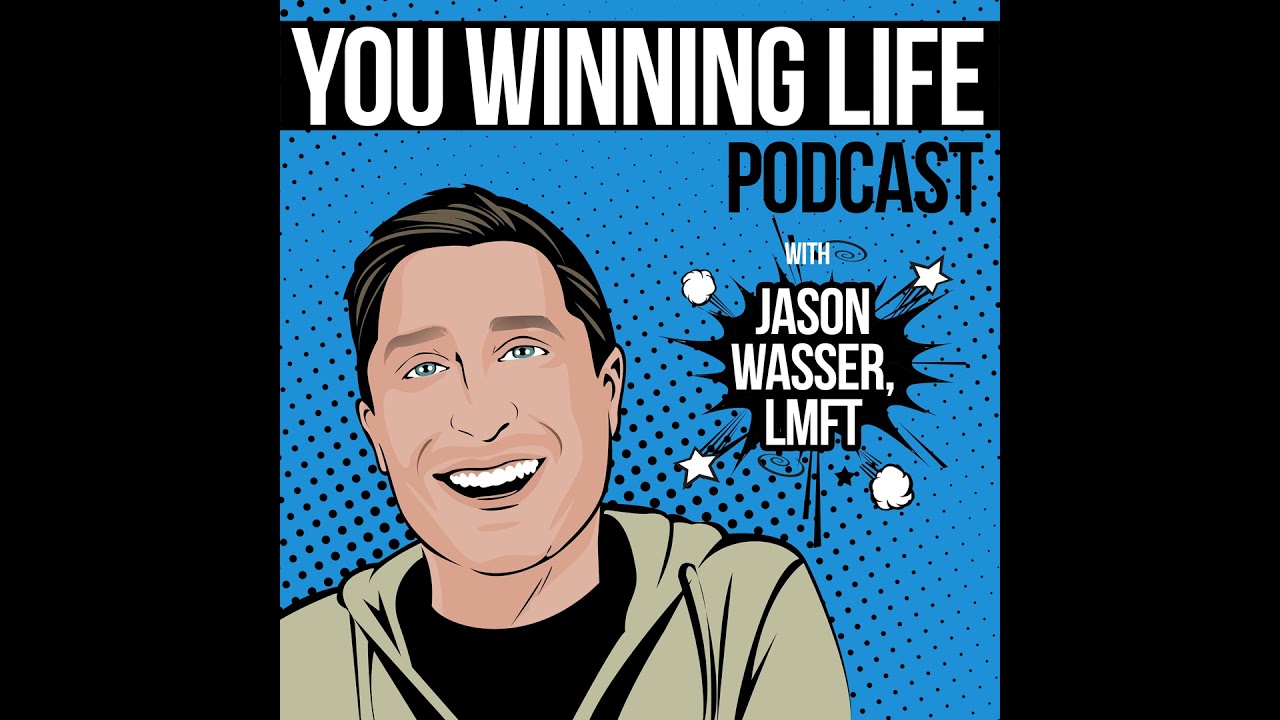
In this episode of the Work From Your Happy Place podcast, host Jason Wasser, LMFT, shares his personal and professional journey, describing how early family challenges and a spiritual trip to Israel sparked his interest in helping others. He outlines his evolution from informal youth mentorship to a licensed therapist and founder of a full‑service mind‑body integrative wellness practice in Fort Lauderdale that combines traditional therapy, Neuro‑Emotional Technique (NET), chiropractic, nutrition, and muscle‑testing‑based modalities. Wasser discusses his transition to entrepreneurship after attending the Business Finishing School, emphasizing the importance of defining core values, accountability, and coaching for both personal development and business growth. He explains the rhythms, rituals, and long‑term reverse‑engineering planning he uses to stay productive, and introduces the “Doorman Principle” – a value‑based filter for clients and personal relationships. The conversation moves to his podcast, You Winning Life, which covers psychology, integrative medicine, spirituality, and entrepreneurship, and he offers concrete advice for aspiring entrepreneurs: start with core values, identify problems to solve, and align opportunities accordingly. Finally, Wasser shares current projects—including expanding his practice online, speaking engagements, upcoming books on mindset, and his website and social media handles—inviting listeners to connect and access his resources.
Chapters
This is the You Winning Life Podcast, your number one source for mastering a positive existence. Each episode, we'll be interviewing exceptional people, giving you empowering insights and guiding you to extraordinary outcomes. Learn from specialists in the worlds of integrative and natural wellness, spirituality, psychology, and entrepreneurship so you too can be winning life. Now here's your host, licensed marriage and family therapist, certified neuro-emotional technique practitioner, and certified entrepreneur coach Jason Wasser.
It is my pleasure to be here hanging out with you. Thanks for having.
Oh, fun. Well, we're gonna get into some really good fun topics today, but why don't you just take a moment and kind of tell everybody a little bit more about yourself and about more about that journey? Like how did you get to this place today? And then we'll get into a little bit more about what you do with your business today as well.
Absolutely. So if I were to reverse engineer this story, the reason why I exist as a practitioner is to bring people health, hope, and happiness and to optimize the human potential. And everything goes back to everybody's personal story. We all have been through personal life challenges that no matter what someone's background is, there's stuff that we have to accomplish and stuff we have to work on. So I grew up in a— down here in South Florida and a really average family, and like average families, we go through divorce. My parents went through divorce when I was starting in middle school and ending up after the end of my high school. It took that significant period of time for that to get dealt with. And meanwhile, I'm dealing with compensating as a high school kid what's going on with my family, what's going on in my life, who am I, what's my purpose, what's my potential, which left me to a lot of wandering and journeying, spending some time in Israel after high school and doing a spiritual journey, coming back and working with youth groups and youth departments and programming both in high school, middle school, and college campuses, which made me realize that I'm already doing therapy in an informal way. Why don't I just go ahead, get licensed, and actually call myself a therapist? And that led me to integrate a lot of the things that I'm now doing, which is working with kids, couples, and families, and now young professionals and entrepreneurs and their businesses to help maximize their potential while minimizing their stressors.
That sounds fantastic. That was a great way to explain all of that, so that's awesome. I think that it is a tough time to be going through, um, all of those changes when you're in that middle school to high school period of time. It's just a really tough— because you're discovering things about your own self and what you thought was true isn't. And I, I just find that to be, um— that is when I went through my divorce and my kids were of that age, and I just did a lot of reading up on it, and it is, uh, It is a tough time because of all the things you're discovering about yourself and your own feelings about relationships and everything else that exists.
Right, and especially with today's technology where we don't give it enough credit that the kids who are, you know, that elementary, middle school, high school age have radical more knowledge on a data side than we ever did collectively in most people's lives. So they're fast-tracking an experience where they think they know all this information, but their emotional and intellectual experiences don't line up for that. So one of the things that I love doing, especially for teenagers, is not just talking about what's life like, what do you want to accomplish as far as a career, which I think is one of the worst questions you can ask a teenager— what do you want to do for the rest of your life— as opposed to what are the 50,000 different things you want to do for the rest of your life, is also finding a way to sync the emotionality with their data knowledge that they've gotten through, you know, what we call the technology of the internet.
Right, that's a really good point. So tell us a little bit about your business today, and then how has how has that shaped your lifestyle today?
Sure, so I have a full-service mind-body integrative wellness practice here in Fort Lauderdale. What that means is that it started off as a traditional therapy practice, and as I journeyed further into what I like to call the down-the-rabbit-hole healing modalities that are clinically researched and journal-published, such as neuro-emotional technique, the philosophy of my personal life as well as my practice has expanded radically. So now on staff I have an acu— I'm sorry, sorry, on staff now I have a chiropractor, on staff I have a nutritionist, I do not only traditional therapy, but I also do this mind-body technique, NET, neuro-emotional technique. I do other modalities that incorporate neurological muscle testing for nutrition and toxins that helps the emotional mindset, not just biochemistry-wise with nutrition, but also how you feel with your motivation and your anxiety and your stress, to look at the whole body. As well as I have a built-up practice In addition to this, where I'm doing coaching both in person and online with entrepreneurs, uh, both in their business as well as with their life outside of their business.
Wow, that's great. Um, so what do you think, or have you identified what you think two of your greatest skill sets are that have really helped you, um, with this journey or owning your own business, trying new things, all, all of the things that are required of an entrepreneur?
Yeah, so I think that question could be answered by telling you where I was at a few years ago, where my definition of being in business was that I'm a therapist and a healer, not an entrepreneur. I come from a third-generation family furniture business. My grandfather survived the Nazi Holocaust, and after he moved from Poland to America, opened up a furniture business in Pennsylvania. It eventually moved down here to South Florida, where my dad took over, and now my younger siblings, my brother and sister, are running the business full-time. I never really saw myself in that world, being more of that people person from a different perspective. Sales is still, you have to be 100% a people person, but I was more of that emotional side and self-development side. I never saw myself as a businessman, and that definition never really felt authentic to me until a buddy of mine tried to convince me for almost 2 years to come to a program called Business Finishing School in Dallas, Texas. It freaked me out because the word business and entrepreneur was something that was not part of my lexicon. Once I got there and I heard I heard the definition of what they deem as an entrepreneur, which according to Rick Sappio, who's a capital venturist billionaire who created this program, said an entrepreneur is someone who defines their core values and then holds themself accountable to making decisions from those core values. And I'm like, well, I have values. I wanna have compassion and self-awareness and personal growth as part of what I do both as a person and as a professional, and that's what I want my clients to get. So I guess I'm an entrepreneur. From that point, I went through this program. I was offered to become a coach under Rick with a handful of other practitioners in the program. Um, and I think that two things that came out of that is one, everybody needs a coach in their life, no matter where they are, where they're sitting, no matter what stage of their career, career, that everybody needs someone who's not seeing them from inside the frame, that I can see you from an outside perspective. And look at patterns. So that's number one. Everybody, I think, needs a coach in their life. And number two is that if you're not making equal investments into your personal development through therapy, through coaching, through workshops, through seminars, you're missing out on a huge chunk of your potential.
Wow. So what do you think has helped you to sort of stay the course, if you will?
So I think one of the things that are most essential for someone like me who is naturally ADD, even without the diagnosis, is having rhythms and rituals in your life. So for example, if someone says they want to accomplish a goal, my challenge to them would be, let's reverse engineer the action steps and the plan to make that happen, and then let's plug that into your calendar as a priority. So that's one big massive step, right, to make that very clear in your life. The second part of that would be to be the accountability part. Who do you have in your life outside of you that's holding you accountable to those goals? So one, I'm part of an accountability group for, uh, through this program, through Business Finishing School. And number 2, I am that person for many of my clients, both my therapy clients and my coaching clients in the businesses, to hold them accountable to specific obtainable goals that are going to take them to the next level in order for them to reach that which they want to accomplish.
Great. I think accountability is— everybody's looking for that, really, whether they want to admit it or not. I think everybody needs that, and they need to find the best ways for themselves, whether that's through a coach or what other kind of triggers can they do to create their own accountability, whether that's a system or a planner or whatever kinds of habitual things. And I think I would agree with you, creating good habit patterns that you can learn to be repetitive in are very good for helping you create that accountability as well.
Right, and I think that people are afraid of that rhythm and ritual, what they would call— they're afraid it would become too mundane. My life will become mundane. I won't have enough creativity or enough wiggle room or enough free time. But research actually shows that when you create a long-term goal, and I'm not talking about a month, 3 months, but when you reverse engineer a goal of what do I want my life to look like 10 years from now, 15 years from now, 20 years from now, that people are too short-sighted on outcomes in their life. And then the things that they're doing on a daily basis will either sync up with them getting to that goal or they're not. And you'll be like, wow, am I in the right job? Am I in the right relationship? Am I parenting the right way? Am I spending my money the right way? Because then you really look at, like, if you do a long-term plan, you say, in my career I want to be making $250,000, $300,000, $400,000, or you're at a $20,000, $30,000 a year job and you want to make $70,000. What do you need to do to make that next jump up, and people then need to figure out, who can I be coached by to say, they're doing this, what are they doing to get that level, and I just have to easily life hack that. I don't have to reinvent the wheel. Right. So I want to challenge people out there to look at the long-term thing and say, are you plugging in what you need to do on a daily basis in order to get accomplished that which you need to do, and who's out there doing that, and just copy them. This is— thank God for the internet. You can do that.
Absolutely. Absolutely. So let's talk about, um, one of your most outstanding accomplishments or something that's— that you've achieved that's super meaningful for you.
Sure. So I would have to say personal development in that category over the last many years has been such a high priority for me that you would hope that as a therapist and as a coach that that would be. And what I'm finding, there's a lot of big talk in everybody's arena, especially now with this social media entrepreneur, um, or that personal personal growth and spirituality has become such a mundane buzzword that it loses its touch. I joke around with my clients when they say, "Well, what are your rates?" I say, "Before I tell you my rates, let me tell you that I guarantee you're not going to find another therapist and coach who spends as much money on personal development as I do that I'm able to bring that back into the value that I'm bringing you, so you're not just paying me for the time I'm spending with you, but you're spending—" You're paying for me to go out and distill all this information to bring it back to you so I can help you exponentially more than the average person can. So I think that my contribution, one, to mind, body, spirit health, whether it's acupuncture, yoga retreats, my personal development doing this business finishing school program, really getting coached by the right people who are not playing the game at the level I am, but that are exponentially 10, 15x more successful than me, and spending my time time, effort, and money to get in front of them has been a really incredible investment. That's great.
So opposite of that, what's an obstacle or challenge that you faced? And I'd love a story.
So, and then how did you work through that? So I think that as I've been on this journey, one of my favorite techniques and tools that my coach Rick Sapio talks about is the doorman principle. And Rick and Dr. Ivan Misner, who's the founder of BNI, wrote a book called Who's in Your Room, which I highly recommend that everybody out there Forget. Um, and one of the things I talk about is this doorman principle. It's kind of like if you have a restaurant or a nightclub, who do you let in determines the success of your business. But a lot of people aren't doing that, both in their professional and especially their personal life. So as I started learning this experience of, well, I'm Jason Wasser, the therapist who wants to help everybody, I realized that I was seeing clients that are just not my niche and ones that I'm just not really good at helping. And on top of that, I was just burnt out and I was not looking forward to seeing them. So once I gave myself permission to have a Doorman Principle and I established the core values of my practice, I established what type of modalities that a client has to be okay with working, like my mind-body modalities, that if they're not looking for that or they're not open to that, I'm not gonna take them on as a client 'cause that's what I do and that's what I'm an expert at. So I can't offer them my best version of myself if they're hold— saying, "Nope, I want you to see me and hold one arm behind your back." So as I was doing this journey, I started creating a list of personal values of people that I wanted in my social life circles. And I'm very friendly, I'll talk to anybody on the street, but I had a person who was in my life who had somewhat of a sketchy reputation, has a heart of gold, but when it came to relationships and dating, their level of values was very different than mine. And when I realized that people were saying, "So-and-so is a good friend of Jason's," I was wondering if they would also say, "Well, if so-and-so is acting that way in relationships," Does Jason also act that way in relationships just because of association of our friendship? When I sat down to have a talk with that person and say, "Listen, I love you, but I can't be friends with you at this level anymore. I will see you socially. I'll say hi to you. I'll give you a hug, but because of these values that are different, I can't be associated with this because it will ruin both my personal and professional reputation." That was a really big shift for me, and he got pissed off. "You're judgmental. You're critical. You don't even know what's happening." I had to say back to this person, "Reputation goes a long way and you only get a shot of a reputation once. I know yours is burned in the community and I don't want mine to be burned." That was it. I know years later that person's reputation continued. Now when people ask me, "Aren't you friends with so-and-so?" I said, "I used to be, but our core values no longer aligned, so I had to end that friendship." I made that a really clear line in the sand. Wow. And that—
those are, those are hard choices, but sometimes necessary ones, right?
Right. And when I share this idea, when I'm doing my workshops and seminars about helping people create their core values so they can have a life of simplicity and getting the outcomes that they desire, I find that most people are still afraid of hurting someone else's feelings than living in their own truth. And that's where they need someone like a good therapist and a good coach to help them get really clear on that. Because if you are making choices about who you're going out with, who your business partners with, who you're hanging out with socially, financially, who you're investing with, and it doesn't align with your core values, you're only going to be detrimental to your long-term success, health, and happiness.
Great. So that leads us to our next question, which is a big one and part of the show, and that is, what does working from your happy place mean to you?
So if we took everything and tied that all together, right? Core values, identifying that, helping my clients identify that, really asking the questions of what would it be like if none of these things were a problem anymore? And you were living in complete alignment with who you are is the same questions that I ask myself. What do I want my schedule to look like? What do I want my spirituality to look like? What do I want my health to look like? And then I go and I connect with the people that I know are doing that. So again, like I said, I can life hack that. Um, and my podcast actually has come out as, as a result of that because I get to hang out and interview, like you are, people who are doing the things that I love doing that I've become friends with through my network, and now sharing and distilling that information to the people that are in my community or becoming part of my community. So my happy place will be that when I'm hanging out consistently with like-minded individuals who are connected, or I would even dare say obsessed, with personal development, with being a really good person. And I joke with my clients, I don't care where you pray, and I don't care who you sleep with, and I don't care who you sleep with while you're praying, just be a good person and I'm happy to hang out with you.
That's wonderful. So what's the name of your podcast, while we're on that topic?
Yeah, so my podcast is called You Winning Life, and I determined based on my own personal development that 4 domains in my world have contributed to my radical success, and I thought that would be where I could be helpful and serve people out there powerfully, would be in the world of psychology and mindset, alternative and integrative medicine/wellness, spirituality— and when people say, well, spirituality, what do you mean? I'm like, well, what is spirituality What does spirituality mean to you? And entrepreneurship. Those are the 4 domains that my podcast tackles. I either share some mindset stuff or I interview, like I said, people that are in my network or people that I want to be in my network to leverage that wealth and wisdom so that people out there who don't have either the resources or know they can have those resources, to distill that down for everybody to be as successful as everybody else out there. Because if you just do everything consistency with accountability and goals and rhythms and rituals core values, you can get these same outcomes. And that's what I really want to share and invest into with everybody who's out there in that community. Perfect.
That is perfect. So what advice would you give to those wanting to be entrepreneurs?
So first step, I'm gonna keep bashing it over and over again, is define your core values. Instead of deciding what you want to do, what's the business you want in, first, if you know your core values, you— and then figure out what are the 20, 30, 40 different opportunities that align with those core values, no matter what you do, you can't go wrong because you'll never be breaking your own true authenticity in that regards. The second step is what's the problem you want to solve? There's going to be a lot bigger buy-in if you realize that there's something that I know personally that I was put in the world to do. And if I have a meaningful connection to solving this, you'll have a lot more success waking up in the morning and going to bed at night when things are tough. Because it's not gonna be easier than working a 9-to-5 for someone else. It's not the rise and grind and just lose your mind. I don't recommend that either. But it's really finding the buy-in of why you believe that you were put on this earth to help solve and make this world a better place and have a purpose in connection with that. Great.
So in closing, what are some exciting things that you're working on that you'd love our listeners to know about? And then how can they find you, Jason?
Jason Wasser. Sure. So one of the things that I've been working on over the last year is extending my private practice into an online coaching practice. And I work with entrepreneurs and their businesses all over the country. I also am doing a lot more speaking engagements and workshops. So I'm available to do that for companies and businesses and retreats and those type of scenarios. And my podcast, which has been the biggest project that I'm working on. So obviously I would recommend not only listening to yours, but— there's also good stuff that are symbiotic, that there's enough really good information out there. I'm a big fan of plugging things between your ears to drown out all the chaos and noise that unfortunately our world has out there. You don't need to be in person anymore to get good info. Then down the road, I'm working on a few books on mindset and kind of tips and tricks from a therapist that if every person out if people out there knew these 10 to 15 things, how much stress would I alleviate from their lives in different domains of their life? And that's a project I'm working on as well. Oh, beautiful.
And website?
Sure, yeah, so website is www.thefamilyroomsfl.com, that's South Florida abbreviated, so sfl.com, thefamilyroomsfl.com. Instagram is Jason Wasser, W-A-S-S-E-R, LMFT, which stands for licensed marriage and family therapist.
Wonderful. Well, Jason Wasser, thank you so much for your insights today and your wisdom and just your willingness to help others. It's very clear that you're very passionate about what you do and what you're able to bring to the table for others. And so I appreciate that because so many people are in need of some direction and guidance and just really trying to figure figure it all out. So people like yourself and coaches bring a lot to the table for people just to kind of figure it out and navigate their way through life. And I do think that that is it. And we're all in different seasons of our lives, you know, all the time. It's always changing. And so as you navigate those— that journey, you're— what you might have had figured out, you're now suddenly faced with new sets of circumstances. And we all go through that, and we all need that sort of guidance just sort of that navigation for dealing with things that surprise us in those new, you know, seasons of life that we're all going to continually be making our way through. So thank you so much for all that you're doing with that.
Thank you so much for that really, really beautiful compliment. I'm beyond flattered, and I completely agree with you that every stage of life is another layer. And if I can help someone minimize their complexities and maximize their potential, and on every level, I think there's more potential that we can have. And if people choose to do that work and put that effort in, the life that they can have is way beyond anything they ever desired. And I definitely agree with you on what you just said. So thank you for having me on.
Oh, well, thank you for being here today. And just as a friendly reminder to everyone listening, so that you don't ever miss one of our great shows, is subscribe to the podcast Work From Your Happy Place and check Jason Wasser out because all of us as podcasters love to increase our listeners, and we love people like you. We want to bring continued great value, and podcasts are a great resource that are completely free, and that you can learn so much about so many different subjects. And it just— I just love it. Just when I'm walking, when I'm working out, it makes that time fly by so much so that I actually don't dread working out because I'm attaching connecting it to some really great information that I'm going to get. And that's helped me to stay on the path of working out. So that's just my little life hack if anybody needs one. Because then you start kind of getting excited about, oh, what's the rest of the story today? Or who am I going to hear today? And then it gets you on that treadmill or on that walking path or whatever it is you're doing. So that's my advice to everyone. Leave us a review. We love that. And again, Jason, thank you so much. My absolute pleasure.
I'll talk to you soon. Thanks for joining us at Work From Your Happy Place. If you like what you hear, please share it with your friends and be sure to rate and review us on iTunes or Stitcher. For a free gift on finding your own happy place, please visit workfromyourhappyplace.com and click on the free audio button. Thanks again for listening.
Thanks for listening to the You Winning Life podcast. If you are ready to minimize your personal and professional struggles and maximize your potential, we would love it if you subscribed so you don't miss an episode. You can follow us on Instagram and Facebook at Jason Wasser LMFT 🎗️.
More from Jason


Howard Behar Starbucks Former International President Heartwarming Story #kindness #shorts





