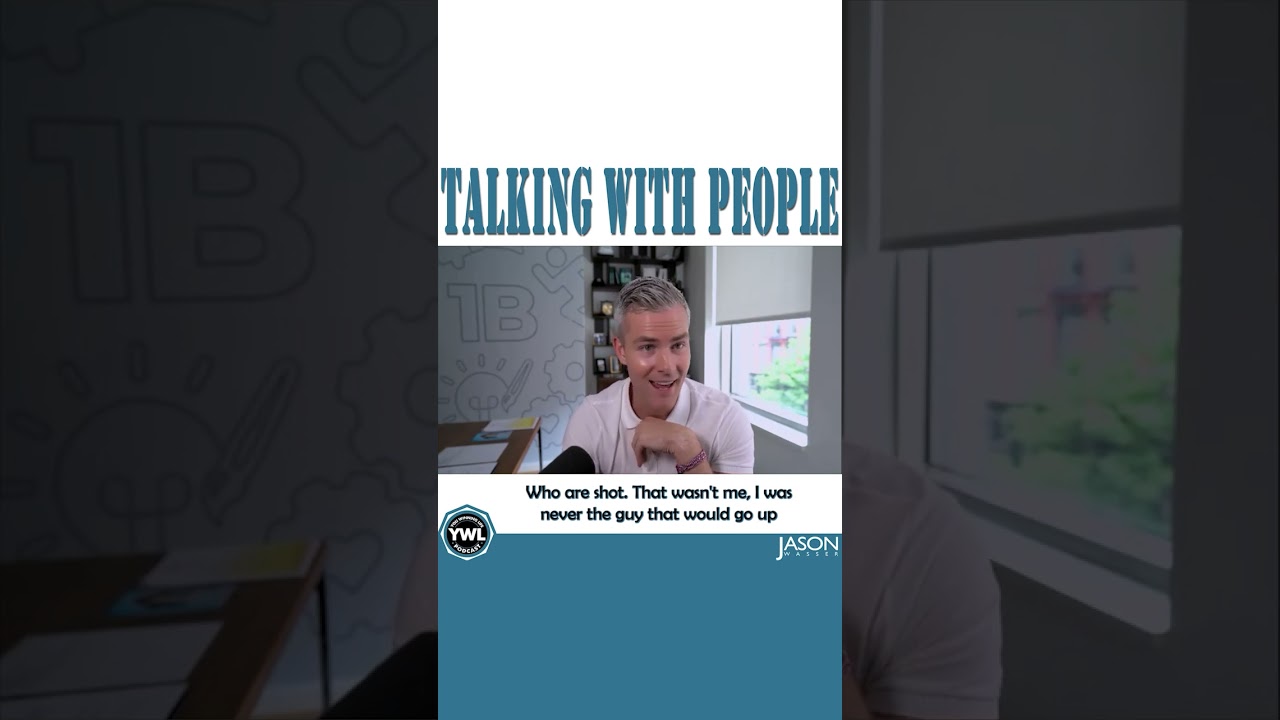
Ryan Serhant explains why the best conversationalists aren't the loudest or the quietest. They listen to understand before they speak, then contribute something real. He moved from being silent and nervous to actually engaging with people.
Chapters
I'd clarify actually and say talking with people. There's a lot of people who could talk at people and can talk to people, right? Those are the people that don't shut up. And then you hear them talking and they're talking, they're talking, and they're not connecting. They're not talking with anybody. It's just noise coming at somebody. Mm-hmm. Okay. That's one end of the spectrum. The other end of the spectrum is the people who don't talk, who are quiet, right? Who are shy. That, that, that was the me. I was never the guy that would go up to anybody and just talk, talk, talk, talk, talk. Hopefully something sticks and be, you know, talking to Susie over here. Um, I was a guy that went into the corner, looked at my phone. I was the nervous guy. I was like, I don't have anything to say. I don't even know what do I say. I don't know. I can't literally think of anything. And so I'd rather not say anything. Um, the middle of the spectrum where you want to be is the person who always has something to say of value and you talk with people, you listen to them, hear what they're saying in order to respond instead of just listening to them and hear what they're saying in order to reply, right?