
You Winning Life Ep. 106-Running a Bootstrapped Business with Sarah St. John
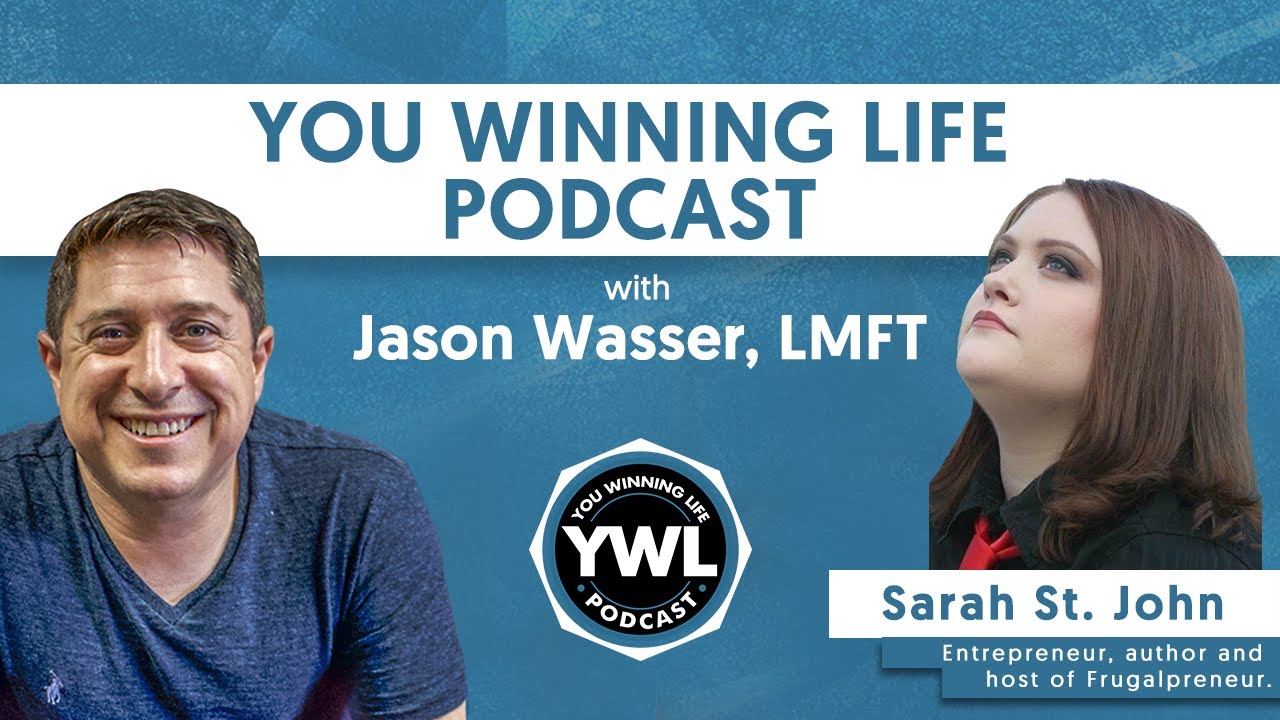
Sarah St. John, founder of podcast production agency Podseam and author of The Frugalpreneur, shares how she bootstrapped from a 2008 photography business into a thriving operation. She walks through free and cheap tools like Descript and SendFox, why owning your email list matters more than social media, and how to avoid chasing shiny objects when you're starting lean.
Chapters
All right, welcome back to the You Winning Life podcast. As you already know, I'm Jason Wasser, licensed marriage and family therapist, certified entrepreneur coach, and certified neuro-emotional technique practitioner. And what's so crazy, people ask me, like, I never discussed this on the podcast, but I wanted to kind of throw this out there, like, why do you do this mind-body stuff and you're also hanging out in the entrepreneur world? Like, it doesn't make sense, it doesn't line up. And I realized that at the end of the day, how you show up in one place is how you show up in every other place. So when I'm working with my businesses and my entrepreneurs, really the stuff that they're dealing with in their companies is really the same stuff they're navigating in their day-to-day life and their relationships. And a business is just another system, it's just another type of relationship. So when I use the NET, the integrative mind-body stuff, that's a tool and a technique, but the approach to helping solve problems in a system to help people go from stress to potential is really the focus on what I'm trying to do both in my practice as well in the podcast. And today's guest, Sarah St. John, is also an entrepreneur. She's also a podcaster. She's also a course creator. And someplace I haven't gone yet is an author. She's created several startups through her entrepreneurial career. She now has a podcast production agency called Podseam, and the podcast that she hosts is called The Frugalpreneur, which is all about building a business on a bootstrapped budget. So she helps people launch and manage your online business on a budget. Sarah, hey.
Hey, thanks so much for having me. Thanks for the intro. And that was interesting in the beginning to learn more about the connection there between what you do and entrepreneurship.
Yeah, it's something that I never thought in my, a little bit of my backstory is I ran from this idea of being a business owner and an entrepreneur. And my family owns a third generation furniture business and I'm the only child who doesn't work there. And now since I've come around a full loop over the last couple of years working with my entrepreneur community, and as I share with you, my, my, the program that I connected with is actually out of Dallas. And my coach lives in Dallas. I've involved my family in the program and brought them to the conferences and they've met the community. And I've now helped consult with this, with my family business, and helping them do some stuff and leverage some stuff that I'm helping with my other businesses do. So it's been a nice, interesting circle where I am able to help my family grow and evolve without having to be an employee. And the cool thing is, is trying to convince my— my sister totally gets this. My brother is like, no, you need to be here full-time. I'm like, no, I don't need to be here full-time to help you be consultants. My job is to help you hire the right people, not to do all this stuff ourselves, right? Which is really interesting because, right, you're talking about this frugalpreneur building a business on a bootstrap budget. And I know one of the things that you and I are probably going to get into is how and when do you know that you should start hiring the next person so you don't have to do everything? So let's start off, before we get there, talk to us a little bit about your journey. You know, one of the things that you and I were talking about pre-show was highlighting female entrepreneurs, and it's not done enough. And, you know, we have the Sarah Blakelys and all the, you know, all those, but, but, right, but it's not like, I feel like there's obviously an overabundance in this space of, of, of, right, of the male-female ratio. So I'd love to hear your journey specifically just into the entrepreneurial world, how you got there, but also how you've navigated the balance of being in this space, which is underrepresented, and how you, how you've been able to stand out and create your brand within that world.
Sure. Yeah. So I started my entrepreneurial journey back in 2008. I had had 6 different jobs that year, not at the same time, but throughout the course of the year, and realized that working for someone else wasn't my thing. I wanted to be my own boss. And so I started a photography business, but then I realized, well, I like taking photos of animals and architecture and landscapes. I didn't like taking photos of people. But that's where the money is. I was doing weddings and portraits. But the bigger issue than that was just the expense to maintain equipment and all that. And so I decided to try an online business model, but wasn't sure what I wanted to do. So I tried a bunch of different things like dropshipping, affiliate marketing, blogging. And it was in the course of that process that I discovered like all these free or really affordable tools and resources and software that you can use to run your business on a budget. And so I decided to write a book called Frugalpreneur. And that idea, just that word came to me. I was in a Dave Ramsey, what's it called, Financial Peace class. And he's talking about all these ways to save money and pay off debt. And I was thinking, you know, all these ideas are great, but what about making more money? To help with that. And for some reason, the word frugalpreneur came to me and then I was like, oh, I could write a book. And so in the book, I kind of talk about all the different online business models and the different software you can use to do it close to free or very affordably. And then while I was writing the book, I decided to launch a podcast also called Frugalpreneur to coincide with the book. But it was just going to be, you know, 10 episodes or something. And but I was getting more leverage and traction with the podcast than the book. So I kept the podcast going, and I was editing my own show, and people were complimenting me on that. So I was like, well, why not get paid to do it for other people if I enjoy it and I'm good at it? So then I created the podcast production agency, and I'm working on a podcasting course, and now I'm all in on podcasting. But it took, you know, a decade or so of doing this, that, and the other thing to finally figure out my niche or where I wanted to to stick, to stick. But, but yeah, so that's, that's where I am now.
So it sounds similar to what we were talking about in my intro of like, I have all these areas of things that I'm passionate about. And I remember a bunch of years ago, it was two offices ago that I had, I closed mine, I guess the middle of March. I mean, I stopped seeing clients in person in the middle of March 2020, as the pandemic started and moved out the end of June since that wasn't, you know, there's no way I'm going back in the middle of a pandemic. Previous office to that a couple years ago, one of my clients said to me, 'You should have a TV show, like a Dr. Phil meets whatever.' And I'm like, 'What are you talking about? You're crazy.' Like, you know, like, it's not, you know, I don't want to be a Dr. Drew or like, you know, whatever it is. And this was like probably around the time that I heard of a podcast, but never dived into anything about a podcast. I'm like, 'I know there's an app on my phone.' I had no clue what this whole phenomenon was. And this was like, right, I know they've been around for longer than that, but we're really talking about So I started mine 2 years ago, give or take, and this was 3 or 4 years, maybe 4 years before that. So this was like, you know, no one was doing anything at that point unless they were like the bigger, you know, whatever. And it wasn't until I got connected to this entrepreneurial community through my program in Dallas that 1 or 2 people, uh, especially 1 person in my accountability group was doing one that eventually became based on his book called You Need More Money. His name's Matt Manero. And, um, And I really obsessed over it. Like I listened to every single episode, even though I was in an accountability group with them during that time. And I started hearing all of these really cool names. And then I went to Grant Cardone's 10X Growth Conference in Vegas, and he was doing his book launch there. And he was doing it with Michael Burt and all the— there was a few other people. And these were names that I didn't know, but Coach Burt was one of the speakers that weekend. And then there was like these other people that were on the stage that were also invited to this book launch that was— and I'm like, oh my God, right? So that's the weekend I heard of Andy Frisella, Ed Mylett, Bradley, right? All of these people, Coach Michael Burt. And all of a sudden this podcast world opened up to me and it became this like fire hose of knowledge of information coupled onto this structured business program I was taking. And it took a while for it to marinate. And I'm like, oh yeah, I should be doing this.
Yeah. I mean, I didn't— so, okay, I'm, I'm a person who loves music and always listen to music. And like, I can't stand talk radio. And anytime a commercial comes on, I'm changing the channel. And so, you know, a few years ago when people were talking about podcasts and how I should listen to them, I was like, that doesn't really seem like something I'd be into. Well, then I started hearing about specific podcasts like Smart Passive Income and Entrepreneur on Fire. I was like, okay, those sound interesting to me. So I started listening to those and literally became an addict. I mean, obsessed and addicted. And now I subscribe to like 20 different podcasts. And I think that was probably like, oh, maybe like 3 years ago, something like that. And then I started my podcast probably like a year or something after that. So, I mean, I never envisioned listening to podcasts, let alone starting my own.
Well, it takes time to marinate. I think that's kind of like the concept when people talk about action steps and decision making. Right. We talked about the pre-contemplation, contemplation, and then action. Right. And I do think that like, there are so many people out there that you see probably in the Facebook groups and online. I want to start a podcast, but I don't know what I should do. Right. How many people I see over and over and over again, what topic should it be about? And it's like, well, there's two ways of going about this. If everybody has something to share, but like you said, to find your niche, right, is the most important thing. And it does start off with your story of what you went through to how you've arrived where you're at and where you want to go. In the future and using the podcast as a tool to get there, right? And some people think like, oh, I'm going to monetize it in the first month. 99% of you will never ever monetize a podcast. Most people actually, I think the research shows when after 8 to 10 episodes, people give up, right? So you'll see thousands and thousands and thousands of podcasts that only go up to episode 10. So you're in the rate you and I are in because you're up to what episode at this point, or that you're about to release?
I think it's almost 80, right? Somewhere in the high 70s, right?
And I'm a few ahead of you. And plus I have God knows company in the bag ready to release, right? So the fact that you and I are doing this with a long-term consistency shows a commitment to something at the other end that we know it's a tool, not the main headlining feature, right? And the funny thing is, is like, as we evolve in this, like you said, you mentioned Pat Flynn. I was at that conference, the Podcast Movement conference, and he gave a thing and like he has his fans already. And I remember one of my buddies is like, meet me after this thing. And I'm like, oh, I'm gonna go to this other thing you know, at the same time, another person speaking. And I went to meet him. And someone was walking around outside there. It was packed, standing room only, people in the hallway, on a side hallway from the conference room of where Pat was speaking, no clue who he was. And this guy's walking around just giving out his Superfans book. And I'm like, yeah, sure, I'll take it. So that was in August of 2019. I go away in the middle of the summer 2020 to take a week break to go visit family in Atlanta. To just decompress. And I bring his book with me. It took me a full year to pick up that book. And that took me until before that to start listening to his— his whole— my whole way up and down to Atlanta, driving the 11 hours, was his podcast only. But it took a year for it to be in front of my face. All right, Pat Flynn, I don't know what this is, right? Versus actually starting to absorb the data. And I feel like that's a common thing that we as entrepreneurs go through. We have this idea that's thrown in front of us, and then it has to pop up in the right place in the right time for us to realize that it's already a tool. Available to us.
Yeah, exactly. I actually have that book. It's actually in here right now. I have all his books and Russell Brunson's books. And yeah, I do actually, I give, do a giveaway every month. And it's funny that I do a, I give away a book every month. And it's funny you mentioned Superfans because that's the book I'm giving away this month.
That's awesome. And the cool thing is he also has an online program that matches each of his books that like go hand in hand with worksheets and all, right, which is, which is a brilliant leverageable tool that he integrates So many things. And the great thing about this community is you really can simply separate the really nice ones from the people who are not so nice. And he's genuinely one of the nice ones. He does so much for his community and connects so much with his community, which I love and respect so deeply. And I think that's something that, um, as I went through my entrepreneurial journey, I grew up in South Florida and I grew up in a pretty affluent community, but I was a scholarship kid. So I always saw people who were not nice people that also had money. Was a turnoff to me. So therefore money became a turnoff to me, which obviously affected how I ran my business for many years until I got into a community that saw doing good things, being a good person, having core values, and you're able to make a lot of good money. And the more money you make, the more you're able to help out your world.
Mm-hmm.
Never really came eye to eye with me until then. So it's nice to see people doing what you and I are trying to do, which is help other people, lift them up and be a support versus I'm in this to make the money. So I'm wondering, like, as you, as you journey through this, right, you, you started photography photography, right? You were doing all these service-based things, but you're talking about this frugal entrepreneur. What's one of the, um, how would I say, what's one of the limitations, the mindset limitations that you think that a new, a new entrepreneur, a new business person has to immediately let go of to get to the other side of the mountain that if they don't let go of will hold them back for their entire career and might even cause them to give up?
Uh, there's probably a few. I would say as far as on the monetary side would be the assumption that people have that it costs a lot of money to start a business. And of course, if you're doing like a retail or brick and mortar, then yeah, it will. But that's why I like the online business model, whether you're, you know, podcasting, blogging, or if you're a coach or consultant. I mean, there's a bunch of different ways to have an online business and, you know, very affordably. So I think when people, they get hung up on, well, how much is this going to cost? How much time is this going to take? And like, for podcasting specifically, I think people assume that you— I mean, they are basing it on, I guess, radio stations and broadcast stations and all their equipment. But really, to get started— I mean, I got started for under $100 with an ATR2100. It's like $60 or something like that. A USB, plug it right into your computer, and, um, and there's free software for editing like Audacity, and there's a bunch of different things you can do. I mean, really, all you have to pay for beyond the mic is the podcast hosting, but that is anywhere from like $5 to $20 a month, right? So it's very affordable, and I think people get hung up up on just their assumptions, or maybe what they're used to seeing or hearing. Or, and then like you were talking about with pod fading, where people, you know, do 7 to 10 episodes on average before they give up on it, I think the issue there isn't so much the recording, it's the post-production that people have an issue with, and that's what takes up all the time. And, and so that's basically why I created the Podcast Production Agency, because I actually enjoy that stuff, the post-production, but most people don't, or most people don't have time for it, so they just basically record their episode and send it to me and I take care of the rest. So yeah, I would say the expense is an obstacle. Time, I suppose, too, because I definitely recommend— like, if you have a full-time job, I recommend keeping your job until, you know, even as you launch your business or your side hustle, whatever you want to call it. Because even if you don't intend for that to become your full-time gig at some point, I think it's good to have a side hustle. Everybody probably should, just because, you know, what we saw with COVID you never know when you could lose your job or whatever. But even if you do are wanting to start a business full-time, I would recommend, of course, getting it to the point where it's matching your current income or at least paying your bills before, you know, jumping ship from your 9-to-5 or whatever. But yeah, so, but it can be difficult, of course, to manage time with Well, especially if you have a full-time job, right?
And I think that's one of the challenging things. So I remember, you know, the blessing that I had walking into Podcast Movement and already putting out 2 or 3 episodes was the person who was doing my buddy's podcast was working for him full-time and then went out to start his own, you know, social media video production company with the audio and video. And he was just getting started with that while still working with my friend, so he was getting new clients. I was able to get in at a very entry-level cost per month, which was cheaper than, right, a lot of other people have been doing this for a while. And I had them for about a year. And right, I was able to get the audio, the YouTube, the social media clips, right, to create everything for me. And it was wonderful. It was a commitment. It was a couple, you know, it was, it was a luxury car payment every month. But everything was done for me. All I had to do was do the recording and upload it to a Dropbox, and he would put it back in it, right. But I think that at a certain point, people— and I love talking about this topic, there is the point where, you know, as a professional, that when you're doing the thing that you're gifted at, that you're going to make more money than sitting there trying to edit it, trying to do your social media clips, trying to upload it, right, doing all the, all the things that needs to be done from soup to nuts, audio and video. If that's not your jam, if that's not your, you know, area of expertise, you do need to source that out. And I think that's right where you come in, in that regards, where you saw that, like, you love doing this side versus doing the photography and the other side, right? And you're able to bring that value, and that's an area of expertise for you.
Yeah. And currently I'm doing it all myself, though at a certain point I'll probably need to get like a VA or something to assist with that. Because I know earlier you had mentioned like, how do you know when, when you should hire some— hire help, basically. And I guess I think ultimately what it comes down to is the whole opportunity cost thing where Okay, so if you— the amount of time it takes you to do something that someone else could do for like $500 a month or whatever, let's just use that as an example. Like, is it costing you $500 in potential, you know, revenue from clients or whatever, you know?
So peace of mind also. I mean, you do have to know what your dollar amount is worth when it comes to any type of productive activity. But you also have to know what your free time is worth, your mental health is worth, going to exercise, being able to cook the foods that you want, right? Those have to be— and obviously there's always the budget and all those things we do have to take into consideration, especially early new starting entrepreneurs who don't have a couple thousand dollars a month to spend on, you know, social media, marketing, anything like that. But I do think based on like what you're saying, right, it is, I think when, right, the way I answer it is when someone asks me, and I had this with a, with a client I'm onboarding, a coach of her, they're in their second tech startup company. As I'm mapping out the next steps with them, they're like, well, when do you think I do need to hire the next person? I said, well, since you already asked me that question, you're already too late in hiring, which really means the day that you opened up your business.
Yeah, that's a good point, right?
So I, you know, I really do stress that, but I can't afford, I can't afford, I can't afford it. Yes, but there's somewhere, somewhere, someone somewhere in the world who can afford to do it at the dollar amount that makes sense to them and makes sense to you. You have to do your due diligence and your right experience, and it may not be, you know, this high-class whatever, or it really could be a high-class full-on production, right? And just find you're finding those people who you also, A, match with personality-wise, and B, you're getting the right quality, and how much do you want them to do? So like, one of the things that I would love to pick your brain on is the overproduction of podcasts. I think that in the 100 that I've recorded, I think I've maybe redone an intro for a person 3 times. I have never stopped and started an episode unless we had tech difficulties, like where they cut out, I cut out, whatever it may be. And I don't edit anything from the time I start, right, until the episode starts, until the episode ends. There's no ums and ahs. There's no space editing. There's no, oh, that was a shitty question. I need to ask a different question. If it gets awkward, it gets awkward because this is what real life conversations are. And I see the other side of like, I saw this last night, how many seconds between pauses is a real, is professional production quality? And someone's like, well, the industry standard is 1 second between.
Pauses.
And I'm like, I like the silence. It's a therapeutic silence.
Yeah, I think like, so for mine, I do— well, I take the file and then I put it in Descript, which what I love about Descript is it automatically transcribes it, though you do have to clean it up because it's not perfect, right? But with one click of the button, you can take out the ums and uhs and stuff like that. So because it's so quick and easy to do with Descript, I go ahead and do it, and then I remove like, you know, if there's a big— like, say someone coughs or sneezes or there's a big breath sound, you know, I take out those types of things. But as far as like spacing and pausing and redoing things, I mean, yeah, I don't, I don't do all that.
So funny, one of my, one of my, my neuro-emotional technique mentor and the founder, Dr. Walker, in the middle of our interview, whenever it was, 2 months ago, his dog started barking. And it was so funny because 2 minutes before that, he was talking about Pavlov's dog. And I'm like, oh my God, this is like perfect. And we were joking about it. I'm like, I'm like, like the timing could not have been better. And I worked it into the episode. But even if it was like, and it's always these things of like, right again, it's, it's, it's being as organic and as natural and bringing everything to you. I don't want any sounds. I don't want like whatever, a baby crying. This is life. We're also in the middle of a pandemic and we want to bring as much value as possible. And everybody knows that there's chaos going on in the world. If anybody truly is not going to listen to my episode because there was any of those things going on, then they probably aren't, you know, the right connection for us, right? So I think that like everybody's going to connect to what they connect to and what they're going to find the value in each thing. As you started finding these resources from this frugal perspective, what have been some of your absolute favorite entrepreneurial go-tos? Like if you're right, whether it's whatever, just drop some stuff that's been useful for you.
So for email marketing, I've discovered— well, you probably are familiar with this because we were talking about how AppSumo, but, um, SendFox, it's an actually, it's an AppSumo product, but it's free up to a certain number of subscribers. But what I love about it for a content creator, especially for like a blogger or a YouTuber or a podcaster, is you can put in your YouTube link or your RSS feed and it'll automatically generate a newsletter every week, you know, if you've put out a new episode. And so it saves a lot of time. So I really love SendFox. I really love everything that AppSumo does. They have KingSumo, which is how I do my giveaways. That's also free. And then Sumo is another thing that's like basically like on my website, for example, I have a thing, a header bar at the top. And then like if you try to exit the website, a pop-up comes up saying, hey, do you want a free download of my book or whatever? So, and that's free as well. So I love leveraging free. I mean, because a lot of these things, they have paid plans, but, and that's one thing I recommend when you're getting started, especially on a budget, is to go with something that, like, say you're weighing 2 or 3 different options, go with something that has a free plan. And then, you know, as you're, you know, for email marketing, for example, it's free up to however many subscribers, I think 1,000. Well, by the time you get past 1,000 subscribers, yeah, you'll have to pay a little bit, but you're probably making money at that point to cover that. And so, yeah, that's what I recommend doing is just starting on free plans. And then if you have to go up to a paid plan, well, that's probably a good thing because it indicates that your business is growing.
Right. And one of the great things about a company like AppSumo is that they have 60 days typically after you buy a product to get a full refund, no questions asked on everything, right? Any product you buy. So that company, like, it's been amazing over the last couple of years. It's funny that we were talking about about the platform that we're both using. And we both said the same platform for our online courses, because it's so hard to find something that you trust and has something standing behind it. And it's cool to have this company. I mean, they're brilliant, AppSumo, for what they're doing, right? To really streamline this. And there's also so many freebies that they give away. Like there's marketing worksheets, and there's like templates, and there's so many things that there's so many freebies as well as like very cheap lifetime deals on certain programs. That just makes it, especially when you're a new entrepreneur and you create your business and LLCs, the write-offs for growing the business help you with your taxes. Obviously you have to have income and stuff like that, and it can't just be all write-offs. Talk to your accountant about that, people. But there is, these are things that if you're going to invest in your company, know that there's already stable platforms and other businesses out there that are looking to help. Help growing and evolving entrepreneurs like an AppSumo and all the companies that they partner with to make sure that you're getting value because they don't want to look bad by having some company that completely screws you over. In fact, there was a company that offered a lifetime thing and then because of whatever they were doing, they reneged on it this past few months and they said, "If you want to stay with us, you have to upgrade." So I emailed them. So I emailed AppSumo and— or I emailed the company and said, "What's going on?" Like, "Well, we have whatever all the new things we're offering and the whatever excuse I gave. So I emailed AppSumo, they gave me store credit from 3 years ago on the price I paid for that program.
Oh wow.
So talk about, right, being a company to serve entrepreneurs that really stands behind, even if the company that they work with— and that's rare, I mean, that's got to be one out of God knows how many thousands they've worked with, right? So I think like that's the type of businesses that we want to be, that's the type of entrepreneurs we want to be, that we stand by who we partner with, we stand by who our pro— what our products are. We stand by our service. And, and I think that that's really the, the message of if you're in this entrepreneurial journey, you want to be in alignment with these type of places.
Yeah, I think AppSumo is a good place to go, like, if you're starting an online business and you're looking for certain types of specific types of software, because they have, like you said, lifetime deals where you might get something that at some point is going to be $99 a month or whatever but you can get it one-time fee for, you know, $49.79, whatever. And so I've, I've bought probably a handful of things on there and been pleased with it. And it does save a lot of money.
So sure. So we're in the beginning of 2021. And with everything going on in the platform creation platform space, we know that there's been, you know, with Twitter, with politicians being pulled off, with Facebook, right, TikTok having all of its issues with the legalities, is to chat, right? All those different things. I know that right now, to be able to own your data, to be able to own your information is incredibly important. And in fact, like the second week or so of December, I woke up and my Instagram was shut down, my main Instagram account. I don't post political stuff. I don't post COVID stuff. It was therapy and mindset and podcast stuff. And, you know, had a couple thousand followers and it was gone. And for the last— literally, I'm sending email after email and sending them thing where you take a picture, they show it to you with a code and still nothing. So I had to start over on a second backup, you know, under the You Winning Life one versus Jason Wasser LMFT 🎗️, which was my main one that had everything there. So now it's under You Winning Life, which existed, but I had nothing really. I had like maybe 30 or 40 posts on it. Right. So I'm starting all over from scratch again. But it just shows that content creation, you still have to own your stuff. You still have to have the backups, you still have to own. So talk to me a little bit about why having and creating a website is so important. Mm-hmm.
Yeah, so the, the problem is, you know, a lot of people think you just need to have a Facebook page or whatever to run your business, and it's important to have social media, but if you're only on social media, the problem, like you said, for no good reason it could get shut down, or even a good reason, whatever. Our algorithms are always changing, and like, as I understand it out with Facebook, unless you pay to boost your posts, only 1 or 2% of people are actually even seeing stuff.
Of the people that are your friend. Yeah, people, right. That's right. Of your friends, only a small percentage are seeing it. So your entire friends group isn't seeing your stuff. Yeah. So that's the algorithm change.
Yeah. So, and who knows, you know, in 10 years, will Facebook be around? I mean, MySpace like went under overnight. So I mean, you never know with these other platforms. So So while it's important to be on those platforms, you definitely need a website to, you know, as a way, a place for people to go to learn about you, to find your podcast, your blog posts. And then also as a way to capture emails, you know, offering a lead magnet on your website so you can start to grow your email list. An email list is another important thing you need to have because really the only two things that you own are your website and your email list. And so that's why that would be important. It's basically like owning land versus renting land is basically what you could think of it as.
Where would you, where would you recommend for people who wanted to start creating an email list? Like what they, what's like some of the steps involved? Because I know that's one of the things like you said, right? If you own an email, it's great. And I actually heard something last night. I was in a Clubhouse room and someone said that Clubhouse apparently, I don't know if this is confirmed or not, but someone said in a room that they're getting in trouble already because not when you sign up, because you know how like you have who people are signing up for the app, for the platform. And if you have them in your phone, their number, you can send them a free without losing your invites. So apparently what I'm hearing as of today, as of February 15th, 2021, is that Clubhouse has full access to your entire contact list on your phone.
Mm. Yeah, I guess that makes sense because otherwise how would they— yeah, they would need to versus matching number to number versus—
right. But you have to have their name. Name and number in your phone for them to get that free invite. So I wonder what's going on. We talk about like safety and talk about like, so we have someone was like, well, can you imagine Grant Cardone, like his phone? Because he's on there and he's using it like crazy. And Elena, his wife, is using like crazy. And everybody, all right, Elon Musk is now on there. So imagine like now, like these companies now have like, and it wasn't so clear in terms of service, like we will have access to every single person on your phone once you join up to this app, right? So it's like, talk about like, so getting into legal and ethical issues, but protection of data in 2021 and making sure you don't lose it. Like all the people I was in touch with now, I don't remember, right? The people that was hoping to get on my podcast or influencers that I was already in touch with and whatever is lost. And now I have to walk through the circle of adding them again, making sure they accept me, making sure they're going to get my message, right? Knowing that it's me. It was such a craziness, right? So yeah, so let's start with the email list. Like what's, what's some of the simple things? Is there a platform, a program you love to use for email collection that's easily embedded or is a link that you send people? Like, how would you go about doing that?
Yeah, so as far as email collection, I use Sumo, which is, um, so like if you go to my website, which is thesarahstjohn.com, you'll see a header bar. Actually, I don't think it shows up on the main— does it show up on the main page or just the other? Anyway, um, and it'll say, you know, if you want a free copy of my book, you know, enter your email. And so then that adds them to my email list because it integrates with my email platform, which is SendFox. And, uh, and then, you know, they get their PDF and then now they're on my list. And so the, the good thing about having an email list is you can contact these people anytime. Like, say you're having a promotion or you're just— there's something you learned or something you want to share versus, you know, social media, you put it out there and they're probably not even going to see it anyway. But the, the— I think the issue a lot of people have is, well, how do I even get these emails? Like, yeah, maybe once they go to my website, okay, now I have a lead magnet, but how are they even getting to my website? How are you know? And one thing you can do, of course, is to run Facebook ads to a lead magnet. But one way I've been able to grow my list very affordably is I use KingSumo. I keep coming back to all these AppSumo things. Anyway, KingSumo I use for my giveaways. And like I said, I give away a free book every month. And so what's nice about it is they put in their email, but then if they want a greater chance of winning or more entries, then they can— you can set it up to where they can do certain tasks to get a certain amount of points.
Like, like me on Facebook. Gamifying, right? It's gamifying everything.
Yeah. Yeah. And, and so one thing I did recently, I had someone on my show called Travis Brown. I don't know if you're familiar with him, but he does pod decks. They're like these decks of cards.
Oh, the questions. Yes.
Yeah. And so he was on my show, and I asked him, you know, prior to the show if I could get a deck from him to, to run a giveaway, and then I could, you know, offer it on the program and all that. And so he was on board with that. So I— one of my giveaways that month when his show went live was actually the complete, because it's 5 different decks. It was the complete deck. And I asked if he'd be willing to email his list to let them know, because they're already familiar with Pod Decks. So he emails his list to see, say, hey, you know, I was a guest on this show and she's giving away my Pod Decks and whatever. And so his email list then goes to my landing page, so to speak. Well, it's the KingSumo landing page. Page. And now I'm— now I get their email addresses. And so actually, one of the people on his list is who won, because of course my list is, you know, entering as well, right? But I was able to grow my email list quite a bit from him for, for this collaboration, which I love about entrepreneurship, and especially being on podcasts or having people on your show, is meeting people and the collaborations. Because through that that, you know, I was able to grow my, like, double it basically. And it was a very targeted audience because they're all into podcasting. And, you know, so I think when people are wondering about ways to grow their email lists and how do you get the traffic and how do you get people to even know about it, I mean, you could do ads, but you could also just collaborate with someone. Like, I mean, technically, so I'm giving away the Pat Flynn book this month. I mean, technically I could contact him and say, Hey, I'm giving away your book. But see, he's too big though. But if I had a smaller author that I was giving away their book, I could contact them and say, hey, I'm giving away your book. Would you be interested in emailing your list to say, hey, when, you know, but because even if they have the book, they may want to get that book for someone else. True. Right. And, and the thing about giveaways, one word of caution is that don't give away something that everybody and their dog wants, like an iPhone, for example, because everyone's going to sign up for that. And then as soon as the giveaway is over, they're going to drop off or, you know, put you in spam or something. So give away something that's relevant to your audience. And with me giving away a book every month, it's like an entrepreneurial type of book. The— for someone to give up their email address for the possibility of winning a $20 book. I mean, they're pretty, they're pretty targeted, like my niche audience.
Um, so, and some people just, you know, I have a secondary email address that's my old business address that I put all that stuff that goes directly to there. So if I want to sort through it, it's easy to do that, right?
Exactly.
Which you guys can do that on Gmail for free. So one of my friends still has an AOL address. I'm I'm like, really? Like, I mean, you're not paying for that still, right? That's why— that was the question number 2.
What, really?
Like, you have an AOL and you're— you make sure you're not getting charged for that still, right?
So, oh, so people actually had to pay for email back then?
Uh, I think after AOL stopped doing their membership thing, right, when it went free, I think there was a thing to keep your AOL email address. I think they were charging like a few dollars a month that people didn't know for a while. Oh yeah, that was just like— we went into like, instead of like $19 a month, it went to like $5 a month just have your email address when it got bought out by whatever and it became a free platform. But the email was, you know, I think that's what happened at the beginning until they also, you know, their business model sucked, which was like, they were the first. I mean, that was like the biggest, right? That was around the same time as MySpace, right? So talk about like business platforms of like, they were so big, but they weren't focused, right? They were trying to be everything that was everything, which really was what Facebook came in to be, right? The chat, the groups that I mean, obviously there's not You know, the instant messenger became Messenger, right? Groups— nothing was live, you know, except for videos. But it really did evolve. And like, you know, that's why the pivot is so important, especially as we're talking in the beginning of 2021 and having all these tools and having all your information.
Yeah, apparently— I don't know if you heard this, but Facebook is now working on something like Clubhouse. I don't know how you feel about that, but that kind of bums me out because I'm like, why does Facebook have to take everything? And I feel like like ruin it. I don't think it's going to be as successful.
I think it's going to be easy for those people who don't— and I put— and I posted this yesterday because I saw someone, one of my friends was talking to me about something, they found their password, uh, that they couldn't find for a year. And I'm like, I don't know, like, what's my— so it's like the excuse of like, I don't like technology, or technology isn't for me, or I'm scared of it, can't fly anymore. Because if you want to be a successful person at any level, running a business especially, you have to fully embrace technology. And if not, hire a person who's going to do that for you versus like running away from it. It's just, it's impossible in 2021. This is it. Like, we can't— we're not going back to the 1950s for many reasons, thank God. But like, right, but from a technological, we're not going back to the 1990s. Like, this is not— this is it, right? I think Gary Vaynerchuk said it perfectly. He said social media is Internet 2.0, right? The internet is social media. Yeah, right. That's the new, right, what you're engaging with. So if you're not leveraged, if you're not content creation, then you're consuming. And if you're consuming, you're not growing, you're not evolving. So I think that idea of having to take advantage of all this stuff, and you're not talking about crazy things like email lists, is not a crazy thing. It's just taking an hour to learn what you need to learn. If you don't have a person who's doing it, if you are doing your website yourself, I'm sure there's easy integration. And if you do have someone and it costs you $20 to have someone set it up for you, for your administrators, pay the person $20 so you can make your higher value money during that time.
Yeah, exactly.
And if not, find someone online to do it for you for $10, $15, $20 on Upwork or whatever it is. So, right, that's the, that's the thing.
Yeah, I used to be, so I used to have like, I think I tried them all. Well, I don't know that I ever had Squarespace, but I had Wix and Weebly because I loved how simple it was and drag and Drop and whatever. And, and WordPress was overwhelming to me, but then I was— there was all these specific plugins for WordPress that I really wanted and needed, like for example Simple Podcast Press, um, and there's a few others. I was like, but you can only— they're only WordPress. And so I was like, well, okay, but once you get the hang of WordPress, I mean, then it becomes easy and second nature. But, um, yeah, so yeah, it's a matter of— there's a learning curve there.
But there's a learning curve. And again, that's why it's either if you're an expert, like if something that you're passionate about, that you enjoy doing, that this is part of what you're doing for your clients. But if this is not someone's business, right, and it's going to take 20,000— all these courses, learn how to do your SEO. And it's like, that changes every 6 months. So the 2 months, it's going to take you up to a year, really, let's be honest, that most people are not going to do this, like in a very short period of time, time, you're already getting outdated information. And you've given up hours and hours and hours and hours of your time where you can just like go online and find someone to do this for you. And focus again, like I'm so religious about this, focus on your expertise. That is all right. It's, it's what do you love doing the most that also brings in you the most peace or the most income during that timeframe. And that's what you should be focusing on and everything else, leverage Yeah.
And that kind of reminds me of one problem that I've had. And I think a lot of entrepreneurs have this problem is spending so much time learning, whether it's through podcasts, books, courses, whatever, and you should learn, especially in the beginning, but if you're not implementing what you're learning, then it's pointless. And so at a certain point, you know, so right now I try to, for every hour I spend learning, I try to spend another hour implementing. And, or, you know, just like the whole just-in-time learning where you need to learn a specific thing. Soon. So okay, learn that, do the thing, and then, you know, move on. But I know one problem I've always had is just trying to learn it all, right?
And I know that's what I call the entrepreneurial ADD, the new shiny object. It's this new platform, it's this new toy, it's this— and I saw it. You were talking about Russell Brunson, who I think is probably the most brilliant salesman alive right now. At the 10X in Vegas, there was 10,000 people The man wasn't even done because he walked you through how to do a funnel, which obviously there's so much more on the back end. He showed you the front end. There's all the other stuff that you need to do to actually make it work and to get it in front of people. But the creating side he showed before he was even done, there was 3— I think he sold of the 10,000 people, I think he sold 4,000 people within an hour and a half at whatever price point. Let's say it was $1,000 times 4,000. Right. So, and he wasn't even done and there was people lined up and it was the thing and I'll be out there and you'll take a picture with me. Right. Which you had to wait. You got your ticket. And once you show that you bought the package and you get the free book, right. It was all the thing. You get the book and you get the audio book and you get the, right. His little MP3 player to listen to, to whatever it was, the cook, right. It was all the value adds, right. He basically created a verbal funnel and before he was even done, the stadium was emptying out to go sign up for this thing. Brilliance. But to do ClickFunnels is a full-time thing. It's not a 2-hour investment. And I want people to realize that, like, and I feel I'm not talking bad, like, he's brilliant, but you have to understand when people like listeners, it's not plug and play. It's not create a podcast and you're going to have people sponsoring you. It's not, I'm going to have a $100,000 business in 6 months. It's not anybody who's selling you that. It's not unless you're doing multimillion dollar deals right off the bat in a multimillion dollar industry and you've separated created yourself as an expert, it's not going to come overnight. There will be people who will, luckily.
But yeah, speaking of funnels right now, have you heard of GrooveFunnels?
No, talk to me. Tell me more as I sip my French press coffee.
So, uh, because earlier you were asking about like the different, you know, software and tools and whatnot, and especially free ones. So there is this new product called GrooveFunnels, and it's free actually, at least for right now. Um, I think you get— it's basically like a limited version of— I think you get like 3 websites and whatever. So it's a smaller version of their paid option, but still it's free. But it has like all these things built in, like email marketing, um, what else, membership sites. They're gonna work on like, uh, like a booking calendar and webinars, and it's going to be like this one-stop shop, all-inclusive thing. Um, and the guy who owns it is called Mike Filsaime, which apparently he, he's friends with Russell Brunson, and he helped— have you heard of Kartra? Yes. It's kind of another all-in-one um, so GrooveFunnels is kind of like Kartra, I guess, but it's going to be even— have even more features. But apparently Mike Filsaime, uh, helped start Kartra, and then whatever, now he's doing his own thing. So that's another free resource out there is GrooveFunnels if you want to build a free funnel or a free website even.
Yeah, so there's so many. That's the beautiful thing about this, right? As I go on it, right, immediately you have your things showing up in the background of like like, so it's literally like, for those of you who are like, are familiar with ClickFunnels, it's pretty much the same layout with a video that starts playing and your YouTube video, and then your offers and stuff like that. And this is great for all different types of people. Right? Here's one thing that I learned, and like, this blew me away. And no other therapist was doing this. Because people are like, oh, do you do sliding scale? Right? Which is a big thing in the health professional wellness world. Can you do sliding scale? And I said, absolutely. I don't— I do 30, 45, and 60-minute sessions, but I also have 90-minute and half-day sessions. And here's my price per hour, and if you want me for a half hour, it's 50% of that. So I don't do a sliding scale. I aggregate my time based on my fee. So you can get a lot out of me in 30 minutes in a partnership. You don't need a full therapeutic hour. So, right, this idea of people looking at the services they're doing and having a menu option right? It's kind of like when you go into Starbucks, you have this, you know, the tall, the grande, and the venti. Why do people always kind of set— like, there's a magic behind the numbers and why they pick those numbers that people are like, oh, it's really only 50 cents more to get a bigger size. And then the big— the next jump up is not that much more. It's less than, you know, could be less than 50 cents, right? So like, well, it's an extra buck, I might as well just go all the way up, right? It's a psychological game of I want to get the most value. But they're really realizing that behind the scenes, this is all all meant to fuck with your brain to get the most out of you as possible. Right. And that's, and with a funnel, the add-ons are right. You're getting into the, like, you know, if you buy this now, you're not going to miss out. Right. So you're heading into the FOMO, but you're also creating extra value at a price point that your clients are going to see. And I think that's again, the brilliance of what Russell has really reverse engineered in that regards and why funnels are cool. But the way that it's kind of become a little bit of a cult type of thing is also really interesting. But again, I'm not knocking him as a brilliant, brilliant entrepreneur, just, you know, you know, the community, right? You want to make sure you're getting someone who's really good at doing what you're doing. So let's wrap up with my question that I love asking, and it goes like this: if you had 2 minutes to meet with someone that you know you'll never see again, and they're standing in front of you as a new entrepreneur, what advice, what insight would you give them regardless of where they're at. But what would you say, like, this is what they absolutely completely need to know if I'm never going to meet with them or see them again? Oh, wow.
Well, I guess I would first ask them if they already know what it is they want to do. Um, and if not, I would ask them, well, what is something that you're good at, or something that people tell you you're good at, or what's a hobby of yours, and can you turn that into income, basically? Or can you teach other people how to do that thing? And then I, at that point, once we figured out if we could in 2 minutes what business model or what they're going to do, then I would just basically give them the initial steps, like the whole get a website, get an email list going, things of that nature. And I would warn them to like we were talking about earlier, to anytime they're learning something, to implement it. Don't spend all your time learning. And then to try to avoid shiny object syndrome, which is a common entrepreneurial problem, trying to get your hand in everything and try everything and get bored with something and you think of something else. Ooh, that seems like a good idea. But say you're doing 5, and this was a problem I had for many years. Say you're doing 5 different things, then you're only giving 20% of yourself to each thing. Versus 100% to one thing, and it makes a difference. So I, yeah, I guess I would just, um, try to determine what it is that they want to do, what they're good at, what they've been told they're good at, what they enjoy doing, how they can make money from that, uh, how to get started, at least online anyway, and the things to avoid.
Love it. So everybody who's been out there, especially in the entrepreneur space, so much good stuff, so much tactical stuff. I, my guess My guess is that this is gonna be an episode that those of you who wanna take some action steps and tactical stuff to grow some backend of your business, that you're gonna listen to this episode a couple times to make sure you get everything and take notes, especially if you're driving while listening to this. But Sarah St. James, St. John, excuse me, right? Entrepreneur, podcaster, online course creator, author. She has an agency, a podcast production agency called Podseam. The author of The Frugalpreneur and also podcast of that. And if you got anything, which I will be shocked if you didn't get anything from this today, then we have a— then if you got nothing from this episode, please send me a message on Instagram so we can have a conversation and see what I'm doing wrong. So, right, because, you know, because it can't be you, the listener, right? But please, you know, if you think anybody, anybody you know would benefit from this or any other episode, please please forward that on to them. And if you can take 2 minutes to go on to iTunes, specifically on the podcast app on your phone or on iTunes Podcasts, and leave us a starred and written review, not only does it tell us what we're doing well and that you're enjoying and getting value, but it also helps us get in front of other listeners as well. Sarah, this was awesome.
Well, thanks so much for having me. I appreciate it.
All right, y'all. We'll see you next episode. And again, if you have any other questions, you can reach out to Sarah. Sarah, where can they find you?
Actually, I give away all 3 of my books for free, the PDF version, at thesarahstjohn.com/free. That's Sarah with an H and then S-T-J-O-H-N. And then yeah, the podcast production agency is Podseam, and I'm everywhere on social @thesarahstjohn, or if you're on Clubhouse, it's @sarahstjohn.
There you go. So, right, 3 free books only in exchange for an email address. Right, exactly. Highly worth it. Doesn't cost anybody anything. So, and you can always, right, you can always get yourself off if you don't, right? But there are tons and tons of really good stuff. Again, thank you, Sarah. I really, really, really enjoyed spending time with you today.
Well, I did too. Thanks so much.
More from Jason


Howard Behar Starbucks Former International President Heartwarming Story #kindness #shorts





