
You Winning Life Podcast Ep.187: Be Frictionless w/Ryan Chute
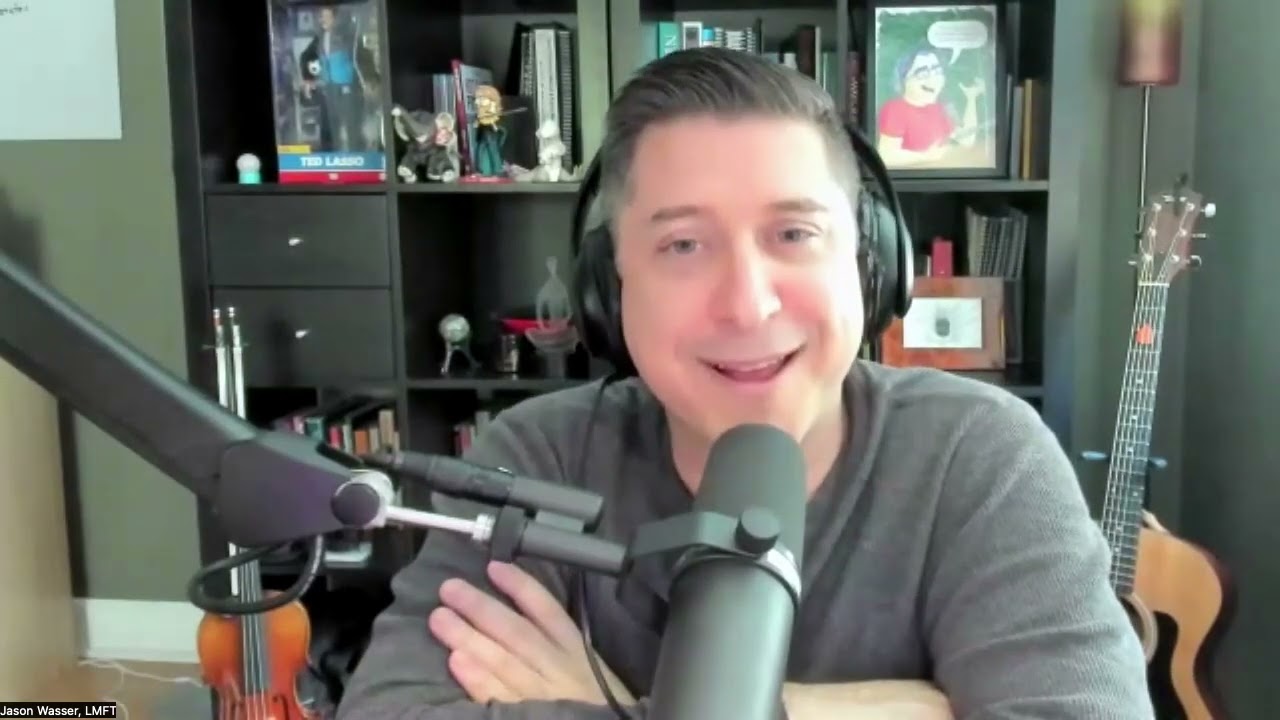
In this episode of the You Winning Life podcast, therapist and host Jason Wasser, LMFT, interviews Ryan Chute, partner at Wizard of Ads. The conversation weaves together personal narratives, business philosophy, and therapeutic insights to explore how to move from a transactional, survival‑mode mindset to a relational, frictionless way of living and leading. Ryan recounts his journey from rugged, performance‑pay retail and automotive sales to discovering Roy H. Williams’ Wizard Academy, which shifted his focus from pure transactions to the physics of communication, values, and gratitude. Both speakers discuss the importance of distinguishing values (actions taken for others’ benefit) from beliefs (subjective opinions), and how true growth requires healing underlying fear, shame, and ego. They connect these ideas to therapy practice, emphasizing fit‑based client intake, the cost of friction in client‑therapist interactions, and the role of negotiation in personal relationships. The episode also covers entrepreneurial mindset as accountability for outcomes, the OODA loop as a decision‑making framework, and the power of gratitude as a core driver of happiness. Throughout, Ryan and Jason share practical tactics—micro‑nudges, reframing objections, using value‑over‑cost lenses, and applying negotiation principles from Chris Voss—to reduce friction in business, relationships, and personal growth. The dialogue culminates in a concise actionable takeaway: continuously ask how to help people win in a trustworthy, grateful manner, and keep the life‑flywheel running with minimal resistance. Listeners are directed to Ryan’s website and social channels for further resources.
Chapters
Hey everybody, once again, welcome back to another You Winning Life podcast. Today's episode is with Ryan Schutt. He is the wizard of ads, and having grown up in different sales and business and marketing positions, he found all of the struggles, the pain point, the disingenuousness, the gimmicks, the wheeling and dealing just didn't sit well with him and found a way to have some personal growth and insight that led him to becoming such an incredible human. You're, you're gonna be, uh, just as excited as I was to just have this conversation. This is on the flip side. I'm doing the intro after the, after the episode, but I just wanna tell you just how wonderful the following conversation was as we're gonna get into the concept of, uh, shifting from transactional relationships, uh, you know, challenging the concept of servant leadership, how to become more frictionless in all aspects of your life, as well as challenging the ideas of what the difference is between a value and a belief. And we spent some good time on how true growth can only come from true healing. So really look forward to hearing your feedback. Please, please, please, please reach right directly out to me. You know how to follow me, Jason Wasser LMFT 🎗️ on Instagram. Um, you can go right to my website, jason@thefamilyroomsfl.com, which is my private practice website. And if you're interested in any, uh, therapy in the states that I'm licensed in or some coaching, uh, for some other aspects of life that would not be therapeutic or partnering in, in collaboration with a therapist, uh, we do have some spots coming available starting in 2025, uh, to take on some new collaborations. So I would love to hear from you if you're interested in that. And also, the project I'm working on is that if you are in the medical field and you are listening to this and you'd like to learn how to become a podcaster yourself, I'm gonna be creating a workshop for early first quarter 2025. So if you're interested in that, please go to my Linktree on my Instagram profile and there's a signup form for more information as that comes together, so you can be on the email list for that. And As always, thank you so much for, for listening. And, uh, here's Ryan.
Hey, thanks for having me. I really appreciate it.
Yeah, so, so as, as we, we were discussing, you know, we— I always want to make this different than any other things that you're putting out there, uh, other interviews that you've done. But I also don't want to make it difficult, more difficult for the listeners to have to go down a rabbit hole to like piece some things together. Um, but right now you're wearing a polo shirt that says The Wizard of Ads. Got it. And that's presently a company that you are the co-owner, co-founder?
I'm a partner there.
Partner, partner of that. And, uh, you got there because of an interesting journey. So I would love for you just to share a little bit of that trajectory and a little bit about what Wizard of Ads is, is doing, hoping to accomplish, and, and achieving. And then we have some really, really awesome other topics too. To delve into, but let's start there.
Yeah, no, absolutely. You know, back in 2015, I turned 40 years old and I thought, I've got a lot of this stuff kind of figured out. I hadn't achieved what I wanted to achieve in my entrepreneurial endeavors and career. Still haven't today, probably won't before I die, but by George, I'm gonna keep shooting for those stars. And I was really coming from a transactional world. I grew up in retail, the gulags of retail as I fought it out, the good fight, and in furniture retail, then automotive, learned how to be a really good salesperson, always lived in performance pay and, you know, only ate what I killed kind of mentality. So this very kind of rugged individualism that had my ego just tickled pink with how awesome I told myself I was. And A lot of it was just toxic workplaces and bad bosses and, um, you know, weaponized fear, shame, and guilt, and all of the grossest things that, that you grow accustomed to. And I was mirroring that. I was, I was just straight up like, that's what you're supposed to do, so that's what I did. And as, as my ambitions put me into management positions, I was really good. I was a really good manager. Operationally, task orientation, getting things done, not a problem. Leadership, I was terrible. It was embarrassing as I look back at those things. And it's a vulnerable thing to think about now because in 2015, I went to the Wizard Academy where I met Roy Williams. Roy H. Williams is a New York Times bestseller of the trilogy, Wizard of Ads trilogy. And he opened my eyes to a universe frankly, uh, something that you talk about, you hear about the big brands and Apple and McDonald's and all these kind of Coca-Cola, just like, wow, big stuff, kind of like that seems like so not realistic, you know, maybe as some sort of peon that works within the cogs, but never as the, the thing that you could actually do yourself. And he didn't approach it from here's what Apple did and here's what all these other companies did and here's why they're geniuses. He approached it from the laws of nature. It's like, here's the physics of communication, like a third gravitating body. Here's, um, here's the truth about a profound truth. Sometimes the opposite of a profound truth is an equally profound truth. And how do we reconcile that, baby? Well, yeah, you know, Neil's—
the counterintuitive question.
The counterintuitive question. And, and these are the things that he had started having a struggle with and and had been doing for many, many years, as I came to find out. 2 years later, he invited me to become a partner after a lot of conversations, communications, me going to his classes over and over again like a, like a lost puppy, because I'd realized that I was living in this transactional, transactional space and I'd make just, just obnoxious amounts of money. There was no question about, about the success that came from those transactional kind of tactics and strategies. But it was very abundantly clear to me that it's way more than, than transactional. There is so much more that, that lives in the world of the relational world, the thriving world, the abundant world. And frankly, most people don't even realize, like I didn't realize in 2015, that not only is there this abundant world, this world of thriving, keeping up with the Joneses, but there's a whole other world, a universe that sits above it. In the self-esteem and the self-actualization that comes from letting go of the rugged individualism of a sturdy white man with intelligence who's able to get things done and stepping into a universe of the only place we can go to really make this that much more powerful is together. True leader can't lead people who aren't going to follow him. And if you're hoping to be the leader, whether you're of title a leader or not, it's not authority that we're talking about. It's the fact that people will buy in and follow you that matters for us to go collectively together and build something bigger than ourselves. By definition, it has to be more than just you doing it.
Right.
Right. And when I started to realize this, I got excited and I really just did what I do, and that's to go deep and wide and figure this whole thing out and figure out how I can step away from the friction, from the transactional mindsets and frankly the wiring and the chemistry, the biology of my brain and body that says I'm in survival mode or thriving mode because If I don't address that, then I'm never actually going to do anything but, you know, put Band-Aids on symptoms and never actually relieve the pain and move towards that bigger, better, stronger, accelerated, profitable growth. Profitable being in whatever the definition of success is for different people. Profitable in relationships, you know, as rich, deep, meaningful connections. Money, success, connection, all of the things that actually matter, not just, you know, appeasing the shareholders.
It sounds so applicable to my world as a therapist. And, um, I shared with you before that I had a new client call, and right, the media, like, well, and how much do you charge per hour? And I'm like, well, I could share that with you, but it may not matter if I'm $500 an hour or $5 an hour if we're not the right fit for each other. But let me make sure that you're the right fit for my practice first and that Can I help you?
Mm-hmm.
And so many people are just not used to that question. Right, right. I think you're gonna be able to help me cuz I'm calling you and you're the first person that called me back or answered the phone cuz that's an issue with therapists that I feel like they don't have their systems in place and they're not answering calls and they're not answering emails and they're not calling clients back. And I can tell you how big my conversion rate is of being the guy that sneaks in that call in between session or emailing and saying, I got your email, I will be calling you back, or you can call me between this time and I will answer the phone, right? And just letting them know. And my conversion rates on that have gone through the roof compared to colleagues of mine. Like, I don't know where the clients are. I'm like, because you're not calling them back. So, but the idea of this friction, this idea of transaction is you provide a service, you get paid for it. If you provide it better, quicker, faster, you get paid more. If it has the value, perceived value, I'll pay even more. I think people— you're right, I think people are done with that. And I've even seen right in some of your, your videos that you put up about like the truck and, you know, why are people willing to pay $60,000 for, for a basic truck versus like a $30,000, right? And can it help me get there quicker, faster, more efficiently, and more comfortably, right? It's, it's the value over cost. Paradigm, and relationships are finally catching up with that, right? I think that people have been paying too much for relationships. In other words, it's cost them too much, which is why they eventually come to therapy. Yep, right? When they should have been doing it years ago. But right now they're coming like, oh, I'm thinking about getting divorced, or I'm realizing now my spouse is abusive, or I'm realizing that I need a better relationship with my parents. Okay. Well, you've known this, but why now, right? Why today, right? Why not next month? Why aren't you coming? Why not wait till after the holidays? As we're the beginning of December, right? So I feel like you— what you're saying is, is so spot on. And people don't realize, um, what I didn't realize for so many years. I ran away from being an entrepreneur. I was just a guy who ran away from a third-generation family furniture business. So my family's still in it. My brother and sister are still in there. They're doing great, and it's a great business, high-end American and Italian furniture. But I ran away that mindset of being an entrepreneur until I realized that I can't be an amazing therapist without being entrepreneurial.
Right, right. Entrepreneurship is a— is absolutely a mindset, and not everyone should be an entrepreneur because they're technically sound, right? I frankly, I shouldn't have been a leader or put into a leadership position until I was taught how to be a leader and Sometimes you have to figure it out, and sometimes that's just your path, that's your story, and those are all okay. Yeah, but your story brought us— you brought me to, to our conversation, and, and somebody listening to this podcast story brought them to this, this conversation that we're having. And now it's time for you to reflect on your subconscious and self-conscious and, and think, am I being all of the person that I can be? And what are some both tactical ways that I can just smooth out the rough bits that are causing friction and resistance from people? And what are the things that are, are, you know, things to celebrate about me that actually grease the wheels, so to speak?
Right. Yeah. And I see this like even this platform of having a podcast, I by default am— what people who know me are always shocked when I say this— and I'm super shy, and I'm actually more an introvert than an extrovert. But when I go out and I'm like, you know, in certain situations I'll talk to everybody, but also like being in certain situations like, I don't know if I want to talk to somebody, I feel uncomfortable. But this podcast in a way has allowed me, right, to get in front of people that I would never have the opportunity of meeting.
Yeah.
But instead of it being like, hey, I'd like to pick your brain for some advice, It's how can it be mutually beneficial for someone who has a business, someone who has a book in the making or already has a book out or a course or whatever that I feel in alignment with that other people can benefit to. So it's a good-for-all paradigm, and that gives the other person more investment in wanting to spend time with me. But I'm getting the same information, but it feels good for both people. It doesn't feel like I'm taking from an ask.
That's it, right? And, you know, one of my mentors is Lisa Nichols, and she says, when I'm learning, we're all learning, or when you're learning, I'm teaching to one, I'm teaching to all. All of these narratives are true in podcasts. That's one of the real charms of podcasting is that these shared experiences that we're having right now are almost a voyeuristic look into a conversation between two people who've invested their genius into similar things with slightly different angles of approach, which is what makes this whole darn thing quite interesting, but also just allows for perspective. I don't know how many times in the last 6, 7 years, 8 years with Roy, um, and with people that he's introduced to me and so forth, where somebody has said something just a little bit differently and it connected, and I was Whoa, holy cow, like life-changing transformational moments. Um, and that's a big deal because at the end of the day, we need sometimes just need to rattle our own cages to, to get the dust off and start pointing in the right direction.
Yeah, yeah, I just got back. So we're in the— it's December 4th as we're recording this, and 2 weeks ago I was in Dallas, Texas, and visiting my mentor, uh, Rick Sapio. Um, Capital Venture, but created a program called Business Finishing School, um, which paid, you know, training program, accountability for business owners on how to actually truly be, uh, successful entrepreneurs. And it wasn't about the dollar, it was all led through core values and adding value to your community, becoming a better human. And so that was what really made me fall in love with it. Um, but unfortunately, he has pancreatic cancer at 57 years old, and I flew out in July for— took 1 or 2 days to see him then, and It's now, unfortunately, you know, as we're listening to this, it's, you know, it's pancreatic cancer. It's how long, not, you know, how long can you fight it type of situation. And it was so humbling to be, you know, a community of probably thousands of people that have been involved in this community, but to be able to just show up while going from treatment to treatment and it just being a holding space after all of the impact and, and shifts I've had in my life from a mentor that really did— in addition to just being a therapist and then all the integrative and alternative medicine stuff— that this program was the other big topping on my personal professional shifts. To just be able to hold someone's hand while they're getting acupuncture needles in them because they're just skin and bones and everything hurts so badly. Yeah. From someone who's, you know, where at the end of the day it's just the relationship and the gratitude for having that impact on our lives, right? Like you're saying, you're having with— have this with your mentor and now you've become a partner with your mentor. And not everybody gets— I, I don't wanna, I don't wanna pass up the opportunity to just say how freaking cool you have— that is. That you have that opportunity. And he's seen that, and he saw that value in you and that awesomeness in you.
Well, and through the transactional nature of, of, of, of who I was, he saw through the, the intention, which is, I think, what Roy is astoundingly good at, is, is, you know, understanding, um, the human condition, um, and, and the people that he introduced into my life that furthered that that narrative in conversation. You know, I have rules of engagement, you know, that I truly believe based off of a lot of study are true to businesses that are very true to people in general. It's like business and life when I think of friction, because as I started making the bridge between advertising and sales, which was the first place I was in my head with Roy as he was going, This is the rules of advertising and this is how you get people to retain and recall and delight and like you. And this is the chemistry of loyalty. I realized, holy cow, that's true in sales too. Oh, holy cow, that's true in training too. Oh, holy cow, that's true in my relationships with my wife and my kid and all of these things. And when I started getting those initial realizations, I'm like, we're really talking about some very, very fantastical things that really boil down to a very simple set of communication rules, these first principle rules of communication that really do cut away friction in a person's life at all levels if you practice it and allow it and allow yourself to be vulnerable enough to, to step into those. And in that, in that three Try this on my wrist. I wear them every day. Helping people win in a trustworthy and grateful manner. When I did the research around everybody's core values, mission statements, purpose, vision, blah, blah, blah, blah, blah, all the nonsense that we've seen for hundreds of years about the things that gurus have turned this mess into, it boiled down to some pretty core things. And the core things were all of these different ways of saying it boiled down to 3 buckets. Rather helping people win— they're not mutually exclusive— but helping people win, being worthy of trust, and living gratefully. And I'll tell you that the grateful part was the outlier that I did not expect. And a friend of mine, an author, a consultant in the gratitude and leadership space, Zeef Warren, wrote a book called Surviving to Thriving: The 10 Laws of Grateful Leadership. And he and I had many discussions about it, and, and he truly had me, um, better understand the power of gratitude. And today I, I deeply believe that gratitude is the ultimate pursuit of happiness, right? It is not money, it is not things. Can you buy something and be happy? Yes, but it's not the thing that made you happy, it's the gratitude that you could buy that thing and the gratitude you have for interacting with that thing. So there's this misnomer of all of these things that, you know, money can't buy happiness. Yeah, actually, scientifically it's been proven that it can, but not in the way you think, right? It's not a direct line correlation. The stopgap is the thing that made you happy was the ability that you— that's a symbol of your ability to have thrived in this world, to have shown the world that you were autonomous, that you mastered something and that you lived a life of purpose that got you to where you are today. You're feeding the identity. So ultimately, this all lives around identity. The whole core motivation of the entire universe lives around our individual identities and how they fit against and in comparison and proximity to the ones we love and the bigger tribes that we're a part of.
Love it. It sounds like a, a really good reframe of what mastery is in self-mastery, right? And, you know, reflecting on my career of a therapist and like, you know, the whole thing is like, well, what do you specialize in? And, and, and you hit it on the head where you said, you know, is this gonna have, you know, this impact and helping people get more of what they want, right, in a healthy way? Is also going back to the challenge of how do they decide that they think that's going to be healthy for them to get that paradigm, right? But even being able to ask that question of like, how did you decide that that's what you want, right? Well, help me, you know, and help me understand the motivations, right? Like you said about that. And that's usually where a lot of the friction comes in because people are talking about what they think they want, but yet their life does have so much resistance and friction about those things, that there must be something in there in their organic belief systems, their rules, their assumptions, their expectations, whatever, intergenerational themes that needs to be sifted and sorted through to truly get to having clarity and certainty of the direction they need to be heading in order to have a frictionless experience.
But, and I think it really comes down to the, you know, there's two times that you ask, you know, you start reflecting on these things. One is when you're in survival mode and you're going, why does it have to be so damn hard all the time, right? Why, why is it happening to me? Why is this universe conspiring against me? And then there's the, the point where you get into a more what Abraham Maslow and his hierarchy of needs would be called belonging, right? That, that middle section, that's, that's the, you know, what I call the third layer or the first level of, of, of, um, thriving. And ultimately in that thriving mode, you're like, now that I've got this, where can I go from here? Is that thing that I thought was a pie-in-the-sky imaginary unicorn opportunity actually a real thing for me, whatever that means for me. Now, I might not be Elon Musk, but I might work with Elon Musk one day because we're doing big things that matter together. And I've abandoned my ego back in survival mode, right? So it really starts with, as Abraham Maslow would say, 65% of people are either trying to get into the third category of belonging or stay in the third category of belonging, which is what they perceive as Ma, I made it, right? Keeping up with the Joneses. Yeah, the bigger TV, the nicer car, the prettier wife, the cuter kids. And for the love of God, let's just keep this whole house of cards together, right?
And then, and then it's reactive mode. And I, and I see that a lot of— and that's, that's again going back to the beauty of the psychology of entrepreneurship, of how much self-actualization is, is embedded if done in the healthy way. And of course, right, our, our conversation is about how to make it healthy versus, like you said, just the, uh, the sales guru type of, you know, mentality of everybody needs your product and everyone— no, not everybody needs it, right, type of thing, right? Sell or be sold, right, type of mentality.
Yeah, David Goggins is somebody that you'd brought up that made me think exactly of that. When, when you think of David Goggins, he's like, it's all like raw, like beast mode all the time. All the time. Like, and that's the persona that he has to put on, which it's got to be exhausting for the person. But equally as much, one of the things that I learned from the book Tribal Leadership, which was really kind of the roadmap for Zappos and the huge success that they became with Tony Hsieh, bless his heart and rest in peace. It was very much about you have to meet people where they're at. And one of the things that I've come to realize is the first person you need to meet in survival mode is yourself. And yourself isn't telling you the truth. And there's a guy in a committee, and he's the chairman of the board, and that guy's name is the ego, and he's telling you all kinds of stupid shit that's not real. Like, it's like all kinds of nonsense. And you— it sounds believable though because he's one hell of a salesperson. Fuck yeah, he's pretty believable because he's you, right? It's like all the— it's like, man, that sounds like pretty darn reasonable. I am kind— that guy is trying to steal my wife. That, that guy stole that sale from me.
Like, ego. And then he got a Scooby-Doo, and you're like, oh, it's Old Man Winters, you know?
Exactly, exactly.
So when I almost got away with it too, you meddling kids, right? So that's, that's, that's the way you have to look at it.
This is exactly it. When Fred unmasks it and it's Fred, then you realize, aha, I've gotten to the root, right? That's the whole thing. I love the Scooby-Doo reference. That's just awesome. I might have to borrow that one from you.
Go for it.
That's the whole thing though, right? Like when we start to self-reflect and dig past the subconscious and really start stirring around in what it is that's making us think and act that way and then making a decision of, yeah, that's nonsense and this is actually healthier, thriving, abundant, profitable, mentally, physically healthy, happy, right? And we just have these simple constructs that we put together that allow us and give us our own permission to step forward. Then we can serve others as leaders. It doesn't matter if you're a boss or not. It's, it's, it's being a, being a leader in life is such a big deal.
Yeah, no, I, I see this in as my own journey, right? Like I ran away from this whole owning a business. Like, I was a therapist and I'm a healer. I don't own a business, right? That whole— right, I completely rejected— I grew up in South Florida. I was a scholarship kid, right? I had kids in my class who are nice kids, but they were getting their, you know, Land Rover at 16 years old or their sports car, right? And, um, and meanwhile, I'm the scholarship kid. And I had just had this whole false belief about money. But it was, you know, again, it was that transactional, right, experience until I started meeting people who are radically, radically successful. Successful financially, who also were like, wow, you're also a good person. You're not perfect. You're radically human, right? You still go to couples counseling, or you still have to go to therapy, or you still have a fight with somebody in your family. But, but it's that self-awareness. And the— I think what, what really shifted it for me the most, and I do see this in my world too, and I see it in other, you know, any of the helping professions, is how even those who are helping still don't take full accountability for their own outcomes. And I think when I learned that concept through this program, it's not unique to this program, but it was something that was really drilled into us is that Rick would say an entrepreneur is a person who's entirely accountable for all of their outcomes. Then you're an entrepreneur, right? And that's that mindset. Again, it doesn't mean you have to own a business, but if you're a family and you want to decide how your children are being raised and what food you're feeding them and who they're spending time with and where you're going on vacation and what movies you're seeing, By deciding the core values around that and then holding accountable to that, that's being entrepreneurial. And that was his ultimate mindset about like, it's not about owning a 7 or 8-figure business. No, that can help. I mean, that's good. You should do that too if you can, right? But, but it's the accountability of outcomes.
I think there's a, there's a trap that is, that is in that, the, the pitfall that is often in the entrepreneurial or leadership mindset is, is in the blind spot. It's in a spot you don't see it. It's got nice little leaves covering over top of it, and there's spikes in underneath, and you're gonna, you're gonna, you're gonna get hurt. And, and that trap is two things. One is survival mode thinking. The ego is constantly tugging you back down saying, hey, man, that, that crazy stuff going on, you got to watch that stuff, right? They're trying to get your thing. You're, you're better than that. You deserve better. And Do you, or like, are you being a bit precious?
Right, it's cluttering, it's clearing through all that.
It's clearing through that. The other thing is that if we're not careful, what we believe our values are actually just beliefs. And there's a crazy trap that waters down what we fix a lot of the time, that Wizard of Oz. And not because we're smarter than anyone else, but because we've come to recognize one thing. And that one thing is, is that beliefs are worthless. Beliefs as a whole are interchangeable, right? When, when you think about justice and mercy, injustice, it really depends on which side of the table you're sitting on, right? And mercy is the same story. It just depends on which side of the table you're sitting on as to what you want. But they're both profoundly true statements. If I'm the accused murderer, I want mercy. And if I'm the victim's family, I want justice. But what happens when the victim's family murders the murderer?
Now what?
They want mercy, right? So completely okay and natural. This is the world we live in of duality. We can't not be a part of this in our universe. The difference being that value is about doing what is inconvenient for you for the benefit of somebody else. Inconvenient in whatever way you define that. In business, that could be staying open late even though there might not be any calls to go out to. It, uh, in, uh, in your life's, uh, family life, it might be listening and, and opening up dialogue that is dangerous and/or scary for you. Because, you know, there may be repercussion from that because the other person's not necessarily fitting in that same wavelength at the time. They're going to weaponize that later. So there are these things. I grew up in a weaponized fear, shame, and guilt space. Do you think I'm conditioned to be sensitive to weaponized fear, shame, and guilt? I think everything is weaponized, right? So my wiring is designed for that, and super irritating to my wife, right? Because I do get triggered, and I thought that was a silly word for a long time, but I realized that's actually what's happening there. And as a 49-year-old white man in a very privileged position, I'm— what I thought were rights are, are actually really just my entitlements, right? So if you want to deliver value, you have to ask yourself, what am I willing to sacrifice? What am I willing to struggle with for the benefit of somebody else? Because true honor lives with you actually accepting the self-inflicted wound, the self-consequence you put in place, and, and that value in your, in your family life and in your business. Right? It, it's all the same value. People value you as an individual or a brand when you do something of value, which means that you did a sacrifice or a consequence or a, a sacrifice or a struggle, right? When you could have done the easy thing and just made it better for you, but that's what the customer is looking for.
Yeah.
Roy, just yesterday said, Ryan, do you want to know what the real difference and real definition of value is? And I'm like, from you, Roy, I want to know anything that you have to say. And he goes, value is the perceived value of whatever it is, the perceived worth of whatever it is that you're selling, offering, getting buy-in from, in excess of the pay that you have to send out. Now, the pay could be money, energy, or time, but if that pay is less than the value the customer sees it good value. And when they see it the other way around, that they're paying too much money, energy, or time for what you're proposing, that's a bad value. What do you want to be? You want to be such an outrageous value without such an expense to your operation internally or as a brand that you can't continue on to deliver that consistently, sustainably for the inevitable future. So there's this balancing act of resources that happens on both sides. But very often an awful lot of value requires fairly minimal resource output— money, energy, or time.
Sure.
When packaged correctly and cutting out all the extra nonsense that doesn't matter, like greed and inefficiency. And the stuff that—
the fluff, yeah, it's taking up space, right? Yeah, it's interesting that you're saying, right, as I'm reflecting on what you're saying and bringing it back to how does this show up in the therapy world, or even just in like any dynamic of relationships, let's just put it that way, I'm interpreting it as what's one less hill you're willing to die on this week in order to be able to connect. More with somebody else, to be present in some different way than you've been before, right? What's one belief you have to let go of? What's one belief you have to abandon? What's— that may not have been, should have, you know, and again, we can go back to the whole conversation around like, how did that get there in the first place? And did that serve you? Is that even yours? Did that— did you— who did you inherit that from? Questions, right? But even, you know, as we were talking about, you know, politics in our pregame, and when I shared with you, like, how that freed me up so much. Because there's certain things I'm just like, wow, that's— if I no longer am willing to die on that hill about that, what could that free up for me? And then I did it, and it felt— yeah, freaking fabulous. Even when I did get some feedback from certain people, like, I can't believe that's what you did, or you didn't do, and no, like Wow, look how— look, look what, look what, what it takes for you. Look how you're showing up to me to call me out on that and something that I decided to do for me. And all of a sudden you're telling me that you're uncomfortable with something I did. Isn't that something that you should be exploring, not something that I should be doing to make you feel better?
Right, exactly.
And it just opened up so much of like this clarity on, on all these interpersonal dynamics of how we Right? We get pigeonholed into even unconsciously— and I'm not even talking about peer pressure, and not even like— forget even like the societal phenomena, but like how a binary, binary thinking in any way. There's only right and only one way that's right and one way that's wrong. Yeah. Versus the both/and paradigm is so much more profound and freeing. Yeah.
Yeah, so, so agree with you. Absolutely. It, it makes me think of, of selling, of sales. One of the books, uh, you know, that I've, I've read many times, Grant Cardone's, uh, The Closer Guide, uh, Closer Survival Guide.
Yep.
And, and he talks about, you know, most, most objections aren't objections at all, they're, they're just complaints. And I, I said, hold my beer, Grant, uh, figuratively in my head, and, and said, it's not only complaints. It's complaints, lies, objections, stalls, excuses, and justifications. Yeah. And, and when we have that, when we have that different narrative in our head of, you know, when our spouse is, is objecting, are they objecting or are they complaining? Or are they complaining because of not their problem but of the thing that you brought to the table who's actually yours that you haven't yet I'm certainly guilty of that with my wife. And I think that we all are as humans, because we're human. We're showing up as human. And as I like to say, salespeople and leaders and your wife, they're all just like Soylent Green crackers. They're made of people.
And it's so funny because I'm staring at my— I I recently reorganized my bookshelf in the other room by, uh, by categories, I guess. I have my apps, so I can see the, the Closers, uh, Survival Guide there book. What I love about that is that it's right— it gives you an example of, uh, right, of someone's objection, and then it gives you an example of how to handle it. But then it also has a space where you can fill in and write your own version as applicable to you. So it's not just a teaching guide, but it also is like literally a hands-on workbook of, okay, now here's space for you to apply this your particular field or challenge. But I use that exact thing this morning with one of my clients who is just a lovely human being. And I'm like, oh, so you're basically, you need to practice learning how to handle an objection. And like, because it's all sales, especially in couples, right? It's like, I want to do this, but, you know, and we literally verbatim what we just, you just shared. And like, it probably was, you know, a Grant thing or a, oh gosh, what's his name? He was the ultimate, the Zig Ziglar, right? Type stuff. Right? And the type of like the good gurus, right? Of Zig Ziglar was just so magnificent in that. But, but it was that, okay, so here's what you, you are afraid to ask your wife that you want to do this thing on vacation, that's recreational for you, then handle the objection, put out what she might say to you in return. I know this is something that you might be concerned about. And I want to make sure you and I have a conversation about diminishing all the possibilities that that will show up for you.
Yeah.
Because I know this will be good for me physically and mentally, and I don't want it to cause you any discomfort. So how can we figure that out? And by the way, what do you want to do on vacation that might just be just for you without me around, and I'll take care of the kids, that you might even be right and make that a good for all? And I was just like, oh my God, like, like, it is that simple sometimes, right?
Right.
And It's so true. But we're not trained. And I think this is the beauty of the curriculum of entrepreneurship is— and maybe Grant's talked about this and other people have talked about this— where you have to learn these things. Because it isn't just, again, about that dollar. It is about whether it's for your health and asking, going to your doctor and saying, "Hey, I want to run these extra labs and tests." Oh, I hear this all the time because I do a lot of integrative and medicine approaches. And I give my clients the objection to handle. Doctor, before you say, I don't think your insurance is gonna— my insurance is gonna cover it, run it anyway, because I'm not worried about paying for it out of pocket if it does come back as not covered. And 99% of the time, the stuff's covered anyway when coded right. But the average doctor doesn't know because they're just like, well, I have to play within the process of managed care. We don't usually run this. It may get rejected. Your job as an empowered client, patient, is to say, don't worry about that, just, just run the lab. Yeah, and then that shows up there too.
This, this, this, uh, conversation, this piece of the conversation really reminds me of, of something that Chris Voss says. Chris and I are in the midst of writing a book for the HVAC and, and plumbing industry about never splitting the difference in negotiations, and And he said, Ryan, one of the things that's super important to know is the most dangerous negotiation you will ever be in is the one you don't know you're in. And fundamentally, everything is negotiation. So buckle up, buttercup. It's a wild ride. Just understand and reframe your perspective to everything's a negotiation. Now, this is coming from Chris Voss, like total FBI negotiator badass. And he's awesome. He is. And look, my early days of Chris Voss experience, I've taken his kind of high-end masterclass and met him in person that first time. I read his book 5, 6, 7 times. And I thought, oh yeah, like badass and guns and danger and violence and death. And like, you know, and what you come to find out about Chris Voss is, is that he is the most empathetic, kind, compassionate human being that you will ever meet. Negotiation for hostages' lives is about getting everyone out alive. Yeah, right now it is a negotiation, it is high stakes, but it is deeply, deeply considerate and careful and kind. And that can be just applied everywhere, in every process, in every part of the business or the life that you're living. Um, if you have that entrepreneurial mindset, what I like you know, some people call it the growth mindset versus the fixed mindset. Some people call it transactional and relational. Some say survival mode versus thriving mode. All of these fit into the duality of life. And then there's then some. But the duality of bad versus evil, good versus bad, this versus that. Did you know that for every proverb in the whole wide world, There's an equal and opposite proverb.
Oh, I'm sure. Yeah, right. Yeah.
So there is no right answer. The right answer is that any right answer is also the wrong answer.
So context is important.
Context. And, you know, pick your poison and put it in context and proximity to what actually, uh, matters in the moment and make a decision as a leader would. A leader is going to make a decision. You know this. You You can't change your mind. You can change your belief and decide to do something different, but you can't change your mind, right? So when you start thinking about that, I think about the military— I can't think of his name— fighter pilot, and he created the OODA loop. OODA, O-O-D-A, OODA loop. And it's this, this loop that you're putting yourself through. And the acronym teaches you to, to really just start thinking about what's, what's in front of me, what are the constituent parts of it, and what decision am I making, and then I'm going to readjust. Now, when you're in a fighter plane going Mach 5, you have to figure that out pretty quick, so OODA loops become rapid. Well, how's that any different than life when somebody throws emotion at you and you've now viscerally reacted through the lizard brain that's saying, react, right? You have zero—
And it overpowers your neocortex. Yep.
It absolutely does. So you have no choice but to live within the context. And the OODA loop allows us to kind of assess, adapt, and address and move on quickly. Because the only thing you can do is make a decision that nudges you there, there, there, there. This is not unlike navigating a ship. Right.
Right. And it is that nudge, right? And I think that's exactly what I wanted to focus in on with that shift is that it's this micrometer nudge.
Exactly.
Right? That is that life and death. It's not the radical thing because that's the same, that's just the counterbalance of what you're already doing to the opposite extreme of that, which isn't useful.
It's the micro movements, the micro the micro movements matter just like in driving, right? And when those radical movements almost always turn into a crashed car, and there's very few people that can drift like Vin Diesel. So at the end of the day, maybe Chuck Norris. Chuck Norris is fine. Yeah, he'll be all right. I'm not worried about Chuck anyway.
Yeah. So, and then I know, you know, just pivoting this into just this idea of coping, right? The, that we use beliefs or we use experiences that we create stories. And, you know, this idea of coping and thriving, and some might say, well, coping and thriving is different. And I know you have a different— you have a different idea around that.
Yeah, I think that coping and thriving are not mutually exclusive. I think that the human neuroscience and the biology of human beings, the way that we're wired is to cope, right? We purposefully edit out things. One of the reasons why I know that is because of a little guy on this side of the head named Broca. Broca the bouncer, I like to call him. Now, Broca is the place where it's deciding whether or not the new, interesting, and different get into the imagination or they get tossed into the street. Well, if they get into club imagination, they have the chance to get into the decision-making facilities of the prefrontal cortex, of which there is no capacity for words. That all lives over in the left side of the brain where the boring business is done and all the accountants live. But it's the heart that needs to make the decision on whether or not this is going to be right first. That's why it doesn't matter what we say. It doesn't matter the words we chose to use. It's, it's how we made a person feel. Our solution doesn't matter. The way the solution makes them feel now, before, during, and after the sale. And the sale could be proverbial in the sense that it could be you convincing your wife of something or convincing a customer or something because it's the right thing. If they don't feel it was the right thing and they got bamboozled after the fact, then you've diminished, right? That ended up being cognitive dissonance, a bad buy, and, and at the end of the day, they won't make that mistake again, whatever it might be. Same with your kids, same with yourself. And a lot of people in this whole construct wonder, like, what in the world does all of this have to do with you writing ads for people, um, to grow their businesses at Wizard of Ads? And the answer is that it's friggin' everything. Sure. It's—
it makes sense to me.
Yeah, because if you don't have a North Star, if you don't have actual value— because you don't have actual values, you just have convenient beliefs— if you don't show up to deliver something that all of your other competitors wouldn't just say, but everyone does, then you're never going to be a market leader. You're just going to be another guy doing the same thing that the other guys are doing. And that's fundamentally different even in your business. As we spoke about whether or not you're actually paying attention to people, like one of the things that you believe in is actually getting back to people and communicating in a way that has them understanding that, holy cow, this person actually empathetically is thinking about me now. We talk about that like we talk about conversions, but a conversion happens when something has happened of value to the customer. And it's micro-values that build up to the decision to take the leap with you to make the purchase.
And it's also the benefit to me is not just the dollar amount. It is that I've committed that my practice is only going to be with people that I love to be spending my time with. And I need to ask certain questions to, to clear that up within the span of maybe sometimes 20, 30 minutes. It's so funny, like, you see that— I'm sure you've seen this, like, call us for a 5-minute or 10-minute or 15-minute, you know, whatever. I've had 30, 45— I've even had like hour intake calls, non-paid, right? Just asking questions and getting curious and, and being like— because number one, I want to be absolutely certain if I'm going to be spending the next 6 months to a year weekly with this person, maybe even longer, right, depending on all the dynamics, maybe for the rest of our lives or me practicing, that I want to be sure that this is a person I want to give 45 minutes to an hour of my energy every week, but I'm also like enthusiastically excited and buy into that which they want as an outcome. Yeah, because then I'm gonna be more— I'm gonna be the better version of myself too.
That's it. Entrepreneurial spirit really points upwards, you know, and, and pointing upwards is, is why I took Maslow's hierarchy of need, frankly. And I spun it around because survival mode, that subsistence that you have when you cross-tabulate that against the tribal leadership mindsets of tribes and how they evolve into higher levels and higher hierarchies, it's small to big, right? And it points up and we're pointing up to grow, not pointing up top to shrink it. Now, Maslow did it because, of course, there's much less people at the top than there is at the bottom. The majority of the people live in the bottom. Well, yeah, why not just flip that on its head and start thinking from a thriving mindset? And I'm not saying, um, let's meet you in thriving, because look, if you're struggling, if you're having a hard time, if you're— if everything's a friggin grind, if, if you're not where you wanted to be in life, by this time in your life, don't be so darn hard on yourself, but start taking an inward look on things that are not helping people win in a trustworthy and grateful manner. And you'll start to see that there's some stuff that's in you that's causing friction, not just with other people but with you.
Yeah.
And when you can clear that up, you're going to move up and thrive a little bit more because you're going to be more emotionally, mentally, and financially accessible. And that's just going to continue to compound to a point where you're going to be able to have that thought again and think, what's more, what's bigger than this? And that's fundamentally what goes through businesses who get to $2, $3 million. They hit the ceiling, they can't do anything more. They're like, I guess that's it. I like— I don't know why, like, I have competent competitors, $50 million in my, in my marketplace. Well, it's because you, you've grown to the length of your own shadow and you're not tall enough to ride the next right? And, and that's going to come from you and your intentions. And, and very often it's not your fault, it's that you haven't had an opportunity to either cut away all of the nonsense that the whole world is screaming at you, and you've listened to 8,000 podcasts that all say something kind of different, right? And read all of these books that all have these great ideas, but really impractical ways of making it happen for a company your size. And you go, it's just like, I'm stuck. Like, yes, you are. Pick a path, right? That's why we're writing the book Frictionless, is because we know that there's these 12 things that if you get that friction out of your way, those, those friction points are going to be what help accelerate profitable growth in whatever you define profitable, right?
But yeah, I'm so reflecting on an experience. There's a person out there in business coaching world who I, I respect the heck out of, and I know personally, and they're, they're just a good, good human. And they often do these lower-cost entry, you know, crash courses. And then, right, you know, at the end they're gonna be like, okay, now if you want to go you go deeper into this, you want the accountability, whatever it may be. And you know, it's a large significant chunk of money for their program. And they always write the— they always have their 3 ways of you can do it, and it's this price point, this price point, and this price point.
Sure.
And I've always found that even the lowest price point still doesn't answer my questions about seeing myself specifically, not the generic person, but with my own set of of personality challenges, maybe, you know, I wouldn't even call personality challenges, but just say ADHD-type tendencies and distractibility. And I have my practice, and, um, that without that level of handholding, even the highest price package, I don't see with clarity, right? And, and it's interesting because on one side, I value so much the information, and just even if just being around the person is, is, is nice, right? Even on a Zoom workshop or whatever. Um, but I— but it's one of those things where I constantly see, and I can know so many other people have this in this world, of like, I'm getting so much information and value at this level, but I don't see where if I invest on a bigger level, a level that would actually, so to speak, hurt, right, to commit, that I'm gonna get that result. And I, you know, and I think what you're describing is that gap that we have to solidly answer. Because I go through some of my— when I'm going through my billing, and I'm like, oh, I've been seeing this person off and on for the last couple of years. And the last year I've really been seeing them consistently. And before that, I saw them a couple of years ago for a bunch of sessions, but now I'm seeing them once every week. I'm like, wow, that's a nice little— they've paid my rent collectively, right? If it was just last year, that seeing them for the entire time I've seen them has paid, let's say, half my rent, whatever. That's a lot. That's, that's, that's, that's a lot of money, you know, for some of you, you know, and putting it into context. And then I go back and I'm like, okay, so I want to make sure, because you've invested in this process X amount of dollars, what's been the outcome for you? And I'll ask that question sometimes when I'm getting that insecurity as a therapist, which is not, you know, it's my own shtick, But I always want to make sure, like you said, I want to make sure I'm always providing more. I'm like, listen, we've had— we've done approximately this many sessions. Here's the exact dollar amount you spent with me. Where? Tell me where. Convince me in a way, right? I want to make sure that we're on the right track. I'm doing enough. I'm doing enough. I'm working hard enough with you and really stepping into not just taking A for granted, that this is just the process that might take a long time. But be like, every single session, I want to make sure that you know, like, that you're feeling, oh no, no, that, that really didn't cost me a thing because I got so much. That little nugget was worth 5 times more than what I just paid. And I really do want to play at that level.
But, you know, there really is only value in knowledge, and, and an awful lot of us feel good about collecting knowledge. I like to call it shelf help. It's fantastic, just arbitrage of crazy amounts of libraries of crap that never actually get applied. And we think we've done something, right? It's all busy work because it didn't actually generate a return on investment, right? Value is only valuable if it, if it, if it has an outcome that has value, right? So we, we often as business owners get stuck in this thing of, I am busy, I'm listening to all these podcasts and I'm doing all this stuff and I'm— and, but you're not moving forward. So this is where we go back to the OODA loop and we look at it and go, how many decisions am I making? How much am I shifting? How much am moving forward and propelling upwards, and how much am I just sitting there and waiting for it all to happen because that's what the book told me to do, right? Or I've got to finish that book or finish that course. The second thing I thought of is your, is your friend who again pushes out an incredible amount of valuable information and for obnoxiously low prices to get you involved into the thing that, that theoretically matters. And what they failed to deliver on, right, as a sincere reflection on business models like this, is that they've taken what needs to be a deeply custom-tailored solution for Jason Wasser.
Yeah.
And turned it into an operationally excellent money-making machine that did nothing more than make you feel good and your money. They're not actually providing anything for you. If you think that you can take a $5,000, $10,000 course with a bunch of other people and that you're all just going to get the thing that you need to tick that box at the, at the end of the day, the answer is no. What you got is a visit with the doctor, but you haven't taken the medicine yet, right? The medicine is the actual cure. And that means that you're going to have to do something. And no little one-pager PDF worksheet for today's to do the homework that you're not going to do for next session is going to cut it because you need to have that, that struggle, that battle. This is no different than the Wizard of Oz when we're doing marketing for them. We have highly customized solutions from the same suite of channels that everyone can buy marketing on, right? Everyone has the same channels. The channels actually don't matter at all. Any marketing works with the right strategy. It's the strategy that matters, and the strategy is going to dictate the story, which is going to move this— any channel forward, because it's not the channel that makes the difference, it's the message that does. So what we're doing is impacting at the top of funnel, superficial way to get people to call, way different than what what, uh, your friend is delivering, which is this, this notion of I can solve your highly custom-tailored, unique to you, um, neurochemistry and what, what different unique things that have tugged on your life, be it genetically or environmentally, for the entire, your entire life, and solve it with some sort of generic course. Now, am I diminishing group work No, not at all. That's super valuable. But let's call it what it is and let's understand that visiting a doctor and having these conversations is not the cure, that the cure is what is the return on my money, my energy, my time? How am I acting and behaving differently? Which is, as I said earlier on, not much different than running a business and getting your salespeople or technicians to do thing to your, your family lifestyle and getting them to buy into your idea, or for you to compromise with their, with their sentiments of the idea, and finding that space where communication is at the highest level so that everyone's getting the, the abundance, the wealth, the return on investment that they're looking for.
Nice, nice. So I just want to wrap up with one, one, one just idea of everything we're talking about. To be successful is really about personal growth and really about doing the work. And you know, that, that phrase has been tossed around and it's now like, you know, the cliché, like, are you doing the work? But, but, but it's, but it's clear and obvious of what you shared a little bit about your story that that this is happening, right? The work in progress, again, as cliché as that sounds. But I'm sure as everybody's listening to this episode, it's not just spewing information, right? It's felt, it's tactile to you. It's not just didactic, it's not just, "Oh, well, I'm taking this from the book and I'm gonna teach that." It does come across as lived in and lived through, And, and I'm wondering, as people are listening to this episode, how they can apply that for themselves, of connecting with people through lived it and lived through. And not just like saying like, oh, I get it because I went through that, but what are you offering? How are you connecting through? Oh, I totally understand that. Yes, this is how that showed up in my life. Would you like, you know, would you like to hear what, how that, how, what I did with that, or how this worked for me, or what didn't work for me? And, you know, if people are choosing to spend time listening to a podcast episode of the millions of episodes, you know, podcasts that are out there now, and the millions of episodes that are coming out this week, you know, I, I go back to maybe this is the final thing we we can talk about is the, the on one foot question. And I haven't asked this in a long time, you know, if they, if people can walk away with, you know, on one foot, if they put this into practice, their life will be richer. And, you know, richer as in more, you know, more beautiful. What might that be?
You know, I, to sum it all up and wrap it up into a little bow, because there's not a lot of stuff, there is a lot a lot of journeys we've gone down here is, is an actionable step that will actually change behaviors. Let me start by saying we're always working on ourselves because the flywheel of life, be it our business, our relationships, or whatever, is always changing. That ball bearing is now bigger in this one part of our life, and this one's smaller, and this one's rusty, and this one's You know, this one's got the brakes on it and these—
the brakes— spray WD-40 on everything.
Yeah, exactly right. So, so yeah, there's always this evolution of the mechanism of, of life changing, which is meaning that you— until it's in perfect synchronicity, which is typically, um, about 3 days after you die, uh, that, that you're, that you're going to be working on this flywheel your whole life. The goal is to keep that flywheel wheel running as quickly and with the least amount of draw on resources as possible.
Frictionless.
Frictionless. Bingo. Exactly right. So the whole concept here is that I took from a girl, one of my wife's very best friends growing up, and she was talking about her relationship with food and she was very fit and she was thinking about how do I kind of think about food differently? And she said the relationship with food. And that just made me start thinking. And of course, as I evolved on, it's, it's really the relationship with communication. And the very first person that we need to have that relationship with is, is ourselves, right? So while yes, we're working on ourselves, and, and, you know, all the, you know, pedantic things that we could talk about when it comes to, you know, the clichés of, of, of, you know, self-work and mindset and everything else. It's while we're always constantly externalizing, we got to fix those staff members and those people. I just want my kid to understand. It's like, what if I just kind of understood myself and then talked to my kid, right? And even it's just for that thing. What if I understood where that guy was coming from? Because he said that, or she said that for a reason. What's, what's their experience up to this level of their life had them lead to say that thing, do that thing, act that way? And how can How can I, as a business owner, structure that in a way where their actions and behaviors are more effortless? How can I empower them? Well, that comes back to the orange bracelet again. How am I helping people win? You notice it doesn't say customers or clients or employees. It says people. How can I help people win in a trustworthy and grateful manner? Use the litmus test mechanism to just go back and reflect. That is the crux of life. That is the true linchpin of what's going to get us from What we're doing today to what we can do a little bit better tomorrow and a little bit better the next day. Just keep asking yourself that same question.
The law of compounding interest.
Oof. There's an awful lot of power in compounding. And you know what else is compounding? Is branding, right? Sales activation, you know, up and down. There's no— it's sunk cost. It's like you spend it, it's gone. You got something or you didn't, right? Branding is building. Building, right? It's entrepreneurs are pointing up. Your brand is your identity as a person. Your brand is your identity within your business and what you intend for your business to deliver. So all of these things start to sync up and become the same thing. And that's why leadership to me is not unlike entrepreneurship for you. Anyone with an entrepreneurial mindset is that of a growing mindset, a seeking mindset, an, uh, a helper mindset, a mindset of thriving abundance and care for the universe that is going to better this place and live with purpose and to have finished our lives knowing that we actually had contributed something of value, even if it's just one person. And even if that one person, God forbid, is you.
Yeah. Love it. So for anybody listening, you want to track down more of Ryan's information, you can go directly to his website, ryanchute.com, right? Right. You'd also go to his Instagram, Wizard Ryan Chute, C-H-U-T-E, same thing. And obviously all the links will be in our, in our show notes. Um, Ryan, thank you. This, you know, there's conversations where that are so awesome to have. And sometimes there's the, the intensity of the conversation drives the impact of the conversation, and then there's the, the tenderness of the conversation that drives the conversation. And today the tenderness really was obvious, and I really appreciate just the, the, the, the, the, the— I don't even want to call call it delicate because I don't want it to be taken as a misconstrued word. Just the— the right— the tenderness. I love, I love that word, and it's a not used word, not enough used word.
It's, it, it isn't, you know. I—
it's tender, right?
Yeah. I, uh, you and I have very similar minds in the way that we think about words and the impact that those, those words have. And, uh, the title of my third book is— as, as I'm working on it with some yet-to-be-announced people are, um, are gentle savage, right? Because I think that there is a— there's a— there's an opportunity for people to be amazing badass people that aren't living a gruesome life of carnage along the way, but they're certainly getting things done, right? And I celebrate that, and I want to explore with, uh, with people who have a ton of insight in that area.
But also, it just sounds very Jordan Peterson, the way he talks about that whole thing, right? Um, but it's, yeah, you know, that, that has its pros and cons too, right? It's, um, but yeah, it does. Everything does. No, it's, it's, and they all, again, just to tie this up, and anyway, if we have to, we have to, we have to buggy here, but you know, there's so much out there for everybody. And I want people who are listening to this that like, you know, this is the blessing of having this and I get to hear all the different— right, people can say the same thing just with it, like we said earlier, with a different personality, right? It can be the David Goggins side of, right, or the yay-yay, rah-rah, you know, the Gary Vaynerchuk's, you know, and then, you know, you have, right, it's all this spectrum of The information has to come from the right packaging for you to receive it.
Yes.
So I, I know that what you shared and how you shared this could be very well received with, with the community. So I want to thank you.
I hope to serve.
Cool. Then to be continued.
Indeed.
More from Jason


Howard Behar Starbucks Former International President Heartwarming Story #kindness #shorts





