
You Winning Life Podcast Ep. 69: Rachel Pedersen- Queen of Social Media
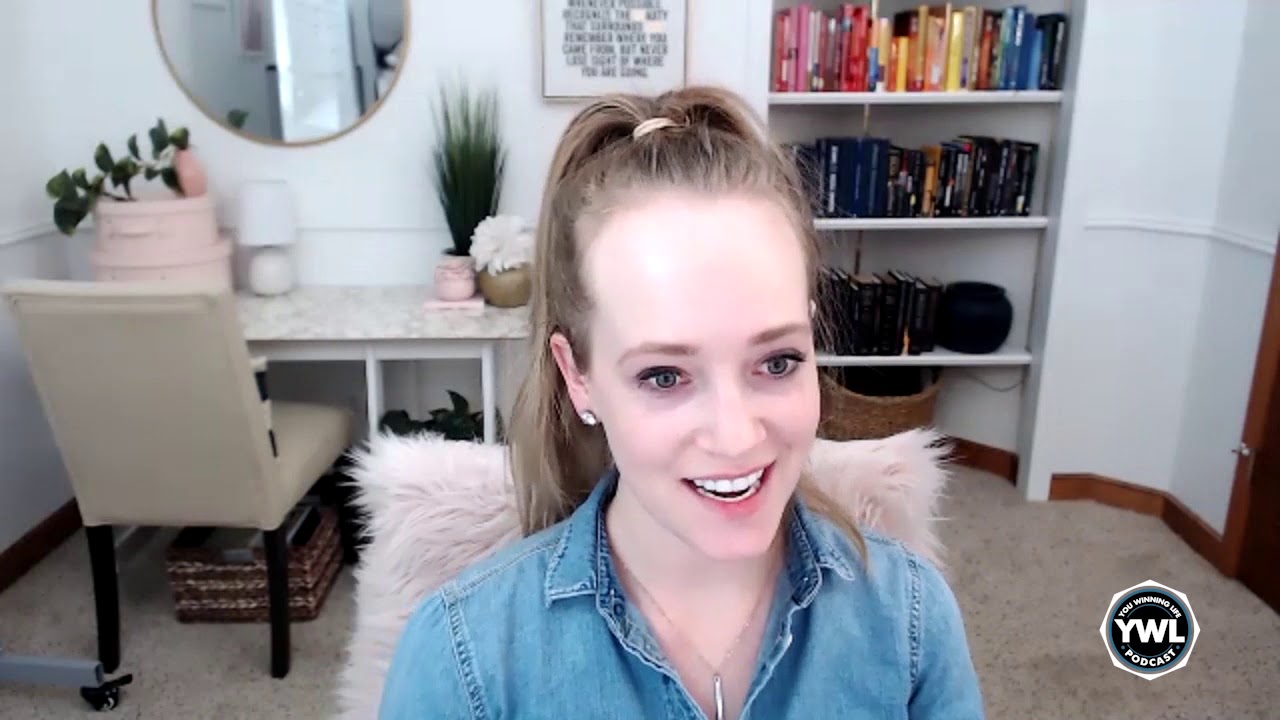
In this episode of the You Winning Life podcast, host Jason Wasser interviews social‑media strategist Rachel Pedersen. Rachel shares her unconventional path—from a teenage Naval Sea Cadet to an early adopter of MySpace, AIM, and Twitter—explaining how those experiences taught her to chase impossible challenges. She recounts a public Kickstarter failure, the lessons it taught about kindness and resilience, and how she later leveraged social media to grow a hair‑extension business, build a community of busy parents, and become a TikTok star with over 100 K followers. Rachel outlines her “slow‑down‑time” philosophy, emphasizing time awareness, language around time, and disciplined time‑blocking (including rituals like celery juice and daily workouts). She discusses her core priorities (faith, self‑care, marriage, children) and how she balances them with a growing business. The conversation turns to the unique challenges faced by women entrepreneurs, the lack of visible role models, and how men can unintentionally exclude women from opportunities. Rachel explains her early‑adopter advantage on TikTok, the rapid audience growth, and her upcoming free training and paid courses. The episode closes with a concise “on‑one‑foot” piece of advice about pursuing dreams, embracing failure, and recognizing inherent worth. Listeners are directed to Rachel’s website, Instagram, TikTok, YouTube channel, and her Social Media Secrets podcast.
Chapters
Hey everybody, welcome back to the You Winning Life podcast. I'm Jason Wasser, and today's guest is the queen of social media and loves to teach busy parents like herself how to find freedom by becoming successful social media managers without sacrificing the things that matter most, which includes their family, their friends, and their dreams. She has an avid following on her YouTube channel. She has 92,000 subscribers on her Instagram. She just hit 100,000 subscribers on her TikTok and is the host of the Social Media Secrets podcast and has created online courses for digital social media managers and those that want to increase their email list to leverage ways to reach their clients more. We had the pleasure of meeting a few months ago at Evan Stewart's Obsessed conference where I heard her speak on the topic of how to slow down time and get everything done. Rachel Pedersen, thank you so much for hanging out with us today.
Oh my gosh, thank you so much for having me. I'm excited. We're gonna dive into some really good stuff, Jason Wasser.
Very much looking forward. So the first thing is that many people will people don't know about you, especially when they watch your social media, is that you have a background from 13 to 16 being a Naval Sea Cadet.
Yes. So how did that happen? So I was in the Navy Sea Cadets because I was a really, um, not bad kid, but I was outkicking my parents' coverage of how to handle a strong-willed child. And it was really challenging for them. They didn't know how to handle someone who had big massive dreams, who always wanted attention, who thought about crazy things like let's adopt a baby cow, like crazy things that they just didn't get. And so they actually put me into the Navy Sea Cadets because they were like, Rachel, we need you to understand how to respect authority. And that was their big concern. Now I signed up willingly because I walked in and there was like 60 good-looking guys in uniforms. And I was like, oh, I'm absolutely all in. So I jumped in and I actually ended up loving it and learning so much and advancing ranks and going to boot camp and going to trainings all across the nation. So it was a really powerful experience.
So what was the ratio of males to females in this experience?
Oh my gosh, I think at one point we had almost 100 people in our squad in the Twin city squad and we had 7 females. So it was, there were a lot of guys around.
So knowing you now and what you're doing, you've always been this outlier a little bit of, of, of taking things that aren't the typical standard path and then doing it in your own way.
Oh yeah, for sure. And you know, I wasn't athletic. And so when I did like my first, you know, my first physical, um, training there, I was, I couldn't do a pushup. That was like impossible. And then seeing kind of how I grew and learned there, what that experience taught me. And part of, I think, of who I've always been is like, tell me something's impossible. Show me something that you think I can't learn and I'm on it. Like, let's do it, you know?
Yeah. So walk us through from that point in life to where you started discovering this whole social media thing, leveraging it.
Yes.
Creating your own technologies around it. What was that time period like for you?
OK, so what's interesting is I was really an early adopter of MySpace. I was obsessed with MySpace from the time that it was around. I was doing like the quizzes, the custom coding on my profile, adding the music. I loved it. And I think some people really, really were early adopters of social without even realizing it. And AIM, oh, AOL Instant Messenger. It was my life. Now, I was really sheltered growing up. And so I kind of had to hide some of these things. And for me, what it was was this portal into a different place, the ability to talk to my schoolmates when my parents would never let me go to parties. And so I fell in love with like everything social media. And then I remember when I was 19 years old, before I had my first kid at 21, I was on Twitter and I started like tweeting at reality stars. And one of them like tweeted me back and I was like, oh, Oh my gosh, so you mean to tell me I can tweet to people and get their attention? And that's when I became like hooked. And when I was like 21, 22, a single mom, I would like tweet at these, all these reality stars. Reality TV has always been fascinating to me. So I tweeted these stars, tweeted these producers, and I started to get their attention. And before you know it, I built a friendship with one of the producers of The Bachelor, and her and I like became pen pals and started communicating. And I even went through like the process of auditioning for The Bachelor through her, which was pretty fun. But it was— for me, it was like this magical portal into a world that was outside of my bubble, and I loved it.
It's so funny that you say that. So about 2 or 3 years ago, a buddy of mine took me to Comic-Con here in South Florida, and it happened to be on July 4th weekend, and my birthday is July 4th. So we're like, we got nothing to do in the morning, so let's just go. He's really into all of it. He actually collects and knows the different artists from different magazines. I'm like, yeah, I'll go down with you.— and I'm watching this experience, and I love observing people in context, and I'm seeing like groups of people, and there really wasn't anybody hanging out by themselves. And I'm realizing that like 20 years ago, right, in the '80s and '90s, people who were doing Dungeons Dragons or they were doing some type of like niche little social group didn't really have ways to communicate with each other or to create a community unless they would show up at some type of event. But then what would happen after that? And I'm realizing that the power of social media has allowed this community and a sub-community within a sub-community find not only events to go to, but friends and even relationships. And I'm sure because of social media, how many people who never 20 years ago would have never met a partner have now found relationships and love. And I think a lot of times we knock social media about the negative sides, and there's tons of that which we don't need to get in today. But I really know that you've been leveraging the positive side and empowering people, especially women, especially women entrepreneurs.
Yes. I will say what I love is what you just shared, that social media suddenly, it creates this beautiful, not hashtag me too, but like me also. So I'm going to say me too. This beautiful, like, wait a second, you're a mom that also refuses to drive a minivan. Oh my gosh, me too. Like it suddenly makes it where we feel not so much like I guess like rebels in our own society. Like Minnesota is very traditional. It's like you get married at this age, you have 2.5 kids, you drive a minivan, and then you have a backup car for your husband to drive to work. Like it's very, very traditional here. And suddenly I started to connect with these women that were like, I want to be a breadwinning woman. I want to build a business. And I was like, this is so cool. Oh my gosh, me as well. So I love that the internet opens that up. And, and that's, I think, why I became so obsessed. I was finding people that I connected with.
So what was the first thing that you did that started creating that community for you? And then when you knew, wow, I have something I can build on this and I can actually build a business and a lifestyle on this.
Oh man. Um, there were a couple of different things. So I tried, I had a failed business before, um, I became a social media manager, but even before that I started using social media to build my hair clientele. And so I didn't really know how it worked, and I wasn't a master by any means. I just knew that I would put up these beautiful before and after pictures, and I specialized in pretty dramatic transformations, especially with extensions, because they instantly boost women's confidence. It's amazing. I have to say, extensions are like magic, especially when you're working with a woman who has thin hair who's like, I have I've always been embarrassed. You would put in this full set of extensions and she'd be like, I get to be me. I'm free. It was just so beautiful. So I put these up on social and I would just have these like raving clients that would always come in. And while they were in my chair, they would like and follow my, my stuff on social. And then I think that that would always remind them to book in. And that was really powerful. But my first, my first big experience was a failed attempt at crowdfunding, uh, a fried chicken fast food restaurant. Chain. I wanted this franchise in Memphis, Tennessee, and it was so random. And like, we literally were all over the news. My dad and I were in Memphis, Tennessee. I'm walking into like black barbershops handing out flyers. These people are like, what is this girl doing? She is so not from Memphis, Tennessee, obviously. And you know, it was this really crazy experience in failing massively and publicly. We only raised like $1,000, I think $800 of that was from me. And so like, this Kickstarter did not take off. We did not fund the business. And I had to live with the experience of being all over the news as a failed Kickstarter.
Yeah, yeah. But how much did you learn from that experience?
So much. I think my favorite lesson from it was number one, that people are actually really kind. And we sometimes think that because they're in a different walk of life or in a neighborhood that's technically more dangerous, or because they're in a barbershop, which I've never walked into in my life before, we think that they're not gonna be welcoming, and they were so kind and so gracious, and I was like, this is really beautiful. Like, maybe separation is all in our minds, and that was really neat. And I also learned how much you learn from failing. Failing teaches you who you really are. Anyone can be awesome during a winning streak. Anyone can be on fire, kind, awesome, wonderful, warm, welcoming, confident, who you are when you fail teaches you everything.
So how do we take that into a daily practical application psychologically, right? You're uplifting people, you're empowering people, you're helping them create financial stability, but also, like you said, without sacrificing the dreams that matter most to them, which is their friends, their family. Stuff like that. What is some of those like practical applications that you would want people to apply from these life lessons?
You know, one of them definitely is that a failure isn't really what we think it is. We think it's like, oh my gosh, I need to like go crawl in a hole and never come out again. Um, I started to kind of embrace failing a lot more and I realized how averse we are to failing. To the point where we never try anything new. For example, I'm learning French right now, and every time that I start working on my French, I'm reminded of how much I don't speak French. Everything I say, I'm like, this is painful. And there's all these little micro failures that lead to growth. And so saying, am I willing to experience those micro failures to grow into something? Am I willing to go walk into the hot yoga class and possibly fall flat on my face? Am I willing to sign up for the marathon and start running even though I'm gonna fail every day until I run the marathon. There's just something so beautiful about that that helped push me outside of my comfort, or more like throw me outside of my comfort zone and say, listen, you're gonna fail a lot as a business owner, and those little failures are what are gonna determine and build the muscles of a strong business. So has everything been smooth? No, not even close. But that pushed me to grow. Does that kind of make sense?
Absolutely makes sense, because the image I have in my mind is that if someone's working out, they don't realize that in order to build muscle, they're actually tearing muscle fibers. Now, you don't see it, right? But you're actually tearing something apart in order for it to grow again. And I'm a week and a half away from running a half marathon on the 26th of January. And, you know, I started all over again because I haven't run a marathon in a couple of— half marathon in a couple years. And that first mile, I didn't run it straight. I couldn't run, you know, people 8-minute, 9-minute, 10-minute, 13-minute, 14-minute mile straight. I had to— so once I got that one mile down, I'm like, okay, now I got to just do this 12 more. And it is, it's the inertia in the direction of a long-term goal with dropping as much resistance as possible to the things that are going to get thrown at us. So I very much agree with that philosophy. And I know you do talk about the idea of slowing down time to get everything done.
Yep, absolutely. I've been breaking that down even further because when I say that, a lot of people don't believe that it's possible. They legitimately say like, there's no way. And I started to first and foremost recognize that our society isn't even time aware. They're losing time. There's this time slippage that happens all the time. And how do I know this? Because TikTok is my favorite social media app. The average user spends 61 minutes on TikTok without even realizing it, which means at the end of the night they sit down, they open the app. No shame. I love TikTok. But 61 minutes slip by before we hop on. And what started to kind of make this time slippage clear to me was looking at your screen time on your iPhone. And suddenly you realize, oh my gosh, I spent 45 minutes browsing Pinterest. I could have learned a language in a year in that time. And so when we become time aware, it allows us to start to slow down time legitimately, meaning we're maximizing it because we're aware of it. It's not disappearing. But then the second step is the language that we use surrounding time. If you listen to how most people talk about time, they're like, I am so busy. I do not have time to get everything done. There's no way. I'm going to be late. I'm going to be running like a chicken with my head cut off. There's all this language, and once again, no shame. We all start somewhere. But when you think about how you talk about time, pretend every single one of those phrases is like a spell, like you're going bibbidi-bobbidi-boo, and then suddenly it's true. Now, like, oh my gosh, that's terrifying. There was this great conversation. I was a waitress or a server back before I had my daughter, and that was really fun, only I I was so not ready for it. And I would like run around from table to table feeling like I was always behind. And there was this other server, his name was Joel, and he would serve twice as many tables as I would, way more than anyone else. And he would just walk around and like saunter from table to table, and his tables loved him, and they'd tip him extra, and they'd leave raving reviews. And I was like, Joel, how do you do this? Like, I don't understand. I can barely keep up with their waters. And he said, it all comes down to this. They can wait a minute. And that stuck with me so clearly. There is time for everything if we would start to just treat time with respect, including in the way we talk about it.
Yeah, so sounds like something that, especially as it just became 2020, we really need to be mindful because on one side, again, right, having this time suck in things that aren't useful for us or beneficial to us, but also knowing that in that timeframe we can learn we can learn to leverage social media. We can spend more time with our friends or our family. How much do you feel is like time blocking and scheduling and rhythms and rituals? How much of a part of your life is that?
Ooh, it is a big part. Um, but it is not super rigid in that it's not the same every single day. So for example, I love variety. Do you know about like the 6 human needs, how there's like, variety, certainty, etc., or at least that's some people's theories. I love variety. And so how do you fit in routines when you love variety? Well, for me, it's going into each day and knowing that at some point throughout the day I want to work out. When? I don't know yet. We will see when it feels right. But I know that I'm going to block out, you know, an hour and a half, 2 hours for our workout each day. And so it's sometimes in the mornings, sometimes it's after the kids go to bed. Sometimes it is in the middle of the workday when I'm like, oh, My brain's had enough. Okay, we got to go. Let's go to the gym. And so I like variety. And I think that that is helpful for people to know who aren't great at routines all the time. But there are some routines I follow. For example, I start every day with celery juice. I, you know, I start every day with a huge thing of water. I drink 6 to 8 of these a day. That has helped me quite a bit to stay refreshed, keep my skin looking young. Those are all important things. But time blocking is everything because that allows you to start being aware of where your time is going. And so when you have time blocking going on, now you look at 15 minutes and you say, okay, 15 minutes. What are all the things I could do in these 15 minutes? I could write an email to my email list. I could do a Facebook Live. I could record a video for my YouTube. I could create 10 TikTok videos and save them all as drafts. I could write a chapter for my book. Like there's so much that can happen. When we time block by becoming aware of where there are actually gaps in our schedule.
And you also have an outcome of where you want to be within a certain period of time, is my guess, right? You know that you want to hit certain platforms a certain amount of times. You know you want to be in front of your clients a certain amount of times. You know you want to spend a certain amount of time with your family.
Yep.
So that's all reverse engineered into there.
Absolutely. So for example, um, one thing that's a non-negotiable is at least 2 hours of 2 hours of family time per day. And I'm not talking like sitting down, all of you like not paying attention to each other. We spend 2 hours of family time per day. Sometimes that means we're watching a movie and laughing together. Sometimes that means we're, you know, eating dinner and then running to Target and having fun. And we turn it into an adventure. That's super important with Target errands, like make it super fun. But there is time for all of those things. Have you ever seen the analogy where you have a a vase and you're like, how much can I fill this vase with?
Right.
If you start with the big rocks, it all works out. You know, then you go to the medium-sized pebbles, then you go to the sand, then you go to the water and you're like, wow, all of that fit in there. The same thing is true with our time. So you have to start with what's most important for you and for your priorities.
Yeah. I always talk with my clients about what their 5 highest priorities are and if they're doing anything else but that, or at least until they finish those things, then they shouldn't fill the other pieces in. And I love using this, and I've shared this with a bunch of other guests, is that I love it when a couple comes in like, our relationship is the number one priority. Okay, so you've been married for 10 years or whatever. And they're like, yeah, yeah, how many therapy sessions have you gone to before me? We've went to like 2 or 3. So I do the numbers with them. So you have X amount of days in a year, right? 365 times 10 years times, right? So that's whatever, 4,000 hours, right? Or whatever it is. And And I'm like, and you've been to therapy for 3 total hours. So that's like 0.0 or whatever percent. All right, fine. I get it. Life's crazy. How many books have you read on couples or relationships or on love and romance and love languages? I'm gonna get a zero. Okay. YouTube videos? Nothing, right? And I'm like, but you're saying this is your highest priority. And it could be anything, right? Could be their health, it could be business, it could be— and yet you have not spent any effort in the direction of your goal. So I don't know how I can believe you if you either A, you really don't know how to do it because no one's ever guided you, or maybe that shouldn't be your priority.
Yeah, absolutely. You know, that was actually one of my most controversial videos I've ever done, was one where I was talking about priorities. And I said that first and foremost, like my faith, God, my relationship with God is number one for me. This is not for everyone else. Then number two, making sure that I'm okay, making sure that I'm taken care of, that there's self-care. 3, my marriage and my relationship with my husband, and then number 4, my kids. So first and foremost, people took it like I said that if my kids were in a burning building, I would be like, nope, I'm good. I prayed and I'm out. Like, it was so crazy. But priorities are an interesting thing. They also didn't realize that there's a bajillion priorities after the list of 4. I wasn't saying my kids are my last priority in life. But I think that what you bring up is a really interesting point.
People don't understand how priorities are expressed in time, in money, in energy, in resources, and the bias that someone else is going to judge someone else through based on their lens of seeing it, whether they're lacking in that area or they're overcompensating in that area. And that's where a lot of that judgment does come from in their, in their timeframe. So one of the things that you just listed was your husband Jason, as one of your— and your marriage is one of your highest priorities. And as we mentioned before, right, there's 13 days, right, from meeting to marrying him. So I see this as incredible efficiency. I see this as you must have known something with absolute certainty that other people out there can say, that's crazy, 13 days. This isn't a reality show like the ones you were obsessed with, right? What did you know?
Oh my gosh. So first and foremost, I want to set the scene before my husband came on because I think this is really interesting. So I dated a lot and I'm just going to be honest about that. I feel like no one ever says that once they're married, but I really did date a lot and I dated some good guys that just weren't the right fit. I had dated some guys where I was like, oh, like stay away. And also I was a single mom, so I already kind of had some experience in parenting and and having a vision of what I imagined my life looking like bringing someone in. And so that helped to set the stage. But that doesn't necessarily mean Mr. Right walks in. There's still a lot of experiences in dating where you're like, this just doesn't fit the vision of what I see for my life. And so I met my husband. We were actually set up, but we were both reluctant about it. And we were at like this group event and we hit it off immediately. And a week later, I was like, oh my gosh, I love him. And I remember thinking, I'm gonna have to play this so cool and not say anything because I have never felt this this soon. Like, I am in love with him. I feel like I've known him forever. And thankfully that night he was like, I'm in love with you. And I was like, oh my gosh, me too. And so what was crazy though is the very first date we had after the night we met, We were sitting on the couch and I was holding his face and he kissed my inner arm. And I remember in that moment I felt like I saw him kissing our baby and kissing our grandbabies. And it was almost like I got a glimpse of what our entire future life was together. And I was like, this matches the vision I have for my life. And I just knew, I had this strong gut feeling, he's safe. Like this is safe and you guys will always be happy. And so I didn't want to waste time. I was like, as soon as he said I love you, he's like, I want to spend my life with you. I was like, do you want to start tomorrow? And he's like, well, it's a little soon, but we literally ended up not waiting that many more days to go for it.
And what was the kickback that you got from that from people around?
Oh my gosh. So the kickback was actually the reason why we got married so fast. So when we met, 7 days later, we started telling our friends and family, and he was about to turn 30, by the way, which in our culture is weird. Like, that's a long time to wait until you're married. He's like, "I wasn't gonna settle." So basically, we told all our friends and family, "We're gonna get married in 6 months. Like, this is it. We found the person." And the kickback we got was insane. People were so angry. They were like, "You cannot get married in 6 months. You guys don't You don't know each other. You haven't seen what they're like at the holidays. And it was so strong that I called him up on a Monday night and I said, "Do you wanna get married tomorrow?" And he said, "Yes!" And so we ran to the Chapel of Love at the Mall of America after, of course, going to the courthouse that day. And we went and got married because everyone was saying we couldn't get married in 6 months. And I was like, I was only gonna wait for them. So we got married. We didn't tell anyone except for our parents. Some of our siblings didn't even know. There was a huge uproar. People thought we were joking. People thought we were pregnant, but 13 days isn't even long enough to get pregnant and find out. Like, we had a baby like 11 months later, but that's still time-wise, we were good. It was just so interesting because, yeah, that people were really, really angry. But every year that passes, It kind of is like, see, told you guys, you know? Yeah.
So this confidence that you exude in the story that you tell and the experience that you had is something that I've learned about knowing you that you're trying to empower and give to other people.
Right.
So you went after what you wanted. You saw core values, you saw experiences, you saw a vision of what it could be like. How much did you dismiss?
Right.
Because again, core values have to be there. That's a given, right? Spiritual values, all those different things, how he treats people, how he treats you and vice versa. What in your gut was the— right, what do you think your gut was really saying? Because I know you use the word, he's really safe.
Yeah. Oh my gosh. That's a really good question. So my gut has always been right if I'm truthfully listening to it, not just like trying to align it with whatever I want to happen. My gut feelings about situations and people and decisions I've made in my life, it's always been right. And I still don't know how to explain it fully, whether it comes from faith or science or woo or a combination of all three. Maybe it's all three. But there's just sometimes this like undeniable sense that we get. It's a peace. It's like a, this is the path that's ahead of you. This is what I've called you to. And I'm like, you know, when it happens, I know to follow it because it's never been wrong. Or if it's not 100% right, it's going to lead you to the next path. And I think I had spent so long seeing friends that would waffle about marriage for years, and then they get married and they're like, well, dang, this isn't even that good anyways. Like, I spent— I mean, my parents were married for 20-something years. I want to say 20 1 year, and then they had this big, horrible, painful divorce. And I was like, you know what, I'm gonna go with my gut and I'm just gonna listen to it because otherwise I'm gonna spend the next few years waffling and I could still be wrong. So there was just a part of me that was like, do not go gently into that, you know. So that was kind of where I came from.
And is this the same approach that you take now? Because even though I know you're reaching and targeting everybody, but your real focus is on female female entrepreneurship. And I know you've created some really cool stuff and programming and online courses. What do you find is some of the challenges women entrepreneurs are facing? What do you think they can be doing differently? And how do you think men can do different in order to help other female entrepreneurs?
Such good questions. So one thing that's interesting is that I never intentionally sought out females as entrepreneurs to support them, but I think that there was such a lack of strong female leadership. That's not saying it's not out there. There just is way less strong female leadership and role models for women that women gravitated towards me and they said, "Oh, thank goodness. She's saying I can be a mom and I can be a wife and I can run a business. Okay, I don't have to choose." And so what's for me, The biggest thing that I found was that there wasn't a lot of— there weren't a lot of examples. It was really hard. I found oftentimes that the women that were very successful in their careers were distant as mothers, or they weren't mothers at all. It was— or, or their marriage fell apart, or they had had 6 husbands, you know, a lot of the most successful—
at the same time.
Yeah, sometimes. I can't even imagine having me too. That would be so hard. But there wasn't this example of someone saying, like, you know what? Yeah, you can be happy in your marriage and you can be happy as a business owner and you can love your kids. Not in that order, but I stepped into that. And that doesn't mean I had it all figured out at first. There was a season in my life where my marriage was not the priority. It went my kids, my business, and then my marriage. And when I started to realize, oh my gosh, everything you envision for your life could fall apart and you're taking this man for granted and vice versa too. He was definitely a part of that. We realized it's time to get serious. We invested 5 figures into our marriage and we do every year and started making date night a priority. We realized there was time for everything and that it all was available. When it comes to men supporting women, I've noticed that— I'm gonna give people the benefit of the doubt, so I don't speak for all women when I say this— when a man plans an event, let's just say like a white male, okay, when he plans an event, he thinks of his friends and he thinks of the other people that he can put on the stage. I don't think most of the time that they're thinking, "Let's exclude the women," or "Let's make sure there's no diversity on this stage." It's more of like, Oh, I'm going to think about my friends, and their friends happen to mostly be white males. So I'm going to give the benefit of the doubt there. What happens is there needs to be someone around them that kind of gives them that little, oh hey, what you're not seeing, here's your blind spot. Women might see this event and think, oh, I'm not going to be able to relate because this person's never tried to build a business when they have hormones or when they've gone through pregnancy. Or when there's a pressure to be a thin female, right? Like all of those things aren't gonna be reflected. So I'm very fortunate in that I have natural diversity around me. My husband is Latino. I have a lot of friends of different walks of life. And what's so interesting is I didn't wanna come at it angry saying, "How dare they not have women on their stage?" But instead say, "Hey, I noticed." You don't have any women in your lineup. Did you— were you looking for a woman speaker? And offering a solution to the problem versus reinforcing the problem, which is separation. It's really, really powerful. So when women do that, it makes men, I think, more excited about being like, you know what?
Yeah.
Oh my gosh, I'd love to have you on my stage.
Well, it's a gentle, loving way of I'm going to solve a problem for you that you don't even realize that you have. And I see this and I'm planning something with somebody here. And he's— we actually met at Starbucks and we bonded. And now 6 months of tracking each other down through social media, we finally met. And he's from Afro-Caribbean background and we're just brainstorming. And I'm like, I want to make sure— obviously, you're sitting with me. I'm a white Jewish guy from South Florida. You're from Jamaica and your family's from Jamaica and Haiti and you grew up here. But like, I want to make sure that this represents our diversity of what we're doing. And I wanted— and he's like, oh, no, like the number one speaker I'm inviting is a Black female, and then there's this person. I'm like, good, we're in alignment about that. And I think that's really cool that like you're able to come at that in a way of lovingly educating them without even them even realizing it, which I think is a really powerful trait that women have in their relationship, you know, with real relationships with men. And they're like, oh yeah, well yeah, this was my idea in the first place, right? Without it being them realizing that. So that's, that's really cool. And I know we only have a few minutes left. I know you wanted to— and I want to spend so much more time on this idea, but I know the one thing that has happened for you recently was this 100,000 followers on TikTok. And in our few remaining minutes, what's going on with that? Right. People— TikTok is the new Instagram. If you get on it now, Gary Vee talks about this all the time. It's like being on Instagram 10, 12 years ago. What are you doing differently on TikTok than what you're applying to other platforms? And what do people out there need to know?
Ooh, good question. So I wasn't on Instagram very well 10 to 12 years ago. I was certainly not a marketer. And so this is my first time being an early adopter on a platform. And I just have to say, it feels so good. If anyone gets an opportunity to be an early adopter, which we are still in the midst of for TikTok, and I think we will be for the next year, maybe even two, like jump on because there's something so beautiful about tapping into new markets. And I mean, I'm talking about being a social media manager on this platform and people are like, what's a social media manager? And I'm like, oh my gosh, this is so cool. I've been surrounded by people who are hit by the same messages every single day. And I get to come in here with a totally different, like, viewpoint. What it's done for me is it's untapped the fullest potential of my personality. I'm a very goofy person. I love having fun. And so I'm able to let my crazy fly on this app, which is so fun. And that's not right for everyone. For me, I'm like, woo, let's do it. And so I've really enjoyed it. But what it's also done is it's built almost overnight clout for me. Where on the other platforms I felt like I was always one step behind trying to keep up, even though I understand social media, that early adopters advantage is unbelievable. And so I grew by 7— no, 93,000 followers in 6 months and just tipped over 100,000, over a million likes. I'm getting 2 to 3 million views per week and it's just continuing to grow. And so it has been truly remarkable. Seeing it come to life.
And is there a new training that's gonna be coming out of this?
There is, yeah. I've been doing everything for free up until this point. I just launched my beta course, which I have a feeling by the time this goes live, the beta course will already be closed. But I'm teaching everything for free to start in my Facebook group, and so people are welcome to join there and learn more. And then if they want even more, they can jump on in anywhere.
Awesome. So I know there's so much more we can talk about, and I know our time is really limited, and maybe we'll have a future time where we can hang out again and talk a little bit more about entrepreneurship and, and the nitty-gritty details and some really actionable things. So is there one thing, just before we wrap up, that if you had 2 minutes to be with a person and you knew you were never going to see them again— and I call this my "on one foot" question, you know— what would you say to them? What would you share with them? What would be the wisdom you'd want them to know after spending 2 minutes with you?
So first and foremost, I would say your dreams aren't an accident. Go after them. You don't have to do anything to be worthy. You're beautiful and perfect exactly as you are. Doesn't matter what anyone else thinks. I'm probably gonna say a lot of other people's quotes in here because it's just like a quick compilation. They don't even like themselves. Anyways. Your dreams and going after them is just gonna be a mirror for your own personal growth. Take it as far as you can. This is all a big giant game, and let's see how far you can make it. Failure isn't what you think it's gonna be. It's an adventure every single day, and you get to decide what the ending is ultimately gonna be.
Awesome. So far, that's pretty good. So for our ending, where can they find you and follow you so they can see all this awesome stuff you're doing? Where can they sign up for your courses?
For sure. So everything's available on my website. It's rachelpeterson.com and it's all E's and a D in my last name.
Awesome. And I know on Instagram it's the Mrs., right? Miss Peterson. And TikTok is the same as well. Awesome. Rachel, I really appreciate the time that we had today. And I know that, guys, please check out her YouTube channel, follow her on Instagram. I know like a week or two ago when I was starting to get into my TikTok, all of a sudden you just started showing up and I'm like, oh, that's really cool. Like, something like the algorithm puts you in front of me and we already knew each other, which is really cool. So it's working. The algorithm does work in some way, shape, or form. You will show up in front of the people you need to show up in front of. And again, thank you so much. And guys, please, if you found any value in this episode, subscribe and share. Also, please check out Rachel's podcast. It's the Social Media Secrets Podcast. Give her some love there. Leave her some positive reviews on all of her social media. And again, Rachel, thank you again for hanging out with us.
Jason, thank you so much for having me.
More from Jason


Howard Behar Starbucks Former International President Heartwarming Story #kindness #shorts





