
You Winning Life Podcast Ep.74-Anna Vocino: Eat Happy For A Joyful Life
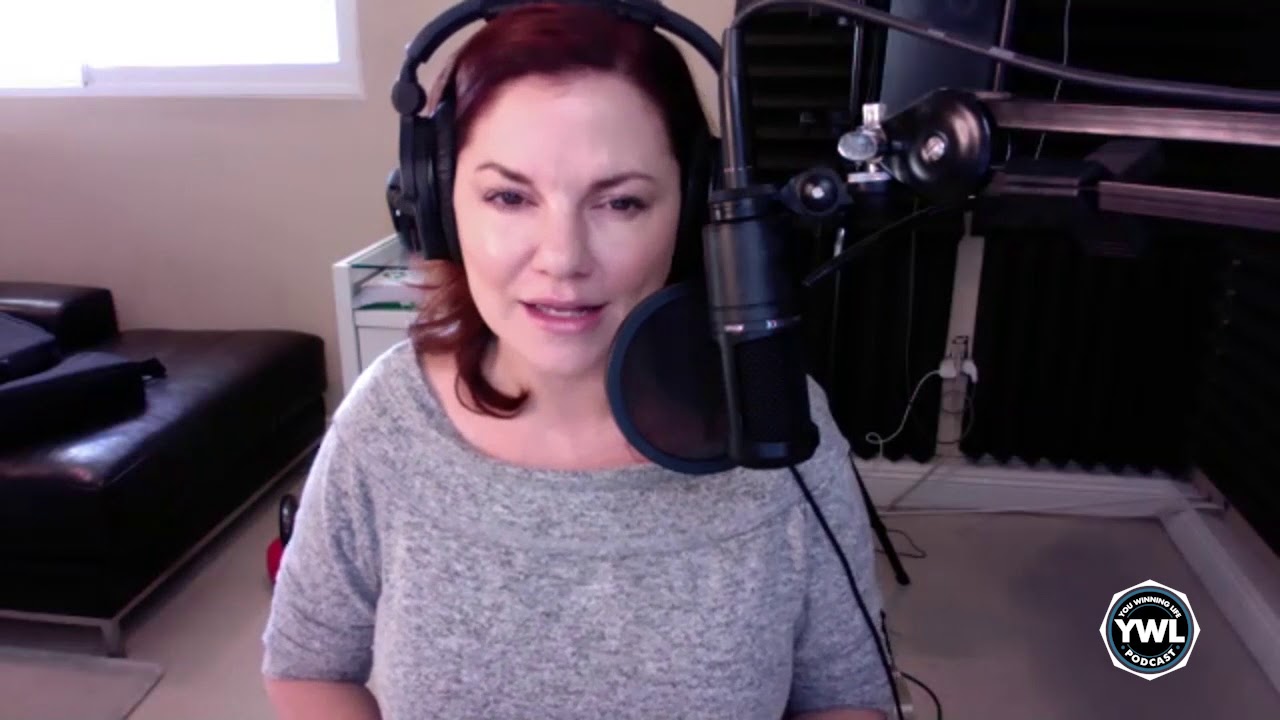
In this episode, therapist‑host Jason Wasser interviews Anna Vocino, an actor, comedian, voice‑over artist, podcaster and author of the gluten‑free, grain‑free, low‑carb cookbooks Eat Happy and Eat Happy Too. The conversation weaves through Anna’s personal and professional journey: her early improv work, marrying a comedy writer and developing a joint stand‑up act that functions like couples counseling on stage; her long‑running podcast ventures dating back to 2007; her 2002 celiac diagnosis that sparked a lifelong commitment to gluten‑free cooking and the creation of her cookbooks; the practical challenges of writing, testing, photographing, and publishing the books without a celebrity chef partner; her approach to recipe development, accommodating dietary restrictions, and evolving food products; broader reflections on mindset, entrepreneurship, niche versus hobby, and how therapists and creators set boundaries and prioritize. Jason also shares his own practice philosophy, emphasizing strict client‑selection based on core‑value alignment, the importance of personal health habits, and the binary nature of his therapeutic approach. Anna offers candid advice to mothers juggling multiple projects, stresses the need for realistic expectations, and highlights the role of community support. They discuss making recipes accessible through Instant Pot adaptations and the value of social‑media platforms—especially Instagram and a personal website—for audience engagement, book signings, and behind‑the‑scenes content. The episode concludes with mutual promotion of Anna’s cookbooks, upcoming events, and a reminder to listeners to leave reviews.
Chapters
As you guys can already hear from my slight giggle and laughter in my voice, the conversation that I've already been having with today's guest is already off to a really amazing start. So you may have already heard about our guest or even heard our guest in some form on television promos, in commercials, or even cartoons. She's an actor, comic, voiceover-er, podcaster, and cookbook-er. There's a lot of er-ers in your life, as well as a wife, mom, lover of hiking, good books, going to Italy, and I saw somewhere a little bit of vodka too. So you're the author of two cookbooks, Eat Happy and Eat Happy Too, which just came out. And she focuses on gluten-free, grain-free, low-carb recipes that recreate versions of comfort foods. From her half Italian, half Southern girl heritage. Anna Vaccino, please give us all this incredible knowledge.
Incredible knowledge. I will say 14 seconds. Yeah.
Welcome to the show.
Laugh instead of cry. That's what I like. You know, I saw you with a friend of mine.
That's an episode.
A friend of mine is a fabulous actress, a fabulous comedic actress, but she can also cry on cue. And I, I feel like I was like, really? I've worked really hard to suppress my sadness. So when they asked me to cry, like the last time I was asked to cry on cue, it was such a bizarre circumstance. And then I was like, I said, no, I can't. And I got up and I walked out of the audition. And I think that was 2005.
It's a long time ago.
Yeah, that was when I was still doing on-camera stuff. And I was like, I can't, I'm sorry. I'm not gonna do it. Much rather laugh. Let's do something funny instead. I don't want to feel my feelings.
I'm hoping that we're gonna go through a nice little journey of your life with a lot of laughter. And hopefully, you know, my hope is that if people are listening to this while they're driving, that doesn't cause any mayhem while doing so.
Oh no. Let's under-promise and over-deliver. Let's not promise mayhem at the top.
Oh gosh. Can you imagine if people actually said that like on dates or like on a wedding night? Like, you know, I'm gonna under-promise and over-deliver. Deliver.
They probably should. They probably, they probably should. And especially on a wedding night, not about the night itself, but about the next 20 years. Let's just under-promise and over-deliver because we're gonna have to renegotiate this thing about 17,000 times.
Well, let's just go right into that then, because I know one of the things that you do is stand up with your husband.
Yes.
So before we get into this whole journey, because we're gonna talk about nutrition and we're gonna talk about health and we're gonna talk about talk about like being an actor and all these cool things. But it's right there. Let's bring it to the forefront. Yeah, you and I were talking before that, right? I'm a marriage and family therapist, and you basically are doing your couples counseling on the stage in front of people in a stand-up format. So what the heck?
Well, here's the thing. We both, we both met many years ago doing improv in Atlanta. And then we hadn't been dating that long. We went out one night, and this is in the '90s. You guys, this is during Bill Clinton, I think. I don't know. I never know what the era is, but I think it was Clinton.
Do you mark it by like presidential scandals?
I feel like we should. Like, I didn't realize until like a year ago that I was born when Nixon was president. And then I realized, but who else would it be? It was '73. Like, that was his year. It was the Watergate. Like, it was a lot. Like, that was Nixon's time.
Right. So there's a running theme now in your life about this.
Yes. And also too, I read a statistic that 1973 was the year the least babies were born post-World War II. And I was like, well, no wonder. Nobody wanted to get it on when all that was happening.
Were they all glued to their television? Or was it just like pure depression? Like, holy crap, what's happening to our republic?
It was just depression. And I think that like, then it's no wonder that Gen Xers grew up with like this apathetic, like, Whatever, man. I don't know. I just— I feel like—
can we thank that for Nirvana and all the grunge scene?
I think we can. We should thank Richard Nixon.
There's a positive spin to that.
That's where it came from. Yeah, that's where it came from. And I think him taking the gold standard, the currency off the gold standard, is what we have to thank for Kurt Cobain. So anyway, I was born of a mother— no, I don't know. What were we saying?
We were talking about marriage. Yeah, my husband and I.
I mean, we can get into all marriage stuff.
That's very interesting, but yeah, but how did that turn about to like the whole stand-up comedy?
Well, we, you know, we worked together a lot over the years and he's a comedy writer by trade and he's written on shows that I've been on and he's written on for Jimmy Kimmel for several years and he's, and now he freelances a lot of stuff and he's a very good writer. So when I started doing stand-up many years ago, I would naturally run my jokes past him to punch them up because why wouldn't you do that when you live with a joke writer? And then he was like, I think there was an element of he didn't like me going on stage, you know, razzing him as it were, giving him guff. So he started doing it. And of course, you know, married people talk about what it's like to be married a lot. And we kind of, we would run our jokes past each other. And then we kind of thought, wouldn't it be interesting if we got on stage at the same time and did it? And we wanted to do it in a way that would be fun for the audience, not like this weird self-indulgent therapy session. For the people who are on stage, but like we want it to be relatable and anybody who's in a long-term relationship. So there's a little bit of he said, she said. And actually my husband and I have a lot of qualities where our roles are reversed gender-wise. So that's interesting because you can, you know, I like it when people go, oh my God, that's you. Oh my God, that's you. You know, when they watch us set up something and also improv because we've been doing that for 20 years. So we, you know, we say like we can fight about anything and we'll take a suggestion from the audience and no matter what it is, we can fight about it and we do. And, you know, the other thing is we do a lot of Q&A with the crowd because we love talking to people about where are they in their relationship. And we had the last show we did Sunday night, this couple had been married a year and a half, and I was like, oh, you guys still kiss on the mouth? Okay, that's cute. That's really cute. You know, and it's fun. It all—
in other places you're supposed to be kissing after 2 years. Yes.
So it only gets better. Kiss on the mouth or not at all.
Those are the only two options. It's very binary.
Yeah. So we've been taking this act out and I actually, you know, the next logical step is we are starting a podcast like everybody else. I've already been podcasting since 2012. And even before that, I used to do a podcast. I produced a podcast that my husband wrote along with the executive producer of It's Always Sunny in Philadelphia, David Hornsby. And they, it's called Yoda and Me. And we produced this podcast that got such a cult following, but it was back when I had to learn how to write XML code to be able to put it up to iTunes. That's how old. This thing was like 2007, 2008.
Before anybody even knew where podcasts were existing.
Yeah. Yeah. And you had like a basic like Web 1.5 website. There was no like WordPress interface to make life easier.
Or all these wonderful hosting companies that are doing really great.
No, there's nothing. No Libsyn, no Blueberry.
No Sproud, which I'm on. Yeah.
None of it.
Yep. Wow.
So that's like, old school DIY before, like, you know, in this, this, I had to find a guy in Canada who I knew, he was in Montreal, and I wrote him, I was like, Marc, what am I doing? And he had to teach me how to write XML code. And I was like, I'm not equipped for this. This is not my skill set, but you learn it, you do it. So there you go.
So what are some of the things that have come out? Like, so you're doing this and you're interacting with the audience? Like, what was like a big takeaway that maybe like someone had or that they shared with you? Like, we really connected with you over what you just said, and this has helped us.
Has there been anything I think, yeah, there's been a lot, there's a lot of feedback usually, and it's, it's, I mean, anybody who's been in a long-term relationship, which is mostly everybody on this earth, has at least tried to be with somebody on a long-term relationship. It'll be relatable because the thing is, the thing is, it's not really addressed. I see in the media a lot of marriage being depicted as they're either old and married and they hate each other, or they're new and they still have the spark and it's great, but where's all the in-between? And in particular with our case, you know, we got knocked up and had a shotgun wedding and managed to make it work, whereas a lot of couples who did it on purpose have now broken up. And so what is it that's made that happen? And of course we're gonna make jokes at each other's expense to make people feel enlightened. Maybe you think like, I've heard a lot of, oh my god, I didn't realize that y'all do that too. Other people do that too. I'm not so alone. Yeah. And that's the thing. I mean, ultimately, comedy is very spiritual in the sense that you see somebody up there, you resonate with their premises, and then the jokes are like this relief of like, oh my God, I'm not alone.
Right, right.
Thank goodness.
And it's a very vulnerable space. And I do believe, as we were talking before, that it's incredibly therapeutic for someone to get up there. And that, you know, but there's again the difference between self-indulgent versus it actually being relatable and connectable. And that's obviously the side that you're leaning much more towards.
Yeah. Yeah, absolutely. And I mean, we, you know, we talk about what the struggle is to keep things fresh in the bedroom. We talk about the struggle of two people having completely different opinions on how to pay bills. Like, my husband thinks the bill is like a first— it's like a first notice, like you'll get another notice, don't worry about it. And I'm like, which is why I've taken over paying the bills because he can't be trusted with it, you know. And there are certain things that that you just kind of glom into these roles. And we're at the place now that that shotgun wedding baby is now a junior in college in New York City. And so we've had this opportunity to go, who are we to each other? Do we know each other at all? Do we like each other? Do we love each other? Do we want to stay together? We actually wrote a bunch of jokes about our terrible, terrible wedding. We had the worst wedding. And in the process of writing jokes about it, it actually kind of healed something we never talked about, something we had huge shame surrounding. So, you know, it's, it's, it's good.
Well, it's interesting that you said like you're now this— how many years have you guys been married now?
21 years in about a month.
Okay, so right on. If you're familiar with this, but John Gottman, who's one of the top marital researchers in the world, talks about different timeframes of where marriages will have their most significant challenges. And it's that 18-year-ish timeframe where it's the empty nester syndrome, right? Where now you're like, you're, you're identity, right? Right. So, so interesting that you guys were navigating that as this identity shifts back to who are you when you're not parenting. And I discuss this with my clients all the time. Forget it just in their relationships, but also when it comes to their careers. Like, if they weren't identifying by what they do, who are they?
Yeah.
And that's very tough for people to wrap their heads around. And I can imagine as someone who's as multiversatile as you, at the end of the day, right, we have— we both have very similar interests in the world, which we talked about before, but if we didn't have these things, if we didn't define ourselves by these interests and what we do, how would you present yourself to yourself?
It is a very interesting question, and I find that, you know, listen, we're two very sensitive and creative people, and we can bump up against each other if we're both having the depression at the same time, you know, if we're both feeling vulnerable. It's been a tricky thing, and that's why I said you kind of renegotiate over and over and over again as you go along with the relationship. And that's the, to me, I found the best way to grow together. You know, I don't know, it's like, when you have two very creative people together, it can get very fiery. Also two Italians, it's like, come on, it's too much with you guys. When my daughter was in first grade, and I don't know if this is really sad or really funny, probably both, they did like one of those booklets for this, like make a booklet for your parents for Valentine's Day. And it said, you know, draw a picture of your parents. And she drew like two stick figures, like looking at it, like talking to each other. And then write what's your parents' favorite activity to do. And she wrote, yell at each other.
Which is classic Italian, right?
Classic.
Right? Isn't that in cultural, it's like we're making love.
Oh, yeah. Right? Yeah, exactly. Well, it is. We do, we have a tendency to talk loudly at one another. And it's strange because it's not like I grew up with my immigrant grandparents. I didn't grow up with them. And yet you have these like, "Ugh, I'm gesticulating and I'm yelling and I'm passionate about stuff." But yeah, but now, you know, we try to channel that and just save it for the stage. It was an interesting thing too, because all of our friends, have little kids right now. So we started way younger than our friends. And I always felt like I'm watching everybody else go on with their careers and really build a solid foundation financially. And we just started so young. We were 25. And which, by the way, in middle America isn't young, but on the coast, it is.
It's very young in the middle America. It's not.
No. So it was— it's now very interesting because like my best friend had her daughter at 43. And I sent mine away at 44 to go to college. So it was a very interesting, you know, dichotomy of life. And I was like, well, I need to figure out who I am.
And I don't think that, like you're saying, like we could have these cultural things that we do, but seeing so many different backgrounds in my office and being in South Florida, right? So we have the Afro-Caribbean community and the Latin community and the South American community, and we have everything here. Kind of, it's kind of like a little bit like LA and San Diego. Yeah, yeah, very, very similar to that dynamic. And I'm finding so much similarities where one of my clients just was like, when they would get excited, they would like, it came across to the two gringos in the room, the partner of this client and to myself, like, once, like a few sessions ago, I'm like, why are you yelling at me? With a big smile on my face. And they're like, I'm not. And I'm like, I get that you're being excited. But I get that. Does your partner get that? Does the people you work with get that?
Right, right.
And literally, you can hear the glass shattering in their brain.
Oh, I love that. I always talk about it's like you got a new fold in your brain. Yeah. When you have a realization, I love that.
And then like, it's just like everything stopped, time stopped for that person. They're like, holy crap, is this how everybody sees me? And I'm like, I know you're passionate and I know you're excited, but when you're parenting your child, are you yelling at them? Are they— which way they're looking at it when you're yelling at your partner? Are they yelling? Are you yelling at them? Or are you right? We have to figure out and be self-aware enough to figure all this out. And it's really cool to hear a story of using and leveraging the tools that you're passionate about to help your relationship and your—
Yeah, absolutely.
So, so let's talk a little bit more about— right, we're going to flip the script that we were supposed to talk about nutrition first, but we're already here, so let's just go with this. So acting about and all that stuff. Oh yeah, let's start with the book. I just happen to have a copy here randomly, just happens to be in your hand, right? So for those who are gonna be listening to the audio version of that, what the heck was that?
I just held up a copy of my second cookbook, Eat Happy Too, 160+ new gluten-free, grain-free, low-carb recipes for a joyful life.
So the people out there who are not down with gluten-free, grain-free, Yeah. The delicious part might be suspect.
I know, they don't trust it.
They don't trust it, right?
Yeah. These— okay, so I was diagnosed with celiac disease in 2002, and the only reason I was diagnosed is because my mom was diagnosed, and it can— has a tendency to run in the family. And I thought to myself, because at the time, you know, I was a size 2 actress and I didn't eat bread or pasta Like, I kind of knew not to have those things, but I would sit down and eat a sleeve of JoJo's cookies from Trader Joe's, you know what I mean? So, and in fact, I said, I remember like a couple months before I was diagnosed with celiac, I was eating like 10 JoJo's and I was like, oh my God, it would take like a doctor telling me I can't have cookies to not have cookies.
Only premonition, right?
Yeah. And then I was like, oh, Well, that's what happened. So the only, it's not a cure, but I guess prescription for celiac disease is to not have gluten because gluten, they've narrowed down gluten to be the protein in wheat, barley, spelt, and rye as a trigger that triggers the immune system to then attack the villi in the small intestines. And biology, 7th grade biology class reminds us that the villi are what absorb nutrients into the body once your food's gone through the canal and then you go into the villi and then you absorb all your nutrients and minerals and vitamins and it sends it to the bloodstream. And I had flattened villi. So the villi are fingers. It's totally flat, like at the knuckles, and then it can't absorb anything. And so when I was diagnosed, I had severe anemia. I had a DEXA scan and I found out I had osteopenia, which is like right before osteoporosis. So I had the bones of like a 75-year-old woman at age 28. I had a host of digestive issues, skin rashes. I always bruised easily and they would take forever to heal. And I had very typical celiac symptoms without even knowing. Oh, I had terrible allergies and asthma, always bronchial stuff. That's another kind of warning sign. However, now these days, there's a lot more awareness surrounding it so that a lot of kids are getting diagnosed, which is great. Parents write me all the time, "Oh my gosh, my child was just diagnosed. What do I feed them?" And I love it. I love when they get the diagnosis early because then you know, because then you're not going to go through your whole life being sick. And I know it's terrible at first.
Yes.
With these children, it's very obvious because they have what's called failure to thrive. They don't grow. They're very— they're low on the Apgar scale. They can't grow. They look sickly. And then they know now to do the blood test. I don't think they do endoscopy. I hope they don't do endoscopies in little, little kids. But my goodness, I'm getting a frog. So yeah, I think that it's a blessing to know and it was certainly a blessing for me because it sent me off on a path of, okay, well, I'm gonna recreate everything that I love to eat but gluten-free and I'm gonna make it so that anybody could come to my house and eat these things and they wouldn't be like, ew, that's gross, it must be gluten-free. Because at the time you'd go to Whole Foods and there was like, I remember there was this bag of cookies, chocolate chip gluten-free cookies that was $17. It was the most disgusting. It was like, they were like mini things and they were stale, stale. And they look like, like Chips Ahoy cookies.
Like someone took them out of the box.
No, Cookie Crispies. Remember that cereal? Cookie Crispies. It looked like that. And it tasted like a little hard, like they would break your teeth. Sand, sugar, disgusting, and generally too vegan too. So it was like everything taken out of it. And I was like, "This is wrong." Pleasure-free, joy-free. Just the only thing basically you can add to it at that point is just put in more sugar because you're trying to distract from how terrible the taste and the texture is. Just keep throwing sugar at it. So anyway, so I decided to block those things. And then what happened was I slowly started to put on weight. And it wasn't until actually a few years ago after doing many more food blood tests that I am also having the autoimmune response to dairy. So some things cleared up and some didn't. And then with the normal progression of aging and being over 35 when women's bodies really change hormonally— by the way, they say perimenopause goes from like 35 to 50, so stuff starts to get wonky. That's why they call a pregnancy over 35 a geriatric pregnancy, which I hate.
Interesting. That's only in America though, because right, again, we can go into the whole spectrum of what nutrition is that we're eating here versus in the EU and what pesticides have been banned and organics and all that stuff.
They're not afraid to ban them.
Right. They're not afraid to ban them, but yet, you know, we're supporting these companies by—
Yeah, we should be.
—all the politics of that, which we'll save for another episode.
Oh, it's another thing. Yeah.
That's a whole nother talk show. Yeah. Yeah.
Yeah. But I think that through the normal course of just getting older, also trying to make all these gluten-free treats, which still have sugars and grains in them, not all of them. I actually test pretty okay for rice and corn. However, when I test my blood sugar, my A1C was starting to go up. My fasting insulin, fasting glucose was starting to go up. And it basically was just a matter of time. And then I rendezvoused with my friend Vinnie Tortorich in 2012 who had a fabulous book called Fitness Confidential that he had just written. And he had called the agencies. He was a trainer to the stars out here. And he called William Morris and they said, oh, we can't do anything with you until you have a platform. You should start a podcast. And so he called me, he's like, you did a podcast, why don't we do one? And I was like, no, there's so much work. I had to write XML code, no thank you. And then he said, do me a favor, just read my book. And it's about a memoir of the 30 years of his time out here. And by the way, I think he was— I was 38 when we started and he was 48. Now it's been 8 years. I'm 46. He's 56 or 57. Anyway, so it wound up being a beautiful union. And you can hear on the early episodes of him saying, "You should cut out sugars and grains." That's his thing. NSNG, no sugars, no grains. And I was like, "No, I think I'll just join Weight Watchers." But Thanks, Vinnie.
And he's like, okay, go ahead. So that stubbornness, right, that most people have, that we all go through at some level, and I'm guilty of it also. Like, for years, I knew, like, in high school, all of a sudden I started breaking out from— I worked at a pizza place, the worst, right? And I would just have like the skin rashes and the itchiness and all that stuff. I was still thin, and I was still athletic. But then once I— but all of a sudden, out of the blue, all these food reactivities, and we couldn't figure out what it was. No one knew, because this is 1995, 1996. '94. Right. And '96, I graduated high school and I ended up moving from here. I went to study in Israel for 2 years. And right, there was pita every— right, it's pita at every meal, right? So very Mediterranean stuff and battered stuff and fried chicken schnitzel. And I'm like, why aren't I getting better? And I thought it was tomatoes and I thought it was sugars and I thought it was oregano. I'm like thinking about all the ingredients that would have been in a pizza sauce. But not the actual crust itself, but not the crust.
Well, because we're taught bread is the staff of life, right? No, I mean, it's friggin biblical. Hello. It's like, for Christians, you take communion, you take a, you know what I mean? Right?
It's like, right. And then if you're Jewish, right, every Friday night, right, you have the two challah breads and you have matzah on Passover, right? So everything is around—
culturally, bread is very, very important to many, many cultures. So it's very hard to When you come to the realization that either you can't have gluten or a lot of people can't have all grains because they're getting metabolically ill from it, it becomes like, well, wait a minute, don't Japanese people eat rice? And don't Italians eat the pasta? And don't— and it's like, yes, they do, but that might not be what you can eat. So I'm sorry.
And then there's the extreme, and I just heard from someone that they know someone who stopped eating rice because one of the rice versions is It said glutinous rice. And they're—
Oh, no, that's different. Yeah. Right.
That just means it's sticky rice. Yeah. And not— there's no gluten in it, but that was the term that they adopted God knows how many years ago. So like, oh no, I can't eat rice either because now rice has gluten.
Yeah. No, rice gluten has generally been wiped off of— they used to put rice gluten in ingredients and now they don't. They just say like rice starch. Right. But if they're using it as a thickener, but yeah, no, that's a common question that I get as well.
So, so how did this all turn into this cookbook?
Well, you know, I had a lot of recipes on my blog with terrible pictures because I didn't know about food photography yet. I'm surprised people made the recipes because now you've got to have the— that you got to have the hot pictures, you know. You can't like food porn. Yeah, exactly. You got— it's, it's, it's pretty crazy. So I, I basically was writing all these recipes. And then when I switched over to eating NSNG, no sugars, no grains, which by the way, yes, you do have to get off sugars and grains. But then it's, it's really more of like, I guess, a lifestyle. I hate that word because it sounds like swingers, but that's not what I mean.
It's a lifestyle. Well, if you swing between, you know, different types of gluten-free breads, that's true. Is that a swinging lifestyle still?
But you mostly cut out sugars and grains. And when you do that, you increase the fat in the recipe and let's be honest, the fat is really delicious. So you're increasing, it goes against, it's antithetical to how I grew up, which is you have to have low fat and we all ate Snackwells, which are loaded in sugar and no fat when we're in the '80s or have a bean burrito because beans wouldn't have any fat, you know, and that's kind of what we did and then if you cut out the sugars and grains and you're able to heal the body metabolically, the hormones will start to regulate And one of the actual tertiary benefits is you will start to drop weight if you have weight. You will lose inflammation if the sugars and grains are what's making you inflamed. A lot of times it is. For me, it's also dairy, so I have to be dairy-free.
Which connects back to autoimmune-related things for people out there that— I have this guy, I have someone who I was seeing, a client, and they were on keto, and I'm like, "I don't know if what you're eating, like you can have an autoimmune response to," or, right? You're eating this, this, and this, and it can have lectins, which are also inflammatory. And at a certain point, At some point they hit a wall and they weren't losing any more weight. And I'm like, I can't tell you what to do. I'm not a nutritionist, but I don't think this is the right diet for you. And then they tried a 6-day egg fast.
Which is when you only eat eggs or you don't?
They only ate eggs and water for 6 or 7 days. And I'm like—
I would think that would make your immune system get allergic to eggs. Right. Especially the albumin are very common. Cross-reactance with everyone.
Yeah, one of the top allergens. And they lost weight. But then of course, the day— within 3 days after going back on their normal diet, they gained back the 7 to 8 pounds. And of course, that's not a lifestyle. That's not— you have to do something that— first of all, we have to know what you're— what you actually be eating, right? Food allergy, food sensitivity testing. And there's some good stuff out there. There's some stuff out there that I would tell people not to go try, and people can—
what would you say not to do?
So There is a specific test out there that I have a friend of mine who's a nutritionist and she sent 2 blood labs of her own taken at the same time and sent it in under 2 different names.
And they came back different? Oh, so that speaks to sloppy practices in the lab? Is that what that means?
It speaks to the lack of whatever that whole test— quality control? Or the test itself may not be. And I've heard that from multiple people about this specific lab and in fact, What I know is that the person who even created that lab and that protocol no longer works with the company that he created and has started a new version of that known as something else now.
But I hope that you'll email me and tell me what it is.
Yeah, yeah, yeah.
I want to make sure that—
One-on-one to reach out to one of us, you know, then we can happily give that information directly. But I know that there are certain exams out there that will test multiple foods, and it's a way to start, but it's not going to be the end-all, be-all because the reason why you might have this is an autoimmune, and if you fix the autoimmune, then you're going to be able to change what you can potentially eat as long as it's not anaphylactic type of experience to it.
Yeah. I noticed because I've gotten multiple blood tests from multiple labs come back to say all of the components in dairy, ironically we say lactose intolerant, but most of us are not. It's not the lactose that's bothering us. It's the proteins and sometimes the fat molecules in dairy. With me, it was the casein, of course, the casomorphin and the milk butyrophilin that were like red, red, red flares causing inflammation. My CRP and homocysteine were off the charts. And so I did a 75-day challenge last year and I like doing challenges like this because it tends to form new habits. When things get too lax for me, either like, you know what, I'll have a couple little bits of his popcorn at the movies, or you know what, I will have a glass of wine, or you know what, I'm gonna have that dip with the vegetables that has the dairy in it. So I noticed that I was waking up and going, my joints hurt, so something's happening. I either shouldn't have had that wine last night, or I shouldn't have had that— and it was always one of three things. The dairy, the carbs, or the alcohol. And so I said, what if I didn't have a cheat bite of all 3 of those for 75 days? Boy, was that illuminating in many ways, from a behavioral sense of like— What you're capable of doing. What you're capable of doing. From a social sense, you know, I don't normally do this, but because it was like day 5 of the 75 days, I still wasn't totally secure in it, so I walked into a July 4th cookout. And I told my girlfriends, I was like, I'm not, I'm doing this. And she was making steaks. I was like, perfect. I'll have steak and salad and thank you. And no, no alcohol, nothing.
No barbecue sauce, just no barbecue sauce.
No, you know, I'm not going to cheat and have some of the cheese plate. I'm not doing it. And what was interesting was that I got a lot of like, ew, you're boring. You're boring, right? Is what I got. And I was like, oh, I'm boring. So what you eat or what you drink makes you exciting or not?
Yeah, really, which is the opposite of that joke of like, you know, what happens when a CrossFitter and a vegan walks into a bar? Everybody knows that they're a CrossFitter.
Oh yeah, or if they went to Harvard.
Yes, Harvard Law, Harvard Law. So yeah, but it's an interesting fact because I get that all the time where I remember when I was gluten-free and vegan for a bit. And I would have friends come over and they're like, okay, so are you serving us cardboard? And then they came and they enjoyed the food. They're like, wow, that was the tastiest cardboard I've ever had.
You know, that's why I endeavor to make delicious recipes, because I don't want people to feel like they have to suffer. And also too, I'm shocked at the number of people who come to this. They either, you know, hear about— because Vinnie's a regular on the Adam Carolla Show, so they'll hear about us from that, or they'll find one of my books. Now, or well-reviewed enough that they pop up in low-carb or gluten-free searches on Amazon, which is great. So we get a lot of new people who are new to this and they're like, "But will the rest of my family like it?" And I can't tell you how it fills me with joy, especially when wives or husbands are like, "I made this," like the shepherd's pie with cauliflower mash. And they're like, "Nobody knew it wasn't potatoes on the top." And I'm like, "I have done my job." Times have changed, right?
The foods have changed, the consistency has changed, the production of it, even the mass-produced gluten-free stuff has changed.
Yeah, it has. It is radically better. It would have to be.
Yeah, there's actually a company here called DeLand Bakery, which is in middle Florida, and they make millet-based bread. Oh, interesting. And bagels, and of the people who love the bagels and the lox and the schmear, that's been a big thing for me to give up, especially at family gatherings on a Sunday morning, right? It's like, crap. Crap. Like, and I would suck it up and once in a while have the bagel and I'd feel awful for it. And, and now if like, if I'm really, really, really craving, which is not as much anymore, I'll go pick up a bag and, and they're actually pretty good. Like, you can tell that it's not wheat in that sense of wheat, but it doesn't have— it has the same crunch, it has the same consistency.
That's good. Because that's always the tricky thing to replicate. Yeah, with gluten-free baking is that chewy crispiness. Right. That you can get. Right. So, yeah. Yeah. And now that I take it one step further and I actually have great, it's all grain-free in my cookbook. 'Cause I do have some dessert recipes that have a little bit of sugar in them for when you are making those occasional treats. And it is different. It's different. You cannot replicate what you can replicate using traditional flour.
So is there a big difference between book one and book two between A, what you know now about cooking and the food preparation and stuff like that, but two, also the experience of going through and making this cookbook from book one.
Well, yeah, I mean, they're more like companion pieces. I was able to do with book two to fill in the gaps that I feel book one is missing. I feel like— I know for a fact there are way more dairy-free recipes. I give suggestions in both the books about how to make dairy substitutions, and then there are just certain recipes that are not going to work without the dairy, and that's okay. Okay, you can rip those pages out and burn them. I don't care. So, but in this, in the second book, there are a lot more, like I have a Caesar and a dairy-free Caesar, ranch dressing and a dairy-free ranch dressing, just to give some other options. And a lot, like there's a beef stroganoff that's dairy-free. There's some recipes that are inherently dairy-free, like brisket with cabbage is inherent, that's easy to make. But then, What else is another one? Oh yeah, poke bowl, that's really good too. There is just a lot less— oh, oh, here's one that I make all winter long. Where is it? It's the spaghetti squash with sausage, leek, and sage sauce, and I use coconut cream. Can you— is that— that looks really good. Yeah, it's really good.
It's like— for those people who are listening to that, there, uh, you should just buy the book. You should just buy both cookbooks. Forget free ham.
But yeah, and people write me all the time too "Do your books have dairy-free options?" And I say, "Yes, many, many, many." It's not an exclusively dairy-free cookbook because my audience is not exclusively dairy-free, but I am, so that's why there are a lot of options and suggestions in there. Well, it's also— Well, it's also, products change with that too. Like what you can get at Whole Foods is different than what you could, you know, now there's a lot of nut-based products and then some people have nut allergies. I'm constantly trying to evolve stuff. Like once a mom writes me and says, "I love your pizza crust, but my son is allergic to almond flour." I can't, so that's why I developed the cauliflower crust and then I developed the pork rind crust and there's just different, I'm trying to constantly evolve this stuff. Although I will say, a woman wrote me and it really stumped me and I do try to answer people's questions as much as possible but it's gotten a lot. Especially now, Vinnie has a documentary out called Fat: A Documentary and it's hit number one and so I'm getting a lot of questions but this woman asked, my friend is allergic to gluten, dairy, coconut, and something else. What can I make her for dessert? And I was like, an apple. Yeah, straight up. Have a fruit. That's it.
Yeah. Yeah. Well, you can also do— I had an incredible at a vegan, raw vegan place. It was a chocolate pudding with cacao and avocado nibs. Oh yeah.
There was something about—
she had cacao nibs and avocado.
Yeah. I love— my friend makes a fabulous avocado chocolate pudding that you wouldn't even know. You would not know. It's so good. But, but it was something like she couldn't even have chocolate or anything. I was like, an apple. Yeah, cook a peach and do compote, right?
We don't, we don't forget that. Like, there's been recipes that we've been doing for thousands of years that are already out there that have all the solutions. This processed world that we live in is really only the last 80 or so years. Yeah, everything was cooked raw, cooked fresh, canned and preserved. I know that my dad likes to joke that he's waiting for this. I was born in Scranton, Pennsylvania, and my dad still has a bottle of wine that was made by somebody in our family from my bris, from the circumcision, right? Right, right. So he's like, you know, one day when we're back up there in the house, it's sitting in the whatever downstairs in the basement where it's -40 degrees year round. Right. We'll pop that open because, you know, it's been preserved for the last 41 years. I'm like, yeah, I'm not gonna take that risk.
But it's gonna be an interesting taste test. Interesting taste test.
I don't necessarily want to die from it. So, but I know that like there's stuff that my grandmother basically tinned 30, 40 years ago that probably if you pop it open, as long as there's no mold on it, it's probably good to go.
It's probably good, right? And that was probably has more nutrition ounce for ounce than the stuff that we have today. Yeah. And you're— again, a whole other conversation.
Whole other conversation. But I just want to go back briefly when you're talking about wine. And I know you live in California, and I just saw a study last year that said even organic wines in California are consistently showing up in tests with glyphosate pesticides.
Oh, yeah, I believe. Right.
So even if you're drinking an organic wine, from California and you want to make sure that there's no pesticides, unfortunately you can't buy wine from here anymore because of those pesticides. And we are better off going to the countries that are very, very, very clean.
That's such a shame because I just got a house up in wine country in Santa Ynez. That's a bummer. Right.
So you'll pick and choose and maybe you might have to get— right, you can send it out and get it tested and, you know, whatever it may be. Or you just stock it up and be like, it's once in a while. And there are supplements to help our body process out glyphosate, and I'll put some of that in the show notes as well. Oh, good. There's from Supreme Nutrition. There's— there's— oh, that's good. I'm gonna buy that.
So I'm gonna get it.
Send me the link. Yeah, for sure. For sure. So let's take a jump because there's a lot more we can talk about, about nutrition and health and, and creating. But what was that process like to create this book? Like, I mean, right there is 7— like I said, there's 17.8 million cookbooks that were sold in 2018, 2019 alone. One, right, just this idea of like creating something, to gathering your recipes, deciding which ones to use, which ones not to use.
What was that process like? Well, I, listen, I, when I, before I wrote the first book, I talked to several people in publishing, some of them I was hoping would want to work with me. And I was rejected by all of them or ignored. But what the people I did get the chance to have a conversation with, they all told me, you either need to partner up with a celebrity chef, or you need to do something where— people aren't going to buy your book, is what everybody told me. Nobody knows who you are, people aren't going to buy your book. And I was like, but I have this audience. And they're great. And I have been on TV and I have some things and they're like, nope. Nope, it's not enough. You're not enough. You are not enough is what the feedback that people like to tell you. And it really got under my skin because I really wanted to work with somebody because it's hard work doing a cookbook on your own. And I thought, okay, well, I don't have a celebrity chef. First of all, that advice to me never made sense because I was like, well, wouldn't they just put out their own cookbook? Right. Anna Vocino and Curtis Stone make a killer cook— like, what? No, that's not gonna happen. So I said to myself, self, I need to make sure that these recipes are on point and that they work. I am a consumer and lover of cookbooks myself, so I— and I grew up watching cooking shows, so I kind of already knew the format and layout that I wanted. I wanted to make sure— listen, and I also know as Americans, we really just eat, as far as proteins go, beef, pork, chicken, turkey, and fish. We don't— so I have one lamb chop recipe in the whole first book and no strange game, no odd pig, no hen, Cornish hen, not even that. I, you know what I mean? We buy what's available at our grocery stores. So that to me was a really important thing.
What's in front of people's eyes, they can just grab it and get it.
And also to so many of my friends are like, I don't even know what to do with a whole chicken. That scares the crap out of me. I'm like, okay, if you can't handle a chicken, and that's like the most basic—
that's what Instant Pot was created for, right?
Exactly. Totally. And so I wanted to be— get those people who are coming from a processed foods takeout background and get them into the kitchen. So it had to be not intimidating. Also, too, I'm a mom. And therefore, a large swath of time I was making 3 different dinners for the 3 of us in the household. So it had to be yummy food that kids would eat, you know. So I always kind of give a wide variety of recipes. And the other thing is I always want to give more value than what you're paying for. Like, I want to make sure— because what I didn't understand, and I had this conversation with Vinnie multiple times off the air, is Why would you buy a cookbook when you could just punch into Google, okay, I have chicken, peas, mustard, and bacon, what can I make? And a million recipes will come up. And Vinnie said, no, no, no, just write the cookbook because people want it packaged up. They want it packaged up. And I was like, okay, simplicity, fine. And then I was told when I started inquiring about food photography, that would cost $30,000 to $50,000. For the photographer to just shoot about a third of the recipes. And so I marched my butt over to Sammy's Camera in Pasadena and bought a $2,000 Canon and bought a $300 course at CreativeLive by Andrew Scrivani, who's the food photographer for the New York Times, and taught myself. I was like, it was just necessity. Yeah. You know, and then so the second go-around, this time. So it took 4 years to write the first book. Keep in mind, I have a day job. So that's part of it. It took me— but it also is about you write the book as quickly as you get over your limiting beliefs about writing the book. Exactly. And then I took me— I was like, well, this next one I'll put out in like a year. But it took me a year just to get over putting out the first one. I was exhausted. And then, yeah, and then it took me 2 years to finish. So it took me 3 years total to come out the second one. And I thought, I already wrote this. I got this. And let me tell you what, I hired so many proofreaders. And listen, I print them in smaller batches. I still have to pay to print them. It's a lot of money up front. I max out the credit cards and then, you know, now we're finally getting to a rhythm. But there were still a couple of like crucial typos. Like I forgot, I put, you know, like half a cup of basil leaves in the ingredients, but then there's nowhere in the instruction in the tomato soup where to put those basil leaves in. And most people know you just put them in and you puree the soup and it's fine. But I was like, oh my God, really? The thing that we checked for 100 times? The basic— and so that kind of thing makes me feel crazy. And I know every cookbook has typos in it, even the ones that have editors and have HarperCollins and Random House and Penguin behind them. But it's still, to me, it's just like, I want to put out really good recipes that I know work. I test all my recipes a ton of times. And I don't put any duds in just for filler. There's a really long answer.
That's a great answer. It's, it's whenever we're trying to figure out how to do something, I think, you know, especially when it comes to goal setting, and this is a really great goal that you have achieved, that we usually set the goal or we have an idea of what we want to do, right? Then we have this fear factor that kicks in and we then re— assess the goal from a place of where can we do it just short of where it starts kicking in the anxiety and the fear. So, right, whether it's about making a certain amount of money, whether it's about going and doing a certain type of adventure, we'll kind of set ourselves up to just going a little bit below that actual goal. Oh yeah, right before that trigger starts kicking in around it. So the fact that you came up with a game plan, that you thought out what needs to be done I don't want filler. I wanna make sure that everything is proofread. I wanna make sure that the pictures are as attractive as the recipes are gonna turn out to be. That's all game planning and reverse engineering things. And I think that as a therapist, that's kind of how I come from with anything that my clients want. And I'm always asking, well, what are the risk factors involved if you were to actually achieve that goal? And of course, the first thing everybody says is, what do you mean? There is none. And I'm like, well, if that were true, wouldn't you already be doing it?
Oh yeah, no, no, the risk factors are I put a book up on Amazon and it gets a bunch of 1-star reviews and I have no sales and I'm a hack. Yeah. Like, and that's honestly, it's funny, like, that was the fear of putting the first book out. And then I was like, oh, people like it. Oh, good. Because you don't know until you have a much larger control group of people making your recipes. Like, I know they work for me, but what if I, you know, again, you know, I had to make sure I was writing the recipes correctly. There is a standard format to writing recipes. But you want to be clear about how to make stuff. In fact, my cousin, my husband's cousin came to our show on Sunday night. And she said to me, oh, my daughter loves the bacon broccoli. When she comes home from college, she says, I want your bacon broccoli. And she goes, but you really messed up on that recipe. And I go, what do you mean? That's literally one of my most popular recipes. And she goes, well, The first time I made it, it burned because you said cut the broccoli crown into florets and I cut it into little tiny pieces. She didn't know what a floret was. And I was, and I just take it for granted that we have these bags of what's called broccoli florets, that people know what that is. And she burnt it and she goes, well, you should put that in the book. And I was like, meh. And I had to like, meh, stop bossing me around. But she's right. Ultimately, you want to, when you find out these pain points of people, you want to make it as clear. Make that— I will add a, you know, cut into 1-inch size florets, just to be super specific, crystal clear. Because if that happened to one person, it happens to hundreds of people who are like, I don't know what's a floret, you know.
That's so interesting that you say that, because I just had a conversation with one of my clients, where we were talking about what their goals were and the fears of that. And they kept talking about like how the experience that they have, and a lot of people have this, especially in that like 20-year-old age bracket, is that they know they want something purposeful, meaningful, but they're waiting for that to show up as opposed to going out there and creating it with their own determination.
Stir it up. Yeah.
And, and so the metaphor that I kind of gave this person was like, you know, remember like Roomba version 1, where you would, right, it would go out from the dock and it didn't have the sensors really to like learn anything, but it would just bounce off something and then redirect itself until it bounced off something again. And versus the newer versions, which actually have like tracking of where they hit, so then it stops a millimeter before it hits that thing and then turns automatically. I said, which version are you? Are you version 1 or version 2 in your life? And because version 1 sounds like you're just wandering aimlessly, right? And version 2 sounds like you've learned from your things. And this person's like, I haven't learned shit from my life. And they're such an insightful, smart human being and a really wonderful, wonderful person. And I'm like, okay, so now that we got this metaphor down, what can you do differently? And because the fear is that you're going to keep smacking yourself against the wall and it's going to hurt. And if you're not learning, you just keep turning and going, wandering aimlessly throughout life. How do we change that wandering aimlessly? And I, and I love hearing that, like, you found this on the Taking a really challenging situation in 2002 when you got diagnosed with celiac and making this beautiful, powerful resource for so many people out there is incredible. It's incredible.
Well, thank you. Yeah. And I think the second one coming out, then I was like, well, I got this. Then I was like, wait a minute. This has to be the same quality of goodness, if not better, as the first one. Because then I don't want the, oh well, sophomore slump or anything. You know what I mean? I don't want that.. I want it to be good. And I think because I do set high standards for myself, you know, and again, I'm not perfect. I'm not saying, you know, I know I'm not perfect. And I know that there, there, you know, I'm going to make mistakes. But really, I think having very high standards and doing whatever you can to live up to them before you put something out there. And I think that flies in the face of a lot of like internet gurus who are like, just ship it, just send it out. And I'm like, I don't know. I have a different philosophy of like, and maybe it's just, I just, I like nice things, well-made things. And so I'm obviously wanting to put something out that's like, even just, it's so little. They sent me the first copy of the first book and I was flipping through it and I was like, first of all, this paper, what is this paper? I didn't even know that I was picky about paper until they sent me the first. And I was like, how come I can see I don't want to see the things. So then I figured out, I asked the book editor guy, I was like, what's the kind of paper that I'm talking about that I want? He goes, you want this kind of paper. And I said, what's the finish? You want this? I was like, okay. And I called or emailed at least 100 printers until I found one in Michigan who would use the paper that I wanted, but also just print the books 5,000 to 10,000 at a time because most people won't do that. Right. For the price that I needed it to be in order for me to still turn a profit on the book. Because what's the point if you're not turning a profit? Exactly. I love you guys, but I'm not gonna work for free. So it's like, you know, little things like that where I was like, okay, well, it's gonna delay putting it out another 4 months. Fine. I don't want to catch any flack over something I could have controlled. Right.
Well, that goes into your whole other side of voiceovers and acting and where you can put out an unfinished product. You can't put out a raw edit and just send it in and say, no, no, this is, this is what it is. You guys have to accept this as final product, right? So everything down to the microphone you're using to the, to the audience.
This isn't even the voiceover microphone. This is the podcast. The voiceover microphone is the Sennheiser that's back there. That's, that's where NBC gets their love, back over there. Right. Yeah.
No, no. Knowing what each microphone serves a purpose for, right, differently.
What mic is that you're using?
I like the Audio-Technica USB right into my laptop. Love it. Funny enough, it's a $60, $70 microphone and it sounds good.
This is a $100 AT2020. It's great, right?
And they're incredible for podcasting, right? So when I'm traveling, I have a— I actually use an SM58, which is a vocal mic.
Oh yeah, oh yeah, everything on stage. Yeah, right.
And everybody's talking about how you have to get the SM7, right? That's what Joe Rogan uses.
And like, you know, I don't think you do. No, it's changed a lot.
Things have changed because there's that level of status, right? There's now in this world, for people out there who are listening, there's a whole like level of status around equipment that like, if you don't have these type of microphones, you're not using this type of recording equipment, or you're not using this type of audio editing, you're doing it wrong. And it's not going to come out good. And I'm like, It's kind of in the— somewhere like, I have an editor. He's a professional.
I send it to him. And that's smart.
He's with the volume and the whatever he needs to play and with whatever, you know, all that technical stuff. I'm not an expert. I'm a therapist.
For everything. No, no, no, don't. You should not be editing. Right.
And this is the teaching I share with my clients all the time is like, know what you're an expert at, know what you're good at, and bring in a consultant or hire the right people. Yes.
That's what I did for the books. Listen, I had my friend Kevin whose studio I went to all the time to record. I said, 10 years ago when I knew I was going in the direction of, and back then we had to have ISDN and I have the Mackie board mixing and a compressor and all this stuff. And I said, Kevin, you need to come over and I paid him to set it all up. And he goes, you realize I'm paying, you're paying me to like put me out of business. I'm like, I'll still come see you. But that's what I needed to, because I couldn't, there's no way I could.
Because my value in that hour that I could be editing versus doing therapy, one, I'm going to be making significantly more money doing the therapy. And two, it's not going to take me an hour to edit something that's an hour episode. It's gonna take me multiple hours. And I know that because at the conference, people are saying they're taking 6 to 8 hours per one episode because they're so micro, you know, obsessive about it. And I'm listening to my episodes, not in judgment, because I had a fear of putting out stuff. And who am I? I'm just this therapist in South Florida. I don't have this massive platform or books yet, or Right?
Who am I? That's a very common thing. Yeah, right. And it's probably why you're drawn to put out the material. This is what I've realized. I'm drawn to do this stuff in order to be able to answer the theme, who am I to think I have any business shining my light out there in the world? And it's a very interesting— so, and I now I'm old enough to be able to look back. If I had had this conversation when I was 26, I would have no idea. But now I can go, oh, your life has had this this theme of you put yourself out there because it's part of your exploration of figuring out who you are, who you're gonna be in the world. And that's the next unfolding for everybody.
What's the next— yeah, little step. And, and it's interesting because you and I are very similar in that we're multifaceted in our interests, that it's not just about nutrition or being a therapist or being an actor or being— we have all these different things that not one defines us, but as a conglomerate, it enriches our team.
I think it's the direction it's going to be going in. I remember reading Gary Vaynerchuk's Crush It! in like 2009, because I remember thinking, well, I love this gluten-free thing, but I'm also, you know, an actor and a comedian and a voiceover. How do I even— and I remember really struggling with you can only be one thing, because like when I was a kid, a film actor couldn't even be a TV actor and vice versa. Like you had to be one thing. And now I think you're going to find a lot more folks, and I think I naturally have that brain that goes, well, I'm really interested in this. How can I monetize it? I for sure have that instinct to be able to do that. And I'll continue to do that. In fact, it's funny, I remodeled now some houses. And I'm like, oh, this is interesting. This is like a future thing where I'm already going, okay, maybe when I turn 50, I start to do this a little more because it's fun. And it's exciting. And maybe I'll be bored with writing cookbooks by then and I want to do something else.
Yeah, right. And it's so practical because I tell my therapy, my coaching clients, I'm like, you have to know the difference between what you want to make into a business and what's your hobby.
Right.
And it's a very big distinction between the two. Just because you love doing it doesn't mean that you're going to enjoy trying to sell it, replicate it, and make a business around it and do that, you know, 50, 60, 70 hours a week. And do or die based on how your production is of that. So, right, knowing that we as human beings, especially with technology and it being 2020 and things are just at warp speed and it's only going to be getting more intense and how information is becoming to us in a good and challenging way, right? Deciding where you need to put your focus and your energy on. And, you know, I'm a big fan of that. You have 5 fingers, there should be nothing more. And each one of those 5 fingers is one of your priorities.
Oh, I like that. That's good.
Anything that's not in those top 5, just put on the shelf for later.
Right? Don't worry, it'll be there.
Real estate, especially in California, ain't going anywhere. Right? It's— I mean, this is true for an earthquake. But you know, it's— but right, things are— there's a lot of things that will always be there. And, and I know Gary Vee talks about this since you just quoted Gary Vee, right? Being patient. Yeah, being a long game. Right? I I'm 41, I'm a few years behind you, and I never thought that I'd be doing that which I'm doing today. And the process of— how long am I really going to be a general, right, this therapist in this mindset, as opposed to niching even more where I am the therapist to the people that I'm really trying to interview and becoming their therapist slash business coach slash whatever, where I'm now niching to the point where I'm the therapist and expert for these professionals in this, right, in the professional community of entrepreneurship and acting. And right. So, so now all of a sudden, if that mind shift happens, all of a sudden the people I'm attracting into my world and guests that I'm having are shifting. Two weeks ago, I had Howard Behar, who's the former international president of Starbucks. That's awesome. And that's a big crazy, right, to reach out and say, here's what I'm doing. Would you honor me with some of your time? When I'm so— right? I can't think of— I'm just this guy Jason in some corner office in Fort Lauderdale, right? That I'm responsible for bringing that out there. And so when you're doing your voiceovers and you're acting and all that stuff, like, how much of that is mindset for you? That, you know, people don't see you, right? Because you're not doing the in-person acting anymore, but they're hearing, right?
Yeah. Well, you know, I like— I actually don't— I don't miss auditioning for on-camera stuff. Sometimes I miss doing the actual jobs. So whenever a friend of mine's like, hey, we're shooting a short film and we need it, I'm always like, yeah, yeah, I definitely would love to come do that. But, uh, I've done voiceover now for so long, it feels second nature. But it is a tricky thing when you first get started in it because it's one of those things where you're just in the dark. It's just you, you're shooting off an audition to your agent, and your agent doesn't have time to give you feedback or direction. So you do— I highly recommend anybody works with a coach and get get good and make sure you spend the money to get a good demo. And usually if you have any sort of musical background or musical ear, you'll generally be very good at voiceover because it takes that kind of an ear. There's a musicality to reading ad copy even. I think that it's, I think I've gotten to that point where I've done it so much that like even when I auditioned for NBC, my way in, You know, I knew that they had been auditioning people for a while and they hadn't found their person, or maybe they had and they weren't sold on that person. So, which told me they weren't quite sure what they want, but they knew they would know it when they heard it. And I have now gotten to that age where I go, well, listen, here's what I can do is me. I can do what I would do with this piece of copy, and then if they like it, great. And if they don't, that's fine too. I'm used to them not liking it. And then every now and then you get a job. So it just happened to be that it hit at the right time, and then they were like, "Well, hey, can you read this Will and Grace thing?" "Well, hey, can you read this AGT thing?" "Hey, can you read the thing for The Voice?" Yeah, yeah, of course. Of course I can, and I'm happy to do that. But it came along in such a way where I think even 5 years ago I would have been trying to give them the read that I thought that they wanted. As opposed to just doing what I know that I can do. And if it gels, wonderful. And thank God it did. And who knows how they could change their minds tomorrow? We don't know. Like, we don't have control over that stuff. I love that so much.
Because that's right, the line in the sand. And I think Grant Cardone talked about this in, when he was talking to business owners, and he said there's 60 billion people in the world. So how many of those are in a first world country or going to be even interested in your service? So let's take out like 40 million, right? You have 20— I mean, 40 billion. So now you have 20 billion, right? And maybe established first world countries. And of that, how many are actually now in really need of your service? So let's take away like 80% of that. And then, you know, by making a line in the sand and by saying, this is what I do, this is how I do it, you do want to alienate 50% of the people, right? Because you're going to save your time on sending the marketing, doing cold calls, knowing where, right? And you want the people to be attracted to you. And I've heard this from multiple other people besides him. But, but that idea of being crystal clear with who you are, right? I am very crystal clear that I'm in mind-body integrative wellness practice. So if you're going to come to me, and you're not open or willing to do any of the integrative clinically researched, like neuro-emotional technique modality that I'm certified in, and that I believe is one of the best and most efficient modalities to get past emotional and physical traumas, then I'm not going to take you on as a client. Right. And I have that line in the sand, and it's blatant on my website that you're shopping around looking for the most affordable therapist, don't give us a call. If you want this, this, this, and this.
That's important too, to be able to, you know, your 20s and 30s, I do believe, and God bless the people who know this in their 20s, but I didn't, where you're still kind of sifting through the data of it all and figuring out who you are. Maybe you need to have a fire sale on yourself yourself. So you can do a bunch of jobs and figure out what you like, what you're good at, what you're not good at, what made you uncomfortable, what made— you know, you have to like sift through all that data. And then for me personally, I love turning 40 because everything just kind of like, oh, I don't have to care anymore. Something about that age, you dread it for so long, and then you turn 40, you're like, I'm free. And it feels wonderful. Yeah.
And it's so powerful because my practice has shifted over the last couple years where I joke, as you can see I'm sitting on a red couch, so I don't have a red carpet. But I tell my clients, if you've made it onto my red couch, you've done something right. And they're like, well, what do you mean? I'm like, well, I don't know if you realize, but when I was— when you called me to ask about coming in, I actually asked you very specific questions. And because of that, I can rule in or rule out whether you're the type of person that I'm going to want to work with, because I like having a high success rate in my practice. I will only take people I know I can help, and I won't take people that show up with certain types of scenarios or certain certain clinical issues, right? It's just not my jam, and I don't want to take your money. I don't want to be— it's gonna be unethical for me and my own personal ethics to take you as a client, even like I'm sure I can help in some way, shape, or form, but I'm also don't want to get burnt out. Everybody I see, I enjoy hanging out with. Yeah, and that's weird for a therapist to say. We're like, I don't— I love my clients, not in a romantic way, but they're the type of people that I want to be collaborating and partnering with. They're not my they're my patients, they're my collaborating. So I think there, as if people out there can hear that, that you do have that choice. And I shared this in previous episodes, and people who know me are ad nauseam of me speaking about this as core values. And if you have crystal clear, like, I'll work with every one of my clients, I'm like, before I can help you, you need to go home, do this worksheet, and come back in with your 5 to 7 core values of what we're going to be making decisions on. And what's the barometer for that? And And I think that's a great place to start. And once you get that cleaned up, then you know, yes, in your life, what are you eating? Where are you spending your investments? Where are you spending your vacation? Where do you spend your free time? Who are you friends with? Whatever it may be.
I think that's a really good, you know, super helpful because you don't want your life to feel like it's living you, right? So you know that stuff, then you're living your life.
Well, it's also incredibly binary. You either allow it, it can't be like based on a whim or based on an emotional thing or unfinished business. Right? They're like, oh, I will feel bad if I make them feel bad. You can get to that point where you're like, you're great, you're amazing. But our values don't align. And I joke that like, if someone came in for an interview to be an associate here, and they brought in a soda, there's no interview.
That's interesting. There's no interview.
So, people drink sodas? Yeah, you know, and plastic straws, right?
So actually, I will say my brother-in-law, who is the most beautiful man ever, he's so gorgeous, and he drinks a Coke every day. And I'm always like, George, you are the most genetically blessed human I have ever seen. To be able to look like you do, be 54 years old, and still drink a Coke every day.
I need to see what his insides look like after that Coke. Right? Yeah. But it is, but it's a core value, and it makes my practice very simple. Now, if a client shows up, we're going to talk about how that's affecting them and their digestion and their hormones. Hormones and, and all that other stuff. But I'm very clear with who represents my brand here as a business. Right. Yeah. It's very, very good. I'm here sipping my tea from, you know, probably Whole Foods in my clean canteen. So, you know, it's— you have to do— yeah, I have to be in alignment. And I think, right, you're right, that age bracket does come with the more you do this work, the more you figure it out, the more alignment comes with that. Absolutely. And have you seen, you know, as we wrap this up, that, like you said, how can I do all these things? Like, you know, that the alignment is fitting for you. Yes, yes, it is.
I have always had an issue with having too many projects I'm trying to move forward. And I think part of that is we don't necessarily have a— it's becoming more and more, but they're not a lot of women out there modeling that kind of behavior. So I always look for people who can be role models to me, and then I'm also trying to model that behavior for other women so that we can— I'm not going to say have it all because it's not about having it all. It's about, you know, we can bounce around and be a mom. Listen, if you're the mom of young kids, forget it. Like, I don't want you to put any pressure on yourself because you need to spend that time, you know, being with your kids. And then if you have any bonus time to move other stuff forward, great. But I will never ever pressure moms of young kids because it's insanity when you have small children. And I only had one and she outnumbered two of us. And I, you know, but I'm here to tell you, you'll get through it. But I don't even know what I was saying. I just want to make sure that the moms of young children are okay. Just tweet me, you guys, and let me know you're okay. It's a lot. It's a lot.
One of my clients actually just had a newborn baby a few weeks ago and it was in the NICU. Just came home and it's adorable because we actually had a video session this morning and she's holding the baby and then their 3-year-old is of course like— it's 40 degrees today, by the way, here in South Florida, which is like absurdly cold. Yeah, I know, right? So global warming in reverse, I guess. I don't know, right? More climate change. Yeah, climate change. Thank you. Yeah, better way of saying it. So, yes, yeah, whatever, right? We're not the experts working on that project. No. But like, the 3-year-old is home, like, from— because like, it's too cold to send my 3-year-old to school. And we were just talking about this. I'm like, everything you're going through is about your worry about what's gonna happen to this kid. But like, 18 years from now, you're gonna reach out to me, I guarantee, like, you're gonna get that college acceptance for this kid. And you're gonna track me down if we're still not— still not my client by that time. And you're gonna say, Jason, you were right. I have the college acceptance. We made it through the first 17 years. Yeah, you did it.
You did it. Now you get to go do you. Yeah. Yeah. But yeah, as far as moving stuff forward, I don't know, you get done what you get done that day. And then you've got to put that day to bed. Because you can only get done it. I always tell myself, if it didn't get done, it wasn't meant to get done. And I'll do it another time.
Esther Hicks, right, from the law of attraction world, though. But you're never— you're never going to get it all done. And you're never going to get it perfect.
Yeah, that's right. Right. You never get it done. And whatever she said, I heard her say that.
That's that. Yeah. So it's a very, very, very powerful statement. It's never gonna be perfect, and you're never gonna get it all done, and you're never gonna get it all done in this lifetime. There's stuff that we're playing out that's unfinished business from like generations before.
We got a lot of— we got a lot to do.
We got a lot to do and very, you know, 80, 90 years to figure it out. And, and fine. So the next generation will figure it out. Yeah. Yeah. Just what's been happening for, for eons of our life. So as we wrap this up, number one, thank you for— thank you for having me— doing. And two, Right, the book. So, again, as it floats across—
Eat Healthy Too on Amazon and Barnes Noble. And also Eat Happy. They're both great. I am not gonna lie. And, you know, I don't know when this is coming out, but generally, you know, Amazon lowers the prices. So it's like, hello, bargain.
Yeah. Yeah. So right. So anybody out there who has any interest in— just forget it if you're— if you have any food sensitivities, but you just want delicious easy-to-make foods. I know there was a recipe that was Instant Pot friendly, right?
Lots of Instant Pot. I have YouTube videos too. In fact, one of my YouTube videos is the chicken paprikash in the Instant Pot. It's quite delicious. But yeah, no, it's because I got an Instant Pot a couple years ago for Christmas, and then everyone kept saying, do Instant Pot recipes. So this, this book has a lot of Instant Pot recipes, and I try to put some slow cooker alternative instructions in there. But then it's like, people write, I don't have an Instant Pot, why don't you write recipes for me? And I said, I do. It's called all of the other recipes. Exactly.
So, and if people want to get in touch with you, where are some of the places they can get in touch with you? Where are some of the places that they can hear some of the cool stuff that you've done? I know you have your website.
Oh, well, if you watch anything on NBC, you'll hear me do promos for whatever shows they have going on. I am on a ton of video games. I do cartoons. I, my website is the best way to keep in touch with me. That's where I post all the shows that I'm doing, all the book signings. I don't know if this is coming out in time for this, but February 1st I'll be in Encinitas at the Barnes Noble signing books. March 14th I'll be in Redlands signing books. March 29th I'll be at the Barnes Noble in— no, March 29th I'll be at Roman's in Pasadena signing books, and I get to do food demos, which is also another fun thing about being a cookbook, is I get to come and do food demos and we all get to eat snacks. And I'll be going in New York in April doing a whole bunch of shows with my husband, doing the dual act in New York at The Stand. My website's the best way to get in touch with that. And then also I love Instagram because Instagram you can do stories. And for me, the stories are the most fun way to connect and deepen that relationship with my audience. So I can show you guys what I'm making for dinner. I can show you how my husband doing his stupid Vanderpump Rules cast members impersonations. And because we're both obsessed with Bravo shows. So, you know, I love Instagram for that reason.
Over the Chrisleys, over Vanderpump, over the Chrisleys.
Vanderpump over the Chrisleys. I haven't converted him to the Chrisleys yet, but I know the— I know the goals.
I mean, that's true Southern Atlanta, you know, they're major.
And I feel like I've known 100 of those couples. I'm always like, okay, okay, Chrisleys.
Awesome. So on Instagram, again, where they can follow the name, @annavaccino. Very cool. Awesome. Anna, thank you. Thank you so much for hanging out. Next time I'm out in LA, we're gonna hit up some Real Food Daily. Yes, yes, absolutely. Favorite go-to spot, the one on La Cienega. So yes, exactly.
The old school one.
The old school one. The OG Real Food Daily. Exactly. So again, thank you guys. Everybody out there, please, please, please, this cookbook has— as a person who has food sensitivities and has tons of my friends have food sensitivities and probably most of the world has at this point, please, please check out these cookbooks. You know, support someone who sounds really cool and is doing some really cool things and have been through the journey themselves. And check out her stuff and support her on social media as well. And if you loved this episode or any of the other episodes, please leave us a 5-star written review. And we're available on iTunes and Spotify and Google and all that other stuff. But check us out. And also your podcast, what was the name of that one more time?
Oh, Fitness Confidential is also on all of the podcast platforms.
So check it out, dude. Awesome. And thank you again so much.
Thank you so much, Jason Wasser.
More from Jason


Howard Behar Starbucks Former International President Heartwarming Story #kindness #shorts





