
You Winning Life Podcast Ep. 88- Beau Whitman Helps Cancer Survivors Go From Stranded To Strong!
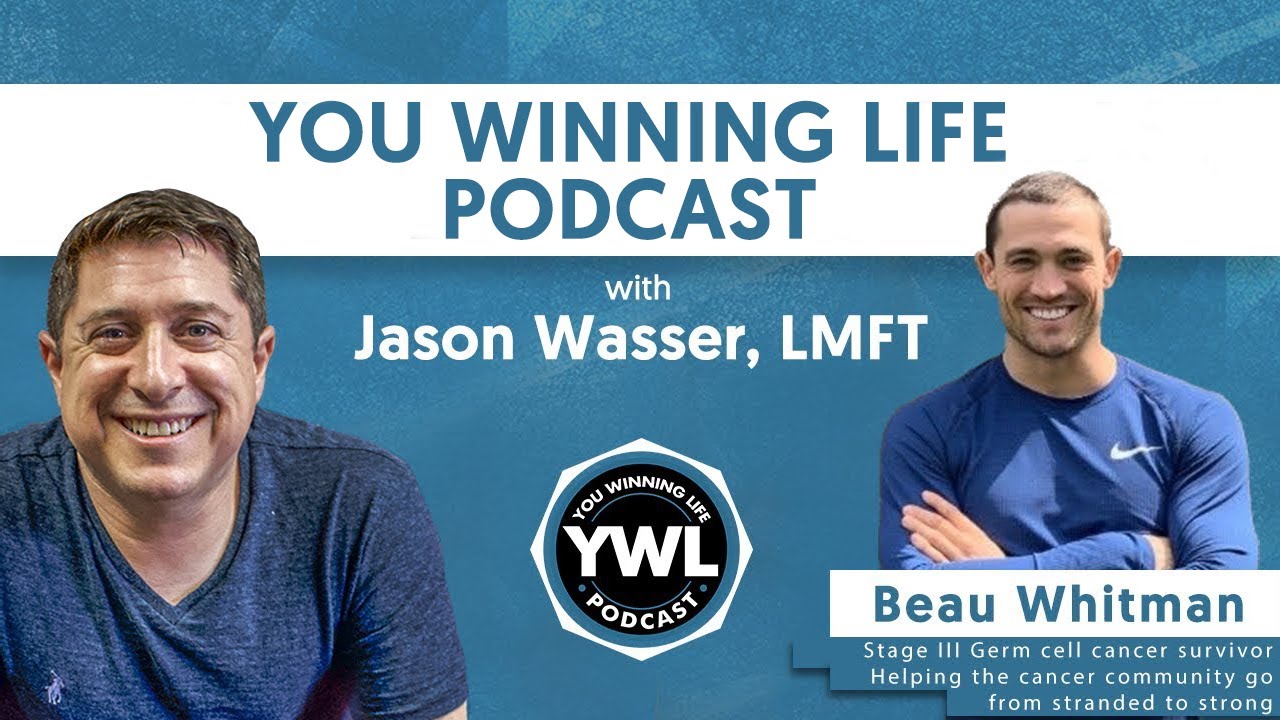
In this episode of the You Winning Life Podcast, therapist‑entrepreneur Jason Wasser interviews cancer‑survivor and recovery coach Beau Whitman. The conversation centers on the importance of operating within one’s niche—both for therapists and fitness professionals—and the ethical responsibility to decline work outside of one’s expertise. Beau explains how his personal journey through multiple surgeries and cancer shaped his brand, Pressure Fitness, which focuses on strength, recovery, and post‑injury training rather than generic weight‑loss programs. They discuss leveraging social media (Instagram, Clubhouse) to build authentic communities, the pitfalls of inauthentic personas, and the value of transparent, specialist‑driven content. Beau shares details about his upcoming “Rebuilt to Inspire” program, designed to motivate other survivors by modeling resilience. The episode closes with calls to action: follow Beau on Instagram and Clubhouse, rate the podcast on iTunes, and share the episode with anyone who could benefit.
Chapters
Hey everybody, welcome back. I'm Jason Wasser, licensed marriage and family therapist, certified entrepreneur coach, and neuro-emotional technique practitioner. But you already heard that all in the awesome introduction that we have this week. I have a really, really, really awesome powerhouse guest, which hopefully everybody's getting used to at this point. I'm only trying to get in front of the most inspiring in awesome people just to bring you as much value as possible. And I even hate using that word value because I think it's like one of the— between pivot and value, I think those have become the two most overused words in the last year, especially as we're hitting this pandemic. But today's guest is cancer survivor, recovery coach, believing that vulnerability is your greatest strength, and he helps cancer patients go from stranded to strong. He's also the founder and trainer at Pressure Fitness, all the way up from New York. Got Beau Whitman hanging chat with us today. What's up, brother?
Not much, man. Thank you so much for having me. I'm really excited to like, you know, just be on another podcast, being another great influence to just, you know, open up, talk about everything.
Yeah. So we connected in Clubhouse.
Yeah, right, we did, man.
So, so like we're, we're making things happen that, right, the, the whole pandemic-related, how do we connect with people, right? I've been on Zoom. I closed my private practice in person mid-March Uh, I made a lot like an over the weekend decision. I was hosting a young professionals retreat with a buddy of mine, Pablo, who also has his own podcast called, uh, Chief Executive Connector. And, um, that weekend I pulled the plug and I'm like, I got to move online. And I, you know, the whole thing was, I'm not going to tell my clients that they have an option. I'm just saying on Monday, our session is now on Zoom. Right. And it's been now almost a year. And how do we keep connections up? How do we keep relationships up? And one of the beautiful things about this pandemic is people have been finding a way to put their health first. And you're in the personal training world, you're in the fitness world, very much like, right, we're both in the health world. So I would love to, as we, we talk, I mean, there's such an incredible backstory that you have, so we can go either way. Where do you want to start? Do you want to talk about like from pandemic, pre-pandemic, post-pandemic stuff first, which I think is also relevant to how you got into all this stuff? And so I'm going to leave it up to you to just like, you know, go where you want to go, start with— you want to start and we'll freeform it as we go.
I think Yeah, I think, I think it's better to start in the beginning, like, so everyone can kind of understand where I came from. Because if I just jump into where I am now, they're going to be like, we don't believe this is the type of person you are. Because, you know, there's— it's a building block, like, for sure, you know. I wasn't like this person 3 years ago, like, it's completely changed. So let's just do a quick, you know, backdrop. Let's say I'm 28 years old, um, I'm from outside Philadelphia, I'm one of 7, super competitive family. I was a Nationally ranked gymnast. I was a competitive gymnast at the National Training Center in Bethlehem, Parkets National Training Center, for 12 years, almost 13 years. I was a Division I track athlete, a 5-sport high school athlete, like 3-sport state, 3-sport nationally ranked athlete. And then I'm a nationally AO competitor in Olympic weightlifting. And since the age of, got 14, I think was my first surgery. I had my first shoulder reconstruction surgery. And then between the ages of 14 and 26, 25, I was getting a reconstruction surgery every year and a half. It was either, you know, my shoulder, my wrist, my knee, my other wrist, my other shoulder, just going, you know, around the body. It was a joke. And during that time, it was always like, I grew up with this philosophy as a gymnast at that. I was like, I like to consider myself the old generation gymnast where, you know, before all the scandals and all that came out, where we were trained to, you know, when you get hurt, you shut your mouth, you keep on pushing, you go to the locker room, you go to cry. Yeah, right. Yeah, you be a gamer. Like, there— and that's how it was. And, you know, there's that whole thing where people are gymnasts still today and they're like, oh, I know what it's like to be a gymnast. We're like, no, no, no, no, no, no. But, you know, I grew up with that philosophy of, you know, keeping it all in, don't say a word, you know, just work through the pain. I kept doing that through all my surgeries, like Oh God, another surgery. Okay, I'm not gonna say how much it hurts. I'm just gonna hide it and push it off until, you know, I really need to get surgery. And this whole philosophy kept on going. And during my last surgery was my wrist. I blew up my wrist right before trying to qualify for AOs for Olympic weightlifting, the American Open. And it was like the week before and somebody approached me who was like at my gym, a member, and was like, hey, I have to get shoulder reconstruction in like a week. Like I have to get my bicep and rotator cuff done. I've heard you're like a robotic man with all this stuff and you're still snatching like 245, doing all these crazy weights. Like, what's your recovery plan? Like, can you tell people what you're doing? I think it'd be really cool. And it dawned on me, I was like, this would be a really cool opportunity to show people like what I can do as a trainer. And I was kind of in that world of, you know, what type of trainer I am. I was a head coach at NYU for the jumps, uh, jumping squad. So I was helping with the pole vaulters, long, triple, high, and I was also coaching, you know, 30 classes a week at 4 different gyms and doing— I was all over the place and running my own competitions.
You had a ton of free time in your life.
I had a ton of free time. Yeah. Uh, you know, just trying to man of many hats, you know, just grabbing out whatever.
What age bracket was this, this when you were doing this?
This was so This was around 25. Okay, 25, 26. And I did this from 24— 24 to 28. Yeah, so for 4 years I was just, you know, grinding, hustling, doing all that. And I remember sitting down with my good friend, uh, Nick Pags, and he was like, hey man, let's have a chat. Because I was like, he knows everything in the fitness world. He had his own gym, he ran, he sold it. He was a top trainer in New York City. He's a mindset fitness coach right now. He's unbelievable in the mindset world. And he was like, listen, in 3 months something's gonna happen. Like, you're at this point in your life where like, you know, you don't know what you want to do in life, but something's gonna happen. It's gonna hit you really hard. It's gonna open up the doors. 3 months later, diagnosed with cancer. You better believe he was the first person I called and was like, guess who gave me cancer, you son of a bitch. But it was a joke.
It was a way to lay down the guilt on that one, huh?
Yeah, I did. He— the funny part was like, I called him and told him he He was like, "Hahaha." Ended the call. 5 minutes later, I get a call back and he's like, "Wait a minute. It's like 2 o'clock in the morning. Like, are you serious? Are you drunk right now?" I'm like, "We can talk in the morning." And— but before all that, like my whole entire belief with fitness was this whole thing about foundation training, gymnastics strength training, and building your foundation of your body before you go to the next extremes. And that was what I focused on. I worked with recovering athletes that were like nationally ranked. High schoolers or college athletes. I worked with some professionals as well in the past, you know, getting their body back in shape after an injury. Instead of doing the physical therapy route, we did some physical therapy, then we worked on the correct, you know, explosive training they needed, restabilization training they needed to get to that next step. And it was going really well, but you know, it was a small niche, small market, but I wanted to do something more and help people more. And during that time, I started going back, going through all my surgeries, being like, this helped me the most during my shoulder reconstruction, this helped me the most during my knee, my wrist, everything. People really started to like it. And I started opening up more and more and more about it. And I went through this whole psychological battle, kind of depression, but more guilt than depression of I was broken because every year and a half there was that injury. And I was getting to that year and a half year point where I always went through. I was like, God, okay, what do I have? Okay, I have a competition coming up. My week's not that heavy, it's really light, this is going to be good. Like, I'm actually going to finally be able to qualify and go to AO. I was like, this is great. And I was at a meet with my coach, and we were at Brooklyn Barbell outside in Williamsburg. And I remember it was like my second clean. How— if no one knows what Olympic weightlifting is, you have 3 cleans, 3 snatches attempts, and then your best weight total for both of them is your actual score, and it's by weight class. I had a chance to go to AOs and then AO finals, so I dropped like 10 pounds over 4 months, like, and I did it right, 4 months, like, to drop 10 pounds. It was pretty good. I was able to lift the same weight. I felt great. I was in the best shape of my life. And I remember catching this clean, and on my second attempt, it was like 280 or something, 290, and I felt like God smite me with a lightning bolt. I thought, I, I thought I either broke my back or I bulged the disc or something happened. And I remember looking at my coach. I was like, I'm not lifting a third lift. I was like, something's wrong. My back was immediately locked up. And I remember laying there. My strength conditioning coach from NYU came. And she was like, something's wrong with your back. Like, can you walk? I'm like, I can walk. I'm just in pain. I don't know. Like, my threshold is high, but this is a whole new level. I was like, something's definitely wrong. I remember calling my parents and being like, well, we got to schedule another doctor's appointment. So we did. We went. And I also had like a bruise on my neck because I caught a cleaner earlier that week. And when I lost all the weight, like I lost like, you know, my traps, like everything was so skinny. I thought I hit my collarbone and my collarbone was swollen. So I figured I was like, oh, it's just bruised. It's fine. And like 3 days later is when my doctor's appointment was. Well, I woke up the next morning. I couldn't walk. Like I had to coach also at 5:00 AM. So at 4:00 AM, I went to step out of my bed. I was in so much pain. I remember like downing like 5 pills of Advil. And going into the gym coaching and I sat at the front of the room and it was the first time I wasn't like crying, but like the morning crew was like, something's wrong. I sat there and I was like, hey guys, I think I might have a bulged disc. I don't know what's going on. If you see me crying, it's because of how much pain I am, but I didn't want to cancel on you guys because it was last minute. So I will be sitting right here in the center of the room. Here's the workout today. And I called like the guys that I know that are like, have been in the gym for years. I could trust. I was like, they're going to be demoing the movements today. Like it was a normal crew. There was no one new, which is great. So. It was weird because then I coached 5, 6, 7, and 8 o'clock. And I remember the owner coming down after being like, "We got some calls that like you are not in a good place." And I was like, "Yeah, no." And it was great. Like the community was really like nice about it. It was the first time they were like, "Okay, this is weird. Like we know you're this strong, like funny guy in the morning and now you're just like quiet. You look like you're in pain." And I remember going to the doctors like 2 days later It was like 6 o'clock at night and we had to go to the ER to get scans done and all that thing. Next thing you know, it's 1 o'clock in the morning and we're at this ER and we know some of the nursing staff that were there. Both my parents are in healthcare and it was like a scene from a movie. I remember sitting on the bed, it's 1 o'clock in the morning and I see this nurse come by who was helping us all night long. She's crying and I get up and I'm like, goddamn it. I was like, something's definitely wrong. I was like, mom, get up, it's bad. She was like, don't say that. We don't know what's going to happen. The doctor comes around. He just looks like a pale white sheet. And he goes, "Just got off the phone with the oncologist. You have stage 4 non-Hodgkin's lymphoma. You probably have a year and a half to live and they probably won't treat you." And that was the first thing he said. And immediately I just laughed. I looked at my mom and I was like, "Yeah, right on cue. Like a year and a half." And I laughed. I was like, "All right." And I looked at the doctor. I was like, "Okay, well." the, uh, Aspen Cancer Center is down the street. Like, it's 1 o'clock in the morning. Am I being checked in, or am I being admitted here, or am I going home? It's like, what's the deal? And he looked at me and he was like, you're being way too optimistic right now. Like, I just told you you have stage 4 non-Hodgkin's lymphoma. Like, and I sat there, I was like, so? I'm like, but what's next? Because that's how my brain was taught. Like, and I— it wasn't like this whole, like, I was gonna die thing. It was more like, I was more worried about, well, I have a competition that I'm running in a week and a half. I have 4 events this week. I have this, this, and this. I was like, what's new? I was like, it's always—
you're looking at us like, what do I have to do to train for this competition?
Yeah, exactly. Yeah, it's like, what's gonna happen next? And I remember my mom, because a lot of people are like, oh dude, like, you're just in shock. And I was like, probably, that makes sense. And then I remember my mom being like, yeah, okay, like, we're in the ER, let me go look at the scans myself. And it wasn't until I saw her go look at the scans, you could just see her go from like, this isn't real, to just sheet white. Where I was like, okay, this is definitely real. This is like, you know, I got a year and a half. And I remember he was like, oh, we're not going to admit you. Like, you have to go to the cancer center tomorrow. And I remember getting in the car and being like, Mom, couple things. I'm going back to the city this weekend to finish all my stuff. Like, I have to. I'm the director of this 2500 competition that's in a week and a half. I was like, I'm also running these events. I have to be back. I was like, two, this isn't real until my head is shaved and I have an IV in my arm. I was like, and 3, what are we telling the fam? I was like, that's the big thing. Like there's 7 of us. What's going to happen? Because I'm going to tell you right now, everyone's going to drop everything they're doing and stay home. Like my little brother immediately walked up to me and was like, I'm calling my school tomorrow. I'm taking a semester off and staying home. I was like, absolutely not. I was like, you are not doing that. Do not be stupid. You're not changing your whole life.
I like, I guess I'm dying, but where are you in the birth order of your siblings?
So I have 4 older sisters and then 2 younger brothers. And I remember sitting there and I called my 2 closest friends from college. One was this girl I dated forever and we're still best friends. We're each other's anchors in life. I called her and then I called my good friend Holden Greidner. And they both at first were like, "Yeah, okay. This isn't real." And I called them at like 3 o'clock in the morning. And then 3 hours later when they woke up, they were like, Hey, we're just calling to make sure. And I was like, this is real. And they're like, okay. We talked and they were like, how do you feel? I'm like, I don't know. It's like, I feel great. Like, I'm not going to know what I feel like until, you know, we really go in. And I remember going into the, the cancer center. They did the blood test, the scans and everything. And they were like, yeah, this is real. Like, it's non-Hodgkin's lymphoma, stage 4. Like, we can talk treatment plans. And it was scary. Like, it got to the point where, like, I got to an all low of I wrote a sheet out in my notes, like, what am I going to do in the next year and a half? And I remember calling my friend Holden and being like, what do you think of this? And he literally caught on immediately. He was like, delete this right now. You're not doing this. And I was like, why? He was like, come on, let's be honest. This isn't the end. Get out of here. We'll do whatever you want, but don't write a sheet down. And I never wrote one down since then. And then 3 and a half weeks later, I finally told my mom. I was like, I need to come clean about this. Stuff. I have my phone exploding. I had like 400 messages on my phone from like members asking what happened, trainers asking what happened, like from somebody that was coaching, you know, at 4 different gyms, 30 classes a week. Also the college, coaching at college, and then having 15 personal like sessions, training sessions. Everyone was like, you just blanked. No one knew where I went. And I told my mom, I was like, I gotta come clean. Like, I wanna just be open about this and just, you know, say what I have. And mom was like, all right, let's just go in for our final appointment and figure out what the treatment plan is first. And that was like the night before my appointment at 6 a.m. the next day, a doctor called and was like, greatest news in the world. We got your biopsy back, your second biopsy back from one of the masses. And it turns out that one of the cells are mutated. So it's not non-Hodgkin's lymphoma. It's this super rare cancer called seminar mutatus something. Like, it's a germ cell cancer, and there was like, it's a mix from testicular cancer and some other type of cancer, but like, it's 100% curable. But you know, you have to go through like 5 months of like the most intense chemo and then 2 major surgeries of like lymph node dissection. And he was like, there's still a chance it can come back after, but there's no stage 4. Like, you're not gonna die. Um, and it was one of those things where I was just like Okay, like at least something's going for me. Like it wasn't like a switch of like, it started crying, being like, I'm gonna live. It was just like, okay, I'm still hurt. What's, you know, it was always that next step. It was always, and I, yeah, it's always what's next. And I went on my Instagram that day. I already had my head shaved. I had like a flow, like where I could put in a man bun. Like I went to the store with my brother, the haircut place, shaved it all off and posted the next day on my Instagram being like, Dear cancer, the joke is on you. I look better with a shaved head. Love, Beau. And it was great because I'm that joking person all the time, but people know when I post something that it's serious. I had so many people being like, "Hahaha," or like, "Oh my God, it's real." And I had to go on my Instagram story and be like, "Hey guys, I have cancer. This is the deal. This is how bad it is." And just started opening up. And the responses I got were great. And I had all these people that were going through cancer or people that were survivors being like, you know, "Thank you for sharing your story." And it kind of opened up my mind to be like, to that one girl who referenced me as a coach being like, "Tell us more about your injury." And I was like, "Wow, this is amazing. I'm just gonna talk every single day." So from like that day on, I got on my Instagram and on my story and 15 seconds is our story. That's all like a post is on Instagram. And I would go on for 15 seconds to just be like, "This is how I feel." Doesn't matter if it was like angry, sad, taboo. Like I was talking about the stupidest stuff half the time, but like, What started happening was these people that were going through cancer or these people that are going through depression started reaching out and being like, how are you okay sharing? How are you okay saying some of this? Like, some of this stuff you shouldn't be saying. And I'm like, well, why not? I was like, what? I know, like, I grew up in a time period too where it's like, you know, men aren't supposed to be vulnerable, but why, why can't they be? Why? And I found out that I was able to open up more. I felt a lot better about myself. My treatment started feeling better. My journey every day. And when I woke up, it was like whenever I was feeling down and upset, I would go and post about it, and then people would reach out and respond to it. Not in a, a helping manner, be like, I feel so sorry for you, like, if there's anything I can do, let me know. It was more about like, hey, I'm glad that you're opening up about this, my friend's going through this and wants to talk to you about the same thing. And it turned into this amazing thing where it kind of opened the door to this new world of cancer with patients and survivors. And my mind was already ticking on what was I going to do after cancer. And I remember I was 3 months into my chemo treatment and I remember sitting with my coach. I was visiting him. I was still going in and coaching. I was still doing events. I still went and talked in front of 2,000 people. Like the first week of my chemo, I had 5 days straight of chemo, went from the hospital to Long Beach, New York, and stood in front of like 1,500, 2,000 people and gave a speech. Talk to them. Immediately puked my guts up right after.
And it wasn't from a fear of public speaking?
No, no, it wasn't.
That was, that was the chemo hitting, right?
Everything. And I just remember like people coming up being like, oh, what's your workout plan? What are you going to do after this? And I was like, oh, I don't know yet. And I went and talked to my doctor the next day and he was like, well, there's therapy, but you're not going to need therapy, but you're going to be able to go back to what you used to be able to do. And I was like, that's not the question I'm looking for. I was like, what's, what's next? Like Who do I go see? Because every time I got hurt, I mean, I went to like nationally ranked coaches, like world champ. I would just message them after wazoo being like, help me, what can I do? Like, I will give you everything for 90 days if you help me. Like, you know, working for them. And I did that. And my connection and just being vulnerable and opening up helped so much. And I found out there's no programs. And I remember looking at Livestrong and they had a program for YMCA, but it was like, you know, basic trainers. Like there wasn't like knowing it, how to get back into your sport or even back into your daily life. Because for people that, you know, are listening in that don't know how cancer really affects you, like your life's on hold. Like you can't do anything. And it was for a year and a half where like all I did was sit on the couch, watch TV, or like read a book, work on my online biz. Like, like I was doing stuff because I was pushing myself. But like then when they were saying you're done, you're finished, you feel so isolated. You're like, how do I get back into it? Because you can't just jump back into it. Yeah. So it's a whole thing. And that's where it dawned on me because people kept reaching out being like, how are you going to train? How— where's your mental state? How do you stay in this positive? And I was like, this is my calling. I was like, I am so excited because I'm going to create the first cancer program. I'm going to do this. I'm going to do— and I remember I talked to the VP of Livestrong, amazing woman. And I was like, this is what I want to do. And she was like, oh, we have that at YMCA gyms. I was like, no, you don't. I was like, I want like cancer-certified trainers. I want— that are not just certified trainers but are survivors. I was like, there are so many people out there that connect because the biggest thing— and people can all relate to this that are listening— if you are someone that's surviving from depression, someone that's like going through a hard struggle time with family, if it's abuse, if it's a survivor in general, it's so much easier to talk to somebody that's going through the same thing you are because they really understand.
Well, that's the advantage point, right? That if you can— I joke, right? I'm a licensed marriage and family therapist. My parents are divorced. And I got married between my first and second year of graduate school and got divorced a few years— like 6 years later. And people like, but you're a marriage and family therapist. I'm like, yeah, but 50-something— 58% of the universe is divorced. But— and I don't hide the fact that I'm divorced. It was 10 years ago. But I know what I've learned from being in that type of scenario. I know what I've learned about myself. I know what I can bring to the table from a very different vantage point of saying, oh, I recognize that, that maybe a person who hasn't gone through it might You know, it's not just about the books and, and here's what the healing you have to do. Here's the work you have to do. Here's the questions that no one else is going to ask you to look at. So I very much appreciate that vantage point that you're coming from of saying, yeah, it can't just be someone who wants to work with someone who's in recovery of a major medical diagnosis. It should be people who've been through it themselves.
And I think the biggest thing that I want to get into is we talk about vulnerability, okay? And I believe vulnerability is the greatest strength that we have as humans. And like Angela Duckworth talks about it all the time, Brené Brown. Yeah, Brené. They all talk about it. And like, I've been on the prowl to be on TED and talk about this topic. But since I opened up about cancer, I have a book in my backpack and it's filled with over 300 names right now of people that I've helped, that have reached out to me about not just being like, okay, give me advice. I've gotten on the phone with— like, during my cancer, people will be like, hey, can you help me? I'm like, let's jump on a Zoom call. Let's do this. Like, same thing with Clubhouse. But My belief is 15 seconds of vulnerability can change a life. And what I mean by that is it can change a life. And you have to define what vulnerability is. Okay. A lot of people think it's weakness, weakness in a structure. Okay. For me, vulnerability is just opening up a door. That's all it is. And it can be any aspect. It can be, for example, people go, how can you be, how can I practice this? I go, go on your Instagram. If you're free this week, or even a day you find out you wake up and like your meetings are canceled, like this giant snowstorm that hit us. I do this once a week. Whenever I find a day, like today's my off day. So Monday I posted on my Instagram story, hey guys, I have a free day this week. I used to be an animator and graphic designer. If anyone needs help with their business logo or anything like that, let me know. I'd be free to help and give points or tips out or anything. That's me opening up. That's me just do it. And I had about 8 people that messaged me. And I was like, all right guys, I'm going to hit the first 3 people and like, see if I can get, you know, how I can help. And then if I can't help you next week, if I have more time, I'll come back. And it's great because it's, it's not just giving back. It's also, I'm practicing something I love to do. Um, I'm staying in practice that, but that 15 seconds really helping to open up to people. One of my 2 favorite moments so far that like changed my view of like why I keep doing this is I remember my one friend Austin, who's a fitness trainer in Chicago, amazing guy. He was like, let's do a workout together and let's get people to come in a Zoom class. There were 70 people in this Zoom and we were just hitting this workout at like, we're going crazy. And at the very end, we're having like a half mindset vulnerability talk. And I was like, I want everyone to close your eyes and this is what I want to see. I want everyone to open up about what are they most vulnerable about in this, like right now in this second, like, is it how bad your body's hurting? Is it like, you know, missing a loved one? Like,. And the responses we got, and I put it so like you can put it anonymous. So like you can't see who's doing it. I had people being like, being forgotten, commute. Somebody came up saying committed, like I'm afraid of committing suicide, like all these deep things. And at the end I'm like reading through these things and like, you know, they're like the committed suicide. I like checked that off the side, immediately sent it to Austin. I was like, cuz we can see who's sending it. And there was a common thread of being forgotten coming up, like being forgotten, not being missed, not being valued, like these kind of things. And this one girl started crying and I was like, I'm sorry if I made you guys cry. I was like, what's going on? She was just like, you know, I lost my family when I was young. I was through an abusive relationship. I feel like no one's going to miss me, blah, blah, blah. This whole entire thing and just opening up in front of 70 people. And the most amazing thing happened. 6 people started talking on this chat and then they like stopped and one at a time spoke. And all 6 of these women went through like domestic abuse and lost their family and was in the same situation she was. And they all formed a group and now talk once a week.
Amazing.
And I was just sitting there and like the one girl reached out to me a week later, was like, thank you, you changed my life. Like this, these people are helping me do this, this, this, and this. And I'm on a better place now, my path. And I I was like, I didn't do anything. And they were like, no, you took 15 seconds to make us do this drill. And now I'm here. That's what I tell people all the time when it's like, you know, we're not in the 1900s anymore. We're not in 1920s where it's like rub dirt on it, do this, like preach about that vulnerability so much. And you know, you can get to the level where you get to where I am, where I don't care what people think because you either are going to like me or you're going to hate me. Like I'm that 5:00 AM coach. I like to use that as analogy where People are like, oh, I'm going to try to work out in the morning. You see this coach blaring the Circle of Life at 5 AM and you're like, I'm leaving because this kid's crazy. Like, right.
I love you for it, but I hate the fact that you have to make me get up at 5 AM. It's funny. I started, um, during as a pandemic pivot, you know, it started and really, you know, no one knew what the hell was going on. I did a speed dating singles thing online on Facebook with someone's group and it was so not for me, that group of people. But like I reached out to the host of it. And I said, thank you so much. I want to let you know I'm a licensed therapist and I'm doing stuff for young professionals. Would you be open if I gave a class? Which we started advertising. So that is now— so that was what, April of last year? And now every single week since then, I've had an unofficial coaching call with ranging from 5 to 35 people, which is now on Tuesday nights. It's called Unfinished Business, where I either present a theme and we hash it out as a group, or someone asks a question, they get into the hot seat and we pick it apart and everybody He jumps in and I might give some non-therapeutic— I'm not playing, you know, therapist. I make the rules really clear and we unpackage stuff together and it gets really, really, really vulnerable.
Right.
And then people are in tears and people are sharing some heavy, heavy stuff. You know, I joke like if we're not, if we're not crying by the end of it, we're not, we're not going deep enough type of thing.
Right.
Which I know you get. But, and I always like always make the caveat, I'm like, if I'm giving you crap, it's because I really care about you. Like if I'm poking the bear, I'm not poking the bear for my enjoyment. I'm poking the bear because no one else has, and I want you to think about things in a different way. And I think like that's like what we need in our— I'm 42, so I'm— everybody's in there in their mid to late 20s into their early 40s, and it's all single young professionals, right? And there's a lot of that story of, like you just said, I'm not where I need to be in comparison to my friends, right? My friend— maybe they're like, my friends are married, they have a better job, they have a— they live wherever they live, they might have kids already. I don't have these things. Why aren't I meeting the right person? I've been through bad relationships. So we all have shared similar stories, right? They become traumas at a certain point, but to find people that where you know you're not alone is outstanding. And they've all created friendships with each other offline from this group into— right, I mean, whatever, I mean, you know, in cyberspace as well. But, but we're creating community, and that's what I loved about how you and I met, right, through Clubhouse, which is like now creating a community.
And that's the crazy part. I mean, I believe everything happens for a reason. Like, if I look back why cancer was so an easy type of thing for me. It was all my previous surgeries building up and all the recovery. But the Clubhouse world, that was hilarious because I got a text from my buddy being like, yo, I need you in this call right now. I'm like, what do you mean? Because I've been in Clubhouse for almost 3 months or something and I haven't been on that long. Like I've been on and off, on and off. And he was like, I need you to come on, tell your story. And I was like, okay. So like I got on, I did it. I wasn't even looking at how many people were in the room or anything.
Was that the one where I messaged you right after? Or that was a different time?
Yeah, it was the one where I ended ended up being a moderator. And I got on and, you know, I told my story. And then he was like, are you sure you're okay? Like, texted me separately. It was like, are you okay saying this in front of this many people? I forget how many. I think there was 200 or something. It was, it was like 200 or something people in there. And I'm like, I didn't even realize it. I was like, yeah, I don't care.
Like, because you're like walking around your apartment just talking, right?
I'm like, I'm just walking around talking, you know, like, but I think, you know, doing this whole thing and talking about this. And he was like, it's a lot of information. I'm like, I don't care. Like, it's just opening up and talking about I think the one thing I want to talk about really quickly though is because people are hearing me chat and they're, you know, probably wondering like, but is there a time where you were really vulnerable? Is there a time where like you hit rock bottom? And there was, there was two times. And so the biggest thing, the hardest part for me for cancer, the hardest part for me opening up was so since being one of seven, four older sisters, two younger brothers, I was always the pillar in the fam. Like whenever I got hurt, I would get back up. I was the strongest, always like, you know, oorah, next type of thing. Uh, almost like Marine Corps kind of thing, Semper Fi. But whenever anything shit hit the fan, I was always the pillar in the family keeping everyone up. That was always the thing. So for me, when I got cancer, like my mom's dad died of lung cancer, like it was like a big thing. Like it was kind of one of those scary things because no one knew kind of how to be the pillar. And I remember like I never cried, never did anything. And there was this one day, it was after my first round of chemo. You get a booster shot, a white— a white cell booster shot to help you like fight, keep your immune system up and everything. And they screwed up because you're not supposed to get a shot if you have a ton of surgery or like broken bones, because one of the side effects are like you get extreme, like acute pain to where all those sites are. So when someone gave me the shot, I guess they weren't looking at my file and saw that I had 7 reconstructions beforehand. So the next day I woke up I was in that mind space of I couldn't stop shaking even though I would sit still and go into a blank zone in my mind. My body was shaking. Couldn't control it. The pain was so bad. I remember getting over to the couch and being at that point where I was like, "I can't cry in front of my mom and my two sisters. I can't cry. I can't cry. I can't cry." My mom handed me a bowl of oatmeal that was sitting out for a while. I remember she handed it to me and I was just like, "Bowl," was just shaking. Then I fell over because I couldn't control my body and I just bawled my eyes out. And it was like one of those things where I was just like, well, fuck me. Like, I'm finally broken down to zero. Like, I don't know what's going to happen. And my sisters came over, gave me a hug. They were like, it's about goddamn time you cry. Like, we've been crying for a week. You haven't cried in 3 months. But it was one of those things. And then like I cried for like, you know, 5 minutes and then was like better because I was like, okay, you guys like are sucking me. Yeah. Yeah. And it was like, okay, that's great. And then the other time was after my, after my chemo treatments were done, December 28th. I will never forget the day I went in for surgery to get my whole, my abdominal stomach, like whole area, get all the lymph node dissection, retroperitoneal lymph node dissection surgery. That's what it's called. And the doctor goes, I'm going to forewarn you. He was like, this surgery is one of the 3 most painful surgeries out there. Like besides amputation, all that. He was like, you're gonna get 2— yeah, for recovery. He was like, you're gonna have like 200-something staples going up from your chest all the way down your pelvic bone. He was like, but that's not the issue. He was like, if you have someone that walks in that doesn't have— that's like, you know, not fit, doesn't have a core, there's no muscle to cut through there. So like, it's an easier recovery for them. They're like, you're a gymnast. Yeah, you're an Olympic weightlifter. Your core is solid rock. He goes, we have to cut through all that. He goes, it's going to be very hard for you to use that again, but like, because of how it contracts and everything. But he was like, the hardest thing for people mindset related is how much your core helps you. And in terms of walking as well, he was like, listen, we're gonna do the surgery. It's gonna be like, you know, 8 hours, 9 hours long or something. Then you're gonna sleep for another 6 hours, and then we're gonna wake you up and you're gonna have to walk 10 laps around the, you know, the floor. And I was like, okay, like, this is gonna be easy. And he was like, no. He was like, take all your surgeries and times it by 12 because you're not gonna be able to walk. Your pain's gonna be so bad. And I remember waking up and like looking down at my stomach and I felt like Iron Man. I was like, oh, this is dope. Look at this scar. And then I remember like getting up and being like, this is going to be easy. Like I was running so much, doing all this stuff, and I couldn't even take one step by myself. And it was like 4:30 in the morning and my buddy Nick Pag showed up and he literally scoots me under one arm. We started walking and it was one of the most painful moments because like I would get down to the end of the hallway and it wasn't just pain. I was out of breath. Everything was swarmed, like, in my stomach and everything. I was like, I can't even make it half a lap and I have to do 10 laps. Took me like 6 hours or something to just make it. But like, you have to walk like 14 laps a day. And like, I was crying halfway through.
And now you've never cried to an IV also?
Like, oh yeah, I was hooked up to an IV. I was doing all that painkillers, felt like it was doing nothing. But you know, he kept saying the same thing. He was like, everything happens for a reason, man. He was You made it through this. You can do this. And we were making a joke because I told him the day I was diagnosed with cancer, right before that, when we were having that meeting, I was like, hey man, I just need you to know something. If I get hurt again due to fitness, I'm done with it. I'm going to go back, sit at a desk and do animation work. I am done. And I remember during the walking around, I was like, well, at least I'm done with fitness. And he started laughing. He was like, bro, fitness didn't give you cancer. Suck it up. I was like, wow. I was like, damn it. I was like, I guess you're right. I was like, but okay. But you know, it all came back to being vulnerable. I'm like, yeah, I do have those low bottoms. And I talk about those things. I post like Throwback Thursdays. I post about those things. Like I still have panic attacks every once in a while. Like last week I was in my gym working out. I was doing a heavy treadmill workout with, you know, some burpees and some like weighted squats. And I remember getting done my workout and I couldn't breathe that well. And I was like, I need to make it outside. I need to make it outside. And like the mask wasn't helping. And I remember opening up this door. I took 2 steps and I collapsed hard and couldn't breathe because like my neck was swollen from like if I run too fast or something like my neck swells. And I forgot to tell my owners that were in pressure that, you know, I was doing cardio. They all came running over and they were like, oh my God, we're calling an ambulance. I'm like, no. Don't—
just a panic attack.
It's just a panic attack. Can't breathe because I went— yeah, I went through like an hour and a half in the hospital one time not being able to breathe. And they finally— I got calmed down, I got all that, and they were like, do you need to tell us something? And I was like, Jesus Christ. And it was embarrassing, but at the end of the day, I was like, hey guys, like, here's the highlight of your day. How do you feel? Like, I gotta keep you on your toes somehow. But you know, it all comes back to that vulnerability, just opening up saying like, you know, just what's on your mind. It doesn't have to be so negative all the time. It can be positive. Just get on, even if you want to get on, like I went on the other day and was like, "Hey guys, if you're having a bad day, here's my puppy like going through the snow. I hope you guys enjoy it because I'm having a bad day." Like I don't say why I'm having a bad day, but that opens up so many doors. And with entrepreneurs right now too, I have so many people asking like, How'd you get so started so fast? How is this being so successful with working with all these cancer patients? And I was like, 15 seconds of vulnerability. What? Okay, you have a small business. What's your issue? Oh, I'm having a lot of issue with my LCC or having a lot of issue with graphic design work. And I was like, go on your Instagram or Facebook, go to your story and go, hey guys, I'm starting a business. I'm really struggling with this. Who can help me or who can give me advice? Yep. That's— and like, if you do that, I guarantee you people are going to reach out, be like, hey, I have a buddy, or hey, I can probably help you out, or hey, and they'll look just to help. They're not going to be like, hey, pay me $5,000 and I'll help you. They'll look to help. They're your friends. Exactly.
Or they'll point you in the right direction.
Or they'll point you in the right direction.
I hosted a room the other day in Clubhouse, um, and it was like— and I can't remember the exact theme it was— and I'm like, and but when you're, when you're done sharing about what you're doing, feel free to make an ask of somebody, right? And say, hey, and what are you looking for? What do you need help with? And I made— I put it on my, on my bio on Clubhouse and I says, I'm looking for help with online course creation. Here's all the things I could do to help you, right? All the ways where, what I'm doing in my world, right? But I'm looking for help with online course creation. And I'm waiting to like, to see like, if someone goes through that, like, oh yeah, I can help you. There you go. Right.
So there you go.
Right.
So we're going to talk after this, but I can help you for sure.
But then I love what you're saying because it is, you know, the crowdsourcing, the networking. One of the guests I had, Stephen Wilcox, he used to work at Oakley and all this stuff. And he created, um, called the Parkit Chair. He basically is an outdoor camping beach guy and he's like, all the chairs that we get are crap and they, right, they, you're lucky if they last you a season, right? Camping and beach, they're all poor quality. They're all uncomfortable. And he came up with a design for one of these like camping slash beach chairs and he crowdsourced it. And within like a couple days, all their money, I think it was, I don't even remember. It might not even have been a day where all the money came in like $50,000, whatever it was. Because he crowdsourced it and people are like, oh my God, you're gonna solve a problem that we have an issue with. And I think you're touching on the point— I talk about this all the time, especially when I'm doing my entrepreneur coaching, when people are like, I want to start a business, I don't know what to do. I'm like, what are you uniquely positioned by your world of expertise, of what you've went through, to help other people solve a problem that no one else has solved?
I love that. I had, uh— were you on the call when the girl Simone came on? I don't think I think you were. This girl, she was a fitness trainer. She came on to Clubhouse. I remember this. And she was like, I'm having so much trouble, like doing what I want to do. I want to be a Nike master trainer. I was like, same here. I want to represent Nike as a cancer, like coach and trainer. And she was like, yeah, well, my superpower statement, for those of you that don't know, superpower statement, it's like that hook to get people to come in, what your business tagline is. She was like, I train people like professional athletes, something, something like super generic, something like that. And I was like, It's like, tell me your background. Why are you in fitness? Like, this is in Clubhouse with like 200 people on this call. And she was like, well, fitness helped me defeat bipolarism and made me a suicide survivor. And I was like, she kept on ranting. I was like, stop, stop, stop. I was like, so you're a suicide survivor and bipolar depression survivor? And she was like, yeah. I'm like, there's your tagline. And like, that's your niche. And she was like, she was like, well, yeah, I don't tell people until they ask me about it. I'm like, why? And I got on the phone with her after. Zoom call and we started talking. She was more open than I am about stuff. And I was like, this is who you need to be. I was like, and we ended up making her superpower statement go from like, I train, I help people. I think it was like, I help people train like professional athletes. It was her first one. Then her second one was like, I show people how training like a professional athlete can defeat depression. And I was like, that is fire. That is great. And we did a live together on Instagram. 3 days ago, she told her story and she changed her whole entire bio on Instagram to like this whole thing that I helped her do. And then within 3 days, she had 50 people reach out to her asking to work with her. I'm like, there you go. I was like, how you feeling? She was like, I woke up and I feel accomplished, not just like with my job, but with life. I'm helping people with what I went through. And it's because I went to Clubhouse and opened up for 15 seconds about what was going on.
And it becomes so purposeful. And I think that's really Growing up a child of— my parents got divorced. It took years for them to get divorced. But I grew up in that home where it wasn't always the most stable. It was a loving home, but it wasn't a stable home. And, you know, to work with kids for many years previous to becoming a therapist, I was youth director, camp director, all that stuff. I really loved it. But I really do see now as an adult, what we're really trying to unpackage and heal is all this stuff, like the real true love, the self-love, the stories that we have to let go of. That really is based in resentments. And I'm finding more and more people like, no, I don't— I'm not upset at them. I'm like, what's the definition of a resentment? And they're like, well, I'm not angry. I'm like, well, it doesn't have to show up as anger. Do you wish you got something differently than what you did from this experience in a childhood? And they're like, yeah. I'm like, well, that's a resentment. Like, what do you mean? Like, you know, like, it's just like, because you think it to be this big blow up. Like, you know, you're holding on to it as everything you're like every morning you're waking up in that mindset. But that's not right. That's not what a resentment— it could be.
Yeah.
But there's so much complexity to it. And I think that as people work through these things, as they work through resentments, as they work through and understanding what they carry with them— because I have this belief that you can't be of— you can't be empowered and be a victim at the same time. And you gotta pick.
Yeah, exactly right.
So as you're working through an issue, it's— you have to decide, like, what are all the— and I challenge people to do this. So those of you who are listening, create a list. What are What are the things in your life that you are fully empowered about? And what are the things in your life that you're still saying because of circumstance, because of person, because of money, because of this relationship, because of the society, because of politics, because of whoever, that you believe that you're unable to accomplish whatever that specific thing is? That's the victimhood stance, right? And your job is to now remove all those things about that to get it to the other side of empowerment. But there are going to be things you're going to be empowered about for sure. And there's going to be things you're a victimhood, right, in victimhood about. Out, but you can't carry— you can't be empowered and be a victim at the same time. And our job is to move more from category victimhood to category empowerment through the course of this lifetime.
Yep. I mean, with that, like, you can't be one and the other, but what I like to do is when I work with like cancer patients, for example, the first thing that like the light bulb that goes above your head that really changes people's view when I'm dealing with— not dealing, sorry, that's the wrong word. When I'm working with people that are going through cancer, the first thing I tell them, I was like, how does it feel to be a survivor? And they're like, I'm not a survivor yet. I'm like, what do you have right now? And they're like, oh, I have this type of cancer. I'm like, yeah, are you living? And they're like, yeah. I'm like, you're surviving through cancer. You're a survivor. And they're like, oh, that's the language. Oh, so yeah. And they're like, they, that whole, once I say that, this like pedestal kicks cancer off because like, you know, we deemed cancer in society as such a negative thing. Think of, we're brainwashed as it, look at every film, TV show, movie. It's always about death with cancer. It's such a negative thing. And once I do that to people and kind of change their reality and the language of it, they all go immediately to, oh, I'm not the victim. Like, I'm strong. Like, I'm doing this. I can beat this. And it's this whole entire world of changing this concept. Same thing with vulnerability. That's what I'm trying to do right now, you know, changing it from instead of being this negative thing to open up more about it. And it doesn't have to be again about, This is what I'm going through. It really sucks. This is what's happening, or this is what's happening. Like, start small and you'll notice the more you do it, you'll start opening up more to like your friends, your family, close ones, work buddies. And then, you know, you'll be able to get deeper and deeper with those things.
And I love that you're pinpointing on the language side of things because the words have power, right? As I hear, I hear James Earl Jones in my ear every time I say that phrase. But it's like the languaging that we choose to use. Like, I can tell what someone— where someone is stuck just by the words they use to describe the situation that they're going through. And many times I'll just offer a different word in exchange for one of the words they use that's a little bit more strategic or a little bit more, uh, light.
And their whole—
again, the vantage point or the approach to solving that problem starts opening up to them because the word that we typically use keeps us most stuck. Because again, right, going back into— let's just say that puts us back in that victim space, but it also leaves us less maneuverable, less strategic. So I always want to find like, if we had a list of words, what are all the synonyms for that word? Which word is the better feeling word that will possibly, if you started using that word, will give you more possibility and expansion?
Exactly right.
And I think that as you're, as you're, as you caught yourself of, you know, dealing with versus as I'm, you know, working with or supporting through, it's right there. They all mean the same thing. And none, right? But we are so aware in the work we're doing of how much power that has to lead someone towards being that much more successful when they realize that they can stop telling that story to themselves.
I think that's really powerful. Yep. Yeah, I agree, man.
So as you were going through all this and as you're doing, um, your healing, you created this new— this business that— this is this personal training.
Yeah. So what I did was I— yeah, I looked over, you know, what was missing from the community. I was like, okay, cancer, I can go to a YMCA gym. And I even Googled, it's like cancer recovery coaches. There was nothing on Google. I was like baffled. I'm like, how is there not something? And then I realized there's no real certification yet. There's no nothing out yet. And then I remember finding that ACE, NASM and ACE, NASM didn't have one, but ACE just came out about a year ago, year and a half ago now with a cancer specialist certification. I immediately jumped on, you know, took the certification, took me like 3 months to do. But it like focuses on like the most 10, 12 most common cancers, you know, the surgeries, it's felt like I was being a doctor, but it was like so insightful, knowledgeable as a personal trainer to also learn that. And I looked at my own personal journey, looked at my notes of like, you know, my journaling and all that stuff. And like, I looked back, back at conversations that I was having with people and I decided to make this program. It's called Rebuilt to Inspire. And because when we're going through cancer, okay, we're pretty much being stripped of everything. Like, breath, body weight, or gaining weight, mental system, like our mental chemo brain, I like to call it, where we kind of go in that daze and we blank. Like, I still go through it. Like, there's those days and I always joke about it. I'm like, ah, I'm chemo brain. Give me like 5 minutes. And I decided to make this program that's 60 days long where, you know, I write a program that's specialized to that person depending on their cancer and what they have. If they're in the city, I'll work with them one-on-one. Uh, and then, you know, once a week we jump on the call and we talk, we do mindset drill work. I go through all these different drills that I've written, that I've worked out with that helped not just me, but other people that are going through cancer as well. And it's been going really great. I've helped around 200 people so far go through it that are either patients or survivors. And on top of that, I started a— with the gym that I'm at in New York City, it's called Pressure Fitness. We're in Chelsea. They have been amazing and supporting what I want to do. And we're starting next week now. Uh, we're going to go once a month. A week, one day of the month or a week. We haven't really set on the exact date, but we're going to do that whole day. It's going to be all donation classes and whatever that amount is, we're going to use that as a foundation cash thing for any patient or cancer survivor that are in the city that want to come in and work out with me. They can work out for free because the biggest thing that I'm finding, and I, I'm going through it right now too, is All right, we're cancer survivors, and then they— or we've already been, we defeated, we're in remission. They could go back to your normal life, and then we're like, okay, I'm gonna go back to my normal life, but I still have to pay bills now. I had to pay for this, now I had to pay for that. I don't have cash to spend at a gym or to do this, but it would really help me mentally and physically. So now this is my way. Instead of saying let's give back to the cancer community at the hospital, I want to give it back to the people that actually like write in the city need it. Like, we have MSK, we have NYU, we have Columbia, and I know there's survivors going around that just want to be able to feel like they're able to move, to work out, and to be able to work with somebody that has gone through it but also is certified through it, that can actually, you know, know what they're doing so they're in a safe place. And that's— I'm, I'm starting that, uh, next week. I believe it's next week when we're going to start it, or the 1st of March is going to be our official launch date.
But Is there going to be a link online for people who are not part of that program to just donate from outside of—
Yeah, so yeah, that's all going to be created. It's all going to go on my website and everything. We're going to create all that soon. But yeah, it's good. It's something that's not been done yet, and I'm really excited about it. So, you know, it's, it's about changing the community at the end of the day. That's what I really want to do. I want to make an impact, not just because there's no one doing it, but more because there's this drop-off in the Cancer Society, where if you think about it, it's like an uphill battle where you're at the ground floor, you get diagnosed and you have your family, your friends, you're walking up this hill, you have your doctors, you still have your family, you have your friends. And then at the top of this hill or cliff, it's like this celebration. Hey, you beat it. Oh my God, congratulations. And then there's like this sheer cliff and at the bottom there's you now and it's like work, job, and everyone's kind of like gone. And that's how, that's how I felt that it happened to me. Once I beat it, everyone was like, oh great, like, congratulations.
Not crisis anymore, right?
Yeah, yeah, it's not like a crisis anymore, like, congratulations. And then it was like, there's nothing, there's no support anymore, it's dipped off. And I want to be able to be that support that can help, you know, continue this positive aspect because, you know, fitness is such an important part of anyone's life, even if it's just getting up and moving, like, or getting up and doing something. Like, I remember working with this patient 2 weeks ago. And I went to her apartment, you know, quarantine safe and everything like that. And she's stage 4 colon cancer. She's going through it. And if anyone that does not know about colon cancer, it is, you know, it's hit and miss, meaning one week you could be fine, the next week you could be gone. Like it's a very, very severe cancer. And I remember she was like, I'm not having a good day. I don't know what to do. And we talked for an hour and all she did is every 10 minutes we got her up from one seat, moved across the room, sat down, got up, up, moved, sat down, got up, moved, maybe moved something. Like, we did these small activities type of a thing, but having someone there to distract her and kind of move around. And at the end, you know, she was sweating, she was working out. She was like, it's the most I moved in like 2 months. I was like, yeah, and each time you move is a win.
That's—
every time you move, it's a win. And a lot of people listening, I didn't understand that until I was going through cancer, where there was days where I would get up and I remember taking one step out of my bed and being like, whoa, nope, nope. And the best way to like convey it, I feel like, is for people that are wondering, like, I want to be in your shoes, is people, when you get up in the morning, okay, let's say your foot's asleep, you know, when you take that step and you kind of fall and you catch yourself and you're like, whoa, like my leg's asleep. Imagine that leg, your whole body though. Like, that's the best way I think I can like describe it. Your whole body's numb and you like, you just don't I don't have the energy to walk. And it's so mind-boggling because I made it my goal every day. I told my mom, it's like, I want to go outside. I want to walk. I was in West— the West Village in New York City with my sister living at her place over there. And I was like, I want to walk 5 blocks. I want to walk to the river, see the river, and walk back or Uber back 4 blocks. And I remember I was able to like do that like twice a day when I first started the chemo. And then when I got to my third month of chemo, my third cycle, like I was lucky if I can make it to the the front door. Like, it was like some days were that bad. Or like, I would be able to make it to the water and be like, okay, I need to sit down for an hour and then walk 4 blocks back. But like, that's, you know, the fitness stuff. Like, it doesn't need to be all this, right? Strength training, lifting, stretching. Yes.
Yeah.
Yeah. And it— and people—
it's functional activities at that point.
Yeah.
Yeah.
And it depends on the type of cancer you have. I had a ton of people reach out to me being Oh, I have germ cell cancer. Like, and it's this rare one that we have this germ cell cancer. We're lifting and ollie lifting, do all this. You could definitely do it still. And I was like, well, I have a mass around my aorta artery that if my heart rate goes above, you know, 150 or something like that, it could pop. Like, and if it pops, you know, you have 2 minutes to stop it or you're dead. I was like, I don't think I wanna work out. It's like, I'm fine just, you know, doing what I'm doing. And you had to be okay with that. And, you know, coming from an athlete me being an athlete my whole life, that was a little hard for me to accept, but you know, it's great. And the biggest vulnerability moment that I'm having right now personally is 3 weeks ago, I started Olympic weightlifting again, and I'm going and like last, what was it? Today's Wednesday. Yo, yesterday I had team training and I remember picking up this barbell. I was doing some snatch work, just technical stuff, no heavy lifting at all. Just like working with like 40% of like my one rep max. And Let me tell you, 40% feels like 3,000%. And I was just sitting there and the person next to me was this young kid and he was 24, 25, but he's throwing around weight like it's nothing. And I was like, I remember when I could do that. And I was like sitting there and I had this realization because they have a meet that's coming up in like 5 weeks and everyone's exciting for it. And I'm sitting there, I'm like, out of nowhere, I don't know why my mind clicked. I was like, I'm happy where I am. Like I'm working technically, I'm working my foundation. I can't wait for the day where I feel back to normal with my snatches, or back to normal what I'm doing. I'm— and I was like, I don't care that I'm not pushing myself as hard, but I felt happy for once. And it was that vulnerable moment that bit— realized, like, you know, okay, that's fine. Like, I'm great. And like, my whole day changed around. Like, I was so pissed off. Like, I hiked all the way from the Upper West Side to Williamsburg in the snow. I was like getting into the train station where there's a 15-minute wait at each train. Like, I was having a bad morning, and like, that moment changed my whole day. And you know, it's just those little moments to look out for. Like, even right now, you guys might be listening to this and you might be walking somewhere or doing something. Take a minute and like, you know, be vulnerable with yourself. Like, what's that— what's that one thing that's making you pissed off today? And put it to the side. Like, maybe you're late for work, or maybe you had— you woke up the wrong side of the bed. Well, take a step to your left, wake up on the right side of the bed, like don't let the rest of the day, you know, throw you off.
There used to be the Folgers Coffee for that. I don't even know if they even exist anymore, right? But they're—
I have it.
Oh, you do really?
I'm drinking it right now.
Okay, that's awesome. I'm like, I haven't seen a Folgers can in God knows how many years. So, but what's their tagline, right? What was their marketing thing? Do you remember this? The best part of waking up is something in your cup, right? Folgers in your cup, right? And I remember one of my mentors years ago saying, no, the best part of waking up is that you actually woke up.
Yeah, right.
And that's how misaligned we are with realizing how much gratitude we should have for— it's like, I gotta get up to have my coffee. Like, no, you should get up because thank God you woke up, right?
Yeah.
And, and it's the simplicity in that. Um, and I want to round it out with one more question because I'm a big fan of leveraging, realizing how much we're trying to do by ourselves. And in order to reach our goals, we need to have our dream team. You had the people who supported you going through everything. You had the doctors, your friends, you had all that stuff. And I even, you know, when it comes to personal health goals, we're gonna put all the cancer aside and all that other stuff. But just when it comes to personal training, to working out, right, we have the people that are going to the gym, they might go for their walks, they might go for their runs, they might eat okay, but they're just not hitting their goals. When it comes to hiring a trainer? How can we get someone who's been stuck, not either— either thinking, A, I don't need a trainer, or B, I can't afford a trainer. How do we refute or debunk that mindset in order for— gets to get— to get someone to go all in on, if your health goal is really X, Y, and Z, you really do need a trainer because you need to leverage out someone who's an expert in that versus you trying to half-ass it. So what would you—
I love that.
Yeah, break that down for us.
Love this question. Um, breaking it down. So let's start with the trainer first. Start— let's ignore money. Let's talk about what your goals are first. Your greatest asset right now is media, social media, okay? And you have to first identify really what your goal is. And when I'm working with clients, like, I work with people that aren't cancer patients or people recovering. I work with all sorts of pain. Like, I'm a strength conditioning coach. That is like my main bread and butter. I work with a ton Spartan Race people or HIROX people or marathon runners, or a lot of people that are to cat— like do the D10 for fun. Like I work with a ton of those type of athletes or Olympic weightlifters, but finding a trainer that's in your niche, not saying, okay, if your goal is I want to lose 60 pounds, a lot of people are going to look for the best person that either is going to give you a cookie cutter type of program, something like this. You want to look at one, what your goal is. Okay, let's say if it is to lose 30 pounds or 10 pounds, your next question is, do I want to do something where someone's going to hold me accountable, or do I want to do something on my own? Because if you want to do it on your own, go pay $100 to someone that's going to give you a cookie cutter routine, and let's see if you're able to do it for 4 weeks straight by yourself. I always say try to find something that's more accountable. You have all these coaches that are out there that are willing to be like, okay, I'm only having— and I love the type of trainers that are saying, I'm gonna work with 6 people in the next— like, something super small, cookie cutter. That's not cookie cutter, but super small that you're gonna get their best time texting you every single day, going through those different types of aspects. I think that's very important.
Starts here, it ends here. We're doing this together.
Yeah, yep, yep. Um, and that's what you— you start there, you get those 2 things done. The next thing you got to realize is there are coaches out there that are willing to help you no matter especially during the pandemic now. Like I have 4 women that I train every single morning, Monday through Friday. They are the reason I get up at 7:00 AM. I love them to death. And I remember I started working with them during the pandemic and like I did a deal that was like $200 a month, Monday through Friday. I'm going to coach 2 classes a day, like super, like lower than a gym membership type of thing. And then I got to the point where like they reached out to me and they were like, hey, this is a little too expensive because the pandemic, we don't know what to do. So I was like, all right. This is what I'm gonna do. I was like, 125, like 125 a month, Monday through Friday, 7 AM. It's all we're gonna do. We're gonna hold each other accountable. We're gonna get up at 7 AM. We're gonna work out together as a group. Yep, we're gonna— I'm gonna coach you guys through a workout. We'll do, you know, full body gymnastic strength training, lower body noodle day, like, you know, the whole entire thing. And they were like, oh, that's— are you sure? I'm like, yeah. And I remember last month they reached— 2 months ago they were like, hey, do you want us to start paying 200 again? Things are getting better. I "Skip at 125. I don't really matter. Like, yeah, it would be better for me to get 200, but at the end of the day, like, I want you guys to stay here. I want you guys to keep on doing that." Trainer is going to be willing to work with you the more honest and upfront you are. Okay. Well, they're not going to say, okay, it's free, but like, they're going to be able to help you. And I think at the end of the day, when people are looking for a trainer, it all comes down to looking for that, the niche that they're in. Um, I think it's very important to find a trainer that it's not just been in the industry for so many years, but more about the experience they've been through. What I mean by that is, and I guess I can get in trouble for saying this, but like, I don't believe in like the NASM ACE certification stuff. I postponed mine for so long because I started training people when I was 16 years old. When I start— when I— after being an elite gymnast and I worked with Olympic coaches in gymnastics, in track and field, and Olympic weightlifting and wrestling, in not just drills and training but in strength conditioning training. And I worked with all those different Olympians, and then I worked with national champions that were athletes that taught me different training. So all my experience, like, for coaching was all internship-based.
Yeah, you were in front of the people as opposed to a cookie-cutter training program. Well, that's my issue with— oh man, like last night it took took me all my force. I literally had it sitting on my computer as a whole thing because I was on Instagram and someone was talking like, oh, I hired a coach, this 21-year-old person, whatever. And like, and I hired a coach and it was better than all the therapy I ever had because they talked about my future, not my past. And I'm like, you just had a shitty therapist previously. Like, like this, like, you know, this idea of like someone wants to become a coach because they think it only talks about the future, it doesn't talk about past. We don't talk about emotions, we talk about goals, we hold you accountable. Therapists don't— like, that's Nonsense in the therapeutic coaching world, right, of people who are like, they don't want to get a master's degree, they don't want to do clinical hours, they don't want to do supervision hours, they don't want to do real training, and they're like half-assing their way. And there are some amazing coaches, and I'm friends with some amazing coaches, but they know their little box and they know their wheelhouse and they know, as opposed to coaches that are doing therapy and calling it coaching.
Exactly. And yeah, and the great part about it is though, with the coaches, if you know, let's say Okay. If there's this, you're looking to hire a coach, if it's a business coach, if it's something like this, reach out to some of your friends that might be in that world and ask them before you like go and Google different things. You'd be surprised. You could find like, for instance, I coached in the city for 6 years before cancer. And I get a message from trainers all the time that are like, hey, we have somebody that wants to learn how to handstand or do strength training and gymnastics. Can you take them? Because we know you're the expert in the city.
Right. That's your wheelhouse. Right.
That's my wheelhouse. And like, it's a small community, like we have a WhatsApp app and they're all like, you know, they all, we all reference each other for different things, all these different things, which is great. Um, but you'd be surprised, like the people that you find that are just within your inner circle that don't talk about it a lot, but are amazing business coaches or, you know, someone that can really easily train you. That's why, like, if I look at my schedule, like this week, like I'm training someone for a Spartan race, I'm working with a cancer patient, I'm doing handstand training. Today, like this afternoon with somebody that I'm teaching. And then I have Olympic weightlifting that I'm teaching someone later in the day. Then I'm teaching my own classes as well. Like, it really depends on what, you know, the trainer, what you're really looking for.
What you're saying, it sounds to me like it's that person that you want to partner with has to have proven success and track record in that specific niche. And that's like, that's where I'm okay. Like if someone's right in the gen— because, you know, you know this, right? In that coaching world, from the therapy world, anybody can wake up tomorrow morning and proclaim themselves a coach. You can go to the bathroom, wipe your ass, and all of a sudden, right, you're an ass-wiping coach, right? So there's no regulation. There's all these big, you know, like, like you have your certifications in the training world, there's these like coaching federations, whatever it is, but they're self-certifying. It's like USDA Organics, you know, like you go to Whole Foods and you get the broccoli and it's from— it's organic from China.
Like, you know, and I, I think though, I think the other thing you have to separate too is you have to define what success is. And you have to remember, with a coach, it's not success in money, but it's success in the businesses that come out. For like a business coach, for example, like the one thing I don't like about Clubhouse is there are so many people on there saying like, they'll put like, oh, I've helped thousands of people. I, I created six-figure businesses. And I remember being, hearing this one woman talk and I went on and looked at her profile, looked up her Instagram, looked up company. And I was like, you haven't even made like $100,000. Like I can, I'm looking up your company's worth and looking up this. I was like, like, why are we blank lying about all this stuff? Like, I know you're probably just trying to—
that's sifting and sorting through social media, and people are going to see that, right? My buddy who, um, who really— he created from nothing. He was in jail a bunch of times. He's killing it in the podcast community. Um, Zach Babcock, he was on an earlier episode, but he's like, dude, like, you can't fake the Lambo on Clubhouse. Yeah, right? And I think that's what— and I see all those profiles on Instagram and social media and all this stuff like that, and it's like, ah, it's rough, right? Because I'm working with businesses, I'm working with family businesses, but I'm coming as a family therapist, right? But everything is a system. Everything's relational dynamics. And it's like, but you're right, I'm running a decent business and I, you know, whatever it is, I'm not working. I don't have a million-dollar business. I'm working with million-dollar business owners because as a family therapist, the systemic dynamic is the same no matter the setting for me, right? So I'm just taking this philosophy and applying it to that same system. I don't care what their profit margin— I mean, I can help them with their profit margin because I'm going to diminish stressors. But you have to, right? You're saying people have to find those that are experts in that specific niche in the area that you want to solve a problem. And I know what, what, what, like even with my clients, someone's like, well, I, like you mentioned bipolar before, I don't work with that niche. And if someone says like, I had a client call me straight up, hot lead, right? Someone referred them to me from a friend of a friend. And they're like, I absolutely am ready to plunk down my money to work with you. And I'm like, I don't work with, right? Unfortunately, that's not my niche. It's not my specialty. I'm not good at it. I can't take your money. I don't want to take your money. I'm not going to be a good therapist for you. That's the type of people you want to look for out there. For those of you listening, you want someone who knows where they end and where their expertise, right? What's their niche? What's their wheelhouse? What they won't take on. And ask that question, who and what won't you work with?
Yeah, that really, that really defines, like, for instance, like the only type of people I won't train, I guess you can say, are like if someone comes to me and they're like, I want to lose like, you know, 30 pounds, I'll be like, listen, Jason, I can train you in that, but it's not my specialty. I can give you the, the cookie cutter, like, right thing if you want. And if you like how— because some— I have two people that are like that, that work with me. The only reason they want to work with me is because they love how I train them. They love my personality, and that's a personal connection with them. Yeah, yeah. And that's— they were like, this is why we come in. Like, we know we could be going to, like, this other coach that could be really— like, they're still getting results. They're not— it's not like they're not, but it's not my type of training. Like, you know, if you want some strength training or recovery training, that's like my— that's my field. Like I'm— like I said, I'm working with a ton of people that are coming back from injuries or cancer or gymnastics training or just anything. Um, but when it comes to like weight loss, we can work with each other, but it's not my, you know, and I'll say that. So, and I think that's like a huge difference because most trainers will just be like, oh yeah, yeah, yeah, I, I can help you, let me, let me Google this when you're not looking, kind of a thing. Right.
Especially when people have medical-related stuff or thyroid stuff or adrenal fatigue or, right, any of the post-orthostatic type, you know, right, POTS or, right, anything where they're getting the dizzy and their heart rate goes up and they get really dizzy and they get that orthostatic, you know, issues. It's a lot of stuff to look at. That's why I love having this conversation because it is, right, like whether it's a therapist, whether it's a business person, whatever, like to find that niche of the person that is exactly like you said, they are steeped within being an expert in that specific area of the problem. You're trying to solve. So I really wanted to thank you for, for the awesome clarity on that. So before we jump off, I just want everybody to kind of track you down and where— so where all the different ways they can follow you, connect with you.
Of course, uh, you can find me on Instagram. It's very simple, Beau Whitman. So B-E-A-U dot W-H-I-T-M-A-N. Or you can go to my website, which is beauwhitman.com. Um, on my Instagram, you'll find in the link bio ways to work out with me. There's Articles from Men's Health that I've done with different things. Also Authority Magazine talking about my company a little bit more. If you know anyone in the cancer world that just wants either, you know, mindset work or fitness work, reach out to me. On my website, there's more about the program, more about what we're doing at Pressure Fitness. And within the next week, week and a half, I'll be putting up the foundation page for that new program that I'll be doing. It's still gonna be called Rebuilt to Inspire because I mean, the name has been a saying that I've had since I was 13 because every surgery I had, I was rebuilding not just to like— it's mostly that saying, like, I'm doing this to inspire other people. I'm going to show people that I'm going to be able to do this still. I'm going to be able to do that because doctors were always like, you'll never be able to snatch, you'll never be able to handstand again. I'm like, no, it's like, absolutely not. Like, I'm gonna show you that you're wrong. And then, you know, cancer is the same thing. I'm going to rebuild myself every day to show that I can inspire myself, that I can go on to the next day. And I think that's a super important thing for anyone. So that's where you can find me, guys.
Love it, love it. So y'all, everybody out there, please do both of us a favor, connect with him, follow him, listen to all the good stuff that he's putting out, uh, right? Also on Clubhouse, same, same, same, uh, same name on, on Clubhouse.
Yep, same name. Keep it simple, right?
Those of you, those of you are the Apple users that are on iPhone, now the Androids, everybody who's been all the Android users are always knocking iPhones and Apple products Hahaha.
Right.
Because you guys aren't on Clubhouse yet. But for everybody else, if you, you have gotten value out of this or you think there's someone you know who would benefit from this episode and any of the other episodes that we've put out, please send it off to someone. Please forward this off to one person. That's all we ask. And I don't really do any sponsorships, but we would love to have a starred and written rating specifically on iTunes. That's where we can help get these episodes out in front of more people and all of the amazing guests who have been gracious generous enough to spend time with me and with you to share their story, their experience, their wisdom to make life much more successful. So Beau, my man, thank you.
Thank you, man. It's been a pleasure coming on here and talking.
Looking forward to continuing.
More from Jason


Howard Behar Starbucks Former International President Heartwarming Story #kindness #shorts





