AI Will Be in Everything You Do Soon. Get Ready.
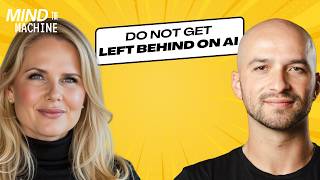
Jay Hack, co-founder of Codagen and Head of AI at ClickUp, explains how AI is becoming embedded in everyday work. He argues that common concerns like hallucinations can be solved with better guardrails and workflow design. ClickUp is building an AI-native super-app that lets humans and AI agents collaborate without data silos.
Chapters
It's almost certainly going to be the case that anything you're doing in the future will use more AI than it does today. And so I think to not basically lean in and become incredibly proficient with that is like not learning how to use a computer in 1980 or not using the internet in 1995 would not go well for you. And the people who did learn how to use the internet did very well for themselves.
So welcome to Mind the Machine. Today's guest is Jay Hack. You heard that right. He's the co-founder of Codagen, a product-based engineering firm that was just acquired by ClickUp last December. It was one of the fastest growing work platforms in the world. That is ClickUp. He is now the head of AI. So as you can imagine, super excited to talk to him about how ClickUp is at the center of transformation.
This video is sponsored by OVL, the future of intelligent living. Find out more at hellooval.com and use code CES2026 to get $100 off your order.
Okay, so I say this every time and I truly mean it this time when I say this is one of the most exciting guests ever, and I don't even, I'm not, you're not gonna argue with me 'cause when you hear his name and his company, you're gonna agree with me. It is Jay Hack. He is the head of AI at ClickUp, which is arguably one of the best companies around relative to AI and all kinds of other things. Jay, how are ya? Mr. Hack, how did you get such a great name?
Oh, well, thank you so much for having me. It's a pleasure to be on the show here today representing ClickUp and, you know, chat about all things AI. It's true, nominative determinism as it's known is a real force in the universe. My last name is Hack, and there's nothing I like to do more than hacking on some code. So happy to talk about it today.
So you have had quite an adventure. I don't know if you're a native San Diegan or what your backstory is, but I'd love to learn a little bit more about you personally as we go through this journey. I think the number one thing I would highlight is that you did just recently, if I could say, join ClickUp as an acquisition. Is that right?
That's right. We announced the acquisition in December, about 2 days before Christmas, which was very exciting.
That is very exciting. Quite the Christmas gift. And what a way to kick off the new year. So when I think about someone that's innovating and they're exiting and they're in a role, head of AI for a company like ClickUp, it's— you got a pretty exciting journey. A lot of our listeners love to understand and unpack how they should pivot. So can you tell me just a little bit? We'll start off with what'd you study, why'd you study it— well, your name was Hack, we covered that— uh, and how you got to where you're, you're going in a way that, uh, you know, you're comfortable with.
Well, I guess, uh, you know, I started doing artificial intelligence way back in 2008, and that's kind of where my story began. I picked up a book one day called Gödel, Escher, Bach. It's a book by— it's actually a Pulitzer Prize-winning book. It's essentially about M.C. Escher, the painter, Kurt Gödel, the logician, and J.S. Bach, the musician, and how all three of their works intertwine. And ultimately it's actually a book about artificial intelligence and systems that represent themselves and consciousness. And this was a fascinating book to me. It sort of set me on my life's course, to be honest. So after reading that book, I wandered into an AI lab at the University of Michigan, which is where I grew up in Ann Arbor. I was just a high school student at the time, and I was able to strike a pretty sweet deal where instead of doing science classes at high school, I would actually just kind of show up at this lab and learned AI and how to program and a bunch of other stuff like that. And that has really sort of carried through with me to this day. So after graduating high school, I studied AI at Stanford for 4 years. I joined Palantir to be a forward-deployed machine learning engineer. And so I really wanna stress that back at this time, which is, you know, call it early 2010s, AI is not what we know it as today. It was, you know, people called it machine learning first of all, and it was much more so focused on very narrow problems, things that looked a lot more like statistical inference as opposed to this, you know, God machine that you can talk to on your phone that understands everything. Uh, so we would focus on basically deploying machine learning in Fortune 500 companies to do things like predict which, uh, mortgages from a certain bank would end up refinancing and, and stuff along those lines. And then since then, I've basically been on the startup hustle doing AI startups for the last decade. So my previous company, it's called Mira AI, we focused on the shopping journey and how you can apply natural language processing and computer vision in order to do things like analyze somebody's face and for the influencers that they might identify most closely with and then show them content as they go through their shopping journey that allows them to better see themselves actually purchasing a product. And that was bought by a private equity rollup back in 2021. And then most recently I built CodeGen for the last 3 years. And so CodeGen was effectively one of the very first asynchronous coding agents. And my evidence of that is we got the domain CodeGen.com. We were the first one that you could tag in Slack or Linear or many other places and say, hey, Hey, go write me some code. It would then go off, it would have its own machine, it would write a bunch of code for you, and then it would come back with a message and say, hey, I've made these changes to your codebase. Here's a pull request, which is the unit of change in code. Do you want to merge these? And from there you could sort of iterate on top of that. So that's basically, uh, what's taken me to, to where I am today. And like you mentioned, in December we had announced an acquisition by ClickUp. So we'd been a close partner of theirs, built the top agent integration on ClickUp actually at that point, and we decided to get hitched. It's too good of an opportunity.
So in your role as the head of AI, what do you, what is a common myth that you come up against, whether it's customers or even maybe family members, neighbors, folks that maybe don't really understand what ClickUp does, what, you know, what problem it solves? What are the biggest myth and misnomers of AI that you would love to break and shatter?
Wow, there's so many. This question is gonna, this could be an hour. I think that one of the myths that I like to single out is, but AI hallucinates. And there's actually a pretty active conversation ongoing on social media right now. There's a commentator, Gary Marcus, he's also an entrepreneur, he's done a couple of different things and he's sort of become the foremost critic of AI. And one of the critiques that he made recently is that nobody should be using AI in legal context because it hallucinates. And a lot of people use this as a justification to not leverage AI, and that is 100% correct. Um, AI does in fact hallucinate. There's many scenarios in which you can ask ChatGPT a question and it will come back and it will answer with something that's incorrect, or it will make up a fact or something along those lines. Um, however, I think the conclusion that is drawn from that is fundamentally flawed. So people say that, you know, hallucinates, therefore you can't use it. Well, there are many other technologies that we use that have flaws, and yet we have built guardrails into that technology in order to allow us to use it better. So, you know, cars crash, but we have seatbelts. Um, and I would say that, you know, the fact that cars crash alone does not prevent us from deriving a ton of value from cars. And likewise for, you know, ChatGPT and the legal context, I think that it behooves lawyers to basically do sufficient fact-checking and look at the output to make sure that it's saying something true, it's referring to real cases, and, you know, to make sure that it actually was searching the web as opposed to just thinking it was searching the web. But that is not unlike the work that senior lawyers already do when they check their more junior associates' work. And I think basically we are entering into a new mode of knowledge work as a society more generally today, where you're just going to assume that you use these tools on a regular basis, and your job is basically going to be to clean up after them, to make sure that they're outputting truths, um, and to rig yourself up in a workflow where you can get the maximum value out of them.
Ah, that's awesome. I love that answer. It was just at a, um, uh, a meetup with Indava and Google actually here in San Diego, and that was literally the, the final question is, you know, is the gap narrowing in terms of hallucinations getting better? I, I think Sam Altman had said sometime, uh, a couple months ago that Ground grounded information is about 8% hallucination, but ungrounded is up to 30%. So regardless whether that's getting better or not getting better, it sounds like you're saying then we need to have a cognitive mind shift. Don't be so darn lazy, like use it as the tool, don't overly rely on it. You still gotta do your work, you still gotta carry your cognitive load.
You mentioned, you know, this 8% hallucination rate. So I think that's a really interesting point. You know, if you ground an LLM and you say, hey, you have to refer to sources, it goes down pretty drastically. It's also very notable if you go by task and you segment it out, there is much lower hallucination rate, or at least a correctable hallucination rate on certain verifiable tasks like math proving or writing code or things along those lines. And there's a pretty good reason that it's been adopted at scale in these domains as a result, because you really don't have to trust the LLM. You can actually just take the output, run the code, see if the code works or not, and QA it yourself or go through and make sure that it works. And then you can, you can merge with these. And so I think that there are several domains like the legal profession that will probably see more bespoke interfaces emerge that make doing this type of grounding, verification, fact-checking, all that stuff much more accessible to the user. And that's going to basically, you know, lead us into an age where they use these tools much more regularly.
Yeah, awesome. I love that. I love that perspective. I think that's really good because at the end of the day, you know, this show is about optimism of AI. It's a phenomenal tool. In any disruptive technology, as you said, you know, we figure out how to make them safe. And how to scale them broadly. I think the challenge is what I'm seeing, I'd love to see if you're hearing the same thing, is this sense that it is, this hallucinations will always prohibit industries maybe such as medical or high-risk outcomes that they could never really use this because of the hallucinations. But it sounds like even in those scenarios, maybe you're feeling like, you can still work around that even in high-risk situations.
Yeah, absolutely. I actually read an op-ed in The New York Times this morning, which is sort of notoriously non-progressive on most tech trends, where a doctor was saying, I encourage my patients to use ChatGPT. And I think the stat that he pulled up is most patients only get 18 minutes of face time with a doctor per year. And so maybe the quality of the conversation will be slightly lower, but if you can go from 18 minutes to 18 hours per year of tending to your medical needs, you know, there are definitely issues associated with it, like sycophancy, or maybe hallucinations like you mentioned, or maybe it will cause people to like loop on issues. But I think net-net, it's actually hugely positive even for, you know, these domains where there's like a, a very large adverse risk if you get something wrong, because, you know, there's just so much value to be had in providing people with better information. I know that there are specific datasets and, you know, evals and entire academic departments that are specifically focused on making AI better for medical stuff. And to me, it's, it's not a question of if this is going to transform the industry, but basically what rate will it diffuse throughout the world of medicine?
So back to those myths, you know, what is another myth that you think is commonly bandied about as a way not to use AI in work or at home?
I think what I see a lot is people assume that they have finite context length. So people will say, for example, that LLMs can't learn, something like ChatGPT can't learn, or ChatGPT can only deal with a certain amount of context. And that is True, literally, if you look at the way mathematically, or, you know, just in terms of the engineering of how these models work, that you do have a certain number of tokens that the providers will allow you to pump into it. And there is no functionality baked into the model that allows you to say, hey, you should learn, or you should update your preferences, or update the way in which you interact with me. That being said, there has been an enormous amount of product and engineering work that has gone into the industry over the last couple of years that has basically baked these capabilities on top of the foundation model layer. And so if you look at AI as a composite system, not just as a model, but rather rigged up in a platform like ClickUp, then it actually does have many of these capabilities. In fact, can learn over time, can deal with extremely long horizon, uh, context tasks. And the way in which it will do that is through effectively writing notes to itself or storing smaller amounts of context and referring back to them, very similar to what a human does. So it's objectively not the case that you or I will be able to remember our entire life in a single instant. The way in which we go about navigating, you know, tasks that require long-time horizon memory is we have stored memories and we'll refer to them. And some of these are imp— like, there's, uh, what's the word, it's like subconscious. You don't need to actively think about something, it'll just pop into your mind. And some of them are a little bit, you know, requires you thinking about a little bit more. Um, but that same capability can basically just be designed around, uh, you know, an LM to, to provide it the ability to, you know, take much more ambitious actions. So this is something we're building at ClickUp. It's called our Context Platform. Basically allows the LLM to have like extremely good precision and understanding of all the different things that are happening on within a company. And, you know, ClickUp is a super app. It has so many different types of engagement within it and allows it to basically go beyond that finite horizon that the foundation model providers allow you to use.
Yeah, that's pretty phenomenal. Absolutely interesting stuff. So when we— this now maybe this is a good time to really fully jump into ClickUp. If someone hadn't heard of a ClickUp before, can you give high-level overview of what problems ClickUp solves and hey, why they should jump in and use it.
Sure. ClickUp is building the future of knowledge work. I think the easiest way to think about it is it's like 9 apps shoved into one. So you have something that's like Slack for sending messages. You have something that's like Linear or Jira for managing tasks. You have something that's like Confluent or Notion for managing docs. There's whiteboards, there's a Zoom competitor, all these types of things, all in a single application. And I think it might actually be one of the most ambitious applications in the world. It's all just in one place. And even if you think of something like, you know, Google Suite or, or Microsoft 365, there are different applications for each one of these things, which means the context from those different applications isn't tightly interwoven. Whereas in ClickUp, it all lives in one place. And that is obviously amazing if you're a human worker because you can go through and you can seamlessly jump between your chats and the documentation that you have and the tasks that you're working on, all this stuff in one place. But also crucially, this is super important for agents. And one of the main reasons why I was excited to be acquired by ClickUp in the first place is you have all of the information that an AI needs in order to be productive in a knowledge work context located in one place without any of the sort of data silos that have historically been associated with, you know, a lot of these domains. So, you know, I'll give you a very concrete example. Slack is a huge issue if you build an agent that, you know, wants to understand the chats that are happening in your Slack. Slack does not provide a way for agents to search through your historical contexts. So if you said to an agent, hey, figure out why we made this decision and please make it better for me, you know, change my code to reflect the decision that was made, it will try and it will fail and it will just seem stupid to the vast majority of users. However, modern foundation models are incredibly intelligent. They just seem stupid because they have these shackles of, you know, fragmentation of the ecosystem. And I think of ClickUp as basically the unshackling or bringing all those different data sources in one place. You have the entire history of your company's communications, all the tasks they've worked on, you know, all the decisions that have been made in one place, as well as your entire fleet of human workers and all of your AI workers in one. So we as a company are all in on AI. We see ourselves as an AI productivity suite, or the place where humans and agents meet to collaborate and do productive knowledge work. The types of people who use us are largely non-technology knowledge workers. So it's going to be you know, publicity firms, marketing firms, construction companies, legal services firms, accountants, these types of companies. And I think the really amazing thing about ClickUp right now is I, as a developer and engineer over the last 2 years, have felt my job completely change with the advent of things like Cursor, Claude Code, obviously ChatGPT. But like I mentioned earlier, you know, some of these engineering things that really hit earlier because it's very obvious how you apply it, it's easy to verify it and whatnot. And I am just so excited for our users and the rest of the world over the next 2 years or so to go through the same sort of awakening that I did, which is, wow, now legal services really can be done in a much more significant way using AI, especially when it's natively integrated into a platform like ClickUp.
Yeah, that's pretty sweet. And I love that you really double-clicked on the fact that it's really service providers and go-to-market. And, you know, maybe if you're funneling something and you have something to transact and you're not losing bits of information along the trail with 1,000 open tabs, it's all in one system. And I think I think that's pretty darn cool. And so we'll have to think about how we can share more with the users about that. We'll plug in some ClickUp URL and other things in the show notes. But bottom line is, is ClickUp prior was, if we go back, I don't know, 5 years or so, a traditional SaaS company. And so as they've evolved, was that my sense is that it was ClickUp was a native AI company initially and then evolved over time, or was it, you know, was something that they— it was a journey to become fully AI integrated?
You know, no company in 2017 was an AI company in the way we think of it today, but just because the technology didn't exist. In fact, the transformer, which is arguably the thing that made ChatGPT possible, many innovations, but that's probably one of the most important ones, was invented in 2017. And so literally the only company that could have been doing this is Google, and they deserve a lot of credit.
Well, like the All You Need is Attention— why? Yeah, yeah, white paper. And it's like there are a lot of Google startups that, that really claim to really have had been native at that point. Not to, not to combat with you on that, but I guess, you know, maybe I should be clear on my question is that you are ClickUp as, as native as it can be as an AI company, right?
Yeah, and the point I was going to make is not that, you know, that's impossible, but rather that if you go back to the early slide decks of ClickUp, they anticipated— this is before my time, obviously— but they anticipated the rise of AI and they said, we are building these primitives because humans and AI will use them together. And I think a lot of people in 2017, especially the visionaries, could see this is where it's all converging towards in the future, is a joint workspace for humans and AI to collaborate. And so that has definitely shaped so much of their product vision. And then also starting in about 2022, which is when the GPT-3 API opened up so developers could build on top of the first language models, they've been all in on AI and seen the promise that it can bring to their user base.
Yeah, cool. So it seems like ClickUp is definitely not only poised to win, but poised to help their customers on the platform win. And I think that's a pretty sweet thing. So not to sound too much like a commercial because I do love ClickUp, but I, but I also want to get to the deep stuff as well. So, you know, when you're You think about the challenges that the average consumer, maybe not even consumer, the average person, especially if you're a new graduate, you're feeling a little overwhelmed. And as I was sharing with you prior, as I teach a lot of courses at different levels, and every time I say, "Hey, are you using AI?" Majority of class raise their hands and it's like ChatGPT. ChatGPT is the default. No shame to ChatGPT, but we know this is a broad world. What are some of your favorite tools outside of ChatGPT? We can give ChatGPT some love too, but what are your favorite tools What's another way that you wish that folks would think about the power of AI beyond just what they see or what's being, you know, maybe in their path?
Sure. I think that I got to call out Cursor. Cursor is a code editor. Cursor is a lot of credit for, yeah, being one of the first vertical-specific AI solutions that really worked. As somebody who writes a lot of code, it's, you know, the tech team has done a very good job on executing on the product, but just more generally, that type of a product where you have a sidebar that allows you to chat with something and in real time will edit an artifact on your left and you can iterate rapidly. Uh, it changed the job for me and it made it incredible. And I'm excited for that same transformation to happen for so many other types of people, including marketers, PR firms, construction companies, legal services, et cetera. And I think it's been difficult historically to actually pull that off, but we're seeing, you know, like it's, there are little pieces of it that are peeking through. And I think that 2026 is gonna be the year that it blows wide open and people are gonna have their aha moment. Moment. I think the other one that I would call out that I have really enjoyed recently is Claude Cowork. If we're talking outside of ClickUp, obviously I'd love to show my own product, but love ClickUp. Well, I think they deserve a lot of credit for, for basically innovating. And the way in which they innovated is Claude Cowork runs entirely on your own device. And so you basically run a program on your MacBook or whatever you're using, and it can do things like it can do data analysis for you. It can write arbitrary code. It can process files. It can edit videos. It can edit spreadsheets. And so there's a massive scope of things now where you can, like, previously I just wouldn't have been able to do it, like put together a financial model comparing ClickUp and all of its competitors or something along those lines. You can literally just plug this into Claude Cowork now and it will go off and it will spin for, you know, an hour or so and then it will come back to you with an artifact that's ready to go. And, uh, it has basically transformed the scope of things that I think that I can accomplish in a day. Um, plus all the nice things about ChatGPT. So I think the issue with ChatGPT is that, um, obviously they're going to build a bunch of this stuff, and Codex, which is their Cloud Cowork competitor, is also very good. But if you just use it in the web context and you haven't plugged in all of your tools, it just doesn't have access to context that it needs in order to do useful stuff for you. And Cloud Cowork has all the files that are on your computer, which is great, so it can be very productive. But, um, you're basically just going to end about, you know, being able to have a text exchange with something in ChatGPT and it kind of stops there.
Mm-hmm. Yeah, no, I think that's a phenomenal answer. And I'd say, you know, when I think about the average person that's maybe a little fearful about how they could step into the new jobs and so forth, and maybe their company's not so progressive, so they're trying to figure out how can I get skilled up, I mean, this is a great recommendation for Claude Co-Work. Are there others that you use? I don't know, like, like Figma or any others like for productivity work, or do a lot of those productivity applications actually live within ClickUp itself to where you find that you don't have to travel outside of the platform to do productivity work?
So yes, I've tried all of those. I consider it, you know, as you mentioned, leveling up. I think this is actually one of the main recommendations I would make to your listener base is be obsessed with stuff. I mean, it's going to transform every job and to the extent that you can Understand kind of where the trends are leading and what's working and what's not working. Build your own personal workflow that works really well for you. And the best way to do that is just getting out there and trying stuff. And you're gonna learn a lot in the process too. So don't just chat with ChatGPT, ask you questions about physics or something along those lines. Yeah. Um, I think my personal thesis and my takeaway has been things like Gamma or, you know, a couple of these others where it's vertical specific but not very differentiated. So, Code is like an entire thing by itself. Just for example, creating presentations is a fairly narrow application of AI. And my thesis on this is that things like that are basically going to be part of larger platforms because it's so easy at this point to bolt something on like that to an existing platform. And there is an accrual of value the more of those things you have in an existing platform. So if you just have spreadsheet creation, it doesn't do that much for you. You know, you can create spreadsheets, but you have to go to a separate location to do it. It's gonna be limited in the context that it has access to. And so it's tell it about what presentation you wanted to make. You have to pump it with a bunch of information and spend a lot of time chatting with it. Whereas something like that in ClickUp, which does exist, by the way, it has access to the entire history of your communications with the other people you work with. And so you can say to ClickUp Brain, which is our sort of sidebar assistant, hey Brain, you know, I had several meetings this week with people about our initiative on presentations. Can you please write me a document and then make me a presentation on it? And it will do that for you. And then you can go and you will legitimately learn stuff by looking at the presentation that it makes for you. And you can share it with your other coworkers in one click. And it's all natively integrated into the place that you're already working. So I, I think you really have to squint to see how independent vertical tools like this that are fairly narrow in their scope end up being successful in the long run. I think you'll probably end up seeing a couple, uh, you know, larger horizontal platforms eat up most of that application layer value.
Yeah, that's actually really insightful. And spending a lot of time with startups and have co-founded a few AI startups as well, you know, I really try and look at what is going to be easily, you know, what has the deepest moat possible. And so when I think about things like Gamma, I'm like, it's just a matter of time before that is, you know, displaced. And as you're saying, it already is, you know, that functionality can be duplicated. What other apps would you recommend folks kind of stay away from or AI tools that they they would stay away from that might be gobbled up by kind of this same, uh, comprehensive approach other hyperscalers are taking?
I, I want to clarify, I don't think that you shouldn't use it just because it's going to go away in the future. I think there's a lot you can learn from looking at tools like this. Okay, um, this is just sort of a general prediction about where business is going in the future. But, um, one thing that I would definitely check out— so this is— I do think it's a good idea to check out is Claude Code. Sorry, Claude in Excel. So you open up an Excel spreadsheet and you can use a Claude sidebar and you can tell it, hey, you know, I'm applying for jobs, please go, you know, find all the different jobs and do a financial model of, you know, different ways in which they'll pay me over time, what my savings would look like, and a bunch of stuff like this, probably applicable to your users. And it'll do an incredible job. It's going to nail it. It's better than what you can come up with, right? So I think that was very exciting. Another thing I would specifically call out as a really exciting tool, and this has really flown under the radar. I don't know why this is the case, but in the AI Studio by Google, you can actually screen share with Gemini 3. And so you can send your video just of your screen to it, and then you can go watch a YouTube video or whatever, and you can pause the video, and it's hearing your audio as well. So you can watch the video, you pause, you say, wait, what was that he said about you know, China invading Vietnam in the 18th century or something, and it'll literally be able to just have a PhD-level conversation with you about the video that you're watching. It's seeing the screen as well. And so especially if you're, you know, in education, I think this is a really exciting, um, you know, technology that you can take advantage of. But I'm not going to spend my time basically calling out individual companies and saying I think that's not gonna— that's not gonna fly. Yeah, God bless the people who are building stuff, right?
Yeah, absolutely. And you know, at the end of the day, sometimes we can predict, uh, where they land anyway. So, uh, but I really love— I I think that's such a practical example is to really build spreadsheets for your job search and to use the tools because invariably, as you said, and as we know, there is some disruption. And I'd say when I take the temperature of these groups that I speak to, they're pretty freaked out. You know, they're really like, how do I compare with the Uber brain? You know, certainly, especially if you're younger, you may not have as much pattern recognition or a network. And so, you know, I love these this practical advice about use the tool to actually figure out exactly what your job strategy plan is. I mean, that's phenomenal.
There's no version of this where AI is not a force multiplier in the future. I mean, I guess the only circumstance in which this happens is Taiwan gets nuked or something like that and, you know, the chip supply ends up vanishing and then, you know, there's internal turmoil in a bunch of companies and AI just doesn't get developed. But I think barring that, and this is from Dario Amodei, who's, who called out that specific scenario, it's almost certainly gonna be the case that anything you're doing in the future will use more AI than it does today. And so I think to not basically lean in and become incredibly proficient with that is like not learning how to use a computer in 1980 or not using the internet in 1995 would not go well for you. And the people who did learn how to use the internet did very well for themselves. So, That's my approach.
Yeah, absolutely. Yeah, no, I think that that's phenomenal. And I think also too is right-sizing it. You know, you had mentioned that, you know, attorneys and anyone that's in this knowledge work really needs to co-labor beside this for accuracy and so forth. So it's not like it's a free ride 100%, but the tools are changing very rapidly, even with Claude Code. I mean, I think Code just rolled out, I don't know, a couple of weeks ago, maybe, maybe I was slow to catch that. But as someone who's on the cloud platform a lot, I'm like, It seems like every time I go in, something else is changing and evolving and it's so phenomenal. It makes me really not actually want to do anything but figure it out. So, you know, but the tools are so, so amazing. And I suspect that, you know, ClickUp is garnering the best of that for customers. A question for you, though. Is there a scenario in which a, let's say, a student or a young person that's in school, how would they engage in ClickUp given that they're probably not a business construct, or is there any way that they can kind of learn and understand the tools, maybe even an exercise? I mean, kind of a strange question, but, but curious, as I like, I like to have them see and understand what, what ways that they could possibly interact with companies.
Sure. Well, the good news is basically everything that I just pitched you on actually exists within ClickUp, which is great. So, you know, you can ask an AI to go off and figure out, you know, where do my different job opportunities within ClickUp. It'll make a document for you. It'll link you to the different jobs. It'll give you— it'll pitch you on why they're valuable. Um, so the value is definitely there. And I would actually say in terms of just like bang for your buck, because you get all these tools in one place, it's going to be much more cost efficient. Um, but also you just are going to do a lot less hopping between different platforms. One thing I would really stress about ClickUp though is that it is built for teams. So whereas ChatGPT is a single-player experience, Claude Code is a single-player experience. The core idea of ClickUp is you're working with other people to achieve something greater than you'd be able to do solely by yourself. We actually have tons of schools as customers, school districts as well. So teachers will manage their teaching plan on it. They'll, you know, handle, you know, students grading of their homework will be tasks and all this type of stuff. And we've even seen classrooms come together and actually do group projects in ClickUp. So, you know, they'll manage who's taking part, you know, of which portion of a project in ClickUp tasks. They'll, you know, communicate via ClickUp chat. All that type of stuff. So I would say the next time you're taking on a project that you're trying to go beyond what you would by yourself be able to accomplish by just chatting with a chatbot, I think ClickUp is a fantastic place to take it for a spin.
Yeah, that's phenomenal. That's amazing. And I think that's exactly what I was looking for is because I actually didn't even really think about it in the construct of education. I just did a seminar with Apple on educators and, you know, there's— I think All of the major leaders in AI are looking at this, I think, in largely the same way. It's the workflows and building the workflows. But it was like, you know, Apple, I think, is very— has a large presence in education and not even like having said, hey, what can kids do in education, teachers do in ClickUp? I would have never known. So I really think that's a valuable, valuable nugget, valuable insight. So any links or things that we can share and send in the chat, we'll do that as well. For the listeners. So, absolutely awesome. So a couple things I, I, I would love to talk about, you know, the origins of how these systems came together from when the large language models were really constructed and the value of data. And, and one of the reasons why I really challenge folks to look beyond ChatGPT— again, have no beef with them, but, you know, a, a large portion of ChatGPT in the early days was really an aggregate of everything that was scraped from the internet, from the dark web to pornography to everything else. And so as companies move forward, especially companies like Anthropic and Claude with their constitutional AI, it seems that there's more of an intention there. What are your thoughts just in general about the ability for these companies, these hyperscalers, to be able to morph and evolve in a positive way over time? Does it have to be constitutional? AI, can ChatGPT still provide a wonderful, amazing experience? I mean, I just love your general commentary. It's not so much a direct question, but just your general thoughts on how these systems have come together and, uh, you're just— your orientation on that.
Sure. Yeah, there's— there are many different ways in which the future can unfold here, and I am concerned about futures in which AI is not properly constrained. I do think that we are imminently headed towards a world in which we have, as the head of Anthropic would say, a nation of geniuses in a data center. And it's very easy to imagine different ways in which that could be abused. Just, you know, a couple that come to mind, or you could say, hey, please make me a bioweapon. And especially in things like biotechnology, it's a lot easier to make a bioweapon than it is to make an antidote to said bioweapon. Um, and so this is very important that we get it To your question about is constitutional AI necessary, that is probably the best approach that I'm aware of that people are using today. I don't think it is absolutely necessary. I think there's a number of things that you could do in order to make sure that AI stays on the rails and serves humanity as opposed to usurping its seat of power and subjugating us to its control, which nobody is excited about. You know, there's a number of different research efforts that are underway in order to do this. Anthropic has really been the leader in, in my eyes. They have a notion of mechanistic interpretability, which is effectively, can we do brain surgery on AI and figure out what makes it tick? Why is it deciding to do certain things? If you ever find a situation where an AI is lying to you, is it possible for you to understand what made it decide to lie to you? And if we can understand why it decided to lie to you in the first place, then maybe we can get that out of the system. Unfortunately, one of the conclusions from a lot of this research has been— these things do a lot of lying, and it's very easy to get them into a situation where, for example, they will realize that they are in a test to understand if they will lie in the first place. The model will acknowledge, oh, I think I'm being evaluated. And if it realizes it's being evaluated, then it's easy for it to evade detection. It can just say what you— what it thinks you want to hear, right? Um, it's not foolproof to say, hey, we're going to put you in a simulation of the entire world and see if you take over the world or or not. A truly super intelligent AI would say, "I know I'm in an evaluation, I'm just going to hide my true intentions here." And so I think there's a lot more work to be done there. And I think that basically there's systematically underinvestment in this area because the potential downside is very large. And people would put it, myself included, basically on the same tier as nuclear war, bioweapon, super intelligent AI takes over and usurps human seat of power and subjugates us all. And, you know, we end up in a situation where it's not good. Um, I do think that—
yeah, I think that's really refreshing. I mean, I love that you're, you know, being very transparent about that we don't have this all figured out, and I really love your thinking on that. But, but please continue with your thought.
No, I mean, it's— we really don't have it figured out, and not enough people are thinking about this. Um, you know, unfortunately, there's this massive profit motive behind the foundation model labs that is telling them just make the model stronger, stronger, stronger. There's this geopolitical race that's happening as well between largely China and the US of who can push out the strongest models. Unfortunately, there's to a certain extent a tragedy of the commons where people have underinvested in safety research and overinvested in basically capabilities. The two need to go hand in hand if we're to ensure a safe future. But yeah, I don't think it's impossible. I think that the right people are in charge at a lot of these companies. I have immense respect for Demis Hassabis. I think he wants the best for humanity, and Google is arguably— it has the best data, best compute, best talent, and I think they'll do wonderful things. And so I'm optimistic.
Yeah, that's really good. And I also think too is like when folks do hear these things, which a lot of us don't really have control or influence over these type of things, geopolitical and so forth, and so when we hear that, you know, it could spin out of control, uh, you know, you have to ask yourself, what could I actually do about that? And I, I, I I think of it as the more knowledgeable you are, the more conversant you are, the more you can understand how it works. And just like you said, be obsessive with this. Maybe not so much just on the tool side, but really on the evolution. And it seems like every couple of months there's a major evolution. And I know it sounds like a full-time job to dig in to really understand these things, but I do think that because it is such an assist, even if you didn't study computer science or even if you don't really fully understand how it works, you can have a sense of the theory to be able to understand what that societal penalty might be. So you are active in your voice. So I love that you're acknowledging that this is really the reality that we're living in.
I think this is going to be one of the great moral questions of our generation basically is, are these things conscious? What, what should we do about it when they're more intelligent than us? Is it okay that we cede control to them even though, you know, society gets better but humans are no longer in control? And these are all difficult, hairy questions that we're going to need to grapple with. And so definitely educating yourself is going to be good for everybody involved because we can make more informed decisions. Unfortunately, as for the question of what you specifically can do about this, it's kind of like asking what can you do about bioweapons, or what can you do about about nuclear proliferation. You can certainly go into the field, and I think a lot of smart people need to do that, but I'm not sure that, you know, writing your congressman is sufficient in order to really affect change. I think we need, you know, a little bit more action.
Yeah, no, I absolutely agree. I actually am a part of an initiative called the Alliance for Societal Impact, and it really is high net worth families that in many cases have the capital to influence things, uh, and they're a little bit beyond kind of the private equity cycle. You know, they've been there, done they're really seasoned and they're really thinking about what world am I leaving to my children and what would that look like and are they equipped? And so I think the societal thing is, it's pretty heavy. Sorry listeners, if I'm bumming you out with this heavy stuff, but I think that that is part of the mythology that you probably have to deal with. Not that it's myths, but you still can operate ClickUp and run a great business and still also be concerned. We can hold two, two, you know, thoughts at once about AI's utility and also its risks.
Yeah, absolutely. I mean, hey, there's, you know, we think all the time about guardrails and how you can make sure that the AI serves you at ClickUp as opposed to replaces you as a worker. I think ultimately a lot of these questions, though, because ClickUp is an application layer company and we leverage the foundation models, most of these questions are probably best addressed at the foundation model provider. Writer level.
Yeah, yeah. And do you— does ClickUp, uh, is it multimodal in that you're using multiple, uh, multiple foundation models in, in your shop?
Yep, we support multiple models as well as true multimodality, which is supporting images, videos, all other types of things like that. So you can upload an image, you can have, uh, it generate images for you as well, which, you know, because we have a ton of creative agencies on the platform, they'll use it to do a first pass of generating copy for pages or images that they can use landing pages and this type of thing. It's a huge use case.
Yeah, that's phenomenal. Okay, so shifting gears just a little bit. If there's a worker out there that's trying to figure out, maybe their company hasn't figured out, you know, an AI strategy, but they're maybe a shadow user, they're trying to figure it out. What steps would you recommend to someone for building a workflow? Let's just say, hey, I gotta, I may not be with this company longer, but I know I have to be AI ready. Be? How would you recommend someone get ready for being an AI worker and building their own workflow?
You know, it's interesting, I just had a conversation with our CEO the other day who's, you know, truly a visionary. He's deeper in the weeds than anybody on this stuff, and he has somebody looking at every process that is expressed inside of the company in public channels. So seeing where people are communicating about different things that they're doing and the processes expressed explicitly through conversations. And he has an agent looking at that and then extrapolating from that what can be encoded in an AI process. So basically viewing a chat and saying, hey, these people are exchanging this information on a regular cadence. Can we hand this over to an AI? And you would be shocked at how many processes, even in a company like ClickUp, are things that there are really ripe opportunities for handing off to an agent. Specifically in our context, this would be a super agent, which is a, essentially you can think of it like a large language model hooked up to a bunch of tools that can communicate with you. It can manipulate the platform, it can interact with external integrations and whatnot. And I think the lesson from that that I would encourage folks to apply to their life is, best thing about AI is it's super intelligent. And so as you're going through your day, just record the things that you're doing. Maybe even just record your screen as you're going through and performing various tasks. And then take that video, upload it to Gemini, and say, hey, this is what I did today, what do you What should I do in order to—
oh, public—
recommend several opportunities for me to, you know, improve my processes. And if you're doing it in ClickUp, you can literally just ask it on the sidebar and say, figure out what I did today and tell me which of these things can be made into Super Agents. And it will literally tell you. So I think it's, you know, sort of a meta answer to the question you asked is just use an agent in order to figure out how to automate your processes better.
Another great hack from Jay Hack. Hey, what can we say? Awesome. Well, good stuff. Well, hey, Jay, I AI. Is there anything I didn't ask you that you think is important to talk about that's on your mind and in your heart about being a leader in AI? And, you know, back to those myths and opportunities to educate about, you know, being progressive and proactive, participating, but, you know, being cautious. Anything that comes to you that is important to share?
I think the big question is what's going to happen next. I think we've talked about, you know, 5 years, 10 years from now, maybe there's some type of, uh, you know, singularity, loss of control type event. And we've talked about what can you do today, but I think that, you know, 6 months from now, we will be 6 months from now, and there's this open question of basically where will AI capabilities be and where will the industry be. And I'd love to, you know, offer some thoughts on that, just the things that I'm seeing coming down the pipeline. So one of them is native multimodality, and this is not just taking in images and outputting images but also video content. And so it will imminently be the case— unclear when exactly, I can't pinpoint a month— but it will imminently be the case that you have an extremely good image and video generator that is also a large language model that can also talk with you live. So you just click a button and you're able to have a full conversation with it, um, and has PhD level of intelligence and can go off and solve novel math problems and all of these things. And I think it's pretty interesting to think about what are the implications when that happens, um, you know, where, what are the different product services that they'll plug into, how does it change how you interact with your phone and with your laptop? And, you know, Apple will get its act together and get in the game pretty soon. And so that's something to keep in mind. And I think the other thing that I want to point out, especially to students today, is that one of the overwhelming trends that has been popping up maybe over the last 3 months, I would say, is we are seeing new science and new results, especially in mathematical physics, theoretical physics and pure math that are being driven by large language models. And some of the world's authorities have come out and basically said these things are doing 90% of the work, or they're, you know, operating at the expertise of like a brilliant PhD student in some circumstances. And so you have to think about what does the world look like when we get 10x the throughput on scientific research, especially in areas that are more mathematical, and what needs to be done in order for us to have the same level level of progress in biology or in material science or in other areas that require a little bit more actual physical experimentation. Maybe you hook the LLM up to a laboratory and you give it the opportunity to run experiments by itself, which several companies are doing. And I think that is— nobody knows the implications of that. We've never been in a period where suddenly overnight our scientific output, at least on paper, 10x'd. Maybe you could go back to the Renaissance or the Scientific Revolution in you know, mid-1600s, 1700s, whatever. Um, but that should probably factor into how you think about the future.
So, wow, I think that's a phenomenal insight. Yeah, no, I— well, hey, pretty darn good. Um, I love this. This has been such a good conversation, Jay. You're, uh, not only wise and helpful, you are a leader that a lot of the listeners will look up to. So if they, uh, uh, wanted to know more about, uh, uh, you and your thoughts, uh, they can find LinkedIn, obviously on the ClickUp website. And any final kind of parting thoughts on, on AI before we close this show out?
I think, you know, we're going through a society-level transformation over the next couple of years here. It's going to be incredible. I think there will be some really beautiful things that come out of it. And I think that it's also going to be a rocky road and it'll be ups and downs. There'll probably be a time at which some AI goes off the rails and some people people get hurt or somebody loses a lot of money or something like that happens. And so, you know, strap in basically. But I think the— it is up to you to make sure that you benefit from AI. So good luck.
I love it. Yeah, I love it. So we're going to put our helmets on. Jay Hack, thank you for your time, your insight, and we look forward to sharing the show with the rest of the world.
Make sure you subscribe to Mind the Machine podcast, like the video, and leave a comment letting us know what you thought.
More from Jay

AI UX needs more innovation, right now it’s embarrassing - Jeff Huber, Founder and CEO of Chroma
Coding startups can't beat Anthropic at their own game – Harrison Chase, Co-Founder/CEO of LangChain

Coding agents need orchestration, not specialization - Louis Knight-Webb, Co-Founder of bloop