Jay demos Mira, a platform that indexes YouTube beauty videos, extracts product mentions with timestamps, and shows reviews aggregated by product. It includes a hype tracker for top-rated items and a personalization engine that matches you to influencers based on your facial features and skin tone.
Chapters
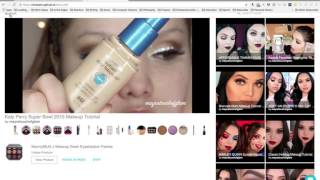
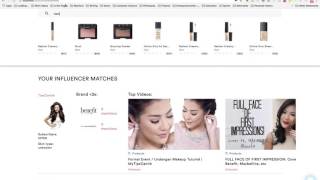
Hi there, I'm Jay, and today I'm going to be demonstrating a prototype of Mira's web app, as well as describing some of the technology we put together to address issues of aesthetic preference and visual identity in the cosmetics world. So here's our website, and let's say I'm looking for a specific look. What I can do is I can go through and browse videos and immediately search for something like a smoky eye, which is a specific style of doing eyeshadow. So this video here has caught my eye. These are all indexed from YouTube, by the way. I can click through to it, and what you'll see is immediately we've been able to extract all of the products that occur within this video that this woman talks about. What we've noticed in the past during our user research is if I was traditionally going to a video to view something about a smoky eye, I would have to scroll through till I find the locations at which she's actually applying eyeshadow. Whereas in this setup, I click through and immediately see the point at which she's talking about using a certain palette. Palette, and furthermore, get product details down here. Now let's say this is a product that I'm interested in after seeing her application of it, because I like the color and I like the way it sits on her eye. I can actually go through and view product-centric details. So here we have every video that's ever described this product in our database, and clicking on it will immediately pull up the individual's review of this product, or at least a visual of them applying it to their face. Now if I wanted to engage further with this product, I could click through and you can quickly see how this results in a certain pattern of user browsing behavior that takes into account the products that people are putting onto their faces. So it looks like this was the one. Click through to it, and here she'll be applying it to her face. And I get to see it much more close up. If I wanted to, I could click through to other videos that we believe the user will enjoy engaging with based on their engagement with this current video. So another thing we've observed during our user research is that not only do people care about products and when they're being using videos. But it's also the case that as women are going through videos, they'll be keeping a sort of mental histogram of what products are hype or what products are being validated by the community that they care about and what products are being used in looks that are fashionable and glamorous. So to that end, what we put together is what we call a hype tracker. And you can think of this as a sort of Product Hunt for cosmetics. Now typically, if you're a sort of an inexperienced makeup user, A typical workflow is if you're looking for a foundation, then what you might do is you would go to Google, you would search top 10 foundations, and you might see a top 10 list put together by, you know, somebody on BuzzFeed or something like that. Whereas we've taken an alternative approach where we're actually able to objectively assemble a set of reviews or find the most positively reviewed products by influencers who actually matter. So on this MAC Studio Fix Powder Plus Foundation, not only can we pull up different e-commerce websites on which this this product exists, what their price is, etc. But also we have the set of people who are actually talking about using this. So here we have, uh, everyday makeup routine, and she's going to pull up this product presumably and actually put it on her face. So we can immediately see reviews and validation from the community. Now one thing I'm noticing as I'm going through here is it's not necessarily the case that I identify with the people who are immediately shown to me over here, whereas I might more identify with him. And this is even more pronounced if I look for something like a dark foundation. So the NARS Sheer Matte Foundation isn't necessarily validated by people who I think I can personally visually identify with. And you know, that sort of makes sense. Like, dark to the community in general does not necessarily mean dark to me as a white male. So to that end, what we've done is we've put together a personalizer that can take into account my visual features, or my sort of, my facial features, my skin tone, etc., and find influencers who I'm likely to visually identify with. So here you have faces of every influencer. And anytime I see the switch, I can flip it and it turns to people who are— we think that I'm likely to visually identify with. So here you see all men, and it is slightly hilariously the case that most of the men on our platform or the influencers that we've aggregated actually end up being costume artists, as you can see. Cool. So what this means is if I'm looking for a dark foundation that the community in general has validated, I get this one. Versus when I asked to personalize and I view all of the, uh, the dark foundations that people like me have validated, I ended up getting a very different set of things. So here you see Manny Wah, who's a very famous white male influencer talking about this product. And so I'm much more easily able to identify with the people putting it on, or it seems like it applies more to me. And likewise, I can go through and say, I only want to look at, you know, foundations that fit within a certain price range, et cetera. Cool. I hope you enjoyed our demonstration of technology and our web app prototype. We're looking forward to having an alpha release very soon. If you're interested, please contact us. We'd love to put you on that and interview you about your experience with it. Thanks so much for watching. Bye-bye.