
how i get my students to close in 30 days | Wholesale Real Estate
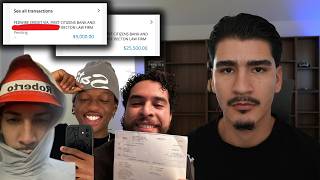
Jay Mendez teaches beginners to close their first wholesale real estate deal in 30-45 days. He walks through his system: readiness checks on phone skills, setting up CRM and dialer tools, targeting absentee owners with equity, then follows a student named Jose through sourcing a lead, negotiating against a maximum allowable offer, and closing for profit.
Chapters
In this video, I'm going to be taking you through the step-by-step process on how I take complete beginners that have never talked to a seller, never talked to a buyer, never started a business before, to closing their first wholesale deal in their first 30 to 45 days after working with me. I'm also going to take you through one of the students' journeys from joining the program, picking his markets, setting up his systems, getting his first lead, to taking that lead all the way to closing. And if this is the first time you're watching one of my videos, welcome. My name is Jay. I've been wholesaling real estate for the past 7 years and I make content just like this to help you close your first deal. And if you like this type of content, like, comment, subscribe, and let's get right into the video. So as you can see in here, here's some of the students that closed some deals. We have some $24,000, $7,000, $10,000, $6,000, $10,000, $12,000. You get the gist. These guys are closing deals. Now, the first step in actually making sure that these guys going from zero deals, zero experience, never started a business before, to closing deals like these on a consistent basis, or even in a short period of time, in a span of like 30 days to start a business, set the foundation, understand what you're doing. Be able to solve a big problem in the marketplace for you to get paid with amounts like these, it takes a certain step-by-step formula. So the number one thing that we do with every single one of our students is setting the foundation for success first, before you even spend money on marketing, before these guys spend money on systems, before these guys even talk to a seller, we want to make sure these guys actually sound good. And a lot of my videos, I explain thoroughly, I would say that, hey, the systems are copy and paste. You can understand how to underwrite numbers. You can understand what market to go into. You can understand what systems to use, you know, to use for to use for underwriting, to use for market research. But if you don't sound good on the phone, nobody's going to believe you enough to trust them with their house. So that's why first we have a readiness check, which we give them the scripts, we give them tonality trainings, we give them call recordings from myself, from my acquisition team, from other guys in the group where they're closing deals live to make sure, hey, you understand what it looks like to be successful and understand how to replicate it, right? So that's the first test that we bring these guys through immediately after they join the program and go through some of the of these modules. So as you can see right here, we have readiness check, tonality, speaking with confidence, conviction, conviction, how to dig into motivation, condition of the property, literally everything that you're ever gonna need to understand what to say on the phone, how to sound on the phone, what kind of energy you need to bring for people to trust you, right? Because at the end of the day, you can have all your systems set up, but if you don't know how to sound on the phone, you don't know what questions to ask, you don't know how to handle a conversation, nobody's gonna work with you and you're gonna have no leads. You're gonna have no people interested. You're gonna have no contracts. So this is where you learn how to sound on the phones. We want you to master each part to get you actually started talking to sellers, not burning through marketing. What a lot of people do is they'll tell you, hey, run texting campaigns, do cold calling, run ads, pay for PPL, pay for an agency to run your marketing for you, but they never tell you you're the one that has to close them, right? So there's no point in spending all this money. And this is something that we emphasize with the students since they already joined the program, they paid to join, is, hey, we want to make sure You have everything in your power to close a deal the second you start marketing. All right. There's no point in calling for months and months and months, and you don't know what training to actually use. You don't know what to say, and therefore you're not closing any fucking deals. So that's the first part that we go into as far as the readiness check. Next, we go through onboarding. So as far as readiness check, we take one Zoom call test, which is about 30 minutes. You run through about 3 role plays. If we feel that, hey, you're good to go, right? I believe that, hey, maybe we need a little tweaks here and there, but it's not a deal breaker. You're ready to hit the phones. That's when we start setting up the systems. But if you don't pass that test or if the student doesn't pass that test, obviously they don't move forward. And once they move forward, that's when we get into the onboarding, right? Your system set up as far as your dialer, how you're going to be calling out of your CRM, build out, build out how you're going to be putting in all these leads into your pipeline and having that and all the math and all the automations going through to make sure that, hey, you're following up with people on time. You have drip campaigns for when sellers don't accept an offer. You literally have everything in place after having the skillset of being able to talk to sellers, right? The skip tracing, build out your KPI sheet, customize markets picked by me. So the second these guys pass that first test, they build out all of their systems. We get on a call with them and I make sure, hey, are your systems good? Is your CRM good? Are your, um, are your markets good? Right? You pull a 10-set of markets. And from there I pick out 3 that would be the best for that specific student based off the area, based off the time that they have available to call, based on their experience and based on their goals, right? It's going to be different. Somebody that is looking to just close their first deal versus somebody that's looking If you're looking to do 2, 3 deals a month, that's going to be a different criteria. So on that call, we want to make sure everything is taken care of. Everything is dialed in step by step by step. We don't want to rush anything because we know, hey, if we build it, if we build all these systems out once the right time, hey, we can use this for the next couple of years. So that's the second part that they go through. Once they pass that onboarding test where they sound good on the phone, then they get all their systems picked out, they get their markets picked out, and that's when they start marketing. Now, let me go ahead and show you one of the students, Jose, who came into the program not to bash on Jose, really good guy, good friend of mine now, um, didn't have any experience, never spoke to a seller, never ran a business before, sounded terrible on the phone in the beginning. Obviously after certain tests, after certain group calls, and after getting all the systems built out and having to market consistently, he was able to do $15,000 in his first 60 days. As you can see, his YouTube video is actually on my YouTube channel. If you guys scroll down through the channel, you'll see the testimonial interview that I have with him. And let me actually run you through one of the deals that he closed, kind of all the ups, all the downs, all the sideways, you know, how the deal didn't go as planned as most deals don't go. And that's just me being realistic, but let me run you through the step-by-step formula on what he did to actually close that first deal, which eventually led to him closing that second deal. Number 1 is marketing. So he used BatchDialer and PropStream, PropStream to pull his data from, to find the markets, to run comps on the deals, and then BatchDialer to actually market to the sellers and market to the buyers. The first thing he did is he pulled a niche list in the market that I picked out for him. He picked out 5 years plus of ownership. Absentee owner, high equity, and older year built. I'll explain why, but this is literally what I tell you guys in every single one of my step-by-step videos to make sure, hey, you're not going into a market where you're talking to people that are not motivated. You're talking to people that don't have room in the deal, and you're talking to people that don't have a problem to solve. So he pulled a niche list in the market, 5 years plus of ownership, meaning there's at least some equity in the deal for us to be able to get that cash offer or get that Novation offer in the door and the seller walk away with money and not have to come to the closing with money on the closing table. As far as absentee owner, Obviously we don't want somebody living in the property. It's going to be a, not necessarily super harder, but there's going to be more things in the way logistically. It's not going to be as easy as somebody that doesn't live in that specific property where the property might be vacant or the tenants might be on their way out, or they're just willing to move in a 30-day span. So as far as absentee owner, that helps us with the quickness of the, of the cash conversion cycle of when we first talked to the seller to when we actually get paid and the seller gets to walk away from the problem that he's going through. High equity, again, making sure that we have cushion in the numbers for the deal. As far as older year built, We normally go for 1950 to 2005. I believe because of the market, we had a limited amount based off the criteria that we pulled the first list from. So we went a little bit older to make sure, hey, we have at least that 1,500 to 2,000 leads to go ahead and start the testing process in this market that he's going into. So he did that as far as the marketing, right? He consistently marketed, he called sellers again and again and again until he got a lead. In this case, he got this one. Here's the notes from his actual CRM. ASAP timeline, right? As far as wanting to sell as soon as possible, not really, but only if they get a good offer. So ASAP timeline versus, you know, only interested if they get a good offer, those are kind of conflicting. So that's the first issue, right? Price. Then there's tenants in the property. It might mean that, hey, it might take a little bit longer than the 30 days for that property to close because the tenants are living in the property, or we can sell the property with the tenants, but it's going to be sold for a lower amount because it's going to be a smaller buyer pool. As far as the boring 4.5, 4 bed, 1.5 bath. That's the actual property description. Good condition, just looks older. I imagine it's in as-is condition, still livable, but not in terrible condition. And the seller wanted $100,000 for the property, right? As they should. Acquisitions. This is him talking to the lead. This is the first lead that he got. Now, the first roadblock that came up was price. The seller wanted $100,000 and our MAO came out to $76,000. So Seller's price, what he was asking for, for the property was $100,000. The MAO came out to $76,000. MAO meaning our maximum allowable offer, right? The most we're able to offer on a property to get the deal under contract. If it's anything over $76,000, we normally do not want to lock it up because hey, that's going to mean there's a smaller profit margin and a likelihood that the deal just doesn't financially make sense to an investor, which at the end of the day, that's who we sell it to and how that's how we make money. So if it doesn't fit your MAO, this is again, advice to you watching the video. If it's not If the seller's not willing to accept your MAO or not be near there, there's no point in locking up the deal, right? You're going to be stuck there with the property for the next couple of weeks. It's going to be a headache. You're going to be doubting yourself because you're locking up a deal that simply doesn't make sense. And you're not thinking like an investor in the first place. So here we have a $24,000 difference. This is the first roadblock that came up with this lead. And, uh, yeah, we need to get it lower. So he ended up getting the deal at $78,000. What a guy, right? This is based off sales training, having the right agreements, being in the right market, knowing how to pull the right pain points to be able to get somebody with with, with an expectation on a sales price of $100,000 down to $78,000, which is only $2,000 above our MAO, which is again, in that range, anything over $79,000, $80,000, $81,000, we don't want to be in that range because that cuts too much into our profit. Again, we're looking to make at least 10% off the sales price to the investor. Meaning, um, if we're trying to sell the property, if we're trying to sell a property at an ARV of $200,000, we want to make $20K on the deal. So as far as the contract price, you can see he locked it up as an Ovation because the property wasn't in too bad of a condition. And he locked that up at $78,000. Now, transaction coordinating, he got the deal under contract. Obviously from here, he built out the DISPO package. He reached out to a title company. In this case, he used TitleStar. He called them to make sure, hey, you guys work with wholesalers, you guys do blind HUDs, you guys work with assignment of contract. Everything came back clear. He sent over the agreement. He got the EMD funds for the buyer that he was going to reach out to later down the line. And he got the DISPO package ready. So that was good. And then the second roadblock came up. Again, a lot of deals will have roadblocks. You just have to understand what to do in the situation. Granted, Jose was in the program. He was able to just call me and text me, hey, I got this problem, and I guided him throughout the way, right? As far as the second roadblock that came up was condition. The property was in worse condition than what the seller explained, which again, this is a normal thing. Sellers are fucking liars. Don't sit here And think because the seller's being nice, because they're answering all your questions, because they're answering all your calls, they're telling the truth about their property condition. In this case, they lied. They said the property was in better condition than what it actually was. So our plan had to change from novating this property and listing it on the market with these expectations of selling it for a higher price point because it was in a better condition to, hey, we need to sell this to a cash buyer because nobody's getting a 30-year mortgage on a property that has these holes in the ceiling, right? Hoarder type of rooms. You can see the outside. Terrible condition. It's not a good look. This is not going to get approval from an FHA or a regular conventional mortgage. So that's when we had to transition from a novation to a wholesale deal, right? As far as the agreements, we're able to still use that novation agreement for a wholesale deal, but not vice versa, because on the novation agreement, we have that public marketing clause. So next, once we understood this, we had to go for a reduction. So I'll talk about that later, which is down here. Dispositions. Originally, this property was novation. So we were talking, we were in talks with real estate agent, right? Signed the listing paperwork. And then we got the inspection done and it did not come back clear. So we went from looking for a buyer on Redfin, right? A public, regular retail buyer to looking for one on InvestorBase, which obviously Jose just asked me and I sent him that cash buyers list. And then he found a buyer at $95,000. And after walking the property, obviously after the inspection, it came back at $80,000 for the offer. Granted, if we go back up, we got the deal locked up. At $78,000, which granted, that's a $2,000 profit margin, which is not what we want to make. That's like 1% of the sales price. So he got, um, the original contract locked up at $78,000. He got an offer at $80,000. Jose then negotiated the deal with the buyer to make his offer come up from $80,000 to $86,000, which is good on Jose's end. Then he renegotiated the agent's commission because obviously we signed that listing agreement with the agent. Um, where it was going to be way more to the point where Jose did not walk away with any profit. But in this case, he renegotiated with the agent. He got his commission down to $1,500, again, doing good business. Granted, Jose could have sold it behind the agent's back and been a piece of shit, but that's something that I do not recommend at all. If you do good business, good business will come to you and you will get rewarded down the line. That's just the way that I believe you should do business. So he ended up getting the agent paid out, even though he found the buyer. Jose renegotiated the buyer to $86,000 from $80,000. So that brought his, um, he actually— here you can see he got an assignment agreement closed with the buyer. He got the EMD to the bank and then he got the closing deal closed, which got him— what does it say? $6,500 on this one deal. And granted, like 2 weeks later, or if not a week and a half later, he closed that other deal for, I think, twice the amount. But yeah, this is literally the breakdown that we had from one of the students' deals. Obviously we have a shit ton more. If you guys like this video, comment down below. Like, comment, subscribe. And if you guys want to get helped one-on-one, just like Jose did, to close your first deal or scale your wholesale business, click that first link down below in the description. And I'll see you guys in the next video. Only serious people though, please.
More from Jay


Blue collar to no collar #motivation #bluecollar #onlinemoney #realestatebusiness