Becoming an Olympic Chiropractor: An Interview with Dr. Ulrik Sandstrom
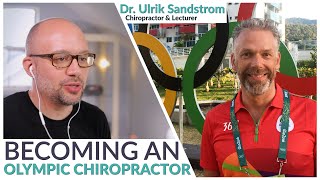
Dr. Ulrik Sandstrom describes working as a chiropractor at the 2012 London Olympics, the first Games to include chiropractors officially. He discusses the long days in the polyclinic, collaborating with other medical professionals, and a case where he helped a track athlete. His focus is on proper diagnosis of hamstring injuries and when they're something else entirely.
Chapters
Mentally quite challenging as well, particularly in London because we were very much on trial. It was the first time that chiropractic was an official part of the polyclinic. As an official part of the medical profession. This was the first time ever the chiropractors and osteopaths were involved.
Good afternoon, everybody. I am happy today to be joined by Dr. Ulrich Sandstrom. We are going to talk Olympics, we're going to talk sports, sports, chiropractic. We're going to talk about epic coming up in Berlin. I'm excited for this one and really happy that he was able to take the time. Ulrich, how's it going?
Good, Jeff, good to see you.
Nice to see you as well. And as I understand it, you just finished up working with the rugby team overseas. I caught you right at the tail end here, is that correct?
Yeah, pretty much, yeah. I just came back from Denmark last night and boys down at Leicester Tigers were. We had a pretty tough game over the weekend, so I was down there this morning. Normally have a Wednesday off, but yeah, I popped down to have a, a look at a few of the players this morning.
Got duty called. Awesome. And I want to dive in kind of right at the top here and say, what's it like to be a chiropractor at the Olympic Games? I know you were involved in 2012 and 2016. What's it like?
It's super exciting and very, very, very hard work. Mentally, quite challenging as well, particularly in London, because we were very much on trial. You know, it was the first time that chiropractic was an official part of the polyclinic. Obviously chiropractic has worked at the Olympics before with individual teams and individual athletes. But as an official part of the medical commission, this was the first time ever the chiropractors and osteopaths were involved. So it was a pretty big deal. We had lots of people watching us, our every move and our every step. So that was pretty stressful. And, you know, we'll probably touch on that a little bit later on as well, how you behave in that sort of environment. But no, it was amazing. It was tiring and just a really cool thing to be there. And, you know, you make friends across, not just the colleagues that you're there with, but the physios, the osteopaths, the masseurs, the doctors that you're working with. You get some great contacts and you're at the Olympics. So it's an amazing thing to be part of.
And I'm going to assume that 2012 went very well considering you were invited back in 2016.
Indeed. Unfortunately, it's not always as easy as that. We also felt that 2016 worked very well, but that doesn't necessarily mean that we'll be there in Tokyo. But yeah, certainly had it gone badly, we wouldn't have been there.
I can understand that. So what's it like? What's the chiropractor's role? What's it like within that team atmosphere in the Olympic vill? Kind of set the stage for us out here who have not approached that experience. What's it like day to day? It sounds like it was long days, high demand. What's that look like and feel like day to day?
Yeah, very early starts. Normally you're looking at a 6:30 start in the morning. Unless you live very close to the Olympic village, which most people don't, then you're looking at an hour and a half traveling time to get there. So yeah, most of the time you're up at about half four in the morning when the alarm goes and you're straight off and traveling. And obviously the first day you arrive, particularly obviously in London, where we were all new to it and you just get to know everybody, introduce yourselves and sort of also try and get a vibe for what the opinion of the rest of the team there is on chiropractic, you know, because of course, you know, it does vary. Some people, you know, sat next to one physio in London. The first guy, I believe, literally sat back down to the introduction meeting, who also happened to be rugby physio. And you know, when I said I was there as a carpenter, he was like, oh cool, we've got chiropractors here. So he thought that was really cool. It was fairly obvious that some were pretty surprised that we were there, but on the whole, you know, the reception was good and then there's a lot of waiting around. There's a lot of really hectic time when a lot of athletes come in. I guess the first couple of days you're trying to find your feet and find out what is our role within it. In London, it was very much a case of we had to actually be referred the athlete by the physio. That was just part of the deal. We were the new kids on the block. You know, you can jump up and down about being primary care practitioners all day. If those are the rules, those are the rules. And as long as we work with the physios on that and that was fine. I found a couple of physios who I worked really, really well with. And we ended up actually doubling up on a lot of the athletes that we were treating. So someone came in to ask for a physio. If I was free, the physio would go, alright, come over here, let's workshop on that. And to me, that was probably the highlight of it. Not just the fact that we both were inputting into the patients, but also our interaction and what we learned from each other was really cool on that as well. But yeah, they were long days. Then you spend all day treating and then pretty much when you're finished, you've got to get everything noted onto the system. And that was pretty much the bugbear of most of the practitioners was the couple of hours that you had to sit and actually translate your sort of on the fly, handwritten notes into something that was actually out on the computer. But you know, it was just as important that that was actually noted and generated because of course we were doing stats on how many patient interactions did Kanipilot have to see, you know, was it worth, you know, did they actually get utilized? And yeah, we did, very much so. So, yeah. And then you finish your shift and you're in Rio. You gotta go out and explore Rio. We were so tired and we did have one, had one day off in the 11 days that I was there. And it was. I just felt like just sitting on the beach drinking tamarindas all day, but actually dragged myself up and did do a little bit of sightseeing and. Yeah, and then, you know, you hang out with a few of your old friends and newfound friends in the evening and socialize and chat. And that's also part of making those connections and making those friends. And then you try and get an earlyish night and then the next day it all goes on again.
That sounds like quite an event. And if we heal it back way before that, that's kind of, you know, what, what you've led into. But to get there took a heck of a lot of work and I'm sure a lot of determination on your accord. How did you first get involved in sports? Chiropractic?
Sort of by chance a little bit. It was, you know, no one ever believes me when I said that. It was never my goal. I never graduated. Oh, you know, I want to be a sports chiropractor. You know, I started working in Sheffield in a clinic there. And after about a year or two we got approached by the local basketball team who had an American coach, quite a few American players who were obviously very used to Chiropractic as part of a sports medical setup. So they contacted me and said, do you want to do some work with us? I didn't know much about basketball, but just in the way that I knew very little about rugby when I started working with the rugby club. So but got involved and again got to enjoy the collaboration part of it. And that to me was and still is the real, probably my main motivation now for being involved in sporting. You know, yes, it's super exciting and yes, you get to do some high profile stuff and you get to work at the Olympics and you know, sit on the sidelines on, you know, big finals and that's super exciting. But it's actually the day to day collaboration with people who work differently to you, who think differently to you. To me, that's actually probably my week in, week out. The main thing I get out of sports chiropractic is just that interprofessional collaboration.
And with that team approach to care. What have you found to be perhaps the biggest challenge? Because I'm sure with every team, with every organization, there's different sets of not only personalities, but politics and everything else you can possibly imagine under the sun. But perhaps touch on a little bit of maybe a challenging time that you've experienced or an aspect of it where it was like, man, this was something that I had to overcome and I was proud or glad I did.
Yeah, there's quite a few. There were, I think probably the Olympics was the main challenge in terms of those of us who had worked with elite medical teams for quite a while, were used to the fact that we were sort of accepted. We don't have stripes. We'd come in and, you know, been humble and just sat back and watched and listened and gradually worked our way up to then be in a situation where we were faced with a sort of elite standard of athletes that we were used to seeing, but very much in a, as I said, we were very much on trial and actually the most important part was how we were perceived and you had to keep that in mind. It was very easy to get really excited, go, all right, I'm going to go to do this, this and this. And I know if I do this with this athlete, this is going to be amazing. But you always have to make sure that you have the backing of the rest of the medical team and the physios and sometimes even physios who have a lot less elite sport experience than you had, but they still had to be the ones who signed off the forms. So that was challenging. And you had to keep reminding yourself that even if I do the best job for this athlete, if I managed to upset an important part of the medical team, I may have won my little battle, but we've actually lost the overall fight. So those are probably some of the biggest challenges and still are, I think, for a lot of kind of patterns, starting to work in a big team.
I can see that. Because anytime that you go into a new environment, whether it's a hospital based setting, whether it's a multidisciplinary team, whether it's a sports team that has multifaceted approach to care, I think understanding where you're going to fit in and how you're going to go about that team approach, because it's not one size fits all. And I'm sure you've seen that as well. In some of the instances, it's just wide open access, come on in and do your thing. And we love that you're here. And I've certainly also seen some of the other where it's okay, I got to kind of tiptoe here, I got to politic a little. But in a way that is beneficial in a patient centric approach and doing what's best for the individual and standing up for that. But understanding that there was a lot here before I got here and respecting that I also think is a fine line. So I certainly give you a lot of, I commend you on the ability to do so because I think it's something that not everybody is finely in tune with and that's something that can go awry very quickly. And in some of these places, I'm sure you've seen it can be one shot. You have one opportunity to really get it right.
No, absolutely. As I often say, the problem with chiropractors is that as a breed, we're actually pretty bad at collaboration and working with other disciplines because we're just not historically, we haven't done it. We go to a chiropractic college full of chiropractic students and we graduate and we go and work in clinics with other chiropractors and then we may set up our own clinic. And we sort of live in a little bit of a bubble where we're in our own clinic. Once you've been in there for five or 10 years, seeing enough patients who walk through the door telling you that you're God, you start believing them after a while. And to then get invited into a scenario where you actually now have to sometimes have a head of medical who's often A physical therapist tell you what you can and what you can't do and that you correctly say some people do struggle with that. Well, the phrase that I always use if I advise people who get a bit of a break in sport is if no one tells you what to do, ask, get in there on day one and say, what am I here to do? Can I adjust? And normally the answer is yes, because that's why they got you in. But can I use my needles? Do you want me to do soft tissue or do you want me to refer that? Do you want me to okay a plan before I go ahead and start or. Yeah, you have me to just report at the end of the day what I did, who I saw, and if that's your sort of first day there, that they hopefully get a bit of a warmth feeling that, you know, this guy is actually a team player. And because it's, it can be a fatal environment. And sometimes athletes will try and play different practitioners off against each other. And if you're not savage at that, you can end up in trouble.
Yeah, I can understand that. And with some of the docs that are, you know, maybe new docs or docs that are experienced and just starting to get involved in sports, whether it's local, regional, national, what are you seeing as some of the bigger opportunities that may arise over the next few years in the melding of sports and chiropractic and how that plays together?
I think in sports, chiropractic is that, you know, it is becoming, it is growing more and more and most of the time, and certainly with sports docs, I find very few issues with sports doctors in chiropractic. I think they can a little bit depending on the country that you're at, the sports doc generally. Oh, here's another person with a bit different set of skills to the medical team who can add something to the mix. I guess the doctor won't really feel threatened by chiropractic being there. It may be more, it's physical therapists or the osteopaths who, you know, where the interaction is tricky. And of course it's always a two way process. And as I said before to me that once you embrace that and realize, I mean, I've learned more working as a sports chiropractor than any of the CPD work I've ever done in my whole career. Just seeing people with different ideas and different angles to me has raised my game, you know, and certainly improved my skills and certain ways of not just treating people, but how you think your Way around issues and how you manage people. Working with these has certainly helped. But I think in terms of getting Sports Medic to open to chiropractic, it's happening more and more and it's all about those people who are out there actually still keeping doing the work and hopefully behaving in a way that is conducive to us keeping being invited back.
Good point with that. What sort of as you look back and you've been involved obviously for really years at this point in time and really built up a nice reputation, a nice client base and certainly push new opportunities for chiropractic at large, I think is awesome. But as you look back and say, man, maybe what's the one thing that I would have loved to have told myself 10 or 15 years ago as I got started in this world that would have helped my journey be maybe a little bit easier? What's maybe something you'd offer to a younger doc out there?
I think that the key thing is to actually be focused on asking questions of the team that you're in as well. So not just being very focused of trying to impress them with what you can do, but be really open and wanting to learn from them too. Because again, that works both ways. They've got the same problems that we have. They're also human beings, whether they're a masseur or physical therapist or an osteopath. They have the same issues with self confidence and doubt and certainty that we have. And they also respond to flattery. And I sometimes tell young chiropractors, if you're not sure of how to go about getting a good working relationship, ask if you can observe them. If you're in a club and you see a physio. I saw you did that technique there, or what was that test? Can you just talk about. I'd love to learn that. And that just again opens up that mutual learning and interaction so that next time you do something or you can even finish off once they've shown you the techniques and that's really cool, I'm definitely going to use that. Oh, by the way, if you ever see me, or if you want to about anything that I do, I'm more than happy for you to sit in with me or ask me questions as I treat some of the players, because there's no better way of getting people to learn what you do than having them absurdly doing it.
That's very well said. I think it ties into maybe even some old, some tried and true networking. Right when you're the one out there asking questions, questions you're able, you know, people think you're a great conversationalist when you're the one asking the questions. And in this case, I think it's especially prudent for us as clinicians and physicians and chiropractors because it's not just just asking to ask in a networking sense, but you're actually going to be able to, as you said, get some gems out of that or perhaps a new way of looking at something, or a new way on how you can fit into that puzzle of treating. Because quite often it's going to be in a multifaceted approach. These athletes at the high level, they're getting care from a variety of sources and the more that that care is continuous and communicated, the better off it will be. And I'm sure that most of the time and plenty of times it's not very well. It's not very well and it can be fractured just as with anywhere else. But if you can be somebody who can take a step back, so to speak, or start to learn about what's going on in other places, I think that pushes up the value of the chiropractor in those institutions as well.
Absolutely. And I think that if we can get that two way process going, that's the way to get them on board. Absolutely.
Tell me a little bit. I'd love for you to pull out what's maybe a highlight of when you look back at everything that you've been able to participate in, whether it's a case, whether it's an event, I'd love to hear maybe a highlight, something that you think back on and say, man, that was awesome.
The one that always comes back is probably the one in 2012 in London where as I said before, one of the physios there who I started working really closely with, we had this girl walk in and she was a track and field athlete and she kept walking crying and you said, I need someone to help me out, I've got my heat tomorrow, I don't even think I'm gonna make the starting line. So we assessed her and, and we knew by then what sort of techniques were using and particularly in terms of assessment. I do a lot of manual muscle strength testing and the physician I was working with, he was pretty interested to the point where I would do some tests and he would almost go, right, step back, I'm going to do some work. Right, Just test again, see if that made any difference. So we spent an hour with this athlete and bearing just gradually got her function back and started putting her through increasing loads, increasing tests and she was dying to pass them. As we kept doing work with her. It actually ended up in a slightly three way high five at the end of the session and she was just really happy that she felt that she could compete. She got on the starting line, she actually competed. She made it, she made it to, I think she made it to the semis. I still remember on the way out we went, right, so you know, what were you hoping? Because unless you know the athlete, you know, they could be gunning for a podium or they could just be happy to be there, you don't know. And she said, you know, obviously I haven't trained for two or three months because I haven't had good medical care and I've been struggling with this injury but would have been nice to defend my gold medal from Beijing. Oh so that was probably one of the highlights of, you know and I would have to say that she went on and medals, she didn't, she made the semis because obviously she hadn't tried that or she hadn't trained that hard. But that to me was, it was just lovely. It was lovely to bring some really good skills and care to an athlete who hadn't had it for quite a while. And that's I think also one of the things about the Olympic that you realize there are people there who literally have a friend with a sponge at home and who have paid, who have washed dishes and dug ditches for months to be able to afford to get to the Olympic Games. And it sort of puts it into perspective with some of the more well funded athletes who have, you know, Skype calls with a sports, sports psychologist and 3D video, video analysis, you know, when you, when you see people like that out there. So yeah, that probably is still one of my highlights.
I love it. And I'm going to transition a little bit here to Berlin in EPIC 2019. I know you're speaking at it. I'm super pumped to go out and meet you and a bunch of other docs and I'm certainly going to put a link below as well for anybody that hasn't picked up tickets yet. But I know you are talking hamstring injury and when it isn't, which is an interesting, interesting counterpoint there. So can you talk a little bit about. Let's give, I'd love for you to give a little preview. Where are you going to go with that talk? What can docs that are, what can they expect to learn? I think it's going to Be awesome. I love the title. Good copywriting. So I'd love to learn and have you speak a little bit about your upcoming talk here at EPIC 2019, which is happening in March in Berlin. Yeah.
The little tagline of when it isn't is because so much of what we see, both in sport but also in clinic, it looks like a hamstring, but it isn't. It's a neural issue. And it's to the point where certainly in sport now, we actually talk about the neural hamstring. So to me, trying to differentiate when you actually have a true, you know, myofascial injury and when you actually have a neural component. And of course, the two are very interlinked and they often happen together, but to me, that they need very different approaches. And that probably is the main emphasis of my talk, is finding out is it actually a true hamstring that I've got here? And just because the patient tells you that it's a hamstring, because that's where they feel it, you know, the fact that they tell you that, well, when does it happen? You know, does it happen when you run? No, I'm fine when I'm running, but my. But I get all this hamstring pain when I'm sitting in my car. Maybe it's not a hamstring. So that's sort of where I'm starting off with is actually the differential diagnosis and that because to me, a really big part of sport is that whatever we do in sport, I do the same thing to my patients in clinic. You know, there's no, there's no difference. Well, there's difference in how you manage, but it's the same bodies, it's the same injuries. And certainly I wouldn't like to think that only people who are interested in sport think, oh, this is just for sports chiropractors. It's not. This translates really well into a lot of what we see in clinics. I'll be touching on the differentials. Hamstring injuries is actually one of those injuries that we probably have more decent evidence for how to treat them and how to manage them than most of the other injuries. Just because it's a. It's a place where a lot of money has gone into. You know, it's probably one of the most expensive injuries in the elite sport. You know, it's the one that costs clubs the most in terms of loss of participation of their, of their highly paid athletes. So we're going to be looking at how to manage them. And a really key part also is return to play. Because that for me is the key, is safely returning the athletes back in, making sure that they don't end up, you know, re injuring that hamstring again. And that's probably return to play is probably the one thing that being involved in elite sport has taught me better than anything else. Because there are very clear return to play protocols. And in terms of hamstring, we've actually got some really decent tests that I'm going to be throwing at people out there. Well, you know, your runner comes and go, can I run? I used to be, you know, the nice guy, Go, oh yeah, maybe run a little bit, you know, Whereas now go, well, let's find out, you know, and it takes the pressure off you a little bit because it's not me going, oh, you can't run, it's the test saying, well, you can't pass the test, so you can't run yet, or you can only run at 60%. So I've got some really cool assessment test that will guide you into is it now safe to get your, your athlete back into running again? And as I said, return to place. I'm just much more ruthless now. And I used to go, well, maybe run a little bit. I go, no, you can't, but you're injured. So I'll be giving some real good protocols of how do we get our athletes back in a safe way, get it back as quick as we can, but get them back safely in order that they don't end up with another tear or another injury.
I think that's such an important point. What you bring up right there is that subjectivity and that pressure. As a clinician, as a chiropractor, when you have somebody, whether they just want to walk to the grocery store, get back at their high school sports or beyond. It's like being able to look at objective measurements or have some frameworks. You said it so well. It can take the pressure off you and it's like, well, this is what your body is telling me. It's not just my best guess. Of course, there's always clinical experience and intuition. You know, these things are all combined with what you read, what you see and everything else. But being able to rely on some differential diagnosis, make sure you get it right up front, key. But then downstream, as somebody's returning to life, right, returning to play, returning to sport, returning to life, being able to have some objective ways to look at things to help make the best decision possible, I think is a very, very important thing that in my experience, working with Some high school football previously was a gray area for me. I can tell you personally, I'm looking forward to learning from you out in Berlin because I think it's something that I personally have struggled with and I think a lot of other docs have in the past as well. I'm looking greatly, greatly forward to it. I'd love if you want to close it up by telling us perhaps maybe what you're looking forward to most in Berlin in March. I think that'd be an awesome place to touch on as we come to a close.
The camaraderie is probably one of the things. I've been to a number of ECU and WFC conferences now and it's the camaraderie there. It's being with chiropractors from all over the world who some have a similar outlook, some don't. But we're all there. We all get on, we all talk, we all learn. You know, we all make friends and you sit in conferences and you sit and talk and you think, this is really interesting. This rocks my boat a little bit or this shakes my foundations a little bit. But to me that's a good thing. Being a little bit open minded and being curious about, well, just because it shakes my foundation doesn't mean that it's wrong. And one of the things that I've always found with anyone who speaks at these events is that they're always super happy for you to go and chat afterwards. Yeah, everyone, everyone is bribable with a beer in the bar, myself included. But yes, I come back with such a buzz from these events. And it is, you know, yes, you learn, but it's also, it's more than just, oh, yeah, I'm now a little bit cleverer than I was before I got out there. You get motivated and, and you find new directions. You come back with a little sort of palette of oh, I must look into this a little bit more. I should go and check that out. So yeah, it's the burst in the camaraderie for me and yeah, I can't wait.
Awesome. Well, I appreciate you taking the time. I know you are a very, very busy man and I look forward to meeting up personally in Berlin. And if you haven't picked up your ticket yet, but you're watching this, I will be sure to drop a link down below and hopefully both of us will see you there. So thank you for taking the time.
Ulrich, Friendship.










