ChiroHD EHR Demo: "My NEW Favorite Chiropractic Software!" (Deep Dive)
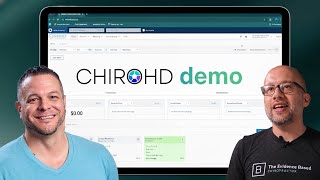
Jeff Langmaid and Gabe walk through ChiroHD's EHR, showing the multi-location dashboard, drag-and-drop scheduling, two-way texting built into patient workflows, customizable SOAP notes, and reporting dashboards that track insurance claims and financial metrics.
Questions this video answers
October 30, 2025
Jeff Langmaid and Gabe (from ChiroHD)
A web app (web-based application)
Chapters
Hey everybody. I am happy to be here with Gabe from Cairo hd. We're going to dive deep behind the scenes. This is a great opportunity to see behind the scenes of what is fast growing to be my favorite ehr. And you're going to see why as we dive into the simplicity of the tools, the technology, how it makes your practice and assists you in helping your practice run easier as well as some of just the flows that they have enabling your patients also to have a more streamlined experience with your practice. So Gabe, I really appreciate you taking taken some time and I think we're going to start on the dashboard screen, is that correct?
Yep. We are on what's typically like your first login as an owner of a clinic, which is what we call a multi location dashboard. And it doesn't really matter if it's just one, if you have one clinic or multiple, even a single clinic benefits from it because we do have the option of like a training location where your staff can go in and, and do whatever they need to to do to learn the system. So even even though it's just one clinic location, we still have that, that zoomed out view where you can see multiple locations if you were to ever add them. We, we love encourage. You know, a lot of our clinics have aspirations of having multiple clinics and knowing that they can expand easily into multi location setups is, is a really good use of, of them seeing this screen. So really at this level you can set up all kinds of things. We're not going to go into all of them, but this is where you do things like create your price lists and fee schedules and set up your inventory. And the beauty of that and like a multi location setup is you don't have to do that every time you open another location. So it saves you a lot if you know anything about data hygiene. The ability to use the same things across multiple locations makes reporting and consistency just so much easier. So we handle that all at the system level. But you can also see on here the idea of being able to compare clinics and see comparison between all your locations across multiple metrics. So this is you have these all on the individual location level, but you also have the ability if you have multiple locations to actually segment and look at it across different locations. And then you can also see, we'll look at this on an individual location, but things like trends over time are, are your collections going up, are your, you know, charges going down, visits, et cetera. You can see this all in one really easy to, to look at dashboard. It's probably where we'll stop at at this level. But we're going to dive in and look at an individual location and start looking like what it looks like to run a clinic on a day to day basis here.
Beautiful. Yeah. Let's take a look. One thing I love on the on the front end is the ability to see information at a glance easily and it doesn't 7,000 clicks to get to some of the high level information that you want to be able to see on a moment's notice. So that's awesome and I'm excited to see it. Looks like we're going to dive into an individual practice and the schedule.
Yeah. So we are now looking at what you would typically call like the front desk screen. Although because we are a web app, it's not like in some other platforms you actually have to load the, the front desk module and then you have to load the doctor's module. Right. We're a web app. So this is just happens to be one screen. But typically what you'd see at the front desk. This schedule that we're looking at right now is very basic. It's got three providers. We've got the main doctor in the clinic, we've got a massage therapist and this one happens to have an acupuncturist. So you can see we have all three laid out next to each other. And you can see that there's a lot of different configurations you're looking at even right here where the massage therapist doesn't have any hours in the morning but they have an afternoon free. Dr. Eric at 8 o' clock has time blocked out where he is only a lot. He's only taking one patient in in the 8 o' clock hour and the rest of the day he's able to take three every 15 minutes. So you can see there's a lot of configuration options that are just really, really easy to set up. You can come in here and you can see clearly their provider schedule. This is all an easy drag and drop system. So you can make really complicated schedules at the really easily. You can understand it very easily. From 7am he's got three slots. At 8am he's got one slot and you can have that for every single provider have different schedules. So a lot of configuration here. One of the easiest configurations to set up in in the EHR space in chiropractic and, and that's important to note because chiropractors have some of the most complicated schedules I've ever seen in any systems. Everything from, you know, seeing 10 patients every 15 minutes the way that they want to book to, you know, having multiple times a day that are blocked out for new patient exams or RE exams and sometimes associate docs in there that can, that can handle a different load. And so you, you know, in the afternoon you might be able to see twice as many Cairo appointments, but you, you don't have as much in the RE exam space. There's a lot of flexibility. We've thought through a lot of that and tried to make it really easy and are always looking to different ways to make it easier. Drag and drop, which at this point most EHRs are here. But when we started that was actually a really big. You want to reschedule an appointment and move things around. Just being able to drag and drop appointments is real easy. Scheduling generally very easy as well. One thing that again, it's very much what I would call a Web 2.0 thing. But if you've used a lot of older systems, everything starts with the patient. So if you wanted to schedule an appointment, the first thing you're doing is you're looking up a patient and then you're interacting with this calendar most people like in Google or any other calendaring system out there, you start with the appointment time and then kind of back your way into it. So we mimic that where if I'm looking to schedule someone at 10am, I click on the 10am slot and from here I can do a patient lookup right here or I can click the new button and, and now fill out a new patient form. So you have a. It's very, very quick and easy to schedule into this and create a new patient appointment. You'll see we have options for different case types and different appointment types. You can schedule that all from right here, but very simple. And when you're scheduling an appointment, you know, we're not asking you for every detail about them. We're just trying to focus on what you need to, you know, the patient's calling in and wanting to schedule. You're not. You don't have to get too granular. You get first name, last name, contact information, whatever you need to get them scheduled. But really simple scheduling options there.
Fantastic.
Looks great. A few things that are kind of fun. We do have integrated two way texting in our platform, which means that we'll look really quickly. When you have a patient pulled up, you can just click on their phone number and actually see your texting history and communicate with them right in app. You don't have to go out to another platform you can, you can just see it. All right, right here. You also have some nice visual indicators. This patient has been sent a text reminder for today's appointment. So you can just look at the calendar, know your text reminders went out and you can see that if patients confirm their appointment, you'll actually get a thumbs up or an X if they've, if they've said they can't make it. So a lot of really small visual indicators that just make it so much easier and efficient to run your clinic and see what's happening.
Yeah, I want to just highlight something that you touched on and the importance of it is the ability to text and be able to see and activate those conversations directly from this dashboard is absolutely so critical. One of the things we always discuss across the evidence based chiropractor is communication and it's not only what you're saying, it's also how you're saying it when you're saying it. Right. So being able to understand and have the information of the patient at the fingertip and be able to literally at the same time on the same screen, be able to see and engage is an absolutely. It's an absolute power feature that I'm going to say enables the doctor and their team to be that much better stewards of the relationship, which we're in the relationship business. So that's, that's a really fantastic tool and I just want to make sure everybody listening and watching really understands to the power of that simplicity. And so is it always simplicity on the other side of complexity? I'm sure that wasn't easy to build.
I mean, so that's, I think that's a thing worth noting. My background obviously starting ChiroHD, but before that I was a user experience developer and I spent most of my career working with, simplifying process and protocol. I will say chiropractic has tested me a lot. Is that the amount of diversity in how one clinic does things to how another clinic does things has been very enlightening. That's a nice way to put it, but. So, yeah, we've had to build a lot and I would say, you know, this is something we're constantly trying to improve because every day, even with the number of offices that are on ChiroHD, I still see things on a weekly basis that I've never seen an office do before. And so trying to figure out how to improve those things while not. There's always a fine balance. Sometimes it's a training thing and you can show an office how to do something better. And sometimes it's the opposite. You they're doing something that I've never seen that's actually incredibly efficient and we want to bring that into the whole ecosystem and train people in better ways. So something we're constantly looking at. Let's dive into what the doctor screen looks like a little bit if that's a good next step here.
Absolutely.
I'm going to touch really lightly on the flow of how they get there and then we'll dive into the doctor screen. But most of our clinics, just to point out, use an iPad or some sort of check in device. At the front desk, patients will enter their phone number and then they'll get checked into the system. We have a few different views of this front desk screen. The calendar we've obviously been looking at, the flow screen is, is more for clinics that, that have complicated room setups and, and really monitor patients going from point A to point B to point C, et cetera. So you have, this is all a drag and drop screen where this can be automated. We have a calling module that will actually automate calling patient from, from, from the scheduled area to the arrived area to the assigned area, et cetera. But this is a way that you can visually see what's happening in the clinic versus just looking at what your calendar is. So we have a few different views of that just depending on how your clinic operates and what's the most efficient for your clinic. Cool. But for the doctor's screen, again, very similar look and feel. We're on the doctor screen now. They are going to have that same cue. Over here on the left is our queue. So actually we'll arrive this patient just to make this easy so you'll see that they show up in the queue over here. We have some things on here where this patient has a Preference of Table 3. And you can see that clearly in the queue. If I go over to the doctor screen they're going to have that same cue over here. The difference being is when you're at the front desk view and you click on this, you're going to get what we call our patient snapshot which has all, you know, I call like the, the cockpit information, just an overload of information about what the patient is, is doing what, what their care plan is, where they're tracking. If I'm on the doctor screen and I click into that, it's going to pull up the, the, the SOAP note screen or the SOAP note module so that they can do their note efficiently. So this screen is broken up into a few Sections, obviously we've got a patient with a lot of listings that they've, that they've set up here. You can see that this, this is a free form type. So they have some things that they've put in here, but they've also used like a Fusion, that's a free form type that they had a fusion at L5 that they wanted to note on here. So they can customize that however they want. A lot of this is this screen. You'll notice that we're split into two sections, patient info and the actual note you can specify which you want to land on first. Some docs don't really care about this information on the adjusting piece and they'd rather just jump straight into the note so that you have that flexibility to pin which one your preferred starting point is. But you'll see we've got information about any their diagnoses, tags, any, any of their trackers that they have set up, which tells you where they're at in their care plan, recent visits. You can view all their previous notes. You can reuse a note from a while ago. This patient happens to be pregnant. So we have a pregnancy tracker that tells you lots of information about where they're at in their pregnancy, if you know the genders, they're twins, et cetera. Once we get into the notes, you'll see some similar information. What charges are going on today? Chief Complaint, Care notes. These are our default macros. Now, you can customize your macros very, very easily. And I will say most of our clinics do end up customizing their own macros. They'll usually start with ours as a baseline, unless they're working with another group or a coaching group that maybe prescribes a certain way to do things, in which case we have some of those preloaded and can load them in, depending on your group. But this is a really basic setup here where you're walking through your soap sections across, across here. And then often, you know, once you do that first note, a lot of times they're just doing this reuse last note instead of actually going through and doing a full walkthrough here. But just so we can kind of COVID that as you click into each box, if we're doing subjective, it's going to ask you some very basic questions. Are defaults better the same or worse? What's your pain scale? What, what areas of complaints do you have? And that's really all it is. So it's very, very fast. You can walk through it, you'll have a lot of visual cues. Again talking through like the importance of visual being able to digest information really fast. So you've got these boxes, these boxes are the things that were actually filled out as part of the macro. And then you've got underlined text or things that we pulled from their profile. So like their name we, we have macros for he, him, her, he, she type things so that, that the, the note conforms correctly to, to all of that. So any of those are just going to show up as underlined text but you can quickly and easily see. Okay, they said the same this time. You can click into this for subsequent visits and just change that one item so you don't have to type on the subsequent visit. It's really easy. And then you just keep stacking on top. So we've got our subjective on here. We can do our objective and you'll. I'm not going to cover each one of these answers because again these are very customizable. You can switch this to whatever level of detail or simplicity you want but you can see that that just adds to the note until you get your full note here. Right. Once you're done you can do a few different things. Save as draft. This is, you know, depending if the doctors knows he needs to come back to it or maybe doesn't do the note at all right now and is just trying to move them through the flow properly. The save as draft puts it in the separate queues so the doctor knows he needs to come back at the end of the day and take care of his notes. Submit is just, yeah, I did my note, everything's ready to go, we're done and over with it and then submit and assign. This is really for, for clinics that have like a multi room process where they're, they're done with this note but they want to assign it to the next room. They're going to go from here to decompression, they're going to go talk to someone else. So you can finish the note at this point and then assign it to another doctor, another room. Nice.
Yeah, that's cool. That makes a ton of sense. I don't think I've seen that before. That's great.
Yeah. So it just depends on, you know, that's where we do a deep dive with a lot of clinics really understand what their flow is and try to help them configure this in the way that's most optimal to them. Yeah. And then once they're done with that it just, it clears it from the doctor's queue. So it's the doctor's onto their next patient and it'll move them into a new queue on the front desk, which will let the front desk close out that appointment and ask for next, you know, make sure they're scheduled for the next appointment, whatever your normal process is.
Yeah, that looks great. I'll highlight a couple of things because I know a lot of docs that are listening and watching in my audience, so to speak, they kind of span the gamut. We have family wellness docs, we have sports docs, we have subluxation based docs, we have auto accident. So when I look at what you just highlighted in terms of, I'm going to say the simplicity and flexibility of how to build those macros and how it can create a comprehensive note with a few clicks that also retains accuracy, I think is really, really important because I think there's a lot of docs out there that either have ended up on one side or the other. Either they've built it so automated, but then it's not thorough enough or on the other side, it's just, it's so complex that they can't get through it. So when I look there and see, wow, how you can build individual macros, work through a SOAP note and then to your point, visually see the areas that it's informed, you know, so to speak. That is a massively powerful feature because it enables you to not, you know, complete a note and then see it and be like, let me go back and have to do these. I'm sure you can edit things if you want, but you can do it right the first time, is my point. When you can actually click and see, see this thing building itself out on the screen with a few clicks. I think is, is, is a massive advantage for docs utilizing ChiroHD.
Yeah, it's, it's, it's always a fine line on, on complexity versus simplicity because you know, everyone is different and you want to give flexibility where flexibility makes sense, but you also don't want to give flexibility where it's, doesn't serve a purpose, you know, so that's one of the things that we're always trying to, we, we are a very, we like to call ourselves an opinionated software company in that we, we've seen, you know, we have clinics on the platform that see 1200 visits a week and we've got clinics that see 50 visits a week. And so we've seen a lot and we've seen things that work and we've also seen things that don't Work. And so we really try to curb when we see an office doing things that we've seen repeatedly not work, we try to, you know, help and, and show the better ways to do things.
I think that's great. Yeah.
All right. So another area that I'd really like to talk about is reporting. Reporting is a big deal for us. You know, we, we've really tried to bring a lot of metrics in house and we're always looking at new ways to expose metrics. There's been a lot of pop up companies that bolt onto these EHRs and give you metrics because the EHRs have traditionally been pretty bad at giving you really good metrics. And I won't say that we're quite there and where I want to be, but we still have a pretty advanced metric set and it's something that we're constantly building on. So I'm going to focus on two areas. The first one is what we call our simple reporting. And this is really like your, what I would call like your end of day screen. Right. This is really designed for your staff's trying to close out the day. What did we do today? How did, how did everything go today? Make sure our cash balances with what we actually did, etc. So this screen is really, I mean you can do a lot more with this, but it's designed to kind of walk down this list. So you set the date range. I'm going to just back up a little bit. So we've got some data in here and, and you can disregard these top four. These are for membership type clinics which support as well. But normally it's going to start with collections here and we're going to just walk our way down. We'll see what our collections were, what were our sales at, what was our appointment scheduled, rescheduled, missed, canceled, walk in, completed overall statistics. This gets into a little more detail in terms of new patients, some state and practice type metrics. If you have different types of visits, you can see breakdown of each visit type, overall charges, insurance collections, et cetera. One of my favorite ones is health check. We're constantly looking for errors that we see clinics make all the time and try to automate fixing or at least bringing light to it. So these are some of the more common things that we see. You know, doctor puts in charges in the front desk puts in charges. They didn't realize that they both, they both stepped on each other's toes there or they do the exact opposite where the doctor assumes the front desk is going to take care of it and the front desk assume the doctor took care of it and now you have no charges even though the appointments were completed. Appointments missing, soap notes, patients without future appointments, billable items on suspended insurance cases. These are all things that we see really common problems that we try to bring bring light to. So at the end of your day you can check and see. Okay, I've got three patients that have charges going on suspended cases, which means I might not ever get paid on them if I don't take care of that call list. Again, just a lot of offices have a practice of calling their new patient. You know, at the end of the day they'll call their new patients and see how their adjustment went. You can, it'll pull those up, it gives you their phone numbers, what their appointment type and you can just really quickly get through those lists. Great. So again this is like your end of day scheduling. But then we, we have reporting dashboards. This is something that we've been rolling out new updates to regularly over the last six months. These, most of these are, are new to the platform within the last six months. This front, this main metrics dashboard is the one that we were looking at at the very beginning that was at the multi location level. And you do have a lot of options here to see things like total income, patient collections, insurance charges, et cetera and visits. But it's fairly flat and it's just this one style and it doesn't, you really have to dive into each one individually to get some views. So we added a trends one which we briefly touched on before, which gives you a lot more information about how your clinic is doing from point A to point B. I love this. So, and you can break this out, it defaults to the last three months, but you can actually do it in the last 12 months. So you can start seeing patterns across different things that are really important.
I love it.
Our insurance dashboard is just really like a snapshot of what's happening in your insurance world. How much are you billing? How much are you collecting? How much is in your ar, how much is addressable? Who are your best payers, who are your worst payers? How are, how are certain codes getting paid versus other codes? So just like a really high level snapshot of what's happening in insurance appointments. Same ideas like what's happening with appointments, what's our overall, you know, how often are our points being completed versus rescheduled versus canceled versus missed? Are we scheduling out future appointments? How, how far in advance, you know, are we just doing within the next 30 days. And we're not scheduling people out for 60, 90, 90 plus days. Once a patient shows up for their appointment, what's your average time from the time that they arrived in the clinic to when they actually completed the appointment? So this tells you two things. It tells you if you're compliant or that you're doing the things that are necessary for this metric to be right. Because you have clinics who you know, don't complete things properly. They, they wait days to complete appointments and they'll come on here and it'll say that there's, you know, the average is 27 hours to close out an appointment, which tells you something about your, your systems versus the patient. If once you follow that correctly and you're actually doing things, it tells you a lot about how efficient your clinic is being and getting patients in, getting them adjusted, getting them back out the door and in, in a way that honors their time and yours. And then the last one here, compliance percentage. This is literally just looking at appointments that were valid within a week of their appointment. How, what percentage of people are actually showing up for those appointments. And, and that breaks out by type too. So I'm going to back up a little bit. So you'll see in this clinic they have 100% on 100% of their new patient appointments that came in during this date range, booked and came in. And you'll see that fall off by different appointment types. So 97%. But it gives you some good idea of what people are scheduling. If you're having a particular issue around a particular appointment type, you can have your staff train on those things. Financial. This is a big one that we've got lots of questions on and is continue to be one that we're honing in on. But you know, income by like where's all your money coming in? From a referral basis are, are you. They mostly insurance cases versus CASC cases versus private or personal injury, you know, private insurance versus like Medicare, workman's comp, things like that. Charges by category. Is this most my income coming from chiropractic or if you do acupuncture, you do, you know, other nutrition, things like that. You can have that broken up by category. And then your. These are obviously metrics that everyone's monitoring, which is like your visit averages, charges per visit, income per visit, lifetime value of a patient. This is one that we've literally had to like coin our own phrases around this because the, the amount of talking about offices doing things differently, I think the, the most complicated thing that I have learned in being, being chiropractic for the last 10 years now of, of working with all this is. Defining what a visit is, is maybe the most painful thing I've ever experienced because no one can decide together what, what this is. So we actually like, have stepped further back from that and are just trying to give you lots of different ways to look at it. So we actually have a term, and I'm not going to get into it on here too much, but we, we call it an interested new patient. Instead of reusing a term like new patients or something like that. We, we wanted to have very clear things on here. But so this is basically say if a, if a patient has shown up and expressed enough interest to be considered like a what, what we might call in sales, like a qualified candidate, right? That, that if they get to that phase, that on average in this clinic that they stay for 110 visits past that point. And then we've offered these two, you know, a lot of. Another one controversial thing is like price per visit is, are you talking about charges? Are you talking about income? And, and how are those two related? And so we've just decided to actually give you both of those. And you can think about it from a charge perspective, which in a cash clinic is almost very close to your income per visit. But in an insurance clinic, your charges and your collections can be quite different. And so we've exposed both. And then your lifetime value, which we base on income because that's really what you're measuring at the end of the day is how much cash are you collecting? Like on average, based on these, how much are you, what's your actual lifetime value of a patient? So we, we're still early in our metrics, you know, journey, but, but we are really big on what I like to call actionable metrics. My goal is, I hate dashboards that have 900 data points and you really can't decipher what to do with that data. We're really, really big on. I'd rather give you one screen that says do this than, than give you any metric. I, I would love if we never had a metric and we just said tomorrow. You guys really need to work on your, your financial talk or your doctor's talk because we see this is causing problems. We, we really love actionable data where you, we can bring something to your attention that you don't have to go study a chart for or, or something like, hey, your new patients are down 40% over last month. You did something change with your marketing did you switch companies? Like we really love those ideas and we're going to continue to invest in those.
Love it. This is fantastic Gabe. I really appreciate you hopping on and walking through this docs. If you have not schedule the time to chat with Gabe and his team, dive deep on a one on one demo, I'm going to encourage you to do so. There'll be links down below and again I cannot say enough about what Cairo HD is doing in terms of reporting, in terms of research initiatives that we didn't even get to and many more topics that we'll dive into in future conversations. So if you have not connected with their team please contact click on down below and do so. Gabe, I really appreciate you chatting today.
Yeah awesome. Thanks Jeff.
Thanks so much for checking out that interview. If you liked it we have plenty more available. You can check out the next interview right here.










