Chiropractic Panel Discussion: Featuring Dr. Jay Greenstein and Dr. Patrick Gentempo
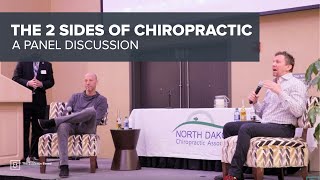
Dr. Patrick Gentempo and Dr. Jay Greenstein debate chiropractic's future, from data ownership and research credibility to conflicts over X-ray guidelines. They worry the field is losing its core identity while chasing drugs and surgery, and envision AI and wearables reshaping care if chiropractors stay patient-centered.
Questions this video answers
1983
1992
14% of the U.S. population had been to a chiropractor in the last 12 months; 49% have never seen a chiropractor.
Chapters
We talk about ethics. If you think that the insurance industry has the best interest of the health and well being of their insured, that's standing in your office on their minds. You're living in la la land.
Back in the day, I used mercy guidelines to help educate patients. I won cases in court when insurance companies were trying to reduce or eliminate my care for my patients. I used those guidelines to rate cases.
So first of all I'm going to just them off with. Since you graduated, what has changed in the profession? Good and bad and where you see it in the future? So Katrik, I'll let you start. Since you graduated, what has changed? Good, bad, where do you see the future? So I graduated a long time ago to be exact, 1983.
You look good, bro.
Yeah, thanks man. This chiropractic stuff works in many respects. I feel very blessed in my career as far as what I've been able to witness. I came to chiropractic. I became a chiropractor in 1983. This is the pre Internet era. Something my children at all can't wrap their heads around. And one of the things that was a challenge back in that time was access to information. If you were somebody that was looking for a different model of thinking, a different model of healthcare, A if you're a chiropractor looking to review literature and trying to look at contemporary research and how it might apply to what you're doing, et cetera, there's these things they used to call libraries that you had to go to and do your work and all that kind of stuff. So one of the things that I think is a great improvement for the profession is technology. Technology is the friend of chiropractic. A lot of people had a feeling that chiropractic somehow needed to be steeped in sort of an anti technological frame of reference based on sort of its roots and its context. And I always had the opposite feeling of that. I felt like technology is something that's only going to support chiropractic and something that's been expanded. So the access to data, the access to information, ease of publication, all the things that have changed through the 90s into current day. I found the extraordinarily validating for chiropractic and has really helped us culturally. I've seen also a great shift as a result of the pre access information where medicine, back when I started in the profession, enjoyed extraordinary cultural authority. It was basically unquestioned that the medical doctor almost was like a deity when you would go and their word was sacrosanct What I've seen over time with free access information is that people are starting to question about starting to take more personal responsibility that the cultural authority of medicine has deteriorated. And I'm not saying that in a gleeful way, it's just that it needs, things need to be questioned, authority needs to be questioned. And I've seen a balancing, I believe, of the playing field relative to the role that chiropractic can play and the voice that it can have. Because whether you're going to the website of a large medical organization, the AMA, what have you, and if you've got a 23 inch screen you're working on, well, you can go to any chiropractic website, it's going to have the same amount of real estate in that screen and the information that can be there. So there's been a leveling of the playing field that certainly dollars still have an impact on how to shape public opinion and consumer behavior. But we have much more opportunity now as a profession to get our message out, have people understand it, being able to increase our own understanding, etc. I'm also, to some degree, I'll say this is that I've been so my background's a little strange. I was involved in the politics of this profession for a lot of years. I'm not really that politically involved anymore and I've been on these national leadership forums, etc. I'm probably one of the only, maybe the only or one of the few people that has received high level awards from the ica, from the aca, and at the time it was in existence and it was in the game, the wca. So I received some of their highest level awards from all the varying, supposedly conflicting and warring organizations. And what's the reason for that? I think because I really do have an appetite to see this profession become more cohesive and less divided. I believe we're more and more polarized. That's the challenge in general and I believe that that polarization can be overcome. But it's going to require some people to want to let go of some things and be able to find the common ground and allow a let live attitude. And I think that's possible for us today.
That was great. I agree with much of what Patrick has said. I graduated in 1992 and I think the word that comes to mind for me as it relates to what I've seen in chiropractic is relevance. And I think that relevance has been driven by research. You know, you really can't have somebody say to you, I don't believe in chiropractic anymore. I mean, it's kind of a joke. And I'll actually talk about this a little bit tomorrow as it relates to how we use literature and how we use science to communicate with other healthcare professionals. But, you know, in this day and age, chiropractic is extremely relevant. When we think about things like triple aim, better outcomes, lower cost, higher levels of patient satisfaction, who does that better than we do? And I think because we've had so much good data come out over the last 25, 26 years that I've been practicing, I've seen this become significantly more relevant. And I'm not talking about the individual patients. We've always been relevant to the individual patients, but to the community at large, the country at large, to the world at large. I think you become a lot more relevant. You guys may not realize this. I didn't realize it, but I was just at wfc, World Federation of Chiropractic in Berlin a few weeks ago, and I was talking to the ECU president and he told me that there's more chiropractic colleges and universities in Europe now there are in North America. I was blown away by that. I was like, wow. So it's become truly, what, relevant worldwide. You know, where do I see chiropractic going in the future? I completely agree, Patrick. Technology is changing the game. And for us, I believe that it's not so much or as much the randomized controlled clinical trials, the clinical practice guidelines that Chris and Jeff and others work on. But I think it's big data. You know, our ability to aggregate big data rapidly over time, and us owning our own data is really what's going to move the needle to get us treating 14% of the population. You know, people who've been to a chiropractor in the last 12 months to maybe 80% of the population, 49% of the population has literally never seen a chiropractor. And for 25 years, between 1990 and 2015, low back pain and recognition were the number one cause was the number one cause of disability worldwide. Now, how does 49% of the population never see a chiropractor? So I think big data is going to help us move the needle even more rapidly. And again, I agree with Patrick. What needs to happen, and I think it can, is we need to find a way to unify. Unification is different, but we can be unified in our approach, specifically as it relates to strategy.
All right, I'm going to open up questions here. A little bit here, but the first one that we had kind of discussions during our annual meeting was even some of the ACA guidelines Choosing Wisely, the X ray guidelines, that was kind of a hot topic nationally. Some associations came down hard on that. Some associations really loved it. So within this room, there's probably some disagreement on how to handle it. But the ACA Choosing Wisely guidelines, basically no X rays until there are red flags, meaning chances of a fracture or other warning signs where you need to take these imaging right away. Jay, what is your opinion on those guidelines?
So I think it would be really good for everybody to go to the Choosing Wisely website and don't do it on your mobile device, do it on your computer. Because you have to understand what Choosing Wisely actually really is. And it's about having conversations with your patients about clinical recommendations based on the evidence. All that being said and full disclosure, as chairman of the Clinical Compass, I and our board voted to approve the Choosing Wisely guidelines on behalf of. I don't know if it's on behalf of the aca, but in support of these guidelines. But here's what I would offer each one of you. As far as my opinion is concerned, it's not about us. It's about the freaking patient. You know, patient may walk into a chiropractic office and they may want to have an X ray done. And at the end of the day, evidence based practice is patient values, the best available evidence, and clinician knowledge. You're gonna have patients that might want to have an X ray. If there's a clinically appropriate reason for it, then you might want to provide that X ray for them. Now, when we talk about things en masse and you're looking at the literature, the literature at least that I've seen, and maybe Patrick has seen different literature, literature lesson has said, you know what? X rays are not improving outcomes for the treatment of these conditions that we see in our practices every single day. That's not. Again, that's not to say that on an individual basis an X ray might not be appropriate. That's my opinion.
I think really the question here is, you know, what do we think of the guidelines or what do I think of the guidelines? To me, they're not a chiropractic guideline, it's an orthopedic guideline. So it's not really something that pertains to my viewer version of chiropractic, which is the assessment of sublimation. These guidelines are directed towards orthopedic conditions. So if your practice and I don't have an ethical problem. If your chiropractor chooses to limit their practice to back and neck pain, and that's the purpose of what they're doing. That's really the question. Guidelines are for specific purposes. What was the clinical objective? So if you were to say these are orthopedic guidelines for the treatment of limited scope treatment of musculoskeletal pain, I'd say they might make sense there as long as it allows discretion of the practitioner, which I think to some degree they do. If you were to say these guidelines are broadly applicable to the practice of chiropractic, then I would say that I would disagree because I'm an upper cervical chiropractor, there's absolutely no way for me to correct an atlas in the style that I do it without a radiograph. So what's the clinical objective is the question which I cited is that for outcomes, they don't impact outcomes, et cetera. The question is what outcomes are determine. I see. The opposite is true in subluxation correction. If you're looking at saying, okay, somebody comes in with low back pain, you do your standard physical examination, the standard orthopedic neurological packages, and then you'd say, would an X ray modify the treatment plan and have an impact on the outcome? And I think based on the literature review that they did relative to this, some people concluded no, it really doesn't. So then it's 100% appropriate at that point in time. However, if your outcome is correction of spinal alignment through the adjustment for many techniques, you have no other way to know but to take a post radiograph. If you look at the validity of spinal alignment, spinal menstruation, et cetera, probably the most published guy in our profession is Dean Harrison. So rather than try to go down a litany of validation that's been published in significant journals, PubMed index, peer reviewed journals, there's a lot of data there. So for me it's always the question, how are the guidelines being applied? If they're being applied to you as a subluxation based chiropractor, I think that's a misapplication of the guideline. If it's being applied to you as a musculoskeletal limited scope chiropractor, I'd say then there's validation to the guideline.
I would actually offer up that you wouldn't necessarily have to be a musculoskeletal practitioner to apply the guidelines. You know, I think we see what I would call miracles in our offices every single day as it relates to treating patients with, you could call it subluxation, you call it joint dysfunction, you can call it whatever you want. Who actually get better with non musculoskeletal issues that they have. And these patients get better and they don't necessarily require an extra. So I would disagree with you on this one, Patrick. I would say for me at least, it's not really orthopedic guideline or chiropractic guideline. It's a guideline based on the best available evidence as it relates to outcomes. To your point, like what's the outcome that you're looking for? It's based on that. And then how you apply that guideline is going to be based on the individual preference of both the provider and the patient.
Dr. Hager, you had a question from field. If you could look into the future, where would you like to see the.
Profession be in the next 100 years?
Just in rounding that out, the clinical goal is what matters. And if your clinical goal is correction, subluxation, and your way of assessing that is through a radiograph, there's no other way than to do that. But we'll put that aside. And I think there's a deeper conversation that could be very important because I think it goes to heart of the matter. Where do I see it in 100 years? So the best vision I've seen of this is an article that Chris Kent wrote and published some time ago where basically the person, an individual is walking around maybe with, call it a smart pen, maybe it's their smartwatch with some type of a wearable technology. And this wearable technology is monitoring varying physiological parameters, things like heart rate variability and other such things. And it's got enormous processing power which would be necessary to be able to do that. And it also is monitoring other forms of neurological function, stress levels, general adaptive potential, et cetera. And it as it's monitoring your body recognizes when stress is adversely affecting neural function, which is adversely affecting your ability to heal, regulate and express life. When that happens, it's going to automatically connect to your chiropractor's office. It's going to book your appointment, it's going to have you go in there. That literally the things that we do and what we affect, which is almost incomprehensible, and more technologies allowing us to better understand it, that there can be real time monitoring around the clock and that the chiropractor, which is, and this is what happens when you get into vitalism, is still relevant not only Relevant, but necessary if you're in the mechanist model. So to understand vision, you have to understand this distinction. In the mechanist model, you're going to see as AI is improving right now, surgeons, lawyers, so many people are going to go away as far as their need in society, especially when AI robots can start replicating themselves. You know, there's a whole conversation there, but it's just. It's gonna be seismic in the ship and humans actually performing functions. You're talking 100 years. So we're going out, way out there. You know, when the singularity hits, we hit that tipping point, humans are gonna have. They're gonna be doing a lot less, and a lot of people are gonna be living in a virtual world. Why would a chiropractor still be necessary? Why couldn't we just have a robot that can climb, create the impulses? Because the role of consciousness and the interaction of the consciousness of the patient with the consciousness of the chiropractor with a force with intention that's applied in a constructive way, is received by the body in a certain way, cannot be replaced by a machine. I can demonstrate this. I've measured it. It's real. So 100 years from now, chiropractors are going to still need humans, and. And they're gonna. And technology's gonna allow the monitoring of human physiology in a way that's gonna automate the process of people getting care. And to me, the future is really exciting, and 100 years now almost unimaginable.
So I love, dude that you're talking about AI and robots. It's awesome because he's right. Our universe is literally moving in that direction, and it's moving faster than any of us can imagine. And again, tomorrow, I'll be touching. I'll be more than touching. I'll be talking a lot about this as it relates to the application and intersection of technology and healthcare. The one thing that I do want to add, though, in addition to what Patrick said, is the one thing that can't be replaced by robots, even with deep learning, is empathy. There was a great podcast that I listened to, and they were having this debate about whether or not these robots could do better than human doctors. And at some point, sure, the technical piece of things, you know, AI and deep learning, all that is going to help improve healthcare. But at the end of the day, they still need us for empathy. So that's really, really important. You know, where do I see us in 100 years again? You know, it's almost hard to imagine what the universe is going to be like in 100 years or what it's going to be like for chiropractic. But my guess is that there's two things, two avenues. I'm doing it. My guess is that chiropractic will be much more, much more highly utilized by the public than it is today. And my goal, my hope would be that it would be used for more than just neck and back pain. So with a show of hands, how many people in the room believe that chiropractic makes us healthier? Raise your hand. Okay, so virtually everybody in the room. I have that strong belief too. And I think over time Big Data is going to prove that out. And I believe that's going to happen in our lifetime. So my hope is that I wasn't feeling well today. I was like, jeff, can you adjust me please? Like, yeah. And you did. And now I feel like a million bucks.
Right.
So.
Huh. No extra.
No extra. No extra. Exactly. You did correct. A million dollars. A million. I'll pay you later. But yeah, I mean, I think being leaders in true health and wellness is where I would like to see us be in 100 years.
I'll make that just a little bit of a piggyback comment. I'm also, I share Jay's enthusiasm for Big Data. I think it's going to be, it is a game changer. It's starting to be a game changer already. But the one thing I will say is that for it's not even just in my mind, I would make the argument that it's already a foregone conclusion that the effects of chiropractic on general health and well being is established. I don't think we need Big Data to prove it. I think it's proven. I just think it will further add to the foundation of what evidence does exist today. Having done the Vaccines Reveal series that.
You'Ve done and seeing the pushback that.
We'Re getting, as in that is what's.
Happening in New York. Is there a, a more legitimate defense.
Than what you've already presented? Sorry. So he's asking about one of my companies did a docuseries called Vaccines Reveal where we went out and did a lot of investigative work on the vaccine issue. And the question was, is there a, I don't know, put words in your mouth, but how do we get the public to understand some of these alternative views or maybe dissenting views on vaccines? And my answer is that plain and simple, the public is being completely lied to. The whole vaccine issue, what's being promulgated through the media, through our legislators from the farm industry, is a lot of lies. So the issue for me on vaccines, there is a debate that's a scientific debate as to whether or not they're safe and efficacious, which is one debate. The bigger debate is parental rights. Should a parent have the right to choose what substances are put in their body, or an adult, for that matter? Is your body sacrosanct or does the state have control over your body and what can be done to it in the name of the public good? Because even if you, you know, I've gotten to know Bobby Kennedy Jr pretty well through this process. And as he said, he said I'm, you know, pro vaccines. He says, I think there needs to be better safety and efficacy around them. But what I'm against is the state deciding, you know, what goes into your body. So be that what it may, you know, in the end, this is. This could be a very long discussion. But in the end, there's no doubt that lies are being perpetrated. The four vaccine manufacturers in this country collectively, Bobby Kennedy Jr. Made this point very recently. Collectively, in the past years, they paid over $35 billion in fines levied by the United States Department of Justice for fraud and malfeasance in their practices on pharmaceuticals, on drugs, that they lie, they cheat, they mislead, they're convicted felons. They have been fined $35 billion. These same people, the exact same people are making the vaccines. Why are they suddenly honest and truthful when they do the vaccine stuff? But they're convicted felons when they're making drugs. None of it makes any sense. There's a whistleblower at the cdc. If you saw our series, you know about it. I've got the phone conversations on my servers basically saying that we lied about the connection between the MMR vaccine and autism. There is a connection. The Vaccine Court has paid out damages to kids who became autistic as a result of vaccines, et cetera, et cetera, et cetera. So what you're hearing and what's being promulgated is a bunch of lies from a very, very, very powerful lobby that has control in these vaccine manufacturers. But here's what's not debatable. There is a risk with vaccines. The only debate is how much risk. There is high level disagreement amongst experts about safety and efficacy. Nobody can debate that. That's a fact. So now the question is, if there's a risk and if high level experts disagree on safety and efficacy, should the state force A parent against their own conscience to put these substances into their kids bodies.
I think you should drop the mic right now, brother. That was really good. I actually wanted to hear more. That was pretty cool.
Thank you.
Because I mean I don't have any expertise on vaccines. So it's great to have that information.
I'll tell you guys got excited about big data. How do we keep it from only Apple, only Google and United health, which is 2, to ignore their data.
So I'm happy to take that one. When we work with specific technology partners in our region. You guys know who Infinity is? Okay. It's a clearinghouse and they manage all of our claims data. We had an issue and again, I'll talk more about this tomorrow. We had an issue related to these inappropriate reductions in reimbursement from our largest payer. Well, because we had our own data, because we as a three state association, independent physician network power own data, we now can go back to. And we did go back to, we're going to go back again to this payer and explain to them the amount of variation in our payments. When they implemented this particular payment reduction model, we went from an average variation from 1 to 3% to 26 to 31% variation in our payments. And you can see it started July 1, 2018. So the point is, is that we must own our own data. It's not good enough that Dave Elton can stand up in front of the National Academy of Sciences. And if Dave, if you're watching this, hi. That it's okay for him to be able to stand up with our data and make all these great recommendations around chiropractic, that's great. But he owns the data. If we said can we look at our data? Can we get more information about data? Can we use that data to go out and talk to employer groups of this or that or legislators? We don't own that data and we can't, we can't have those conversations. So ultimately it has to be us owning the data. The way that we do that is through relationships with data companies like Infinity. There's others out there. Infinity happens to be a really good one.
One more quick comment on that. Is excited for Jay's drive on the data side because data doesn't scare me. The data I know is going to be really favorable for us. I know that with cla, when we were running it, we introduced heart rate variability into the profession. We used the data from the American Heart association as far as what norms were relative to heart rate variability and the parameters. It didn't take long. And this is before we had data access like there is now. It didn't take long before we had on our servers much more data than the American Heart association had. And we're able to create our own data from that. And you watch, emerge and refine and get better and it's a very, very exciting thing. And when they start comparing chiropractic populations of people versus non chiropractic populations of people and we have big data to show it, people are literally going to be stunned.
Can I add something really quick? So two other things because you just simulated a thought in my brain. So the great thing about Brad Koss, who's the CEO of Infinity and Infinity, is that they've got many, many, many tens of thousands of medical doctors as part of their, as part of their clearinghouse. And they've got ACOs, Medicare, ACOs, all kinds of ACOs. And they looked at the portal of entry for a patient who got into the right portal of entry for chiropractic and the wrong portal of entry for medicine. And they found that like one or two clinical decisions and made a difference in cost savings of billions with a B of dollars. So having access to that information is really, really critical. The second thing I want to say is also your electronic health records. So we have a mutual friend we just talked about. His name is Dr. Brian Capper. He runs a company called Genesis. He's not my sponsor this weekend, neither is Brad. So full disclosure. But he's a good friend of ours. And so he runs this company, Genesis. It's a cloud based electronic company health record system. And because I have a research foundation, so we run clinical trials in our practices, I asked them to go back and rebuild the system so that we could literally aggregate any data point that we wanted. And they did that. Like we're in the final stages. We're like 80 to 90% of the way done. So when that's done, all of the providers on the Genesis Nation network, we're now going to be able to aggregate that data in real time. And it's any piece of data, it's clinical data, it's demographic data, and it's also cost data. So we can address really the three legs of the triple A stool.
What do you think the biggest problem that chiropractic has right now?
I think the biggest problem that the chiropractor, that the chiropractic profession has right now is some of the old guard kind of stuck in their dogma. There's a great book called Drinking is by a guy named Shane Snow. And he talks about the importance of cognitive friction, the ability for people to have different thoughts and different ideas, because ultimately to create a dream team, and I would consider us a team, to create a dream team, you need diversity of thought. But I think what happens in our profession is people, they become anchors in their own dogma, in their own opinions, and they're not really willing to listen to others to get our profession to where really its rightful place, where it needs to. And I could give you like many examples of that, as I'm sure Patrick could, but that's what I think.
I think the biggest challenge is loss of chiropractic identity. What makes us separate and distinct, which in my mind are the foundational principles of chiropractic, if chiropractic. When I testified from the White House Commission on Complementary Alternative Medicine and and the basic theme of my testimony was chiropractic is not a modality meaning spinal, because people equate spinal manipulation with chiropractic. Some of the stroke anti chiropractic stroke stuff that was published in Chiropractic manipulations caused stroke. Then they had a review of 31 cases. I think it was 31. I might be off in the number. It's been a while. But do you know how many of those cases were actually chiropractic patients? Zero. They were manipulated. None of them were chiropractic. I One of the things that. So the loss of identity comes from this. Number one, loss of principles, which I believe are not being taught in any of the schools right now. Number two, lexicon. So to me, and yeah, this is why every J and I probably see a little different. But segmental dysfunction, subluxation, manipulable lesion, these are not the same things. A segmental dysfunction and subluxation to me are radically different things. There's a radical difference between a manipulation and an adjustment. They're not the same thing. Now, if we amalgamate and say, oh, these are just interchangeable terms for interprofessional dialogue, then we've lost our identity. So what's the difference between a physical therapist that manipulates the spine? In a chiropractor, if the intention is just the amelioration of symptoms. So the biggest threat to the profession is it's loss of identity because it doesn't do anything unique anymore. That's in my opinion. And I don't have and say, like I said, I have zero. I'm a little let live guy. If chiropractors want to use the term Manipulation, and they want to use the term, you know, sentimental dysfunction, and they're more orthopedic in their orientation, then that's fine. But at the same time, do not try to legislate my mode of practice out of existence. So I think from the educational side and from the lexicon side, those are the areas that are our biggest threats. We have a question. Do you know what the current usage of chiropractic is in the American population?
The last Gallup poll said 14% of the population had been to a chiropractor in the last 12 months. 49% of the population is never seen chiropractic.
Don't you think that's our main focus as chiropractors is getting the majority of the population under chiropractic care? Because then our work will speak for itself. We can't handle it. Yeah. We don't have the capacity. Yeah. And this is one of the things I talk about, one of the things. For years I taught state board reviews with Chris Kemp. And you're helping chiropractors get licenses. And states had such high failure, like I remember. Well, I mentioned failure. Shit. North Carolina, for example, they had a 13% pass rate. And there were failed people from schools like Life and Sherman, et cetera. And this is going back decades ago, but the whole thing was everybody felt like there were too many chiropractors in the field. I did the math once and I said, we are on a regular. So 14% of the population may have seen a chiropractor. The question is, how many are under care right now? And it's low single digits. They transient in and out. And if we just saw, I think I'm going to say the numbers and I might be wrong. I did the math. I used to lay out this math at one point in time when I was making this point. But if 10% of the population, I think, were under chiropractic care on what we call a regular basis, which was, I think, less than once a week, Instead, that puts 500 visits per week in every single chiropractic office in the country on 10%, how could we possibly get to 20, 30, 50%, etc. And what I find interesting, how many people here get adjusted, you know, regularly, a regular basis? So that's our view of chiropractic, regardless how we might disagree in some of the details. You know, most chiropractors really do get adjusted because they experience the benefit and they want it for themselves and their families. So I say we need to flood the colleges with many, many more students, our colleges should be bursting at capacity and having to set up new campuses and then we can get to 50%, 70% of the population. The demand is there. I think the demand will continue to come. I think more chiropractors will create more demand. Not a zero sum game. There's a pie. We have to split it up before chiropractors come in. Jim, do you have anything to add to that?
Not necessarily. I think that was well said, Dr. Yole. How can you flood the country with powers when most of them can't even.
Pass the national borders? You'll get no argument for me that the colleges could be doing a better job in educating our students. And incidentally, not a fan there either. I don't believe that. How well you do international board determines how competent a chiropractor you are. I think in part it does, but not across the board. I think there's a lot more to it. But the answer. So we can end up in a rabbit hole here, start talking about the schools, what they're teaching, what they're not teaching, how to better prep, et cetera. I made my entire career around taking chiropractors out of school who really didn't. They were lost in trying to get them understanding what chiropractic is and how to go out and practice it in the world. But ultimately, if you're saying what's my. What would my ideal dream be? Colleges are graduating very competent students and that they're increasing their numbers and their volume, getting out into the field and that they're doing a good job. There's a lot of work to be done to make that happen.
Colleges need to make money, need to stay open. So are they bringing in incompetent students to begin that?
Well, all I can say is it's a lot harder to get into school now than I went. The minimum requirements, in my opinion, the minimum requirements that you get into the colleges, I believe are pretty high bar. If somebody can pass the courses with certain GPA that are required in order to enter chiropractic school, to me they have enough intelligence to figure out how to be a chiropractor.
Can I just make one real quick comment about that? Because it's interesting because I don't know the predictive analytics around who's going to be a successful provider based on their gpa. But when I went to Maryland, I majored in things that were not academic, we'll just put it that way. And so I went. I never forget this. I went to the Year of chiropractic college, because that's where my mom's chiropractor went. And he said, you got to go to New York. I'm like, cool, I'll go to New York. So I go up there. I'm sitting at the admissions office, and she's sitting across the desert. She looks at my grades, she looks up at me. She looks at my grades. She looks up to me, looks up at me and says, I don't think you're chiropractic material.
Right?
I was like, okay. So then I got on a plane, I went to Chicago and went to Nashville. And they would let anybody in. You had a heartbeat and you could breathe. They were letting me in. I had a 2.8 GPA, whatever it was. Met Mel, met Dr. Winterstein, and next thing you know, I'm at National. And you know what? I think I'm doing pretty good for chiropractor right now. So I don't know. I don't know that there's any predictive measure of, like, grades or possibly even board scores that determines whether or not somebody's going to be a really successful and impactful provider. And there's a minimum threshold, for sure. But just wanted to expand on that whole GPA concept.
I got one small comment that what he's saying is not only rings true, but it's been validated in multiple research studies that there is. There is. They can find no corollary relationship between GPA board scores and competency in the field. That that's been. That's actually been studied. And you're 100, right.
If somebody goes to chiropractor and they.
Have a bad experience, they don't say that chiropractor is not for me or.
That chiropractor is bad.
They say chiropractic in general is bad. And so if we aren't filtering more people out of the schools and only graduating, like, you know, I'm not saying you need a 4.0, I'm not saying has anything to do with grand. You need to, like, have a minimum standard. And if you aren't doing that, it's really dangerous to the profession as a whole.
I. Sorry. I agree with that 100% about the whole concept of, you know, you had you bring a plumber to your house and it's about a plumber. All of a sudden, nobody's walking around saying, I don't believe in plumbing. Right. So I get it. And at the same time, as Patrick just said, there's not necessarily a predictive model that says just because it's taking somebody longer to get through chiropractic school, that they're not going to be a good, honest, hard working, ethical, impactful healthcare provider.
Adding to that, Jay just gave a perfect and thank you vulnerable example. Didn't have a great big gpa, was told by one chiropractic school, I shouldn't bother. This guy's a massive force in nature for the profession, has been. And if what you just said applied back then, he wouldn't be sitting here right now. I would check your premise on that. You know, I'm a guy who graduated the bottom third of my high school class, probably because abd I have a genius iq, but I have also not. I'm not great on standardized exams. I'm not great on classes that I have a hard time getting interested in. So, you know, so. But I'm one hell of a chiropractor, so I would, you know, I understand the nature one protective reputation, the profession. I'm a marketplace guy. The market's gonna figure out who's a bad chiropractor pretty quick and they're gonna fail. Okay, Dr. Anson, you had a question kind of steering you back to the data and the future. What role do you see state associations and national associations playing in a world where the big data really rule the day? And at this point, we're having a conversation about who owns the data. It's not about whether that's important. It's just the owner of the data is going to dictate the terms. So in a world where we own our data as chiropractors, who's we? Is it a state association? What role would a state association play or a national association?
So in thinking about the future, I think in the future we're going to have access to the data, but we're not going to own it. When you think about emerging technologies like blockchain, and there's been lots of great articles written on this again, I'll talk about this tomorrow. You know, at some point, patients are going to run their own healthcare records, so we'll have great access to that information. We'll have access to our through electronic health record systems, we'll have access through clearinghouses. But I don't think it's the state association's position to own that information. So the role, I think, for state associations is to take that data and to be great advocates of it. So how do you go to your state legislators? How do you lobby to Congress? How do you put out appropriate public relations and marketing Campaigns to help more people understand the benefits of chiropractic. I think that's the role of state national associations.
State national associations are trade organizations, right? They're there to represent the interest of the profession. State boards are regulators. That's a different animal altogether. And sometimes there might be a natural tension between a state board and a state association. For example, you know, I grew up in the People's Republic of New Jersey, right? One of the things that we had to accomplish there is that we had six different state associations in one state, which shows you the fractured nature chiropractic. But what we did successfully is we were able to amalgamate it to one. And it took a lot of work, a lot of strain, and we got there. So now I'm trying to represent the interest of the profession. And what's one of the hardest things to agree on, folks? What are the interests of the profession? Right? So the problem comes when one group of people want to restrict another group of people, and that's where the fight begins. But if you can get together and say, hey, listen, we can find a way to live and let live, we draw a line here at drugs and surgery, we're just never going to go down that route. And I think we can make the rest of this work together, and then you find a way to be effective. So I think, Jason, with big data, it's, it's. The big data will be a tool of the trade association to help further their agenda. And as far as the regulators are concerned, you know, I've been. I've been a very outspoken critic very often of many of the chiropractic state boards. There's no national. You know, we don't have a federal board for licensure. We have to have licensure in all 50 states. And I believe that if they're charged with protecting the public, but I believe they end up saying that I have a certain agenda to do for this profession. I'm going to try to legislate that and enforce that as compared to just worrying about protecting people. So nonetheless, I believe that data in either case is going to be something that's going to be utilized to help create policy. If you've got rational people who are involved who will look at the data and actually make rational decisions based on. So if there are chiropractors who want to push the envelope for things like drugs and surgery, and again, there's data that supports when a product, you know, applied appropriately can also lead to good patient outcomes, don't you think that using Chiropractic in reverse also, you would have to tell everyone else how to do that. I guess a part of the question is obviously we need unifying. We need to define what we're doing and where we're going. But like, for example, this in reverse, look at chiropractors function here. And a lot of times people are primary care physicians. And patient centered care would involve things like being able to give them a Moxicom when I know they have an ear infection if that's what that patient chooses, because that's the model care that they want. Live and let live does not mean anything goes. And those are two very different things. So when I say live and let live, it doesn't mean anything goes because then suddenly there's absolutely no boundaries or context for the profession. I was involved in a fairly huge debate in New Mexico some years ago when the whole trope thing was coming up there. And certainly, you know, we can have that debate. But the reality is that at what point does chiropractic, what boundaries do you push for suddenly chiropractic? It's not chiropractic anymore. And there's a couple of aspects of this, one of which is the legal and regulatory side. The other is the moral and the ethical side. So I've heard that argument before. Well, you know, it's kind of a rural area, et cetera, et cetera. If we want to look at the practical level, or let's start with the moral level, is there a moral reason why chiropractors should start giving drugs, start prescribing drugs? My response is that, do we feel like the drugs are underutilized and there's a lack of access to them and that we need more distributors of drugs into our culture. And I don't think there's a good argument that the answer to that question is yes. I've never seen it. There are plenty of people out there who could prescribe drugs. We aren't educated for it. It's not a part of our view and it's not something that I believe is in need of the culture in a general sense. Secondly, on the practical side, people say, well, we can get more patients to come in. I run several multi million dollar companies. I hire experts that come in to say, how can we grow our business? How can we increase market share? You know the answer. I get the first thing I get back from every single one of them. What can you do to show your difference, your distinction? What makes you different? You don't go to a marketplace and try to get more people to come to you by trying to show your sameness. Well, I can give you drugs too. Now I'm not as well qualified, I'm not as well trained, I don't have near the experience. And these things might kill you, but I can give them to you too. So there's not a moral or practical argument for chiropractors to do drugs or surgery. And if somebody wants to do drugs or surgery, there's a profession for that called medicine. And that should be the profession that you go into. Chiropractic needs to keep its distinction as a drug free mode of health care. So as soon as you lose that, then you've really gone off the cliff of identity and there's no reason for us to exist anymore.
I just want to say one thing. I literally could not agree more. You look at some of the leading experts in competitive strategy, guy named Michael Porter out of Harvard, he talks about differentiation is the key to success. So the idea that we would do something that is the same as another healthcare profession, which by the way has not been shown to be very effective. Out of 11 industrialized nations, we have the highest cost and the worst healthcare. So maybe we need to think about this whole thing differently. So the idea that drugs and chiropractic is okay is like completely mind blowing to me. I don't understand it at all. And I agree, like, yeah, there's maybe there's access issues in rural areas, but there's other people out there that can prescribe drugs. And if you want to prescribe drugs, drugs, go to medical school, be a nurse practitioner. Great, you do that. But it's not chiropractic.
Just a little bit longer before we finish up. The biggest question I have from several other people and they weren't, they didn't ask it. I love wellness care. What's your definition of wellness care and getting patients to do wellness care?
So there is a scientific definition for wellness care. There was a paper that was created by Clinical Compass, it's called the terminology paper. Wellness care is for patients that are asymptomatic, that feel good, that come in because they want chiropractic to help them stay well. That's different than supportive care, where you're delivering care to patients where their condition will deteriorate if they don't receive chiropractic care. Those two things are different. So my position on wellness care is yes, do it. Yes, I believe in it. Yes, it's good for you. Yes.
So we're in violent agreement here. There is a difference between wellness maintenance, supportive care, these are characterizations that are used wellness. One of the companies that I was involved was called Creating wellness. We put 300, I think, lifestyle based wellness centers. We've got patented technology to measure parameters, wellness, etc. Wellness care is something that's more proactive in nature. As a matter of fact, I believe somebody can have a serious disease but still engage in lifestyle wellness program protocols, even if it's not to treat their disease. Somebody's got cancer, can they detox, can they get adjusted, can they do different things that isn't necessarily a direct treatment for the cancer but supported for their body, or it's moving them towards wellness. If you look at there's an illness and wellness continuum, right? You got wellness on one side, you got illness on the other side. Right now every single person in this room and every single person in your community is either moving toward illness and away from wellness, or they're moving towards wellness and away from illness. And if you had to be completely honest with yourself right now, which way do you think you're moving? And if you were to ask the same to your patients, which way do they think they're moving? So the idea of care that's directed toward the improvement of general health and well being or life expression is something that's been demonstrable through chiropractic services. So wellness care is, you know, I think the ultimate goal for chiropractic and for chiropractic patients. So anyway, so there's, and it's something that's measurable, outcomes can be measured. There's this parameters around it to say are you, you don't have an active condition as Jay cited, but you, you, there are parameters to say that you're still getting healthier, you're moving toward wellness away from illness. There's ways that you can measure that stuff.
Just want to, just want to add one thing because I think it's really important because again, we want to go back to the patient, or at least I want to go back to the patient what's important to them. And I think, you know, obviously I'm a chiropractor, I believe in chiropractic and I believe in wellness care. And what I don't appreciate or what I don't like to see in the profession, is it being used as a sales strategy because those two things are different. Like do you want to provide wellness care for patients who need and want or need to be educated on wellness care because it's good for them, or are you prescribing wellness care because it's good for your new Mercedes. Those two things are different. It's about intent. And I don't appreciate the Mercedes intent. I do appreciate the intent where there's an open and honest conversation about what chiropractic wellness means to the patient and how we can deliver it as providers. Where do you define spinal manipulation in wellness care?
Does the evidence has little support?
You can tell the other way to.
Support spinal manipulation in the delivery of wellness. Good. So first of all, I can't speak to spinal manipulation because it's something I don't do. It's something I have no experience with. Okay. You know, if I'm toggling an atlas, I'm not manipulating a joint. You understand? It's a constructive force being put in with a specific vector directed with intent to create a correction that's going to improve neural function and that will translate to improving the general health and well being of the individual. What's that? More than you can read the rest of your life. And with that, outcomes can be measured relative to that if it's having the desired effect or not. So this is where I'm saying there's many techniques in chiropractic network, Toggle Thompson activator where you're not manipulating joints so joints aren't being gapped, there's no noise. Still a corrective adjustment that has profound effects on the individual's health and well being. So to answer your question, you have to start with your model. You ask yourself what are your models? So if you start with the premise, as I do, that the body is self healing and self regulating, that the nervous systems, the vascular system in control of that body. When you have stress in three dimensions, physical, biochemical, psychological, probably electromagnetic, is another one you get added at. It's beyond the general adaptive potential of that nervous system to adapt. It starts to go into defense physiology which create, and this is something I would love to have time to get into today, but the whole point is that then it creates this downward spiral of less adaptive potential as you go into defense physiology rather than growth physiology. Most people, if you saw, if you, if you saw the thing I did on prenossology, what they were talking about is that prenossological states are defined as borderline states between health and disease. This is what these physiologists are saying. What they're saying is, hey, these people don't have any active disease or condition that we could name from a medical context, but I wouldn't call them healthy. There's this Borderline state between what we call healthy and what we call a disease state. And that borderline state in between we call chiropractor subluxation. Those physiologists call it prenupical states. In that gap in that area where people are in that borderline between health and disease, which if it goes unresolved, as I showed you in that chart, becomes disease, it becomes asymptomatic pathology, pathology, et cetera. So now if I can have parameters. They used heart rate variability in that paper, just to give you one example. We introduced heart rate variability in this profession, I think in 2004 or so, maybe even earlier. And there's so much literature on heart rate variability, parameters and morbidity and mortality and all types of other things related to general health and wellness. Even if there's not an active disease, I can show you that my chiropractic adjustment has impact on heart rate variability parameters, beneficial impact. So there are ways to look at these things, measure them and not speculate about them. And if you take this stuff seriously, you'll measure it, you'll provide care, and then you'll be able to see if what you're doing is having an effect or not. So the answer is that wellness to many people sounds very abstract to me. It's something very measurable. What does Blue Cross Blue Shield say? Well, I can give two shits about Blue Cross Blue Shield, they can kiss my ass. I'm sorry, but in other words, I'll be damned if I'm going to let a third party payer decide what that person in front of me needs. If they cover it, fine. If not, that's fine too, because we talk about ethics. If you think that the insurance industry has the best interest of the health and well being of their insured, that's standing in your office on their minds. You're living in la la land. What's that? The question is, how do we get reimbursed for that? The patient pays you, it's called they whip out their credit card and pay you. And how many people here have 100% cash practice? Okay, a couple. Do you think there's something like they're aliens or something? How many people hear 50% or more of their practice is cash paid by the patient, not by the insurance company? And this is unusual because today, more and more, all I can say is if you're in the practice and you're dependent on third party pay, there's not much of a future for you. How many patients want their health care.
To Be paid through a health insurance like a social.
I don't know. You know, I don't have. I don't know what Dave, but what I could tell you is, again, I don't care. And I'm not trying to be flippant, but my point is. And then this is why you're hearing my passion go. It's not anger, it's passion. The thing that chiropractors have to understand is the value of their care. And the chiropractors who knuckle under to blue the day that you can make. And I believe I sat across from Blue Cross Blue Shield in meetings in multiple states having negotiations with them for chiropractic reimbursement. And the thing I can tell you is the day that we could sit down at the table and not care if they reimbursed us or not is the day that I can go and negotiate your best deal. As long as we're dependent upon them for our existence, they will screw you right into the ground.
So something that's bothered me since my.
Second year in chiropractic school.
Forty years later, it's only gotten worse. If subluxations are such a serious problem.
Why are we not at all interested in prevention?
Very few chiropractors spend a proper amount of time teaching their patients how not to get subluxated instead of just, yeah, I got a roll of band interior dis. Keep coming back, I'll slap them on.
Yeah, well, I, I share your frustration that this is why we created Creating Wellness for the purposes of having an organized system of being able to deliver wellness to a patient. Because in my opinion and every other chiropractors go differently. I believe that my, my job is not only to correct civilizations. I see it, but to prevent them so that they don't have them in the first place. The, the, the, the moral mandate for any noble profession is to make itself obsolete. What I want to do, I don't want to create chiropractic dependency in my patients. I want to create health freedom. I want them to take responsible for health and need me as little as possible. So I'm right there with you.
Yeah. I think the best prevention is the appropriate treatment. If you deliver great care to your patients, most likely it shouldn't come back. Now, there's chronic pain patients, and that's a whole other story. But I think the first step for us as chiropractors is to deliver the best and most appropriate treatment for our patients. And that's the first step in prevention. What is the appropriate Treatment for wellness care. Well, not everybody's the same, so I'd never recommend the same wellness care model for every single patient. I'd be having a conversation with them about their needs, their values, what they're trying to accomplish with their health, and then take it from there. I have patients, so I don't see patients anymore, but I have patients that I saw once a week. I had patients. He muted me. I had patients that I saw once every six months. And so it really depends, you know, I had athletes that I saw only before competition. So it just depended on the individual patient. There is no, you know, everybody gets the same shit. That's not good chiropractic care.
I couldn't agree more. This is the problem where people. And incidentally, this is the problem with guidelines. As you can tell, I'm not a big guideline fit.
Wait, I just cut them off. Sorry, dude.
You know, guidelines, as a reference to help inform practitioners is great. I have no problem with that. I think it's great to review and look at what other people are thinking and what consensus shows. But guidelines is mandated through regulation, is something that I fight against. I want you with a brain and with the patient to decide what they need, not some other people who aren't there with you right now. So I. I should clarify. I'd like expert opinion. Sure, publish them. Take a look at them. But when they took things like the mercy guideline to screw chiropractors, when they take guidelines and you're up in court because you get some kind of adverse action against you, and they say, well, according to these guidelines, blah, blah, blah, blah, blah, and you didn't follow them, therefore you're not within the state or to care. That's a very dangerous thing. But what Jay says, 100% accurate. It's not like, oh, there's. There's one protocol for people who are asymptomatic. Asymptomatic people have what, High blood pressure, they got cancer, they got all kinds of things. They might not be symptomatic. It's a matter of the assessment and then tailoring a plan based on your findings and what the patient wants. You know, they play a role. To me, the truth will do. It's not like this is all you have. It's basically saying, I love what Brussels. The first thing I would tell a patient to report a findings is when I'm about to present Options is, number one, Mrs. Jones, your first option is you can do nothing. That is an option, right? To do nothing. And I want to know that's one of their options. You might, I'm going to lay some stuff out here. You might decide to do nothing. That's one of your options. Your second option is we can do this sort of care. Here's the expected outcomes. Your third option is et cetera, et cetera. But that's on a patient by patient basis. There's no one to say that there's one size that fits all.
So as it relates to guidelines, I think that's where many times the misinterpretation comes into play. Guidelines are not to be utilized to tell every doctor what to do with every single patient. It's a guide, you know, and again, when we talk about evidence based practice, I don't want to beat this at horse, but patient values and clinician experience and the best available scientific knowledge, I think, you know, you mentioned the mercy guidelines, Patrick. I mean, I use the mercy guidelines, I don't even know how many times to educate patients on why I am prescribing the care that I'm prescribing now. I use the most, the more recent guidelines. Back in the day, I used mercy guidelines to help educate patients. I won cases in court when insurance companies were trying to reduce or eliminate my care for my patients. I use those guidelines to win cases. So, you know, sometimes I think there's this negative approach towards whether it's mercy or other clinical practice guidelines. And I'm like, man, to me, it's the best. It's one of the best available tools that I can use in clinical practice. It's all about context. It's how we read them, it's how we interpret them, and it's how we use them as tools that either create barriers or, or victories.
All right, we're going to finish up here because I know we have some deadlines here and I know even the association, we have a few as well. So I want to thank both of you for sharing your opinions, your ideas. Thank you, the attendees, to sharing some thoughts and questions. Wonderful time. Hey, what's going on? If you loved that video, be sure to subscribe to this channel. The evidence based chiropractor puts out videos all the time at the intersection of marketing and research, showing you how to grow your practice while also growing your knowledge base. So if you liked it, be sure to comment down below or hit subscribe and I'll see you in the next video.










