Chiropractic's 10-Year Strategy: Solving Payment Parity & Professional Unity with Dr. Don Reno
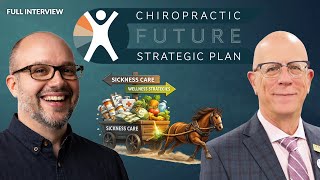
Dr. Don Reno outlines a 10-year strategy to unify the chiropractic profession and fix payment parity with Medicare. The plan includes a legislative hub, a chiropractic super PAC, and pushes for outcome-based payment models. Chiropractors can volunteer, donate, or build their own 10-year practice plan.
Questions this video answers
Over 4,000 responses.
chiropracticfuture.org.
They spun up the first super PAC within the chiropractic profession.
On the Chiropractic Future website (chiropracticfuture.org).
Chapters
It's also what employers want. And employers are now waking up to wellness Strategies. They're going broke on paying for sickness care. They're having that realization. They just haven't joined us with that realization. So it's our job to hook that horse to that wagon.
Hey, everybody. As promised, I'm here with Dr. Don Reno. Don has been heavily invested and integral in a lot of what's going on with chiropractic, not only in the state of Michigan, but far beyond that with his involvement in the Chiropractic future strategic plan. We're going to dive into that and much more on today's episode. Don, I appreciate you coming on and chatting today.
Oh, I'm honored to be with you. Thank you for having me.
It is my pleasure. So you reached out to me a few weeks ago, I did a little bit of research on you, and man, you have a long history of really being involved in this profession for a long period of time. I tip my hat to you for that because we need people doing those things. And one of the items that you said you're putting a lot of focus in today is the chiropractic future strategic plan. A lot of words there. I think there's some docs who have heard of that, maybe some docs who haven't. Let's pick it up right there. What is the Chiropractic Future strategic plan in a nutshell?
Well, I'd like to say that the strategic plan started on a lounge chair with a very good friend of mine, Dr. Tom Clapp, a number of years ago, but we can't take that credit. We recognize the fact that other professions have strategically planned. Some specifics in our conversation was really that the physical therapist had a strategic plan that was launched and they got very strategic and they did very well in all 50 states to bring it forward to 2019 at Cairo Congress. At that point, we got together a group of people which included all of the associations in the profession, and we began to actually strategize in work groups. And moving forward, we surveyed the profession, got received over 4,000 responses to a survey to primarily triage what the concerns are of the rank and file chiropractor and how we can serve not only the profession better, but serve the world better. So strategy works, you know, and a cohesive strategy amongst different groups is really, really important in my mind.
Yeah, I agree with that wholeheartedly. So let's keep digging a little bit on this. What's kind of the goal? I guess overarching, you know, having a Plan is one thing, actioning it is another. When you think about where that first conversation was and where things are at today, how has the goal of the strategic plan evolved over time?
Well, I think we've gone through some wins and we've had some challenges. I'd say the overarching goal is harmony in the profession. Open ears, open conversation and being receptive to discussion. Not feeling like we're an association that has all the answers. And we're not even an association. We don't have members. We are strictly run on donations and gifts in kind. So I think the overarching is the idea is to bring the profession together in a harmonious way without firing out or firing in, I should say. And looking at the outside challenges.
Yep. And that sounds like a tough challenge. So from your perspective, how, how has that gone? And I'll just ask a direct question that probably some docs listening are thinking. Is it, is this a political thing? Is this a not political thing? How does that sit with you?
I, I, I would say it's not political. Sometimes there's a tendency for others to politicize any other organization and make comments about that. But we're not political. I mean, I do chair the Governmental affairs work group. That sounds like politics. Well, it really isn't. It's to give our profession an opportunity. In this most recent Cairo Congress annual meeting, we had our second annual legislative forum for the entire profession. And we wanted to boil down what we think one item is that we need to focus on. In all the state associations, it's parity. So without getting into a room, there's a lot of subjects we could quarrel about. But why do we need to quarrel? Why don't we bring together something in a coalesced idea so that we can move it forward?
Yeah, I like that idea. So you mentioned parity. I'm sure there are a variety of aspects of the strategic plan. I'll ask you to cherry pick a few. What are some aspects of the strategic plan that get you the most excited?
Well, I just think that the presence of different organizations within the leadership board and amongst the work groups. At a loss for how many work group members there are. There are 14 workgroup members on the GA workgroup all the way from legal. We have lawyers that are on, we have people who are currently in practice, we have college professors. So we've got a really, really interesting mixed group. And that's also some of them are members of the different national associations. So it's really an interesting dynamic where we can come together and just discuss issues and a couple of things that we have solved. How about giving the profession an overview of what's going on from state to state. And we've masterfully designed something called the legislative Hub, which is housed on our own website. You get a snapshot of what's going on in all 50 states. What can you do? What can't you do? And that presents obviously an opportunity to look at legislative, legislative strategy or even look for a state you want to practice in. So we've got a really cool tool that I'm very, very proud of. That's our main accomplishment in the last several years and man, I want people to use it.
That's cool. We will be sure to drop a link down below. Website is chiropracticfuture.org but we'll, we'll link to exactly the tool and resource that, that you mentioned. You also mentioned you're involved in the. In affairs sector, shall I say of the strategic plan. What does that mean? Yeah, how does that work? What does it mean? I hear that and I probably have some assumption. Does that mean you're going to Capitol Hill? Does that mean you're writing letters? Does that mean you're designing? What is going to be done by doing those things? What does it mean and how's it work?
Well, I think it does present a future opportunity for working on drafting legislative language. We have not done that. We have obviously looked at parity issues. I would point people in a direction of resources. Florida's done masterful work in their parity laws. Nevada just recently completed a parity bill that puts chiropractors right where they should be in their payment scheme. The other element is that out of our work group we spun the first super PAC within the chiropractic profession, which gives us the opportunity to go to and actually support our legislators that support chiropractic. And we're uniquely positioned because we are not a membership organization to create that super pac. We really are the only organization that was capable of doing that. We cherish that opportunity and we certainly do love financial support in that area.
Yeah, that makes, that makes sense to me. When, when you look at the. The plan as it stands today. I guess I'll ask a sort of a simple question for the docs listening and watching and myself. Is this a plan where there are bullet points that are outlined that we can see? Is this more or is this more related to some of the workshop groups that you're highlighting that are working on various aspects of moving the profession forward? I guess when when you all get together and sort of start to brainstorm and ideate on, you know, what, what could happen, maybe what should happen and next steps, how's it play out?
I'd say it plays out because we're very transparent in what we do too. So visitation to our website will give you all of our strategic plan points. And we just coming out of Boston this week and a half ago, we really are looking at our focal point for our longevity and sustainability. And that takes finances. And so we're always looking for sending individuals to the website, see how it fits for them. I mean, if there's a donation in your heart to contribute to this, this initiative, I'd say donate away because it takes, you know, old saying is no bucks, no Buck Rogers. And we, we do need some financing because we are not a membership organization strictly run on donations.
Regarding that, a lot of docs listening are probably thinking about how they can get involved. What are sort of the stages and steps, and maybe I'll ask you to peel back your personal journey a little bit. How'd you get involved? Sounds like you were there from the beginning, so. But how did you get involved and what would be your recommendation for docs that either want to get involved financially or potentially with their time?
Well, I'd say take a look at the strategy in an overview. First off, if you want to volunteer time and resource that way, volunteer for a work group. Find something that does make your heart rate go up. And the other element too is if you find it in your heart that's easier for you to send a donation to the strategic plan, by all means, do so. I've been in the state association here in Michigan for over 40 years. And with that in mind, I always wanted to step up with time. That was the easiest thing for me to give. But at the same token, I've always been a dues paid member and contributed to my pack of my state. So I think there's a kind of underlying dynamic for a chiropractor, almost like the constitutional responsibility of a chiropractor to be giving of time, money and their resources as best as they can. Everything I have in my life came from chiropractic. I'm going to assume everybody else has that same element. So give back to what gives to you.
I like it. If you could paint a vision of the future and look five years out, 10 years out, strategic plan is going to help guide some of that. If you could paint your vision of what you would love to see within how chiropractic fits in within the larger healthcare space and independently as well. What would you love to see come to fruition?
I'd like to see an affordable education process where students are not coming out with massive student loan debt. I'd like to see us rise back to the top of being an attractive profession because it is an affordable education opportunity. I think we're treading on some very thin ice on the expenses. I'd like to see some of the old vibe back 40 years ago where people are actually really super excited about being chiropractors. Yeah, I've kind of noticed a little bit of a malaise that's there. That's not just. That's not me, that's on others. I'm super excited about being a chiropractor. And if I can sprinkle a little bit of that around, I just like people to rise up to the top and change lives through chiropractic.
I like it. You mentioned Cairo Congress a few times. How does a strategic plan and Cairo Congress interface or non interface? Are they together? Are they separate? Is there overlap? Let's talk a little bit about that.
Well, Cairo, we needed a place to be housed and because we were at a Cairo Congress event and Cairo Congress more or less being an apolitical organization, they don't write legislation. They represent all 50 states in their state association structure. So it was, to me, it was a natural fit. And we needed administrative oversight. So administrative oversight's been a big deal coming out of Cairo Congress. And then we circle the wagons at Cairo Congress where all the state associations are feeling the same pains and growth. They get tremendous support there. I just think it was a natural fit. And again, not to usurp anybody else's juice or strategies within the profession, just to be as we are with government Affairs.
If you were to look a year down the road. You mentioned parity. Is that really the prime objective right now within the Government affairs workgroup?
Yeah, I think we. Our second legislative forum, we birthed that in Denver last year and then this year coming together, it really gave the states associations the opportunity to look at what they need. And we need payment parity. Obviously, Medicare reform is a huge issue. There are bills. I think the national associations have done a masterful job of not stepping on each other's toes and keeping that alive. I know there's really good activity in the new administration. The Make America Healthy again is a good strategy. We are just looking for ways that we're going to fit in with that. Not necessarily driving an initiative with the administration, but to look at how can we support you. They're going through massive changes, a massive discussion. We see that all in the press. But the bottom line is, is how can we help them because we're not really in a position to mandate anything.
I'd love to continue to dig a little bit on parity. This is something that I know all of us have heard this word, but I'm even a little bit cloudy on from time to time. Does this just mean that what an MD gets for a code, a Cairo should get for the same code? What does it actually mean when you break it down and what docs need to know regarding that?
You know, that's a great question because one of the things that we looked at and we tried to drive and this is the challenge is the data that comes out of the osteopathic profession, you know, their reimbursements for their manipulative codes. We have our own chiropractic codes, so what's the disparity there? And we need information. So if you go down the street and call up your friendly neighboring osteopath and say hey, give me some DE identified EOBs so I can see what you guys are, the payment patterns are for you. That's pretty hard to get your hands on. I'm not saying it's impossible, but we just face a serious disparity in the amount of payment that we receive. And if you took it away from codes, what about low back pain? How can the guy down the street that has their educational background get paid more than me? Right? It's ridiculous. It's really a public health threat. For that to occur. It keeps people out of our offices and probably in a little bit more pharmaceutical harms way that we really need to address and take care of. We gotta make the legislators wake up, wake them up.
I guess the difference, the non parody, should I say, is this something that pretty much affects every insurance company? I mean I don't mean to have you call people out here, but is this something that is just like this is everywhere everything or are there some that there is parity and others there's great discrepancy. How does that actually work from what you've seen?
Well, from what I've seen is that it always dies in the negotiation process. We are not negotiating with payers, payers are not interested in negotiating with us, so they keep us pigeonholed where we are. And it's not just a data driven, outcomes based situation. It's also what employers want. And employers are now waking up to wellness Strategies. They're going broke on paying for sickness care. They're having that realization. They just haven't joined us with that realization. So it's our job to hook that horse to that wagon.
And when you speak of negotiation, I've always felt that this is again, just totally opaque in my mind. Is this like I'm just going into an office and talking to a CEO? Is this always led by national organizations doing that negotiate? How does that actually work? I feel like there's just like probably a lot of confusion out here in terms of like how does it actually work? When it then it would distill down to everybody. Is it every office for themselves? Do you look to your state or national representation to do that?
Well, I think in many instances that that lone ranger aspect of an office going in, trying to negotiate with a big network is absolutely futile activity. It's not going to. It's not going to work. The other element too is that we tried to do too much on our own in many instances. You know, I'm a chiropractor. I'm not a negotiator with an insurance company. I do know one thing, I don't get paid fairly. So I want to turn that over to my strategy being enhancing someone's capabilities to go in and negotiate those contracts.
Right.
And it's a state by state and it's a network by network disparity that's going on. It's not just you fix it by going to one state unless it's a legislative mandate, but the negotiation process. You need good negotiators, you need to be able to bring the data. And I think we've done a good job on beta with the strategic plan and the data lake that we've been working on. So we're way behind on data, but we're getting further and further ahead as we move on through the years here.
Yeah, and, and this is that this has been something that's always been a little bit confusing to me. And I think it ties in with exactly what we're discussing right now, which is around the change in behavior, whether that's the change in payer behavior, whether that's the change in referral behavior, et cetera. So I look at it and I'm probably biased, obviously, but I also part of this podcast is me reviewing research every, you know, every single week. So it's difficult for me to actually believe that there's probably nobody that's read more chiropractic research than me because I've been doing this 10 years I read three to four studies a week to choose one. And I'm not a researcher. I like to say I'm an interpreter of it. So my point of saying this is I feel like I am constantly saying the same old thing for 10 years. The research shows what we do is best. All of the clinical guidelines from pretty much every single guideline provider in history recommends what we do should be first or at the top of the list. And it's almost like sometimes I'll say it on the podcast where I'm like, hey, I know we're sick of, like, we're almost sick of talking about low back pain in some context for chiropractors, because we're like, we've been saying the same thing for 30, 40 years now. Over the last 10 to 20 years, there's been a large advancement in terms of the practice guidelines, in terms of the quality of the research, etc. But I think there's sort of an interesting disparity between, you know, I'm sitting here like, there's such overwhelming evidence and such overwhelming guideline support for what we do. Where's the breakdown between that and actually what happens in real life? What's, what's your take on that?
You're by far and away a greater expert in that than I. I would say cost plus initiatives. That's all, that's basically all we work in. You know, we're in that same old model where service after service after service drives up cost.
Yeah.
And if the system doesn't change, truly, I don't think we're going to change the system alone. But what's going to happen to outcomes based care? Are we going to be incentivized to do a great job? You might get paid more if you do a great job and you prove that evidence. But if you stay in the cost plus system and all health care is pretty much still there, unless you're in some type of clinically integrated network, which, that's another subject. But it's cost plus. Just take an X ray, do an exam, do an adjustment. Plus plus plus plus plus. And there's not a lot of incentive for the insurers. They just want to raise premiums over that type of structure.
Right.
So we're, we're stuck. Phonograph spins, needle doesn't move, we're there.
I'm going to ask you to take off your hat as far as any association with the organizations. I'm asking Dr. Don, what's the alternative on that? And again, if you could say, like, man, I could change the healthcare system tomorrow. It doesn't mean your answer needs to be perfect. But what do you like as opposed to that?
What's I like is my doctor to be able to take the best care of me as an individual who at age 65 had health insurance and could get whatever I want. And now I go over into a Medicare model. Totally changes for me as a patient. I'm not a doctor. I'm not in an association. Where is the fairness in health care? Because now I lose certain privileges like an X ray or a physical exam from my chiropractor. Where's the fairness in any of that? Change that. Change how we get treated at various ages and shifting from health insurance to Medicare, that's a big issue.
It's a big issue and it's becoming a bigger issue. And over the next 10 years, all the data that I see means that it's going to become the biggest issue we have ever seen. For the docs listening and watching, I'm going to give a shout out. Make sure everybody listening and watching, please visit chiropracticfuture.org we'll drop that link down below, click around the strategic plan site. Become involved, whether financially or through volunteer. If it is something that, that really strikes you and I think as you go and dive in and experience what they've put together and create it, I have a feeling it will. But Don, as we wrap up, closing thoughts.
Yeah. Flip this out. Of all the initiatives that we've discussed and put this on the personal side. What I would encourage practitioners to do is create a 10 year plan for yourself. I know many times that I get a chance to go out, came back from Boston. I love flying on airplanes. There's not a lot of communication going on with me. My cell phone, it's put away. I pull out my little journal and wrote out my 10 year plan. I've been in practice for 40 years. I got a 10 year plan. You know, however that's going to look, it's in that little book. And I close that book and open it up in six months and start to see how it's already starting to develop. So set the intention for yourself, take yourself wherever you think you want to go and change lives. Love it.
Great, great closing wisdom. Thank you, Don. I appreciate it.
You're welcome.
Thanks so much for checking out that interview. If you liked it, we have plenty more available. You can check out the next interview right here.










