How AI Is Changing Chiropractic EHRs (with ChiroHD)
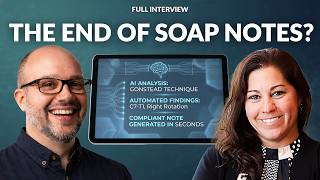
In this interview, host Jeff Langmaid talks with Dr. Christina Esposito, Director of Product at ChiroHD, about the evolution, philosophy, and future of their chiropractic‑specific electronic health record (EHR) platform. Dr. Esposito explains ChiroHD’s origin (a programmer‑founder building a custom solution for a chiropractic franchise), the product’s core focus on intuitive, click‑light design, and the shift from traditional server‑based EHRs to cloud‑accessible, AI‑enhanced tools. She highlights automation features that free staff to focus on patients—templated task lists, trigger‑based communications, and built‑in lead‑management dashboards. The conversation covers under‑utilized capabilities such as lead tracking and automation integrations (Sked, GoHighLevel). Dr. Esposito describes the ideal practice fit (multi‑location groups, new clinicians, high‑volume cash or insurance practices) and outlines ChiroHD’s onboarding process, including data migration templates. Looking ahead, she details three major roadmap items: a rebuilt transaction‑tracking engine for flexible reporting, AI‑generated natural‑language queries, and automated ERA posting, plus a pet project to generate SOAP notes via dictation, conversation, and form inputs tailored to specific chiropractic techniques. Throughout, the emphasis is on using technology—especially AI—to increase efficiency, reduce manual work, and improve the patient experience.
Chapters
When we are able to automate a lot of these things that typically a CA or an office manager would have to do manually, it just frees up more time and energy that they can focus on the patient. And that's really our goal is how do we use technology to create more efficiency so that the people can focus on the people.
Hey everybody, what's up? I am happy to be sitting down and chatting with Dr. Christina Esposito, who's the director of product over at ChiroHD. And if you've been following along, you know I am a big supporter of ChiroHD. HD. They're a partner of mine. They're doing some awesome things in the EHR space and really making some big advancements that can help you in your practice. So, Dr. Christina, I'm going to kick it off with what I think is an easy question to get started. For anybody that hasn't heard of ChiroHD, what's the quick backstory? And, uh, you know, how did ChiroHD specifically get built for chiropractors?
I believe it's been about 7 years, um, 7 years ago. I know, uh, Gabe, who's the original CEO and founder had a connection with one of the franchise, 100% Chiropractic, and so was really involved in that, that group and was looking at some of the software that they were using and having been a programmer himself was like, I can do this, right? So that's kind of the origin story. They built that framework and then started focusing on some of like the chiropractic groups and coaching groups and really has evolved over the last 7 been years, a lot of big strides. Uh, I know in my, my, uh, prior life in, uh, working with the AlignLife franchise, that's how I got originally connected with, um, ChiroHD, um, about 6 years ago.
So that's great. And as the Director of Product, I'm sure you keep your finger on the pulse of kind of what's out there. So I'll just ask you straight up, what are some of the things that you've seen in true— what I'll call traditional EHRs— that you think in ChiroHD has just been like, man, that's just wrong for chiropractors? What are some of those things from a product perspective that really you saw and have seen great opportunities?
Yeah, I think, um, from a product perspective, you want to make sure that things are as intuitive as possible, right? We shouldn't have to have a user manual just to be able to schedule an appointment. You want to be able to flow through the system. Um, I, I always say I'm allergic to clicks, like too many clicks. Uh, we need to be very efficient in being able to get through a daily visit. So having been a chiropractor myself, I know the pains of having to move quickly if you're seeing a larger volume of patients, but still trying to be compliant and documenting the visit appropriately. So I know for me personally, that's always my sensitivity is looking at efficiency in daily flow. And I think you wanna keep things simple sometimes is better where you know, you may have every bell and whistle out there, but if it's not actually providing a solution to problems, then sometimes it can be a little bit of noise. So we do want to make sure that we're being focused on what are the actual problems that we're trying to solve.
Yeah, and I'd love to dig deeper there. What are some, what are some things that, you know, docs think are normal with the EHRs that they're currently using that really shouldn't be that way?
Yeah, well, I think obviously the progression of EHRs over the last decade or so going from server-based platforms, still some out there that are operating off a server base. So nowadays having the ability to access the data from anywhere you're at, even from your cell phone, is extremely convenient. And now we're moving into this world of AI, right? The talk of the town everywhere. So now it's looking at how are we able to rethink everything we're doing? So that's kind of what the conversations are in Kyra HD, and it's not necessarily how are we using it to improve what we have, but how are we using AI to completely, you know, recreate something from scratch better, faster. So it's been a, pretty crazy last couple of months as we just keep getting deeper and deeper into that functionality.
Yeah, I love it. There is just so much opportunity out there and I think a lot of this comes back to— I remember speaking with Gabe last year and some of, you know, just how he approached building ChiroHD and as, as really, you know, head of product, I think, you know, you probably have some pretty, pretty good and specific ideas of how you approach it. So I'll just ask you, when you think about product and specifically relative to ChiroHD, of course, What's kind of your core philosophy?
Well, the biggest challenge is, you know, you want to do everything, you want to create everything, and everyone wants everything created. So the challenge is honestly in deciding what to say no to. And that's probably the biggest challenge for any entrepreneur in a business. It's not that we don't have all these opportunities. It's like, what do we say no to and what do we have to stay focused on? So that's always the biggest challenge in getting a balance between What are your existing customers needing and wanting? What is going to help bring on new customers? Then there's a real heavy investment, which I think a lot of people don't realize, in the framework and the structure of the platform. So a lot of time and energy has to go into improving that as you continue to grow and there's more and more users on it so that you can keep this feed going and compliance and obviously HIPAA. So there's so much of that part of it, which I wasn't even fully privy to, you know, previous to this position. So it's a balance and making sure that we can kind of serve all those different audiences.
I love it. When, when somebody comes on as a new user in Cairo HD, I'm sure you get this feedback all the time. What are maybe 2 to 3 things that come to mind as far as new users saying, man, these are 2 to 3 benefits that totally wowed me out of the gate?
Just from like an office perspective, like as an office manager, let's say, there's some functionality around having like templates that can help guide, you know, what are all the things that you need to do on day 1 with the patient? What are all the things that you need to do on day 2 as you, you know, present like a report of findings? And being able to utilize the tool not just as an EHR to document SOAP notes and track CPT codes and do billing, but also starting to use it as a practice management tool in how do I operate the business. And that's something that I've always had extreme interest in, in saying, you know, we don't want to have to use 12 different software systems. How can we keep everything in one place in CareHD? So those task lists, like templated task lists is one of them. Another thing would be triggering communications and notifications off of appointment types or charges that go into the patient's file. So things like that that can help you keep track of how you're educating the patient. It can help you to promote different products and doing upsells and cross-sells and things like that. So there's a lot of built-in tools that you can create automations around that really help from the business perspective. And what's good about that, when we are able to automate a lot of these things that typically a CA or an office manager would have to do manually, it just frees up more time and energy that they can focus on the patient. And that's really our goal is how do we use technology to create more efficiency so that the people can focus on the people.
Yeah, the, the benefits that you outlined in automation's just so, so critical. And, and I'll reinforce what you just said. When you have software that enables your team as a practicing doc to be more present with the patient, instead of diving into screen after screen after screen, looking down. We've all been to healthcare practices where that's been the case and we've been to the opposite, right? It's just such a world of difference where many people don't think software can extend the patient experience, knee to knee, heart to heart, and it very well can. Now, I don't want to jump off of some of the benefits. So I love asking this question and I'm super interested in your answer to it, which is What are maybe one or two benefits features within ChiroHD that you think most docs are dramatically underutilizing? And you're like, this is awesome. But when we look at it, docs should be using this every day and it's just not utilized as much as it could be. This is great for not only docs that are ready to go to ChiroHD, but maybe people listening and watching additionally that are using ChiroHD. So I'd love to hear your thoughts on it.
Yeah, that is a great question. Two things come to mind. One is Um, we have a built-in like lead management dashboard. So, uh, I know a lot of kind of bigger clinics or a lot of people are starting to use, uh, other platforms, uh, platforms like GoHighLevel, which we have an integration with. But for some clinics it's just not reasonable. It's added cost. They don't have a team that's gonna build out all these campaigns. And some of that stuff we can do right within the ChiroHD platform. Um, kind of going back to, uh, tracking leads. So there's a dashboard where we could have, um, through a connection, have, let's say, Facebook leads come right into the system, and then we can track them— first contact, second contact, third contact. But not even, um, just digital. You know, you go to a screening event out in town and you walk away with 10 people that were interested that need to follow up on. And I know in my past it's always been like, what happened to those people? Who's following up? Where did— where does it live? You know, it was this piece of paper that someone filled out Now what? So being able to keep that all in the software and very easily get them scheduled and create them right in the system is huge. And then the other one, I'll go back to those like triggers. I think taking the time to really understand that feature and being able to create those automations is huge. And with the partnership now with the Sked platform, that also kind of opens up the door to a lot of templated communications that we can do with the patients between the two-way texting and emails. They've really mastered the art of patient communication through technology. So the partnership with ChiroHD has been amazing.
Yeah, that's, that's fantastic. When you think about the types of practices that love ChiroHD the most, and I know with ChiroHD, you guys have been able to serve practices of all sizes, of all types. But when you think about the practices that really love ChiroHD the most— high volume, cash, insurance, multi-doc— where's really the sweet spot of those docs that really should be looking at, at ChiroHD?
Um, yeah, it's hard to pick one. I mean, I do know just from my personal experience, um, the platform was designed very well to manage, uh, groups of practices. So there is, uh, some dashboards and reporting and the ability to gain access to multiple clinics. So even if it's not some, like a franchise group or something like that, but if you own multiple practices, the foundation of how they built that is allows there to be some controls, but then also give each location their own permissions. So that was really built. I haven't seen another system that was laid out that way specifically to serve that group. So that's one niche that I think we serve very well. But even anywhere from, you know, brand new docs, it is pretty intuitive. I do hear that a lot. It's very intuitive being able to move through the system. So when you haven't been using another EHR system for 10 years and you're brand new and you're just trying to get through it, I think it serves that group equally.
And let's talk about docs that are maybe thinking about or in the process of making a switch over to ChiroHD. You know, switching EHRs always sounds super painful. Let's just call it exactly what it is. So at ChiroHD, I'll kind of just tee it up for you and ask you, you know, how do you make it as easy as possible for those docs looking to come over? What does onboarding look like and migration? Is it all on the doc? You know, what's that process look like?
Well, first off, it's hard for me to feel sorry for people because I did it back in the day when you were literally typing in John Smith and the address, like thousands of patients manually. And I did that about 2 or 3 times prior to coming on board with ChiroHD. So that is for sure painful. Nowadays we have a lot more ability to grab all the patient demographics, and that's actually something that we're really focusing on more, just making it easier and easier depending on whatever platform you're in, One of the things that we're looking at now is creating, um, like starter templates in Carr-HD. So if we know that you are a user from another system, or if we know you are a particular kind of, you practice a particular way, starting to create these templates where it really fast forwards your ability to get started with the platform because the system is already preset with some of that stuff. Um, so you can get started a lot quicker.
That's fantastic. I know that's usually a really big pain point. It sounds like, you know, from, from what I'm hearing from you and from what I've heard with docs that have made that transition, Carro HD makes it just about as easy as it can be to get over and get going, and especially with the ease of use of the system that also just enables so much speed and really brings down that learning curve, which is so, so critical. So now I'm going to ask you a few fun questions as the, as the director of product. So this is a wide open one. So Where do you think EHRs are headed over the next 3 to 5 years?
Well, again, getting back to the AI, obviously we're just rethinking everything, right? How does a doctor go through a visit from start to finish? What does that look like? And, you know, we often talk about, have conversations about like, well, what is ideal? Like in a dream world, what would you want it to do? Well, with AI, the dream world is now a reality, right? We're, we're able to do things that we never thought we'd be able to do before, and we're able to do it a lot faster. So those are the kinds of conversations that we're having and looking at, you know, from soap notes. I know recently we did a state of the industry survey to kind of find out, collect a lot of data from different clinics that not just Kyra HD users, but across the profession. And the number one pain point that was reported was soap notes, for example. Docs. So that's been our, our recently our top focus of saying, okay, if that's the number one pain point that's being reported, how do we make this, um, just so simple, so easy, so quick? Uh, now of course the challenge with AI is the doctor's still responsible, right? That liability still lies on the doctor, and AI is not going to be perfect, we know that. Um, but we can still, um, fast forward, uh, move a lot quicker, um, and get a nice compliant, comprehensive note documented.
Yeah, very, very well said. So now I'm going to pull in that timeline a little bit and I'll maybe even ask you to let the cat out of the bag a little bit here. But what, what are you building right now that you're most excited about? What's some of the, some of the benefits and features in the pipeline, you know, are coming out or maybe just came out that ultimately you're like, this is awesome?
Yeah, I think one of the things that's been in the works for a while was a complete rebuild of how we tracked the transactions in the system. It was built in a way that was a little bit restricted in how we can create some reports. And it's one of those things that it's a huge lift and no one feels the benefit of because it's the framework, right? But it was one of those things that we had to do, and we're about to wrap that up. And the beauty of that is it will open the door to be able to provide a lot more flexibility in the reporting that we do around collections, how money is allocated to different services and things like that. Two of the other projects that we are in the works on right now, actually three of the other projects. One is the ability for AI-generated queries from the user. So being able to speak into the software and say, I want a list of all my patients who have had an adjustment in the last 90 days but also missed an appointment on Friday, right? Like ridiculous queries that we would have to kind of hard code all these different scenarios. All of that is now gone and we have that ability. So that's a project that is just now getting kind of the framework for that is getting built out. And then the ERA posting. So the ability to, from the insurance billing perspective, we have this in a beta test right now that there's several clinics using it, still kind of identifying some unique cases where we have to make some tweaks, but the ability to not have to manually post every single line when an EOB comes in. We still make sure that you have eyes on it and you're verifying it, but the manual part of it will happen automatically through that electronic file coming from a clearinghouse. So those are a couple of the big ones. And then I referenced SOAP notes. So that's a little pet project that Gabe's been working on that we're all super excited about being able to not only use dictation, but then also just through a conversation with a patient, let's say during an initial consultation, being able to compile that into a comprehensive SOAP note in addition to dictation, in addition to still maybe being able to override it with a form where, so kind of combining all 3 of those all at once. You don't have to choose one or the other and all of that data coming in to create, um, a nice SOAP note. And the cool thing is what we're able to do is, is tailor that based on technique, right? So let's say if you're a Gonstead clinician, uh, everywhere, everything from like designating the listing that you found, the rotation, you can talk through your x-ray analysis and it will know that terminology because it will have that, uh, resource already programmed. Or if you're upper cervical, they use different tech terminology when you're doing an exam findings and x-ray, uh, analysis than you would another practitioner. So being able to tailor that where the, the AI knows what kind of practitioner you are. What type of visit this is. And it again, just, it blows my mind, the types of things that we're able to do. So a lot of things going to be coming down the pipe pretty quickly.
Those are massive, massive power features. And for everybody listening and watching, if you are living in pain with your current EHR or ultimately you just know there's a better way, as Dr. Christina has laid out, that, you know, ChiroHD and their team is spending a lot of time, effort, energy, and money investing in the future of your practice and enabling you to practice in a way that's more efficient, that's more effective, that frees up your team to do only what you and your team can do, which is be present and ready for the patients and have the systems, automations, and processes running behind the scenes so that your practice is running as fluidly as possible. Now, as a listener and watcher, ChiroHD is a partner of the Evidence-Based Chiropractic. They're going to hook you up with a special offer, so please be sure to click on down below, connect with their team, ask your questions, see if ChiroHD is a great fit for your practice. Dr. Christina, I really appreciate you taking time and chatting with us today.
Thank you for having me. I appreciate it. It's been great.
Thanks so much for checking out that interview. If you liked it, we have plenty more available. You can check out the next interview right here.










