How Effective Are Adjustments with Modic Changes in the Spine | Podcast Ep. 200
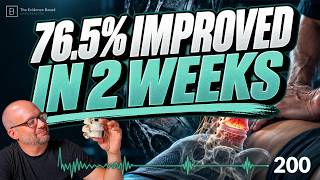
Dr. Jeff Langmaid reviews a study on spinal manipulation for disc herniation, comparing patients with and without Modic changes. Patients with Modic changes showed larger short-term improvement, but Modic 1 changes were prone to recurrence, affecting how chiropractors should manage expectations and ongoing care.
Chapters
Foreign hello and welcome to the Evidence Based Chiropractor. I AM your host, Dr. Jeff Langmane, and you are listening right now to the 200th episode of the Evidence Based Chiropractor podcast. For nearly four years, this podcast has been coming out each and every week, delivering research in marketing in the time it takes to get to your office. If you've been listening since the very, very beginning, thank you so much. I listened back and looking at the episodes today versus back then, I think we've improved a tremendous amount. So if you've been along for the ride the whole time, thank you so much for tuning in. If you're new, that's awesome as well. We've been fortunate to be one of the most widely listened to chiropractic podcasts in the world, so. So we constantly have new listeners coming in as well. And if you're new, thanks for tuning in. This is a good one to start out if you are new. Because I'm gonna be giving away a set of chiropractic office posters from the Evidence Based Chiropractor as sort of a giveaway special kind of thing for the 200th episode. Cause I don't think we did anything at the 100th episode. So we're gonna have some fun today as well as diving in to some research as well. We're gonna be talking about a paper titled comparison of outcomes in MRI Confirmed lumbar disc herniation patients with and without modic changes treated with high velocity low amplitude spinal manipulation. But maybe I'll let the cat out of the bag on the giveaway now. So what I'd like to do is give away a set of evidence based chiropractor office posters. You can check them out@the evidencebasedchiropractor.com in the shop. If you haven't seen them or if you just want to trust me that they are awesome, then you can win them by doing something exceptionally simple. Hop onto itunes. If you're listening to this podcast in the app on your iPhone, you can do it right from the app. Leave a rating or a review or feedback for this show. What I'm gonna do is next week I will choose one person who left feedback over this week and I will give away a set of chiropractic office posters. So. So if you've been listening or this is your first episode, hopefully you think this one's a good one, you know. Please head on over to itunes. Leave a rating, a review, obviously, if you just leave the rating with the stars I'm not really gonna know who you are. So leave a couple lines of text, leave some feedback, a review of this podcast. I will look at the date that it is posted and I will choose one person from this next week and I will give away a set of office posters. I'll announce the winner of live next episode. So evidence based chiropractor posters. If you want to win a set of three, simply head over to itunes, make sure that you leave some feedback and then I will pick one and we will give away a set of office posters. I don't think we did anything for the 100th episode again, but this is the 200th episode. I think we more than deserve to have some giveaways coming up and it probably won't be the last time. We won't wait another 200 episodes to do some giveaways. I think we're going to have some more fun, some more interaction on this podcast and as we move forward. But we are gonna stick with the research and the marketing. So let's take a look. The purpose of this study was to determine if there is a difference in outcomes between MOTIC positive and negative lumbar disc herniation patients treated with spinal manipulation. So we've talked about MOTIC changes, I think not too terribly long ago on the podcast. Modic changes are the end plate changes you see to the vertebra, right? Right where that endplate meets the disc, where the disc connects to the end plate of the vertebral body. Modic changes can occur and they typically happen in Modic 1, Modic 2 or Modic 3 type changes. Modic 3 are what I'll call stable changes. They just look like sclerosis when you look at it. They are fully formed. Many people don't even get to that point. That takes decades and decades. But Modic1 and Modic2 have the propensity to cause pain and specifically become inflammatory. That's where things start to get interesting. Endplate changes are okay, but but they can become inflammatory and painful over time. This study was looking at, well, what happens if those individuals get manipulation, get a chiropractic adjustment during that time, especially those individuals that have concurrent disc herniations. So they note the role of spinal manipulation, the role of chiropractic care, for conservative treatment of symptomatic lumbar disc herniations. It's been controversial over the years, but in 2014 they cite Lehman, who published a study which showed a high degree of clinically significant significant improvement in patients with leg and back pain due to a disc herniation who were treated with adjustments with no adverse events, by the way. So when we look at medications, we talked about it before on this podcast. Opioids, 100 deaths per day. NSAIDS, 3,000 deaths per year. When you look and see no adverse events or very, very low risks associated with what we do within chiropractic, our case for these patients starts to become exceptionally compelling. Not only on the efficacy side of things, but, but certainly also on the safety side. The researchers found at two weeks, 76.5% of patients with Modic changes and 53% of the Modic negative patients reported clinically relevant improvement. That's incredible. At two weeks time, three quarters of the individuals, over 75% of the individual with MOTIC changes had clinically relevant improvement and over half of the individuals that didn't have modic changes had had clinically relevant improvement. Those results are absolutely fantastic. But let's dive even deeper. These researchers found. Quote this is the first study to investigate the role that MOTIC changes may have in relationship to the outcomes from the specific treatment of high velocity low amplitude spinal manipulation in a group of low back pain patients with a very specific diagnosis. Both the disc herniation and modic changes are known to act as pain generators in the lumbar spine. The. So this is the first time that anybody's evaluated this. That's exciting, right? This came out in JMPT just I believe last year or just in 2016 rather. So this is a relatively fresh paper, first time anybody's looking at it. And also again, we know there are multiple sources of pain. Somebody has disc herniation and modic changes, it's very likely that they have more than one pain generator. Researchers also found the percentage of patients reporting clinically relevant improvement in this study increased over time in both categories of patients. But surprisingly, at two weeks after treatment, the percentage of MOTIC change positive patients reported clinically relevant improvement was over 23% higher than the ones without. So this is where it starts to get interesting, right? And they start to ask some questions. A great paper doesn't necessarily give an answer to everything, but it stimulates new questions. This paper does exactly that because they quite frankly weren't expecting to see the people with modic changes and have the results. It was kind of, you know, the thought process was, well, if there's a disc herniation that's kind of mechanical, you get in there with an adjustment, you might be able to open up the ivf, decompress the disc a little bit and we'd expect to see some relief there. But when there's end plate changes that are active and inflammatory, huh, how does an adjustment work to take care of that? Now this paper doesn't exactly find the answer, but it certainly asks the questions to say maybe there's a central component, maybe there's a nervous system component, there's, maybe there is a pain, how we feel pain component within the central spinal cord. All of these things are true obviously as we've seen in other studies, however, this is the first to categorize it in terms of modic changes. Researchers also found it does appear that Modic1 patients are prone to relapses or recurrences of pain and this may be due to the influence of the inflammatory component. It would be interesting to follow the modic one patients over a longer period of time than just one year to to identify these further relapses and determine if the condition stabilizes. So this is an important component and I don't want this to be lost. I know there's a lot of chiropractors that listen to this docs that listen to this podcast and associate within the evidence informed evidence based community. I mean the title of the podcast is the evidence based Chiropractor. But I think it's important to have levity with these situations. People are gonna have relapses throughout time, they're going to have challenges. I know maintenance chiropractic care of three adjustments for the rest of your life, but probably isn't necessarily the best or most logical thing to recommend on the first visit. Somebody comes into your practice, you don't know how they're gonna respond next week, nevermind next year or next decade. However, when we see things on film that are structural challenges that are, you know, in this case modic changes that are prone to relapse over time, the changing to the bone is not gonna reverse course tomorrow person might feel better within a week or two, but what are you doing to keep them feeling well so they stay active? If they're prone to relapse consistently and they're not having any care. And that care can mean a variety of different things within a chiropractic clinic, right? It might be exercise and rehab, it might be nutrition, it might include adjustments, it could include massage, it might include some passive modalities to get people through just mild increases in pain. There's a variety of different things that you can do in your practice besides four visits in get out, right? I mean being a good provider, being a Good practitioner. Being a good chiropractor to me is about really understanding what's going on with that individual. If they have modic changes and they are a geriatric patient, they're older, they have challenges getting around, they have a lot of structural challenges on the inside. Well, you might be able to get them feeling better very, very quickly in your practice. However, they're probably going to need some ongoing care, at least some every now and again, PRN as needed care to help them stay well and get well. And having that conversation is very, very important because that's what sets the expectations for what somebody expects literally in your practice as they move forward. And that can be the big difference between somebody saying it didn't work, aka they had an 80% resolution of symptoms in two weeks, which is awesome. But something comes back two weeks later and they're saying, oh, that didn't work. And, oh, doc told me that I'm probably going to have a relapse. That's very likely that something's going to kick back up over time. I got 80% improvement before. I'll just pop back over there and get back on track. That's a very, very different mentality. And us as chiropractors, I think some of us over time have maybe not done the best job preemptively getting into those conversations because there are a lot of people out there, oh, it doesn't work well. It probably did work very well for you, but the expectation wasn't set long term. So it's a little bit tangential. But I think it's important when we talk about disc herniation, it's important when we talk about modic changes, end plate changes. These things take a long time and improvement. Thankfully, improvement with what we can do as chiropractors can come very, very quick for a ton of different people. People improve very quickly with what we do. It's awesome. There's the physical nature of the adjustment, how it affects the disc, how it affects the facet, there's the impact it has on the peripheral and central nervous system. All of these things are huge and they allow us to get unbelievably fantastic results. But the flip side of that is people are gonna live their life under gravity. People are gonna have injuries, people are gonna continue to age. These are all things that add up over time. So having proactive conversations with your patients about what they might expect in the future, very, very, very important. So a couple takeaway messages here from this paper. Lumbar disc herniation patients with MOTIC changes report better outcomes after spinal manipulation treatment at 2 weeks, 3 weeks and 6 months compared to patients without modic changes. So if there's some inflammatory aspect like what we do as a chiropractor can help improve that. And MODIC one patients appear to be more prone to reoccurrences compared to Modic2 patients and those without Modic changes. So as Modic1 changes become Modic2, this is my take on it. We can see an increased opportunity for relapse as those modic changes. If the MOTIC changes don't exist, well, that's easy. Or if they're farther along in their progression, they are what I will refer to as maybe a little bit more stable and and less prone to relapse. So important to keep that in mind. If you're looking at X rays in your practice, take a peek at the end plates. Specifically if you're looking at mri, great opportunity to take a peek at those end plates, guide and direct your patients in the best manner possible. That is what it is all about. Hopefully that's what we've been able to do with this podcast over the last 200 episodes. Give you an opportunity to learn a little bit about the research out there, how you can apply it to the patient conversations you're having inside of your practice each and every day. We love to throw in a little bit of marketing. That's also my passion is really how do you get that message out there in the community? That's why we have the Evidence Based Chiropractor, the Smart Chiropractor and Chiro emails. So if you want help on the social component, check out the Smart Chiropractor and Chiro emails. If you want to bridge the gap and build relationships with other healthcare providers and increase referrals. We had a doc last month within the Evidence Based chiropractor that got 18 referrals from medical providers in his community. If you'd like to be something like that and want the tools, the strategies, the tactics necessary to get there, then become a member of the Evidence Based Chiropractor and or if you just want to grab a set of three chiropractic posters, I would not blame you. And you can do that or at least have a chance to win very easily by leaving some feedback on this show within the next week. And I'm going to look forward to the next 100, 200 and maybe 300 more episodes. We hit 200. That is awesome. I appreciate you for being a chiropractor. I definitely appreciate you for listening to this podcast and I hope that you win that set of chiropractic office posters. Have a great week in practice and I will talk to you soon.
Thank you for joining us on this episode of the Evidence Based Chiropractor. If you want to grow your practice, come back for next week's episode. If you want to grow faster, visit theevidencebasedchiropractor.com and join our MD Marketing membership today.










