How Jane Makes Chiropractic Practice Management Easier with Alison Taylor
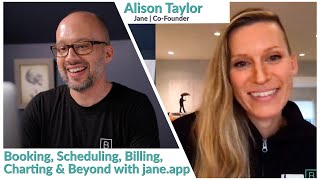
Alison Taylor, co-CEO of Jane, built practice management software after opening her own multidisciplinary clinic in 2011. Jane started as a booking and charting tool and now focuses on online scheduling, smart charting templates, and data analytics to cut admin work. Taylor stresses design and direct customer support as core to the product.
Questions this video answers
2011
2014
"tens of thousands of practices" worldwide (guest claim)
Understanding their business with data (ranked higher than getting new patients)
Chapters
So during COVID when people had to shut down their practices, we said, well, what can we do to provide value that's not using just Jane, the software. Like, how can we continue to be helpful to our customers? We're not just a product, it's not just design. It's actually more than that.
All right, everybody. So as promised, I am here with Ali from Jane. We are going to break down a bunch of really practical information that you can utilize in, in your practice. You can take a look at the systems and processes and tools that you utilize each and every day and ultimately improve how you go about your clinic flow and ultimately that leads into patient outcomes. Ali, thanks for coming on today.
Oh, thanks for including me.
You got it. So I want to pull everything back a little bit, reverse the timeline. What is your background? I'd love to know more about your journey in healthcare.
Yeah, I always. I never know quite how far back to go when people ask me that question, but I'm going to start with 2011. I opened a multidisciplinary practice, which we were just talking about before you started recording, because I'm not able to give it as much attention as I would like anymore. But so I opened a multidisciplinary practice. It's physio, chiro, massage, naturopath, midwives, acupuncturists, counselors. It's a little bit of everything. It's got eight treatment rooms. And during that process, I was looking for some software, couldn't find anything that really worked, especially for that would respect my brand, that would allow great online booking and then the charting needs for the different types of practitioners. And so Trevor, who is now my co founder and was doing my branding and my website at the time, offered to build me something, which he did in six weeks. And then I just used that at my practice for about a year, a year and a half. And then other people started showing interest in it. This online booking looks great. Can I use it? We partnered and then in 2014 we launched it as a product that other people could listen. So that's called jnapp. So now we run jnapp together as co CEOs and we're used by, you know, tens of thousands of practices all around the world.
That is. That's awesome. So I want to dive into a couple specifics there because you made that sound super casual and I. No big deal. But so when you made that, I guess the first inflection point when you decided, like, hey, I want to like, build, you know, my own software tool, like how does that come together? Like, how do you get that thought? How do you start to think about it and execute? I'd love to hear a little bit about that process.
Yeah, you know, people have asked that a few times and I think it's interesting because I'm never satisfied. Like, I think things can always be better. And I think that's been true. I think that's just my whole life, I think that's been true. And so when I was looking at the softwares out there, I'm like, this is just not, this could be better. And even now I feel bad about Jane. Like I only see the negatives. Like we can get. We have a whole page of capture reviews right now and out of 100 stars, we've got like 98 on the first page. You know, the only thing I see.
The other two, I'm like, why didn't.
We get those two? Let's make that better. And so I think when you, like when you're never satisfied, you always just feel like you need to do, you need to do more. And then Trevor, when he, they built this, they offered. So really, really, I was like, okay, great. That was just, that was serendipitous that, you know, I had a designer that was able to build something and then people just kind of, it was, It's a lot of pull, A lot of people just looking for this, having the same problem, needing the same solution. And then I have a great heart now for small business and clinics and I'm super excited to help them. I told you at the beginning, I'm like, I'm not a good pitcher, I'm not a good marketer. I literally just like we love helping these small businesses. So it's a really, it's like a passion. It's a passion project for sure.
I think that that's, I think that that's awesome. And I know that over the last probably year and a maybe year, year and a half, I've just seen, you know, Jane make such a big splash in the chiropractic community, specifically here in the states. And I'm sure that you've learned a ton throughout that process. What are some I always hear because I always hear docs complaining about sort of their legacy ehrs and challenges that they're having. What are some of the biggest challenges that you've heard that docs have utilizing their system, specifically kairos in the states? What are some tidbits that you've picked up on as you guys have grown and expanded?
Yeah, I mean one of the biggest problems for most legacy softwares in every discipline is adding online booking and online capabilities. And the reason is just because they were built in a different paradigm. So it's just the way the world works. Like there wasn't an online world and most legacy softwares were built primarily just for admin staff. So docs did paper charting and there was no such thing as online booking. Patients would call. And so that's the base of the infrastructure of those legacy softwares. And then as they've developed, they've tried to bring them online. And that's really difficult to change. It's like it's changing the country you live in. You know, it's like culture shock. Like it's really tricky to start somewhere and then migrate into this new world. So I think that's been a struggle for people trying to also add like bolt on services to do different things when their software doesn't do everything all in one place. So we've been working on trying to make sure that we can expand Jane into doing all of those things, hopefully in one place because an integrated solution is obviously more convenient. And then cost is obviously a really difficult for kairos in the US Specifically, it's actually quite shocking. Some of the business models that are out there, they really surprise us when we hear like the one time upfront fee that people paid in order to get a software downloaded into their clinic and then that they charge for support is just shocking to me too. So you have to choose and clinics don't have like humongous margins. So every time we're making a choice, it's a big one in clinic, like every dollar makes a big difference. So those are probably the two biggest things that we've seen in Cairo for the US for sure.
Yeah. Both of those are so impactful because we discuss it week in and week out on this podcast. Really about docs getting out there and marketing and making it easy. So having the ability to schedule online, have that seamless experience is so critical to patient experience and ultimately to being able to fill your schedule and help people and have them be happy about the care that you give. And the second piece, no question about it, is I think price is always a concern. And we see this with a few different verticals, I would say, around services that support the industry where it's like there's just these crazy weird loopholes where they charge unbelievable amount for this, that or the other thing where it's like, isn't that a core competency of kind of what the item delivers?
The Pricing is super fascinating because MDS and optometry actually have higher price points that they're comfortable with. And then a lot of those type of softwares try to move into Cairo and they're charging these huge numbers that Cairos will bulk up. And then when you get into some of the other disciplines, they undercharge and Kairos are like, well, that's cheaper than blank software that I'm used to using. So that sounds great. So usually we're told we're cheap by Kairos, but we're expensive by like other disciplines. So we're just like, we gotta work with everybody. So we're finding a nice middle ground. So Cairos tend to think we're over like shockingly reasonable. Okay, well that's fine.
Yep. You'll take it. Aside from price, maybe what's one of the biggest surprises that you've seen as you've grown and helped more docs, what's some of the biggest surprises that you've seen specifically in the Cairo Marketplace or requests? What, what have you learned?
Yeah, there we just launched a couple of new charting features that were specific for Kairos in. We're calling it smart charting as a, as a whole. So there's phrases where you can, you know, pre populate phrases that you can, they'll create a whole sentence for you with a shortcut and then clicking. Cairos don't want to type at all, only want to click things. They want to click things and then they want that clicking to turn into a full sentence. And I think that it is actually really interesting because when people move over from different softwares, they're always, they're bringing their understanding of how that software worked and so they're trying to translate their workflows and what they need to do into Jane from their old software. So the feature request we get, I can usually tell what software you came from. I'm like, oh, you're coming from this software because that's the feature request you're making. Because your brain is being programmed this way. Like we build Office procedures around our software so your software will have like, it will have strengths and will have weaknesses and you will have built your entire Office procedure around your software. And sometimes people have a hard time recognizing that. So you've actually accommodated weaknesses already in certain things. And so when you change software, you also have to say, well, is this the best way to do it? Like what is the best way to do it? And then you kind of have to have a bit of an open mind about learning a new way Sometimes, but we are pro and administrative staff are programmed and I know, I've worked front desk at clinics many years. Like we know like you don't read, you just click six times. So that was a lesson we learned. Like we once moved a button, don't ever moved it. And people are like, oh my gosh, what happened? Because they're so used to muscle memory, they just click certain places on the screen. Like you can't move a button once you put a button somewhere.
Old habits.
Old habits, Lots of clicking and you know everybody, no matter what kind of discipline they are. No one likes charting. No one. Do you like charting?
No.
No.
Want to make it as seamless as possible?
Yeah. So no one wants to chart. So we're always trying to make sure that we're, we're finding ways to make that easier. Hopefully. I always said that I wouldn't go to a practitioner that liked charting, like charting or you have good handwriting. I'm pretty sure I'm not going to trust you.
I think that's a good, I think that's a good rule of thumb.
Your audience that has beautiful printing. I'm sure you're a great practitioner. You have to read the chicken scratch and try to figure out what people are saying. So at least the stick drawings and the chicken's drag, like at least we've moved on to a more legible system.
No doubt about that. And as you go, as you look towards the future, I mean, where do you see, you know, that's sort of where, you know where some docs were at, maybe where a few still linger today. But where do you see, where do you see things moving in the future? Because EHRs are such an incredibly, as you just said, it's the, it really phrases the dynamic of the practice, operations and systems and flow and how everything goes. And so many docs, you just forget about it because you get used to the habits around what you do. Where do you see the future of EHRs positioning themselves within a practice or the evolution as time goes on?
Yeah, well, I mean I do always think that the expectation of both patients and practitioners is that it's an app like experience. Like there's an expectation, it's an enjoyable software is enjoyable to use. This has come from the consumer world of software and so the expectation will continue to be that ehrs move in that direction. Right. I want to enjoy using my software and I want patients to enjoy using the software. But I mean I think softwares will end up becoming. Because now we touch, we work with the patient we work with the practitioner, we work with the admin staff, we work with the billers. You're working with so many different layers where it used to just be admins at the front desk that the scope of an EHR is going to have to really expand. And what I found interesting about things like patient marketplaces or, you know, there's these different ways that people want to interact with EHRs. Like we get requests for API integration from so from so many different softwares, which is fascinating because it's going to be your hub, but it will expand and allow like lots of tools to be interconnected. Patient privacy and data privacy is like a huge conversation to have about that. What do we do with the data we put in our ehr? But I think enjoyable use is going to be the future of. I do think enjoyable use is a huge part of the future. And then just simplicity. So allowing practices to do less admin work obviously is always the goal, since no one likes admin work, no one likes charting, no one likes billing. All the things we offer, like Jane, even though Jane does all the things you don't like to do.
And that's a good way to put it.
So great business model, I don't know, great business to go into. We do all the things you don't like and then we try to make it feel like less awful.
Well, let's dive into that because do you think that a lot of the benefits and while size ultimate, like the goal is like joy with using the software, do you think that that's more design driven or feature driven?
So I am a huge believer in design solving all problems and I am not the designer of Jane, so I think it's easy for me to say this, but whenever there's a problem, well, that's a design problem. Like if the customer does something wrong. So for example, today I had a customer was saying, I can't find this patient in my database. Like, they showed me a review that said they definitely had a visit that day. And then I went to try and help them and I found the patient. And then I said, can you just show me your workflow where you're not able to find them? They're spelling the name wrong. And I was like, well, Jane should maybe do fuzzy. Like that's a design problem. Like we could just do close matches, show up on the list and not just exact matches. So I think every problem, like if onboarding is complicated, like every problem is. It is actually a design problem at some level. So we have to pair our design with amazing support. Our amazing support buffers us from where Jane is weak. And then relational business. So we want to be a relational business. We had two years ago, we had a lot of problems with our servers. Like we were growing too fast for our servers. We were on our own. We hosted our own infrastructure, which we've now moved off of, to a infrastructure that scales more rapidly with us. And we were having down every lunchtime. We would go down every lunchtime and we had built like this, this relationship with our customers and they were patient with us. And so for us, it's a whole like it's not just design, it's everything. It's everything all together that makes the recipe of what makes like a. A practice management software that I think is worth being a part of. So during COVID when people had to shut down their practices, we said, well, what can we do to provide value that's not using just Jane, the software. Like, how can we continue to be helpful to our customers? We're not just a product. It's not just design. It's actually more than that. Well, I hope it's more than that. You should ask our customers actually probably that question as well. Is it just design? I don't know. I think it's a large part of it. I went off on there. Sorry.
I think, I think design is a very important piece. And you led exactly what I wanted to ask you about next, which is about Jane, the company, about the people and about the culture. And I know that you guys have a pretty unique culture. And as we were talking before we hopped on, really, you certainly don't do any cheesy advertising. You do very little advertising, if any at all. And, and everything is relationship based. So tell me more about that and why is that so important to you? Because it's clearly a decision, right? This is clearly. You built a culture within what you do with the people that you surrounded yourself with that is distinct and different and that has a way that you go about your business, your priorities and what you're looking to do and how you're looking to help people.
Well, I think like everything relates back actually to small business and clinic ownership for me. And Trevor also is a small business owner. So when we leave the company together, we, we didn't know what a typical software company looked like. It doesn't look like Jane, we've learned, but we just created a company that was growing the same way our small businesses and the way that all your listeners grow their business. Like you cannot build a business without being a Relational person, like, you can't treat your. Your patients aren't going to recommend you if you're not capable of creating a human connection. And the same with your admin staff. Like, you're. I have, I'm actually, we're building out a whole bunch of training your admin staff because someone emailed in and was like, customer service is so amazing. Can. Do you have any, like, materials you can send us for our front desk? And I'm like, yes, let's build that. That's so. That would be so helpful. So I'm so. I'm super excited. We're going to build something out that'll help people train their admin staff. But a relational admin staff or relational practitioner, like, that's how you build a business. That's how you build a small business. And I feel like that is. That's true for our customer base. Like, everybody wants relationship and they want real human connection. It's one of the things I'm fighting as we scale is the customer support voice. Hi, how can I help you? I'm like, I don't want that on the phones. I would like you to just say, this is the human being I'm talking to and that's another human being. And let's just talk about, you know, what's going on with your story. So our support is well received, but it's scaling something like that, keeping that human connection. Like, you know how clinics have a soul and they're part of their community in a way that is very. It's hard. I say soul and I'm not like, woo usually about practices, but I'm like, every practice has a soul. I love visiting practices. I love seeing how you've set it up and how people are. You know, there's a feel. Like you walk into a practice, it's got a feel. And I think that that's the same. You can scale that. We're trying to scale that. We're trying to make that it feel the same way. Like, we're just a big practice. Our customers are like your patients. And so how you would treat your patients. I want to treat our customers and I want to build that into our community, invite people into our story. Yeah, it's all very relational, probably too much.
I think that that's really important. And there's so many docs out there that are building and growing a team. And you sort of alluded to it, but what's been the most challenging aspect of really building and growing an awesome team and keeping that cohesion and keeping those, you know, goals while having fun. And, you know, I don't know, what advice would you give for docs as they scale and build their team in order to keep that feel, to keep that. That culture that they're striving for?
Yes, I wonder. I sometimes wonder if going back and opening a practice now, having had this experience, would be different. Like, how would I use this? I'm definitely, like, a more confident leader now than I was when I was running clinics. I'm also older. At the time. I was trying to manage a lot of people who are older than me, which is also its own challenge. But I think leadership and culture really do go hand in hand. Like, you set the tone for your practice, and so the way you show up is important. The way you show up in your own practice is important. I just read an article and I just actually put into our training about how you know this. Emotions are contagious. But as a leader, it's especially important that you show up in a certain way, so you have a responsibility when you want to practice. But the hard part about being a practitioner owner is that you're practicing in the day and trying to run your practice around it. It's just, I have, like, deep, deep empathy for this. It's evenings and weekends. And also clinic life is lonely and challenging in that if you have associates or they don't always know or see, or you may not always feel like they appreciate all of that work. And so there's like, a bit of a natural friction that happens there. So I would say, like, there's not a ton of practitioners that are great leaders of the clinic. Like, it's not a huge number. I think if people are listening to your podcast, they probably fall into that number of the great ones because they're looking to educate themselves and become better leaders that I would definitely go back and read up on leadership and communication and do a better job at working with people on, like, negotiating their contracts and, you know, the difficult conversations. I would work really hard on doing those better at that.
I think that's very. That's. I would look back at my journey and definitely say the same thing. I think there is. So there's. So there's infinite learning to be done. And the more that you can gather and understand how other people are doing things, the more that you're able to mold what works for you. You and your own style. And ultimately that creates and, again furthers the relationships that you have when you're able to show up genuinely, when you're Able to show up and be the individual that others need you to be and that you can be. And sometimes it takes a little bit of a learning process to discover, like, who am I? What's my role here?
I know I will recommend Harvard Business Review podcast as well. I don't know if you've ever listened to it.
I haven't.
They're wonderful. They're really easy to listen to. And then what you do is who you are.
Yeah, I know, exactly. Yes. Yeah, yeah. You're close to the title. And I'll drop that in the show notes as well.
Yeah, yeah, that one I found actually really wonderful. Just thinking about, like how to show up in a business. That's great. And then, yeah, there's so many. I mean, I've been listening to these podcasts all week and I'm writing my all hands. You know, we have to communicate to our whole company and a lot of it is about some of these things I've heard on this podcast recently. And then dealing with negatives is as powerful as dealing with positives. When you have negative feedback, how you respond to that is almost more powerful than how you respond to positive feedback. So I would also recommend working on taking criticism with grace, which I am not good at. I have a 24 hour cooling off period. I'm like, it's best if it's by email. I do a 24 hour cooling off period before I respond.
Self awareness, that's the most important. So what are you excited about as we come towards the close of 2020? What are some. I'm not asking you to let the cat out of the proverbial bag here, but what are some things that you have sort of on the product roadmap or things that you're super excited about as we head into next year? What are some exciting, exciting either milestones or items that you're like, man, when we get here, I'm going to be jazzed. Whether that's a product feature or whatever it might be.
I know, I'm always looking forward to the next. We just were building out our roadmap for 2021 and we actually sent a survey out to a number of our customers. I don't know if any were listeners and responded to it, but we're about to send out some of the results from that and we wanted to make sure that we really understood, like, what is your biggest business problem? And so we asked getting more patients in the door or managing a packed wait list or difficult insurance billing, or understanding your business with data. Like we Kind of had five things. And what do you, like, what do you think was the biggest problem?
New patients.
No, it was not. That was like, bottom of the pack. And I'm like, really? For most of you, getting new patients is your biggest problem. That's what we thought it was due to. But most of the biggest problem that they wanted was understanding their business with data.
Interesting.
Yeah. We do have a data analytics package, Dr. Lulis. It is so cool. And then the ratings and reviews is coming out too, which is also super cool. Reviews are challenging because a lot of people aren't allowed to publish or solicit public reviews, depending on your discipline. But their ratings part is awesome. I'm putting it in my clinic for sure, because it's just feedback. How is your treatment with this? We're gonna word it. How is your experience? So it's kind of about the whole thing, but specific to the practitioner who you had a treatment with. And then you can just get a temperature check, like, how are all my practitioners doing in my. In the clinic? And you can highlight problems. Some people don't come back because they're better, and they don't come back because they had a bad treatment. And so sometimes you don't. You haven't seen the difference. You don't know the difference. So we get ratings on our support emails, and I'm obsessed about it. Like, how's everyone doing? I'm obsessed with our numbers. I'm obsessed with everything. Clearly, I've been obsessed. But every day I'm checking, how happy are our customers? How happy are our customers? How happy are we feeling about this? So, yeah, the data package and then ratings and reviews, I'm really excited about both of those that are coming out soon. And then we have a whole bunch of endurance integrations. It's a big part of Jada's making sure insurance integrations work. And every country is different, so we have teams that are working on different countries. Are your listeners all us?
No. Spread out? Yes. Probably about 80% US, 15% Canada, 5% Australia, and a couple percent spread throughout. It's like completely demographic based on chiropractic distribution.
Yeah. Great. That's amazing. I love that worldwide. It's a worldwide community. Right. When you're part of like this. And actually my parents are both physical therapists. And When I was 12 or 11, we went to New Zealand on an exchange and they just, like, traded practices with another physio. Wow. They took on their practice. I think that's something you can do. So you're a heroine you can do that when the world opens up again, depending on, I think, the way that you're qualified in each country. But it was very low.
That is super. That's awesome. I want to talk more about that because that's super cool.
So super fun. I've been back many times. I took my daughter to New Zealand like 2 years ago just to be my friend that I met down there when I was 12. But we still remain friends.
Wow, that's incredible.
It changes your whole life, you know, I love that about. I just. I think the path that life takes is so fascinating, and even the path that business takes is fascinating. Like, I talk about Jane's course like we're trying to climb a mountaintop and. But the path is like a dark path. You can't see the way you're gonna get there, but you know where you want to go. And every step, it's like you have a flashlight, you can see just a little bit further ahead on the path. And I think the business is like that too. Like, Kanibu is like that. Every step along the way of opening a practice, you're just saying yes to things and trying things. And it's amazing if you just try something, what the next step is like, oh, it becomes more clear. So just take the first step. Take the first step. You never know where it's going to go.
That is true. That is true for any docs out there that are tuning in and maybe they've heard of Jane in the past, maybe they haven't. What are the easiest place. Where's the easiest place that they can go to learn more and check out the features, understand more, if Jane is a great fit for their practice. And a lot of the tools that you brought up, I think are so. Are so important. I'm kind of cutting in on an answer here, but the rating and review component of what you discussed, I think is incredibly important because so many docs are blinded to what actually goes on and they're seeing lagging indicators by the patient. Just didn't come in right. And like, why didn't they? I have no idea. In being able to assess that proactively, I think is really a big impact point and difference maker for so many docs out there. So I just wanted. I'll give a shout out for that because I think that that's so incredibly important to being able to accurately manage what's going on and ensure that what you believe is happening and the experience that you hope to be providing is what's actually aligning with what's going on? It's super hard. It's almost impossible to just guess it.
It's really. You do need the data and it's very pretty. So I'll plug the design.
Nice.
Although it's very pretty. And I did want to also mention the online booking. Another stat from that that is interesting about online booking, which is a feature I really do believe. Every Clinic should have two things about it. One, we have stats that show that, like, 80% or like, I should get your maximum number because I'm totally making that up. 5% number of appointments are booked at like 10pm you know, it's well packed. Interesting, because people go throughout their day, they're so busy, and this is one of the reasons I needed all my booking so badly. When I open my practice, I'm like, I can't book an appointment until 10pm I'm working all day. I've got three kids. I was like eight months pregnant. I'm like, there's no way I'm getting to my own personal until 10pm and so I knew I would only be able to book. And I can't get on the phone. Call me back. I don't have a voicemail on my phone right now. It's turned off. You can't even leave me. It's just horrible. So they book it out late at night because that's when you get the time to do it. And so the Sunday night bookers, you miss the Monday appointments. By the time you get the message, you call them back, they book somewhere else. So I think an online booking is actually an incredibly important tool if you're in the middle of your practice. I think it's shockingly difficult if you don't have an online book, because people also do online research. They book. If they don't book, they're gonna go look somewhere else.
Yeah, it's a missed opportunity, especially if somebody is literally doing a Google search. Like, if they're doing that, they're looking for something. Like that is a destiny. Like they're looking for an answer or a solution, and they're not gonna wait because you're 100% correct.
Online booking, I think, is super important. But yeah, if you wanna learn more about Jane, the website's Just Jane app, which does confuse people. I have a landing page that speaks more specifically to the features that most chiropractors enjoy and use. So maybe I can give that to you and you can post it somewhere.
Yeah, for sure.
I think it's just chiropractic. You could probably get it.
We'll be sure to drop, we'll drop a link to both pages in the show notes for sure. And I'd encourage anybody who's watching or listening if you do not have online booking available for your practice, it's I'm going to say I'll go further. It is a necessity to build and grow your practice this year and next. It is now not a luxury. It is an absolute necessity. And you know, as Ali broke out, if you had these challenges that we see time and time again with legacy systems that either the pricing seems completely weird and high, you don't have the availability to be able to have online booking, or your clinic flow just ultimately isn't what you would desire. I'd encourage everybody check out Jane app. I'll also drop that link specifically to the chiropractic features down in the show notes. Take a peek, have a conversation. It just might change your practice for the foreseeable future. Who knows? Because it is all about making sure that you are as efficient as possible. That's what helps you help more people. As healthcare providers, we are here to serve, we are here to help people and we want them to have the best patient experience. So Ali, I thank you for doing your part helping thousands of providers around the world do their part. And what they integrate with, with their hands, with their hearts, each and every day matters so much to the care that they can deliver. So thank you.
Thank you.
Hey, what's going on? If you you loved that video, be sure to subscribe to this channel. The evidence based chiropractor puts out videos all the time at the intersection of marketing and research, showing you how to grow your practice while also growing your knowledge base. So if you liked it, be sure to comment down below or hit subscribe and I'll see you in the next video.









