How to Build a 7-Figure Hybrid Chiropractic Practice with Dr. Grant Elliott
Dr. Grant Elliott built RehabFix into a 7-figure hybrid chiropractic practice by shifting from in-person only to online programs. He charges $2,000-$6,000 for three-month programs positioned as $50,000-value services, now generating $400K monthly, and says the real barrier is mindset, not technology.
Chapters
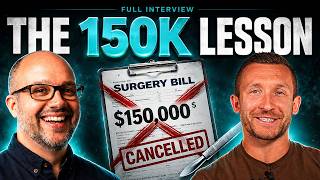
What were they going to charge you for that surgery? And she goes, oh, it was going to be $150 grand. And then I ask the best question I could have ever asked, and it changed my life forever. If I had charged you $50 grand for these 4 visits, would you have paid it? She goes, well, yeah, you still would have saved me $100 grand.
Hey everybody, I am happy to be sitting down with an old friend and a fantastic chiropractor, Dr. Grant Elliott of RehabFix. You might know Grant because he was one of the fastest growing chiropractors RehabRiders on Instagram, helping people all around the world with an incredible online program specifically for the low back. We're going to talk today about how he's helping doctors implement hybrid-based programs in their practice to tremendous amount of success. Grant, I appreciate you coming on and chatting today.
Stoked to be back.
Well, it is my pleasure. It's been a while since we sat down. So, um, tell— for the docs that maybe are new to hearing about who you are and what you do, talk a little bit about the, the basis of RehabFix, how you got started. And I'm going to trace it back even to when you were in school because you were getting went after it real early.
Yep. In 2018, when I was still a student, I was— I think I was a tri-six at Logan. I realized, hey, social media, this thing ain't going away. This is becoming very important. I need to start building a brand. And so I started posting once a week when I was in student clinic, and I started posting every day. Before I graduated, had 100,000 followers on Instagram. And I'm— and I'm going fast here. Yeah, yeah. Narrow the niche down to low back pain. Started just having online consultations with people all over the world. That turned into selling PDFs, which then turned into do-it-yourself programs, which then turned into one-on-one coaching. And then quickly we built the number one online low back program in the world. That grew quite quickly. So within 2 years of graduating, I had 15 staff within 2 years. Um, and now we're helping other docs with anything regards to this and installing, you know, online rehab programs in the brick and mortar, or going fully online, or just trying to grow their social media, whatever it might be, to accelerate the profession as a whole.
I love it. There's a lot of docs out there that are probably familiar with many of the videos that you put out over time that are really helpful. They're educational-driven, and they've helped people literally, as you've said, around the world. When docs think about an online program, especially for brick-and-mortar docs, sometimes that can feel really intimidating. They're like, I don't know that world at all. What are maybe some of the basics, or maybe the one or two greatest challenges that docs initially think they have when they're exploring an online-based program that maybe either aren't true, maybe it's a myth, or maybe people are coming to you saying, this is a big challenge in my practice currently?
Easily the biggest thing is their mindset shift around it. They perceive this as like something completely different than what I'm doing, something that's like a totally new world, and it's not. It's not at all. It is, it is purely something that they're already doing that they want to be better, or something they're not doing that they want to do. It's just better and more accessible rehab. Let's take someone who is doing rehab in their office. Typically they complain about not having as much time as that they would like to. Yeah, I want to provide more rehab, or I want to provide better rehab because I want better outcomes. Okay, great. Then all the normal one-on-one time that you would spend doing that rehab, let's take that, let's package it into an online program, and let's install into the practice that way. So now You don't have to do it. You can have more guidance. The patient can get more access, better instruction, be more compliant. Their results go up and your time goes down. Or maybe it's, maybe they're not familiar with rehab. Maybe they don't know how to do it. And that's an area that they don't feel proficient in. And so they're intimidated by it for that reason. Well, in those scenarios, we will build the rehab programs for them. We'll use our protocols that we've created over the years. And so that they don't even have to do it. Then we just show them how to add it into the office.
As what I consider to be literally the number one expert in online-based rehab in the world, and I think you've proven that time and time again, what do docs have to change? They might say, "Man, my practice, maybe my practice is going really well right now and it's something I'm thinking about, but I'm scared to change." Or maybe I see this as a massive opportunity, which it is, to grow and expand my practice. What do docs have to change in their practice if they bring in a hybrid-based program?
Honestly, really nothing. Like, really nothing. It's— you don't have to change anything about what you were doing. Whatever, however you like to assess, unless you want help with better assessments, of course, but whatever you like to do with the patient, that is not changing. All this is doing is it's lifting the burden off of the office or off of the doc, depending on the size of their office, of course, so that they don't have to constantly trade time for money. Like the only way they can deliver rehab is by them doing it, or the only way they could get paid is by them being in the office one-on-one. Well, majority of models for chiropractors and physical therapists alike up until this time has been constantly trading time for money. Well, if we can think a little bit more progressive here and see where the future of healthcare is taking us, there is no future in chiropractic that exists without forms of online virtual care. It doesn't exist. And it's beginning now. It began when I started this in 2019. And in 5, 10 years from now, if you're not doing this, you're going to be behind. It's just an addition. Hey, now you don't have to do it. You keep doing the thing you want. This is just an additional component to add guidance and to add value and to add results to your office.
How tech savvy does a doc need to be to start building an online or a hybrid-based program into their practice?
Yeah, not at all. It's— we have an interface, a software that we set up. It's, it's as easy as just type in the patient's info, first name, last name, email, phone number.
That's it.
And then it's a couple clicks of a button after that and you're done. And their program is set up because we set it all up for you.
I love that. When you think about revenue, so a lot of docs are probably getting super intrigued. I'm going to encourage everybody, if you are listening and watching, connect, DM Grant at RehabFix on Instagram, or we'll drop a link down below as well so you can connect with him and learn more. However, when a doc is thinking about putting in a program like this into their practice, they don't need to be tech savvy. But what can I expect in terms of revenue? I'm a businessman. Many of our docs listening and watching are saying, Okay, this sounds great, but how does this meaningfully impact my bottom line? With the clients you've worked with so far, what happens to revenue when they build a hybrid program into their practice?
So there's a couple components that need to come along with a hybrid program, and one of them is sales. What are you charging, and what is your sales process to build value? Well, the way I started, which is probably the same way a lot of other docs started or are still doing it, is cheap session-by-session visits, and that's what I did. I graduated, 2020 was my first year. I was doing $120 for initial exam, $60 for follow-up. Within 3 months, I went from charging that to charging $6,000 for 6 visits within 3 months of graduating. And the way that I did that was I was getting people outcomes extremely quickly, and I realized, hey, I canceled a $10,000 surgery and I made about $300. That seems like a pretty significant gap of value there. And so then I heard the package route, hey, you know, get 20 visits up front, 20, 10 visits up front, 20 visits up front. But because I was getting people better so quickly, it, it didn't make a lot of sense, like, either for me or for the patient. So then I realized, wait, if there was a way to take all the rehab coaching I wanted to provide them and basically provide more time, stretch it out over 3 months, and take the focus away from my one-on-one visits and put the focus on the outcome and the journey and going from pain-free to bulletproof, then I can charge for 3 months.
Yep.
Not just charge for a few visits or 10 visits. So what that did for me is it allowed me to charge for the 3 months, allowed me to charge for the result. The focus was taken away from my per visit. So then I started charging $2,000 for 3 months, $3,000 for 4— for 3 months, $4,000 for 3 months. And then I was doing $6,000 for 3 months, and I was only seeing the patient every other week, and their outcomes were amazing. So that's the direction, and you don't have to do 6 months— no, I'm sorry, 6 visits. No one has to do that, but that's the direction you can go easily. But that's because along the way, once I realized what my worth was, well, then I needed a sales process to yield that worth, to show what that worth was. And the sales process is not only effective and helpful for the doc, it's helpful for the patient, because if they don't value their health, if they don't buy into their health, then guess what? They stay in pain, and that's on you.
Yep.
So what we would do is, yes, we can provide a better core offer that involves online care so you're not trading time for money, but then we want to look at, well, how are you going to sell it? What's your conviction in your worth? Do you have nurture sequences to build intent? Do you have proper intake forms to build intent? Do you have follow-up sequences if they don't convert? These are additional things that need to be included so that, yes, we have a better offer, but now what are the additional systems and training that needs to be included to get a doc truly earning their worth.
This is a key topic and I want to dive deeper. I'm glad you brought this up. So there's a lot of docs out there that might be scared or apprehensive about charging more, right? And I know you've spent a lot of time, effort, and energy in marketing, in sales, building mindset, and I love that. And I'd love for you to share maybe some of, some of your best learnings today for docs that might be listening and saying, this sounds great, but man, I'm already getting a pity in my stomach hearing about, you know, a multi-thousand dollar package as opposed to going visit by visit. What are some, maybe some just key off-the-cuff comments, insights, thoughts that you'd give to them?
Yeah, so I'm gonna tell a brief story of literally what happened to me. What got me from charging $60 a follow-up to $6,000 to $10,000 upfront? What did that for me? Once again, within my first 3 months of practice, this is how that shift happened. There was this patient of mine, her name was Beth. This is all totally true. This is documented on my page. Her name is Beth, and she was very high up in healthcare administration. She managed like 3 hospitals, made great money. She had gone to all the physical therapy staff and neurosurgeons at each hospital. All of them said, yeah, this can't be resolved with conservative therapy. You need a surgery, and you need to do this special kind of fusion that like, you know, insurance doesn't cover. It's these like organic tissue parts and whatever, and you know, it's all unique stuff. So she finds me online through my Instagram, comes to me, and in 4 visits, she had classic lumbar radiculopathy. It was a piece of cake. Extension, sweet, some neurodynamic work, and her symptoms were centralized in 4 visits. And so on one of our visits, she goes, Grant, I just need to let you know, I had a surgery scheduled and I canceled it. She gave me that context about the background. I said, okay, and hey, I'm just curious, Beth, You know, what were they gonna charge you for that surgery? And she goes, oh, it was gonna be $150 grand.
That's a lot of cash.
And then I ask the best question I could have ever asked, and it changed my life forever. I said, okay, and after 4 visits, you canceled it? She goes, yes. I say, I'm just curious, Beth, if knowing what you know now, if I had charged you $50 grand for these 4 visits, would you have paid it? She goes, well, yeah, you still would have saved me $100 grand. And that was the moment that I realized, wait, you know, for years I've been in chiro school, I've been taking all these seminars, and I hear truly a lot of evidence-based rehab docs with kind of this poverty mentality of, hey, we get people better faster and we're broke and we're proud of it. And I realized at that moment, wait, if you're a top 1% doc, you shouldn't You shouldn't be paid bottom of the barrel. You should be paid like your top 1%. And so that's what immediately made me convicted in my worth. Hey, if I'm canceling $10,000 surgeries, I deserve at least half of that. Yeah, that's just fair value exchange. But not only that, if I'm canceling a $10,000 surgery and all this narrative, what I'm providing right now is going to help you build your conviction. If I'm canceling a $10,000 surgery, that's the only price we're looking at. Okay, $10 grand saved, I'll charge $5,000 easy. but you're saving someone the risk of surgery, the risk of being put under, the inevitable rehab and complications they're gonna need after anyway. So what's the value of avoiding the risk, avoiding going under, avoiding future complications, getting into the failed low back surgery syndrome cascade? What's the value of that? Far exceeds half of the actual cost of the surgery. So the point that I'm at in my career, and once again, I'm a fellow chiro still operating my chiro business, still helping people with back pain. I'm doing it with you guys. I'm just showing you how to do it better. I'm at the point where when we enroll a client into our program, you know, we charge $6,000 to $10,000 to help people with low back pain. I know that I am selling them a $50,000 program at a discounted rate of $6,000. That's how I see it every time. And if you have a good sales process and you're convicted in your worth, it's easy.
Yeah, that's really, really impactful. And I just want to touch on one key point and then dive deeper, which is for docs listening and watching, as you know you get great results in your practice, understanding the value of that and understanding the value of that against what else is on the market and the challenges. As you said, the challenges, the missed opportunities, the opportunity cost if somebody's going through an advanced intervention. And I think many of us as chiropractors take this for granted every every day. We're like, oh well, of course the patient got better because we do great work, because what we deliver with rehab and with chiropractic care works at such a high level. We can almost become blinded to the fact that most surgeons would say it's 33, 33, 33. 33% get better, 33% get worse, and 33% stay the same. And I'm always like, if we had that, we'd be mortified. We're like, we expect 90% of our patients to be doing well. And the question I think many docs haven't asked themselves is an important one, which is What's the true value of what you do? And that's a really, really important point that you brought up that I think every doc needs to really take a moment, sit with, rewind this conversation, and listen to Grant explain that again, because it is so impactful in your ability to speak with confidence and conviction based upon the experience and care that you bring to your patients each and every day. And 90% of you are probably dramatically undercharging and undervaluing yourself. So I really appreciate you sharing that.
Yeah, and to ask myself a question, if you're allowed. Alright, so I heard this awesome talk with Jeff and Grant, and I think I wanna charge more, but wait, am I gonna get less referrals? Am I gonna get less patients because I'm charging more? That's an immediate limiting belief and fear that people get. Opposite. Opposite happens. Absolutely. The most expensive steakhouses and premium restaurants in this Tampa area, They're the ones who are booked out 3 to 4 weeks. They get the most referrals. They charge the most. So when you have a value-driven system, you're allowed to charge your value. If you provide no value but you're charging like you do, yeah, you're probably not gonna get great business. But if you provide results that are literally better than surgery over and over and over and over again, and you now are able to show and package your value better, charging more is not going to affect referrals. It's not going to affect new patients. Doc we have worked with that we have 10x'd their pricing, their referrals have gone up.
Yep.
Every time.
Yep. Yeah, that's— you're 100% right. It's literally the opposite. It's you see more referrals, you see more new patients, you see— because people understand the value, they get the result, and they are excited. We always say, you know, you pay, you know, pay attention inside now is pain, right? So people are paying attention inside now. Then the real question becomes, are you pricing yourself at the value that you're delivering, and too many docs aren't. For docs that are thinking about this and saying, okay, is this new patients directly into an online program? Is this my existing patient base? In a hybrid-based program, how's that work?
Yeah, so here's the strategy there. We don't want to ruffle any feathers, and this is a concern for a lot of new docs that we bring on if they have like a patient base. So here's a really easy way to think about it, okay? Is this ideally a new sales process, a new core offer that's ideal for new patients who can go through the full process that we've set up for you? But what if there's someone who's still in the acute stage of care? What if they've only had a few visits with you? Or what if there's a maintenance wellness patient that is looking for more bulletproofing, more performance-based things? Well, those are really easy opportunities to say, hey, we don't need to sell you on a $3,000, $4,000, $5,000, $6,000 core offer. That's not necessary. But we do have a new, let's just say for the sake of context, 3-month online rehab program that focuses on this. This could rapidly accelerate the care we're already doing. You know, we have docs who jump on and they're slinging this for $1,000, $2,000 for any acute patient that's maybe 3 or 4 visits in. If there's someone who's more wellness and they're looking for strength goals, performance goals, well then we can create a strength and performance program. Yep. Hey, $1,000, here's a 3-month performance program that's going to get you in the gym, coaching in the gym, cheaper than a personal trainer. And then you can actually have personal training type fulfillment that can be automated after that to now build a subscription base. This fits into any component of the practice. And once again, you don't have to do the fulfillment. It's done for you.
Yeah, that's, that's massive. You mentioned acute care and strength, strength right there. What kind of— if I'm building in a hybrid program, what's the extent? Is this for symptomatic conditions only? I know you were focused very heavily on low back. And docs might be familiar with that. So give me the gamut. What types of programs can be built in and what have you seen be the most successful?
Yeah, this is primarily designed for neuromusculoskeletal disorders, although for docs that we help go 100% online, so they have no brick and mortar anymore, they can travel and treat. We have helped people create dizziness programs, vestibular programs, anxiety, nervous system management programs. There's other really nutrition programs. Anything that can be coached or education, you can create an online program around that.
Yep.
But as it pertains to treatment, neuromusculoskeletal disorders are typical. So for the sake of the conversation, neck, shoulder, knee, hip, low back, sure. For majority of people who are going to be new patients in an office, most of the time they're in pain. Most of the time they're coming to your office because they're in pain. So the structure of your program should be first portion is focused on pain reduction, getting them out of pain, and then the second portion should then lead into a more bulletproofing, strength and conditioning type program, as any appropriate rehab protocols and evidence-based patterns would, would flow.
Cool, love it. Um, for docs that are getting up and running, when they come on board, they're working with you and your team, uh, is it the coaching, training, ads, funnels? What's included and how's it work?
Yeah, so it could be all of those, it could be one of those. Okay. It, I mean, it depends on what the person needs, it depends on where they're at, as you would kind of set up a treatment plan as well. So like I mean, at this point, you know, I went from, let's just say, my journey did $424K my first year. Now we're doing over $400,000 a month. So there's various scales in the business to where you need to make certain hires or certain things a priority, and it changes over time. So based on where an office is at, we might meet with a doc and we might say, hey, right now the only thing you need is more new patients and to sell your worth.
Yeah.
So in that scenario, we're teaching them our sales process. We're giving them one-on-one sales training. We're helping them create a high-ticket offer, and then we're creating ads and running ads for them.
Love it.
If someone is like, hey, I have a bunch of new patients already, I don't have an issue there, but I'm doing, you know, 24 visits for $2,000 or 36 visits for $2,000, and they're doing all the fulfillment, that's their bottleneck. So in that scenario, we would go more towards team building and scaling. So helping them hire a doc, get that fulfillment in, get themselves out of that position more from a clinician to a CEO. Type concept, and then tell them the framework for, hey, here's how you go from $20K a month to $100K a month by outsourcing these components and building your team. So now you can run the business. So it just depends on where they're at. But just based on what I've done in my journey, I mean, yeah, marketing ads, sales, getting email copywriters, editors, sales training the rest of your staff, sales training your front desk staff. So when the phone rings, and they get asked, do you accept my insurance? They're not just saying nope, okay, bye. You need to have a script. You need to know what to say in those scenarios to get your potential patient from a, you know, window shopping, money-based mindset to a value-based mindset, to get them in, to show your worth. And now you're getting patients that you otherwise would have lost.
Yeah, I'm super impressed at how the HybridBrace program really includes everything a doc is going to need based upon where they're at, as you said. So different docs might be at different points in their in their own journeys and you being able to provide the tools and resources necessary for everything they need to implement, I think is just so massively impactful because it helps docs then get the results that they want, which is to help more people and make more money. When we talk about implementation, I know this can vary, but is a doc coaching and training 6 months before they get started, a year before they get started? What's the typical implementation time from when a doc gets started to when they can start utilizing the hybrid-based program? With patients in their community.
Yeah, um, here's a funny question. We talk to a lot of our clients who've been in other courses and stuff like that in the past, and they're almost always in year-long courses. And that always baffles us because I look at it from the same vantage point of when I was starting my practice, my— when I was brick and mortar at that time. And I would hear that patients had been working with other chiros and PTs for 6 months, 12 months, still in the same position. And I'm like, Yo, I'm getting you better in 3 to 4 visits. Why is it taking other people so long?
Right.
I have the same viewpoint with the question you just asked me. I mean, our average client that's in a, in a good position that comes to us, we're doubling revenue usually within 60 days for a lot of our docs. It should not be a long process if you've actually done it. That's one of the biggest things is I'm a fellow chiropractor who actually did it. Majority of the coaching services out there are Not that scenario. Um, so usually with a brick-and-mortar doc, we work with them 2 months. That's usually it. If someone wants to go 100% online— hey Grant, I have this expertise, I want to package it online, I want to build to sell it to the world— it usually takes us 3 months to build them a 6-figure online business that they can run from there. It should not take long if you know what to do.
That is awesome. Well, what haven't I asked you that, you know, docs need to know?
Oh my gosh, how should I structure my ad? How do I convert views to new patients? How do I get my website to convert more new patients? What's the best sales process to charge my worth? I mean, these are all the topics that I get giddy about teaching our clients to help them make more and help them get more new patients. But what do you think would be most valuable to them?
I think the most valuable thing is letting docs know how they can connect with you and your team to be able to learn more and to be able to go deeper, to be able to ask those questions, and to be able to understand how they can take the action steps necessary for them to get the results that they want. We have a lot of docs listening and watching that really pride themselves on the research, that pride themselves just as you have on being a great clinician, but are not reaching the impact levels in terms of the number of people or the revenue based upon sometimes limiting beliefs and sometimes just not having the tools, systems necessary. I think a lot of your program solves an overwhelming majority of that for most of the docs out there. So how could, how should they connect with you to learn more?
Here's what I think would be the most impactful. Obviously there's multiple areas of this, but let's make it simple for anyone watching or listening to this. If you go to my Instagram and you just DM me, and my page is called RehabFix, hopefully you've heard of me or seen me by now, but if not, you're about to start seeing it because of the algorithm. If you just DM me the word 7 Figure Formula, our system will shoot over to you a training where I document how I went from 0 to 3 million followers, over 3 million followers organically on social media, 'cause a lot of docs wanna know, okay, I need to get into social media, how should I post, what should I post, how do I do this? So I'll show you how I grew so quickly, I'll show you how I convert views into actual new patients in the office, so I'll show you the step-by-step sales process that we take them through to get views to new patients, and then ultimately how we structure an offer and how we can close at our worth. Just DM me the word 7 Figure Formula, and, uh, we'll send it over.
I love it. Uh, if you are listening and watching, I'm going to encourage you, please click on down below, connect with Grant at his Instagram, Rehab Fix. We will drop that down below. Connect with him and his team, learn about how you can help more people, make more money, and have a more abundant life. I love what you're doing, Grant. I really appreciate you coming on and chatting today.
Thank you so much for having me. Good stuff.
My pleasure. Thanks so much for checking out that interview. If you liked it, we have plenty more available. You can check out the next interview right here.










