How Your Chiropractic Website Can Drive Telehealth Visits
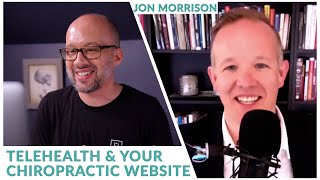
A recorded conversation (Jeff Langmaid with John Morrison) about how chiropractic practices should use their websites to announce and support telehealth/virtual visits. Key advice: make telehealth prominent (above the fold) with a dedicated landing page, explain benefits and workflows (FAQs, insurance, what to expect), add clear CTAs and booking integration (e.g., Jane), and emphasize simple, benefits-focused messaging and editable sites for quick pivots.
Chapters
If we had sat back, Jeff, like, we probably should have seen this coming. Not the COVID thing, but the focusing on telehealth. Because this really is going to stay. Right. Anybody with some forethought should have said, you know, it is beneficial.
Hey, everybody. Dr. Jeff Langmid here with the Evidence Based Chiropractor. And I am happy to be joined by John Morrison at Get Clear Sites. We're going to talk about telehealth and your websites. You've probably seen me come on each and every day over this past week talking about the importance of telehealth in your practice. Announcing it, getting it out there and ultimately getting appointments booked in your website is a critical component of that. I wanted to talk best practices and go right to the source. John, thanks for coming on and chatting, man.
Jeff, I love hanging out with you, man. It's so fun in these uncertain circumstances. It's kind of weird, but happy to connect and add value to your people as much as I can here.
Right on. I appreciate it. And let's pick it up right there. Like, how does a website play a critical role in telehealth? How should docs be thinking about that?
Right. Well, I mean, from a bigger perspective, I think a website always plays a role in how you communicate what you do. The website is the front door of your practice. Some people say, well, I could have a good social media page and you can, but it's not enough to just communicate with social media because we know Google's algorithm is throttling organic posts. Right. So not everything you say is going to be seen. And you think, well, I could email people about what we're doing and who we are. It's like, well, how do you get their email address without giving them something in return? Maybe they become a patient. But what if they're not a patient yet? Right. So email is effective for communicating with people, but not the most effective physical visits.
Right.
You think, well, if people just came to my clinic or my practice, they'd see that we'd make a great first impression. Yes, but how are they going to get there? Where are they going to get the address from? And if they're millennials, then they're probably going to check out your website first before they ever show up. So the website always has played a role. But in these times when we're talking about telehealth, that's going to be where people need to find you and learn about telehealth. Because this is a new thing. Right? So you're going to have to do a little bit of explaining with the words on the site. So, I mean, I've been preaching this for a while. It's always been an important thing for your practice to have a great looking website that has a clear message, that ranks well on Google and you can make easy edits. I mean, it's been my thing for a few years, but now with telehealth, it's like, man, this is just ramped right up. And so let's just talk all about it, how we can help some people today who are pivoting really quickly now. So, yeah, whatever you want to say we can talk about.
No doubt about it. Let's dive into some of those specifics because I think you touched on a few things that are really interesting, how you're positioning yourself. The fact that the website is going to be that front door for so many people. And ultimately it is what gets a lot of people into your infrastructure, right, that gets people exposed to your social channels, onto your email list, et cetera. So maybe if you broke down two or three things docs should look at with their website right now in regards to telehealth, what are some things that docs can and should be looking at in terms of whether it's website phrasing or architecture or buttons? What are some things that docs can bring up their website and say, I'm either doing this well or I am missing the boat?
Yeah, great question. So first thing that I would say is make it obvious right off the bat that you're offering telehealth, so put it probably above the fold. I wouldn't usually say that, but that's kind of the only thing that most people are offering right now. And I know there's a debate about whether you should stay open or not. That's between you and your government and how you sleep at night. But offering telehealth, it's got to be something you have very prominent. So right off the bat, header, big button, we do virtual visits. Learn more now. Right, so I would have a landing page. And I know this is kind of sensitive to people that maybe can't pivot this quickly, but I'm just kind of, if you're using a Squarespace or a WIX or our platform, it's easy to build landing pages. At least it should be easy to build landing pages. And that's where you can explain telehealth, because people aren't necessarily going to know what it's all about. Some people are calling it virtual visits, some people call it telehealth, whatever it's called, there's going to be a few issues that are going to come up with people. It's like, well, how do chiropractors do telehealth?
Right.
I thought chiropractic care was all about just getting adjustments or whatever. But you're going to have to address that. So how does the chiropractor address it? What can they expect? Maybe even about the benefits of it. So there's a few really cool benefits about telehealth, right. It's safe right now. So you're not putting you and your family at risk of getting COVID 19. It's convenient. You don't have to drive and you don't have to sit in a waiting room. You can get the times that you want, probably because there's a lot of people just sitting around, right. So the flexibility is probably there. It's covered with insurance. So that's all simple and stuff. So there's a few things there that are actually beneficial about telehealth. In fact, if we had sat back, Jeff, we probably should have seen this coming. Not the COVID thing, but the focusing on telehealth. Because this really is gonna stay, right? Like anybody with some forethought should have said, you know, it is beneficial and the doctors have to wear pants, right? You could just sitting down and look professional on top, but you know, completely in your pajamas or something, whatever or worse, whatever that's between you and your family's situation. But anyways, there's a lot of benefits to this. Now the one thing that I would probably say is if you can and you gotta do it quickly, try to include like frequently asked questions, right? Because I think people will have some questions like the insurance thing and how does it work out, how long should I expect and what's going to do? But I mean, I think the evidence based community is the best position for this.
Right?
Because they've been saying that chiropractic isn't just adjustments for a long time now. So they've been training their patients to not just think about coming in and getting snapped around. Right. So I think if you actually need to see physically there, you're going to have some issues. But if you can do some rehab or some diagnostic work or some stretching and stuff, like if that's been all part of what you do, you are so well positioned right now to take advantage of telehealth and be a front runner in it and let it become part of your practice long term.
Yeah, you're undeniably right, because that's something I've been talking a lot about from a lot of docs asking, hey, if I can't deliver an adjustment, like I obviously can't do that via video, what do I do? We look at it through the lens of two big opportunities. One is that at home care exercise recommendations. That's why within the Smart chiropractor, we just brought in web exercises. So now all smart chiropractor members actually have a web exercises account. They can utilize it and go. Second aspect is through ergonomic assessments and really because tens of millions of people are working at home and like weird situations and they weren't prepared for it. So ergonomics are a huge piece of that. But there's something you said that I really wanted to drill into a little bit more. And I know something where you guys take pride in and quite frankly do a fantastic job, which is flexibility in the website. There are so many docs out there, as you sort of alluded to. But I'll just say, quite frankly, you know, that have been left, you know, kind of high and dry, meaning, you know, they have to like email somebody and then it takes 24 hours. You know, it's like impossible to get anything to change. And that's a big challenge right now because of, as you said, you know, time is of the essence and the ability to get even if it's just simple things up and off onto or off of your website can be critically important. I guess from the platform on get clear sites, what have you seen in terms of clients being able to change things quickly? Talk a little bit about the importance of that flexibility as you see it.
Yeah, that's great question, Jeff. So as a business owner myself, I had to do a quick pivot too, right? Because the problems that our ideal clients or our people that we serve are facing have changed. And so you have to be able to change if you want to make that connection. Now here's the thing that breaks my heart. And Jeff, we were talking before this. I was like, I don't want to start crying on the call, but it almost makes me sad that there's going to be a lot of people that are stuck because they can't do it, right? Maybe their web provider is out of business, right? He's sitting on a beach in Costa Rica saying, I'm out of here, I can't do this anymore. Or he sits in the corner of his office in the fetal position, not taking emails because everybody's panicking right now. So if you don't have control. This is a really tough time. But if you do, there's a couple of things that you need to think about. One, that idea that the problems that you're addressing are different now than they were beforehand. Right. So ergonomics, Jeff, you nailed it. Like that's gonna be a huge one, right? Somebody sitting on their couch with their laptop and they're just working. That's gonna be really tough on their neck. Well, they can jump on a call with you and you could give them some ergonomics tips. You can give them some stretches even doing it with them. And then if you do have the client portal somehow like connected with you or physiotech, I know other companies are doing that, you could send them. Here's some exercises, here's some stretching. What a great time to have that as part of your offering to your clients. Yeah. And then I would just say like that landing page would be so important to just kind of address like this is something that's going to be here to stay. So you're going to do the work and then you're going to get to keep it. So it's not like telehealth is going anywhere. So you're going to get to have that. One final thing just that I had to remember is we had a whole bunch of great copy on our website before. So there's software. If you use Google Chrome, you get a Google Chrome extension. It just takes a snapshot of your entire homepage. So if you're going to change everything around, remember what you had because it probably was decent. So remember it so that when this whole thing passes, however long it takes, you can just go back and readjust your homepage, but keep that landing page because I think telehealth is a great option for long term treatment.
Yeah, well, we hope it was decent, but you and I have looked at a lot of websites that hasn't been decent. But that might be a conversation for a different day.
That's how I started, was really just saying, like, you know, chiropractors, we can have confusing words. I say we like, I'm an adopted brother, right. Maybe a stepbrother or something. We tend to overcomplicate our language. So taking it down to really simple language, especially when it comes to navigating people through something they might not be familiar with, like how do you do virtual office visits?
Yeah, and let's talk a little bit about that because I know that you have such expertise, sort of in that story branding world, I guess just conceptually just maybe some pointers here. Where do you see as far as this telehealth change? And you discussed it a little bit, but let's dive in a little bit. Where does storybranding come in with that? How can docs conceptualize or even begin to think about that? Because ultimately, this is still helping your patients get where they are today, ultimately to that transformation of where they hope to get to. But the narrative has slightly altered. So what are some of your thoughts regarding that as we sit here today?
Right. Well, I think optimal health, wellness, living their life free from pain, getting to do what they want is still a big theme of what you want to help people do. But the obstacles are a little bit different now. So that's what we talk about. It's like, okay, who's your ideal patient? Who are you going after? What are they seeking in life? And I mentioned that, like, great health and, you know, being able to do the things that they love on either weekends or, you know, high performance athletes, whatever it is that you do, making sure that, you know that this is where they're going after. But there's something causing a barricade or an obstacle or something that's causing them frustration, and that's what they're looking for. Right? Their focus is, how do I get free from this pain? Because when you have a backache or a neck ache or a headache or a concussion or whatever it is, that's all you can really think about. It's stopping you from living the life you wanted to. So when somebody on their website or their social media or their email flags that say, hey, is this one of your struggles? Or are you frustrated? Are you stressed out? Are you feeling left out? Because, you know, all your friends are posting on Instagram after their big bike ride and you're sitting there at home on the couch because you couldn't ride that day, that kind of stuff is like, that's me, you know, I totally get it. So you talk about the problem and then you start to introduce a solution. Here's what we can do. Boom, boom, boom. You have three benefits. And that's why I talked about, you know, what are the benefits of telehealth that people are going to get on board if they see there's something in it for them. It's not just like, hey, this is good for me, the chiropractor, because you're going to pay my bills. That's not the approach to take. It's like, why is this going to be good for you? Help you. So anyone in marketing sales, we know that talk about the benefits, not the features. So that's the next thing. And how do you position yourself as a guide? So I saw a Dallas chiropractor, Jeff Williams, he just did a video, and he was talking about how he has a certification that actually helps him with certain diagnostic. He's got some certification in the state of Dallas, or the country of Dallas, the nation of Dallas, whatever they call it these days. So his certification actually sets him up differently from other chiropractors say, and that's why they should choose him. So that was just a way of saying, I'm going to be a guide to help you get out of this. Here's why I'm positioned. So maybe you don't have that certification. Maybe you have like a rehab program or a gym. Right. You've always been ready for this. Like, what have you done that's prepared you to be an expert in telehealth? Now's the time to bring that to the forefront and say to people, actually, we've been waiting for this. And they'll say, okay, this is very natural. This is going to be the. This is going to be a natural guide to help me get where I want to achieve what I need. And then. Yeah, and then maybe even some testimonials would be great. I know you probably don't have a ton of testimonials, but I would put that on your page about telehealth because people need to know, like, oh, there's other people that do this. This isn't totally weird. It's building social proof, right? So that's social proof. What it's going to do is just make people comfortable with the fact that, you know, this is a normal thing. This is a normal kind of expert that I'm seeing. It's not just like, you may be shaking and not wearing any pants, but on the exterior you're like, no, I totally do. I'm going to help you. We'll get you out of this, the problem, and we'll get you feeling great again so you can be quarantined with your kids, the house, for weeks on end. You can tell it's getting to me too, Jeff. Anyways, and then just maybe just give an opportunity. Like, hey, don't miss this opportunity. Get ahead of the curve, or make them feel like they're something special by embracing this new technology, being an early adopter of it. There's, you know, there's something in it for them as well. And then. And then just include that call to action all throughout, which is, you know, schedule a visit today. Actually, one of the things that I think, I mean, I'll just keep talking, whatever, go for it. We got nowhere to be, do we? Jeff? One of the things that I think a lot of the booking software people are doing is they're taking advantage of this in a good way, they're providing resources. So I'm in close contact with the people from Jane and they just released a telehealth feature on their platform. So I'm sure other companies, you know, Acuity, genbooks, they're probably all scrambling right now. I just know Jane has it available and I think that's going to be an important seamless way. You could do it through your contact page. It's like, hey, send us a little. We'll get you in on the telehealth thing. If your booking software allows it, then it's even more seamless, right? So they just click the button, telehealth appointment, and then they can pay and then it sets all up for you. So that's just a way to make it simple.
I love it. That's such great information. And yeah, I agree. I think that Jane's really taken the chiropractic world by storm over the last year and they continue to stay up to date and release features, which is absolutely critical and awesome for all of us in this time. John, I really appreciate you taking the time outlining how docs can prepare or how they can go about today getting their website in a way that helps facilitate telehealth in their practice. Where can docs learn more about you, your websites, and maybe if you can be able to help them?
Yeah, this is a sensitive season for everybody, Jeff. So I'm. I'm very hesitant to just try to sell anything, but I love doing stuff like this just to pop on and help people. But if they are interested, because I mean, like, literally we had a gal from, oh my goodness, California somewhere and she just was paying like way too much for her website hosting. Right? This is like 90 bucks a month or something just for her website. And we were actually able to get her a new site that she could include this telehealth and a quick new clear message, updated design and she's paying half of what she was before. So we're actually able to save her money. So in that sense, I have no regrets of saying, like, hey, we're offering a great promotion right now. If you just need a simple website up done quickly, we actually had it for her within a day. So get Clearsites.com is the place to go for that. We're trying to be generous. So actually I had this book here, the chiropractic website Essentials that I did. I had a plan for a launch but now I'm just giving it away. So it's available on our website on Get Clear sites. I put on the homepage knowing that some people might just want to quickly find it. So yeah, it just goes over the four things that I say. These are essential part of a website. Great design, clear message, some Google tips, how to be Google friendly, not Google obsessed. If you get Google obsessed you stop getting invited to parties, right? You go a little crazy, right? I want you to just be Google friendly and then just a few things about how to edit your website, how to find a platform that works for you. So yeah, those are the things that they can do to find us free resources. But also if you need a new website, I've got my team working in hyper mode. They're almost like volunteers now because I'm not paying them all that much right now. But they're fine with it because we understand this these are lean times. So we've just reduced our prices to get more people websites that they love. So I hope that helps Jeff and yeah, and if people do want to reach out to me, I'm available on Facebook and even through our website I'm sure they could find me there.
That is perfect John. I really appreciate it. We'll drop some of those links below. If you're watching this and you want to learn more about what John is up to and what the entire Get Clear team is up to regarding websites. And definitely I'd encourage you pick up that free resource that he outlined. I've got a chance to look behind the scenes at how they build their websites. It's awesome. That's going to be a conversation for another day. But regarding telehealth and websites, if you missed any of this, listen back to it. John really laid some great tips and strategies to get out there. John, I hope you have a great day and good to connect with you man.
Hey, it was a pleasure my friend. It's always fun to about talk chat with you Jeff.
Hey, what's going on? If you loved that video, be sure to subscribe to this channel. The evidence based chiropractor puts out videos all the time at the intersection of marketing and research showing you how to grow your practice while also growing your knowledge base. So if you liked it, be sure to comment down below or hit subscribe and I'll see you in the next video.










