Inside the Life of a Chiropractor for Elite Athletes | Dr. Chad Teague's Journey
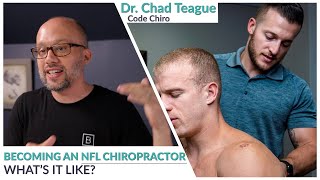
Interview (April 21, 2020 upload) with Dr. Chad Teague about his work treating high-level athletes (CrossFit, UFC, NFL). Teague describes how word-of-mouth referrals built his roster, his patient-centered approach (longer sessions, biomechanics-focused treatment, triage of acute pain then movement correction), typical modalities used (dry needling, active release, Class 4 laser, flexion-distraction), and the delicate process of sharing content on social media (ask permission, avoid posting injury specifics). He explains Code Chiro's all-cash model, clinic layout (treatment rooms + movement gym), plans to expand rehab gym space, staffing (Dr. Mary, Dr. Ryan, a nutritionist at Code Fuel), and tradeoffs of working with pro athletes (great relationships vs. time/schedule demands).
Chapters
A lot of their contract negotiations are dependent on their health. So if someone has a lagging injury and they want to get like a title fight, for example, you know, we can't discuss those issues. You have to be careful because sometimes these NFL players don't want anyone to know that they're injured or they might have to have surgery, they might have to do this, they might have to do that, because it's a very, very touchy subject.
All right, and as promised, I am here with Dr. Chad Teague. Chad, thanks for taking the time today, man.
No problem. Thank you for having me.
My pleasure. And I've been scouting out and seeing what you've been doing on social media for a while now. And the one thing that sticks out to me is you definitely work with some very high end athletes and specifically in the NFL. So let's start right there. How do you begin working with high level athletes and specifically the NFL guys that you work with?
It's been a process. It's really kind of based off of how we've started our practice, and that's through just word of mouth. I started with working with some high level crossfit athletes. I was kind of like my. My bread and butter and still is, really. I work with a ton of those. And then from there I got connected. To who? From one of our. One of our employees here connected us into UFC fighter locally. So I started working with her pretty closely for a while, and then she just recently moved out to Vegas. So I still work satellite with her, but a little more difficult now that she's out there, which was perfect timing because as soon as she moved, I actually had a patient refer. I think it was a patient referred a Browns player to me. He reached out for dry needling, and then when he showed up, he's asked for treatment. And then as soon as we started, you know, getting to it, they immediately started telling other players and then it just kind of went from there. It's really as simplistic as that. My end goal was always to work with NFL athletes, so I try to kind of place myself in the right situations and as much as possible. But that just, that's kind of the chain of events that occurred. I went from like CrossFit to UFC now with the NFL.
So sweet. So what's. I think you're making it sound a lot more simple because it sounds like there's an element there that's probably you doing really great work for these people that you left out. But. But with that notwithstanding, what's your approach to building those types of relationships, I guess. Is it. Are you like super focused on explaining treatment? Are you all about just building trust and rapport with a little bit more personal mixed in? Sort of. What's your approach to how you look at that from a business? From a business and practice owner perspective?
Yeah, I mean, I kind of approach it the same way as I do with my regular patients. And that's just kind of really building a good relationship with them up front. We have, with our treatment style at our office, we have 30 minute blocks. So like 30 minutes or an hour depending. Typically those guys are more of like an hour session. So we have a lot of time to kind of build a relationship and kind of learn a lot about them and them learn a lot about us. And that's kind of been the route on how we do our treatment plan. So it did start obviously with the rapport. Really, I get a good gauge on how the patient is. Sometimes they might not want to learn as much. So I just kind of talk about lifestyle and what they're doing. But I think naturally I do a lot of talking and explaining and people really enjoy that. I try to put everything in layman's terms and make them understand why I'm doing what I'm doing. Really breaking down the biomechanics. Because in my opinion, I think most injuries and a lot of the things I treat here, obviously, besides contact injuries, but most of the time these overuse injuries are occurring because of biomechanics. So I really try to take a step back. Let's see how you're moving. Let's improve upon that. Obviously I'm going to treat the issue and the pain now, but I want to improve how you move so these issues don't come back up again. And then really understanding and seeing that, I think that that really hooks their. Their trust with me.
I love that. And you know, I think in terms of where biomechanics meets performance, I mean, I immediately think to what we opened the conversation with, which is your Instagram account specifically because you're super active on there. I know I've learned just from watching, you know, kind of like, what's he up to over there with these guys? So I think it's awesome. And I guess talk about maybe, you know, shout out your. Your Instagram handle for sure, but also tell a little bit of the docs out there. You know, how does it play out with these athletes? How does it. How can you make them feel comfortable where you're going to actually be able to post Something. Where's that line? What's been your experience? Because you are one of the most active guys that I see, highlighting the athletes that you work with as well, which I imagine is a delicate space.
It's very delicate. I tiptoe around it. I really, I kind of initiate by. I guess it's situational. Every. Every person is different. So I think I have to build that friendship first, which I've developed with some of the guys I've worked with. I have more of a friendship and that, that trust level with them. So they want to push out their content. So it actually helps because a lot of them have people like photographers follow them. So that's why I've got some of those pictures and I just push it. So I've been very fortunate on that. I'm not. My number one suggestion is don't ask for a picture the first time you work with them, because that. It usually kind of gives them a little, you know, weirdness at first. So try to build that relationship first, get that trust and then try to maybe, you know, create that, like, that picture or. And then. And then ease your way into it. I actually, a lot of times I'll be like, hey, I want to show you how you're moving. So I'll film them moving and then show them. And then they see that. And then I show them, you know, maybe we're doing a corrective exercise. And I'll set it up and be like, see how your, you know, your, your biomechanics are better here. Your, you know, your, your hips need to be back a little more and use that as an educational tool. And then be like, hey, can I post this later? Or, like, can't use this as information on my social media. Usually they're, you know, depending on the level of what they are, they'll either be like, yes, because they want to push it onto their story, so it shows that they're working hard. And then some people are very private, though, so you just have to kind of feel out every situation.
Yeah, that's. That's cool. And I guess with that, I'm going to ask a super. In depth. That's very tactical, so I appreciate you sharing that. And the second component where my mind goes, I know so many of these athletes are dealing with contract negotiations. Are they injured or not? Do you find that any of them really want to stay? How do you find that? Do you. Have you ever had an agent call you, for instance, and say, oh, dude, like, you know, kind of cool out or that's awesome. You're hyping my guy up. What's. What's been your experience?
So there has been multiple situations recently, you know, also in the ufc, but also mainly because a lot of their contract negotiations are dependent on their health. So if someone has a lagging injury and they want to get like a title fight, for example, you know, we can't discuss those issues. One, I had an athlete that had a back injury and she was up for a title fight, which she might not ever have gotten again if she passed up on an opportunity like that. So we kind of had to finagle some things there and just try to get people as big as band Aid on as possible just to get them prepared for that moment. And then, yes, no, it definitely happens. You have to be careful if it's a true injury. Most of the stuff I post is more.
So.
For example, with the, the Browns guys, I do a lot of core stabilization and proprioception and a lot of core stuff. I can't do a ton of strength and conditioning with them. They have their, their guys for that with the Browns and, you know, I just kind of take back because they're pounding their body so hard and just try to slow them down and get them moving better, and that's my number one goal. So I don't throw a lot of info out on like, hey, we're working on his knee, specifically because he has a knee injury. You know, just kind of navigate your way without, you know, throwing out injuries. And always ask permission. Always ask permission and find out that information. And I guess, like I said before, situationally, to every person, it's kind of that situation as well. You know, try to get content that's not really showing injuries. And that would be my best advice. But yes, you have to be careful because sometimes these NFL players don't want anyone to know that they're injured or they might have to have surgery. They might have to do this, might have to do that. Because it's a very, very touchy subject.
Yeah, I mean, it's their. It's their livelihood.
Right.
It's their entire career wrapped up many times.
Contract sponsorships, no doubt.
And as you talk about that, let's. Let's dive in a little bit more. What you said for a lot of those high level. The Browns guys, for instance, a lot of them might be more one hour sessions as opposed to 30 minutes. I know it's going to vary so heavily depending upon the person and the player, but what's a typical visit look like? I mean, is it you know, are you seeing these guys? You know, where are you seeing them? And then what, you know, kind of what's your thought process as you work through a normal visit, if you could call it that, with a super high end athlete.
A lot of these guys obviously are banged up. They have a lot of injuries. So most of them come to my office, which is awesome because I'm like 30 to 45 minutes away from their facility and like where a lot of them live. So most of them come here, which is very, it's, it's good for me because it's hard for me to travel a lot and go from place to place. But one to two guys, I'll, I'll go to them pretty often. Really like two guys. And that's, you know, just, just because again, there's levels to things and everything goes to them. So it's just, it's easier for me to go to them. So with that being said, you know, back to how I approach every. Everyone, obviously similar to every patient. In a perfect world, I would love to have an hour with everyone, but just sometimes like we just do the 30 minute breaks and then, you know, schedule out accordingly. But I kind of do like a triage, find out what their main injuries are and then we attack from there. Because these guys have injuries from five seasons ago, from one season ago, from college. So, you know, let's, let's focus on the one thing that's really bothering you. Treat that if it's pain, if it's dysfunction, and then take a step back again after we're done with that treatment and then focus on biomechanics. Because if I fix one issue of pain and then work on their biomechanics, a lot of their other issues might resolve just from that. So. And again in that hour, I have a lot of time, so I'll do a lot of soft tissue things. So dry needling or active release technique. We have a Class 4 deep tissue laser. We use a lot flex and distraction. I love a lot of those guys. Really like that decompressive effect on their back because they're huge humans. Yep. That's been kind of my magic recipe on finding some balance of all of those in one and triaging and really focusing like we have this much time. This is problem number one. We're going to hammer this, figure this out and then, you know, my goal with a lot of them or not, Michael, really, they like body work. So I'll try to get them on a consistent basis. Consistent basis. So if it's an overuse injury, we just kind of mitigate and lower that inflammation as much as possible because there, there's really nothing if you get an injury in season, there's not a whole lot you can do to. You can't rest so, you know, unless it's a big injury. But, you know, tendinitis at different tendinopathies and the Achilles and the elbows and the shoulders, impingements, sprain strains just across the board. Just try to, you know, again, mitigate as much pain as possible and just get them out of that, that process opposed to pulling them away from doing what they're doing.
That makes sense. That makes sense. And I guess in line with that, how much communication do you have with like the team docs, the trainers, the strengths and conditioning guys? I mean, obviously there's sort of, you know, probably in some ways a hard line, in some ways a gray area between what happens within the facility, what they're choosing to do outside of those four walls. I imagine sometimes they want everybody to be on the same page and sometimes probably they're seeing you because they like what you do as opposed to maybe what they're getting, you know, day in and day out in the facility. How have you navigated that and is there a constant communication or is it player dependent?
It's player dependent. I'd like to have more communication and I'm starting to kind of get there. It's very closed doors. Ish. In most facilities and they want everyone in there. And I mean, I don't blame them. You know, they're. I would want the same if I was in the facility. I wouldn't want guys going to random places, getting dry, needling here, doing this there. But I try to tell them to. This is a note. This is a huge thing because there's a lot of egos involved in, in this realm, in this, in this world. So always make it known that you are there to assist and you're not trying to take anything away from what they're doing at the facility. I'm there to assist what they are doing at the facility because if it gets out that you're, you know, talking like, hey, I'm doing this and I'm pulling, or I'm. I'm clearing them for this or I'm doing that and it gets back to the facility, they're immediately you're going to be, you're never going to work your way in. So trying to be as open as possible with them if you're in, if you're in communication with them. They're like, hey, I am just here to assist what you guys are doing. If you have any questions, let me know. It is, it's definitely player dependent though because, well, for example, OTAs, like there's. They have a ton of players come in. They have the same, not a ton of staff to kind of look at everyone. They do, they have enough people to look at, look at people. But like I said, a lot of those guys like extra body work. So whether it's massage or chiropractic care or whatever it may be, you know, they want a little bit extra and so they find people. You know, this is, it's not just here, it's across the nation, wherever, at different sports teams, different, different sports in general. It just happens. So they find a lot of higher level people like to find their guy. So fortunately I've been kind of put into that, you know, mix a little bit and you know, but I still want to have a really, really good relationship with the people in the facility. Trainer is like the hierarchy in, in a, in a NFL locker room or most sports teams that's like the top of the line. They, the, they're with the patients or the players every day. So surgeons, pts. Cairos, they report to the athletic trainer and that's. I don't know if people knew that, but that's pretty much how it works with the systems.
Yeah, that's very good to know. What's, I guess what is the best and worst aspects of working with pro athletes?
Best, definitely. I'm meeting a lot of cool people and building really cool relationships. And it's what I've always wanted to do, like since, since before I even went into chiropractic school. It's been my number one goal is to get to that. And that's what makes me, you know, I'm fortunate with our office. We have super active people. I want to work at the professional level, but I still really love working with people in my office as well because I'd say 95% of my patient population is all active people. So everyone wants to get better. So that's amazing in itself. So I really enjoy going to work and really enjoy that aspect of things. But the professional side is definitely where I kind of want to have that extra space within my office, if that makes sense. Yeah. And then the worst part, time, like their schedules are crazy. So it's made my schedule crazy. So I mean it's expected I'll work seven days a week, which I'm fine with. Kind of like an on call Type thing, which I would like to get a little more consistency with. You know, being always available is great.
To them, but it, yeah, it is great for them. Yeah.
But, you know, that's what it takes if you want to get to that point and be able to work with that level. Sometimes you just have to sacrifice your time and travel, work super late hours, super late hours, random times. So living close to my office is very beneficial because I can just swing over in the middle of the night. But yeah, I would say that's the best and worst parts about it.
That's cool. And let's, let's talk about the practice a little bit. So what's a typical day look like at Code Chiro?
Typical day. So we have a nutritionist here. We work with a company called hsn and she has her own office and she does her own clients that are either our patients or people outside. She has a decent following that she brings a lot of people in. So that's called Code Fuel. And then at Code Cairo, obviously with them all under the same roof, we have myself, my wife, Dr. Mary, and then Dr. Ryan. We brought him on about a year and a couple months ago. So he's up to speed. Running. It's been, been a blessing to our practice. Really helps us because again with travel, CrossFit games, UFC fights, NFL games, stuff like that, it's been very helpful to have him here because when we're not here, the office would just shut down before. So it's nice to be able to, you know, not feel like we're leaving or abandoning our patients. So day to day, we, you know, come in, we have a nice little waiting area where we start people on heat. It's been, it's like our buffer system. We have hydroculators, which people love. So we start them on there for, you know, five to 10 minutes and then we just get pumping and it's 30 minute increments where we do again the soft tissue, the treatment, the adjustments, wherever we deem necessary. And then we take them to the back and we do movement mechanics. So we have a little gym in the back with the squat rack. We have a couple vibe plates, some gym flooring, rower, bike. And you know, if someone has pain in a front rack position when lifting, we put them in a front rack and see what's going on. You know, we, we have the ability to put people in positions that typically with being an active lifestyle, we want to see what's limiting them in whatever sport they might be doing. So running, swimming, obviously we don't have a pool here, but just getting them in positions, finding out what's wrong, fix their biomechanics and then improve their performance.
That's great. And you do a mix of cash and insurance, or is it all one or the other?
All cash, all cash?
Is that. And was it like that since day one?
Yep. That's awesome. Yeah, I keep. Everyone that does insurance says that's awesome. Keep doing it. You know, we. I started my office myself in Mentor, Ohio, where I was in a gym. Across the gym, one of my really good friends, Scott Panchik, he's I think like a nine times CrossFit Games athlete. I think he was fourth in the CrossFit Games last year. Yeah, fourth. But anyways, I started his gym in an eight foot by 12 foot room, just myself, super low overhead, just had a little tule table and for about eight months to a year was in that by myself. And then my wife came. She. Well, she was my girlfriend at the time. And then she moved up here from Florida where we went to school together and she was doing her preceptorship and then was covering for a doctor that had to have back surgery. So it was kind of nice that she had another job. As I was transitioning to this building down here in Mayfield and building this out. And then we went from the 8 by 12 foot room to a 2300 square foot nice little facility. 27, I think, actually. 27. And we're trying to expand now again and go to a bigger building.
That would be awesome. So what's an area of the practice that you hope to improve on this year? What's like a focus area you hope to improve on? Whether it's marketing, whether it's billing, whether it's patient flow. What just what are you feeling? What's the focus point?
I'm always looking to improve every aspect of practice. That's probably like a good and bad thing about me because I'm always like wanting everything to be perfect. With our expansion, we are trying to increase our gym space. Okay. I want to have a. We have, it's, it's big enough for us to do. You know, a couple few people in there like movement mechanics and stuff. I think it's like 800 square foot, but I really want to have a bigger space that I can have. Not like a full blown like globo gym, but I want to have a gym space where we have a disconnect between patients here. They get in, they get injured, they come here, fix them, and they go back to whatever they're doing and it seems to just happen again. So kind of developing like a hybrid clinic gym hybrid, where, hey, you go to our gym for a month, our gym, our rehab facility, where you're doing our exercises, you know our protocols, and then go back to do, you know, your triathlons or, you know, you know, title boxing, whatever. Your space that you want to go back to, go back to that. So we have a little more control kind of in what they're doing and just increasing patient outcomes. So definitely the gym side of things. Billing, you know, is always like a questionable thing, like what you should be doing. But you know, we have a pretty much a flat rate and with some add ons with dry needling and laser, you know, so that's always a hard thing to kind of really navigate if you're being, you know, for not charging enough or not. So trying to be around that area because a lot of people, you know, you check your surrounding area, what people are charging, and you want to be near that. But you know, obviously when you're spending 30 minutes versus, you know, 5, 10, 15 minutes, you have to have a difference in numbers. So I would say really mainly just the gym space trying to figure out how to, you know, get that involved and get it up and running. That's great. The works, but yeah, that's great.
What's. What's been the biggest challenge that you've had growing the practice?
Biggest challenge growing the practice not being from this area.
Okay.
I'm not originally from Cleveland at all. I'm from two hours south of here. So trying to really just navigate relationships, build relationships, putting myself in the right position. Position and now putting all of us in the right position to be at the right place and meet the right people, which is that. That would definitely be the biggest struggle because I, I didn't want to practice my hometown, just because I would say is progressive. Very, you know, it's farm town down in southern Ohio. So I wanted to move to a more progressive area where I could have a more progressive practice. And. But, you know, I think it would have been easier to start practice down there. Obviously harder to kind of. Because you don't know anyone. You don't know people in high school, you don't know, you know, teachers, principals, you know, everyone you grew up with. So that, that was definitely hard to. We're doing a good job of that, which is. I think it's weird because we now we work with a lot of professional athletes, but we still don't have like a huge high school Following. So we're trying to navigate and get on. We just were at an event yesterday at a high school, so definitely trying to kind of make those relationships at that level as well.
That's great. And for anybody that has not checked out, you guys just have a lot going on. I mean, from the outside, I would say it looks like you're doing awesome work, not only for the pro guys that you get to take care of, which obviously is sexy, right. But certainly just from a day to day like when I. I mean, I follow you guys on social and I just, I like what I see. So I just would say congratulations on the success of building it. Number one, because it ain't easy. Staying cash is. Is awesome because it gives you so much, you know, flexibility and enables you, in my opinion, to spend a lot more time focusing on the patient and the clients rather than on all of the other stuff. And for anybody who hasn't been able to connect with you or check out what you guys are up to, what are some of the social handles or website where they can connect with you guys?
So Obviously mine is Dr. Period, Chad Teague. That's my Instagram handle. Then Code Chiro, C O D E and then Cairo. We shortened our name. I used to be C Chiropractic, Performance and Health, which is just a huge mouthful. I don't know why I did that. So we rebranded the Code Chiro. I might even eventually just brand a code we really like. Just kind of simplifying things and looks good for brand awareness. And code is obviously just short for our main purpose, which is cultivate, optimize and develop and enhance. So that's what code is short for. So codechiro is our Instagram. And then Dr. Mary, you can find all of us through, through Code Chiro. Then we have Facebook. I appreciate you saying that about social media. We, we have a CrossFit Games athlete. Actually she used to be our office manager at the front desk and we kept her on as our social media. She does an awesome job of doing just kind of like stories and highly recommend finding someone that knows your practice and doing that because you only have so much time in a day to be able to do things. So having that available has been amazing. Her name's Fisa Gaffi. Great. I probably should start a business of her just doing that for other people too, because she does a good job. And then we have another girl that does videos with those little videos with Dr. Ryan and Dr. Mary, the do's and don'ts. And we have another girl named Cassie that does those. She's in college. So finding college young people to kind of help develop, you know, the social media side of things. My personal social media. I'm glad you say that. You think it's, it's looking good. I feel like I'm lacking a lot. I need to post more. I try to post as much as I can, but I'm just not great at that side of things. So definitely working on it. Fortunately, I have a lot of those good pictures from some of the, some of the guys I work with, their photographers and their social guys.
So yeah, no doubt I'll throw all those links down below as well. So if you haven't checked out Chad, if you haven't checked out Mary, if you haven't checked out code Chiro, I will link all of the Instagram accounts and website down below and I just would send Chad. When you get in the new space, we'll look forward to a part two of this interview and we'll talk about the wins and the losses along that journey because I'm sure it's going to be a journey and I really appreciate you sharing and taking the time today.
No problem. Had a great time. I appreciate you reaching out and getting us on the books.
Right on. My pleasure. Hey, what's going on? If you loved that video, be sure to subscribe to this channel. The evidence based chiropractor puts out videos all the time at the intersection of marketing and research research showing you how to grow your practice while also growing your knowledge base. So if you liked it, be sure to comment down below or hit subscribe and I'll see you in the next video.










