Is Your Chiropractic Website Reflecting Your Brand? Expert Tips from Jon Morrison
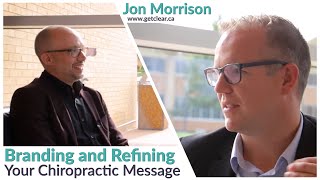
A filmed interview (Jeff Langmaid interviewing Jon Morrison) about chiropractic branding, messaging, and website strategy. Morrison emphasizes speaking to patients’ problems and benefits (not features), positioning the clinic as a guide (not a hero) using StoryBrand principles, niching to an ideal patient, clear calls-to-action, testimonials/social proof, and easy-to-edit websites (Get Clear Consulting / Get Clear Sites).
Chapters
You have a great opportunity. Someone clicks on your website, they see that first image. What do they see? Well, is it a picture of your building? Well, if you're selling your building, hey, that's a great idea. I can usually tell right off the bat if this person gets it, it's a picture of their ideal patient enjoying their life after you've treated them.
Hey, how's it going? Dr. Jeff Langmey, the evidence based chiropractor here and I am fortunate to be sitting with John Morrison of Get Clear Consulting. He is a specialist, I would say, in branding and refining your chiropractic message to make sure that it is clear, no pun intended, to your audience. And we're going to talk a little bit about it. John, thanks for coming on and chatting.
Jeff, it's awesome to hang out with you.
You got it.
Your fame has preceded you before this and it's been great to actually get to hang out and talk for the first time.
So thank you. Give a little bit of insight into how we were talking a little bit off camera. How would you describe what you do? Then we'll get into some history and some fun stuff.
Yeah, I just help chiropractors grow their business, their practice, whatever they need in terms of their marketing, whether it be a clear message or a website or any kind of marketing collateral, just whatever they can get to be seen by the people that they want to reach. Because I really want to help the best guys and gals get the best tools so that they can achieve what is that they are trying to do.
Biggest stumbling block that you see with chiropractors in regards to their branding, market positioning and messaging. What would you say?
I think it's a tie between two things. The first thing is the words, how you actually position yourself, how you talk to people. A lot of us, it's human nature just to want to talk about ourselves and how good we are and what we can do and blah, blah, blah. And the problem is that when we talk too much about ourselves, like anytime you're at a networking event, you meet someone for the first time, hey, you're on a first date with somebody and all they do is talk about themselves. So something inside of you just says, you know what, this person must be a very big deal to themselves. But I'm actually just not that interested anymore. There's a little principle we use called interested is interesting. And when you actually take an interest in somebody else, they take an interest in you. So we need to talk on our websites in a way, maybe or wherever Even whenever we're talking about what we do in a way that says, I can help add value to this person, they're struggling with something, they're. They're not getting something that they want, there's a goal that's unmet and I can help them achieve that. And you know, that kind of once you learn to talk about what you do in a way that actually connects with people and gets their eyebrows up, you know, I'm in. I'm from Canada. So we always say, oh, that's very interesting, no matter what people say to be polite, but I can always read people's eyebrows to see if they're actually interested. So when you talk about what you do and someone furrows their brow and goes, oh, that's interesting. It's like, you know, they have no clue what you're doing or you're in some category. If you say you're a chiropractor in some places and people have had bad experience with chiropractic or their parents told them that, oh, they're just a bunch of quacks. If you don't position yourself in a way that breaks out of that, then they're going to give you the furrowed brow, like, oh, that's interesting. But if people open up their eyes and raise their eyebrows and they say, oh, that's interesting, you've positioned yourself in a way that shows that you're solving a real problem and that you offer help and you're actually doing some good in the world. Right? So I think that's important. And then the second thing that I see mistakes is that when it comes to our websites, we're just not leveraging the opportunities that are available today online. And we talk a lot about social media and the importance of that. But I think the foundation of your online presence needs to be your website. That's where all the vital information about your staff, your hours, your contact information, how you're gonna pitch and you're gonna sell on that homepage or whatever, your call to action is there. So that if, you know, you do online booking or something, that's the button that they gotta hit. And, you know, from there you can go to your social media links and all that stuff too. So I see a lot of people when they show me their website and I'm like, oh, you know, why did you do this to me? I had so much respect for you until you showed me your website. But the truth is that everybody actually hates their website. I work in a lot of different industries. Construction, you know, even Dentists have bad websites and we all know what they make, right. So it's not just chiropractors, but it is. You asked me what the biggest thing about chiropractors. It's usually the messaging and the website.
Gotcha. So with the messaging it sounds to me a lot like features and benefits, right. It's really talking about, you want to get out there and talk about the benefits that your patients, your clients can receive. Not necessarily the features of your services, but the website. I want to dive into that because that's something you brought up. Very interesting. What would be the number one thing a doc listening or watching this right now that they can open up their website. The thing that they can look at and say this is either something that's definitely pointed in the right direction or something that they need to have a conversation with somebody like you about that it might not be the best idea to have. What's maybe a pitfall.
There's so many different things. The first thing that came to my head is as you read it, ask who it's talking to, right? Is it talking to somebody that just wants to know all about the doc or is it actually talking to people who are struggling with pain or some of like not, not achieving some of their goals and they're frustrated because of it. Like imagine the person who's on, they're going for, they're in a running club and all of a sudden they get some injury at work, bust their back up and all of a sudden they're like, I can't run anymore. Right. Like, how are you going to feel when that happens? Well, you're going to be incredibly frustrated. It's going to be lonely and you're going to feel like you're missing out. And if you don't, if you can talk to people like that and they read that, they're like, that's exactly what I'm feeling. Like I like this person. You make a human to human connection. But if you spend all the time saying, you know, welcome to blank Blank Chiropractic here our services, our aim is to provide, our mission is to do this is you've missed an opportunity, you have a great opportunity. Someone clicks on your website and they see that first image, what do they see? Well, is it a picture of your building? Well, if you're selling your building, hey that's a great idea. But if it's, you know, is it a picture of you? Well, you know, it's not even about you. I can usually tell right off the bat if this Person gets it. It's a picture of their ideal patient enjoying their life after you've treated them. So if they're a runner, show runners. If you treat golfers, show someone golfing. If you just want to do like one of my favorite pictures is like just three generations. So you got a grandma, their middle aged son or daughter, and then some kids and they're all happy flying. Those are like that best pictures because you cover all the generations and they're all there enjoying themselves. Any grandma or parent sees that, they're like, that's what I want. I want to be able to enjoy my life again. So I'm not on the couch or whatever. Right. So when we start to think about it, I think it's good for actual the doctor to be like, you know what? These are what people are struggling with. And the more you think about their pain and their anxieties and they're feeling left out and they can't do their weekend activities, your heart starts to break. And then all of a sudden you remember like, this is why I got into this. It's not about the money and it's not about advancing the profession. While those things are great, at the heart of what you guys do is care for people, real people, and they're the ones that pay the bills.
Yeah, I could not agree more.
So I think that if you feel that way, it should bleed out onto your website. There's so much jargon that we put that we think we just have to do it. But you have a website, sometimes it's better to get someone like me from outside and be like, you know, this is your opportunity. Don't just copy the person down the street what they're doing because they didn't have a clue what they were doing either. Get somebody to come in and be like, okay, who are you actually trying to reach? And then just talk to them about the things that they can get when they work with you.
I love that because I think it ties into branding. And for a lot of docs, I think, you know, think about branding like, oh, that's a, that's a Nike. That's a, you know, a Whole Foods. That's a thing for big companies and corporations. And I think you and I would feel the exact opposite branding needs to take place. Whether it's a sole individual doing any sort of service or item all the way up the chain. What are maybe some ways that you think about branding within the healthcare space and then specifically within the chiropractic space?
Great question. I would say one of the things about branding is how interactions with you make people feel. So your brand covers your website, but also is your front desk, your admin, your staff. Right. How do your staff make you feel? What's the experience that they're getting when they're actually being treated with you? What's your, you know, your bedside manner or whatever, how you take care of people. And it should all reflect your values of putting people first and the importance of providing excellent care and service to regular people. So how you want to reflect that, I mean, I think there's lots of different ways in chiropractic, but if you really do care about people, it should show on your site. And that's what I was talking about the other night about, you know, the edge that the evidence based community is going to have, I think is that they're actually providing real solutions for people, not just long treatment plans that, that pad your pockets. But actually this person was in pain after maybe a car accident or a sports injury. After seeing you a certain amount of times, however long that that takes, they all of a sudden been transformed so that they could do those things again. And all of a sudden it's like, wow, we're in the business of transformation. I think transformation is a great brand feel. Right. People come here and they don't leave the same. They once were lost, now they're found. They once were blind, now they see. We love stories of transformation. Right. And so that's a great. Make that the theme of your, of your brand. Right. So how do you make people feel, I think is what a is associated with the idea of branding. Not so much the colors. Yeah, sure, the colors are good. The logos are good too. And the font you use, it's all part of it. But it's the customer experience, the feel that I think establishes a brand. Yep.
Yeah, I could not agree more. And I guess tying.
It's good to hear that you're drilling a guy like Jeff tells me you couldn't agree that's good. I'm doing something right.
I think it is, it is about, it's about patient experience. It's about the feel of the individual. It's about talking about what can they expect. Exactly that. What are they struggling with now? Where can they hope to get? What's their aspirations, what are they hoping to achieve? You know, whether it's quality of life, whether it's performance, whatever it might be. And on that, on that, on that side of things, how, how can a doc think about maybe the, you know, how do you think about Pain points and benefits. How should a doc start to consider and think about that if this is new to them? They're looking at their website right now saying, oh, my gosh, this thing's all about me. It's all about these features that nobody understands. But I'd love to start talking about benefits. What's. Maybe there are some frameworks that you've utilized to identify pain points and those benefits. How can a doc just get started with it?
Yeah. So I think the best resource for this right now is building a story brand by Don Miller. It talks all about how every one of us, every single person all around the world, wakes up as the main character in a story. And the main character in every story, whether it be the Bourne series, Matt Damon trying to figure out who he is, Luke Skywalker in Star wars trying to figure out who he is and trying to understand, use the good side of the Force, whether it even be Happy Gilmore who wants to learn how to help save his grandma from bankruptcy, right? Everybody wakes up as the main character wanting to achieve something, and then there's something stopping them from getting it. And so that's what Don Miller says is actually that's what drives an interesting story. So an interesting story is all about a problem stopping a protagonist from getting what they want. And so that's what the story is, them fighting through the whole time to solve that problem. And every chiropractic patient, or would be patient, is the main character in their own story. And they have a problem, whether it be those nagging injuries or chronic pain or whatever it may be, it's stopping them from getting the lifestyle that they've wanted. And so I think so many docs have. They probably have heard so many stories, they could list them all off. And so when you start talking about that, people pay attention because we're hit with messages all over, like thousands of messages every day. Somebody wanting to buy something or do something to us or take our money or take our time or take our attention. And we all just have this laser focus of I need to solve the problems that are stopping me from getting what I want. When you're in the middle of a renovation project, home renovation, Home Depot knows that they are going to put stuff in your Facebook feed because that's all you care about. When you're doing renovations, right? Get the products to get the end result, which is the great new kitchen or living room or whatever it is that you're renovating. And so I think it's the same when you're in pain. You Just want. Somebody's got to help me here, and I need. I need. And so if somebody starts talking about that, especially on their website, we're going to get their attention. And once you get their attention, then you have to answer some questions like, well, why should I trust you? And that's where we start to say, look, that main character is in a story, is facing a problem. But now screenwriters know that they need to introduce a new character, which is this guide character. So Frodo can't make it to Mordor unless he meets Gandalf. And Katniss can't win the Hunger Games unless she meets Haymitch, which we all know is actually Woody from Cheers. But Haymitch is going to help her achieve what she wants, right? Luke Skywalker needs Yoda, and he needs Obi Wan Kenobi. So that's what building a story brand talks about is the. These guide characters are critical in every story. And the problem is, so many times in our marketing and on our websites and how we talk about what we do, we position ourselves as a hero rather than a guide. When you present yourself as a hero, what people think of is this person seems to be very important. They're winning their story by their awards and their achievements and how significant they are, clearly. But I'm not looking for another hero in a story. I'm looking for a guide. The example I like to give, it takes a little while to tell, if you don't mind.
No, please.
Imagine if, like, Katniss from the Hunger Games is in the woods and she hears a rustling in the bushes. And she draws her bow because she thinks there's a threat coming out pops a little hobbit, and she goes, who are you? I'm Frodo. I'm taking these rings to Mordor. And I'm kind of lost. I don't really know the way. And she goes, you're just a little hobbit here, okay? Puts her bow down and says, well, I got no interest in you, and you're not a threat to me, so carry on, little man. And Frodo looks at her and says, well, who are you? And she goes, well, I'm Katniss. I need to win the Hunger Games and I just need to survive to save my sister and defeat the evil capital. So he goes, okay, well, off you go then. Good luck. And they kind of look at each other and say, okay, I hope they do well. But then all of a sudden, Katniss hears another rustling in the bushes, and out pops Haymitch. And Haymitch Hemich is like, hey, I've won the Hunger Games before. I know the pressures you're going to face. I know some of the skills you need. I know the resources that can help you. And all of a sudden, Katniss is like, tell me more. Tell me everything. Help me achieve my goals. And then Frodo's walking along the road and he's going to Mordor, and he doesn't know the way, but he meets this White wizard along the way who knows the way to Mordor and knows some of the burdens of carrying that ring. And all of a sudden, you better believe that Frodo is going to listen to every word that Gandalf says. Because every hero needs a guide to help them overcome their struggles. And the guide character in a story is actually the strongest character because the hero is. You know, we all want to be the hero, but the truth is the hero is full of pain and struggles and doesn't know the way. But the guide character is so strong and wants to help the main character. So in our marketing, what I usually can tell is, are you playing the guide or the hero? And you need to play the guide if you want to capture the attention of your patients.
Yep, that makes sense.
They're waking up every day. So building a story brand makes that very clear, amongst many other things. It's not my own intellectual property. I just like talking about it because I get to bring in movies and hear it out of it.
I guess with that messaging and talking about really being the guide instead of the hero, helping support the journey of the individual who's looking to transform and overcome. How specific or broad should a doc be, especially relative to websites? Right, so when somebody clicks on a website, they're going to see that top header image and that copy that first thing that's talking to the patient. Should they try to stay as broad as possible or should they go the other way and stay as niche as possible or somewhere in between? How do you think about that?
I mean, that's why I have this little slogan that I've got. I call it Start with who and start with who is all about figuring out who it is that you love working with and who is it that's going that you feel like you make the biggest impact on. And they're also going to pay your bills too, which helps. Right. So if it's golf that you. If it's golfers you want to reach, then put some golfers on there and talk to golfers. If it's. I Know, a lot of people work with like moms that 30 to 50 age, they say that are gems for chiropractic help.
Right.
They're great patients for chiropractic, pelvic floor stuff. Right. So put women on there and make your colors a little feminine. And if you're going after women, then talk to them. Right. You know exactly what they're going after. If you take it general, yeah, you can kind of cast the net a little wider. But the problem is that you end up sometimes at running the risk of speaking to nobody. Right. If you just try to be everything to everyone, you mean very little to a lot of people. Right? So I've always been told and you know, the business guys will tell you this. The riches are in the niches. However, it's scary to do that. Right. GEICO does this, I think brilliantly. They've made their slogan. They'll save us 15% on car insurance. But GEICO sells all kinds of insurance too. Did anyone know that? Maybe they did intuitively, but car insurance certainly we know they specialize in. So I would just say be bold that if you're gonna be a sports injury clinic, then go after that if you're gonna do personal injury, talk to people like that. I think there's a lot of margins in there that not a lot of people are doing, however. So talk about car accidents and stuff. One of the other things too that's interesting is a lot of times people are saying, you know, we want to be a pain clinic, but we're not going to talk about chiropractic as our leader. When you do that, you run the risk of losing Google searches. Right. If you don't have the word chiropractor in there and people are searching for chiropractor, that's an interesting little thing that we're kind of dealing with, with the evidence based community which they're trying to say, you know, we, we don't want to be just a chiropractic clinic. But I'm saying, okay, but you better find a way to get those words in there because if you go invisible on Google, you ain't going to be a chiropractic or any kind of clinic for a long time because you're going to start to get buried on page three, which is where you hide dead bodies, right, on page three of Google. No one will ever find you there.
That is correct. And I hear 60, 75% of the traffic goes to those top three results. So that's why I think having those keywords that are associated with your practice in your clinic can come in so big long term because it's going to help build positive equity online, so to speak. And the more that you touch those, I think the better off you are and the more clear you are regarding your messaging, the longer people are going to stay on and read in that view. Time or the time on the website is oh so important as well. Instead of getting somebody that immediately backs out because they're saying, this isn't right for me and that bounce rate. So where can people learn more about what you, what you're up to today and where can people learn more about the services that you offer?
So my company is Get Clear Consulting. We're based out of Vancouver, B.C. in Canada, which means we don't have to charge tax to the states because of good NAFTA deal there. So it works. A lot of my clients are American. In fact, most of them are. I don't know what it is. You got to reach those Canadians, but I'm not doing it. But you know what, the money's worth a little more down here, so I don't mind it. So what we do is we basically say, look, who's your ideal client? What do they want? What are some of their pain points? Stopping them, because that's how we're going to get their attention. But then we're going to flip and say, how can we build. Establish you as a trustworthy guide. So we're going to make statements, we're going to brainstorm some together and say, tell us about how you understand their difficulty, their pain, their frustration, and then make that human to human connection. Because every business is always built on human to human. So make a connection so that someone reading it be like, man, I've never met this person before, but they get me. And when we say that they get me, we instantly trust them. So we want to build trust that way. But we also want to build trust by establishing you as an authority. So you may make a human connection. But if you can't help somebody and you don't have a history or no testimonials, or no social proof, you're missing one of the key elements of establishing yourself as a guide. So we'll talk about that then. Usually we look at testimonials, say, what are your best testimonials? Let's lead with those, let's promote those. Like I said, the best testimonials are like, I once struggled with this and then I was better. You know, I once had a toothache. If you're a dentist. Then I saw Dr. Wilson. Now my teeth feel great. Those are just great stories. Those are transformation. Good way to build a brand. We'll talk about your call to action. So do you want people to schedule a call? Do you want them to schedule an appointment? What's your software that you're using? Just talking through that, making sure your call to action is clear so everybody knows exactly what they're supposed to do. Have you ever been to like Target and you had all your goods and you said, hey, where do I check out here? And the, you know, pimply faced teenager said, well, you go up the escalator, down the hall, there's a women's restroom there, take a right, there's a broom closet. Past that, go down another set of stairs, through some gates and there's the checkout. You're like, you know what, forget it. I don't know what to do. It's too confusing and I just want to check out now as soon as somebody says I want to book an appointment with these people, there should be a button somewhere close by that they can know exactly what they have to do. So a week ago we talk about your call to action and then a little bit about talking about, let's get good at talking about success because people always want to hear that a vision cast for their health, for their life. So as a doctor, you got to get really good at saying, hey, this pain is not the end of your story. There's a better future for you. And then start talking about it and get them excited because there's going to be a lot of skin in the game for them to make a full recovery. Right. They're going to have to lift some weights, they're going to do some stretches, show up at appointments. So you want to make sure that the vision is clear for them. Not many people have somebody actually coaching them through all this stuff, right. They just kind of feel alone. So I kind of come alongside and partner. But Jeff, what happened after that? After doing that for about a year, every single time, 12 times out of 10, I'm not really a math major. They said to me, well, my website doesn't reflect any of this. You just spent all this time with me and none of this is reflect on my site. So we came up with a website builder that is very easy to use and simple and for an affordable price, which is very important for me to help people. So I mean all that consulting and stuff is nothing unless we get it actually in some product. So I learned that a website Like I said, was a huge pain point for a lot of people. It just maybe they had a generic Cairo something site that just wasn't ranking well on Google, wasn't getting them a ton of leads and it was hard to make changes to. Right. If a website is hard to make changes these days, we have such great software available that people should be able to make changes right away. You shouldn't feel like your website is hostage held hostage by your web developer, right? It's like, hey, could you send an email? Like can you change this to an uppercase e instead of a lowercase e? It's like that's demoralizing, you know, and you feel like this is not my site and you get embarrassed by it because it's like, oh, we got a new staff member, that page is dated. So anyways, then they say, well let's not talk about our website. Well, you're missing an opportunity, right? Your website should be the front lines of your sales force. If you feel embarrassed by your website, then I say, you know what, we got to figure out these help these guys. So we created this website builder, call it Get Clear Sites, just to not confuse people. So the consulting and the sites are two totally different companies and I think it's the best thing. Honestly, I'm not much of a sales guy in terms of like slight being slimy. I just believe in something and it's helping a lot of people.
I think it's so, so important. I'd encourage. If you're listening or watching, check out your own website if you believe it could be better. If you've been frustrated with your company, you feel hostage or it's just not functioning at the ideal level you'd like it to. I'd encourage you check out what John has going on at Get Clear Sites. We'll leave a link down below as well. And John, thanks for taking the time.
So fun, so fun to hang out.
Hey, what's going on? If you loved that video, be sure to subscribe to this channel. The evidence based chiropractor puts out videos all the time at the intersection of market in research showing you how to grow your practice while also growing your knowledge base. So if you liked it, be sure to comment down below or hit subscribe and I'll see you in the next video.










