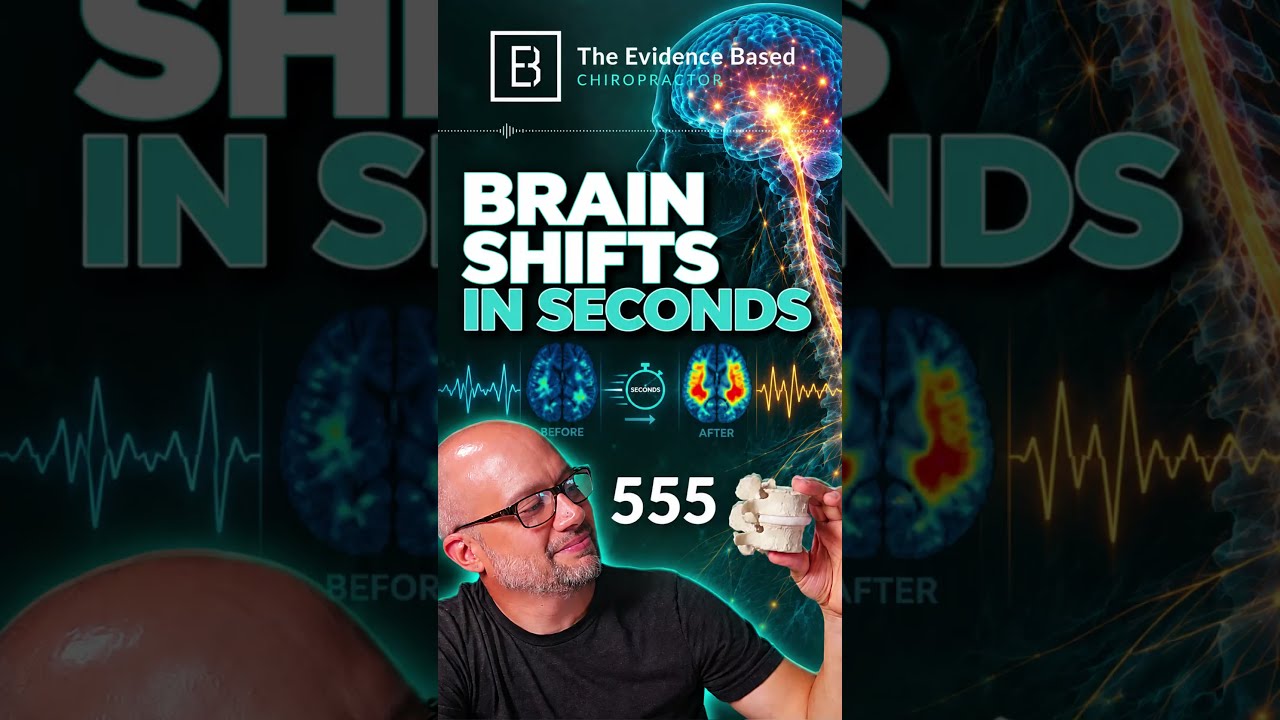
Jeff Langmaid explains how spinal adjustments temporarily alter neural excitability using transcranial magnetic stimulation studies. Adjustments increase motor evoked potentials and reduce cortical inhibition, making muscles easier to activate, with some changes fading in seconds and others lasting longer. Researchers are now mapping short-, mid-, and long-term neural effects.
Chapters
There were several TMS studies that found changes in motor evoked potentials, cortical inhibition, or cortical spinal output after an adjustment. So basically, in plain English, the adjustments appeared to temporarily change how readily the nervous system could activate certain muscles. So I think that's really, really cool. Other studies examined lumbocanal adjustments and found an increase in excitability that disappeared rapidly, uh, like super rapidly. So like within seconds. So it's fascinating to see the The bursts of activity that occur after an adjustment is given, and some of it kind of falls off quickly. Some of it, it takes a little bit longer. Some of it has more long-term effects. And it's fascinating to see as they get more and more specificity with these studies, what are the short-term effects? What are the midterm effects? What are the long-term effects? And when you stack adjustments throughout a care plan, how does that impact things as well? That goes beyond this study today, but man, it's going to be super cool to see this knowledge base continue to evolve as time goes on.