Launch, Scale, and Exit Your Chiropractic Career Effectively | Remarkable Practice Experts
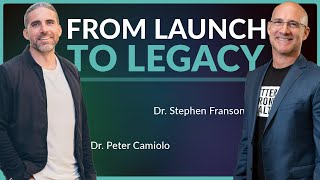
Jeff Langmaid talks with Dr. Steven Fransen and Dr. Pete Cameolo about building a chiropractic business through four stages: Launch, Build, Scale, Exit. They argue coaches should teach business skills alongside clinical training, and stress that durability—delivering value without you—is what makes a practice sellable and lets you build a remarkable life.
Chapters
Is we spend all this time in school and nobody teaches us how to create a business, right? So they teach us how to create a busy job at best. So we wanted to make sure that we took this from the approach of let's keep doctors from doing that, right? Let's launch with an eye on building, let's build with an eye on scaling, and let's scale with an eye on exiting so we can do it all remarkably.
Hey, everybody. As promised, I am here with two of the best coaches in chiropractic and two gentlemen I can also call friends very happily. Dr. Steven Fransen and Dr. Pete Cameolo. Gentlemen, great to have you on today. Super excited for our conversation.
Great to be here. Dr. Jeff, thank you for asking us, man.
Happy to be here.
It is my pleasure. And everybody listening, this is going to be part of a series over the next year. Each quarter, Dr. Steven and Dr. Peter taking time out to really share back. And they are two of the best business coaches. So regardless of how you practice over the next year, we're going to go through a four part series that highlights not only how you can improve the business of chiropractic, but also your life. Because, Steven, you have a saying about business and life and making it remarkable. Maybe let's kick it off right there.
Oh, yeah, Jeff, I think you're probably leaning in on our premise there, which is it's about creating a remarkable practice as part of a remarkable life, not instead of one which speaks to, you know, you know, our purpose is to restore health. The way we do that is we want to make sure that people are creating the business that supports their remarkable life, not competes with it.
And that's a really, really key component. I can speak to this as somebody who's been, you know, in and around your ecosystem for a number of years, been to the events, the energy is off the charts. But what I love is not only that the energy is there, but also the tactical approach to improvement and really being able to get specific with docs out there that are arguably listeners of this podcast in different phases of their career. And Dr. Pete, maybe you can speak to. I love how you guys frame out the different, what you call seasons of practice. And for many of my listeners, this will be new. So let's maybe start there and highlight what those different seasons are.
So the genesis of this really came from the pain and scar tissue of recognizing being coached and then coaching that no one really ever organized the, the career of the chiropractor into a way that made sense. And you ended up as a chiropractor going into practice and just practicing and doing that for the duration of your career. And there's just general, like I practice. But what we've done is we've said, you know what, there's actually seasons of your practice career. And I think what we do by organizing the season into seasons is help people identify number one, where they're at and number two, what they need to be focused on and what are the priorities. And so we've organized it into four seasons. The first season being the season of launch, which is again we'll maybe get into a little bit here today, but that's when you get into practice. You're actually getting into owning a practice, you're getting into business and you're starting off and, and it's, it's a time bound period of time. It's a, you know, somewhere, let's say in the, in the approximate time of the year. Right. So by the time you, you, you launch that practice, so you hit your first year mark, which I think you and I both know, or all of us know if you don't know this. But I think it's somewhere around 90% of businesses that small businesses that launch actually fail within their first year. I think it's somewhere in that range. So the fact that you can actually launch a business successfully and keep it going is a significant finding. And so that's the first season of every business's career and every chiropractic business careers. That season of launch, second season is build. This is really about, you know, that, that stage of your business where you've now got it off the ground. You're, you're, you're up and running but you've got to figure out how to, you know, keep patients coming in and keep patients staying. And you've got to start, put together a team and you've got to make sure you have some marketing in place. You start putting systems together because you're starting to develop your systems, your business model. And that's, that's a season of buildings, a beautiful season. Well, we recognize, Jeff, is that most chiropractic speaking with were actually in a season of build, but they wanted to move on to another, the next stage. But there was no organization of that next season. So therefore they just stayed in this season of I built a practice and I just work in my practice and I function that practice as the owner of the practice and the operator in that practice. That for many chiropractors wasn't enough because they realized that there Was there had to be something more. And that's that third season that was a missing piece in our profession by definition, which is a season of scale. Now, a lot of chiropractors who are, quote, unquote, more successful might enter into a season of scale, which means I brought in another associate doctor, somebody else that can help do the work. So now I would say I'm in a season of scale. We're not going to get into all the nitty gritty here today, but that's the third season is scale. It's when you go from it all being dependent upon you, now you can actually use leverage and you're leveraging the talent, another person's talent, to deliver the service of chiropractic inside of your business. And that's the season of scale. And we've recognized that most practice owners want to turn their practice into a business. And that's really where you make that transition from owning a practice, owning a business. It's just oftentimes people don't do a great job of that. And so that's something that we really dedicate so much time and energy to. And then the last season, something we maybe don't think about very often until. Until what? Well, until something happens, life happens, health issues happen, or we're just getting towards the. The later season of our career and we call the season of exit. But we know that we can do a better job exiting as a profession of chiropractic, really leaving a legacy. So those are the four seasons. Launch, build, scale, then exit. And we've organized everything that we do inside of our coaching, our curriculums, our masterminds, our coursework, our conversations, our direction is really organized to help each doctrine in one of those four seasons.
I love the way that that's really positioned. I'm going to encourage everybody listening and watching to really sit on that for a moment and think about where are you in that process? Where do you want to be? Where are you today? Where have you been in the past? Because understanding where you are is critical, and it's the first step to understanding where you're going to go in the future. And one of the things, Dr. Steven, that I'd love to touch on is I didn't hear Dr. Pete say anything about how they practice, about technique, about anything to that realm. I'd love to for you to speak into. There are some key attributes across all of those seasons of practice that are really critical to being able to get the growth you desire and being able to balance that with having a Remarkable life, maybe. What are some of those key tenets that go throughout all four seasons? And maybe the question to start with is, did I miss something? Is this something that's only applicable to a certain type of practice? What's your take on that?
I love this question, Jeff, because Dr. Pete used the term scar tissue, which you hear quite a bit on our podcast. If anybody's a podcast listener, they probably know the Remarkable CEO podcast. So we teach from scar tissue, right? So you're looking at a couple of guys, been there, done that, and we have a history of some spectacular failures and stresses and struggles like everybody else listening right now. So we're just trying to help people see around corners, help people avoid those missteps and compress time, pull their success forward and do it all in a way where they're, you know, maintaining their. Their health and their marriage and they know their kids, and maybe they can take some time off without shutting down the practice, etc. Like all the things that break people down, break families down, break marriages down, break practices down and businesses down. So here's what we know to be true, Jeff, is most chiropractors do not lay awake at night worrying about their practice, right? They lay awake at night worrying about their business. And if you are a practice owner. If you are a business owner, you know exactly what I mean by that, right? So how did we set ourselves apart in this crowded space? And how did we feel like we could add? The most value to chiropractic is to make sure that we are teaching and coaching both sides of that coin, the practice side and the business side, right? So, you know, for this conversation, I'll say the distinction is, let's talk about the business side, right? So, because that's where so much of the pain lives, as Dr. P was alluding to, is we spend all this time in school and, you know, nobody teaches us how to create a business, right? So they teach us how to create a busy job at best. At best, right? So we paint ourselves into this corner. So we wanted to make sure that we took this from the approach of let's, let's. Let's keep doctors from doing that, right? Let's launch with an eye on building, let's build with an eye on scaling, and let's scale with an eye on exiting so we can do it all remarkably right. So we want you to do this gracefully and profitably. And really, you know, the key to that is the systems that we've developed around, you know, creating a remarkable business, right? And that's the business that will support your remarkable life and, and not compete with it.
That's critical. And when you, when, when you say that, it makes me think a lot of community. There are a lot of docs listening. They probably feel honestly a little bit isolated in terms of their business growth, in terms of their connection to the chiropractic community, especially as they've been in practice a few years. And Dr. Pete, I'd love for you to lean in and talk a little bit about how the remarkable practice provides that community, because I think that's really an important anchor not only of what the remarkable practice provides, but what many docs out there are missing. I've seen it at the live events. I know there is coaching that goes on obviously beyond those events as people are connecting week in and week out with their coach and maybe part of their mastermind group. There's a variety of different ways what docs need to know. Maybe that doc out there that might be know that they're maybe a little lonelier than they'd like to be in the professional world. How does coaching really solve for that? And what are the benefits of coaching when somebody can get involved in a community of docs that are like minded, meaning looking to grow their business. And also more importantly, as you guys alluded, with the four seasons in the same position that they are, so everybody can learn together. How's that work? Practically?
I love the word community. I think it's an important word. I'm glad you're asking about that because I think as a chiropractor, you know, it can be very lonely out there. And I know that was, you know, the case for me at times. And I'm sure for many of you who are listening right now, either you have been there or maybe you're there right now. And if you're there right now, I just want to throw an arm around you and just say, you know, it doesn't, doesn't have to be that way. And so Jeff, we, we recognize that, you know, doctors needed a few things and one of them was community. But it was being in a community of, of doctors, as you just alluded that are in the same season as me. That's how you create those connections. Because it's about connection. Human beings are hardwired for connection. We need connection, but we need meaningful connection. We need connection that's relevant at this time because, you know, when you're walking it out, when you're in the midst of it the business, it feels like sometimes you're in the Midst of the fire, you need to be in it with the same people that are in it and with somebody who has went through it and is on the other side who can help you through it. And that's really what coaching is. Right. So we like to say there's a difference between. Dr. Steven Always, always uses this analogy, but a travel agent and a tour guide, the travel agent can tell you about the place the tour guide is in, the place, been to the place, they're there, they're going to tell you all about and they'll walk through it with you. We, we would like to say that coaching is really about that tour guide. We're going to walk you through the season, and we're not going to go alone at this, but we're actually going to create a community. We use cohort formation to do that through mastermind culture in our environment where you can run through a season, you could walk through that season with others that are in the same season and do it in a remarkable way, creating meaningful community that's built around connections and a conversation that's the same. Because I need to be in a conversation right now with people that are dealing with the exact same questions and issues and challenges that I'm having right now. Not. Not like before or later, but now. It's a now thing. And so we're very mindful of that, very intentional about that and what we call curating our culture and curating our community, curating our connection and curating those cohorts. And when we do that, we see that it creates an exponential growth trajectory for that individual and also for that collective group of people that we bring together. So, yeah, Jeff, it's very intentional on our side. And Dr. Steven and I and our whole team, we work diligently behind the scenes to do that on a regular basis.
Yeah, I think it's absolutely fantastic. And I've seen that in action. And thank you for speaking into it. I think that's such a critical component of personal and business growth, is being able to have those partners and the coach.
Right.
That's such a potent combination. Now, Steven, I cannot let us get through this conversation without. We have not. I've not heard your favorite word of all time. Durability. So I want to spend a couple of minutes unpacking. I'll ask you for a little bit of some coaching pearls right now on our way out. What is the word durability? Why is it so important and where does it fit into the docs listening of why they need to be aware of it in relation to having a remarkable practice and a remarkable life.
Yeah, it is one of my favorite words, and it's soon to be your listeners one of their favorite words. You'll hear it pop up more because now everybody's talking about scalability, right? But nobody's talking about durability. So studying, like I study success, Dr. Pete and I have spent a lot of time pulling apart, like, what makes the difference between a really successful practice where they're living a remarkable life, you know, and fulfilled and happy and healthy, and it's sustainable. Like, we're studying all of that and there's always commonalities, right? So you know what it boils down to when you look at the difference between build and scale is when you move into scale. You've taken the job that you love and you've turned it into the business you've always wanted, right? And we had to draw a distinction between what does it mean to have a job and a business, right? So there's three key elements. Number one, businesses are scalable. Number two, they are durable. And number three, they're transferable, right? So scalability implies that you can give more, love more, serve more, make a bigger impact and make a bigger income, but it doesn't have to all be done by you, right? So for some of you listening right now, you're like, yeah, being busier would just mean loading more weight on the bar, right? So I'm already, quote, unquote, out of balance. I'm already overwhelmed, overworked. So is my team, like, dirty little secret, I don't even want to grow, you know? So it's like scalability is you're teaching people how to move from brute force to leverage, right? Don't run and grow your business trying to do brute force, which is an hour of your time and a pound of your flesh, right? Teaching people how to leverage other people, team members, systems, technology, communication, etc. That's scalability. And I bet a lot of the doctors online right now are like, yeah, I've created some scale in the business. You probably have. The next level is durability. Durability is when you can give more love, more server, make a bigger impact and a bigger income even in your absence, okay? That means that you've created this ability for what we call optionality. You have the option to how you spend your time. I think the, one of the ultimate definitions of success, if you were to ask me, is I, I get to choose how I spend my time, right? So we all know there's A difference between having to adjust patience and getting to adjust patience, Right? So to be able to claw back your time, free back your time, right? So, and ask yourself, what's the highest and best use of your time? For many of our listeners, it may be, yeah, I got to free myself up so I can do more clinical care. That's awesome. For some doctors, they're like, no, actually, I need the durability so that I can actually train my other doctors or train my team, or I want to do more of the marketing role or the sales role or more CEO role. Like, so there's so many options that you have once you create this durability, which means you can actually create value and deliver value and capture value even in your absence, Right? Even suggest that you could be home for dinner time, bath time, bedtime, maybe get your weekends back. Or how about this crazy idea, go on vacation and go on vacation without shutting down your practice, right? So durability allows you to take a vacation without having to pay for that vacation twice. Anybody who's ever shut their practice down to go on vacation knows exactly what I mean by that. So, Jeff, that's really the gold standard in the remarkable practice is to move into scale and create not just scalability, but durability. Right? And that brings us to that final point. When you do create scalability and durability, what you've done is you've created leveraged operations, right? So you've created bankable profits and ultimately, and most importantly, transferable value. In other words, somebody else eventually would want to buy your practice because it's actually a business. Okay? So if you do this right and you make your business attractive and, dare I say, irresistible to your ideal buyer, you can make a profitable and graceful exit when it comes to that four.
Season, even in your absence. I love it. Thank you so much for diving into that, Dr. Steven. Everybody listening? I'm going to encourage you. Stay tuned. Over the course of the next year, we're going to have Dr. Pete and Dr. Steven on each quarter. We're going to dive deeper into some of the topics we touched on today. Additionally, if you are not yet a listener of their podcast, I'm going to drop that link down in the show notes. Click over subscribe. You can get content like this each and every week. Additionally, we're going to have some tools and resources linked down below from the remarkable practice. So it's going to give you an easy opportunity to see what they do, connect with their team, have the conversation. Gentlemen, I really appreciate you guys coming on today. I cannot wait as we continue to touch base over the year and bring some of your business expertise over the Evidence Based Chiropractor podcast. Thank you so much and have an awesome day.
Thank you Dr. Jeff. Thanks everybody.
Thank you.
Thank you so much for watching this video on the Evidence Based Chiropractor channel. If you don't want to miss a single thing, please, please subscribe to our YouTube channel so you can get notifications of every video we put out. And we put out new content each and every week, so be sure to subscribe today.









