NeckCare Unboxed: A Revolutionary Tool for Objective Neck Assessments
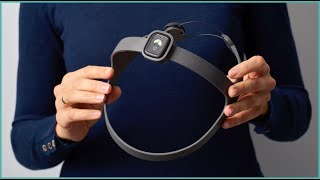
Video demo/unboxing of the NeckCare head-mounted device and web platform. Ori (NeckCare) and Jeff Langmaid cover device design (lightweight BOA fit, FDA testing), three primary assessments (range of motion, joint position error/proprioception, and the butterfly sensory-motor integration test), portability (44 grams), web-based reporting (download/print to EMR), and billing codes (CPT 97750; use with 97112/97110 for therapeutic exercises). Use-cases include dizziness/vertigo, post-concussion, motor vehicle accidents, and athlete baseline testing; workflow notes emphasize quick tests, assistant use, and patient/coach/parent communication.
Questions this video answers
44 grams
97750
97112 and 97110
Chapters
For chiropractors and other clinicians seeing patients with dizziness, with balance issues, with vertigo, post concussion, post mba. Any case that needs objective data and further extensive assessments of the neck, we're here for you.
Hey, everybody. You are live in studio right now, and I'm happy to have Ori from Net Care in the house, quite, quite, quite literally. And he brought over one product that I spoke of a few weeks ago on the podcast, and it really got my attention, not only because of the design, but also because of the ease of use and the extent of the information that can be gleaned from the neck care unit. So you brought out the box. I'd love for you to do a little unboxing right now as well, because as we've discussed, I love great design. And not only is the design great in terms of its user functionality, but even the packaging. So, yeah. So for docs that might not have tuned in earlier, as you unbox that, talk a little bit about what the Netgear device is and how it helps practicing docs.
Yeah, no, absolutely, Jeff, Great to be here. Some people talk about the Apple look and feel it's definitely a compliment. So as we open it up, here we have the Nectar device. This is the hardware device and goes on the patient's head. You do the honors later when we go through the assessment. But what it does is objective assessments of the cervical spine.
Got it.
So anything from range of motion, proprioception in the neck, and sensory motor integration.
Got it.
For chiropractors and other clinicians seeing patients with dizziness, with balance issues, with vertigo, post concussion, post mba, any case that needs objective data and, you know, further extensive assessments of the neck, you know, we are. We're here for you.
One of the things that I really like is, and we've discussed it, is there's so many docs out there that are just doing, you know, they're using goniometers, which might be, in my opinion, a data technology. They might also be just using kind of an eyeball test, which is just so subjective as opposed to objective. And some of the reasons why, in my opinion, is dated infrastructure. Right. You have tools that the oneometers are just like a pain in the butt to use. You got wires everywhere. It's just uncomfortable to use in a patient setting. And the other aspect is just not having something that's giving the data the doctor wants. In other words, can I cleanly and easily do the test, obtain the data, process the data, and make a clinical decision without having to become a PhD to be able to figure it all out. So one of the things as you kind of pick this up, and I will right now as well, is, you know, this is such super lightweight, it's flexible. So you really are able to fit it nearly instantaneously to most people most of the time where they're able to slide it on and then you can just get after it as opposed to feeling like you're in this quagmire of technology. I know we all love the results that technology can provide for us, but when it becomes a hindrance to being able to get the test, that's a real pain in the butt. And quite often it makes us shy away from things. So talk a little bit about the design of the unit. I know this has gone through an evolution as time has gone on as well. So talk a little bit about the design and why the design in terms of the flexibility and in terms of being able to have good ease of use is important.
Yeah, no, absolutely. So what we, what we are going for and you know, from a design perspective is obviously it has to work the number 1, 2 and 10 and just effort works, like we say internally. Right. You don't have to think it should just be intuitive and work in a couple of minutes. So we know time is so, so limited in a busy office no matter who you talk to. So you have to be able to rely on the technology and it has to work and be quick and efficient. And then as for the design, obviously as well it has to, you know, we've done extensive tests on this as well from an FDA perspective, so we have that covered. But also we have like this, you know, BOA system. Pretty, pretty neat. So you know, we haven't had a patient that this hasn't fitted yet. So but super easy, intuitive and that's what we're going for.
I love that. And talk a little bit about if docs out there. Visit and we'll drop the links down below. Please visit the website and connect with the team. But you really take education seriously, whether it's partnerships with institutions, whether it's with technique and learning institutions. Talk a little bit about how research and how real implementation at an educational level informs back to being able to make it good for just an individual practicing doc.
Yeah, so I mean research is, you know, the core of what we do. So, so we really like to be on the forefront. There's. But what our customers and clinics and clinicians are also asking for is, hey, educate me. I want to learn more. What does proprioception in the neck even mean. And how can that help in my clinical decision making and also that ortho and neural world, in my experience, those have been very, two very different schools and professions. You know, if there's a neural case like a concussion, you know, the typical orthopedic chiropractor or professional just pushes that out, refers that out. What we've been able to see is actually people don't have to refer out as much because, hey, they are now getting comfortable. And in looking at those cases, and the same for the neural people, hey, I can actually look at the neck because the neck is involved in so many of those cases. The cervicogenic dizziness, cervicogenic headaches, you know, you can't actually suffer a concussion without having a neck related trauma as well.
Trent. And let's dive a little bit deeper on that, specifically related to the docs out there, whether you are 100% personal injury, MVA, or maybe it's just a portion of what you do, but it's an important component. We always make the jokes. We'll ask a document, you know, what percentage of your practice is personal injury? And if they say 20%, we say, oh, it's 80% of your revenue. Yeah, it's 20% of the volume, might be 80% of the revenue. So it can be a small. Even in practices that are MBA specific, it can be an important part of their ability to earn, you know, earning income. And we all know that tying objective proof of injury and objective data is so critically important. When you're putting together that narrative at the end of the case, talk a little bit about how Netgear, how the data that this produces really can make an impact in a case.
Yeah. So I think everything from that initial assessment, but also to tracking progress, so to continue to get that authorization as well, or for prolonged treatment, you have to be able to document why is that additional treatment needed? Well, you show that on the data. So to be able to objectively document that. And then with, you know, the butterfly test as an example, you know, the signature of the neck that we'll go into later, it's not just range of motion. It's actually looking at the, you know, how the eyes, the neck and the head are actually, you know, working together. So. So I think from that perspective, anyone, a patient, an insurance company or a lawyer can actually look at that data and say, okay, this is off, or this is in the right direction or in the wrong direction.
Right. And when you look at reporting within the software, we're Going to do a deep dive in a few minutes, but maybe highlight a few of those key reports that are or can be generated.
Yeah. So range of motion reports in under two minutes proprioception. So joint position error tests, you know, for, you know, probably remember from school, but, you know, taught with a laser head mounted laser. The patient closes their eyes and they try to find their neutral position. And then the butterfly report as well, the sensory motor integration that I had night coordination.
Got it. And talk a little bit about that butterfly report. Many docs listening and watching might be familiar with the range of motion, the proprioception, but the butterfly might be new to them. So maybe first define sensory motor integration as you see it. And I'll ask you secondly to point out how does the butterfly test showcase that and why is it important?
Yeah, it's, you know, common to just look at things in a silo. Like look at eye movement, for example, just on its own. Well, the neck and the eyes are actually very connected and there are muscles in the neck here that, that are directly tied into, you know, ocular motor and the vision. So you cannot just ignore the whole system and just look at things isolated like just, just look at the neck or just the eyes or, you know, brain activity as well, like from a cognitive perspective. So to be able to perform the butterfly test, you really have to. And perform well on it. All these systems have to work and they have to work well together.
That makes a lot of sense. Let's dive in. Yeah, let's take a look at, let's take a look at some of the software. Let's take a look at some of the reporting. And also I'll, I'll do a few tests.
Yeah, no, absolutely. So let's put this on so, you know, you can do the others.
Okay.
Just gonna turn this on.
Yeah, good to go.
Yeah, put it on and then you can tighten it. Yep, just like a snowboarding.
There you go.
There you go.
Okay, great.
Okay. It feels nice. Yeah.
Is that a good position?
Yeah, absolutely. You could be an accurate model. So what we have here is web based platform. So accessible from anywhere as long as you have Internet connection.
Love that.
And super portable as well. What we have actually seen, I mean, just, you know, yesterday we got news from, from one of our customers up in New Jersey. They went out to a college and did a baseline assessment of all the athletes.
Right.
So baseline concussion assessments for, for the, you know, whole team being able to generate additional revenue.
That, that's awesome.
And new patients as well. So once someone suffers a Concussion or you know, contact. Who are they going to go to?
Right, right. The doctor that made those baselines. And I want to point out, I just want to highlight as you, as you dive in here, for everybody listening and watching exactly what you just said, this is ridiculously portable. I mean, we're talking about a device that probably weighs an ounce or two.
I can, yeah, 44 grams.
There you go. And then, you know, a laptop, a tablet that the doc is already going to have with them. And being able, I see one of the biggest areas of growth and everybody that's followed me knows I talk about how many young dogs fancy themselves as sports chiropractors. So being able to have another really technology driven, yet foundationally data backed way to do objective assessments with and around sports teams in your community is a massive opportunity to be able to get your name known, to be able to have a little bit of an advantage as other dogs may be competing for that attention with those teams, but also be able to provide it ridiculously high value service that doesn't require you as a doc to have to bring a ton of gear. I mean, you literally bring a piece of equipment that weighs 44 ounces or 44 grams, excuse me. And the laptop or tablet you're going to have with you anyway and you can provide, we're going to look at a moment, a variety of tests in short succession that can be really, really meaningful for those athletes long term and are super meaningful for you as a practitioner if they decide to come in to see you in the future and you have baselines, pre injury or pre, whatever that reason is. That's a massive value add. So I hate to take you off topic.
No, no.
But I love the opportunity to be able to connect and engage on the sideline in, you know, in the locker room, wherever it might be with these teams in a simple, easy and fast fashion. Cannot be overstated.
Absolutely. And there's another element there, you know, is the relationship with parents, you know, you got for those, those, you know, student athletes.
Yep.
So to be able to have a documentation that, hey, there's actually something wrong. It's not, you know, the overly eager that like, hey, there's nothing wrong with him, let's put him back in the field. And to be able to show the dad or the parent, hey, do you really think that this looks right?
Right. All right, so this is the portal. So you have patient information on the front page, easy clean. The other thing I love is the design not only of the hardware component, but the software as well. Super clean, super, super easy to see what's going on, which is so valuable in a busy practice, being able to use the system, as you said. So take it away.
Yeah. So we have assessments and exercises. We'll start a new assessment here. And we had different assessments. You know, pain scale, it's a subjective rating to know what's your neck pain today. But then we have range of motion during position error for the proprioception and the butterfly test for the sensory motor integration. Okay. Let's start with the. The range of motion. Everyone does range of motion measurements. You know, measurements. But, you know, that eyeball test is. Is obviously the, you know, most widely used. The goniometer. Yeah. Is still being used. But let's. Let's see how you do here in a very objective way.
Oh, boy.
So the only thing you need to do is sit still.
Okay.
Relax in neutral position. You ready?
I am.
Okay, so we will start you with flexion. So chin to your chest. Great. And then come back to neutral. And then extension. Look up to the ceiling. Yep. And then track down and then up to extension. Perfect. So you may now relax. So how did that feel?
Good. It's rare that I push to the end point, so it's interesting. I'll be interested to see the data because it's very. I'm like, oh, boy. I probably never look up that far. So it's like that. It's interesting. I'm excited for sure.
So now we do rotation. Sure. So the only thing that you need to do now is turn left. Yep. And then right. And then left. And then right. That was that.
Awesome.
And then last but not least, the lateral flexion. So in a neutral position. And lateral flexion left. Lateral flexion.
Right kind of rotation.
Yeah, flexion. And we will see that. So that was that.
All right. Easy.
Yep. And now, even though you love documenting things manually, we do it for you here. We will actually see your results. Okay, so let's zoom out just a bit here. So we also then compare it to normative data.
Got it.
So tell me what you see.
Okay, so it looks like my flexion is within the normal range of motion, which is great at 53.7 degrees. My extension a little bit less. You know, just one standard deviation or less out of norms. Just a couple degrees up.
Yeah.
My left rotation looks good. And within normal data. My right rotation is cooking. We're doing really good. I'm at the top end there. And then my lateral flexion is just about within normal. You know, lateral right is more normal than Lateral left. But lateral left is just off.
Yeah.
How's my interpretation?
No, great. And the only thing that I would probably point out here is that your right rotation is doing fantastic. You are actually pushing towards hypermobility.
Interesting.
And that's another data point that a lot of people are so happy to have here. And that wouldn't be visible with the naked eye.
Right.
And so the discrepancies here between your left and right rotation might actually be something we want to look at and something, for example, might be needed.
Yeah. And I want to just point out, as you kind of put me on the spot to read, that I've never really read a report, so it tells how intuitive the report is that I can literally go through it that quickly and be able to identify. Two things that I want to point out for everybody as we bring this up on the screen is one, you're going to get the degrees to a tenth of a degree, which is awesome. There's a lot of specificity there, and it's objective specificity. The second component is what I was looking at cheating a little bit, not knowing the numbers off the top of my head is that the graphical representation of what I'm going to say is your red zone, your orange zone and your green zone. Red being clearly dysfunctional, yellow being close to normative, and green being within the normative data set. That was a massive help for me because I'm not somebody who particularly thinks about these numbers day in and day out. So being able to have a visual cue on what's normal. Also, you know, pretty much everybody knows red, yellow, green. So even from a lay perspective, if they don't know, your patient, as you're discussing this, doesn't know the exact degrees. They don't need to to be able to know. Okay, great. Where am I doing great and where do I have areas of improvement?
That was awesome. Great. Yeah. And you're spot on there. Also, from a patient perspective, you know, they will not understand 53.7, good or bad. Right. They will know that a green is good.
That's right.
For the clinician. We also have additional data here, and you alluded to it there. When you did lateral flexion left, there was some rotation or some flexion extension actually going on. So you had 33.7 degrees in the lateral flexion left. However, you also had an 8.4 degrees in the rotational plane and 12 degrees in the sagittal plane. So you were not doing this. You were actually doing this. If.
If you can see, I was really cheating.
Yeah. You were, you were compensating Y. And that's also, you know, something that, that a clinician would definitely take a look at.
Yeah, this is that. That's really interesting. I'm going to say specifically from a chiropractic perspective, and I'm not a chiropractic technique expert, but when I think about lines of drive and when I think about when you're getting in there to deliver an adjustment and not only knowing, okay, many people will eyeball it, okay, they're a little restricted to the right, but being able to have the specificity of, okay, they're restricted to the right, but they're also compensating in the sagittal plane. They're compensating with some rotation as well. To me, I think about that from a technique perspective and say, okay, that can actually impact how I deliver the adjustment and the line of drive based upon where I know either the restriction or compensations are happening or where I know that there's a little bit, as we saw, you know, with some of the rotation, maybe a borderline hypermobility. And now I'm able to increase. I always feel like when you increase the specificity of the adjustment that you deliver, you give yourself the opportunity to at least improve the result of that adjustment. So I love that because that's a data point I can say I have literally never seen before is, okay, great. When I'm doing a range of motion test, I'm used to seeing the data for that play in, but never the compensatory data for the additional plates. That's awesome.
Yeah, we hear that a lot. And like you said as well, after adjustment, you might actually go slightly down here in the right rotation, but you might be isolating the movement way better.
Right.
So you're becoming healthier with a better posture. But you'll be able to see that black and white on the table.
That's awesome.
So, yeah. Any questions on the range of motion report?
So if I have this, what do I do with it from here? So is this something where I can easily print it out? Can I make a PDF and attach to a chart? What are my options?
Yeah, so normally, you know, we have both the print and the download functionality right here. So normally what people do is, is they download it and, you know, upload it into the, the patient's file in, in the EMR system.
Great.
So yeah, if that's. Yeah, doesn't matter what, what VMR system, really great without it and then print it out. And for the patient to take home with them, they feel added value. And then also just to be able to explain here, you know, the patient doesn't have to explain, they understand everything. Right. But hey, this is my justification of your treatment and why you need to do this and this and this. It's right here.
That's a really great point. I think about this in terms of the impact it can have in a report of findings. Whether your report of findings is a, is a digital packet, whether it's a physical packet, you know, whatever case it might be being able to highlight. Again, I think this is a challenge that many chiropractors out there have and it's challenge that I've had in the past as well. How do I deliver my message simply. Right. Where there's enough there that a patient can understand what we're doing and why they're here, aside from just the pain, but that also it's not overly complex where now it just becomes. That's a hindrance. Right. So I always think about how do you get to. And I think you've done a great job at the recording here. Simplicity. On the other side of complexity, this is obviously doing a lot in real time with very good specificity and being able to communicate that in a simple to digest char is really impactful because to your point, that's something that is not only great from a clinical perspective, technique, choice, etc. But it also gives you an opportunity from a patient education perspective to highlight things in a way that can resonate with people. Oh, I'm orange here, I'm red here. That tells me that there's a problem and it's not, you know, made up. It is, it's literally specific to a tenth of, you know, to a tenth of a degree in terms of where they were at at that moment in time.
Exactly.
And then you're able to show, knock on wood, that positive progression over time as well, which again further reinforces the healthcare buying decision.
Right.
When somebody's like, cool, I made a great decision, not only do I feel better, which is important, but I'm functioning. So I love it.
And because we all live in the world of insurance, that's also not to be forgotten, that to be able to have documentation that you can also attach to a case file in an NDA case. Right. Or when you submit your CPT codes. Yeah. You attach that report as well. Just you have the documentation objectively. It wasn't just something that you eyeballed and came up with.
Yep. So let's talk a little bit about how Range of motion proprioceptive testing plays a role with insurance reimbursement. And where you've seen this help doctors be able to get paid for their overall services. But also, is there a CPT code for this or how does that work?
There is. So you know, the CPT code typically being used is a 97750 physical performance test with a written report.
Okay.
So it's an underused code. So it's a new code to a lot of clinics that has been, you know, a great addition. And Then you have 97112 Neuromuscular Reeducation at 97110 when you use the system as a, as an exercise.
Okay, all right. And let's talk about that a little bit. So when you describe the diagnostic versus the therapeutic, so to speak. Right. The exercise versus the testing itself, I know this from the strength and conditioning world. Often the test is then, you know, then the exercise. So how does that play out typically in a provider's office that you've seen, is this part of a daily treatment plan? Is this something that's done only on evaluations and re evaluations? How does it work?
Yeah, I mean, it obviously depends on the workflow. However, where we've seen people being able to generate additional revenue is when they incorporate it into their, you know, treatment plan.
Got it.
So you come for the initial assessment, then you come in for, for an adjustment. And then after the adjustment, hey, you go over here to the Necare station, you do some exercises and you know, the line of sight over oversight obviously. And that way you can generate additional revenue while the patient is stimulating those exercises.
That's awesome. And could I be doing these exercises while doing other therapeutic exercises as well? Beautiful. Yeah, great.
Absolutely.
So let's take a look at what's next here in the software proprioception.
Let's do the joint positioner. And further, once you know, familiar with the laser. Yeah, the head mounted laser, it's a hassle to set up. Again, it's not very objective. You, you know, have a printout on the, on the wall. You have to mark that, then you have to calculate the degrees. So, so the people that are used to that know the pains and know the difficulties in using that. What we have done is exactly like the razor motion assessment that we went through. Okay. It's straightforward. So the only thing you need to do right now is be neutral. Close, close your eyes. And then if you go again, flexion chin to your chest and then come up to your neutral position. And then I mark that with the spacebar. And then I will reposition you like, there. If you go down again, deflection, and then come back to neutral position. Great. And then I will reposition it to your neutral and then go down and then up to neutral position. So here we are actually looking at how well are you able to find your neutral. And for anyone that has had a whiplash or a blow to the head and. Or is. Yeah. Suffering dizziness and vertigo, it's super important to look at this because it could actually be a cause for those symptoms.
Right, Right. Yeah. I think about this in terms of also, like, fear, avoidance behavior. If somebody comes in. In neck pain and they're just so fearful about moving and being able to establish, you know, wherever they're at. Right. They might have some work to do. But being able to establish, okay, you can move through a range of motion and get back to that centeredness, that neutral position, or, hey, here's a little bit of an opportunity to improve. That is also something I could see. Having that conversation with a patient that's really fearful about moving and being able to guide them through a proprioceptive exercise and then be able to showcase again, as time goes on, that improvement. But also being able to showcase even just the baseline of, okay, you can do this. Right. And that. That. That's a diagnostic tool that leads into the therapeutic aspect. Right. Where it's like, for sure, okay, I can accomplish. I can accomplish this task. It's not perfect.
Nope.
But I have the opportunity to improve. So.
Absolutely. Yeah, great point. And then we do this for the other, you know, directions as well. We do extension and then left and right rotation. That might also be an indicator. Okay, I'm completely off in my right rotation. Hey. And often that's actually correlated with where you hit your head.
Got it.
So. So, yeah. You ready for the next round? Sure. So close your eyes. Relax. And then now we do extension. So up and then come back to neutral. So actually, more alfier. So, yeah. Again, next session, play with Dr. Here.
There we go.
Good job. And as people might have seen as well, you can actually see when they're performing the test, are you leaning towards one or the other direction?
Interesting.
So.
So.
So that gives an indication of how are you actually moving. Are you moving straight or, you know, are you moving predominantly in one side like I was? Yeah. So now we do left rotation. So if you go to the left and come back to neutral. Yeah, definitely something up here. There we go. Left and back to neutral. Interesting. Let me come to the other side. Here. So this would be the typical nuclear pro. And then left. Perfect. And then, you know, find your neutral position. And then last but not least. Right. There we go.
All right.
So how did this feel?
Interesting. Yeah, I feel like I would have guessed that I was doing better until I started.
But now, again, we do get the objective data right away.
Love that.
So this is how. And this is a heavily researched test as well, called the joint precision error test. Okay. And here we can see how well do you actually hit that bullseye.
Right.
You were good in the flexion when we started the extension. And left rotation, you actually had a tendency to overshoot, so you went too far down.
Interesting.
When coming back. Yeah, so actually I was looking at you and you actually, this. This is where you started. You ended right here.
Interesting. Yeah, yeah, yeah, yeah. Very consistent with the extension you want.
So consistency consistently bad.
Yeah, yeah. This is fantastic because this enables, you know, me, you know, I think as a clinician, I can look at this very quickly and be able to ascertain. But I think about this from a patient perspective as well. I mean, the highly visual. I've never seen anything plotted like this. Yeah, right. Where it's just like. Okay, this is super clear, super quickly in terms of, like, where you are overshooting, undershooting, where you're doing well and where you have a high degree of variability. So, yeah, I love this. So talk a little bit about that table down below.
Yeah. So here we have the numerical data. So. And also there's a difference between the visual people and then, you know, the numbers people.
Right.
So. So here we have the actual, you know, degrees of error. So how far is an individual off?
Yeah.
And then we also have that again in the different planes. So am I off in the primary plane or am I off in a, you know, compensatory plane or associated plane?
Right, right.
And then we also do have the repetitions. So you can. What you want to see ideally is that, you know, an individual, because I'm giving you some proprioceptive input when I'm, you know, repositioning your head. Yep. So you want to see that trending downwards because ideally you want to be learning. Right. Adjusting a bit too. Oh, no, I overshoot here. Let me, you know, not do that again.
I didn't learn very much.
But, yeah, this is the appropriate job to the test.
Yes. A couple of things that come to mind for me. One is the speed at which you can get this much data is something I haven't seen before. Two is, again, the ease of Use. Right. You're able to go a few times and get very reliable data in terms of how somebody's moving. And the third component, as you kind of illustrated, is you have the visual aspects of it as well as the hard numbers. So regardless of whether you're using this as a teaching tool with your patient, where the visual component might be easier, or whether it's something where you're doing objective documentation that needs to be highly specific, you have both available at a moment's notice, which is also awesome that by the time we finish the test and you walked around the table, everything's already ready. Also, that speed is just so critical when you're thinking about, okay, how do I implement something that I know is going to give me awesome data that I know I should be recording, maybe a little bit more specifically than I am. But workflow issues. This eliminates that workflow issue, which is awesome.
And, you know, talking about workflow, I think the, you know, the best cases we have seen really is where, you know, there is, you know, an assistant, a chiropractic assistant or ador or, you know, attack or even front desk. Yeah. So it's a great way for, for, for them to be more involved, but also for the doctor to, hey, they see the patient, they already have that, you know, we call it blood work almost. So, you know, the doctor doesn't draw the blood work. They get the results. So to, to have the results on your desk before seeing a patient or at that first visit is in, you know, can be really, really valuable.
Yeah, yeah, I can see the power in that.
Awesome. So. And maybe I can show you, like, one of the, you know, just case studies from, you know, pre and post. So here's the JO positioner. This is an actual patient from one of our customers. You know, this is what healthy looks like. How, how, you know, you should have been right. This is an. An individual that came in, they were so far off in the right rotation, they didn't even hit the right. Eight weeks into treatment. They're actually within pretty normal ranges in all.
Yeah, yeah. Again, I think, you know, being able to show objective proof of functional improvement is so critically important. And that feels like it's always this sort of nebulous idea. I feel like as a chiropractor, it's like, okay, I, I know I'm going to do maybe my, you know, sfma, my squats, my, you know, I'm. I feel like many docs do a really good job, ironically, almost outside the spine with many of those things, whereas we look towards the spine and being able to have functional improvement data has always been challenging. But this is, you know, this is clear as day and being able to show, hey, this is functional improvement. Now, hopefully, the care that you're delivering, if they had pain, the pain's going down as well. But there is something to be said irregardless of pain if, in terms of functional improvement, because how we move is how we live. And if somebody's having a ton of difficulty with restricted range of motion or hypermobility, if somebody's having proprioceptive issues that are literally off the charts, that's going to impact when they go and play a sport, when they're at work, when they are doing whatever activities of daily living that they are, that's going to impact their ability to do that and potentially even increase their likelihood of injury.
Absolutely.
So I love being able to quickly see exactly what's going on in easy to follow yet highly specific way is absolute bullseye. Yeah.
Awesome. Great to hear. Then we have the butterfly test, which is looking at that sensory motor integration. This is the only test where the patient needs to face the computer screen. And like you have seen here, you know, I can essentially be, you know, looking at the computer here for the other ones. Yep. But for this one, we need your visual system. Sure. So. So that's why we, we are, are, are looking at the computer. Okay, you're ready?
I'm ready.
Your job here is to stay on the red dot. There will be a red dot traveling on the screen and a blue cross. You are controlling the blue cross. Okay. And the best way to look at it is that you are controlling it with your nose.
Okay.
So you're moving your, your head and neck and to stay on that red dot.
Understand?
Makes sense.
Yes.
So without further ad. Got it.
We'll see.
Yeah. Tougher than it looks.
Yeah, it's challenging. I mean, it's really challenging to, to be able to stay on it even when it was slow or at times it almost stopped. It's, it's, it's not a movement that I'm used to considering yet. It's the foundation for everything I do.
Yeah.
That's just really interesting. Yeah.
And, you know, the neck is such a complex area.
Right.
So there's a lot of, you know, mechanoreceptors and proprioceptors in the neck and, you know, all those small muscles that we're not used to training. That fine motor control. That's what you're doing right now.
It's, it's super interesting. I could almost feel myself moving in different planes. I never think about it. So you just kind of move around. Right. So, yeah, I'm fascinated to see what it looks like.
So ready for the next one? Sure. And those are different paths traveling in different speed and different direction. So we're really checking the holistic approach. Okay. All right. And then it's the last one.
Are they in order of speed or.
No, randomized order.
We'll see how it goes. So it is fascinating to just even feel that motion. It's just not something that I'm used to thinking about or considering. It's really interesting.
And for this one, as I said, this was invented. This has been over 20 years in development, and there's a lot of research papers on it as well. So that's also, again, the core of what we do. But what you will see here is what some call the signature of the neck. So now you didn't see, but you were actually tracking a predefined pattern.
Interesting.
And then we have normative data so we can compare your results to norms.
All right, let's see. Then it.
So this is easy, medium difficult, you know, so here you are moving super slowly up here. You know, if this would be super jerky, that might also give an indication of, you know, your stability when moving slow. So you are actually, you know, there's room for improvement. But, you know, when. When it was super slow, you did quite okay. When the pace actually picked up, you did worse.
Got it.
Compared to normals.
Got it. And so talk a little bit about what the. What. What. What's displayed here.
Yeah, so here we're looking at the amplitude accuracy. So how far away from the dot are you? You are keeping in a big bit in the different directions. And then here we're looking at the over and undershoot and time on target. So how much time do you actually stay on target versus how much are you overshooting and undershooting? Interesting. So for you, you know, you have, you know, you're definitely, again, not green.
Right.
So there is some. Some room for improvement. And you have, you know, a high undershoot, meaning that you have a difficulty in accelerating. So, you know, you have a difficulty in actually catching up to the dot.
Interesting.
For people that are. Have a high overshoot, they have a difficulty in decelerating. They're overshooting.
Yeah.
So that might also be an indicator of what treatment approach and personalized plan the clinician would develop.
Yeah. The interesting thing, and we've discussed quite a bit about motor vehicle accidents, about mild traumatic brain injury, and to the best of my knowledge, I don't have either of those. Yeah, this still is showing that there's improvement to be had, which I think is really, really fascinating because right now I'm pretty asymptomatic. I don't have any pain, I don't have any perceptible dysfunction yet. It's not surprising to me that, hey, well, this is not something that I train for every day. It's not something that I focus on. So my point of highlighting that to everybody listening and watching is if you have a patient coming in, even if they're not to the point of, you know, a mild traumatic brain injury or something like a concussion, you know, chances are, you know, I'm going to say, you know, if they have pain, they're probably going to have issues with this. And even those patients that are in performance mode wellness care that might be asymptomatic, it would be really interesting to be able to understand how they are moving throughout these planes via the butterfly test because again, this is just one more opportunity to showcase, hey, here's where you're at today. And again, true objective functional improvement over time, which is some of the most powerful information that you can provide a patient and that can really help them again, live a higher quality of life down the road is when they are moving with, as I like to always think about the balance of strength and flexibility. Right. Are you able to have the strength, the flexibility, the dynamic range, so to speak, to be able to do a functional assessment and stay on point?
Absolutely.
And this is awesome. Just graphical representation.
Yes. And because you touched on the, you know, the sports as well. I mean. Yeah. As a professional athlete or someone that strives to be a professional athlete, you definitely want to have your sensory motor integration critical.
Yeah, it's hot. Not critical. Yeah, yeah, it's critical. Good luck. Trying to hit a golf ball. Yeah. Try to drive a race car in split second movements and be able to make those decisions. If you have a sensory motor integration.
Exactly.
It's just, it's not. You're going to be at your best, you'll be suboptimal.
Yeah.
Right. So this at least gives you the opportunity to have that threshold and I think that that's a awesome opportunity for docs to have great conversations with coaches, with managers, trainers, with parents, you know, with cousins, brothers, uncles, whoever it might be of those athletes, depending upon whether they're a student athlete or whether they are a semi pro or they are a full Professional athlete being able to. There's not many things that can literally improve the threshold of performance. Right. And when you have great sensory motor integration, you've improved the threshold. Now you got to still do the work to maximize that. But that's what I guess athlete fired up, you want to do the work to maximize it. It's when you're hitting that brick wall and you know, I just, I think about a sneaking suspicion in my mind right now, like, man, I'd love to do these tests on every probe and see, you know, which ones are feeling like, oh, I'm hitting a brick wall. Oh, well, there might be some good reasons for that.
Yeah, for sure.
Yeah. That's awesome.
Absolutely. So just to show you, like, okay, this is again, you're pretty neurotypical. I mean, you're, you're around the average. Right. But let's see how an actual patient looks like, you know, post, you know, this affects apple is post concussion. But look at that.
Yeah, yeah, that's stark in terms of highlighting the dysfunction, especially I am compared to what we just saw. So, yeah, this is, it looks like, you know, a noodle, you know, of a, you know, a baby drawing.
It is.
And I can imagine that that has some cognitive challenges.
Absolutely, absolutely.
Yeah.
So, and this is an 18 year old athlete that suffered two concussion within a short period of time.
Right.
But we can see it.
Right.
And that's what has been impossible until now is to actually, hey, how can we objectively document this?
Yeah, yeah, I'll dig deeper on that for a moment because I think it's, you know, one of the things that I've always thought of is, and I think everybody out there listening has heard is one of the biggest opportunities in chiropractic is with neuro and brain health. Right. And often we tie that back to concussion, concussive symptoms, whether athlete or motor vehicle accident. And one of the challenges I've always had internally is, is like, how do I test for that? Like, you know, how do I really get fast information that's accurate? And to me, you know, this showcases a lane in an avenue to be able to get the data necessary to be able to. If you have implemented concussion care in your practice and you're not doing this, you're probably missing out on a massive opportunity. If you've been thinking about adding concussive based care into your practice. And like me, it's like, well, how do I do that? Like, I know what I'm going to do with my care. I know how to take care of People. But how do I describe this thing that people may know they have a concussion, but how do I show that in being able to show this can absolutely take that patient that one step from I know I have this issue to I believe I'm in the right place, place to get help and being able to set a baseline. If you can't do that, you're up a creek. Right? Being able to set a baseline and then show that improvement, I love it.
Also, from a marketing perspective, I know that's, you know, your forte. You know what, what we help our customers do is obviously how can you leverage our technology to differentiate yourself? And many are starting up a new program, going out to the schools or going out to the team. Teams marketing themselves in their environment, in their market. Hey, we have cutting edge technology, something that hasn't been available before, backed with 20 years of research and reliability to provide you with the best possible care that's out there.
Yeah, the ability to take something like this. And I know many docs out there. Back in the day, chiropractors used to do a lot of spinal screenings and a lot of docs go on location now and do taping and things like that. That, that's great. But we all know that when you bring out a piece of technology, you get the ooh and ah factor and people like that. So if you are a doc that's been going out to local events, you know, we talked about it on the sidelines or in the locker room. But if you're going out to local events, talk about an opportunity to be able to bring technology that's got to get people's attention, get objective data that's real, and then be able to open up that conversation in a meaningful way. Like we said, like, this does not take 25 minutes of explanation. By the time the report is generated, you're going to have the patient telling you what's wrong with them just by being able to see it. So to me, any doc that's out there doing events, and again, maybe you're doing taping, maybe doing spinal screenings, maybe you're tired of that or you're like, man, I wish I had something else to bring to the table to get attention at this expo.
Absolutely.
This is a great opportunity to do so.
Really is. And, and also I think like just where we are headed, you know, as individuals, as a society, people are seeking knowledge.
Right.
More and more and more, the patients are becoming more and more educated as well. You know, everyone has diagnosed themselves before they go to the doctor. Right. So so to be able to provide that objective documentation with report that people can say, oh I actually now I understand that. And they connected with their pain. Like you said, they connect the dots in a way better way and buy into your care in a completely different way and a different level.
Couldn't agree more. Yeah, it's fantastic. That's fantastic. Thank you so much for watching this video on the evidence based Chiropractor channel. If you don't want to miss a single thing, please subscribe to our YouTube channel. Subscribe so you can get notifications of every video we put out. And we put out new content each and every week, so be sure to subscribe today.










