New Research: Understanding Cervical Spine Degeneration & Modic Changes | Podcast Ep. 263
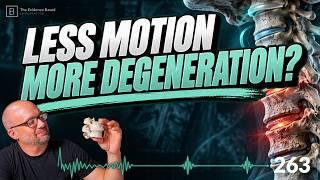
Dr. Jeff Langmaid reviews a 2020 Neurospine Journal study examining relationships among endplate defects, Modic changes, facet joint degeneration, and cervical disc degeneration, and discusses how these findings affect clinical imaging interpretation and care planning in chiropractic practice. He highlights that degenerative changes are common with age, may operate independently (e.g., facet degeneration can occur independently), and are intertwined with segmental biomechanics (disc height, segmental kyphosis, and loss of segmental motion).
Chapters
Hello and welcome to the Evidence Based Chiropractor. I AM your host, Dr. Jeff Langmane. On this week's episode, we are talking research. We're talking about the relationship between end plate defects, modic change, facet joint degeneration and disc degeneration of the cervical spine. This study came out in 2020, just this year in Neurospine Journal and we're taking a look at it. We're to dive in. This is a, I would say a hot bone of contention and no pun intended, and has been for probably as long as chiropractic has been around. What is the relationship between end plate stuff going on, modic stuff going on, facet joint changes and cervical disc degeneration? Chicken and egg? We're going to try to take a look at the latest research and break it down on today's episode. Before we get started. If you have not checked out shield, please do so. If you're looking to get factory direct pricing for your braces, tens, units and more, check out shield@super secretsales.com ebc. Their founder, Dr. Steven Brown was on this podcast just a few weeks back and he is offering a complimentary TENS and E stim unit. Looks really cool, plus free shipping on your first order. He has fast shipping, factory direct pricing and a great selection of products and they're all available right now at supersecretsales.com/ebc. I'll drop that link down in the show notes. But as we said at the top, today we are talking relationship between end plate defects, motic change, facet joint degeneration and cervical disc degeneration. So we know that this is something, I think as chiropractors we quote, unquote, sometimes literally and sometimes figuratively, see all the time in practice, right? Neck pain, multidimensional phenomenon. It affects as much as two thirds or more of the general population. And by my best estimates, it's the number two reason why people come in to see us as chiropractors. Number one, low back issues, Number two, neck issues. Number three, headaches. In most practices, that is the order of things. And as the research showcases, over 66% of people are gonna deal with neck pain at some point in their life. Quite often, depending upon what kind of practice you're in, you might have imaging available. Maybe you're shooting it in your practice. Maybe the patient comes in with previous imaging. But we've all taken a look at cervical spine X rays, that's for sure. Many of us taken a look at MRIs and CTs pretty commonly as well. And we routinely, I'm gonna say, find endplate changes, right? We see endplate changes, we see MOTIC changes of where the end plate meets the. The disc facet. Joint degeneration is not uncommon to see on X rays, MRIs, or CTs and disc degeneration the same way. We also know that the older somebody gets, the more likely you are to see these types of phenomena. So if you shoot an X ray on somebody and they're 75 years old, you wouldn't really be surprised to see everything I just mentioned on those films. If you shoot a picture and somebody is just beyond skeletal maturity at 26, 28 years old, it'd be pretty surprising to see those findings. So there is a continuum. Question is, what's the relationship between these items and really, how does it all work out in clinical practice? So these researchers found that degenerative changes at the lower cervical spine can affect different anatomical structures, the disc, the facet joints, the unclevertebral joints, et cetera. And they've also found that cervical radiculopathy is frequently secondary to osteoarthritic change of the uncovertebral joints anteriorly and or facet joints posteriorly, rather than disc degeneration. Now this gets interesting. So let's break that down and talk about it. This is something that I saw when I was working in multidisciplinary groups. I take a look patients that were pre surgical, maybe they were non surgical. I do a lot of evaluations on patients coming in as part of a multidisciplinary healthcare team. And I'd look at CT scans, I'd look at MRIs, I'd look at X rays, less commonly X rays, but I'd look at all those images and. And we all know cervical articulopathy nerve is getting pushed and crunched on, it's causing pain, shooting, numbness, tingling, et cetera, down the arm. Now, one thing that you've probably heard me say if you've listened to this podcast in the past is the nerve doesn't care. And I used to say this to patients all the time. Nerve doesn't care what is pressing on it. All it cares is if it is getting its space jammed up, it's gonna start yelling and screaming at the patient. Meaning it's not always a disc pressing on a nerve that causes radiculopathy. It could be disc, it could be ligament, it could be bone spurring, and the nerve doesn't care. If something is getting into its space, then that is a potential problem. And these researchers reinforce that fact. So it makes me feel good about myself saying that a lot of times, cervical radiculopathy, frequently cervical radiculopathy comes at, not necessarily due to the disc degeneration, meaning the disc height collapsing and the roof coming down. Right. We know our IVFs, our intervertebral foramens. Top half of that is made up of the superior bone. The bottom half of that hole is made up of the inferior level or bone. And if the disc starts to collapse in height, certainly the quote unquote roof can fall down where the nerve's trying to exit out. But they're saying that's actually secondary to what is happening around and within that joint, and that is osteoarthritic changes. So ligaments that are becoming hypertrophic, bone spurring, that's going on. Those are the things as they're finding here that are actually frequently causing the impingement on the nerve, not necessarily just the fact that the disc has degenerated. So an interesting thing to keep in mind clinically as you're looking, as you're evaluating patients from a physical exam standpoint, but definitely as you're also looking at your imaging. I saw many, many times chiropractors, other docs, chiropractors specifically, would send patients in and they say, oh, my gosh, you have a totally. You know, this is practically auto fuel. And, you know, I'm looking there and they have like 2 millimeters of space in their disc. And I'm like, man, the disc space looks pretty good. But it all, it matters the lens at which you look through it. Meaning I was seeing these crazy cases. I mean, I'd see levels, you know, if somebody had two replacement disc discs and they'd have, you know, 10 levels fused, I would see these nightmare cases. So when I saw somebody that had, you know, moderate findings, no surgical history, I'm like, oh, this doesn't look too bad, you know, as far as the films are concerned. Whereas maybe the doc who normally looked at pretty clean films, saw some moderate findings, was like, whoa, you know, hold your horses here. And it's just a matter of perception. So keep in mind as you're evaluating the films in your practice, it's like walking, you know, outside, you know, when it's super bright out and you've been. Been in the dark all day, right. Your eyes have to take a second to adjust. The same thing holds true with the images. So as you evaluate your images, let your eyes, so to speak, clear and adjust to what's going on. As opposed to jumping to that first conclusion. So these researchers also found, quote, in particular, disc height reduction, segmental kyphosis and loss of segmental motion are related with degeneration. Now that starts to get interesting. If you're a chiropractor, right? Disc height reduction. Okay, there is. It matters. It might not be the first thing with cervical radiculopathy, but it matters. Segmental kyphosis. Now, they're not. Again, I'm gonna pick apart these words because they matter. They're saying segmental kyphosis. So as you look at the cervical spine, we expect to see that nice lordotic curve. If there's some straightening, that's one thing. If the whole curve is kyphotic, that's another thing. But if you take a look segmentally, you could have segmental kyphosis with a regional lordotic curve. So again, making sure that you are being really, really specific with how you evaluate your films, I think is critically important. And then, of course, they say a loss of segmental motion is related with degeneration. Hold the phone. Right. That's probably something that we have been either waiting to hear, as chiropractors known, or it's just good to see it in pr, depending upon your practice style. But lost segmental motion is related with degeneration, according to these researchers. So that's an important thing to keep in mind. Again, I always think about motion through three segmental motion, regional motion, and whole body movement and exercise. If you're firing on all cylinders, if you're exercising daily, if you have good regional motion and segmentally, you're moving right, you're doing pretty good as far as overall motion and exercise is concerned. But if one of those pillars falls down, the others are gonna suffer. You could have great segmental motion, right? You could get adjusted all the time. You could have great regional motion. Maybe you do some stretching and you're justyou have good curves. But if you're not doing whole body exercise, you're gonna not be maximizing your health. Same holds true the other way. If you're doing whole body exercise but your segmental motion stinks, you're gonna have poor biomechanics that could lead to injury, and as they're showcasing here, could lead to degenerative changes. So important to keep all these things in mind clinically, as you see your patients, as you evaluate your patients, and as you plan for their care, what are your findings? Two things, right? What are your findings and what are their health goals? That's where the care plan comes together. What Are you seeing and what are their goals? Those two things really are what combine to form the plan of care that you'll make for every patient. So understanding how to clinically evaluate any degenerative changes. Do they have cervical radiculopathy or do they not? Do they have endplate changes or do they not? Do they have facet changes or do they not? And now, how are they moving whole body, how are they moving regionally and how are they moving segmentally? All important things to keep in mind. We also see here, as far as these researchers are concerned, that they break out and let us know. It demonstrates the change of disc height and segmental motion according to the degeneration grade. As the degeneration grade of spinal stenosis, degenerative disc. Disc height progresses. And as the range of motion decreases, the disc in facet degeneration shows a different pattern. So these things, ultimately, they are intertwined. Their conclusion. Our results may indicate that facet degeneration is a degeneration that occurs independently, rather than as a result of other degenerative factors. So these are all things that are going on at the same time, right? Is there facet joint change? Is there modic change? Is there endplate change? These factors can operate independently. That's important to keep in mind. But they ultimately are intertwined with the segmental biomechanics. So I don't know if that leads us any closer to a conclusion, but maybe it's more questions. That's what the research tends to do, is always stimulate more questions instead of actually answering anything. But it's important that these questions continue to be asked. What is the relationship? The relationship is these things are interdependent because we're a dynamic being. What is the relationship between defects, end plate defects, motor changes, facet generation, and disc generation? The relationship is these items operate independently. However specifically related to facet generation, it can happen independently rather than as a result of other degenerative factors. However, there's a caveat here that we are a dynamic being. And when we look at regional motion, whole body motion and segmental motion all are important factors in our ability to stave off degenerative changes to the best of our ability. We're all under gravity. We're all gonna undergo stress, strain, and injuries throughout time. But if we can have great segmental motion, if we can maintain adequate disc heights, staying well hydrated, doing those proactive things that we talk to our patients about all the time, to stay as healthy as possible, I think there's an opportunity to within. Everybody has sort of their range of possibilities and you just all you're trying to do with your range of possibilities is slide it to the less degeneration side instead of the more degeneration side. And the more proactive steps you can take to do that, the better off you're going to be long term. So that is today's episode. If you have any questions about that, you can hit me up. Jeffeedencebasedchiropractor.com if you have not left a rating or review for this podcast and you're listening on itunes, please slide your thumb on down and tap how many stars or leave us a review that helps more and more docs find out about this podcast. Thanks for tuning in. Thank you for listening and I hope you have a great week in practice and I'll talk to you soon.
Thank you for joining us on this episode of the Evidence Based Chiropractor. If you want to grow your practice, come back for next week's episode. If you want to grow faster, visit theevidencebasedchiropractor.com and join our MD Marketing membership today.










