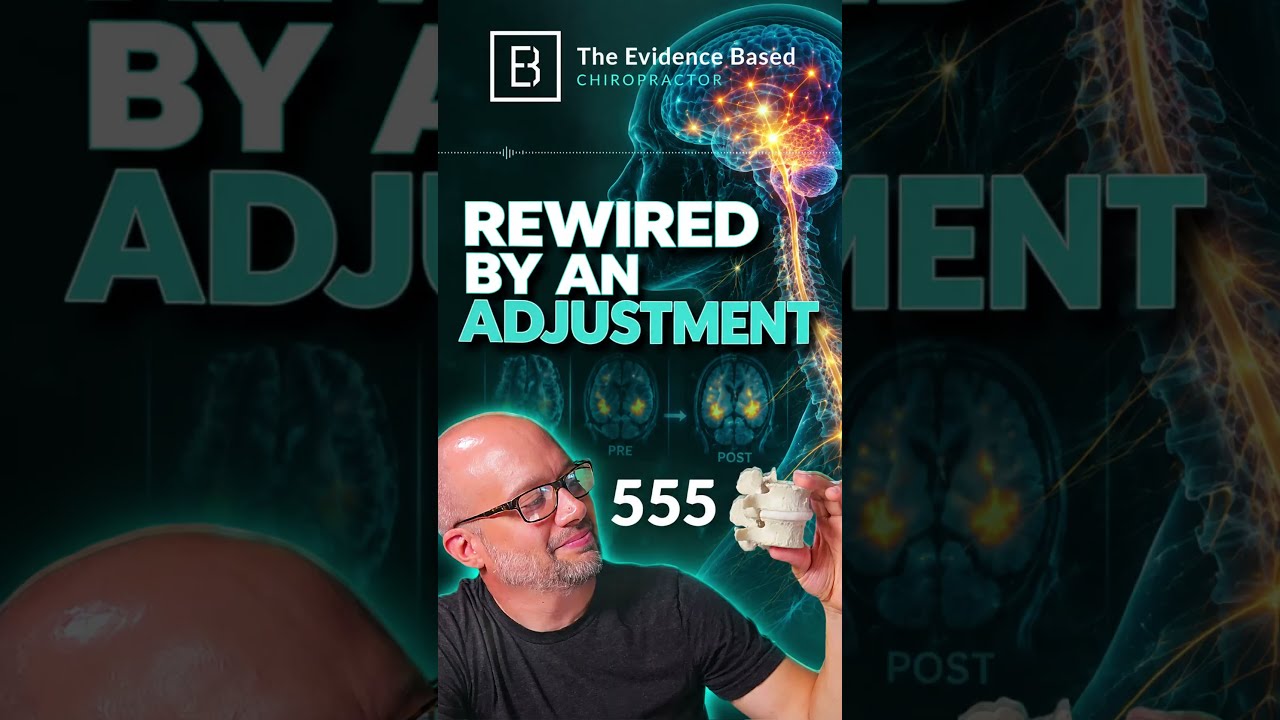
Jeff Langmaid explores what happens in the brain after a spinal adjustment. Using fMRI, TMS, EEG, and PET scans, researchers found that adjustments reliably change neural activity and connectivity in brain regions that control pain, movement, and sensation.
Chapters
And the review asks a pretty interesting question. You know, what happens in the brain after a spinal adjustment or mobilization? Not just what happens to range of motion, not just what happens to pain scores, but what can the researchers actually detect using things like functional MRI, transcranial magnetic stimulation, EEG, PET scans, other forms of brain imaging? And the answer is pretty cool. So the broad takeaway is that spinal adjustments appear to be definitively capable of changing activity and connectivity in areas of the brain involved in pain processing, movement, sensory integration, motor control.