Overcome Roadblocks to Success in Your Chiropractic Business with David Neagle
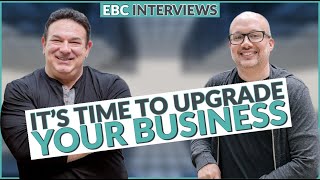
David Neagle identifies five roadblocks holding chiropractors back: lack of business acumen, unclear leadership, poor mindset, inconsistent behavior, and decision paralysis. His coaching approach starts with a free leadership assessment, moves to building a three-year vivid vision, then enforces it through a 90-day follow-through practice.
Questions this video answers
Spoken as 'LifeisNow Inc.com forward/BLA-GROW' (LifeIsNowInc.com/BLA-GROW).
The Successful Mind podcast.
He says he tripled his income in one month.
Chapters
I had an experience where I tripled my income in a month. All of the different things that I learned, I started applying to various different businesses and I found that there wasn't a business out there that we could apply it to. And a lot of it has to do with their attitude, the vision, and the willingness to do what it takes in order to accomplish that vision.
Hello and welcome to this episode of the Evidence Based Chiropractor Podcast. I'm your host, Dr. Jeff Langman. Today I have the opportunity to sit down here and chat with somebody that I think is going to bring a lot of value to the podcast. I know it's going to bring a lot of value to the podcast today. And that is David Nagle, founder of Life is. Now we're going to dive into some roadblocks. Chiropractors listeners might be having some ways to overcome it. And David, how you've helped countless professionals, including many chiropractors, level up in their life and their business. Thanks for taking some time and chatting with me today.
Thanks for having me, Jeff. It's great to be here.
It is my pleasure. So for docs listening, there are a lot listening and watching that just they might have heard of or considered having a business consultant in the past. But many, including myself, might be curious. How do I know if that's even right for me? How do I know if I'm encountering any of these roadblocks that might be inhibiting my growth and success? Let's start right there. What are some common challenges when people start conversations with you that they're struggling with?
Well, common challenge is that the number one challenge is that they're not doing what they love to do every day. They're doing all kinds of other things in the businesses that need to be done, but they're doing it and it's taking them away from what it is that they really want to do. Now they can be stuck, like their business can be stuck. They're not making any forward progress. They're dealing with the same problems over and over again. They have trouble with employee retention or hiring to begin with. And, and they're not making the kind of money that they want to make. I mean, that's a real big one. They, they know that they should be making more, but they can't seem to get there.
Those are, I think there's a lot of people crying right now as you're describing, a lot of, a lot of listeners exact life. And there are so many of us, I was going to say as chiropractors that get into this because we love people, but we just don't have the really expertise that skill set needed to perform in business. And bridging that gap is just, it feels like an impossible task for so many chiropractors out there. What have you seen working with so many docs with that?
Well, I think you're, you're saying it exactly right. You know, people, it is my experience with all the, with all the major professions, that person has to go to school to get some kind of a degree to be able to do great passion for people. They love to help, they love sound solve problems based on whatever it is that they're doing. But they don't have any business acumen. I mean, that's not their forte. They don't teach them how to do it in school either. So they come, they come out and it's almost as if this is what we found, we found this with lawyers first, by the way, which I mentioned to you, we do a lot of attorneys, is that there's almost this assumption because they're so intelligent that they should be able to run a business without any problem. Like it's something lower on the scale based on what they're qualified to do. And the truth is, is that it's not just one skill set. It's a myriad, myriad of skill sets running a business. You got sales, you got marketing, you got hiring, you got team building, you've got culture, you know, and earning money, right? Earning money so that you can be profitable because profit is the very important thing. With, with all of that said it, I find we have found in 24 years that it, that there is one thing that this stems from. They don't understand what kind of a leader they are. And there's multiple kinds of, of leaders. One of the things that we do is we offer a free leader assessment so a person can figure out exactly what kind of leader they are. Now let me just explain this for a second because it, if I don't explain it, people might not understand it very often A person is. So the fact that they started a business at all means that they're a leader. But there are certain things that they don't like to do and there's certain things that they shouldn't be doing. And if they don't know how they lead, what's natural for them, they won't know what skill set to, and they won't know what to hire for. So that's kind of, that in a, in a, in a nutshell that causes that Problem. We're also raised with this idea, especially in the United States, that we, we should have. We have to do everything we like. It's not okay to ask for help. Tons of people are out there just struggling like crazy because it's somewhere in their mind that it's not, it's not okay to actually ask for help. That there's somehow that makes them less of a person or something. But when you, when you learn how to ask for help and you know specifically what to ask for help for, it can make your business skyrocket in a very short period of time.
I believe that. And the something you mentioned there, I want to make sure that everybody listening and watching really grabs ahold of is the leadership style and being able to understand that, because it really impacts, from my perspective, nearly everything that you do operationally and as the visionary in your business, you know, to every degree. So we're going to drop some links down below. If you are listening and watching and that, that this is news to you, click on down below. Head over. Let's ensure that you get a better understanding of who you are so that you can lead at a higher level. David, there's a couple things on your website that I noticed and I want to dive into. I love it. You, you break down mindset behavior and results and mindsets first. And that's something I think many of us as technical health experts, we're getting all the degrees, we're learning all the techniques, but man, mindset is such a critical foundational element to everything. Dig a little deeper, expound on that a little bit for me, because I think a lot of docs get caught up in the technical aspects of practice and overlook how important mindset can be. What's been your experience?
Well, there's. There's two main things that mindset controls. It's going to control your perception and it's going to control your attitude. And if you don't understand how to do that, well, just from a perception perspective, you're not. There's things you're going to miss. There's opportunities you're going to miss. There's different kinds of, we like to call them quantum leaps within a business themselves that a person can make to, you know, make rapid progress forward. If you, if you don't have the right mindset, you won't see it. The other thing is, is a person's attitude, right? I mean, doctors especially know that mindset is extremely important in helping a person heal. If you come in and you want to just do whatever it Is that you do. But your attitude totally sucks about what you're doing. Chances are it's not going to work as well as if you had a really great attitude about what you're doing. And mindset affects the culture of the business that you're building in an enormous way. People want to work in a place where they feel part of something. They feel that there's growth, there's vision. Right. It's important for the leader to have vision. And all of that is based on having a mindset that has a value in personal and professional development for that person's life. It's extremely important.
That makes a lot of sense to me.
Where do behaviors fit in after mindset Behaviors next. Because if you. If you cannot follow through on what it is that you need to do, you're not going to build the business. And what's really interesting is that people generally tend to not do things that they don't like to do. And in business, especially if you're going into business for the reason of you love your product or your service in business, but business is not the thing that you love. Many of the things that you have to do in business, you're. You're not going to like to do. So you're going to procrastinate on following through, or you're not going to do them to the best of your ability. You're not going to make yourself really great at those different, different skill sets. So, you know, we do a thing with people where we take them to a process for 90 days to show them literally how to. And how powerful it is to strengthen the idea of becoming your word. Do exactly what it is that you say you're going to do. But here's the criteria that we have for doing this. Number one, they have to pick something that absolutely needs to change in their business. Okay, so that seems kind of obvious. But the second part is they have to pick something that they're willing to follow through on. I don't care if they have something that is the most important thing if they're not willing to follow through on it. We haven't picked something different. Because here's the truth. If you can develop the strength inside of yourself to do what you say you're going to do, there's absolutely nothing that you can't accomplish. But that has to come first, because if you don't do it, you will not follow through on what's necessary in order to become a success.
I love that and could not agree more. I was saying that the number One predictor of success is consistency. And you're talking about it right there with the actions you take and the follow through. And the third pillar of that stool ties into results. How do you view the word results? And when you're coaching and working with these practices and docs, we like to say results follow actions. It sounds like we're going to be in pretty good alignment on that. But dig a little bit deeper when you talk about results and how mindset and behavior fit in with it. What are some things out there that listeners need to know?
So results do follow actions and actions follow decisions. Okay, so it's another big problem that people have is they get stuck in the decision process, right? They're looking at various different things in their business because they have a lack of skill or a lack of education or knowledge around certain things. They don't know how to make a decision, to take the action, to get the result. But here's the thing about results. Results just aren't the result of the action. It's data. Right? Results equal data. So it's telling you the quality of the decision that you're making, how well the follow through on that decision is actually working and it gives you information to now determine what needs to change. Unfortunately, many people look at results and take the results personally. And when they take the results personally, now we're going back to mindset, see how this wraps around. If you take the result personally, you're not actually looking at it as data and it starts to destroy your confidence, your self esteem, your vision of where it is that you see yourself going in your business. And all it is is data. The truth is, is that we can't learn and become successful without having repeated things that go wrong or don't work or even failures to some extent because they tells us what we need to do differently in order to change to get those things right. It's necessary 100% for growth.
Yeah, that is a fantastic explanation, you know, of that. And I think you're just uncovering so many important things that everybody listening needs to become more in tune with. If you're looking to really build, grow and scale your practice and be that leader that I think most of us start our businesses and practices hoping that will be, but we haven't really fine tuned tune that skill set. And in line with that, working with a variety of different disciplines and specifically working with chiropractors for decades now, you've probably seen that there's many younger dots, some more, let me say, advanced docs as well, in Age that maybe haven't gone through any business consulting or coaching in the past. Maybe it's something that they've been scared of, nervous of, whatever the case may be. What are some tidbits that you can offer to people listening that probably know, you know, starting with that leadership assessment is something that they should be doing but haven't taken the plunge yet. What can they expect?
So the first thing, the very first thing that I do with anybody that we're considering consulting was, is I asked them what do they want? What do you want out of your business and your life? Because if we don't know that, we don't know why we're doing what we're doing. We need to understand why we're going to make changes, why we're going to invest money, why we're going to learn, why we're going to develop skill sets. All of this requires change. And if a person doesn't really have a good reason to change, chances are they're not going to. So it's important for me to know why a person actually wants to change. The next thing is developing a plan, creating a concrete vision of where this is going to go. So we put people right through a visionary process so they literally build out a solid three. Now we do three years. Okay. We follow Cameron Herald's book Vivid Vision. I don't know if you've ever read it, It's a great book. And the reason is because I love the way that he breaks vision down and I love that he uses three years. For years we did like him. Can you see yourself five years down the road or ten years down the road? And people struggled with it and Cameron found out that it was, people had to grab onto it a little bit easier at 3. We've had a lot of luck with people that really work there with the three year vision in mind. So then from that point on, the question is then who do you need to become as a person in order to create this vision? And then we build on from there. Now, from there it could go in a lot of different directions depending on what the vision is, who they need to become, their willingness to change and grow, the amount of money that they have to invest in their business or whatever is required from a resource perspective. But what we've, what is very much true about what we do specifically is that we help people accomplish those results very, very quickly. It was one of the reasons why I got into the industry that I got into. I had a, an experience where I tripled my income in a month. And I was so astounded by what happened because I didn't understand what happened. I was kind of an unconscious competent that I spent seven years studying to figure out exactly how is this possible because I was a high school dropout. It was not something that was supposed to happen in my life. And that all of the different things that I learned I started applying to various different businesses and I found that there wasn't a business out there that we couldn't apply it to, that people literally could make rapid progress providing that there were certain things that fell into place. And a lot of it has to do with their attitude, the vision and the willingness to do what it takes to, in order to accomplish that vision and then get out of the way and let other people that you need to bring in do what they do in a, in a really great way. So it's empowering people, building a culture.
Yeah, that, that is, that, that's impactful. And the way that you've described some of these systems and processes and just the manner of thinking about often goes overlooked when we're head down taking care of patients, which is such an incredible value add. When you think about the other, I'm going to say the other side of the coin, who, who maybe isn't the best client for coaching or consulting. What are some of those things that just lead to maybe lackluster results?
Yeah. So people that have a, a terrible need to be right. Okay, so there's two, there's two things. A need to be right and need not to be wrong. Right. So what they do is they take any kind of valuable coaching or consulting in a way where they take it personally and they think that they're being attacked. Right. If they don't have that emotional maturity and development inside of them, it's not going to be a good fit. We wouldn't take on somebody like that, by the way, because it would be a miserable process for them. You know, the idea is that we're not trying to say that you're wrong or that you've done anything wrong. In fact, it's the opposite. We congratulate people that have had the courage to go through what they've gone through and start. And the idea that they're helping, you know, humanity, they're doing something positive, we think is absolutely fantastic. But if you have the need to be right or the need not to be wrong or you're going to be a person that has to do everything themselves and, or if you have an issue with spending money. Right. Many people have Terrible, terrible money hang ups and that will totally prevent you from from moving forward. Outside of that, we can work with most anybody.
I think you've offered so much for people listening and watching to think about to consider. I'm going to encourage everybody listening and watching to certainly reach out and connect. What's the best place that people listening and watching can connect with you? Get in touch with your team and start to get involved in scaling up their life, their business.
First of all, if they want that visionary leader assess assessment, you'll put the link in. But it's LifeisNow Inc.com forward/BLA-GROW and you'll put the link in. If they want to just listen to our podcast, go to the Successful Mind podcast. It's a business podcast, it's small business podcast and they'll get a lot from it doesn't cost them a thing and we give them a lot of fantastic content there every week.
I love it. Everybody listening and watching. Where to drop those links down below. So if you have not taken the leadership assessment yet, please head over and do so. It's going to be super valuable information that you can utilize put into action. It also gets you within David and his team's ecosystem so you can continue to learn and scale up. Additionally David, love it on the podcast side of things. We're gonna drop that link down below as well. Especially if people are listening to this podcast. Add one more in there. Especially a successful mind podcast which is David's focused on small business there I'm looking at there are hundreds upon hundreds of episodes for you to be able to dive into there. That is a great, great place to learn and to connect. David, I really appreciate you taking time out of your busy day sharing with everybody in my ecosystem today and I hope everybody heads on over connects with you and your team so that they can make this year and beyond their best year yet. Thank you so much.
Thank you Jeff. It's been an honor.
Thank you so much for watching this video on the evidence based Chiropractor channel. If you don't want to miss a single thing, please please subscribe to our YouTube channel so you can get notifications of every video we put out and we put out new content each and every week so be sure to subscribe today.










