Shockwave Therapy: A Game-Changer for Chiropractic Practices | Sal from Oceanus
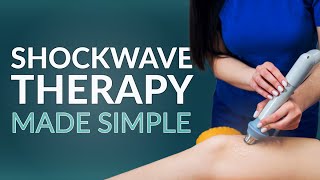
Sal from Oceanus discusses shockwave therapy for chiropractors: pulse waves that dilate blood vessels and heal soft tissue. Factory-direct pricing has made devices affordable. Typical uses include tendinopathies, plantar fasciitis, and trigger points, with quick payback and minimal service costs.
Questions this video answers
August 29, 2024
Approximately $5,000 to $10,000
Three-year warranty
About 4 million pulses
About 2 to 3 million pulses
Chapters
Hey, everybody, I'm here with Sal from Oceanus. Today we're going to be talking about Shockwave technology. You probably have heard about this, but it is making a massive impact not only in people's lives, which is number one, but also in the revenue in many chiropractors lives, which is a really, really great combination when you have high patient satisfaction, high clinical efficacy, and it can be a revenue generator. So we're going to dive into this much more. Sal, thanks for coming on and chatting today.
No problem. Thank you.
Hey, it is my pleasure for those docs out there who might be a little unfamiliar with Shockwave. I guess let's just start there. What is shockwave? How would you describe it?
Basically, it's a shock wave. It generates a pulse, a wave pulse, you know, into the tissue and that penetrates in, dilates the blood vessels, oxygenates, promotes healing. The technology started, you know, probably in the 1980s with, you know, with lithotripsy to break up kidney stones. And since then, you know, the technology has been refined and reduced to where it can be used for inflammation, pain, just soft tissue recovery. And then we've seen a, you know, a major shift in the last, you know, last decade where the technology has moved to what they call like a radial or electromagnetic shockwave to. And that brought the manufacturing and the cost of the device is way down. So in the last, you know, five or so years, the now these machines are affordable to put into a chiropractic's office or, you know, any physician's office and do treatments there. And since they're affordable now, they're profitable. So you can provide these treatments, you know, sell a series of treatments and, you know, pay for your machine and, you know, have a good revenue generator that is profitable and quickly profitable with a low cost of ownership. And that's new, that's relatively new compared to the other modalities that have been out there historically, like ultrasound therapy or laser therapy. So Shockwave is kind of the next. The next one. Yeah.
This has been something that I have seen, you know, really the research taking off. And a lot of that's on the back of a lot of the outcomes that patients are getting. And doctors are getting really great results with a wide variety of patients that we'll dive into in a moment. But something I'd love to dig deeper on is really that cost. There's a lot of docs, maybe they were looking at Shockwave 5, eight years ago, early adopters, and the price scared them away. There's plenty of docs out there listening as well that might have a unit, but maybe they spent a lot of money. I mean, in some cases it could be upwards of $50,000. One thing with Physio Pro that, that I noticed was that you guys have factory direct pricing and this makes it really affordable to productor to bring this in and be profitable very quickly. Can you talk a little bit about your pricing model, Factory Direct and really the advantages of affordability with Physio Pro?
Yeah, we decided that because, you know, we saw that these machines as we developed ours and with the others on the market, they're very easy to operate, they're not complicated, so they don't really require a lot of training and hands on and they're not like the big shock waves of the past that require installation and you know, complexities like that. So they're simple. More, much more basic devices now because the technology has come so far, so we can kind of cut out the middle man. A sales rep or distributor doesn't necessarily have to go in and provide training and staff training. It can usually be done with like this, a zoom call or a phone call to get the physician up and running with the machine. So yeah, our machines start anywhere from 5,000. They go up to about 10,000 for something and the same specification as a 20 or $30,000 machine. Because we're factory directors, no distributor, no sales rep, it's just us. We have a service center and a manufacturing plant and you know, we provide all the service, of course, and spare parts right here out of Florida. Uh, but that model has just been the best because our incentive was, you know, we got to put this into the physician's office. They need to be able to turn it a profit on it. And my goal was to have them be able to do that in less than 60 days. And some of them are doing it within 30 days. They have their machine paid off. And so everything is just pure, pure profit for those for their machine. And we've had a lot of happy customer success stories. We have a lot of references from it too. So. And that's the affordability because you, I don't know, you know, the price you charge per treatment changes depending on, you know, what city you're in, kind of area you're in, or how many treatments you're selling. So but on average you can, you know, you can sell a treatment package for maybe a thousand dollars for eight to ten treatments and you get the patient keep, keep coming back. They'll usually get an immediate result, some immediate pain relief after the first and as you continue the therapy, it the, the healing process really begins to take. And then like you said, the efficacy is there. The clinical data is there on all kinds of things like, you know, anything soft tissue, trigger points, plantar fasciitis, tendinopathy. There's lots of data on, on that. So it's out there. So our just our core competency, our philosophy was, hey, let's get this. So the average physician's office can afford these. They don't have to spend $50,000 on something that's not going to make them any money.
I think that's a great way to go about it. And you touched upon something that I think is really important for a lot of docs listening and watching, which is the training. Sometimes we can bring in modalities into our practice and you know, it takes you years to become actually proficient with it, which is a really challenging in the operations of business. When we look at the training necessary in the learning curve with Shockwave, how would you describe that? It sounds like it's relatively short, very simple.
I mean, if you're doing an ultrasound therapy, pretty much the same thing, you set your machine. We use ultrasound gel just like you would with an ultrasound. So this is the same as that, no different. And we have in our software on the device, there's actually pretty much like the user manual pops up for every treatment you want to do. If you want to do a knee or shoulder, just click that. It'll give you options. Click it. It'll preset the machine for you so staff could use it. It's very, very user friendly. It kind of presets everything for you. Just hit start and then just go. So I find that usually if we can get the doctor on the phone for half an hour, they've got the machine completely figured out. And if they do require trainings, you know, some facilities have large staffs where they want every staff member trained. We can do that too. It's $180 an hour, but we can do that. We can travel there and get that done. We rarely do it though. Most people kind of figure it out on their own.
Yeah, that's great. When you can bring down a learning curve, that really gives the opportunity to implement faster, which I think is really important. And one of the components that you mentioned that I'd love to come back to is you mentioned the different areas of the body that can be helped with Shockwave. And one of the things that I noticed with Physio Pro is that you have some programmed protocols that make it really easy for a doctor to get started with some predefined protocols based upon body region. Can you talk about that a little bit?
Yeah, they're all in there. I believe there's maybe 30 or more. There's plenty of them in there. So those are the one, the therapy protocols that have the most clinical data behind them. So you're going to have trigger points, you're going to have upper and lower back, you can have around the joints, you know knees, elbows, tennis elbow, things like that. They're all in there. So when you turn the device on a human body pops up and you just push the part of the body when it'll work and it'll give you you know, three or four options of what to do and you know there's you know, chronic or acute type treatments, that one's a little stronger than the other and select that and then you just pretty much hit start and it gives you, it tells you how to position the machine, how many pulses to give per treatment. It presets all that for you actually and tells you which therapy head to use. Your three therapy heads, different sizes. So it really walks you through everything. That was our goal was to make this thing very user friendly and take, take the complexity out of this device. So it's high end medical device but it's also should be simple for, for everybody to use. But yeah, all those protocols are in anything you can think of that's soft tissue related joints and, and all that, it's in there.
The docs listening that might be maybe they're just learning about Shockwave. What are some of maybe the top three to five conditions or body regions that you see? Clients using Physio Pro getting great results with their patients.
I have seen as any tendinopathy, patellar tendinopathy, a lot there, great results. Plantar fasciitis in the feet. We do a lot of sales to the podiatry market. They love them. Trigger points. Yeah but anything you know, soft tissue, you know, calcific tendonitis, things like that. And then of course just your general like sciatic lower back pain because you can put it right on those, that muscle group back there and really loosen things up and do a deep penetration into the tissue. So that is great.
So for the docs listening that maybe have been exploring different shockwave units and I'm going to encourage everybody to really keep a keen eye out for Physio Pro not only because of the pre program that you discussed which makes it super easy to implement, easy to understand Training and affordability. But, and maybe this is some of what you'll answer with. But for the docs out there that are shopping around what are some of the unique selling benefits or what are some of the unique benefits that Physio Pro brings to the table? And why should docs really take a look at, take a look at Physio Pro?
Well, ours is electromagnetic and it's so it's an electromagnetic system. So it's very, very self contained. Some shock waves are electro hydraulic, they have water, salt water in them. Some have, are pneumatic there have, they have air compressors. So from a service standpoint ours is electromagnet and that's kind of the future of shockwave. Anyway, that's where it's all headed. You know, you have you know, less moving parts, you're going to have less service issues. And of course we do provide, you know, three year warranty on everything and we service everything here. But yeah, just that the cost of ownership, your service costs are going to be less. Another thing is the therapy. The handpieces that you provide the therapy with on the patient, those handpieces, they have a lifespan to them. The industri standard is about 2 to 3 million pulses which is usually 1 to 2 years of treatments for the average clinic. Ours goes to 4 million pulses. So ours is the leading, the long, you know, we have the most longevity to our componentry. Our accessories last the longest out of anyone else in the market. And then as far as, you know how comparing to the competition, other devices, if you look at the detailed specifications on any machine, they're just, they all, you know, they're all about the same every, they all kind of max out around 200 millijoules of power, 25Hz frequency. They're all kind of the same in that regard for power and frequency. So and when we, when we discovered that, when we saw that we said okay, you know, if you made this user friendly, low cost of ownership, easy to service and then you'd have something to, you know, so that was, that's kind of become our competitive advantage there.
That's great. So for the docs out there listening and they're curious how they can implement this in their practice, I guess in short and basic language and how does it work and where can you use it most effectively?
So it works, it's just, it's an electromagnetic shockwave pulses, you know, penetrates into the tissue that promotes healing. It's a deeper penetration than ultrasound or laser therapy. So mainly, you know, all soft tissue areas of the body, but especially extremities and joints. So shoulders, elbows, knees, ankles, bottom of your feet. It's excellent for, for the joints because it'll, it'll reduce inflammation and, and create a, you know, motion and pain relief immediately right after the first treatment. And as you continue treating, you'll see, you know, much, you know, rapid improvement over multiple treatments in the area. So, yeah, so extremities, joints, hips, as well as your larger core muscle and soft tissue areas as well.
What are some of the differences? So a doc listening, maybe they have laser in their, in their practice currently and the patient doesn't feel anything with that. And often laser can take some time to see result. With shockwave, does the patient feel it and do they typically feel relief pretty quickly?
Yes. So that's kind of one of the benefits. It is similar to doing a laser treatment where you're doing a multitude of treatments over a course of time, allowing some healing in between. But yeah, the shock was, they, they, they, they make a noise and you feel the, the pulse first just feels like, you know, something vibrating on your skin. But after maybe 15, 20 seconds, you start to feel kind of heat really almost deep in your tissue. And then it, the feeling kind of changes a little bit after that. And then, you know, by say the third or fourth minute, you're actually getting some, some pain like relief in the area. And then when the treatments are very short, they really only take their five minutes or six minutes, sometimes less. And by the end of it, you'll have kind of that immediate relief that lasts a good amount of time even into the next day. And as you do more of that, that healing will progress. But yeah, so the patient does have a, does feel it and it's, it's, it's, it's not painful. It's, it's actually a kind of a therapeutic feeling.
Thank you so much for watching this video on the evidence based Chiropractor channel. If you don't want to miss a single thing, please subscribe to our YouTube channel so you can get notifications of every video we put out. And we put out new content each and every week, so be sure to subscribe today.










