Streamline Hiring & Coverage with Chiro Match Makers: Insights from Dr. Allen Miner
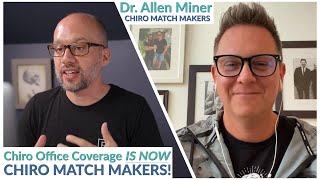
Dr. Allen Miner explains how Chiro Matchmakers uses assessment tools to fix hiring in chiropractic practices. Most owners hire clones of themselves instead of people suited to the role. The service now includes temporary coverage to fill gaps while you recruit.
Questions this video answers
February 18, 2021.
About 700 applicants.
About 5 weeks.
Around 3–4 months.
Just under four years.
Chapters
Anybody that's been following this podcast probably knows that under the evidence based chiropractor historically has been chiro office coverage. But you and I started talking and really saw an unbelievable framing of what you guys do in the staffing world and what we have been able to do in the coverage world. And I guess they're going to drop the announcement right now that that Cairo office coverage is officially part of Cairo Matchmakers. When we talk about really matching docs with associates with CAs, you know, really the core services historically that chiro Matchmakers has been involved in. I know you guys have helped hundreds of docs, yet probably many docs listening to this, maybe haven't heard of that this is a thing and that you can help them. Why is the hiring process so difficult for so many chiropractors?
Well, one of our favorite things to say, and this is very true for me, Jeff, is I tend to operate best out of my scar tissue or out of my failures. I have right now we operate six practices, four in New Mexico and two in Dallas. And we had built one big practice and then decided to start opening other practices. And I don't think I could have created more chaos and a bigger nightmare. I had this beautiful business that was going great, and when I moved into these satellite clinics, it was at times I felt maybe one of the dumbest things I'd ever done. I built a really successful practice when I was in the middle of it every day. But when all of a sudden we have these satellite clinics, I wasn't there. And what became evident very quickly is the people that we had on the team, their behavioral makeup, the culture of that group of people, became incredibly important for the success of the office. And what I then started to realize was when we had somebody who wasn't quite the right fit or the right person for our office before, it was easier to cover that up when we were operating one office. So it literally was two separate $300,000 mistakes to have to close these practices because of the wrong people in place. Great people, not the kind of people who were hardwired to be running these satellite clinics, not people that were complimenting each other. So what we then very quickly realized is almost all chiropractors who've been associates have this rite of passage martyr story about how bad their associateship was. And we started realizing from our own mistakes, this is horrible for the profession. If we're going to grow this profession, this cannot be the case, Jeff. And you know, the analogy we often use is a brain surgeon is technically an Associate doctor of the hospital. But they don't say, I'm an associate doctor. They're looked at as a very valued colleague. So we recognized we've got to do better in this space. And through this led me on a long search to start realizing there's a lot of really cool technology that helps us analyze and assess the culture of a business, the different people on the team. And we started to realize when we find the right person for that position, we think of it as blood typing. All of a sudden, things like motivating a person go out the window, because when they're hardwired for the job you have, they love it, they showing up. They're great at it. They're a natural fit at it. And when you build your team like that, and most of the chiropractors here, Jeff, have gotten lucky with some hires and hired some great people. And you know how what a great experience that is. I don't think a lot of chiropractors realize there's a science behind that. And then of course, most people online have had those nightmare hires too, that just in today's world of Google, you can't afford to do this badly. And those bad Google reviews that come from somebody who's not the right fit on the team can stick with you for, you know, sometimes years and years and years. So we got into the business of first assessing teams to see who is the right fit. And I don't know, probably Jeff, after the 50th clinic said, okay, can you help us find that CA you're talking about would be the great fit or our next hire, or can you help us find that associate doc? We kept saying, no, we don't do that. No, we don't do that. By the 50th office, we said, we better figure out how to do this. So we then got into the staffing business and we used all of these different license technologies that we have that no office would ever want to buy or need to buy. And it really became the evolution of chiro matchmakers. And so it's how we find the right person for the right job and the right fit. And of course, these doctors, you know, they'll spend an average of 20 to 30 hours hiring a person, and a lot of times not even know if they get it right. They're doing it off of gut, Jeff. So we take that burden off of a doc's shoulders so they can use those 20, 30 hours doing what they do best, which is serving patients or being back with their family. So that's kind of a quick, brief, broad history of what brought us to today.
I think it's so interesting because of the assessment tools in particular. And I took an assessment with Dr. Mark Mao, one of our friends, and it's like you're taking the assessment and I'm sitting there thinking, well, I'm nuanced and different. This is not going to capture exactly who I am. And of course the results come back and you're sitting there saying, oh my gosh, this thing looks like I'm looking in a mirror right now. So for docs that maybe are unfamiliar with assessment tools and how that could even integrate into their practice, break down a little bit of why are these assessments so important? What is an assessment and what does it entail? What's that process look like?
Certainly, you know, most chiropractors have some degree of familiarity with some of the simpler or lower level assessments like DISC or Myers Briggs Colby Strength Finders. They're a dime a dozen. And using that and nothing else is going to help you in the hiring process. The challenge is a lot of them are not what we call EEOC compliant, Jeff. Equal Employment Opportunity Commission. So the Discs and the Colbys and those you're not, they consider them discriminatory, which is odd because I wouldn't necessarily see necessarily say they are. But that's why Strength Finders is another one. You're not supposed to use that to screen people when hiring. And so that's the first step is, you know, anything's better than nothing, but be very careful. You're using something that's EEOC compliant. But then what we started to discover with my clinics, Jeff, is there's this other generation of these assessments that Fortune 100 companies use that are just, I don't know, it's just the difference between driving a station wagon and driving the new Porsche 911. They're just. Or the Tesla. There's different layers of technology and, and these companies lean on these heavily. The reason that chiropractors don't know about them is the average license for one costs $100,000. And you know, sometimes you can find them where they might sell you a low level license for seven or $8,000. But if you're hiring a person every year or two or a couple of years, it makes no sense. So that's something that's kind of a unique blue ocean thing that we're able to give chiropractors access to these different assessments that we own the license on that they'd never have access to. But simply put, we all do have a certain cognitive ability that's measurable. The example there is if you've hired a CA and two weeks in, they know your whole office and every system and they learned it like that versus if you had a CA and four months later you're pulling your hair out because this is the 10th time you've been through this and they don't even remember going over it. That's a cognitive thing and you can measure that in a safe, legal, EEOC compliant way. So that's one assessment we use. Another is the stress levels a person's carrying in burnout, you know, that's a big deal if you're burning some, if you're bringing somebody on who's got a high level of energy but they're about fried out, they're going to burn out on you versus somebody who's got tons of energy left to bring on the team. Another thing we look at is loyalty. That's maybe our most important factor. But every office is different. But you know, I want to bring people on that have a high likelihood to be with me for five or 10 years because I realize the churn and turnover of staff, it costs us a lot of money, a lot of time drain training people. And so when we find great people, we want them to stay long term. That's something that's measurable. And then maybe the biggest one, Jeff, is and this is where we all get it wrong as chiropractors and really any industry, is the person in front of me interviewing actually the same person I'm going to be working with three months, six months down the road? And what happens is we all have this natural hardwiring things like how extroverted or introverted you are, how systems oriented you are, or if you're a very big vision person or even your patients levels, will you stay with something long term consistently? Are you on to the next project really quick? And these different traits are great for different roles in the practice. And that's why we gotta make sure we find the right person for the right role. But what can happen is sometimes another thing we measure is stress. And so any stress comes from seven areas of your life. There's financial stress, there's health stressors, there's relational stressors, job stressors, even like friend, you know, if your best friend just stabbed you in the back. So what happens is you have all these stresses in your world, you're going to adapt your innate behavioral style to adapt to the stressors in the world. Those two Things combined, how you're hardwired, we call it your basic natural self and the stresses you're adapting to, equate to then the person you're seeing in front of you today. And if somebody's changing a job, it's pretty safe. Guarantee they've had job stress, they've had financial stress. So you're not always getting in the interview who you think you're getting. And again, if all of a sudden you've had the experience of three months later, you're like, that is not who I thought we were hiring. This person's totally different. That's what's happening. Well, those are all measurable before you even sit down for the first interview. And again, if you're a doctor running a practice to be wasting your time sorting. You know, our average CA position, we have 700 applicants. It takes hours and hours to sort through those. And that's what the team does. After we sort through them in the resumes and the geography and the location, then we apply these layers of cognitive assessments to weed these people down. Then the behavioral assessments. So by the time we're done, we're sending in just a small handful of people to that doctor to interview in person. So who we already know on paper are an ideal fit for the job they have for the values and the culture in the office. And that's how we get it right. And so we end up averaging. You know, we've now been doing this for just over almost four years. Just under, under four years. And our track record of how long our CAs and our DCs stay with offices is really impressive because we get this right up front, which of course then brings stability to the practice, which oftentimes allows docs to either serve more people or to buy back some of their time freedom. And you know, it just makes. Then we start to see the trickle down to where they're able to pay their associate doctors more inc. To truly come in there like the brain surgeon analogy and earn a true living, a six figure living. And everybody's happy and everybody understands their role. And that's really the niche that we're providing in this space right now.
It's so important because of a couple different things that you brought up that I think are incredibly impactful. Number one is the propensity for burnout. Number two is, is that person going to be a fit? It is such a big commitment for many docs when they're adding on, it might be them and they're adding on one other associate. Right. Many docs don't have teams of 200, right, where the incremental change for the next doctor is little. These are big, big impacts for many docs. And I see so many docs have exactly, as you said, these horror stories of challenges. I guess for a doc out there listening right now, that might either be thinking about adding on an associate, maybe it's a doc who's looking to be a member of a practice. Right. On the other side of the equation, what's the thing that you've seen, the number one thing you've seen docs get wrong when trying to expand, grow their practice or add on another physician?
It's looking for somebody who's like them, you know, and it's, hey, doc, I like you. You seem kind of like me. We have the same philosophy, outlook, technique, perspective. Let's join up. And that rarely works out. And so, you know, there's ranges of how we're all built. Jeff. But at the end of the day, the best teams are the most diverse teams. And we see that without a doubt, because different people from different backgrounds, different makeups, have different strengths, have different abilities and capabilities. And a good team is made up of somebody. The team knows all the different positions and roles and they find the right person for each of those. A broad example is you'll have a team that's incredibly clinically minded. They're detail oriented, and so, you know, everything you'd expect is great. Their notes, their bookkeeping, their care plan, their technique. But those businesses can really struggle with attracting people in and growing the business. And then you get the other extreme where it's like everybody's a party. And these clinics tend to have big numbers and they grow, but they're just a nightmare clinically. You know, nobody's following care plans, they're not doing post evaluations. The notes are a mess, the bookkeeping is a mess, the data is not being tracked. And so obviously that's an extreme situation. But I think that's the biggest mistake is you're not looking to hire a friend you want to spend all day with. You're looking for somebody who's hardwired to run the role you have and really enjoy that work because they're going to show up fulfilled. You don't have to motivate them externally. And guess what, they're probably not like you as an owner of a clinic or if you're looking to be an associate doctor. And by the way, 70% of our profession is really hardwired to be great clinicians and end up having to be in practice, in business for themselves, just because traditionally that's the only way you can make a decent living. And we're out to change that. Jeff. You know, these docs are so valuable that, you know, they really can come on board and bring so much value taking care of practice, members, of patients. And when we can educate the owners to see and value that and stop comparing them, like, hey, you're not out there doing screenings like I once did and didn't get a bunch of people. It's like, no, of course they didn't. They're not. That's not them. But they're going to give great care to the people that you bring in. So that's really our space is educating. And to go back to your question, you've got to understand who you are, you got to understand the role you have and you got to appreciate the difference of people you need in each of those roles to really build a successful team. Something corporate America has known for decades now. Jeff. But somehow we kind of have missed the boat on in our profession just because I think we don't maybe have always the revenue and the insight and the tool that access to some of these tools that other, other industries have.
Yeah, I love the way you frame that because a lot of what I try to do personally is look at what's going on outside of chiropractic, what can we learn from it and what's relevant that we can bring in to better ourselves as healthcare providers, as businessmen, businesswomen and as clinicians as we ultimately serve the people in our community. And this is going to tie into, as we get towards the back end of our conversation, I think an exciting announcement because we know it does not happen overnight. Finding that perfect fit for your practice, sometimes that could take a little bit of time. And anybody that's been following this podcast probably knows that under the evidence based chiropractor historically has been chiro office coverage. But you and I started talking at the, I guess last year, at the turn of this year and really saw an unbelievable synergy, an unbelievable framing of what you guys do in the staffing world and what we have been able to do in the coverage world. And I guess we're going to drop the announcement right now that that Cairo office coverage is officially part of Cairo Matchmakers, which is going to give tremendous opportunity for the docs that worked with us in the past, but also to be able to help and serve exceptionally more people really throughout the world, focusing on the domestic United States, but expanding worldwide as time goes On. And with that, Alan, I'd like to say thank you to the entire team, yourself and the entire team for really welcoming what we've done into the fold of what you guys have been able to accomplish with Cairo Matchmakers. And I'll ask for a few words from you. Why did locum services and coverage services seem like such a great fit to have in the portfolio of the services offered by Chiro Matchmakers?
Simply put, Jeff, we get asked about it every week. You're right. One of the things we teach is that I think most of the docs on the line educate their patients. Is the worst place to make a decision about your healthcare is when you're sitting on the gurney in the hospital. You're in full fight or flight survival mode. We get calls pretty regularly. You know, the doc just quit, left, didn't show up. My staff just left, and they're in that gurney in the emergency room. And it's a horrible place to build your team from when your back's up against the wall. And so it's the same thing. This translates into staffing. So every week we get asked, hey, by the way, do you do any kind of temporary coverage, you know, in between when we find the right person? Because I have a maternity leave coming up because I just want to make some money while I go out on vacation and not close the doors. You know, Jeff, it's a blind spot to our profession. But any owner realizes this. You take your family on a vacation for a week, it's not just the five or ten grand to go to Disneyland and the hotels and the flights. It's the other 5, 10, 15, 20 grand that you're losing by the doors not being open. And so the swing on that thing ends up being a big number. So we've been talking for a while about we really need to find and figure out how to provide some kind of temporary coverage. We do a lot of work in Australia and Canada already from our clients there. We knew that locum doctors were more of a popular thing in Europe and Australia and Canada. I don't know. I think we think from our research, Jeff, a lot of chiropractors are blind, that that's an option here in the United States. I know for all my years, we just closed the office. We never knew that there was a service that could bring in locums. And of course, with our capabilities and the whole team we have that really are experts at matching, at finding people, that's where we realized, oh, my goodness, there's a synergy here. Where we can help docs in between. You know, our average CA placement takes about five weeks. Jeff. Our average DC placement takes around three to four months. But what if that person just left you? What do you do in the meantime? And that's where we have, you know, a whole team and a whole group of locums that we're able to source and find and send in to bridge that gap for offices. So we know each other through a group called uac. And it was fun because we've known each other for a few years and we just once we hit on this synergy. It was one of those things that is rare in business. And you realize, and I will say we've realized exponentially even more as we've gone down the road bringing these companies together and these businesses together. It really is neat when you see like the best of both things can come together to make something that's, you know, it's kind of a one plus one equals 11 scenario. And so anyways, yeah, we're now we've converted everything over and Cairo coverage. Cairo office coverage is the locum division of Chiro Matchmakers. So you can find all these services@chiromatchmakers.com and right on the homepage. Go where you need to and talk to the, you know, over here on the locum business. It's Nick who's running everything and Nick's who you'll talk to and he provides a concierge level service to make sure we get the right coverage doc into your practice. Whether it is an emergency, a planned sabbatical or something like a maternity coverage or just even a one or two day long weekend or a week long or two week long vacation. We're here to help you guys out with that. Jeff, we noticed in Australia it's really common when we go down there. These docs are like, we'd go over for a week to do some conferences and they'd be like a week you should be taking two, three, four weeks. How do they do that? Like, and they all just, we realized, oh, it's because they take a month off the owner and they bring in a locum doc and the practice stays going. And it sounds simple, but I've always been blind to it. So to have your expertise and knowledge, having worked and developed this in the last several years and bringing that to the team, we're excited, brother. It's great to be doing this together.
Well, Alan, I am pumped. We've been working hard, but we've been serving small and now's the time to be able to partner with your team. The expertise that you guys bring has been awesome. The process behind the scenes has arguably even been fun, I'm gonna say, as we've sort of iterated and made decisions. So head on over to Cairo matchmakers.com check out the services offered whether you are looking for a ca, whether you are looking for an associate, whether you want a team assessment or now whether you are interested in locum coverage. Be on the lookout for a bunch more information coming via this podcast. All the Evidence Based Chiropractor channels as well as Cairo Matchmakers. We'll link that down in the show. Notes Alan, thanks for being a guest on here today. Hope to see you in person soon and take care.
You too.
Hey, what's going on? If you loved that video, be sure to subscribe to this channel. The Evidence Based Chiropractor puts out videos all the time at the intersection of marketing and research, showing you how to grow your practice while also growing your knowledge base. So if you liked it, be sure to comment down below or hit subscribe and I'll see you in the next video.










