The Power of Patient Stories in Chiropractic Marketing with Jennifer Thompson
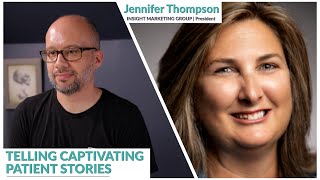
A recorded YouTube interview (host Jeff Langmaid with guest Jennifer Thompson, owner of Insight Marketing Group) about marketing for independent physicians and chiropractors. Main claims: differentiate practices through patient stories (video + long-form written testimonials), keep websites actively updated (they build sites in WordPress), systematically collect and use patient reviews, reactivate existing patients via segmented email lists, and track meaningful KPIs (conversions, positive vs negative reviews, filtered reviews) rather than vanity social metrics. Also mentions resources: podcast “Dr. Marketing Tips” and website insightmg.com.
Questions this video answers
WordPress.
Usually between 1,500 and 2,500 words.
Open numbers (conversion/open) around 40–50%.
Dr. Marketing Tips.
insightmg.com.
Chapters
You know, back in the day they would all say, we got to have our big group photo on the homepage and I got to put that I have two board certifications. And finally we said, doc, every single person out there, when they're going to choose a provider, they expect you to be board certified. The only way you're going to cut through the clutter and differentiate yourself is through the patient stories that you're telling.
All right, and as promised, I am here with Jennifer Thompson. She runs and owns Insight Marketing Group, which you're definitely going to want to check out if you haven't yet. You are by the time we get through with this conversation. Jennifer, how are you doing today?
I'm doing great. How are you, Jeff?
I'm doing fantastic and I'm going to dive right in. How do you help doctors through Insight?
So we simplify their marketing so they can run their practice and it really is that simple.
I love that. And diving into that, there's going to be some challenges that you see all day, every day within multiple doctors offices. We what are some of the biggest mistakes that you see docs making when they're trying to market their practice, maybe on their own or maybe with some agencies that you might think could be doing a better job?
Yeah, I think that one of the biggest mistakes is when doctors think they are kind of the jack of all trade and they can just figure it out on their own. So they've got a little time at the beginning of their career, they go in, they build a website, maybe they claim some of their profiles online, maybe they dabble in social media or do something. Well, then they get busy and they walk away and everything kind of falls apart. They'll hire somebody and they'll hire somebody that does digital marketing especially, or strategy for restaurants, for retailers, for the plumber down the street. We only work with independent physicians and independent physician groups that are non hospital affiliated. So I think when you get somebody that is a true expert in there and working inside practices, you can save a lot of time, energy and money because you're only working with people that do this every single day.
I think that's a really important point and one of the things that you mentioned, I'd love to drill into a little bit and that's websites. I know I look at docs websites all the time and I've seen so many horrible ones that I'm like, how is this feasibly possible that this exists on planet Earth? I'm sure that you see this as well. What's sort of been your experience when you look at a Docs website and what are some of the biggest wins that maybe you've noticed when they've switched over and worked with you guys at Insight?
Okay, so one of the biggest things is the dog will start building it themselves. Or they hired a company maybe five years ago to build their website and then once it was built they walked away from it. So what we do is from strictly how we work with physicians standpoint, we handle everything. So depending on which package you come in at is how much stuff you actually get. But every package involves building a website from scratch or transferring over your existing site into a WordPress platform. So we can constantly be updating it, making revisions to it and optimizing it for whatever it is that we need to optimize for. And so I think that's really the biggest thing is Docs thinks a lot of times just business owners in general think that they can do something once and kind of walk away from it, but that's just not how the how patients find us anymore. And you have to be in there all the time making updates.
I love that you brought up that point. It's something that we speak about within the smart chiropractor a lot, which is you don't want your website collecting dust. Not only is is it probably not optimized for all the major search engines if it's not being updated, but when a patient goes there, a prospective patient, you want to be able to have fresh and updated content. You need them to be able to find it number one. And then number two, you want to have it just as enticing as you would your physical location. And maybe talk a little bit about some of the whether it's the technical nitty gritty within Google or whether it's just facade changes and vanity on the front that that you see Docs again, either maybe making mistakes with or some areas where you guys have noticed some big improvements.
Look, I think that when you use a platform like WordPress, we build all of our sites in WordPress. So when you use a platform like WordPress it's kind of idiot proof. You know, it's really simple to get in there and to make updates on a regular basis so that it's constantly fresh. What I see Docs not doing is building the right kind of content. So they go in there and they think, you know what, I'm going to put my picture in there, maybe I'm going to grab one of these videos that everybody else has on their website. I'm Going to do a couple of blog posts, chiropractors especially. I'm going to do a blog post about maintaining a healthy weight and eating right and what I can do to have better posture. And everything's going to have a call to action at the end. And I'm going to try to drive people to my practice that way. But in fact, if you would start thinking about how you can tell the story story of your patients. And don't worry about SEO, worry about telling a great story and use your patience in that storytelling. Put good long form and video form content in there. It will rise above everybody else. If you're being authentic and transparent, you're just telling great stories. Don't worry about the SEO side, worry about the story that you're telling to that potential patient and you will automatically rise on Google.
I am so thankful you brought that up because I feel like I talk with docs all the time and they're, they're so overly concerned like FOMO and fear of missing out with technical details that they might not know what those details actually mean or do. Yet as you're saying, you kind of go to their website and you're like, the call to action's weird. The picture doesn't match the story. There is no story. And that is such an impactful part of it. And maybe elaborate a little bit on how you see, you know, story and benefit driven copy really permeating the entire experience of how a doc markets their practice.
Yeah, so there's, there's a, there's something that we started doing years ago and we call it patient forward marketing. And basically the premise is when you go to, I work a lot with, I have a lot of orthopedic surgeons as practice, as clients and you know, back in the day they would all say we got to have our big group photo on the homepage and I got to put that I have two board certifications and I went to this school and I did this. And finally we said doc, every single person out there, when they're going to choose a provider, they expect you to be board certified. They expect that you don't have a bunch of lawsuits against you. They expect that you're clean and you're using the cutting edge technology or whatever it is that you added. The only way you're going to cut through the clutter and differentiate yourself is through the patient stories that you're telling. And so our big process is to come into a practice, identify those patient stories when applicable, get some video testimonials with Those patients turn those video testimonials into long form written content, usually between 1500 and 2500 words, and turn that into maybe one patient testimonial, into three or four pieces of good content that get rotated on a regular basis throughout. So the next thing we do is we really dive into reviews and patients leaving reviews. And so we actually have a system in place where we will text message or email every single patient that comes to a practice, ask them to leave a review. We do not focus on getting rid of one, two and three star reviews. Instead we focus on getting a lot of reviews and then using those good reviews in the marketing. Doctors say, can you bury something off the front page of Google? No, we can't bury it. What we can do is tell you what we can do, a sentiment analysis, tell you what your reviews are like, a snapshot of what's going on at your practice so that you can focus on fixing your customer service issues. And that's just an easier way to get to the root of the problem. And then we use those positive stories and Sometimes there are 144 characters in a review, use those positive stories in the marketing and then really lean into getting the patients to continue telling those stories in places like nextdoor Facebook groups, little hometown Facebook groups and things of that nature when they're looking for a new provider. And so kind of really leaning heavy into that patient forward mentality and not worrying so much about board certifications or where you went to school or, you know, how many necks that you cracked last week.
Yeah, the part that you bring up, I think that's so impactful and important for docs to pay attention to is diving back into customer service and patient experience. No matter what sort of bells and whistles you have on the front end, if the meat of your business has these challenges, you're just sort of covering up with band aids, big time problem. So I love the fact that you're utilizing a lot of the marketing not only to expand what's going on that's really great in the practice, but you can kind of behind the scenes get some insights into some areas that might not be performing as they should or could be. And I think that's so important if we get into the technical strategy on some of that. It sounds like reviews are a big component of it. But what are some key performance indicators or KPIs you think docs should keep a look on and what are maybe one or two even that you think docs overinflate and get too excited about?
I think that everybody still gets too excited about social media growth and how many likes that you've got and how many video views and things like that that we're way too focused on. How many visitors to my website did I get? I think what you really should be tracking or what we track a lot of, is how many positive versus negative reviews do you get? We track something called filtered reviews. And so we have a process in place for larger practices where we will, through the patient rooms, put up signage that says, look, if you're having a problem or you want to get something off your chest, go to this feedback page on our website, let us know, and let us deal with it right here in the practice. And so we track really closely how many of those filtered reviews, because we assume that if we can catch them before they go out to Google and put it out there, then we can prevent a negative review. And so I think it's really important to track that level of KPI. I think that definitely track the number of conversions that you've got on different areas of your website. Because at the end of the day, how many new patients did you bring in? I don't really care how the sausage got made, but how many new patients did you bring in? So how many new versus returning? And let's not look at vanity metrics on social media. Let's actually look at truant, pet, prescient, and real social interaction. And how much engagement are you getting? It's not about how big your list is, it's about how active your list is.
No doubt about it. I appreciate that. And I think one of the things that you just touched on that is a good place to go is the new patient versus the reactivated or the returning patient. So, for instance, for a surgeon, things might be a little bit different. Hopefully somebody's not there every single year to have a surgery, or you might have a customer service issue or a surgical issue. But in terms of a chiropractor, we know a lot of people, you know, once they experience back pain, it's gonna be episodic throughout their life, et cetera. I see a lot of chiropractors get so hyper focused on new patients while they have just buckets of patients that they've seen, that they've already built a no trust and like, just fallen out all over the place. It sounds like a lot of your marketing is, you know, what we call teach and invite consistently, which is, hey, keep, you know, keep those people who love you already sticking around your ecosystem. Which gets back to, I Think to our first point, which is don't let your website, you know, go stale. What are some of your thoughts on new patients versus, you know, returning patients? How can docs think about that in a constructive way?
Yeah, so we are recording this right here. Like we're both on like homestay. Can't leave our house in the middle of the COVID 19 stuff. And when we've been looking at all the practices that we work with over the last couple of weeks in particular, how can we reactivate the patient list and use the patients to tell the story for the practice? And so that's something we've been hyper vigilant on the last couple of weeks. And so I really think there's an opportunity with your existing patient list to engage and kind of upsell them on new opportunities within the practice itself. And so to the level that we can segment our list out, really speak to what that is that they want to hear from us and kind of take them through this patient journey into that next conversion, I think that's the key piece. And so, you know, I think starting out, if I were starting out a new practice right now, I would be thinking long term about how I might want to segment those, that patient database and then how I might market to that existing patient database the kind of stuff that sometimes nobody else is even going to see it because you're having what feels like a personal conversation. And you know, I know a lot of us might think that email's dead, but email is back and you know, we're able to get now cut through a lot of the clutter going back into email where a couple years ago we couldn't. I'm seeing conversion numbers or open numbers at 40 and 50% right now because we don't take enough advantage of these email lists or conversions. When people are getting an email from their doctor, they're opening the email and they're actually following through on what's being said.
That is, it is so impactful in keeping that consistent. Communication is so incredibly important. Now the benefit if you haven't is sometimes you can get a little boost once you start doing those activities again. But in an ideal world, when you have an activated health tribe, as we call it, individuals around you, a lot of things like we're experiencing, it's not that it becomes non impactful for your practice, but it becomes less impactful because you have those great communication channels which it sounds like what you do at Insight, it's fully featured, it's multi platform and it's really Enabling docs to touch across multiple places and kind of going off on a little bit of a jump with that. I'd love to ask you a few kind of fast and furious questions here. Maybe a little, maybe a little bit personal. What are some of the last five years? What's a belief or behavior that you've adopted that's improved your life either professionally or personally?
I read like crazy and when I was young I didn't do that. But as I've gotten older, I spend as much time trying to absorb historical information so that I am better prepared to make decisions. That is something that I like. That's a piece of advice I give to everybody out there.
I love it. Any top choices on books?
I go back and forth. So a couple years ago I set out to read one book on every president of the United States to get through it. Teddy Roosevelt, Lincoln and yeah, Teddy and Lincoln, probably my faves and then some of the moderns I'm getting into. But just, you know, from a historical perspective. I was in politics for years and when I went into politics I always felt like I didn't know as much as everybody else. So the more I can get that historical perspective, the better. And then every other, every business book I can, that I can get my hands on, I do. And one that's probably relevant for the times. If you haven't read Grit, it's definitely worth it. Grit is definitely relevant for the time we're in right now.
I think that is a fantastic recommendation and a fantastic book. And if docs want to learn more about you and or Insight, where should they head to? I'm going to drop the links down below in the show notes so feel free to click over there but if you want to audio wise, direct them to a certain place. Where do you think? Where can they head over to check out?
Yeah, I'd say check us out on itunes and any of your favorite podcast streaming services under the the handle Dr. Marketing Tips. So it's Dr. Marketing Tips. And then you can always find us on our website@insightmg.com so it's insight, Amazon marketing, g asngroup.com I love it.
Well Jennifer, it sounds like we have a lot in common. I think we should definitely make a second go around. There's a lot that we did not get to. We just skimmed the surface. But I wanted to make sure we get Insight and yourself introduced to the audience. I love where you're going with the patient forward aspects of your marketing and anybody that has not checked out Insight, please do so click the links that we've dropped below, check out the podcast, you are sure to get information that can help you and your practice. So Jennifer, thanks for coming on today.
Hey, thanks a bunch. Thanks for having me.
Hey, what's going on? If you loved that video, be sure to subscribe to this channel. The Evidence Based Chiropractor puts out videos all the time at the intersection of marketing and research, showing you how to grow your practice while also growing your knowledge base. So if you liked it, be sure to comment down below or hit subscribe and I'll see you in the next video.










