The State of Chiropractic: An Interview with Richard Brown of the World Federation of Chiropractic
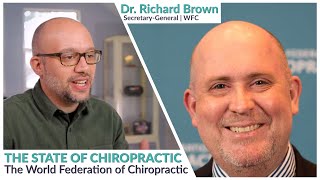
A recorded interview (YouTube) featuring Jeff Langmaid and Richard Brown (Secretary General, World Federation of Chiropractic). Main topics: EPIC 2019 (Evidence-Based, Patient-Centered, Interprofessional, Collaborative) conference in Berlin (March 20–23, 2019) with speakers such as Jeremy Howick and Julian Treasure and a pre-congress sports symposium by FIX; Richard Brown's career path and role in WFC; global chiropractic trends including increased multidisciplinary collaboration, growth in research/academic pathways, workforce distribution challenges (large concentration in North America), and opportunities to expand access and emphasize biopsychosocial/rehabilitation approaches.
Chapters
Good morning and I hope you are having a great Friday. Today is a great day on the Evidence Based Chiropractor. We are fortunate to speak with Secretary General of the wfc, Richard Brown. Richard, thanks for coming on.
Great to see you, Jeff. Thanks for having me.
Absolutely. And I want to kick it off with something very, very important that you and I were just chatting about, and that is EPIC 2019. It is probably an event that everybody should have on their calendar this coming year. Can you tell everybody a little bit about what expect and what gets you excited about epic in 2019 in Berlin?
Well, I mean, the clue is in the name, Jeff. EPIC 2019. This is going to be an absolutely amazing and outstanding event. It's going to be the event of the year for chiropractors. Epic. What does it stand for? Well, the acronym epic, Evidence Based, Patient Centered, Interprofessional and Collaborative. And that really gives you a real insight into what this Congress is going to be all about. It is a joint congress between the World Federation of Chiropractic and our friends in the European Chiropractors Union. It takes place in Berlin in Germany. And if you've never been to Berlin, it is one of the most fantastic capital cities in the world. Formerly divided capital before the wall came down in 1990, but now it is an outstanding capital city where you, you can meet the fusion of east and West. So it's an amazing place to go. If you've never been to Berlin, that is the place to go. When's it going to be? It's going to be March 20th to the 23rd next year. So literally less than 100 days to go.
I think it's awesome. When I looked at the lineup, I saw some things that stuck out to me, right? Sports, performance, progressive pain, science, all in a patient centered model that stuck out. Who are a few of the speakers and topics that you're just personally excited to connect with and see?
Well, Jeff, we have a great range of speakers both from within and outside of the chiropractic profession. We're kicking off. Our keynote speaker is Dr. Jeremy Howick, who is the head of the Oxford University Empathy center, which is not something you hear about, but it really does encompass what really we're going to be around and about when we're talking about patient centeredness in chiropractic. He is a medical practitioner, but he's also a philosopher. So we're getting our injection of philosophy into EPIC 2019. But he has done a huge amount of work looking at placebo, looking at studies that are sort of less biased studies than some of the studies that we see. But he's looking about how we can look at empathy as being a huge broker in terms of the success that we have in dealing with our patients in a patient centered model. But he's also extremely evidence based. He's the author of a number of books. The latest book he's authored is a book called Dr. U, which is about how patients can help themselves, about self management and how we as practitioners can help facilitate that self management. So it's really what chiropractic is all about and why chiropractic achieves so much success. And we think that Jeremy is going to be a real asset and a real great keynote speaker. So we're very excited to have him with us. We have Julian Treasure. Julian Treasure is amazing. I mean, he has given five TED talks and if you've never seen TED talks, I think most of your viewers will have seen TED talks. He has given five TED talks which collectively have achieved over 70 million downloads. Can you just imagine that? 70 million. And he's going to be talking about the power of communication and the power of sound and the power of noise and how the, it's important how we the words we use in interacting with patients, but also how we actively listen. So we're very, very excited about having Julian Treasure with us as well.
That's a really interesting point that you bring up. And that's one thing that I kind of took home again looking through the topics and the speakers specifically with this conference is it's interesting to me and I'll have you speak on this the last five to ten years where, you know, I've seen it with some of the multidisciplinary practices that I've been involved in. I'm sure you have as well. Where chiropractors have historically been very good at communicating with their patients, a high level of satisfaction has been consistent. But that market penetration really hasn't been where it could or should be. And secondarily the other side of the coin, as a matter of speaking, the medical profession has typically had very high market penetration, but historically the communication hasn't been as good. So I think a patient centered model encapsulates both, which is where I give kudos to you and everybody involved for putting together EPIC 2019 because it touches on both aspects of that. Right. What can we learn from what's going on on the other side of the healthcare world, but then also touching on the things that we do. Fantastic. And I think that's an important lesson as we continue to move forward.
You've encapsulated it. Absolutely. I mean, there are so many areas for learning and development. And one of these things, and I'm sure that you experienced it as well. Jeff, when you go to these events, the test, the key test, what is the Monday morning test? What am I going to taken away from this Congress? What am I going to be learning? What can I implement with my patients? And how is it going to benefit the way that I deliver care for my patients? And I think that being exposed to such a wide range of speakers at this event is going to be one of the real key benefits. It's not just going to be inspirational, which undoubtedly it will be. It's going to be insightful. And I think it's going to make people not just listen to the speakers, but also reflect on their own practice, reflect on the things that they do, see how they can benefit their patients by changing the way they practice. And sometimes it's just a bit of fine tuning. But I think listening to other people's perspectives is what being in Berlin is going to be all about. And I think if we can expose ourselves to that and we can open our minds to the way that other people practice and interprofessional is such a key element of this. So, you know, as well as medical practitioners, we've got pain specialists, we've got people from other disciplines that bring their own perspective. I think sometimes in the profession in the past we may have had a tendency to be slightly introspective and I think that comes partly from our history. But we're in a different world now, Jeff, and we're in a world where patients demand that we work as part of a team, that we don't work in isolation. And I think that being able to understand the perspectives of others and bring those into the way that we practice and the way that we communicate is really going to be where the benefits of this Congress will be.
And on that note, I think sports has really, to me anyway, 15, 10, five years ago, as time has gone on and chiropractors have been involved at the highest levels of all sports teams, all major sports programs, domestic and international, so to speak. And I think that team approach to care, I give a lot of sports chiropractors credit because I think a lot of those seeds really started in the high end athletic realm and now they've permeated out as people understand, hey, you don't need to be a professional athlete to have a fantastic healthcare team right and those team members should work together. And on that note, I know we have a couple esteemed colleagues who are going to be speaking out there as well that have been involved at the highest level of sports and sports performance. Do you want to say a few words about that?
Absolutely. And as you say, Jeff, sport is something that so many people have an interest in, so many chiropractors have an interest in sports, chiropractic. And at EPIC 19 we have some fantastic speakers. We have Alan Sokoloff, who you may know, and he is an esteemed and renowned sports chiropractor, travels all over the world treating elite athletes, travels with, with elite football and a range of other sports as well. He has so much experience and so much to bring. So he's going to be talking about what chiropractic can bring into the athletic training room. We have Ulrich Sandstrom. Ulrich is a British chiropractor, originally from Denmark, who is the chiropractor to the Leicester Tigers Rugby Club, a Premiership rugby team in the uk. He will be talking about hamstring injuries or, or what appear sometimes to be hamstring injuries and sometimes aren't. And we've all had patients like that where things look like something, but it turns out to be something deeper. So he's going to be talking about that. In particular, we have Pete Garbutt. Pete is the president of fix, which is the International Chiropractic Sports Federation. He'll be coming to us from Australia and he will be again sharing his knowledge and expertise. Just to mention, actually before on the eve of the, of EPIC 2019, we have a specialist sports symposium. For anybody who's interested in coming in a day early. It's going to be focusing on lower extremity injuries. So that is something that people can sign up to in addition to EPIC 2019. So the FIX assembly and symposium will be on Wednesday 20th March, so just the eve of the. Of the congress itself.
Beautiful. And for anybody that has not picked up their tickets yet, I will drop links down below so you can get access to the early Bird tickets. A couple weeks left on that, so you want to make sure to take advantage. And on the World Federation of Chiropractic side of things, Richard, how did you become involved with WFC?
Well, I've been a chiropractor since 1990. So just coming into my 29th year in practice, which has absolutely flown by for the first 25 years of those, I was in clinical practice and I had a very active sports chiropractic practice. Here in the UK, in around 2009, I got involved with the British Chiropractic Association. I was president from 2009-13. That then got me involved in Europe and then things just went from one stage to the next. And 2015, I started with the WFC and it's been an amazing journey, to be honest.
That's awesome. And with your vision, I mean, you're just able to see so much of what's going on globally with, you know, healthcare at large, but specifically within chiropractic. And what are some of the current trends you see with the global state of chiropractic? What are you seeing from the highest levels?
Well, I mean, as you say, I mean, I'm in a very privileged position in that I talk to a huge number of chiropractors, but more importantly, I listen to a number of chiropractors around the world who are constantly giving me the. Giving me the temperature of what's going on within the profession. There is no doubt, I think, that collaborative practice is the direction of travel. Almost wherever you are in the world. Chiropractic is advancing because they are working with others, other members of the healthcare team, whether it's in research, as part of multidisciplinary research project teams. And we've seen that, of course, this year with the publication of the Low Back Pain series in the Lancet, which came out in March. And we had our own Jan Hartwigson, who is one of our keynote speakers at Epic 2019, and Alice Kongstead from Denmark, who is also part of the publication team, working with literally legends in the back pain world, but coming together and working as a collaborative team. Amazing. We see it in the va, in the Veterans Administration. We see people, chiropractors working as part of multidisciplinary teams. We see it in hospital units, we see it on the ground in, for example, World Spine Care, the charity World Spine Care, working in Botswana. I had the privilege of working with World spine care in 2015 and working alongside other health professionals from other disciplines. It really does embed chiropractic as part of the solution. So I think that there are so many great examples of collaborative practice, and as far as I can see, and from what I know, this is going to continue to be the momentum that will help to develop the profession, because if we're working with others, they're exposed to what we do, we're exposed to what they do, and the patient is the ultimate beneficiary. And if we can't be totally, totally focused on patient Centered care, then we really need to be questioning what we're doing.
Could not agree more. And with that, as chiropractic continues to expand around the globe, what are some of the challenges you've seen as far as access and utilization on some of the countries that maybe haven't picked up as much as the uk, United States, Australia, Canada? What are we seeing as far as that's concerned?
Well, it is a numbers game. One of the big challenges in healthcare. And I talk about healthcare, not just about chiropractic. You may know that the World Federation of Chiropractic is an NGO in official relations with the World Health Organization. And we have been since 1997. So one of the groups that we work with is the Global Health Workforce Network. And the Global Health Workforce Network has really identified that there is a real scarcity of health providers in certain parts of the world. And that really is reflected in chiropractic too. We know that over 80% of the world's chiropractors at the moment are located in the United States. And the number is always a bit of a movable feast. But we estimate that it could be in excess of, of 80,000 chiropractors out of probably 110,000 chiropractors in the world today. And if I give you one example, if we take the continent of Africa, for example, just over 800 chiropractors are registered to practice in South Africa, at the very tip of Africa. But if I tell you that in the rest of the entire continent there are probably less than 60 chiropractors, that just gives you an idea of the inequity within that continent and that's reflected in other areas as well. So while we have large numbers relatively of chiropractors within the US and Canada, in other continents of the world, we are struggling for numbers. But we shouldn't beat ourselves up because, you know, healthcare provision in the world is like that and you know, you have an over representation in some areas and a huge underrepresentation. I mean, there are huge areas of the world still that have no access to healthcare facilities at all. Whether that be for social, political, environmental, you know, or geographic reasons. This is the truth of it. But one of the focuses of the WFC is to populate with chiropractors areas of the world that don't have chiropractic representation. Our mission is to advance awareness, integration and utilization of chiropractic internationally. So that's really what we're working to do.
I think that's, it's so Important because. Exactly. Just sheer literal access, you know what I mean is somebody local that practices is really just so pragmatic. Right. Having those boots on the ground. And with the graduating classes that are coming up lately, what are some of the things that excite you about this new and next generation of chiropractors?
Well, I was fortunate enough last weekend to be the commencement speaker at Northwestern. And there is nothing that excites me more than going on campus and talking to students and listening to students and listening to the energy that they are bringing to the chiropractic profession. It doesn't matter whether I'm in Europe, whether I'm in America, whether I'm in Africa. When you listen and you see what students are bringing now and they're just bright and forward thinking and intelligent and they want to help and they want to get out there and they're really driven. And I think that there is, you know, one of the expressions that we use a lot at the moment is that there is no, there's never been a better time to be a chiropractor. And that is absolutely right. The opportunities that are there, but also I think to, to seize those opportunities, you have to have an open mind, you have to be ready to seize those. You have to be ready to work with others. And I think that is exactly what I'm seeing now. We're seeing students who are coming from a range of backgrounds. Their undergraduate degrees are different and varied, but also their life experiences are different and varied. And we're having mature students coming into the profession, which we always have. But now we're seeing people who are really bringing their talents and skills with even they've come from another health profession and migrated to chiropractic. And I think that's exciting too because it all adds to the richness of what we as a profession have to offer.
Yeah, that's very well said because one thing that I constantly talk about is the breadth and depth of what we see on the research, supporting what we do has never been better. And 20, 25 years ago, docs just didn't have that opportunity. They didn't have the chance to lean back into it. It was barely evolved at that point in time. But now the amount that's is starting to finally trickle into new opportunities where I don't think, and I'm going to exaggerate the percentage, but it's not a 99.9% that you need to be a sole proprietor anymore. There are opportunities, as you spoke of in the va, there are multidisciplinary clinics, they're still not as prevalent as they will be in five and 10 years, but those seeds are being planted. And I see a lot of students really pushing that envelope and looking for new opportunities to practice in diverse and entrepreneurial ways, which is always exciting because that's when the comfort zone of the profession gets stretched and ultimately growth happens. Those are my thoughts.
Well, I concur with what you're saying. I mean, it used to be years ago there were fairly limited opportunities for people when they graduated. You go through your undergraduate years and you qualify and you go into practice. One of the joys that I'm seeing now is that there are increasing career pathways for chiropractors. And, you know, certainly 2018 has been a huge, bumper year for chiropractors gaining PhDs. And really, I think that is a real reflection on the maturing of the profession that we have people now who are going through. They're embracing an academic career, they're going into university settings, they're gaining higher degrees, they're becoming part of multidisciplinary research project teams, but also really contributing to the body of knowledge that's advancing us. And, you know, I think our credibility, our reputation, you know, the entire currency of the profession is being driven by our researchers who are forging a path that we've never had before. And I think that's hugely exciting. So, you know, I think. I think that as we see that happening, as we see academics going into not just chiropractic institutions, but going into mainstream unit universities, we're seeing university degree programs starting in mainstream universities. So, you know, all of these things are happening. The pieces of the jigsaw and the stars are aligning. I think that, you know, our opportunity is now really to seize and to run with what we have. And again, going back to Epic 2019, that is exactly what we're going to be promoting, is those opportunities that chiropractors have, you know, if they've got the will to do it. There has never been a greater opportunity to go out there and succeed as a professional.
Absolutely. And for anybody that's watching right now, as soon as we finish up, I am going to drop some links down below. So if you have not picked up your tickets to EPIC 19 in Berlin, it's happening in March. I'm going to drop the link down below. There's a couple more weeks to get those early bird prices. And this is something you definitely want to put on your calendar. Talking about the opportunities today, moving into the future in five years if you could have a few tenants of what you hope to happen within the world of chiropractic, what are a few things that would be on your agenda or on your hope, dream and aspiration list?
I'll talk about the Canadian Chiropractic association for a minute because they've gone through some really significant changes in the last few years. But one of the visions that they've had that really resonates with me is that their mission is to have a chiropractor as part of every Canadian's healthcare team by 2023. And I think that not stealing from their vision, but certainly looking at their vision and looking at where we need to be, we need to set our sights as a profession is that chiropractic needs to be for the many, not for the few. And I think that that is such an important focus that we should have. I've talked about Africa already in as much as, you know, where we need to populate the profession and make sure that countries and peoples have chiropractic because that is hugely important. As the world shifts away from a drug and surgery model, what we're seeing now is patients who are crying out for the very thing that chiropractors are offering. And I'm not saying that drugs and surgery do not have a place in health care, of course they do. But I think that the general public are seeing things like the opioid crisis happening across North America. They're seeing the scourge other medical models that aren't particularly working in the way that people hope they would work and they're crying out for alternatives. And I think that where we have an opportunity is to plug ourselves in to that new model of healthcare where patients want to know how to help themselves. So we have a role to play in educating patients and educating patients in self help management, but also be really there to be an alternative to the other standard treatments for back pain that have previously been the case. And you've previously worked with surgeons? I've previously worked with surgeons. And do you know the best type of surgeon I've had, and I'm sure you would agree, is what I call the reluctant surgeon, the surgeon who knows what he can offer, but also make sure that people have tried all the other opportunities. And I think that what we can offer as a profession is that great opportunity for people to try something different before they go straight line down for surgery. And I think that's where our real strength lies. But it's important that we don't just understand well what we do we understand what the rest of the field does as well? And I think that is the key thing to have that understanding. So our opportunities are there and I think there are many chiropractors out there, there now, particularly in the field of spine and joint care in particular. I mean, at the end of the day we have to accept whether we like it or not, that spine care is what we're best at doing. And really that is our badge. That's what the vast majority of people come to us for. And in fact the WFC's identity is that we're spine care experts in the healthcare system. And so I think with the Global Burden of Disease study showing yet again last month in the Lancet that low back pain is the biggest single cause of years live with disability, there are huge opportunities there and I think if you give any surgeon or any medical practitioner a chance to do less surgery or prescribe fewer drugs and look towards a credible evidence based alternative, then we're in that great position to be able to provide that care.
I agree. I mean most surgeons don't like repeat customers, right? So that's number one. They like to keep their results as high as possible and doing things early doesn't enable them to do that for one. But the other side of that coin, as I think you very, very well stated right there is, I think we both would agree what we can do as chiropractors can expand well beyond the spine. But until we have 95% utilization, these are moot points because with 90 plus percent of individuals having some musculoskeletal back, specifically spine challenged during their lifetime, and with only 1% of those, tops 3% having a red flag and with all of the literature supporting us as a primary option for that, but our utilization hovering much lower than 90%, we still have so much territory to make up right there and there's so much opportunity to make such a big impact on people's lives. Real life impact. I know some chiropractors, you know, it's, you know, you can, you know, back pain seems like the lowest common denominator, but I don't think that takes away from the fact of its importance. These are real life issues that people are going through. And if they don't come in to see you, if they don't come in to see me, if they don't come in to see a chiropractor, very often they can end up, as you alluded to and rightfully so, in a very challenged situation where they end up having advanced interventions earlier on in care, which increase risks and increases the opportunity for them to have advanced challenges down the road. And us being able to take that and say, let's become as focused as possible on making sure we're doing the best job and having the greatest impact on this specific set of individuals, your practice can continue to expand from there, but making sure that you are the prime option in your community for that type of care, in my opinion, is a great starting point as your practice grows.
Well, you're absolutely right. And it's no accident that the biopsychosocial model of back pair is the one that is really advancing. And I think we talked about satisfaction earlier in our conversation. And one of the reasons for that is that chiropractors are good at talking to their patients and good at understanding their patients. And the one thing that we know about back pain now, and the one thing that is emerging in almost all the data that we see, is the issue of comorbidities. And we know that low back pain is the biggest cause of years lived with disability. But also we know that in the Global Burden of Disease study, the scale of mental health and mental illness is enormous. And the interesting statistic with back pain, of course, is that if you have chronic back pain, you're three times more likely to be depressed, and if you're depressed, you're three times more likely to develop back pain. So I think that recognition that back pain is not just about fixing blocked facet joints or fixing discs or resolving sciatica, it is about treating the patient with back pain rather than the back pain that the patient has, if you know what I mean. So I think seeing the patient as an entity recognizing the comorbidities, we talk about the aging population. We have an enormous opportunity to help the aging population achieve happier, healthier, and more active lives just by getting them moving. If you're elderly and you have back pain and you become restricted in your movement and you become housebound, you become isolated, you can become terribly depressed, you can develop other comorbidities like obesity or diabetes. What chiropractors do can absolutely change lives and is changing lives on a daily basis. So we have so many opportunities, but it's recognizing we're more than just mechanics. We have to recognize we're more than just mechanics. And this is where the biopsychosocial model comes in, that it's about recognizing the reason why a patient has pain or dysfunction, but recognizing the way in which we can support them through their disability, get them mobile, rehabilitate them, and rehabilitation really is the next future for chiropractic. It is about getting chiropractors involved in rehabilitating their patients through treatment, through support, through education, and really empowering them to really get a hold of their problem and tackle it head on.
Well, Richard, I greatly appreciate your time. I greatly appreciate what you've done for chiropractic and with chiropractic in your time. I can't wait to see what happens in the future. I think the docs that are watching this, you know, if you're interested in sports performance, if you're interested in the new opportunities and you're interested in what I call progressive pain science, EPIC is something. First step is showing up, right? So epic is the event that you want to show up to mix and mingle with the people that are involved with it, that are doing it. That's going to also bring you new opportunities as you find new colleagues, find new people to go through your professional journey with, which is half the fun, maybe more than half the fun. So, you know, I think that's an important point. Grab your ticket to epic for sure. I know Richard will be there. I will be there as well. We're both looking forward to it. And Richard, I really, really appreciate your time today, and I can't wait to see you out in Berlin.
Jeff, thank you for having me on the show. And it's been a pleasure to spend time with you. And thanks for all you're doing, too.
Absolutely. Thank.










