Transforming Cervical Assessments with NeckCare | Exclusive Interview with the CEO
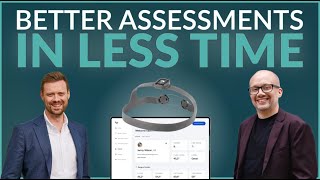
Jeff Langmaid interviews NeckCare CEO Orey about a head-mounted sensor system that measures cervical range of motion and proprioception against normative data. The device captures movements like 52° right rotation, supports billing documentation with AMA-guideline repeat measurements, and helps track progress in dizziness, concussion, and chiropractic care.
Chapters
How do you help a patient understand that the care you're delivering goes beyond just the chiropractic aspirin, AKA just pain relief, is you bring in tasks like this. When you bring this into your practice, this will be the first time ever that you have access to the data that is functional, that's movement based, that's objective, and that goes against normative data and gives you the comparators against that same patient's previous movement. Hey, everybody, I am here with Orey from Neck Care. If you've been listening to my podcast, check out my social feeds. You know, neccare is, in my opinion, the best objective cervical assessment tool. They have the best combo of hardware and software out there. Whether you're looking for neuromuscular control, proprioception, range of motion. They are the leading edge of what's going on in the cervical assessment space. And not only that, they made some massive upgrades to their software over the past few months. So we are fortunate enough to be speaking with Orey, their CEO from around the world, and he's going to walk us through what some of those assessments mean, what they look like, and also we'll talk about how that can really make a meaningful impact on the care that you're delivering by having the best data possible. So, Orey, thank you so much for coming on and chatting today.
Yeah, thanks a lot for having me, Jeff. Yeah, we have been busy this past year for sure, working with our customers across the US and Canada and gathering some feedback. What can we do better and how can we help our customers being more efficient with their time, generate additional revenue for their clinics and helping their patients obviously become better? So that's why we're here. And yeah, I'm excited to walk through some of these improvements that we've made.
I love it. You can share your screen. We'll dive right in and take a look. And a couple of the things that I want to bring up as you start to highlight this for the docs out there, and I know we have the gamut, there are some docs listening who are using some what I'll call really clunky tools and assessments. We also have docs that are on the visual side of things still and haven't really brought really diagnostic technology into their cervical assessments. And often technology can be intimidating when you're bringing it into a practice. And you brought up the screen right here. And as we dive in, one of the things I'd be remiss if I didn't bring up immediately is just how approachable your Software package is meaning it looks good, everything is clear, which is you rarely find in the healthcare space. And I just want to give kudos to you and your development team and design team for making it look good. But as you talk through this, I'd love for you just to. What's, what's your thought process behind having something that has easy flow and good design and the doctors opportunity to be able to install that in their practice in an easier fashion? What's, what have you seen?
Yeah, absolutely. I mean, I think we care about how, how the platform looks like. Everything that we, that we do, we want to be top notch. And we've actually heard that not only from the clinician side, they appreciate it, but also the patients. Like, the patients feel like, oh, I'm actually getting the top of the line here. I'm getting something that looks like Apple, like It's not some 1990s software that is clunky and difficult to understand or read. It just works. That's our motto. It should work every single time and it should look good. The report should be understandable and it should be here to help, not to hinder.
No doubt about that. And I think the patient aspect that you brought up touch on it really briefly. And I think this is really important because often data is one thing. Data that stimulates a meaningful conversation is a dramatically different thing. And often the complexity of the data is inversely proportional. Now you guys gather a ton of complex data. However, the presentation is in a way where it can generate a meaningful conversation to your point, because somebody can look at it as we'll see in a moment, and begin to understand. And from a physician perspective, you can teach on it easily, which is important. You're not having to cross out 75 things. This is the one important thing. It really presents it in a way that the patient can get the take home message very quickly, which speeds up workflow. And ultimately that's what we want, is our patients to be able to have a better understanding of their health, how we may be able to impact that and the things they can do themselves. So without further ado, I'll kind of have you lead the way. We're going to create an assessment, it looks like right here. I'll have you talk through it.
Yeah, absolutely. So this is the hardware device and for those listening, I'm holding a crown, if you will, that goes on the patient's head. And the only thing you know you have to do is, okay, what do you want to evaluate? Let's start with the range of Motion. You mentioned the visual assessments that a lot of people are doing today, eyeballing it. And yeah, most of you are doing it. So all good. You're not alone. But there is a better way and a very objective way as well, from a documentation perspective as well. If you're building insurance or if you want to highlight to your patient, okay, this is actually how you are. There is a possibility to do that in a very, very easy and a simple manner. And that's what I'll do right here. So I will do range of motion. And the only thing I'm. I'm doing right now is as a patient sitting with an accurate device on my head, and then I go through the different motions. So let's start with extension flexion. That's that. The same for the other planes, left and right rotation. And then last but not least, lateral flexion. So lateral flexion. I might need to visit a chiropractor. That's another matter. So how. How long did that take? Under a minute for sure.
You're probably under 20 seconds. And one thing I want to bring up really quickly is how real time that was as you were moving. The numbers are coming up, and that. That those seconds matter so much. So as you're going through that, we're seeing it on the screen, and you were able to move right through that. And now we have the data here.
Yes, so we have the data right here. So, for example, right rotation. My max range was 52 degrees. Why is it red? Well, we do have a database of healthy individuals. So we then compare the patient's result to our healthy normative data. And I'm definitely here in the. In the red zone, being somewhat restricted on my right rotation.
Right. Easy to see, easy to understand. Love the layout. Great job.
Thanks a lot. And then, I mean, patients really understand this as well. And usually. Wow. I have never, ever had a doctor do that before.
Yep. Yeah. Being able to tie it in specifically with the charts and graphs that we see here often, you know, with some of what I'll call the clunky tools, they could give some of the data, but there's no context for it. So being able to see, as you have visualized right here, a patient, you know, you don't. You don't have to be a physician to look at this and be able to see, you know, am I underperforming, so to speak, am I, you know, somewhat restricted, or am I in the clear zone, or am I hypermobile, as we can see as well? So, you know, the presentation of this data is really important, tying back to where we were going earlier, which is getting a clear understanding of what's going on and where do I stand compared to, as you said, a general population of people. And that's so meaningful because, you know, 52 doesn't mean anything to your patient. Is 52 good, bad, indifferent. But when they see it in a graphical, you know, component, as we see on the screen now, it starts to add the context necessary to be like, oh, I'm doing great. Oh, that's an area that's a potential challenge. That's an area where we're going to address.
Yep, exactly. And then, you know, let's say that you actually, you know, see that individual more than once. You can also document the improvement. So this is, you know, an assessment from October 5th where an individual had 55 degrees and then, hey, today you're actually up to 67.
That's awesome. Especially for docs out there as we're doing our progress exams, our re evals, being able to highlight objectively that progress, that's super powerful and awesome because I know as we go through, we often see patients moving, moving and functioning better. But to be able to have again, an objective tool that showcases that easy, one click. Love it.
Absolutely. And then because we do have a three dimensional sensor and as you pointed out before, I mean, we are capturing a lot of data here, even though it doesn't look like it always, we're actually collecting everything that happens from the patient perspective. And we do have accessory movement. So what happens when you rotate to the right? Well, you might also be compensating, you might be flexing or laterally flexing. So we actually capture all of that movement. So you could see here in left rotation. Yeah, I had 67 degrees, which is healthy. However, I was also flexing, laterally flexing to the right, 19 degrees. So when I was moving to the left, I was actually doing this.
You're cheating.
I was cheating, yes.
This is really great. And I want to bring out a couple things. The docs listening and watching and this is a, this crosses professions. But I'm going to speak chiropractic. This is a chiropractor's dream, having this. Because we all know the compensatory mechanisms that take place. And specifically all the docs out there, you know, that are sports chiropractors, which is a majority of the profession at this point, those SFMA DNS docs, if you are doing movement assessments in your practice, having the objective tools to be able to do that with the cervical spine, if you're taking care of the cervical spine, a must, because as you pointed out, there's, we've all seen it obviously in practice where it's like somebody's cheating as they're going through the test. But this is the first time I've been able to see that be measured objectively. And again, this stimulates those conversations that you want to have with your patients because it's not only always about pain, it's about, are you biomechanically sound? Are you at more risk or less risk for this to come back? Is it going to take longer or take less time to get to where you want to be and understanding the fundamentals of how they're moving? Absolutely critical. Love it. This is a great, great piece of the puzzle.
Yeah. And, and what we can also see here, you know, at 10 degrees of left rotation, I actually started compensating. So I know that some of our, our, you know, chiropractic customers, they've told me, oh my God, I now can see that at 10 degrees something happens, meaning that they can then tie that actually back to a specific section of the cervical spine that needs adjusting. And for us to hear that, that our, you know, technology is obviously helping in ways that we couldn't even imagine. But yeah, that's been some of the feedback that, that we've been getting.
Super, super powerful data. You're 100% right. Depending upon which, you know, functional unit, which segment we're looking at, we're going to expect it to, to fluidly move, you know, properly one way and improperly another way. So being able to see that break point, so to speak, where is that compensation picking up gives a lot of clues to really what's going on segmentally.
Absolutely. And then from a patient perspective as well, to be able to show someone, yeah, you were able to move 67 degrees, but you actually got there in a questionable manner. And that's what we need to fix. We want to have you green all the way across for sure.
Great, Great data.
So, yeah. Do you have any questions about the, you know, range of motion assessment?
Not particularly. I think this is fantastic. Maybe one question that comes to mind, I see it go red, yellow, green, yellow, red. I'm assuming that's when we go from hypo mobility to hypermobility. Is that correct? Correct. Great. And as far as the, the data sets are, are concerned, talk to me a little bit about some of the statistical data that you guys keep and, and, and reference, not necessarily the sources, but when you're building basis. What do I need to know?
Yeah, you need to know that we have some exclusion inclusion criteria. So we actually conduct the studies in a clean environment if you will. We do not use our customers data in the normative data because most of the time that's not healthy individuals. So we actually have a control group of healthy individuals us based that we have collected and that's the normative data that we that we represent in the platform.
That's fantastic. My biggest takeaway from this is again docs, listening, watching. If you are using a visual assessment, you can see the difference night and day between what you're doing currently and what you could be doing getting more objective data. And if you're using some of those clunky old tools, great to get that data. But again, totally different story to be able to present and converse with your patient about that data. And ori, one of the things I love specifically is that compensatory information because we know patients are coming in and often we're not the first people that they've seen as a chiropractor, meaning they've been dealing with these issues quite often for a significant amount of time. And we also know the body's wonderfully dynamic and it's happy to compensate to help us move in and going. So being able to actually see those breakpoints on compensation specifically relative to that the rotation and how that can influence the lateral band. Absolutely. I'm going to say critical from a chiropractic perspective when we look at taking care of an adjusted cervical spine. Love it.
Awesome. And then one thing to add. Maybe as you can do as many repetitions as you you want from one to five, the AMA guidelines if you are for example billing an MBA case, motor vehicle accident or PI, you know you want to do three reps per and again it's super simple to just do three from the get go and have it documented for you. So that's another feedback we have received. Simplifying processes and standardizing documentation across your different doctors. If you have a larger clinic and if you're working with insurance companies or billing, claiming reimbursement, to have the data at your fingertips within a minute is pretty valuable.
Yeah, that's great. If I do three reps, do I get the information for all three, does it average it or both? Both. Awesome. Great answer. Cool. What other, what other studies do we have?
So yeah, let's create a different assessment so we can go into the joint position error. The joint position error test is actually looking at the proprioception of the cervical spine, the position sense. And oftentimes we explain this test as does your patient know where their head is at in space? And that's, that's also how you can actually explain it to your patient. And patients with dizziness, with, you know, brain fog, you know, balance issues, any post concussion symptoms oftentimes have an impaired proprioception.
Yep.
And here we have a way to assess that. And this test has actually been around for a long time, 20 years, heavily researched, typically conducted with a, you know, head mounted laser that you need to use a piece of paper and, and a pen to do that. But we have made it so it's automated and digital.
Right.
And the only thing a patient needs to do here, let's envision this as a target on a gun range or a dartboard. And my job, I'm actually closing my eyes now as a patient, so how well can I move my head extension and then come back to neutral, reposition the patient? Unfortunately, pretty. Okay, it seems less.
Well done.
But for people with, you know, dizziness and, and those symptoms we talked about, they're oftentimes way, way off here.
Yeah, this is a, this is a core. As you go through those, those ranges. I'm going to speak into this for a moment because proprioception and our ability to know where we are in space to me drives home to the core concepts of chiropractic, meaning understanding. This is functional movement in my mind. Right. How are we able to from a brain level process where we're at in space and we know based upon an array of the symptomatology that we see in our practices. And I dive into this week in and week out on our podcast. That's why I love doing this assessment tool is how proprioception can be influenced negatively altered by symptomatology, by whatever the case, injury, et cetera, and also conversely, how proprioception can be improved through what we do as chiropractors. So being able to have a baseline understanding of your patient's ability to recognize what, where they're at in space. And I'm assuming as we go through this, you know, of course we could do pre and post as well. That is information that unlocks a whole new realm. It's like you're able to have your, you know, your practice become a cutting edge research facility immediately by getting this and gathering this data from your patients. Because I can speak into this saying, I never had this and I think we all know this. We live this as chiropractors that man our patient's ability to function at the highest level. Their ability proprioceptively know where they're in space is intertwined with that. So being able to have objective data to understand how they are moving and their ability to get back to center, quite literally in this case, absolutely impactful. So what are we looking at on the screen here?
Yeah, so here we're looking at, you know, pre and posts, like you said as well. But here at the top was my, my ability to actually come back to neutral. Now, and when you take the eyes out of the equation, we're now, you know, focused on the, on the neck and the, and the cervical spine. How well am I actually able to then position myself in finding that neutral, my neutral head posture? You know, the eyes are, again, if you have them open, we are, like you said, master compensators as humans. But.










