UNBOXING The Future of Spinal Traction with Vertetrac by Meditrac
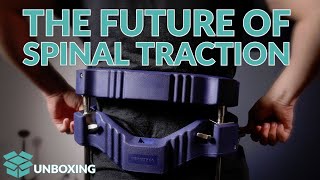
Dr. Jeff Langmaid (The Evidence Based Chiropractor) unboxes and demos the Vertetrac (Vertatrac/Vertatrack) by MetaTrack — a portable, upright, functional spinal traction device available as lumbar and cervical units. He highlights that MetaTrack was founded by an orthopedic surgeon, demonstrates device components (belt, levers, comfort pads), explains positioning (bottom portion above the iliac crest), and emphasizes the device's advantage of allowing movement/weight-bearing traction for patients in-clinic or at home. The video offers practical setup tips, initial comfort/quality impressions, and clinical use suggestions (e.g., treadmill or rehab exercises while in traction).
Questions this video answers
May 5, 2022.
Lumbar unit (demonstrated) and cervical unit (also available).
An orthopedic surgeon.
Above the iliac crest.
Chapters
Hey, I'm Dr. Jeff Lengmaid with the evidence based chiropractor and we have here traction on the move. This is a super unique traction device from Meta Track and they have brought a functional traction unit to market. There is nothing like it. I have a box right here that just got shipped to my house from overseas. We're going to take a look at exactly what the vertatrac looks like, how it can be utilized and, and the benefits it may offer your patient as well. So while I go through and open this. Meta Track was founded by an orthopedic surgeon. So this is somebody who, he and his team are very well aware of the challenges that people have when they're suffering from or struggling with radiculopathy. And specifically they focus on two areas, the cervical and lumbar spine. So they have a cervical traction unit as well as the lumbar traction unit that we'll take a look at today. One of the challenges that I've historically dealt with, and I think a lot of conservative care providers out there deal with as well, are traction units that are static by nature. And when the traction unit is static, it's just not how people live their lives day in and day out. And that creates challenges, it creates a limited application. And I think there's so many of us that know patients will be on a traction unit, they'll feel great while they're using it, and then as soon as they get off, things sort of waste away. And in my understanding, my belief is that when you are able to have a unit that enables you to move throughout your range of motion while still providing that traction, it is a really, really good thing from a benefits perspective, from a results perspective, and from a patient comfort perspective, it just makes a lot more sense. So let's take a look here at what the vertatrac looks like. We got a beautiful handy bag right here to be able to keep it in. I know that this is a device that also can be used supervised in the practice, but for patients, where appropriate medically and with the right direction, they could also use this at home. So we're going to take a look here. We got some comfort pads, as I believe they call them here. And we have the device itself wrapped up in some bubble wrap. So let's unbox it and see exactly what we have here. This gives you the anterior to posterior push, I guess I'll say. So we'll take a look at that piece in a moment. And here is the device itself. Let me get, get those pads out of the way. And the goal of this device, again, is really to be able to have traction while you are able to move. So let's get this bubble wrap out of the way, and we will take a look at the vertatrac itself. And again, this is the lumbar unit. They do have a cervical unit as well. And one of the things that I noticed with some of the training online was when, when a patient is utilizing the lumbar unit specifically, it's a great idea to have them go through some of their movement exercises. So maybe they're on a treadmill, they're doing some sort of functional rehab exercises while they are in traction. And I thought that was a really, really great way to look at things, a unique way to look at things and could provide superior benefits for your patients. Because why not perform some of these exercises while you have that, those decompressive forces on the disc. So patients that have, you know, lumbar disc injuries, they have radiculopathy, as I like to say, the nerve doesn't care what's pressing on. It could be a bone, a disc, or a ligament. But specifically with those disc pathologies, traction can be super, super effective. So, and this can be a great complement to the, if you're a chiropractor, to the adjustments that you're giving in your practice, in your office, if you're providing any sort of spinal decompression, this is a great spinal decompression, of course, is while you're lying down. So having a system to utilize when the patient's also upright and moving around. And again, it's something that if they chose to, they could use at home and on the go is a really, really good, great benefit for the patient because it now, it doesn't limit the traction that they receive, only to what they're able to get lying down in your practice. So you just get so much more of a dynamic ability to deliver the traction. So here we have the unit itself. So this is the vertatrack by Metatrack, and we have the traction device right here. These levers are what initiate the traction itself. And then you have the belt here, which goes around and supports it to the body. So this is my first time kind of diving in and utilizing it. Ideally, from what I understand, you really would want this done skin on skin. It's also something that a patient could wear under their clothes if they so desired. But in this little demo here, we're going to go ahead and utilize it on me. We'll go over my skin here. So this is a first test run here. We're going to see exactly what they have going on. But these levers are what provide the traction. This is the support that goes around the lumbar area. And of course, as we get in, in a moment, I'll use these levers to sort of pump it up, so to speak. That's what's going to deliver the decompressive force. As the bottom surface and the top surface separate, this is what gives that traction on the disc. So if the disc is bulged out or herniated out, as you deliver that traction, you can see some receding of the disc back into the disc space. And if that disc was pressing out into that foraminal canal, into the spinal canal, into the lateral recess and causing compression on the nerve, which is causing that pain, that numbness, that tingling down the leg. This is where decompression does a great job. This enables you to be upright, which I think is awesome. Awesome and weight bearing. But also you can move around and wear it under your clothes. So let's see exactly how this works. I'm going to swing it around back here on myself. And my understanding on positioning with this is you really want it above the iliac crest. So that bottom portion you're going to want above the iliac crest. For the sake of this demo here, we'll just go right around here, get this top one in and a little loose here. So we're going to make sure we get this as tight as possible. We got a little ways to go as we get this tightened up. Get that just in position. We're going to do the same thing with the inferior or the bottom piece. I know that's going to be too loose, so I'm going to pull that in a little bit before we get started. We'll tighten that up a little bit more here. So positioning on this, I'm probably a little bit off on the exact positioning, but I want to get that demo. So I'm going to get it a little bit snug here. You can see when I'm pulling these in, it's also pulling in the side pieces, so I can already. I already feel support across my low back and I also feel some support just across. Just across the sides here, the kind of the lateral sides. So I think we're in a pretty good position. I'm going to stand up and scoot it down just a touch. I was going to tighten it up just a touch more as well, so I don't Think with this, you want to be too shy about getting in there. And now I have my levers here, so I'll turn around and we'll see how we do the levers. I hope you can see right here, I can already feel that it's providing some traction as I get these levers down. I'm trying to press them down as evenly as possible, and I can already feel that traction. I can feel my skin in between here becoming taut. A little bit of extra baggage up here, and that's exactly what we want. If I was utilizing this for my lumbar spine, and I can already sort of feel that nice decompressive force, I can tell you what it's comfortable. Even if you don't have a pathology, just being under gravity and taking that weight off is pretty comfortable. And you can see here, I'm fully functional as far as movement, so I could get on a treadmill without issue. I could certainly do anything in a gym, in a rehab facility pretty easily and be able to move around quite well. I can tell you the comfort level of this right off the bat, if I wanted to. Those pads that we pulled out earlier, I could put those right here. I could also put those pads directly in front, and that would provide just a little bit more cushion if I had the skin on skin between the apparatus itself and my body. With my T shirt here, I don't need to be as concerned about that. But this is really, really comfortable. It's pretty low profile as well. So you could wear this. As you could see, if you had a hooded sweatshirt, you could throw a T shirt over this. But certainly if you had a hooded sweatshirt, if you had a jacket, anything like that, you. You could practically wear this and not have any. Most people wouldn't know you're wearing it at the time you were. Now, the other thing about this is I went bilateral, right? So I had both sides up, I believe, roughly the same. I might have this one a little bit higher on the left side, but I have them roughly the same. For those patients that have unilateral complaints, you also can utilize just one. So if you're really looking to gain traction more so on one side than the other, you can pump up one side and really get that nice decompressive force unilaterally or on a single side. If your left side's killing you, if your right side's killing you, you can really dive in and focus specifically on where you want that traction to take place. So I can say my initial impressions, number one, the quality of this right off the bat is impeccable. It's definitely a medical professional grade piece of gear. It's easy to use. I just, you saw me, I just unboxed it. I had watched a very short video before I unboxed it. But very easy to use, very intuitive on how to utilize it. And these levers feel great. I'm not struggling to get in there with traction whatsoever. This really gives me a fantastic opportunity to get decompressive force to be able to move around. And I think this is going to be ultimately the future of spinal traction. And, and that means it's functional, that means it's upright, that means it's comfortable, and that means you can move around. So this is the vertatrack by meditrack. We'll be sure to drop links down below. If you have any questions, be sure to reach out to their team. Ask questions. I think if you are a conservative care provider or you're even in the surgical realm or pain management realm, this is a fantastic tool to be able to have in your practice for your patients. You can utilize it in practice again. Patients can go home with this when medically advised and with the proper coaching and training. So, so Metatrack. Great job. Really foraging the path for spinal traction in a functional realm. This device is awesome. I'm gonna play with it a little bit more. If you have questions, be sure to reach out to the meta track team and I'll see you in the next video. Hey, what's going on? If you loved that video, be sure to subscribe to this channel. The evidence based chiropractor puts out videos all the time at the intersection of marketing and research, showing you how to grow your practice while also growing your knowledge. Basically Bass. So if you liked it, be sure to comment down below or hit subscribe and I'll see you in the next video.










