What it's really like to work with medical doctors as a chiropractor. LIVE from Berlin.
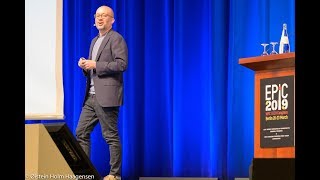
Jeff Langmaid describes working as a chiropractor in hospitals and surgery centers. Doctors ask about chiropractic care but rarely refer. Medical groups hire chiropractors for patient satisfaction, cost savings, and triage, with roles expanding into imaging interpretation and revenue generation.
Chapters
Foreign. How's everybody doing? All right. So we are going to spend the next 30 minutes talking a bit about what I've seen working in a multidisciplinary clinic. I've worked in a couple of them. We'll walk through what that looks like, what it feels like, and my goal is you'll be able to take something away, regardless of whether that's your goal or not. In practice, you'll find something that can bridge the gap, have better communication, and have a little bit of insight into what it's like on the other side. So that's where we'll go over the next half hour. So who here is proud to be a chiropractor? That's good. All right. Good, good, good. I feel the same way. My big question to you would be, where does our integration stand today? Now, it's certainly better than it has been perhaps ever in our history. My great grandfather was a chiropractor who graduated in the 1920s. That was still when BJ was at the helm of Palmer. And it certainly is a lot different today than it was back then. But based upon what we see, I feel as though today we stand not only on the shoulders of giants and I speak for myself, but shoulder to shoulder with them. When we look at the researchers and the publications that they're putting out, it's defining the evolving role of chiropractic and where we are going that is exceptionally important. It also gives us the basis and opportunity to bridge the gap like we never have before. I speak about this often when I say, you know, 25 and 30 years ago, it was difficult to find research relevant to chiropractic. But in today's day and age, we are so, so fortunate for all of the researchers that are here and all of the researchers that are around the globe that are consistently producing high qual publications that showcase the benefits of what we can do in our practices. And we need to be the generation that takes advantage of that. So the opportunities we have in front of us have never been greater. But the challenge to everybody in this room is we must seize them. The research that you see around the top is wonderful, but making it actionable, making it applicable, and helping other people understand its importance, and is the onus of every single person in this room, researcher, clinician or otherwise. So how do I get the opportunity to stand up here? Well, the third and fourth bullet points are really the key components and where we're going to go to today. I've been very fortunate to work as an associate to be A clinic owner, myself, and then to work in two very diverse multidisciplinary groups. One was a hospital based group, 50 some odd physicians, most of them surgeons, entwined with the hospital and the institutions in the United States, University of South Florida Health and Tampa General Hospital. Then from there I was fortunate to jump to a large scale outpatient surgery center which was very different. But both gave a lot of insight into how medical doctors, how dos, how other healthcare providers think of us, but also how we can think of them, how we can be valuable in the overall healthcare landscape and where the evolving opportunities lie. So this slide, what's up with MDs and DCs right now? Right? That's the question. Where are we at right now? So we know where we could go in the future. The 95% that you see up there is, and these numbers are rough, so excuse me, but 95%, almost everybody's going to deal with some back pain, spine or musculoskeletal complaint in their lifetime. We know that. The interesting part is when we look at the 90%, that's the amount of medical doctors who have said they've been asked about chiropractic. This was a study done a few years back and these numbers are a little bit rough, so forgive me if I'm off by a few percent. But roughly 90% of medical doctors report, hey, I've been asked about chiropractic. That's interesting. Well, the 26% starts to speak towards. That's how many have said you might want to see a chiropractor, so an informal referral. And the 11% is how many have made or reported in this study to have made a formal referral. I call that great divide, the gap of opportunity. So there is 90% of physicians saying they're being asked about chiropractic, yet only 11% are making that formal referral. I think that is a massive, massive opportunity for us to position ourselves and for us to really have a patient centric approach that helps the entire healthcare team, patient at the middle of that and all other providers. Now the gap of opportunity is something that I think we need to take advantage of and I think should be on the forefront of everybody's mind. Here's the good news about this. You might say, gosh, everybody's suffering from these challenges. Many MDs are being asked about it, yet none are making referrals. That's an uphill climb. It doesn't make me feel very good. Well, let me give you this insight. If this bar said 90% also made referrals, then you would have two options to compete. Either be much cheaper than your colleague down the street or be exponent better at your care. So the cap of opportunity is fantastic for a majority of providers who are able to. If you get 1%, 2% of that, you would have a lifetime of relationships that you can build from. So as we move forward and now that we understand sort of the landscape, let's talk a little bit about medical doctors and their treatment of spine. It's very difficult, and I'm saying this from a primary care perspective. There are specialists who do fantastic work and there are primary care physicians, GPs who do fantastic work. But traditionally we see them making three different decisions, all of which have extreme shortfalls. When they see a patient, a person with spine or musculoskeletal issues, typically they go to one of three default things. Medication, referral for physical therapy, or referral to another specialist. That's typically how they've been trained and in that order. Right. We see NSAIDs prescribed in an unprecedented rate. Medication is the default go to, even as the major health care organizations guide against it. For that to trickle down to the providers takes time. But it also, again, the onus is on us to provide some of that insight to support their decision making and to open their eyes to what the other options might be. Those other options, there's a lot of them in this room today. Physical therapy is fantastic. I think active care is an extremely important part of the healing process. But one of the great challenges with active care is if you dive right into active care without going through passive, AKA getting better biomechanics, better mobility, you can have an uphill battle. And there are certain individuals who just go through physical therapy and don't get the results that they would like. That's okay. But does that mean that person should automatically go to injections or surgical intervention without having them tried chiropractic? The answer to that is clearly no. And as we go on to the referral to a specialist, when you see medical doctors, GPs and primary care physicians referring directly again upstream, as I'll call it, for injections, for minimally invasive surgery or potentially fusion procedures, this is an aggressive way of going about things. And none of these individuals should be going that direction without at least having explored the opportunity for chiropractic care in their community. So where do we sit in this? We sit at the perfect intersection of efficacy, safety and satisfaction. As chiropractors. We have unprecedented patient satisfaction with what we do. The problem is, I think we all would Love to have more market share because the people are out there suffering. And the researchers, again, as I look up in just absolute awe at what's being produced in this day and age, are showcasing to us, answering, asking new questions, answering timeless questions, and ultimately guiding where we will go. So I view chiropractic really at the middle ground of this efficacy is the nature of what we do. Taking best practices, looking at where we are going, looking at what we understand in the past, and making the best decisions for our patient. Safety and satisfaction speak for themselves. So now we get into the crux of it, right? Why would a medical group possibly add a chiropractor to their staff? Let me ask, how many people here work in a interdisciplinary or multidisciplinary setting? Wow, that is a statistical anomaly. So congratulations. How many people are in sole practitionership, own their own practice? Wonderful. How many people are associates? Wonderful. How many people are not currently, but would be interested in working in a multidisciplinary setting? Cool. Well, hopefully you get something out of this slide. So when we look at why a medical group might add a chiropractor, most people immediately think of the fact that we do something different. And that is correct. You might also think of the fact of, well, there's a different revenue stream. If they're not billing for what we do as chiropractors, that could be a benefit for their practice. From a business perspective, that's 100% correct. But I also want you to keep in mind a few other important things that we can offer. We offer differentiation. When a healthcare group takes us on, they are differentiating themselves for a lot of different reasons that we'll go into. But that is a very important piece of how medical groups who are under as much competition as we are, if not more, are able to go about their business. Additional revenue. We spoke of additional service offerings. What we do as chiropractors is rather unique and that expands their ability to offer new services. Reduced personnel costs. I'm just going to be brutally honest here. Quite frankly, when somebody hires a chiropractor, often they might be able to hire us for a little bit lower base salary, but nice potential upside on the bonus structure without the hard cost of a physician's assistant or an arnp. This is just real life. When you're going to a group and speaking with them, I think you need to have these things in mind. That's a very good business proposition for the group physician. First triage. A lot of groups now are moving towards the. You come in our front doors and you see a doctor first instead of seeing a mid level practitioner. And if they're interested in doing that, there perhaps is no better person than to enable that model than the individual sitting in this room. And that's a very unique selling proposition. Patient satisfaction we spoke of, we have unprecedented levels of that. And that's a testament to the hard great work that everybody in this room does day in and day out. Political advantages is another one. Now this might be particularly controversial, but when a group wants to become, if they've never been exposed to chiropractors or the organizations within chiropractic in the past, one great way to do that is to hire a chiropractor on staff and be a trailblazer. There are advantages to that in terms of their group growth and a hub and spoke growth model. When we look at a surgery center, thank gosh, we're not able to pop up surgery centers every four. Well, sometimes it can seem like it, but a single group wouldn't pop up a surgery center every four miles away from each other. So how do you grow in that case? Well, what you do is a hub and smoke model of growth where you have a hub where you might have your surgery center. And then spoke small clinics all around that, that feed in and out, that are predominantly staffed by mid level practitioners and or preferably somebody like you and I. These are important things to keep in mind. If you are one of the individuals who raised your hand and said, well, I might be interested in multidisciplinary practice. It's not all about what you can do within the four walls of your practice that can be advantageous, but there are a lot of other things that you can offer. So the evolving role of a chiropractor, how does that work out? Right. We always, again, we think to what we know. So many times we think about the fact that if a chiropractor goes into a clinic, they're predominantly going to be adjusting patients. That's a very important piece of the puzzle. And scope does vary depending upon state and country and I want to be respectful of that. So this is from my experience, the evolving role of a chiropractor. This takes many different forms and it ties into the slide that we just went through. But this is what I have seen for myself. Imaging interpretation, and I'm speaking of X ray, excuse me, I'm speaking of MRI and advanced imaging. This is not to take anything away from the neuroradiologist who should be reading everything, but the ability to read that live on the spot communicate that to a patient, empathize with the patient and help guide them in their journey of care is unbelievably important in a case. Huge value. Add that we can provide as chiropractors patient satisfaction. I say again patient care and treatment, the act of the spinal manipulation or the adjustment, all of the active care we can do around that is very important Portal venture provider that ties into the triage capability. We are a great first line for an orthopedic group or a spine focused orthopedic group that is looking to have high patient satisfaction, to be differentiated and to be the best. Additional service and revenue lines are self explanatory and then we look towards the triage again advantages with standardizing collections. This gets a little bit nuanced and I won't go too far down the rabbit hole on it, but in a hub and spoke model, if a physician group has many outlying clinics and they're growing in that capacity, and those clinics are predominantly staffed in the United States by physiotherapists or physical therapists, it's very advantageous for them to have a physician on site at least a few days a week from a billing perspective. It also gives the availability for triage and portal of entry. But that's a very important piece of it. I won't go too long winded on it. If you have any follow up questions, I'll certainly be here until Sunday and happy to dive into the nuance of that. In entrepreneurship, One thing that I've noticed from the medical community that I've spoken to is there's a great deal of respect for the fact that we have these systems and these hierarchies that for many of us, we're on our own when we graduate. That breeds a certain level of entrepreneurship that many medical doctors and medical groups respect, admire, and look for in their own physicians. And we are in the position to provide that guidance and that leadership. So what are the keys to success? There's nothing groundbreaking here. This is the point. Everybody in this room can do this if you want to do it. We'll talk about action steps in a few moments. But a collaborative mindset mixed with patient centered care is the heart of working within a multidisciplinary setting. When you have a collaborative mindset, you are willing to go above and beyond. You're willing to learn, you're willing to be wrong. But you're always putting the patient first in advocating for them every step of the way. That's an important part. And sometimes you might need a little Bit of thick skin. There are bureaucrats within every organization and every medical group that can make things challenging at times. It's not always easy. But having a patient centered approach and a collaborative mindset can set you up for success perhaps more than anything else that you can possibly imagine. So let's say you've made it into one of these groups. Now what I typically, when I speak in the States, talk a little bit about interdisciplinary communication and I give the example and joke, but it's the truth. My first day at the first group I worked with, I was so excited to get the position. I was like, this is the best thing ever. Infinite patience. These guys have patience falling out of their pockets 247 and I show up in my waiting room, looks like a tumbleweed from 1850, a ghost town, you know, And I'm like, what am I going to do? I thought it was going to be patients hand over fist, but I still needed to work at it. I still needed to work at it. Now some people might be saying, man, you didn't ask that question before you signed. That's a really good question and a conversation for a different day. But I had to figure it out on the spot. So there's a couple action steps that I would recommend taking. Of course, meet the docs, meet the other health care providers, reach out to them. It's extremely important. Even though it's so simple. Highlight the benefits for specific patient population. If you go in saying I can take care of everybody, that means you can take care of nobody. Make sure that you are being focused. Make it easy for those other physicians to make the referral to you. They have to be able to picture that exact patient. Before you get 100 referrals, you need one. Focus on getting that one and work towards that with that collaborative mindset. A patient first approach. Attend spine conference. This goes globally in my opinion. Many hospital systems have spine conference where they have physicians roundtable it weekly. Reach out to your local healthcare institutions. You can do that as a not a practicing member of the group. It's exceptionally important. Present at events. This builds your brand. Curbside consults, text engage. Interact with the other providers that you are shoulder to shoulder with. The more you give, the more you will get. And understanding that is a very, very important piece of the puzzle. And of course, make the appropriate referrals. Make the appropriate referrals. So how do you do this yourself? This might all sound great to you, but if you're sitting there saying, gosh, this sounds good, but what can I actually do today? Or tomorrow to make this happen, make it easy for them to say yes. That's the overarching theme. Yes to you, yes to you being a part of that practice. So let's dive into this a little bit. Find a stakeholder. I was reviewing this presentation with my wife and she said, man, that's sort of like, you got to explain that one. So I'll take a moment and explain what find a stakeholder is. Find the individual within the healthcare group who's a decision maker. And I'll elaborate on that in a moment. Shadow as much as possible, if they already have a chiropractic physician, if they have therapy, shadow these individuals, get to know them, understand the culture of the medical group, understand how they're making their referrals, present your pitch and build your brand when you pitch, when you have the opportunity. They say we might be entertaining the idea of having a chiropractor. Hearken back to the slides I gave earlier on the value that you can provide to their clinic. Make it tangible, make it real for them, and of course, always make it easy for them to say yes and build your brand. The more work this is, regardless of whether you want to work multidisciplinary or not build your brand, the more people know trust and like you, the more you get out there in your community, online, offline, it is only going to be advantageous for you if you go to a group and you had a register of thousands of patients who had an online following of tens of thousands of individuals, all who know trust and like you. This gives you a leveraged position when you go in and speak to these groups. And that is a great position to be in, I can assure you of that. So find a stakeholder. I'll talk about that for a few more moments. Shadow, as much as possible, ties right into it. The first multidisciplinary group that I worked with, they had one chiropractor and I shadowed that doc for months on end. It took a long time. I shadowed consistently. But what I found throughout time was that chiropractor was not a dissection decision maker in the group. He would have been unable to hire me. So now it's like, oh, gosh, did I hit a dead end? What do I do from here? This is where finding a stakeholder is so, so important. I discovered that the director of therapy has more power. I also discovered that the chief operating officer, the COO of the group, ran the group organizationally, as you can imagine. So this gave me the opportunity now to set up meetings to set up conferences, to set up the ability to tell my story to those individuals. But I did the shadowing on the front end. So guess what happens? I go to present to the COO and to the director of therapy. I thought I did a pretty good job, but later I find out they of course went back to their chiropractor and said, hey, we met this guy named Jeff. You ever heard of him? Is he any good? I had spent months shadowing and Dr. Raina, to his credit, had said, jeff's fantastic. He's been in the clinic, he knows what we do. Make it easy for them to say yes, put in the time, understand the culture of the clinic, understand the role, shadow as much as possible and find that stakeholder. These are all the very, very important ways to systematically go about bridging the gap, to systematically go about extending your hands. And a lot of this information, I would argue, doesn't matter if you work within or your goal is to work within a multidisciplinary group. I believe that as a member of the healthcare community, in your community, these are all essential tenets of how you build and grow a successful practice. Many people might, if you ever have heard of me, it might be due to marketing. But marketing isn't what you should have to rely on 24,7. It can be expensive, expensive, it can be challenging. But when you build relationships, when you bridge the gap, you truly have the opportunity to build a sustainable practice that can grow throughout time. That requires less stress on your part and you can feel better about being within the healthcare community in your community. So where do we go from here? In my opinion, the biggest thing that everybody in this room needs to do is to simply take action. That's the challenge. We hear all of the wonderful speeches that we've heard this weekend, the inspiration at what's coming on the forefront of research, what we've discovered of what's been just published. But again, harkening back to the beginning of this talk, you have to understand that the researchers themselves do the hard work, but it's your job to stand on and by their shoulders and disseminate their work to the other people in your community. Help them understand the role of a chiropractor, the evolving role of a chiropractor, and how we can be productive members of large scale health care teams. And that membership, that partnership, doesn't necessarily mean assimilation. It means retaining the unique skill sets that we bring to the table. It's understanding the value that we can bring to a large scale practice and implementing that in a systematic fashion every single step of the way. So if you take one thing away from the talk that I gave today, I'd encourage you to act. Whether that's communicating with a researcher that you respect and admire, whether that's going onto your practice page, your practice Facebook page, Instagram, and talking about some of the research papers that are being produced, whether that's reaching out to another healthcare provider in your community, figuring out if there's a spine conference or a grand round that you can attend and hopefully one day present at it will not only build your practice and build your brand, but the patients in your community, the most important people, your friends, neighbors and colleagues will have access to what I consider to be the greatest healthcare profession on planet Earth. If you'd like to learn more about this, I'd encourage you to grab a free copy of my book here. And I thank everybody for paying attention. I hope you have a wonderful rest of the weekend. Thank you so much, Sam.










