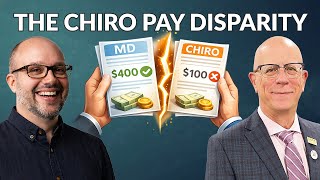
In this interview, the host (Speaker A) and a chiropractic professional (Speaker B) explore why chiropractors receive lower reimbursement than MDs and osteopathic physicians. They clarify that payment parity means chiropractors should be paid the same rates for comparable procedural codes, but in practice there is a sizable gap, especially for manipulative and low‑back‑pain codes. The discussion highlights the difficulty of obtaining de‑identified Explanation‑of‑Benefits data from osteopathic peers, which hampers evidence‑based parity arguments. Negotiations with insurers are described as largely futile for individual offices; payers rarely engage, leaving chiropractors pigeonholed into cost‑plus fee‑for‑service models. The speakers note that effective negotiation requires skilled negotiators, robust data, and often state‑by‑state or network‑by‑network strategies, sometimes driven by legislative mandates. They also point out a paradox: extensive clinical‑guideline support and high‑quality research endorse chiropractic care as first‑line for many musculoskeletal conditions, yet payer behavior and referral patterns do not reflect this evidence. The conversation shifts to the broader health‑system context, contrasting the current cost‑plus reimbursement structure with emerging outcomes‑based care models that could incentivize higher quality and potentially better payment for chiropractors. The interview concludes with a call for better data infrastructure, strategic advocacy, and alignment of payer incentives with evidence‑based practice to address the public‑health threat posed by under‑payment of chiropractic services.
Chapters
I'd love to continue to dig a little bit on parity. This is something that I know all of us have heard this word, but I'm even a little bit cloudy on from time to time. Does this just mean that what an MD gets for a code, a Cairo should get for the same code? What does it actually mean when you break it down and what docs need to know regarding that?
You know, that's a great question because one of the things that we looked at and we tried to drive and this is a challenge is the, the data that comes out of the osteopathic profession, you know, their reimbursements for their manipulative codes. We have our own chiropractic codes, so what's the disparity there? And we need information. So if you go down the street and call up your friendly neighboring osteopath and say, hey, give me some DE identified EOBs so I can see what you guys are. The payment patterns are for you. That's pretty hard to get your hands on. I'm not saying it's impossible, but we just face a serious disparity in the amount of payment that we receive. And if you took it away from codes, what about low back pain? How can the guy down the street that has their educational background get paid more than me? It's ridiculous. It's really a public health threat. For that to occur. It keeps people out of our offices and probably in a little bit more pharmaceutical harm's way that, that we really need to address and take care of. We got to make the legislators wake up, wake them up.
I guess the, the, the difference, the non parody, should I say, is this something that pretty much affects every, every insurance company? I mean are, are, you know, I don't mean to have you call people out here, but is this something that is just like this is everywhere everything or are there some that there is parity and others there's great discrepancy. How does that actually seen?
Well, from what I've seen is that it always dies in the negotiation process. We are not negotiating with payers, payers are not interested in negotiating with us. So they keep us pigeonholed where we are. And it's not just a data driven outcomes based situation. It's also what employers want. And employers are now waking up to Wellness Strategies. They're going broke on paying for sickness care. They're having that realization. They just haven't joined us with that realization. So it's our job to hook that horse to that wagon.
And when, when you speak of negotiation. I've always felt that this is again, like just totally opaque in my mind. Like, is this like I'm just going into an office and talking to a CEO? Is this always led by national organizations doing that negotiate? How does that actually work? I feel like there's just probably a lot of confusion out here in terms of like, how does it actually work when it then it would distill down to everybody. Is it every office for themselves? Do you look to your state or, or national representation to do that?
Well, I think in many instances that that lone ranger aspect of an office going in, trying to negotiate with a big network is, is absolutely futile activity. It's not going to. It's not going to work. The other element too is that we tried to do too much on our instances. You know, I'm a chiropractor. I'm not a negotiator with an insurance company. I do know one thing, I don't get paid fairly. So I want to turn that over to my strategy being enhancing someone's capabilities to go in and negotiate those contracts.
Right.
And it's a state by state and it's a network by network disparity that's going on. It's not just if you fix it by going to one state, unless it's a legislative mandate, but the negotiation process. You need good negotiators. You need to be able to bring the data. And I think we've done a good job on beta with the strategic plan and the data lake that we've been working on. So we're way behind on data, but we're getting further and further ahead as we move on through the years here.
Yeah, and this has been something that's always been a little bit confusing to me, and I think it ties in with exactly what we're discussing right now, which is around the change in behavior, whether that's the change in payer behavior, whether that's the change in referral behavior, et cetera. So I look at it and I'm probably biased, obviously, but I also part of this podcast is me reviewing research every single week. So it's difficult for me to actually believe. There's probably nobody that's read more chiropractic research than me because I've been doing this 10 years. I read three to four studies a week to choose one. And I'm not a researcher. I like to say I'm an interpreter of. Of it. So my point of saying this is I feel like I am constantly saying the same old thing for 10 years. The research shows what we do is, is best. All of the clinical guidelines from pretty much every single guideline provider in history recommends what we do should be first or at the top of the list. And it's almost like sometimes I'll say it on the podcast where I'm like, hey, I know we're sick of, like, we're almost sick of talking about low back pain in some context for chiropractors, because we're like, we've been saying the same thing for 30, 40 years now. Over the last 10 to 20 years, there's been a large advancement in terms of the practice guidelines, in terms of the quality of the research, et cetera. But I think there's sort of an interesting disparity between, you know, I'm sitting here like, there's such overwhelming evidence and such overwhelming guideline support for what we do. Where's the breakdown between that and actually what happens in real life? What's, what's your take on that?
You're by far and away a greater expert in that than I, I would say cost plus initiatives. That's all, that's basically all we work in. You know, we're, we're in that same old model where service after service after service drives up cost. And if the system doesn't change, truly, I don't think we're going to change the system alone. But what's going to happen to outcomes based care? Are we going to be incentivized to do a great job? You might get paid more if you do a great job and you prove that evidence. But if you stay on a cost plus system and all, healthcare is pretty much still there. Unless you're in some type of clinically integrated network, which, that's another subject. But it's cost plus. Just take an X ray, do an exam, do an adjustment. Plus plus plus plus plus and there's not a lot of incentive for the insurers. They just want to raise premiums over that type of structure.
Right.
So we're stuck. Phonograph spins, needle doesn't move. We're there.
Thanks so much for checking out that interview. If you liked it, we have plenty more available. You can check out the next interview right here.