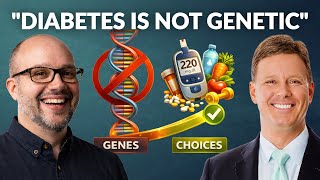
In this interview, Jeff Langmaid and a clinician (Speaker B) discuss how uncontrolled type 2 diabetes harms every organ system and can blunt the benefits of chiropractic and other wellness care. They debunk prevalent myths— that diabetes is purely genetic, that weight loss alone cures it, or that it only affects overweight people— emphasizing that lifestyle‑driven insulin resistance is the true driver and that reversal is possible. The conversation then shifts to a practical solution: a fully online, patented diabetes‑care program that chiropractors can add to their practice without purchasing equipment, hiring staff, or spending on external marketing. Implementation is reduced to generating a licensee link and QR code, sending a monthly email to the existing patient database, and directing interested patients to a free webinar. The clinicians argue this seamless, low‑overhead model lets chiropractors lead diabetes‑care while enhancing their existing hands‑on treatments.
Chapters
In my mind, helping— correct me if I'm wrong— being able to help somebody reduce the effects that diabetes has on their body would seem as though that it would help with all of the additional clinical care that you're delivering in your practice. If they have an underlying chronic condition that's really preventing them from ultimately living their best life at the optimal, at the worst, they're just in abject pain all the time and dysfunction. This seems as though it would be something that actually has the opportunity to enhance the, the, the other care that's delivered hands-on in the practice. Am I off base with that, or is that correct?
Oh, 100%. I mean, you know, high blood sugar affects every cell in the body. It's a nasty frickin' disease, man. It affects the brain, heart, liver, kidneys, pancreas, spleen, digestion. Like, everything gets annihilated. It causes all the inflammation and it's affecting everything. So, yeah. So when you're trying to be that wellness doctor, Obviously doing the chiropractic care is awesome. That's the pinnacle. But if someone's a type 2 diabetic, you know, with all these symptoms, chiropractic is not gonna reverse that. So doing it together is a really synergistic thing and it's just perfectly blended for chiropractors to kind of be the ones that are leading the charge on this because it's, as you said, it aligns with what their philosophy is already.
That makes sense to me. What are some of the biggest myths that you find? I, I think that there's a lot of, uh, information out there that's either lacking or, or maybe docs that haven't focused on some of these things in the past. I'm sure you're aware of some things where you're like, oh my goodness, you know, whether it's the patient saying it, maybe it's a new doc who signs up to the program. What are some of those common myths associated, associated with diabetes itself or diabetes care that we can bust right now?
Well, again, a lot of it is, you know, a lot of people think it's genetic, right? A lot of patients are told, oh, your dad's got it, your mom's got it, you're going to get nothing you can do. It's like the lightning bolt from the skies hit you and there's nothing. And that's not true. There's no gene identified that causes type 2. Now there's genes that kind of have like, uh, make you more susceptible, I guess is the, the right word to use. But there's nothing that's been identified that, hey, you have this gene that kind of have like, uh, make you more susceptible, I guess is the, the right word to use. But there's nothing that's been identified that, hey, you have this gene, you're screwed, and you're going to be a type 2 diabetic. Which is good news because that means it's, it's caused by lifestyle, improper habits and lifestyle. So now when you change those lifestyles and habits, you can reverse it. That's the great news. Uh, another thing is that it's, it's a diet, like you have to lose a bunch of weight to reverse type 2, and that's not the case. We've got tons of people 70 pounds overweight that don't have diabetes. We've got people perfect weight that are diabetic. So it's not, it's not a fat or a skinny disease. It's, it's the insulin resistance in your body. And so that's why we have people that will lose 30, 40 pounds in our program because they have to, but they're still 60 pounds overweight., but now their diabetes is gone. So that's a big myth that, oh, if I just lose 10 to 15 pounds, I'm good to go. It's not that simple. So those are some of the biggest ones. As far as the clinical aspect for the doctors, they think implementing something like this is, is way too challenging. They gotta hire additional staff and spend a bunch of money on marketing and get all this inventory in their clinic and do all this selling and make it— it's like a big hassle to add this to their practice. And it's not like that., and that's what we can get into here too.
So yeah, I'd love to dive. Let's, let's go right there. Let's dive a bit deeper because you mentioned some of the, what I'll call the mechanicals of the program, and I'd love to dive deeper so docs can really have a crystal clear understanding of what this looks like, a, you know, as they add into practice. You've mentioned it and, and we both know it, docs are inundated with, uh, tools, products, and services. I like to call the closet of seminars past. Uh, you know, $30 grand for that piece of equipment sounds great at the time. And then 6 months later, you've given away, you know, half the care of it. You've given away half of it. And it ends up being something of a seminar past. With a program that, as I understand it, you know, is really online, that really allows a seamless handoff, seems like it just makes it way easier from a practice perspective. But maybe just take a few minutes here and let's just walk through A through Z. How does this work? How is it implemented? What does the doctor see, know? What does the patient see or know along the process?
Just how does it work? Yeah, so again, we've literally made this, Jeff, as we just discussed off camera, you know, the simplest thing for a doctor to implement. Because again, I, when I was practicing, I got presented all these things. Hey, decompression, $100 grand this, I got to spend $20 grand a month in marketing, hire additional staff members, have all this stuff. So we've made it to where there's literally, there's no additional staff needed, no equipment to purchase, there's no marketing cost because all you're going to do is market this internally to your patient database. Right? There's literally no time for the doctor, no inventory required. So all we do is create that licensee link and they have a QR code they can give. And all they have to do is send out an email once a month on autoresponder to their entire patient database, just basically saying, hey, if you're a type 2 diabetic or know somebody who has it, we're now a licensee of the world's only patented system. To learn more about it, click on this link to watch your free webinar. It's literally that simple. That's all they have to do.
Thanks so much for checking out that interview. If you liked it, we have plenty more available. You can check out the next interview right here.