Why Most Modalities Fail in Practice (and How to Fix It)
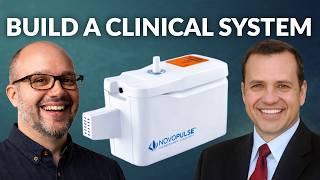
Jeff Langmaid and Scott explain why new treatment devices fail in clinics: clinicians buy them without proper systems. NovoPulse OA Pain Recovery Center provides a belt-pack electric field therapy with a six-week protocol, plus marketing, training, and clinical support. A $6,000 device pays for itself in three to four months.
Chapters
Yeah, I think, I, I think it's really fantastic because there's so many docs out there that, that purchase a new modality, maybe at a seminar or wherever it might be, and then they're never just able to get it implemented because they, they bought a device, not a system. So I'll tip my hat to, to NovoPulse in, in yourself for really developing that OA Pain Recovery Center, because it gives the doc the opportunity to have a holistic understanding of how to approach implementing this in their practice, which is just so critical because that's what takes a really good idea into something that can actually help people in, in the community. And with that, I just wanna touch on for docs listening, watching, and maybe unfamiliar, this is something that the patient can wear on, on their belt, so to speak. So as you visit the website link, you will see all the pictures, you'll be able to see it. But this is really something that, you know, it doesn't take up a, a lot of real estate in the practice. You don't need to, you know, devote an entire room to the, the unit fits with on a belt pack, so to speak, or on the belt. And then, and then goes from there. Now with that, one of the things I just want to touch on briefly are just, you know, just talk loose business sense and revenue case. This opens up, you mentioned it, a new line of potential business into their practice. You also mentioned, you know, being able to sell it to a patient. I just would like for you to highlight some of the opportunities and options, whether a doc wants to deliver the care in their practice, resell, rent the unit. How does that work and what does a doc need to know?
Yeah. So, yeah, you, you covered a number of it, so we'll drill down. So it can be utilized as an in-office, uh, you know, procedure. It's unattended and, and it's 30 minutes because that's what the research has found, is that that 30 minutes allows for everything to, you know, cartilage interaction with the electric field and all of that to get the best benefit. The research from an in-office perspective, uh, has been, uh, based on 3 times a week for 6 weeks protocol and then reassessing at that time. Generally speaking, patients, some patients, if they don't have a huge amount of inflammation and, you know, big problems going on within the joint, they'll see a return in terms of their pain reduction and function returning, you know, relatively quickly, within a week or 2 or 3. Everybody else, you'll begin to see function improved by week 3, 4, 5, 6, and then the clinicians can decide, okay, should we continue with this, you know, at a reduced rate, or, you know, are we clear, if you will, and don't need it at that point anymore. So in-office, what we recommend is utilizing the unlisted procedure code 97039 because it is a unique electric field. And so that's how it can be done. And that could be billed either through, you know, payers, or, you you know, just on a cash basis and they can price it accordingly based on, you know, maybe other modalities they have. And that's, we don't get into telling people what, you know, they should charge obviously, but your in-office procedures, there's number one. Number two would be you could also have multiple devices, which a number of our clients do, and they rent out the device to the patient because especially those patients that are a tougher case, you know, that you know that, and maybe they can't, you know, make it in 3 times a week or whatever, So then they rent it out on a weekly basis or a monthly basis or for like a 6-week program for a certain amount. And then the patient, you know, pays for that. And then obviously then they can renew it at the end of that. And so that's another way. And it's— and I mentioned earlier, pretty straightforward on how the patient can use it. There's one button. It's hard to mess that up too bad. But yeah, and then the patients utilize it. And then the third part that you alluded to has to do with patients saying, how much does that cost? Because I think I want to buy one of these. And I would say that occurs probably 5 to 10% of the time, you know, so it's not like it's a, you know, a lot, but it's, but there is some revenue generation for the doc when it comes to any of those 3 fields. And then we work directly with clients to let them know what that means, you know, for them. We help them figure out their ROI., but the return on their investment, you know, or excuse me, the return of their investment, which means when do I get my money back, usually occurs anywhere from that 3 or 4 month range, which is fairly quickly with a close to a $6,000 device. And then past that point, it's a return of their investment for that amount, you know, what they generated each month. And so our clients do, do pretty well with the device. They know when to use it. You know, they've been able to talk to patients about it and then, you know, use different types of, like we have a poster and we've got, you know, different things that will help them describe the patient. Here's what we're gonna do with you because of this, this, and this. You know, we're gonna utilize this therapy and this is what it does and all that. So yeah, but those would be the 3 primary areas from a business model perspective that, that helps you keep it in your practice and make it viable for your practice.
Yeah. Yeah. It's fractional compared to so many other modalities out there and the need is so high. This is not a niche of 1 in 1,000. This is probably an overwhelming majority of many patients that are coming into many chiropractors' practices each and every day. Also want to give a thank you to you and the Novopulse team and also just let everybody know as a partner of the evidence-based chiropractor, uh, docs that connect with the NovoPulse team can have continued access to that resource center. So you're going to have the opportunity also, uh, you know, for the cost of the unit to also have access to the entire, uh, pain recovery center, all of the resources, tools, uh, you know, marketing, clinical, CE, as you mentioned, all wrapped up in a really wonderful opportunity that enables you to help more people in your community. In a very distinct way. So Scott, I really appreciate you taking some time and coming on and, and chatting today with everybody. And I'm gonna encourage everybody listening and watching to click on down below, connect with the team, ask questions, discover how this can fit into your practice because it's a change that you can make that really opens the door to a tremendous amount of opportunity in your practice from a business sense. But I'm gonna say most importantly from a clinical sense, being able to help people with a lot of specificity. So Scott, I really appreciate you coming on and chatting today.
No, thank you very much, Dr. Jeff.
Thanks so much for checking out that interview. If you liked it, we have plenty more available. You can check out the next interview right here.










