Healthy Communication Between You and Your Significant Other
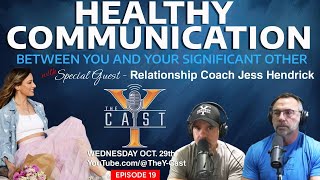
In episode 19 of the YCAST podcast, hosts Tony LaRosa and Rob Davidson interview Jessica Hendrick ("Jess Conscious Relationship & Dating Coach"), a certified Conscious Partnership and Dating Coach with a background in psychology and occupational therapy. The conversation focuses on the communication challenges men face in romantic relationships and how these affect overall health and wellness. Jess emphasizes that effective communication starts with internal work and self‑knowledge, noting that many people look outward for solutions instead of addressing their own belief systems. Key themes include the prevalent "fix‑it" mindset among men, the distinction between listening to understand versus listening to respond, and the importance of nervous‑system regulation (pausing when triggered). Practical tools such as the feelings‑wheel for emotion labeling and a five‑question communication framework (developed by Rudy and Kelly Castro) are introduced. The hosts and Jess also discuss common relationship myths, the impact of poor communication on mental and physical health, and the role of vulnerability as a strength rather than a weakness. A detailed look at Dr. John Gottman's Four Horsemen—criticism, contempt, defensiveness, and stonewalling—is provided, with concrete advice on reframing language (e.g., avoiding "you" statements, "always/never" phrasing) and recognizing physiological freeze responses. Jess highlights the value of male support networks, encouraging men to join brotherhood circles or men's groups to practice vulnerability and communication skills. Throughout, personal anecdotes, research references (Faye Doel, John Gottman), and actionable steps are interwoven, giving listeners concrete strategies for improving communication with partners, friends, family, and colleagues. The episode concludes with Jess offering a free 5‑step guide and directing listeners to her website and Instagram for further coaching resources.
Chapters
Hey there, Health and Wellness fans! Welcome to episode 19 of the YCAST podcast that's revolutionizing the way men think about their health, wellness, and their life, one conversation at a time. I'm Tony LaRosa. Sitting across from me is my partner and co-founder, Rob Davidson. Rob, how are you today?
Doing good, Tony. How about you?
You know, I'm, uh, excited about this topic.
I am too.
We're here to learn. I'm not gonna sit back and learn.
I need to learn.
So yeah, it doesn't matter how long you've been in a relationship, you could always learn. I've got so many questions on this, I don't even know if I'm going to get to all the questions. Um, probably not.
Knowing you, you won't. I know you have a lot of questions.
Yeah, but it's just something like, you think, you know, I've been in relationships a long time. You think you, you understand the opposite sex, and this goes for both sexes, right?
Right.
Because let me preface this too, that, uh, this show, you know, revolves around men. Our company revolves around men, but at the same time, you know, this goes for both sexes, right?
True.
Um, women also have communication, um, things that they work on, and we do too. I would say men more, probably, but I would assume that's true. Yeah. How's your communication in your, in your relationship?
You always tell me I'm terrible. Um, I don't know, pretty— I think decent, you know, but it's a work in progress.
Yeah, yeah, yeah.
Trying to get better at it, right? Every day.
Yeah, yeah. Hopefully this helps.
Yeah, hopefully.
I think it will. Yeah, well, we, you know, we all strive to be better communicators. Yeah, but I found there's some really interesting topics here, um, that we'll discuss that I think you give people good toolbox. Yeah, to enhance their communication or solve some of their issues.
Some of the outlines, I'm excited.
Um, by the way guys, remember, uh, go to projectyinow.com and check out our products. This is our hydrating facial moisturizing cream. Yeah, I had to turn around, I was trying to read it. Um, and that's available. We also have our eye serum. It's really good, guys. These are flying off the shelves. If you order one of these, we're also giving away our new product, which is our tattoo balm. And this is great for moisturizing and shining tattoos.
And if you don't have a tattoo, go get one.
You have to get a tattoo before you use it, it's mandatory. Um, but if you order one of these or both, you'll get a free sample of the Tattoo Bomb while we're completing development of that. So that's at projectyinow.com, and if you use PROJECTY20, you'll get 20% off. All right, as well. So anyway, today we are breaking down one biggest and most invisible walls in men's wellness— communication, right? It's a big problem. Yeah, we're often taught men are strong, um, silent, and fixing is our primary role.
Yes, absolutely.
Um, we're all fixers.
I'm guilty of that.
Yeah, and that feeling is, is kind of like a private affair. But, um, you know, what if that framework is broken? What if we actively are harming our health, our happiness, and our relationships, right? So we got to take that in consideration. This is one of the most critical conversations we can be having, especially for men, because sustainable health isn't just about the supplements you're putting in your body. It's about the entire ecosystem of your life and your relationships. Are very core of that, I think. Uh, we are incredibly honored today to have, uh, Jessica Hendrick with us today. She's a leading voice— she's a leading voice in intimacy and relationships, and she's here to help us draw up a new blueprint. Uh, she helps individuals and couples across the globe heal at the root, break free from the patterns keeping them, uh, stuck in create the life and relationships they— we all deeply seek, right? She has a bachelor's degree in psychology, a master's in occupational therapy, and is a certified Conscious Partnership And Dating Coach. No idea what that means, but we're going to find out. Yeah, with additional certifications in subconscious reprogramming, trauma therapy, and nervous system healing. Okay, so without further ado, Jessica Hendrick, how are you? Thank you for joining us.
Hi guys, thank you so much for having me. I'm excited to be here.
Yeah, we are too.
Absolutely. Yeah, glad to have you.
We, we are, we are students of you today.
Exactly.
Um, I'm really— yeah, I'm gonna sit back and learn and ask questions. I'm liking this role. Yeah, yeah, absolutely.
Well, we wanted to— and I said at the beginning of, um, the opening that you know, this isn't just men are deficient in. I mean, you know, you work with women as well, and women need education, education on how to communicate as well. So it's not just us guys. I know we're probably like, it's probably an unfair ratio, it's probably like 80/20, but that has to do with culture, right? Yeah, absolutely, exactly.
I would think so.
But for men out there listening, I want you to know, like, you know, don't you don't all of a sudden come too hard down on yourself, knowing that, you know, maybe there's— you both have to meet halfway on certain things. That would be my take.
Let me write that. I'm not alone.
Okay, but Jess, why don't you give us a little, um, information on your background, your experience, and then, um, what I like to ask and know is, you know, in a nutshell, like, what would you say if you had that one answer for someone to say, like, what's your overall philosophy on you know, healthy communication relationship, what would that be?
Okay, great question. Um, I love, I love just your vibe and how you guys are so interested in exploring this topic. It's awesome. I'm really excited.
Yeah.
Um, and yeah, I mean, I've been working with individuals and couples for many, many years now. And really the thing that's interesting is that we're taught to go outside of ourselves to try to find the answer, to try to find the person or the money or the job to somehow feel better, to create a feeling of peace or happiness or contentment within. But actually, it's the other way around, where we need to do our work within ourselves so that we can shift the way that we're experiencing the world through the lens of our own belief system. Mm-hmm. Interesting. So, yeah. So the biggest thing I would say is just do the work on yourself, whether you're single, whether you're dating, you're in a relationship. Get to know yourself, understand the way that you move, the way that you tick, like what supports you, what doesn't. And all of these things will help you be a better communicator because if you know yourself, then you can provide, you know, support for anyone you're in relationship with— friends, business relationships, romantic partners, all of the above, right?
Yeah, yeah. I was gonna ask that, that probably Communication obviously transcends into work and friends and all— everything you do in life. Yeah, right. So it's, it's key. So that's the point well taken there.
Yeah, we all have things we need to work on. Yeah, absolutely, absolutely. Um, so let's, let's start with, uh, you know, redefining strong communication. Um, so in your work, what is the single biggest, um, communication mistake that you see men making when they first come to you?
Well, I love what you said too, just about men and women. So we're wired differently to begin with, right? So if we expect women to be men and men to be women, it's not going to work. So it really supports us in taking the time to learn, okay, how are men wired and what supports them, and how are women wired and what supports them? Because it's different, right? But the thing that I find supports people the most is really understanding that everyone is having their own experience, like I mentioned before, through the lens of their belief system, right? So our past experiences, our histories, our childhood, our traumas that we've experienced, they all create a lens through which we experience the world, right? So when we're communicating with someone, especially when we're having conflict with someone, we're experiencing it through our own unique lens. So the— and the thing that we're kind of wired to do is like, well, am I right and they're wrong? Like, like, who's right, who's wrong, who's good, who's bad? And that is what actually impairs our ability to connect, because we need to expand it into this person's having their own experience, and then I'm having my own experience, and both are valid, right? So can we have space for both rather than, well, she did this or he did that and I'm right and she's wrong, right?
Yeah, that makes sense.
Yeah, tit for tat, I guess.
Or the blame game, right? Yeah, that's true. We do that because we look at through our lens, not the other person's lens. Yeah. And once we start doing that, it probably does create that bridge and gaps it, right? So you can really start understanding them. Yeah, makes sense. Yeah.
And everybody wants to be heard, I think.
Yeah.
Which I know we're, we're going to dive into a little bit of that too. Um, so how did— so obviously, you know, we're a show about men's health and wellness, but how does, um, so how does pure, uh, um, I'm sorry, how does poor communication, uh, physically and mentally impact a man's well-being?
Yeah, that's such a good question because the quality of our relationships determine the quality of our lives, right? So if we're having relationships where there's a lot of stress or conflict, or you're in fight or flight all the time, it impacts every single area of your life because it takes so much energy. So energy that you would have for other things to take care of yourself, to take care of your health, to maybe grow a business or for your work or your career. It's channeling way too much into this communication challenge. So it's really impactful. You know, it can impact physical, mental, emotional well-being and every area of your life. So it's really important.
Yeah, I noticed too, like, if, you know, I get in a little disagreement or something, uh, it doesn't have to be in, you know, a romantic relationship, that, you know, I hold, you know, I internally hold on to things. I wear my heart on my sleeve. You?
Yeah. Yes.
So this thing, like, just goes on and on throughout the day sometimes, like, oh, I should have said that, or, you know, I wish I would have listen here and say that.
I've never heard that.
Yeah, um, but it does, and it affects your whole life, you know, work, stress, right?
Yeah, you're probably secreting more cortisol. Yeah, so health, I would assume. Yeah, no question.
Yeah. And then you— so within that, I, I go back to that whole fixing thing, right? Um, that we talked about. So we mentioned the fix-it mindset. And, you know, why is this mindset, um, often the wrong tool to solve these, these issues?
Such a good question, because this is one of the biggest problems that we have. Like, the difference between men and women is men will just go into fix-it mode, and that's how you're wired. You're naturally wired like that. So it's going to be the thing that you just jump into. So this is where it takes work, right, to understand that that's not actually often what a woman is needing, especially if she's not centered or regulated, right? So if she's stressed and she's coming to you in that energy and then you go into fix-it mode, she's just going to feel unseen, unheard, unsupported, dismissed. And all of that is going to probably ramp her up more. But it's hard for men because it's hard to watch someone you care about who's not feeling okay, or she's stressed, and you just want to fix it, right? But counterintuitively, the way to do that is to just hold space and really listen. And you can actually ask her, right? You can say, what do you need from me right now? Do you need me to just listen? Do you want suggestions? Or do you want me to go full throttle into like, okay, let's tackle this thing, right? Because at a certain point, once she's centered, once you've been able to hold space for her, she may be open to solutions, right? But initially, probably not. But the hard thing for men is in order to be able to hold that space for her, you have to hold on to your center, right? Because if she comes to you with anxiety or fear or stress, you could get knocked off your center, and then you want to fix it so that you don't have to feel uncomfortable also. Does that make sense?
Absolutely. In fact, yeah, you know, that's magnified in my relationship with my daughter, you know, because I always want to fix for her.
Yeah.
So it's— yeah, you got older, same thing. So I, I definitely— yeah, I can relate to that actually.
Yeah, yeah, a lot.
And she's told me, I just— that I don't know.
Just listen. So yeah, yeah, but it's, it's tough because you're going against the way that you're put together, right, as a man.
Without a doubt. Without a doubt. Yeah, that's probably the most difficult.
Yeah, I catch myself sometimes too. I'll be like, oh, I'm not gonna do anything, I'm not gonna fix it. It weighs on you like, damn it, I gotta fix that.
Yeah, but I know that's okay. You can even say that of like, I really, I really want to fix this right now, but I, I'm gonna do my best to listen. Just calling it out is helpful too.
Yeah, that makes sense.
More open communication about it, how you're Yeah, um, yeah, and this leads to a key concept that, you know, I wanted to discuss was, uh, so there was a study, um, by— there's a researcher, Faye Doel, I don't know if I pronounced that correctly, uh, distinguished between listening to understand and listening to respond, right? Because, you know, we all do that. It's not only in, you know, your intimate relationships with business and just, you know, social Everyone's, everyone's thinking about what they're going to say before the other person stops talking. I've done that myself many times. But let's, uh, let's unpack this.
Yeah, I love that. Yeah, I mean, it is true. It's something we have to bring into our awareness, right? Because once I was aware of that concept, I realized how much I just want— because I love talking, so I'll want to jump in and say what I want to say, but it's like, that's not always the move. That's not always the most supportive or loving thing, right? So it's like, am I actually— can I slow things down and actually listen to understand the other person's experience? Right. So when we were talking in the beginning about everyone's having their own experience, when I work with couples, there's a tool that I teach them, which is a framework for communication. And a big part of it is slowing down and sharing their experience with the other person. Right. And the other person really needs to listen to understand. So not listen through their lens of what they think happened, but actually just listen from a space of curiosity and wanting to understand, even if they have a completely different experience of what's happening.
That's hard.
Yes, very hard. Yeah.
It's hard to sit through that listening and, you know, your blood's boiling and you're ready to take someone's head off.
Well, that actually To speak to that, though, that's really valid. So there is something that happens when we're really activated or triggered. This is a piece of information that I wish I knew years ago because it changed my life with relationship dynamics. When we're that activated where we can't, we're not in the space to listen, that's not the time to start communicating because your rational brain, your prefrontal cortex is offline because you're stressed. So you can't access the higher realms of thinking, right? You're more in the survival brain of fight or flight and trying to keep yourself safe. So if you know you're in that state, the best thing that you can do is actually just pause and take a minute and come back to your center. And then when you're regulated, then you can go have the conversation.
Write that down.
Pause.
48 hours for you. At least.
At least. 48 hours. Friday to Monday.
Yeah, I know.
Uh, yeah, well, let's talk about the why. The vulnerability, the masculinity, and, um, this thing we call a brain. Um, this is a key shift for many men. It moves us from a place of action to a place of presence. Um, that requires a word that makes a lot of us uncomfortable. Right? Vulnerability? I've never heard of it. So let's, let's kind of redefine that, uh, for everyone. What, what is it? Um, why is it not a weakness? Um, but you know, as many experts out there now say, it's the very foundation of connection and courage. I mean, we've talked about this on other shows, but, um, so break this down for us so we can walk out of here like vulnerable men.
Crayons and coloring, right? That's how we'll figure it out.
Yeah, that could help. Yeah, no, I love it. Well, this stuff is complicated, right? Because we were taught, especially the generation that we were raised in, right? Vulnerability wasn't really celebrated or modeled for us by our families of origin most of the time. So vulnerability was really a liability.
Yes.
And so we were taught, or we learned, either through how we were parented or through adults in our environment or through teachers or whatever, we learned this blueprint that vulnerability is weakness and it's not safe.
That's true.
Right?
Yeah.
So to rewire that takes a minute, but the truth is that it's actually the most courageous thing you can do because it is scary, right? To just kind of drop your defenses that you've been carrying for so long, because that's what you've needed to stay safe, and just be open and just share from your heart what is going on. I mean, that is— that's a skill that has to be practiced over time. And there's certain places that are more appropriate to be vulnerable, and there's certain places that aren't, right? So knowing where is appropriate— like, my mentor would always say, who's actually safe to hold your heart, right? If you're gonna share— because I know we mentioned this a little bit in our talking about the show— we, like, if you're gonna be vulnerable with a woman, we need the woman to be safe for you to be vulnerable. We don't want a woman who's gonna be risky for you to be vulnerable, or who's gonna emasculate you for being vulnerable. That's not right.
That— yeah, right, that throws it on its head, right?
Right, that'll just send you back into never doing that again.
See, I told you. Yeah, see?
Yeah. And then you get evidence like it's not safe to be vulnerable.
Yeah, that's true. Yeah.
But I'll tell you, as a woman, I freaking love when men are vulnerable.
Yeah.
So attractive.
Yeah.
Have you—
have you seen men kind of use this as a tool to potentially manipulate? As well. Oh yeah, because, you know, you start flowing and, oh yeah, I could see like, you know, like a little kid, right? Oh, I'm getting my way, so I'm gonna keep pursuing this vulnerability thing. And I mean, what's your take on that?
I mean, that's true. So there are, there are people out there who are maybe talking the talk but not necessarily walking the walk, or using certain things to manipulate or whatever. And that's just Honestly, that's just more protection that they have. So if someone's manipulating, they're not necessarily inherently like bad or wrong. They just don't know another way. Right, right. So the work becomes looking at yourself, right? Like going back to knowing yourself and knowing your patterns, because a lot of us have patterns that are great and supportive and helpful. And a lot of us have patterns that we developed that are not anymore. They're really they're really now creating havoc on our relationships. But as a woman, I mean, I can tell now because I've had so much experience, like both personal and professional, with just feeling into what's in integrity and what's not, like what's an authentic expression and what's not, right? But that took time. It just— life is a great teacher in that way.
Yeah.
Well, actually, that brings a good point. I should ask you from the beginning, but when did something— did a relationship event, uh, cause you to, you know, pursue this, this career?
Oh yeah, like many, many— I mean, many relationship events. I think I just believe, like, on a soul level, this is literally my calling here because my life from the time I was little up until, you know, up until now, really there's been a lot of challenges in relationship, like both in my family of origin. And then that became my blueprint for my adult relationships with men. So there were a lot of— I mean, I have so many stories, but there was— there were a lot of challenges and there were a lot of things that really brought me to my knees, from like abusive relationships to people that were unavailable, to people that I thought, oh, I thought, and this is finally the healthy one, and they still not. And it's just been It's been a really challenging process, but it's what makes me good at what I do because I really understand when people are in these moments of like deep grief, deep despair, deep heartache, you know, conflict, don't know how to get out of it because I've lived it myself.
Yeah. So from, from your perspective with the education and the experience you have, Is it something that you use in your current relationships now, or is it like when something happens you're like, oh, I forget everything and I figure this all out again? Because a lot of professionals do that, you know.
That's a good question. Yeah, yeah. I mean, I do my very best to embody what I teach to the best of my ability, and I'm a human still, right? So I have my moments just like anybody else, and I don't pretend to have it all figured out or be perfect. I don't even think that's possible. So for me personally, it's like, I'm here, I'm a student as well in relationships and life. The only difference between me and you is that I've spent my life— I've literally dedicated years and years and years and hours and hours to learning this stuff. Yeah, because I want to be able to experience relationships differently, right? And now my life, my relationships are so different compared to what they were before because of this work. And so I would say I do practice it all, and I also have moments where I'm like, my brain's offline, and I'm like, oh my God. But the more you practice the tools, the more they become wired into your brain, so you have more agency, right? So when something's activating or triggering, you have more of a space to pause and then respond rather than just reacting from like a 0 to 60. Place, if that makes sense.
Right, makes a lot of sense.
So, um, tell me, have you been in that moment where, you know, you implement this technique and then you're saying to yourself, you know, and you're talking to yourself saying, wait, that doesn't work?
Yeah. Oh yeah, yeah, 100%. Like, and it's funny because I just had an experience with, with a friend recently that it was like a conflict with a friend, and I, and I got a message from her and it really threw me off my center, and I could feel my body reacting and my heart started beating and I was talking to somebody and I couldn't focus on the conversation with the person. And I'm like, okay, I know what to do right now, which is to pause. Because if I start engaging from this place, but my brain is telling me, I should say this, or why don't I do that, or maybe that. And I'm like, oh my God, it's almost like you're your own, you're your own parent where you're like, okay, like, I understand you're upset, you're anxious, you're frustrated, but like, don't say that because it's going to make a bigger mess, right?
Yeah.
So for the most part, the way that I handled that, I was actually really impressed with myself. I was like, oh damn, that was pretty good. Perfect. But it was so much better than it used to be, where I used to just— I would like fly off the handle. I would say the most hurtful thing. Like, it was not cool. Yeah, I didn't have the tools.
Yeah, all that tuition pays off in that moment.
Yeah, let's hope, right? Mostly life's, life's school that I learned this all from.
But yeah, exactly.
Yeah, that's the best, best education. Yeah.
But I do want to go back to, um, we were talking about, um, you know, verbalizing the emotion. Yeah, right. So the research I was doing, uh, shows a process called effect labeling. I think you call it something else, but yeah. You know, what are your thoughts? Explain that for us, because I, I thought out of this whole, you know, prep for this show, I thought this was probably, um, the most impactful thing for me that I learned. And then, uh, you threw that, uh, emotion wheel out there. So I, so I went online and I Googled that. I'm like, oh my God, this thing is amazing. Yeah, just on the whole, I wanted to put it up as as a slide, but I couldn't figure it out. But the whole, like, I just looked on the anger section, I'm like, oh my God, there's all these, like, emotions to this anger, and I can now identify what I'm doing. Okay, it's gonna take a while for me to put in practice, but maybe you could expand.
So good. I love that you looked it up. So for everybody listening, um, Tony's talking about the feelings wheel.
Feelings.
Feelings wheel.
What'd I say?
Emotion wheel?
It's okay. Whatever. Yeah, emotion wheel. But if you want to look it up, but it's actually in— so the guide that I'm going to give you guys to give to all of your listeners, it's in there. So I put it in there, but you can also look up the feelings wheel and it'll come up as a PDF.
Yeah, that should be on your refrigerator, by the way.
Yeah, no, really, like, my refrigerator is not big enough. This thing is huge.
And that's just the one area that you have to relate to. Right.
It's right by the SpongeBob magnet.
That's so funny. Yeah, I've been in offices where people have it framed and I feel like I should have it framed.
But yeah, it's incredible.
But it's super helpful because we were again where we were not taught to tune into what's— what am I actually feeling? Right. We were not taught this, this level of emotional intelligence. So what you're referring to, I mean, I call it something else, but it's the same thing. Is that I think the guy's name is Dan Siegel, and I think there's a YouTube video if you look it up called Name It to Tame It.
Yeah.
And basically, if you're able to identify and name whatever you're experiencing, right, just to keep it simple, like, I feel angry right now, then it does something. It's like that part of your psyche is being acknowledged, and for some reason it has a calming effect on the brain and on the body. I think maybe because you're just acknowledging it, like the same thing as, you know, women and men, but we need to be listened to. I feel like when we listen and we name the thing that's coming up, it creates this calming effect. So that is really helpful when we're in these moments, especially if we are triggered and we can't access the higher thinking. If we just say, okay, I'm really activated right now, I think the best thing to do is just for me to pause That's great, right? And you can even use this with little kids. So I watch my friends who also do this work who are parents, right? And they use it on their kids, and it's awesome because the kids are now having this wired into their brain super young. So my friend has a little boy who's— I think he's 3 now— and every time his dad leaves, he loses his mind. Like, he's just— his dad is favorite person, right? So every time his dad leaves, and he'll, he'll go through like grief and anger, and his mom will just say, oh, you're really angry right now. I, I see. Yeah, I get it. And then she'll say, oh, and now you're mad. Walk him through it. It's so good. But the feelings wheel is helpful because it's at the center of it. It has, I think, 6, kind of the 6 main emotions that we would name off if someone's like, oh, what were you feeling? And it's sadness, anger, you know, whatever else. And then as it branches out, as you were saying, it goes into more nuances of like, what exactly are you feeling in the realm of anger, or in the realm of sadness, or in the realm of fear, or whatever else it says. So you can use that and actually pull it out. Like, I give it to my couples and my clients. I'm like, look at this and see what you're feeling. And in our sessions, we pull it up and I put it on the screen and they're like, oh yeah, this is— I'm feeling betrayed and I'm feeling dismissed. And it's really helpful because then you can communicate it and you help yourself to feel really seen and heard in that moment. And then you start understanding yourself better too, right?
So, so that's how you practice it, you're saying?
Yeah, well, so there's a whole framework that I'm going to give you guys, but part of— so there's 5 questions in this framework that actually was created by my mentors. So I didn't create it, but they trained me me in Conscious Partnership And Dating Coach And Dating Coach.
It's funny when he said—
I'll give you credit. We'll give you the credit. Don't worry.
No, no, I can't take the credit. But, but I use it all the time. And it's, it's literally medicine. It's medicine for you understanding yourself and for relationships. Their names are Rudy and Kelly Castro. So I just want to give them credit because they literally— it's their life's work.
Thank you, Rudy and Kelly.
Yeah, thank you. Thank you. Thank you. But so it's 5 steps. So 5 questions if you're in conflict with someone, um, and it doesn't have to be a romantic partner, it could be, you know, with your kids or anything, like an employer, employee. But you go through each of these 5 questions and you answer them, and one of them is, what was I feeling? So that what was I feeling, you go to the feelings wheel.
That makes sense because a lot of times we respond so reactionary, right? We're very reactionary, and we don't really know why we do it that way. We're feeling something, so we react.
Yeah.
But to really identify that, I think it does help, uh, rewire the brain a little bit, reprogram what you're thinking.
So, well, when I—
that's a little Mossad and CIA trick, but it really is actually. Yeah.
Nice.
Categorizing everything.
Yeah, I like it.
Yeah.
I think, um, I'm proud of myself because, you know, I went to the wheel, but after I went to the wheel, I remembered a situation. I've done this a couple times, like, recently, where I'm in a conversation and, you know, something bothers me, right? So the first instinct for most people is that first circle: why are you angry? And I, and I remember saying, I'm, I'm not angry, I'm frustrated, right? So I think a lot of people, including myself, could take that as, well, they're the same thing, you know. Um, but I interpreted it internally as, I'm not mad at you, I'm mad at the— I'm frustrated at the situation. And thinking back on it now, you know, it, it worked for me. Yeah, like I was able to kind of dissociate myself with the potential anger of being at that person and, you know, kind of rectifying it internally and saying, okay, let me, let me get through this, this situation, and then, you know, take that little timeout. So it— I'm telling you, I was so impacted by this wheel. Yeah, yeah, it was very cool.
Very cool. Thank you for not getting mad at me.
Yeah, I'll speak to you later.
Yeah.
All right, so, well, that's good stuff. Um, so what's the biggest barrier you see to men embracing this, this wheel, you know, um, about, you know, fear of being judged or not knowing how to go about the process? Um, and how does the opposite sex reaction to that vulnerability make or break, you know, implementing this habit on a daily basis or so?
Those are all really good questions. I think, I think a lot of people, a lot of people when they come to me for coaching, they just don't know what they don't know. Right. So they're running into the same wall, whether it's ending up dating the same person in a different body over and over again, having the same experiences, or they've been in a relationship for a long time and they keep having the same fight over and over again and they don't really know which end is even up. Right. Because again, most of us were not taught how to navigate these things. So I think the biggest thing sometimes is just even the willingness to reach out and get support and ask for help. Because there's even stigma around that of like, oh, I should be able to figure this out. Or, you know, I don't need therapy or coaching because that means something about me. And it's so the opposite. Because the people that are willing to reach out actually then can have a different experience. Right. But a lot of times it takes being in enough pain. If you're not uncomfortable enough, then often people just keep doing what they're doing.
Yeah. Life's hamster wheel, right? They just end up on the same track over and over again. Groundhog Day, right?
Yeah, exactly. Groundhog Day. Yeah. Yeah. But I think, I mean, as women, we really have to take responsibility and understand because something I didn't understand as women I read this book that's a great book for women to read called The Queen's Code, and it's written by Allison Armstrong, and she's an expert in men's work. Like, she studied men for years and years and years.
And she said women to read the book, Rob. Yes.
Yeah, for women.
But he's writing— he's writing—
giving us gifts.
You're sleeping on the couch tonight.
You buy it for your daughter. She's like, yeah.
Sorry to cut you off, dude.
No, no, it's okay. Um, yeah, so this book is great, but one of the biggest takeaways I got from this book is like, holy shit, we're emasculating men all the time without even knowing it.
Yeah.
And that is not okay. And we have to be responsible for, first of all, even understanding what that is. So if you're a woman listening, like, look it up right now. What, what is it to emasculate a man? What could that look like, right? A man, sorry. Um, and I noticed once I read that book, I was like, this is so ingrained. Like, it's so ingrained early on. Yeah, we just learn it, it goes down the line.
Yeah, but how do you— I, I know this is probably a very surface-based question, but how do you— if you're stuck in those traditional values type thing. How do you hand that your man a wheel and say that? I mean, that's, that to me, you know, thinking back in caveman days, that's, that's, that's emasculating him right there. Here's this wheel, right, right. Um, yeah, fine, you know, like this evolutionary scale of, you know, all these different things going on. And I think most men would take that as like, I ain't doing this crap. Yeah, yeah, but, but I, but I think for me, why you're not a therapist. Yeah, well, I, I, hey, look, I may be a therapist for some people, um, but I, but I, I look at the wheel and I, I said to them, you know, I think you also have to have— if you can parse this, but I would say, you know, vulnerability with yourself and say, first of all, I have a problem.
Oh yeah, yeah.
And let me read it first.
Yeah, if you're not open to it, it doesn't happen. Yeah, right.
Yeah, I love that. So here's the thing, we, we can't, we can't approach it like that, right? So if, if you go and give your man a wheel, like, yeah, he's not gonna like that very much because that's like not the move. Also, the wheel is only a part— like, I can explain it if you guys want, but the wheel is just a part of the framework, right?
But oh boy, one step at a time, Jess Conscious Relationship And Dating Coach, please.
This is a 6-part series. Hold on.
I'm happy to, I'm happy to come back. Honestly, I'm happy to come back and talk about it because it could be a whole episode in itself.
But yeah, that'd be interesting actually. Yeah.
I mean, I'm down, but yeah, but the thing is that anybody— so when we're in partnership or in a close relationship, right, it's very easy to look at like us as women to look at our partner and say, oh, these are all the things he's doing or not doing, right? And focus on him. And same thing for men. Oh, she's doing this, she's not doing this. And then it's a distraction from us doing the work within ourselves, right? So really the work is we learn the framework for ourselves and we start practicing it and we start embodying it, right? So when I am dating someone, I use these things whether or not they have the tools or not, but I just, I just embody it and model it. So you teach it more by demonstrating it rather than going to your partner and saying, 'Oh, look at this framework, like, this is what you need to do differently,' because that's not really gonna feel good, you know?
Right, yeah, exactly.
Makes a lot of sense.
Yeah, well, it's a step-by-step process, you know, and I would say, guys, you know, do it, do it in the comfort of your own space in the beginning and read it and try to identify with it and utilize it in your everyday, you know, when you're at the gym or how do I feel?
And I do think more, more and more men are open to it, open to really learning about themselves and learning about relationships, you know. Yeah, now, now more than ever. Yeah, I think social media helps. Yeah, I mean, I think anyway, I'm guessing.
Well, think about the source, um, for men where, you know, more women are implementing a lot of these techniques now. Yeah, right, more than ever, I would anything because it's just the resources are out there, right? So as a guy, if you, if you want to be successful with a woman, you have no choice. Yeah, it wasn't like it was, you know, 20 years ago. That's a good point, where you could just get away with this stuff. Like, if you want to fit in, you gotta do the work.
Yeah, yeah, good point. Yeah, and it just—
if you want to switch spots, Jess Conscious Relationship And Dating Coach And Dating Coach And Dating Coach— because I mean, please Rob's looking at me in awe.
Yeah, can I have your autograph? Can you sign the wheel? Sign the wheel.
That's so funny. Yeah, I mean, it's true though. What you're saying is so, so important, right? But it's funny because you're reminding me of a client that I have now, and he's hilarious because he's so open to doing the work, right? But he told— so we've been working together for 8 months now. And I started out just working with him, and he's married, but he— his wife was like, you got to go do work on yourself. So he just started working with me. We worked together for 6 months, and then she— now she works with me too. So I'm supporting both of them. But he tells me, he's like, you know, some of the things that you were talking about at the beginning, I was like, what the heck is this? All sounds so weird. And like, I— but he said, but I knew what I was doing wasn't working. And I knew that I trusted you, and I knew that you knew what you were talking about. So I, I decided to just humble myself and like listen to what you said. And then it transformed— it's continuously transforming his marriage, right? And but it's funny because I love when people can just share openly. He's like, I was like, what the heck are you talking about? When you talk about, you know, the wheel or the— yeah, or his inner child or whatever, right? But He's like, it works. It works.
It definitely does.
But speaking to what you were saying too about for men now, like there's an energy too that feels differently for a woman when you're in the presence of a man who's actually working on himself. It feels different than someone who's not. And it just creates this sense of safety because the more you're doing your own work for, for us too as women, right? The more that we take responsibility ability for ourselves and we're accountable and all these things, then we're not going to project onto our partner and we're just going to show up in our wholeness. And so there's an energy there because I have a lot of men come to me kind of like, how do I navigate dating? Do I approach a woman? Do I not? Da da da da da. And it's like, just do the work on yourself and then all of that unfolds organically.
Yeah, right, right.
Yeah, yeah, yeah, yeah. I mean, you know, I was through the dating life, so I definitely can relate to that. Um, I have a myth-busting list.
All right, I like that. This is my favorite time.
Ding! I wish we had a bell. Ding, ding, ding, ding, ding, ding!
A gong.
Yeah, so these are some— I did some research on some of these, um, myths that you, you were gonna, um, give us the truth. Okay. Myth number 1: healthy couples don't fight, right? We hear this all the time. If we argue, automatically we're incompatible. What, what's the, what's the truth here?
That's the worst, biggest lie ever.
Yeah, yeah, yeah.
I mean, if you're gonna have conflict because you have two different people with two different paths two different lenses through which you're experiencing the world, right? And different triggers and different reactions. But it's not so much that you don't have conflict, it's how do you navigate the conflict that you have. Because what happens is when you know how to navigate it in a way that supports you, you actually become more and more and more free from these past experiences that you're looping because you're trying to work them out in the present-day scenario, right? So you're taking your past hurts and past wounds and projecting it onto the current relationship. So it's not so much about do we have conflict, but it's how do you navigate it and then how do you come back and repair? Because if you know how to repair, which is basically the framework that I'm going to give you guys, if you know how to do that, then you get stronger after the conflict and it builds trust. And then next time around, a lot of times it looks differently, right? Because you've, you've walked through something hard, right? But now people just think, I mean, there's the honeymoon phase where everything's amazing and, you know, it's kind of fantasyland, but it's all part of it. But then you get into the next phase, which is the conflict phase or the integration phase. And that's where a lot of people, maybe they can hang for a bit, but then they're like, oh, this is too hard. This must be the wrong person. Probably chose this. There's probably someone else out there. But that's the biggest lie because we take ourselves everywhere we go. So we're going to take all of our stuff, we're going to bring it to the next person, and then we're going to play it out with the next person. So doesn't mean that you necessarily have to stay in a relationship or not, but just be aware that these things are going to show up with each person. No matter what.
Yeah. Yeah.
It reminds me, um, I watch some of that reality, um, the Love Is Blind, right? And then the, um, uh, Something at First— Married at First Sight.
Can we edit this out?
Well, no, I think it's— we can, but I think it's relatable to what Jess is saying because, you know, these people, they meet each other and then they go, they, you know, immediately go into a situation where they're living together on a vacation and they're just learning about each other. And some of them are like, do you realize what you signed up for? You know, people can't believe, oh, this is not my person. And well, that's what you signed up for, to figure all this out. Yeah. And to work all these things out through this 3 or 4 or 5 week thing, that experiment that you're on. And I just sit there and I shake my head. But, you know, when they sit in front of the you, the therapist, and they have their moment of, um, you know, when they critique you. It's like, I learn a lot. Yeah, there's a lot to learn about this stuff. So yeah, so I know, I just thought it was relatable. No, it is, you know, I'm turning off your mic.
All right, so where are we?
Myth number 2. Yeah, right. You have to win the argument. This is a big one because I'm competitive. Rob's competitive.
So wait a minute. Does this mean handing out scorecards during an argument's okay, right? Yeah. Okay.
Yeah, absolutely.
Yeah.
Little stars.
Yeah. Little— yeah, I won that one.
Medals.
Yeah.
Yeah, that one. That's a big one. So the whole I'm right, you're wrong, I'm good, you're bad thing, it's just— it naturally comes up, right? It's just what— it's what comes up, especially when we're activated and we're knocked off our center is, okay, how can I grasp for I'm right and I'm the good one and da da da, right? But we have to recognize that if we take that approach, then we're going to be spinning on the hamster wheel, like you said. We're not going to be able to have a shift. So when I work with couples, I say, okay, we have to have some guidelines. And one of the guidelines is there are no sides. Like, so we have to— there's no sides. There's no I'm right, you're wrong. And people sometimes try to pull me in to be like, well, this is what she said, and this is— and I'm like, nope, that we're not doing that. Yeah, because each person's having their own experience. So we have to create space for all of it, you know. Um, but the finger pointing, if we start pointing the finger, we're in trouble because then the other person's gonna point the finger back and we're just gonna be attack, defend, attack, defend. We're gonna be stuck. We're gonna create a bigger mess. So if you're finding yourself in that dynamic, it's easy to happen, especially 'cause remember your brain's offline when you're in that state. But as soon as you can, that's why if you guys have ever heard that if whoever is sanest at the time needs to kind of take the reins. So if you realize, oh shoot, we're in the back and forth right now. And it's like, okay, we need to pause because we're just playing the blame game.
Yeah, yeah, no resolution doing that. Yeah, you'll never resolve it.
No, I find that in these moments, like, like I said earlier, people just want to be validated for what they think they're trying to say, or if they don't feel the other person understood what they were saying, so they keep going back and forth and back and forth. How do you— how can like both kind of validate, like, okay, I heard what you're saying. Yeah, this is what I'm saying. Because if not, it just spirals out of control and go back and forth and it never, never resolves itself.
And then I guess the— and the other part to that is what if one of us, we don't agree with, you know?
Yeah, yeah, then you go down the other spot, right?
So yeah, so You probably shouldn't say I don't agree with that because it's someone's feelings, right?
No, you can't actually.
Don't do that.
Yeah.
What was that? I missed that. You can't say what?
I mean, it won't go well, right? So the biggest thing, I cannot stress this enough, is that each person's having their own experience, right? So you actually can't come in and say, well, you know, someone comes in and shares with right, is vulnerable with you and says, this is my experience of what happened, and you say, well, no, that's not— because that's their experience, right? Even if you're having a different one. So what I do with couples is have them go through— so the guide that I'm sending you guys, I walk them through it, right? So it's simple, but it's not easy. So it's helpful to have support when you're walking through it. It might seem like, oh, I could do this, but try to do it and the triggers come up and the fear comes up and the anxiety comes up, right? But you want to check in with how, like, how grounded are you before you go into this with somebody, right? Because if you're activated in the moment, that's not the moment, right? But you could take the questions, you could go and fill out the questions on your own, and then when you're ready, come back. But then we want to create space for you to share all of the answers with your partner or with the person you're having conflict with without any interruption, right? So the other person sits and just listens, which is hard to do, but listen. And you'll, you'll be like, wait, that's not what happened. Oh my God. And you're gonna want to interject, but you gotta just listen. Let them share everything with you and then reflect it back to them, right? So what I heard you say was— and reflect reflect as much back as you can and then say to them, did I miss anything? And then let them fill in anything. And then we shift into you share with them, right, all of your questions, and then they reflect back. So it's how we create that space. And then from there, you start to understand your partner's world more, right? And the— there's a really powerful question right at the end, which is where have I felt this before? Right? Because it's so easy to take these things personally. It's so easy. And that's where we also get knocked off.
Yeah.
Yeah. We're like, oh my gosh, we just internalize it. But a lot of times they're playing out something that happened a long, long time ago. Right? Like they had a dad that was never available or a mom who was really critical. And oh, I used to feel like this when my mom used to criticize me and say X, Y, X, Y, and Z, right? So you start to realize, oh shoot, this isn't really about me. They're just having this experience that feels similar to their past, which is triggering them, which is why it's creating this argument.
That makes sense, right? Yeah, yeah, triggers. Yeah.
Okay, so myth 3. I love this one. If I have to ask for it, it doesn't count. This is— this one's off because, you know, this, this goes from sex to taking out the trash. Um, what, you know, why is this myth of mind reading so toxic?
Yeah, well, because it's not possible, first of all.
Well, for some, for some mortals, once in a while.
Yeah, I mean, yeah, the more tuned in— oh, go ahead. Sorry, sorry.
No, we can get lucky. Right?
And you can, yeah, you could get lucky and you can be tuned into your partner and get to know them over time and get to know, you know, what supports them, which is great, right? But, but we are really playing a very risky game if we're expecting our partners to read our minds because I agree, then we're going to build resentment. It's like, well, why did they not know? How don't they know me? Don't just— you have to know your own self. A lot of people don't even know themselves enough to even share with a partner what it is that they're needing or, or whatever, wanting, right?
That's actually a very interesting point because I agree with that. I think people do not know themselves very well.
A lot of people don't.
Yeah, they're lost. They don't know what they really need.
Yeah, so how can they even tell you? So that's it.
Exactly.
Well, I—
wait, so I'm thinking about this a little differently, maybe a little deeper, but I'm not necessarily thinking like, okay, no, no, I'm just saying that it— if it's obviously, if it's something that, you know, couples never dealt with before, it's a new thing, obviously you're not gonna read their mind. But I think if it's something that emotionally, um, they've expressed before, like, you know, when I'm feeling like this, I need you to ask, you know, how I'm feeling or something, and then, you know, months go by and you don't do it, and and then they're saying, well, I have to ask you to— yeah, if I have to ask you to ask me how I'm feeling, like, that, that's the way I'm looking.
It seems like a lot of pressure.
So yeah, well, I mean, it is. And it goes back to what Jess Conscious Relationship And Dating Coach was saying earlier, that like, if this isn't innately in you to ask these questions, you have to keep training and training and training. And then at what point does it become like, yeah, you know, something that is, you know, has no substance to it, right?
True.
I'm sorry, I just went off on a tangent.
Yeah, no, it's good, good.
I like the tangents.
Yeah, yeah, absolutely.
Um, that's a good question. I mean, over time you get to know someone, right? So it takes time to get to know people. Yeah. So yeah, if you've been together for years or, you know, you're— you've heard from your partner multiple times that this is what would support them and you're not actually able to do it, then you might want to look at what's going on within you. Is it bringing something up? Is it You know, it might be some subconscious thing that's coming up, like, well, if I'm vulnerable, then that means this about me or something, right? But yeah, this stuff is complex and layered, and there's a lot of different ways to look at it. But generally speaking, people cannot read your mind, and your best bet is just to be as honest and open as possible and ask for what you need, but not from a place of complaining or criticizing.
Right.
'Cause that's not gonna work. So from a place of like, I really deeply desire this, or like, this means so much to me. So men are wired to protect and provide, right? So if we can communicate to you in a way that opens up that space, that's really helpful rather than, oh, you're not doing this, or you're doing this wrong. And it's just that's another way to emasculate.
Right. Yeah. So it's how you approach it.
Yeah.
How you approach it, the tone, the tone with which you approach it, the energy. Because if you're feeling stressed, the worst thing you can do is go to your partner with that energy because then you're just going to create more of that energy. Yeah.
Right.
Makes sense.
Definitely in there.
Yeah. I think we all have it. I think everybody has. Yeah. Yeah.
Well, we're getting kind of close to time, but I wanted to, I want to jump to this one subject because I think this is really important on this topic. It's called the Four Horsemen, so identifying relationship killers, uh, because I think this will help a lot of people.
Yeah.
So, um, I've seen some research on this topic, comes from a Dr. John Gottman, um, after studying thousands of couples, uh, can predict with over 90% accuracy whether a couple will divorce.
Wow. Yeah, really? Okay.
He identified 4 communication patterns, um, so toxic he called them Four Horsemen of the Apocalypse.
Wow. Wow.
Um, so let's walk through it, right? And so our listeners, uh, avoid divorce. Give them the antidote. So number 1 is criticism.
Right, right.
So you can explain the difference between a complaint, like, I'm frustrated, you know, the garbage wasn't taken out, and a criticism, like, you're so lazy, you never take out the garbage.
Go. That was a good one.
Yeah. So yeah, for anybody listening, the Gottmans are amazing. So I love them. They're this, they're this beautiful couple, and they've been together for so many years, and they're just incredible. So they're a great resource. But yeah, I love their work and that, that example is perfect, right? So we just talked about criticism. So it leads perfectly into this where if you, if you come at it with like a finger-pointing energy of like, you didn't take out the garbage or you're doing this or you're not doing this, then it's going to create more of an issue rather than keeping the focus on yourself of like, oh, I'm frustrated because I'm feeling like I'm, you know, I'm always the one taking the garbage out or whatever, right? It's, it's better to present it in that way. Keep it on you. Stay away from those statements, those you statements. And also watch out for always and never. Like, you always do this, you never do that. Like very black and white and very inflammatory language. Yeah.
Got it.
Big thanks.
Get that out of your mouth. Take it out now.
There's a lot of work.
It is.
Okay, number 2. I have no idea what you guys are talking about. Uh, defensiveness. Um, you know, this is the default for so many of us. Uh, partner criticizes and we immediately counterattack.
Yeah.
Oh yeah, well, you never Why is this so counterproductive?
Well, it creates that back and forth that we were talking about before, right? So if, if, if someone feels attacked, they're going to go in defensiveness, into defensiveness. So if you say, you know, you, you, you, then they're going to, they're going to defend, right? So that's natural, right? And it's challenging, but The more that you can just do your best to drop your defenses and just be open and just allow whatever they're sharing with you to land, which is hard to do because then we're also guarding ourselves from going into shame of like, oh, I'm a bad person, or going into guilt like I did something bad. So a lot of times we're defending because we're trying to protect against going into that experience.
Makes sense.
Yeah, it's a tough one, you know, it's like Yeah. Holding yourself, even though someone's coming at you and sharing something that they're not happy about you, about with you or what, like something they're upset with you for. That's a better way to say it. And instead of going to defensiveness, can you hold yourself in your center and listen?
Yeah. Yeah.
But it depends how they're delivering it too, right? Because if they're coming at you with like an attacking energy, then that's not healthy. Right? You can, right? You can listen, but only if they're going to express it in a responsible way, right?
Right. Yeah, I don't want to be toxic. Yeah, that makes sense. Yeah, right. Yeah. And I imagine the more open you are to listening to them, right, the less aggressive they're going to be, right? Yeah, because it's going to be— it's going to make them open too.
It's, it's really— if you can hold yourself, right? But it's, it's, it's not easy. Like, you'll, you'll feel it in your body, if you can hold your center and just be open and try to just have compassion for them. Like, clearly they're upset, right? They're just— right, something knocked them off. So can you meet it with compassion and curiosity rather than defensiveness? And if you can, guess what usually happens? Usually then they can calm down, and then it can— that energy can be open for you back to express anything you might. But you You got to go first.
Yeah, yeah, that makes sense.
Well, I would think too, you know, posture and body language is a big thing for this too, is like, you know, if you're just kind of— instead of standing up over— oh yeah, sitting on the couch and you're relaxed, I think. Yes, that sends messages too.
Yeah, that's true.
100%. Yeah, because I think it's something like 90% of communication is nonverbal or something like that. So yeah, so when you're having this happen, like, are you closed up? Notice your own body language. Are you kind of closed off? Are you, are you not wanting to make eye contact? Are you looking at your phone instead of looking at them? And all of this is okay because you're just trying to feel safe. But can you, can you maybe like just tilt your body towards them a little bit or put your hand on there or hold their hand or something if they're open to it, right? Like letting them know I'm here, I'm with you. This is uncomfortable. It's okay, we're in it together.
Yeah.
Speaking about comfortability, contempt is the next one. Number 3.
Number 3.
Yeah.
So, um, the doctor calls this the number 1 predictor of divorce, obviously. Yeah, it's mockery, sarcasm, um, eye rolling, name calling. I've never done any of this.
I imagine that that manifests over time though, right? Yeah, probably because they're not talking, they're not communicating. Yeah, contempt, you know, it's driven that way, right?
Well, I guess, you know, it also depends on, you know, what you're bringing in from your past relationship. You can still be angry and taking it out on— who knows? But let's let the expert answer, you know.
No, I love it. I love hearing your thoughts. It's great. Yeah. Um, yeah, I mean, contempt, so I don't know if contempt is the same as resentment, but I feel like it's— well, contempt is when you're actually mocking and being basically like rude and kind of abusive, right? So that's extreme. But none of that is okay. So if we're operating from that space, again, compassion for yourself, right? Like, there's been moments in my life where I've operated from that space. Yeah. And it does not feel good for me, right? But definitely not for the other person on the other end.
Definitely Yes. Yeah. So stop rolling your eyes at me.
So if you're, if you're having reactions like that, right, that's something to look at. And that's something that I help people with actually is reactivity. But again, when I work with people, we create agreements. So like things like not using inflammatory language or like not rolling your eyes. And sometimes you might not even know you're doing it, which is hard. Because it can just be such a, such a pattern. I used to roll my eyes all the time, and my partner would say, you're rolling your eyes again. And I'm like, oh my God, I didn't even know I was rolling my eyes, you know.
So we see pictures of you with your eyes rolling or what, right, in all the photo albums.
Oh, I'm like, I am, I'm so expressive. So it was like, yeah, but I didn't even know I was doing it. So, but that's helpful to have that feedback, right? Because now I don't do it anymore because I because I knew— now I know. Yeah, but it takes a little time to practice and rewire the brain. But what you mentioned too about resentment, I mean, resentment I believe is the number one killer of relationship, where like if you're holding it or you're, you're building it up over time and you're not communicating, yeah, that's going to be a big problem.
Yeah, yeah.
So, but also people don't know how to responsibly absolutely either communicate it if that's what's needed, or just give yourself space to process it. Like, process the anger in a healthy way, because you could be holding this for, for years and years and years of something that happened a long time ago, but it's just sitting in your psyche.
Yeah, no, yeah, that makes sense.
Yeah.
Next one is, uh, stonewalling. This is the avoidance myth. The listener just checks out, um, shuts down, or, you know, leaves the room. I've done that.
Refuses to converse.
Yeah, yeah. Um, obviously the research shows men do this a lot more than women, but, you know, why? That's what's happening.
Almost a defensive mechanism, I would think, you know, stonewalling. Sometimes it's an uncomfortable conversation. I don't want to talk about.
Well, I think women are just more prepared for a conversation like that.
And confrontation. I think women are better at confrontation than men, to be honest, when it comes to that emotional confrontation.
I think they practice in the mirror. We need to practice.
Yeah, that's a good point.
Yeah, what's the secret, Jess? Come on.
They practice in a mirror. That's funny. Um, yeah, I think this one, this one's also multi-layered, right? Because are you doing it intentionally, right? Which is one thing where it's like, you know what, I'll show her I'll show him. I'll just, you know, shut it down.
I didn't even go there, but yeah, that makes sense.
That if you're doing it intentionally, that's what I think of as stonewalling, right?
Yeah.
But then if you're having a freeze response, so if you're going into fight or flight, right, what happens when we get an argument? You go into fight or flight or freeze, then you could just have a nervous system response, right? Again, you're prefrontal cortex is offline. You're operating from your survival brain. So you're in a freeze response. So then you actually cannot, can't. So it's not that they're doing it to you. It's that they're literally in a shutdown response. So if that happens for a man or a woman, again, you got, you got to work with your nervous system on your own or with in a supportive space with a coach, with a therapist, like someone that can help you so you can come back to your center. Because yeah, ongoing, you know, stonewalling is, is really going to create a lot of pain and resentment, and it's hard to come back from. But if you experience that as a child, right, like a lot of my clients, their parents would give— like a mom would give the silent treatment. So then that's what they do because that's what they learned. So it's complicated stuff, but you can, you You can totally shift it.
That makes sense. Definitely. Yeah, I can see that.
Well, I mean, like I said, that's probably— this is probably one of the most important subjects in this topic, I think. So again, that's criticism, defensiveness, contempt, and stonewalling.
Yeah.
And you guys can find all this stuff online, or, you know, call Jess. Exactly. Um, But on that note, this is— this has been incredible. We've gone from, uh, the, you know, the neuroscience of talking about feelings, which, you know, guys love to do, uh, to these behaviors that, that can end a relationship, which is helpful. It's a good manual to, to, you know, get yourself back in line. Um, so any man listening to this who feels overwhelmed but wants to change, um, what would you say the one thing is he can do today to start building, you know, more sustainable, uh, connected relationship?
So good. I mean, I would say the one, one thing is a hard thing, right? But I think, I think men— I know that men need men. So this is why I love— this is why when you said, oh, thanks for being so enthusiastic, I love what you guys are doing with your podcast. I love it.
Yeah, because we got one follower.
Hey, that's how it starts. Yeah, yeah, yeah. But it's so important and men need men. So men's groups, but men's circles, men's work, like get involved, surround yourself with men because that's really important. Right. And then also just, just doing the work within yourself. So if you're feeling lost, there are people like me or someone else who can really support and guide you to help you know your own self. Yourself and what you're needing, what you're desiring, and to become the match for what you want to create, right? Yeah.
Well, and speaking of that, we did our— was it the last episode? We did, um, How to Build a Brotherhood. Yeah.
Oh, awesome.
Yeah.
So great. Rob and I kind of reflect on our relationship because we're not only, you know, business partners, but we've been friends for 33 years now.
Oh, that's awesome.
Um, so just the, you know, a lot of these things men don't take into account for their health and wellness, right? Uh, even this, I mean, I guess you can attribute it a lot, a lot easier, but for the Brotherhood thing is to have those guys that understand you, you know, be vulnerable, which is a big topic today. Um, so, you know, we're trying to highlight some of these, you know, lesser-known methods. Um, yeah, but that's it. Well, Jess, this, this has been a really fun show. You're a great guest. Um, you know, we, we're, we, yeah, we were just talking, uh, before you, you jumped on that this is going to be a series, so we can break these topics. Yeah, we can break these topics down, um, quite, quite significantly, I think, with—
I want to do one just on the wheel.
I mean, a wheelhouse.
Yeah, a whole one on the wheel.
Yeah, not the color wheel, Rob.
Okay, it's not. Can we color it though? I mean, at least you can color it if you want. Yeah, well, it helps me, you know.
Yeah, but Jess, thank you so much.
Thank you.
So yeah, let us know where— or let the listeners know where people can find you.
Great. Yeah, thank you guys, this was so much fun. I feel like the time flew by so fast. Yeah, yeah, um, yeah. So if you're listening and you want more information, you can find me me on my website, which is just jesshendrick.com. You can also find me on Instagram, @coachjesshendrick. So if you have questions or you want to explore my work, and then there's, there's options to book a call. So if you want to explore getting some coaching support, then you can just click the link and book a call with me, and I will give you guys the guide, the 5-step guide to healing any breakdown. So support for everybody with communication and for everyone.
Great.
And that's the ebook, correct? Yeah.
So I'll, I'll send it to you so you can—
okay, I'll put that in the comments. We'll put it on the website and we'll get it out there. Um, but yeah, I think we definitely want to, um, you know, have you back on so we can dive a little deeper.
There's so much more here.
Yeah, yeah, this is fun. Yeah, this is really good. This is a great— I like, I like the energy that you guys have created here. It's awesome.
Oh yeah, likewise.
It was all me. Now Rob's actually feeling under the weather today. I appreciate you doing the show.
I'm getting by.
Yeah, yeah, we, uh, definitely needed my partner here today. Yeah, so I didn't pull my hair out. Um, but anyway, thanks again, Jess. Uh, if you enjoyed this, if you enjoyed this episode, hit that like button, subscribe, and please share it with your friends and family. This is an important topic, guys. We're not just here, you know, talking about guy stuff. We really want to help educate guys, which is why we're having experts like Jess Hendrick on, uh, to do this. So don't forget to drop your questions, uh, your experiences in the comment below— in the comments below, so we can answer those as well. Um, special thanks to RCJ Productions. Keith and Lindsay are producers. You guys can reach them at rcjproduction.com. If you're looking to start a podcast or you need some help on the audio and video side or just in production in general, they are great. That's rcjproduction.com. You can find us on our YouTube channel at The Y Cast, Facebook Project Y, Instagram, LinkedIn, and TikTok Project Y Now. Don't forget to download our app and we'll see you guys next time on our next episode. Check our social to find out what that is. Um, but we'll see you guys next time.