
She Was Sure She’d Be the One Person Bariatric Surgery Wouldn’t Work For (Until This)

In this interview, Jessica Lawson, founder of the Bariatric Brain Institute, talks with Aislinn, a bariatric surgery patient and coaching graduate, about Aislinn’s long‑term struggle with weight, her fears surrounding surgery, and how she transformed her relationship with food. Aislinn recounts a 40‑year battle with weight, previous failed diets, and the anxiety that the benefits of surgery would fade, leading to weight regain. After surgery, she experienced a mindset shift facilitated by Jessica’s coaching, learning to trust her body, recognize hunger and fullness cues (e.g., sneezing, runny nose), and allow herself modest indulgences without feeling deprived. Practical strategies are illustrated through real‑life scenarios such as a cruise, a pizza in Naples, and a Costco pizza‑ice‑cream dilemma, showing how she plans meals, prioritizes protein, and avoids all‑or‑nothing thinking. The conversation highlights the emotional transition from feeling trapped in a “jail‑cell” body to feeling free, the importance of self‑trust, self‑respect, and seeking support rather than going it alone. Aislinn shares advice for recent surgery patients, emphasizing that control over food does not require giving up life’s pleasures, that setbacks are normal, and that a supportive mindset and coaching are critical for lasting success.
Chapters
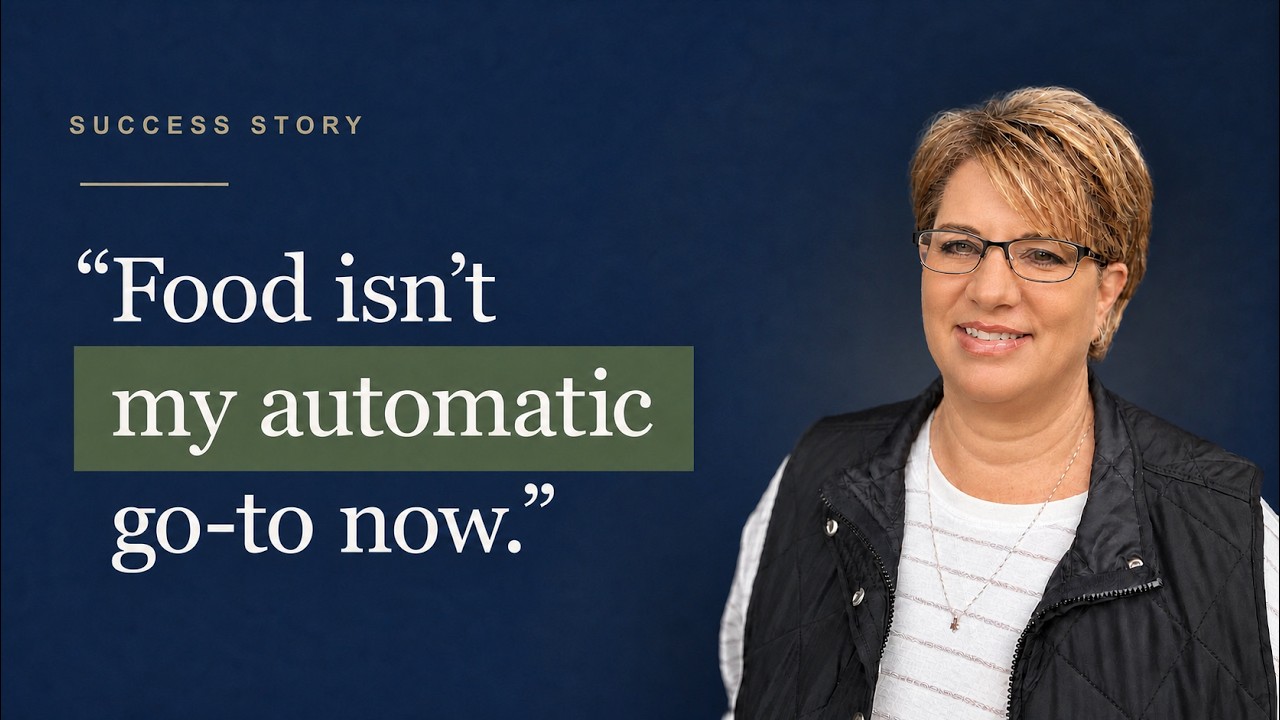
I went into my surgery thinking I will be the one person in the history of this world that this will not work for. I was afraid that as soon as the surgery benefits kind of go away, I thought, I'm just going to start packing on weight again. I just, I just know it. It's been like that my whole life. To be successful at it, I knew I was going to have to give up pretty much everything I considered fun. Being in a big body is is literally like being in a too-small jail cell. Everything is super high stakes, and now it doesn't— it, you know, the stakes are about as low as they can get. I have the tools I need now. If I really want something, guess what? I get a little bit of it because I don't want to deny myself.
So if you had to sum everything up, how does food feel now?
It feels pretty free. I definitely make different choices than I did. They don't feel like strained choices.
You don't feel deprived. Yeah.
Correct. I'm like, I want that. And it's just like that strawberry ice cream, right? Like, I'm like, okay, I'll have that another time. Today is not the day for that because I won't feel good. That's okay. The difference of how I feel is stark from a year ago, right? Like, I am still walking around this earth in a big body, but I don't feel like I'm in jail anymore.
That's huge.
I feel like working with you has been really, really impactful. The level of confidence that I've gained from working with you and the level of freedom, because I pretty much got everything I wanted. I wanted to be able to live my life and not be a prisoner of my body or my mental status around food. I got there.
Hi, everyone. I'm Jessica Lawson, founder of the Bariatric Brain Institute, and I am here with Iceland. One of my lovely, lovely coaching graduates now officially. Yeah, now officially graduate, um, who is sitting down with us to really share her story. So Iceland's story is very unique in the perspective of she had surgery, started to feel some of the old habits start to come back, and she's someone that likes to get ahead of things so she could see where the road was going. And we're going to talk more about that. Aislinn also likes the finer things in life. Let's be real. Uh, she enjoys traveling, enjoys spending time with her family, just enjoys living life. And for a long time didn't see how, you know, losing weight or getting control of her food and being able to be herself and live the life that she wanted to even could even coexist. So we're gonna dive into all of that. Et cetera, and really get it to the heart of who Iceland is and the transformation, yeah, and the transformation that she went through. Awesome. Well, Iceland, thanks so much for being here today.
Thanks, Jessica.
Cool. So the first question I'm going to ask you is something that, um, usually I would start this off by saying, okay, well, tell me where you were when you met me. No, instead Tell me about the cruise.
Ah, the cruise. The cruise was really, really good. I mean, I was nervous going in. Uh, like, having unfettered access to a million different kinds of yummy foods is something that I was really worried about. Um, but it went, it went really well. Like, I sat down and ate when I wanted to eat, and I ate the things that I wanted to eat, but I just didn't overeat. I didn't make myself uncomfortable. I just enjoyed the food that I wanted and pushed away when I was done, which, you know, is a relatively new thing for me. I even worked in having a margherita pizza in Naples, which was delicious.
I mean, if you're in Italy, you got to eat the pizza.
Yeah. I mean, there's no protein in that meal. I had to think about it. I didn't— well, I have to say, I did not feel awesome after that meal, but I did enjoy my pizza and I just, you know, got back on track right after it. I mean, it's not even back on It wasn't off track. I planned it. I planned, I'm going to go eat this meal and I'm going to enjoy it. And then that's a one and done and it's okay. Right? Like, so, um, the cruise was great. I mean, it was, it was fun and I wasn't stressed about food. I wasn't stressed about how much I was eating or should I eat this? Uh, you know, any of that stuff. I just did not. It wasn't in my brain. It wasn't part of my daily structure. So.
That's amazing. And for context, for anyone watching, today is Monday, August 24th, 2026. Iceland went on her cruise end of July, early August. We started working together in January 2026. So let's fast forward, or let's rewind back to to the January version of Iceland. How do you think she would have reacted going on that cruise?
January Iceland was still scared of food. I was just, what, 2 months post-surgery?
Yeah.
And I was just learning how to eat for my new stomach and I— the weight loss was feeling easy, which I think it's supposed to at that time. But I just was so nervous because I just knew that my success or my failure long-term would mean a mindset shift. And that was what I was most nervous about. I was most scared about because I have, I have been fighting weight since I was 14.
Okay. How many years is that total?
Oh, um, yeah, it's, it's almost 40 years.
That's a long time to fight food or fight anything for.
Right. And it was just like, I wasn't always big, but I just steadily from college on, just was gaining and gaining and, you know, kind of battling. Even, you know, when I got pregnant with my daughter, who's now 18, I was really, you know, the doctor was on me about weight. I had gestational diabetes. I just have fought it forever. And then probably about 5, 6 years ago, I went through something with my family where I gave up on myself. And I just said, I'm not important. I'm going to focus on these other things. And then on top of that, food was my comfort. Hmm. Which it's always been. Food has been my reward, my feel-better comfort for a bad day. It's— my family is like that. like that probably still. I just— it looks a little different now.
Yeah.
Um, but I, I was just— I was scared in January.
What were you scared of?
I was scared of myself, of being able to lose, you know, maybe a bit of weight, which I had already seen. Um, but I was afraid that as soon as the surgery benefits kind of go away, I thought, I'm just going to start packing on weight again. I just, I just know it. It's been like that my whole life.
Hmm.
Um,
how'd you know it, right? Because even if it's been that way your whole life, a lot of people go into surgery and think it's, it's going to solve everything, even if they're told It's not. So, but it feels— it sounds like you really knew that. So why is that?
Why did I know that? Well, first of all, I went into surgery because I had exhausted all my other options. I'd been on the GLP-1s. I had done Weight Watchers. I've tried diets. You know, I had tried various things. Nothing had worked. I went into my surgery thinking I will be the one person in the history of this world that this will not
That
sounds
like the old version of you. Yeah.
Yeah. Yeah. Like, I was like, I will be this person, right? So when I started losing weight, I didn't even believe that it was true weight loss until I lost already 20 pounds. I had to get under 300 before I was like, OK, this starts to seem real. And that's also when I started reaching out for help because I was like, OK, this is real now. How do I keep it real?
Hmm. Okay. What kind of people did you even reach out to? Because I think you also said earlier that you knew you needed a mindset shift. So I'm curious, how did you even know you needed that? But then once you knew that, where'd you even go to try to find help?
I mean, I vaguely knew I needed a mindset. I kind of understood that. But then I saw— I saw a TikTok of yours, actually.
OK.
And I was like, there was so much that you were saying that was ringing true for me. Right? Like, I was like, OK, this might be the kind of help I need. I was already planning to— I was going to the gym. I was swimming. I have a bad knee, so I'm limited on what exercise I can do, um, comfortably. You know, every— after surgery, they're like, walk, just start walking. I'm like, okay, well, that's not really an option for me.
Yeah.
Um, so I was like, okay, I can get help at the gym. I got a trainer. I was like, yes, you need to strength train. Okay, get a trainer, all of that. But I was like, I just felt like I needed help with food specifically. And I knew, you know, after like reading a little bit, I was like, OK, I know I need a mindset shift, but I didn't understand how that would look at all. Like, I didn't have an idea. So when I kind of ran across you, I was like, OK, let me try. And you knew I was like, I don't know, Jessica. I don't know. You remember?
Yeah.
And just after talking to you, I felt like, OK, let me try. I mean, like, I was in a right frame of mind to like, OK, I'm going to try everything. I'm going to throw— Everything I've got at this, right?
Yeah.
And you were part— I decided that you would be part of my team. And even starting with you, you know?
Yeah. It was rocky at first.
Yeah. Yeah. It was rough. I was like, I don't know. I— because I'm, you know, and especially at the time, I think I'm, I'm a little bit better now, but at the time, my main characteristic is self-doubt.
Yeah, at the time for sure.
And, um, so, and I, and I still had the mindset of like, I don't know if anything can really help me.
Hmm.
I, you know, I, again, self-doubt. I don't know if anybody could really help me just because I'm such a lost cause.
Hmm. Then what made you take the leap?
Um, fear of failure, fear of failure, and just Grasping at anything that I thought might help me.
Hmm. OK.
So, you know, I went into it with like, I don't know. No, but I dove in and was luckily as honest with you as I needed to be.
Yeah. That's all I ask. Yeah.
And you were able to work around my self-doubt and even the ways I might try to sabotage myself. Yeah. And find really insightful and— how do I say this— doable, I guess, is the best word I can come up with, doable ways that I can incorporate into my life. To make me successful.
I think what's really important is that everyone, everyone needs a little bit of something different, right? Communication. And you communicating what you needed, me being able to pick up on that, be like, all right, this is what we're gonna do instead, and kind of rock and roll with it. And so I'm curious, You had— you see, you met me when you were 2, 3 months after surgery. What did you think was coming? Like, did you know? Like, if you didn't get help, what did you think was going to happen?
Oh, if I didn't get any help?
Yeah.
I think my feeling again, you know, trying to travel back to that time, my feeling at that time was I can't possibly get food right.
Hmm.
I didn't— I couldn't— you know, like, I had tried tracking. And I went back to my surgeon for a check-in, like, 3 months after. And I was like, OK, I tracked for a few days. And it looks like I'm eating this many calories and blah, blah, blah. And they're looking at my weight loss. And they're like, there's no way you're eating this many calories. Like, I thought, you know, 1,200 calories. I was like, oh, that sounds good. And they were like, no, you're definitely not eating 1,200 calories. And I was like, then, you know, it, for me, it's just that little bump in the road and I'm just ready to throw my hands up and I'm like, okay, well, tracking doesn't work for me. Right? Like,
yeah,
it's just, um, a mental beatdown for me. I know it works. Everybody's like, oh, you should track, you should do this, you should do that. And that was probably part of my sense of I'm going to fail because All of the things like I had read and done different programs, and I'm like, you know, I shouldn't know what to do by now. And the thing was, is like, I knew more than I thought I did. I just didn't have any, any, um, any feeling that I would— I got lost. Sorry. I didn't have any feeling that I could achieve it or that I could be successful at it. Everything, you know, a small bump in the road felt like, like, okay, there it is, that's it, you know, it's over. I don't know.
Yeah, that's a lot of pressure to put on yourself, but I totally get that, right? When, when you literally cut your body open and, and we're going, we're, we're going to that level of extreme, right? And I think what's really important is self-trust is not built overnight. It is little moments here and there that compound, and it's all based off of evidence because we can try to use affirmations and tell ourselves things all we want. But if you've been struggling with that your entire life, there's only so much you can convince yourself of. Otherwise, that's kind of the way you got there too. Right. And so I'm curious too, before we started working together, what would have getting food under control even looked like to you?
Before we started working together, if I'm thinking about, are you thinking like post-surgery or pre-surgery? Because they're different for me.
Oh, I'm curious what both are then.
Okay. So Pre-surgery, getting food under control probably would have looked like a lot of denying myself, a lot of denying myself anything that I wanted. Hmm. It was— it would have been, you know, like, you have to do this perfectly. And do it for a sustained period of time and to be able to see any results, which I like really— my first diet I did probably was Atkins. Remember way back when?
Oh, yeah.
And I lost weight on that, but I was doing it with my, you know, family. I was still living at home with my parents and stuff. My mom was cooking and Doing all the legwork of that, um, on my own, trying to do that, not really sustainable. Um, and like you said, I'm a person who likes these things. I like trying things. I like to travel. I like to try the foods and the places. I like, I wanted to feel free of this. Mm-hmm. I wanted to be free of my body. Um, and, and free from this kind of jail that having a big body puts you in, even in your mind.
Yeah. A lot of people I talk to feel like they're in a mental prison trapped by food or their body. Like, is that how you felt at that time?
Yeah. 100%.
Okay.
100%. I mean, being in a big body is, is literally like being in a too small jail cell.
Yeah. When you thought about what it would take to get control and freedom from food at that time, so whether it was before surgery, right after surgery, like what did you think you're going to have to give up in order to get that? Or did you think you were going to have to give up anything?
Oh, I was going to— you know, to be successful at it, I knew I was going to have to give up pretty much everything I considered fun and just be, you know, like, I don't know, try to pick up a sport, try to do anything, you know, like try to do anything to get yourself moving and everything to get yourself away from food and the table and all of these things that you enjoy. Right. Like, it just seemed— that's why it seemed so unreachable, is because it was just like, what do you need to change about yourself? Absolutely everything. Right? Like, that's how it feels. That's how it feels, whether it's true or not.
Yeah.
Multiple attempts and failures. show you that that's true. Like, you, you are either not capable of this or you would have to change absolutely everything. But yeah, can I just interject really quickly here? So, um, I want to say that post-surgery plus working with you, it's Felt organic. The changes have felt organic. Like, it didn't— I didn't have to do any backflips to do this. Like, surgery, of course, feels like a backflip, and it is, but it was not as bad as I thought it was going to be, number one. But I think one of the main things from working with you was that you gave me a safety net. Mm-hmm. Of showing me that I can— I don't have to be perfect at it to still get it right.
Yeah.
And that was a revelation.
Yeah. And, and I think you're never gonna be perfect.
Mm-hmm.
Right. And, and, and I— we had a lot of conversations about that very early on, and, and The expectation is not that you're perfect, right? And so I'm curious, do you feel like you're having more fun now than you ever felt like was possible while still being in control of food?
Yeah. Yeah. Like I said, it feels free. Like, I still have the little bit of fear in the back of my head, like, OK, your surgery year is almost up. And you do have to think it and be careful afterwards, but it doesn't feel like it's going to absolutely happen. I'm going to regain weight and all of this. That is gone. It feels like, okay, I know what to do. And if I see things shift in the wrong direction, I can refocus and get back on track.
Yeah.
It doesn't feel like this is the end if I gain a pound. Right? Like that it's gonna be okay.
Yeah,
it's gonna be okay.
It is gonna be okay. Like there, I think part of it too is like there's no other option. The only option is that it will be okay because we just need to remove the idea of failure from our brain. Right? And so I'm curious, was there a point In working together? Like, when did you first catch yourself doing something different, if you can remember?
Doing something different. Hmm. I don't know if this was the first time I caught myself doing something different, but I'm, I'm reminded at the moment of my Florida vacation where I was like, I kept reaching for those stupid little powdered donuts. thing, you know, like I was like, and I would just like every time I walked by the kitchen, my hand was in the bag and I was enjoying this little thing, but I was just feeling really terrible about it.
Hmm.
Um, but when I talked to you about it, I was like, okay, my meals were like this. My meals were okay. I didn't overeat. Um, I thought about putting protein first. I just kept snacking on these little dang donuts, right? And, and after I talked to you, I kind of realized like all of those bad feelings that I was having about what I was doing at the time, it was like, okay, it's not great, but it's not the worst. Like, I didn't go completely off the rails. I didn't, you know, like I didn't throw everything I knew out the window. Um, I just had sort of a weak moment around food and like, I didn't even gain weight. I, you know, was still losing fairly, you know, slow and steady like I wanted to. Um, so I think that was also a revelation to me, like, okay, I can get it wrong and still be okay. I can get it wrong in one way and it's not the end of the world. Mm-hmm. So I think that one felt like a pivotal shift to me. There were other things that I practiced before that, obviously. Like, I was trying to practice STOP and listening to my fullness cues, which I feel like I've gotten quite good at. I don't know. I mean, I think that that's what comes to mind when you ask me when, you know, when did I start doing things differently or, you know, when, when did I notice?
Yeah. And I think what's— what was really important about that coaching call that we have, because I can still— I mean, it was only a few months ago. I can still very vividly remember it— is that you were, you were very hard on yourself. And made it seem as if you were constantly all day eating donuts. And then when I asked, I remember, I remember you were talking about it and I, in my head, I remember asking, okay, how, how big of a deal was this really? Like, I have a feeling that this might not be as bad as she's making it sound. And then I asked you some questions and it wasn't nearly It wasn't nearly to the extent that you were making it seem. And I think that's when we learned, number one, a trigger for you is just the people that you're around sometimes, right? So, so there's that. But then number two, just understanding that those things might still happen, but also it's not the end of the world. Yeah. Yeah. Um, and being able to see it in the moment and have awareness, honestly, that's, that's step one, right? And being able just to be cognizant of it as well. And so tell me more about your hunger-fullness cues, because I think that's something that a lot of people, especially really early on, struggle with. And I think that's something that for you, kind of like time and time again. Yeah. has really been an anchor for you in building self-trust, but also— and what I mean by that is trusting yourself to not overeat and trusting yourself to actually stop when you're satisfied or almost full too. So tell me a little bit about that.
Yeah, um, I remember just after surgery, you know, and you're just eating Well, okay, let's say after the liquid diet because that's a whole different phase. But when you first start eating like real food again, I was very nervous that I would overeat. You know, I would, I would definitely— some people say they don't feel hungry. That was never me. I always felt hungry. But realizing that sometimes at first my I might not know I was full until my nose started running, or I would sneeze, or I would hiccup, and realizing that those are actually fullness cues. Um, although not always. Hiccups sometimes mean I'm hungry, but just being like stopping to think about that while I'm eating or before I eat or as I'm, you know, as I'm eating. Was, um, was really a big part of my learning and just, um, shifting the mindset from like, oh, clean your plate to, yeah, I don't have to eat all of that. When I'm done, I'm done. I have to respect myself enough to say, nope, no more of that for me. Thank you very much.
Yeah. How many plates do you think you finished on the cruise?
Oh, probably zero. Zero plates I finished.
Okay.
I wasted so much food. I mean, I don't feel great about it, but I'm like, I'm more for my experience and my journey, and I'm being very selfish about that right now. And I, I'm, I'm just okay with it. That's fine.
Well, how many years do you think you weren't selfish about it? And, and selfish is a— is probably not the right term there, but—
Maybe not, but, but yeah, but like, I'm— I am like, I have changed a lot of things in my life to focus on this one problem that was affecting every part of my life. Um, so that itself has kind of given me permission to, to do that, to, to say, okay, yep, that's all of that I want. This meal doesn't work for me. I don't want that one. I'm gonna do this over here. I don't have to eat the same thing that everybody else is eating.
It's okay.
But if I really want something, guess what? I get a little bit of it. Why? A little bit because I don't want to deny myself. That, that was, that was one of the things that I think was keeping me from being successful before, is like, you know, you have to deny yourself absolutely everything to be successful at this. And I'm like, actually, No. I mean, the surgery got me a lot of the way there, and it changed my hunger hormones and all of that stuff to where I could see where the lines were. The lines were completely gone for me before, like hunger, full, eat, don't eat, none of that stuff. Like my body had no idea what to do for itself.
Yeah. So when you think about everything you learned during our time together, what do you feel like you actually learned to do?
Like, in a nutshell?
Yeah.
I learned to trust myself. I listened to— I learned to listen to my body and trust myself. Now, I, you know, like you gave tons of tips and, um, different ways to help me do that. That was, you know, obviously it wasn't all me, but, um, with all of the things that you taught me, it boils down to I learned to listen to my body and trust myself.
It's like learning a new language.
It's a lot like that. And I think about it like that as well, because I think about my hunger-fullness cues a lot.
Hmm.
I think about, I'm hungry. And sometimes I catch my old thinking, like, okay, it's okay to be hungry, and you should be hungry longer, and all of that. No. When I'm hungry, I need to eat. And
And that's okay.
And that's okay. And when I'm full, I need to stop, or right before I'm full, you know, but like basically stop when it's enough, whether or not there's food left, whether or not it's going to go to waste, whether or not anything doesn't matter. When I'm done, I'm done.
And do you trust yourself to do that consistently?
Yes, I think so. I mean, there's moments here or there where you're like, okay, well, that was a little much, but maybe by 5 bites, not by 25 bites, you know?
Yeah, that's, that's fair. Yeah. Um, yeah, I went out to dinner last night with some family and, and like 4 bites in, I'm like, okay. Yeah. Um, anyway, when you think back to the surgery itself, what do you feel like the surgery did do and what it did not do?
Surgery made my stomach smaller, which set me up for success. It also, you know, in whatever scientific ways, it removes some hormones and changes different things, right?
Mm-hmm.
Uh, I can't explain that. Um, so I was set up for success, but I, I 100% know If I did not focus on a mindset shift, I don't think I would, I would have been as successful and also feel the way like, like further progress is, is possible at this point.
Yeah.
Like, I'm not done. I'm not done. It's okay. But I don't mind if it takes me a little while to get to done. It's okay. That's going to get there.
Yeah. What do you think Iceland a year ago would have thought the surgery would have done and not done either?
A year ago, surgery was a complete roll of the dice whether it would be successful at all.
Hmm.
And I had no idea. I was really afraid of what my life was going to be like after surgery. I put it off for a very long time, being scared of the outcomes. Um, it ended up being the easiest surgery I've ever had and the most successful.
Yeah.
But, um, but yeah, I think I, I know after my surgery I was scared to death. I did not trust myself at all.
Okay.
Even after I started seeing weight loss, I still didn't trust myself. Well,
because you've lost weight before.
I have. Not like, you know, 20 pounds in 2 months, but
yeah. Yeah. What do you feel like it costs you now to keep this up? Not financially, but does it cost anything?
Mentally, I mean, I guess there's still a cost there. Some— sometimes, you know, I'm— I, uh, let me see if I can give a good example. Um, oh, we were at Costco and we were taking home a pizza because I was feeding a couple of kids and us, and I was just like, okay, it's just gonna be a An easy meal. It's a busy day, too much to do. Costco pizza for everybody. It's done. And I'm looking at their stupid, um, strawberry soft serve, and I was like, oh my God, that looks so good. And I was like, and I was telling my husband, I was like, that, that strawberry soft serve looks really good. And he's like, I'd rather have vanilla. And I was like, nope, it's got to be the strawberry. And he was like, do you want me to go get it? And I was like, no, we're taking home a pizza. This is bad enough. Like, and then I got home. I had my protein shake before I ate a slice of pizza.
Okay.
Otherwise, I know I'm gonna feel really, really junky. But it was like, that was the meal of the day. So it was just like, I'm like, okay, it's fine, you know? But so, yeah, like, is it Completely cost-free? No. But I was able to make that decision, right? Like, are you going to have ice cream and pizza on the same meal? Like, come on, be for real, lady. You're not going to feel good.
Yeah. Well, what's— I think what's really important too is the number of times that I've heard you say something about how you will feel physically after you eat something in this recording. Like, it, it goes so much back to, I have this new stomach. Things affect you differently, and they affected you before surgery, but you maybe weren't quite aware. I know I wasn't.
Yeah.
But now, if you're not careful, You're, you're gonna end up in the toilet. So, or the bathroom. And so, but also just how you feel physically too, whether or not that part happens. And I know one thing we talked a lot about too is, um, is this the best version of what I could get at this moment? And Costco's not going anywhere.
Nope.
Right? Like they're still gonna be around tomorrow. So,
yep.
The strawberry ice cream will still exist. Maybe you'll go get it today. I don't know. But, but I think the important thing is like, it's okay to not eat it, but it's also okay to eat it if you wanted it.
Yeah. I would have like a year ago, I just would have a year ago, I probably would have had all of it and felt crummy. And just lay down and take it, you know, like it just like, I couldn't, I couldn't, um, I don't know. I don't even know how to say it. I mean, I just didn't have the spoons to make the right decisions.
Yeah. So if you just sum everything up, how does food feel now?
It feels, um, It feels pretty free. I mean, like, I just— I definitely make different choices than I did, right? But they don't feel— they don't feel like strained choices.
You don't feel like you're deprived. Yeah.
Correct. I'm like, I want that. And it's just like that strawberry ice cream, right? Like, I'm like, okay, I'll have that another time. Right? Like, today is not the day for that because I won't feel good. That's OK. Yeah. I mean, I just— I've done tasting menus with a bariatric surgery. Like, you know, my partner for the tasting menus ends up eating a lot of my food. But—
Same here. Oh, we're going to Melting Pot tomorrow night. And I just know, like, like anything that's like semi-buffet-ish, it's like, it's a lost cause, you know, at this point in my life anymore. Um, I mean, I guess forever, but yeah, like you're allowed to— just because the food's there doesn't mean you have to eat it, and someone else can eat it. That's what partners are for, right?
Right. Yeah. Or don't be getting in at all. It's okay. It's fine.
Yeah. So we said, how does food feel now? But like, how does life feel now?
It feels like I do feel free. Like I'm not completely free of my big body yet, but the difference of how I feel is stark from a year ago. Right? Like I am still walking around this earth in a big body, but I don't feel like I'm in jail anymore.
That's huge.
Mm-hmm. It is.
Wow.
It is. I'm, I'm absolutely annoying. If anybody wants to ask me, how did my surgery go, or how do I feel now, I'm like, do you have 2 hours? Let's talk. Let me tell you the 3,000 ways I feel so much better.
Yeah.
And you should.
Right? You've worked so hard.
But it also— like, I realized that I have worked hard, but it didn't feel that hard. And you were there for the beginning part where it did feel hard. So you also see the difference of like, everything feels like a life or death decision. Everything has, you know, everything is super high stakes. And now it doesn't— it, you know, the stakes are about as low as they can get, even though where I'm at and from where I'm at now to where I need to be, it, it seems like it would be high stakes. It's not. It's just like I have the tools I need now.
Yeah. I want you to imagine right now that there's someone watching this who It's a few months out from surgery. Maybe they had it 2 months ago, 3 months ago. Yeah, less than a year ago. They can feel the surgery doing its thing, but they can also feel how you felt, whether it's feeling things starting to change or just not trusting themselves or feeling scared of what could happen. I want you to imagine like you're talking to them right now. What do you want to say to them?
To them, I would say, if you've gone as far as to have surgery, you are all in. So don't like— just go get whatever help you need to help you along your path, right? Like, I just I felt like a failure for so many years trying to do one program or another, but it's still essentially by yourself.
Yeah.
And it doesn't have to be. Now, this, this world, this country, it makes you feel like, you know, you're in it alone and you're a morally bankrupt person if you're in a bigger body, right? Like, at least that's how I felt. Um, but you're not. You're not. You're working. You're doing the things. You just need to, you know, take help where you need it and trust yourself.
What if that same person came to you and said that they're scared that getting control of food, fixing all this, means giving up parts of who they are or parts of their life? That they like, like the trips, restaurants, family time, celebrations. Like, what would you say to them?
Yeah, it, it, it is not the end. It's not the end. You can do all of the things. It just looks a little different than before. But I know that if I had heard somebody say this Back then, I would still think, okay, well, it looks a little different than before. You're like, okay, yeah, you want to take a spinach brownie to a birthday party? Like, no.
That sounds sad.
That's sad. No, don't do that. I mean, unless you have an allergy and you need to, fine, do it. But, you know, like, no, that's not what it is. It's, it's actually you can live your life. You just— your body does know what to do post-surgery if you can learn to listen to it and, and, and respect it, honestly.
Hmm.
Because, like, how many people in big bodies do you know that respect themselves? Yeah. Yeah. It's not because, because the world doesn't really respect you. So it's really hard to get that. And when I say respect, I don't mean like self-respect, like, you know, like an ego or something. I mean, like, actually listening to yourself and, and saying, okay, that means something and I'm going to listen.
Yeah. And just having confidence too, right? Yeah. What is the thing you're most proud of?
Gosh, I'm really proud of myself admitting that I can't do it all myself and getting the help that I need in different areas. Um, it's hard to admit that, and it's hard to take— it's hard to It's hard to feel like that's okay. Because you see, I'm like, oh, I see this person over here. They just get up in the morning before they go to work and go to the gym, and they pack their lunch and they eat right. And so that— and they're successful. Like, if I just could do that, I would just be successful. But maybe not even then, right? I don't know. But it seems like everybody else can do it, but But you. But it's not true. I mean, I guess that's what I felt. I felt everybody can do this except for me.
I think a lot of people feel that way.
Um, and so it was hard to say, like, getting surgery almost felt like I was giving up the, the fact that I can do this on my own. Except that that's the first thing that Plus this, plus getting, you know, help at the gym. I feel like all of those things have contributed to getting me where I feel like I have control.
Yeah,
I have control and I can do what I want to do and work my food and my life around anything I want to do.
Sounds like you're unstoppable.
I am.
Yeah. Anything else you want to share, Aislinn?
I don't know. I just, um, I just want to thank you.
Well, thank you.
I, um, I feel like working with you has been really, really impactful.
Thank you.
And I appreciate the level of confidence that I've gained from working with you and, and the level of freedom because Um, I pretty much got everything I wanted. I wanted to be able to live my life and not be a prisoner of my body or my mental status around food. Yeah. And, um, and like, I feel like I got there. I feel like it's going to be for life. Like, I'm always going to be a little bit different around food and stuff, but I feel like I have the tools, um, that I need to be okay and be free. Does that make sense? I don't know. I feel like I'm rambling.
Nope, that makes sense to me.
Yeah,
and I appreciate you sharing that for sure. Awesome. Well, Iceland, I'm so proud of you. Like, I, I, I just gave you some structure, helped you along the way, but you're the one that actually had to do the work and, and keep going, right?
Yeah.
You're the one who had to implement the tools and test them, use them, and, and make them feel more like just what you do, right? Um, and so it's been a pleasure working together.
More from Jessica

Why You Lose Control With Food The Second You Get Home From Work After Bariatric Surgery


Why You Keep Reaching for Food After Bariatric Surgery, Even When You Know You Shouldn’t #bariatric
Why Food Takes Over When You Get Home From Work After Bariatric Surgery #bariatricsurgery

What no one tells you about regain after Bariatric Surgery #bariatricsurgery #bariatric