
Why You Crave Food at 3pm After Weight Loss Surgery (The Real Reason)
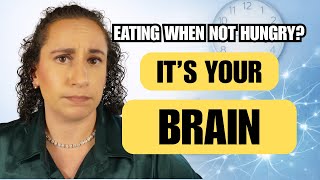
In this YouTube presentation, certified nutrition and bariatric coach Jessica Lawson explains why many bariatric patients experience a predictable 3 PM “snack attack” despite physical satiety. She argues the issue is not a failing stomach but a stress‑driven brain response rooted in the amygdala and cortisol surge that evolved as a survival mechanism. Lawson describes how repeated stress‑to‑food cycles create habit loops and strengthen neural pathways, making willpower ineffective because the pre‑frontal cortex shuts down under cortisol. She shares client case studies (Jennifer and Michelle) to illustrate the problem and the success of her pattern‑interruption techniques—deep breathing, grounding, and identity shifts—that retrain the stress response without relying on food. The video culminates in an invitation to a free Zoom workshop where she teaches these strategies in detail, emphasizing that patients are not broken and that the surgery works; they simply need to work with their brain’s wiring.
Chapters
It's 3:17 PM, you're 3 PowerPoints deep in back-to-back meetings, and your hand's already reaching for the crackers, the chips, the candy again. You tell yourself, oh, I'll just have a few. A few crackers becomes a handful of nuts, then maybe a piece of string cheese, and then a protein bar. Before you know it, you've eaten 500 calories and you weren't even hungry. You walk back to your desk feeling guilty, confused, and frustrated, and you think, what on earth is wrong with me? I just had bariatric surgery. I'm supposed to have control over food. Why can't I stop doing this? Why can't I stop snacking? Why can't I stop thinking about food? You start questioning everything, and maybe your surgery stopped working. Maybe you stressed your stomach. Maybe you're just one of those people who can't succeed long-term. But here's what I want you to know. If any of that resonates with you, you probably think that your surgery stopped working, but your surgery is actually working perfectly. The problem isn't happening in your stomach. The problem is happening in a completely different part of your body— your brain up here— and a part that surgery could never touch and was never supposed to touch. And in this video, I'm going to show you exactly why this happens, why it's not your fault, and how to actually stop it. If you're new here, I'm Jessica Lawson. I'm a certified nutrition coach and bariatric coach, and I've seen this exact pattern in nearly every single one of my clients. I've worked with hundreds of clients and The 3 PM snack attack is so common. I can literally predict it down to the minute. And I'll get a text or a message from a client when they first start working with me before we've implemented anything, and they're telling me, Jessica, every day between 2:30 and 3:30 and 4:30, I find myself in the kitchen and I don't even know how I got there. I've helped over 150 bariatric patients understand exactly why this happens, and here's what I've learned. This has nothing Nothing to do with your stomach stretching, the size of your stomach, your surgery failing, or a lack of willpower. This is pure neuroscience, and once you understand the science behind it, then you can stop it. And actually, before I explain any of this and what's actually going on up here in your brain, let me tell you this. I'm teaching everything I'm about to walk you through in a free workshop this Wednesday, January 14th, How to Eliminate Food Noise After Bariatric Surgery Without Shots or Extreme Dieting. It's going to be live on Zoom. I'm going to show you exactly How I teach my clients to retrain their brain so stress does not automatically equal food. And the link to register is in the description below or the link in my bio. Grab your spot now. So now let me show you exactly what's happening at 3 PM. And here's what you're going to understand in the next few minutes: why the 3 PM snack attack happens even when you're not hungry. And I'm going to show you the stress-brain connection that surgery cannot fix and how your brain's actually trying to protect you using the only way that it knows how. And by the end of this video, you're going to understand exactly why this happened, and you'll know how to actually start retraining your brain so stress doesn't automatically equal food. Let me start by walking you through exactly what's happening at 3 PM step by step, because first we've got to start with the physical reality. Your stomach might not be hungry. You might not be physically hungry. The surgery is working perfectly, okay? You physically cannot eat the volume of food that you used to eat. The restriction's intact. Your hunger hormones are still altered from surgery, but from a purely physical standpoint, your body doesn't need food necessarily if you're not feeling physically hungry. Now, if you are, it's a whole different topic, but I'm talking about the people that feel head hunger, emotional hunger, cravings, all of that at this time of day. Because here's the reality, what I see over and over is that your stress response system is actually screaming for relief. If you've been in meetings all day long, your cortisol, your stress hormone, has been steadily rising. Your brain is detecting threat after threat— the difficult client, the looming deadline, the budget discussion that went sideways. Your amygdala, your brain's alarm center is firing constantly. And then it happens. Your feet take you to the kitchen without any conscious decision. You don't think, I'm gonna go eat now. Your body just moves. You find yourself standing in front of the pantry, hand reaching for something, anything, and you eat quickly, almost unconsciously. A few crackers, some nuts, maybe a piece of cheese. It's not about taste or enjoyment. It's about getting relief from the internal alarm. That's been going on for hours, maybe. And then comes the aftermath: guilt, shame, confusion. Why did I just do that? I wasn't even hungry. My surgery was supposed to fix this. What on earth is wrong with me? Then you start believing that your surgery failed you and that you're broken. None of that is true. You might think it is, but it's not. Because here's what's actually happening: your surgery was a complete success, like I've said a number of times just in this video. Your restriction is working exactly as intended. But you just can't eat like you used to and your physical hunger signals are still altered. This is not about hunger. It's about cortisol, not calories. Your amygdala, once again, your brain's alarm system, does not care that you had bariatric surgery, doesn't know about your smaller stomach or your altered hormones. So when stress hits, it has one job and one job only: to get you the resources that you need to survive that threat. Because you see, for thousands of years, stress meant physical danger or food scarcity. When your ancestors faced a threat, and when I say ancestors, I mean like the cavemen, their brains would drive them to seek food immediately because they might not get another chance to eat for days. This stress eating response literally kept humans alive. Your brain still carries this ancient wiring. It's natural evolution. And when your stress levels spike during a difficult meeting, your amygdala activates the exact same survival response that helped your ancestors survive famines. And predators like dinosaurs. Here's the problem. Your brain can't tell the difference between a saber-toothed tiger and a stressful Zoom meeting. The stress response is nearly identical. So when your boss criticizes your presentation, your amygdala responds as if your life is in danger. It floods your system with cortisol and drives you to seek quick energy, which is food, usually high-carb, high-fat foods, because those give you the fastest sources of nutrients. In order to survive the threat. This is why you find yourself in the kitchen even when your stomach is saying, I'm not even hungry, because your hypothalamus is sending clear fullness signals, but your amygdala, the panic center of your brain, is overriding them with get food now for survival. I had a client, Jennifer, who was a marketing director at a tech company. She came to me about 8 months after her gastric sleeve surgery, and she was frustrated and confused. And she said, Jessica, I could set my watch to it every single day at 3 PM. I have the same team status meeting, and I find myself in the kitchen right after. I'm not hungry. I know I'm not physically hungry. I'll eat a handful of almonds, then some crackers, and maybe a string of cheese. By the time I'm back at my desk, I've eaten 500, 600 calories, and I feel terrible about myself. You see, Jennifer thought she was broken. She thought her surgery had failed. She was convinced that she lacked willpower. But when I explained to her that this was her brain, specifically her amygdala, responding to meeting stress with an ancient survival mechanism, everything clicked for her. She said to me, you mean this isn't about discipline? This isn't about my brain trying to keep me alive? Exactly, Jennifer. Exactly. And then once she understood that her 3:00 PM kitchen visits were driven by cortisol, not hunger driven, and that it was literally her body being used to being chased by a saber-toothed lion, we could then work with her brain instead of against it. So then I taught her brain new ways to handle meeting stress. Then 6 months later, Jennifer told me that she went through the most stressful quarter that her company ever had, and it never once occurred to her to go to the kitchen during or after any meeting. She told me, my brain just doesn't even go there anymore. And that's what's possible when you understand what's really happening and you retrain your stress response system. Now let me show you when this pattern gets stronger over time, not weaker. Your brain creates what neuroscientists call habit loops. The pattern's really simple in this case. The stress, the kitchen, the relief, the repeat cycle just goes over and over and over. And every time you experience the cycle, you're creating and strengthening a neural pathway. So think of neural pathways like hiking trails in your brain. The first time you walk a trail, you have to push through brush and branches, but the more you use that trail, the clearer and easier it becomes to walk. Every time you go from meeting stress to kitchen relief, you're walking that neural trail again, and you're making it wider, clearer, and more automatic. But here's what surgery can't do. Surgery just changed your stomach. It was an amputation of your stomach. It cannot change your neural highways. The pathway from stress to kitchen is just as clear after surgery as it was before surgery. And here's the tricky part. Even small amounts of food can provide stress relief. You don't need to eat a whole sleeve of crackers to get the cortisol lowering effect. Just a handful of nuts or a few bites of cheese can give your brain the relief that it's seeking. Even though you're eating much smaller amounts after surgery, you're still reinforcing the same neural pathway. And 6 months after surgery, That neural pathway is a walking trail, but 12 months after surgery, it's a paved road. 18 months after surgery, it's a superhighway. Your feet don't just take you to the kitchen anymore, they practically sprint there. So why can't you just decide to one day stop doing this? Use self-control, use willpower. Well, because you're trying to use conscious willpower against unconscious biology. That's like trying to stop a freight train with your bare hands. When cortisol floods your system during stress, it literally overrides your rational thinking. Your prefrontal cortex, the part of your brain that's responsible for the decision-making and willpower goes offline. Your amygdala, the alarm system, takes over completely. You can't outthink your way out of a stress response. You can't logic your way past cortisol. You can't willpower your way through an ancient survival mechanism. And here's what makes it worse: when willpower inevitably fails, shame makes the stress worse. Because you eat the crackers, then you feel guilty about eating the crackers, which creates more stress, which triggers more cortisol, which drives you back to food for relief. It's a vicious cycle that has nothing to do with your character and everything to do with your brain chemistry. Because the truth is, this is not a character problem. It really is not. It's a systems problem. You don't need more discipline. You need different tools, knowledge, and systems. Willpower doesn't work. What does? You need to interrupt the stress response before it reaches the kitchen. This means giving your amygdala your brain's alarm center, a different option when cortisol starts rising. So instead of trying to stop yourself, well, once you're already standing in the kitchen, you intercept the pattern earlier in the cycle. You teach your brain a new pathway, stress relief tool, calm without food ever entering the equation. But this requires pattern replacement, not pattern elimination. And your brain needs something to do with that stress energy. You can't just tell it to ignore the cortisol. You have to give it a better option. But an option that actually fills the need. You also need an identity shift. You gotta stop seeing yourself as someone who lacks control around food and can't be trusted around food. And you gotta start seeing yourself as someone who is learning to work with their brain instead of against it. This is not about more discipline or stronger willpower. This requires specific techniques that address the neuroscience of stress eating. Let me tell you about my client, Michelle. Before we worked together, her afternoon routine was very predictable. She would have a stressful meeting. She'd go to the kitchen in her workplace. She would then get a handful of nuts. All my clients love nuts. I don't know what it is, but they love nuts. Then she'd have guilt, immense guilt, and then it would repeat every single day. And after learning the stress interruption techniques that I teach, my pattern interruption techniques, Michelle's 3:00 PM routine looked completely different. When she felt that familiar stress rising during the day, her brain automatically goes to a new pattern. 3 deep breaths, 30-second grounding technique. And back to the meeting feeling calm and focused. She told me a few months ago, Jessica, I realized I went through an entire month of back-to-back stressful meetings and it never once occurred to me to go to the kitchen. My brain just doesn't go there anymore, and the pathway, the neural pathway, the trail is completely different now. That is what happens when you retrain your stress response system instead of trying to fight it. This is exactly what I teach in my workshop, how to retrain your stress response system so that your brain stops using food as relief. I'm going to show you specific techniques that my clients have learned, plus my approach for eliminating food noise after bariatric surgery without relying on shots or extreme dieting. You're gonna learn how to work with your brain's natural wiring instead of against it. If you're still watching this video, here's what I need you to understand, because I've been in your shoes, I've been there, I get it. This sucks. And you are not broken. Your surgery didn't fail. You don't lack willpower. You are a high-achieving woman who's been trying to solve a neuroscience problem with discipline. It's like putting a square peg into a circle. It's never going to work. You could become someone who feels stress and thinks, I know exactly how to handle this, instead of being someone that asks themselves, where's the kitchen? And you could become someone whose brain automatically reaches for the right tool, not the crackers. This is not about fighting your brain anymore. This is about becoming someone who works with it, not against it. And when you do that, everything changes. So look, I'm teaching all of this. In my free workshop, How to Eliminate Food Noise After Bariatric Surgery Without Chances or Extreme Dieting, on Wednesday, January 14th. I don't know if I'm gonna do this workshop again. If I don't, sign up for my other workshop that's on demand. It's a free workshop too about how to stop eating, and I walk through very similar principles. And you're gonna learn exactly in this workshop I'm doing on Wednesday how to retrain your stress response system so that 3 PM doesn't automatically trigger food anymore. It'll walk you through specific techniques that my clients use to interrupt the stress-to-kitchen pathway and create new neural highways that actually support your success. And this is not theory. This is the exact system that has helped Michelle and Jennifer and over 150 other women stop this for good. It's on Zoom, links in the description below and like my bio, or comment workshop. Look, if you've been dealing with this for more than a year— in fact, most of my clients have been dealing with this for 5, 10, 15, 20, 25, 30 35, 40, 50 years sometimes. You can be changed. I know that you think that you might not be able to, but I just want you to know stress does not have to equal food. Your brain can learn a completely different pattern. You just gotta let someone like me show you how.
More from Jessica


Why You Lose Control With Food The Second You Get Home From Work After Bariatric Surgery




Why You Keep Reaching for Food After Bariatric Surgery, Even When You Know You Shouldn’t #bariatric

Why Food Takes Over When You Get Home From Work After Bariatric Surgery #bariatricsurgery




What no one tells you about regain after Bariatric Surgery #bariatricsurgery #bariatric