Color Code Your Life - Building Relationships CONVERSATIONS JessTalk & LisaListen Episode 3
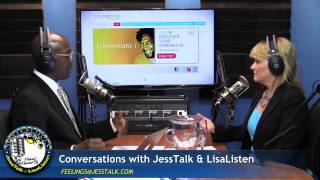
Jesse Ferrell and Lisa Bybee Farrell discuss the Color Code personality system (blue, white, red, yellow) and how understanding these types builds stronger relationships. They cover relationship equity, common killers of connection, and how teams and leaders can use these distinctions in hiring and everyday work.
Questions this video answers
17th Annual Women of Distinction Awards, Thursday, May 14, 2015 (Paris Las Vegas Conference Center).
702-541-6992.
colorcode.com (free primary-only assessment).
$39.95.
jesstalk.com and lisalison.com.
Chapters
Conversation. Conversations with just talk, which is who I am. And you are Lisa.
Listen.
I like that. I like that. I like that.
Yeah.
So you ready for a great show today?
I am so ready.
Okay, talk to me. What's. What's the topic?
Well, we're going to be talking about.
Color coding your life and building relationship equity.
Absolutely.
You know what? I think before we do that, you have got some news that is just way too good to hold out on. This was not going to be part of the original programming, but it's definitely top of mind for me.
Well, and I am still vibing.
You need to be still vibing.
Experience.
Let me tell podcasters why you're vibrating.
Okay, Please do.
First thing we're going to do is tell them really briefly. Then we're going to celebrate, then I'm going to tell them some more.
Okay.
Okay. So the first thing is you are a proud member of nabo.
Yes.
National association of Women Business Owners. All right, that's very, very good. And I've got some literature here that says, inspiring success. 17th Annual Women of Distinction Awards Thursday, May 14, 2015 Paris Las Vegas Conference Center Right here, I've got the actual proof. This is it.
Yes.
Right.
Yes.
Well, you, my dear, are the very best of the very best is what I've been told. Let me slide out a shot here. Slide back in. Women of Distinction Award. You won this fair and square. Well earned.
Well, I have to tell you.
No, no. I have to tell you, you are bad to the bone. You don't tell me anything. Let me finish this. It says, 17th Annual Women of Distinction Award. Lisa Bybe Farrell Nobo of Southern Nevada. This is their highest award, annually given to someone that they feel is bad to the bone.
Well, there were 36 finalists. And there were three, typically three in each category.
Right.
I was up against some very stiff.
Competition, some very credible folks, some really.
Strong women in the law industry, and a marketing firm across the state of Nevada.
So you were up against some legal actions.
So I'm thinking. And I get a call from a friend last night that says, do you have your acceptance speech ready? I said, what?
You know what? Hey, let's stop the chatter. Let's just start. Let's have a little fun with this. Here's the thing. Give me the glass, woman. This is what we're going to do. Let's see. Now we're going to watch that computer. Hey, listen up. Listen. This my apple. This is my apple. This is my apple. I got this. Did I say that out loud?
Yes, you Did.
Let me pronounce that better. This is my Apple computer and I've got this. I want you to know I can also speak standard English. I can say, we got this.
Okay, well, hurry up. I want to toast this fabulous.
Toast. Toast. So this is a toast.
That's a lot of bubbles, Jess.
Yes, it is a lot of bubbles. You work a lot of bubbles. Here's the deal. This is a bubbly day. Congratulations on an outstanding achievement. They do not just give this award away. You've got to earn it. Toast on air. Toast them over there. I'll toast them over here.
What about the people in the office?
We do got a little audience action. Let's pour her up a glass. Girl, come and put your glass in the shot. Here, let me give you some of this action. Come on, hurry up. We're filming over here. There she go. Yeah. There's our Vanna White. Go, Vanna, go.
Cheers.
Cheers.
Cheers.
Cheers. Thank you, Vanna. That is one. Wait a minute, let me finish this.
Wow. Just chug that, baby. Would you know what?
Because I'm so. I'm so absolutely proud of you, I gotta do a little house cleaning, you know. Hi, I'm Mr. Neat Freak. So I want to share the cool things, not just with that award. Did you just get this beautiful trophy and all the accolades that come along with it. Check this out. United States Senator Harry Reid, who just retired. Just retired. This is a certificate of commendation presented to Lisa Bybee Farrell. And it is awesome. He's signed his name right here. You can see it. It's official. It's very official. Can you see it? And look at this one. United States. I'm sorry. I'm embarrassing you a little bit.
Am I blushing?
No. Hang in there, girl. Hang in there. Chill, will you? United States House of Representatives, Congress. Crescent Hardy. Certificate of Congressional Recognition. Lisa Bybe Farrell for. Lisa. Listen. The division of Just Talk. All right, let's get a round of applause for that one.
Come on, audience, Come on.
Hello. Yeah, yeah, yeah, yeah, yeah, yeah. And look at that official seal right there. The official seal right there. Okay, very cool. I'll keep going. There's more. United States Congress Representative Joe Heck. Man, girlfriend, you are pulling in. You're pulling in some freaking firepower.
I know.
Okay?
I'm humble.
You should be. Certificate of special recognition presented to Lisa Bybee Farrell for the division of Just Talk. Lisa, listen. That's the division you have designed and you run and you own. And this says, in honor of your selection as finalists for the 17th annual Women of Distinctions Award. You aren't just a finalist. You won it all.
Oh, my God. I'm still. I'm still vibing. Still vibing.
And look at this. Look at this. Here's more Senatorial recognition awarded to Lisa Bobby Farrell, professional Services girl. Use a professional.
Because they said, no, no.
Use a professional.
There you go. Cha Ching.
So I'm being selected as a finalist of NABO 2015 Women of distinction Award for your commitment to excellence and for being a shining example, which you are, or as they say in my neighborhood, which you is for professionalism, leadership and service.
Yes.
I'm telling you. Look at that. Look. Fancy seal and all. Check it out. That is so cool. And finally, last but certainly not least novel of Southern Nevada Certificate of Recognition, Lisa Bybe Farrell. Lisa, listen. Your company 2015 Women of Distinction Award finalist, tell me that you were just not overblown with joy when they anointed you with such a great achievement.
When they called my name. Yeah, I was, you know, with my people at the table and.
Yes.
And. And I'm. I'm sitting there and I'm shocked. I'm just sitting.
Yes.
And. And the girl sitting next to me, she's like, that's your name. You need to get up.
Like, hurry up and go.
And you know what I said?
What?
I said, holy shit.
You said that out loud, Lisa, you did not. Wait a minute. You said that. Let me get you another job.
And she said, you didn't be saying.
That on our show. She said, pg Show. There you go.
She said, you need to get up on stage right now. And I mean, I am. Literally, I'm shaking like this, and I'm trying to walk up on stage, and I was crying, and I couldn't.
Like a baby.
I couldn't catch my breath. And I'm thinking, my friend that called last night.
No, no. But what kind of crying were you. Were you crying a little too dewy? What kind of. How was it?
I was trying to hold it back, but, I mean, I was very emotional. For a person that's got a speaking and coaching firm, the person that is not shy, that can speak. I couldn't speak.
Couldn't say a word.
I could.
Here's to the power of the word. You know what? PG Show. PG Show. You know what that stands for? Professionally good.
I just want to say that I'm humb. I'm authentic. And I say it because I'm real about what's going on. So I get up there and I said, first of all, thank you very much. And Then I held back the tears a little bit. And you know what the biggest lesson was for me?
What's that?
When somebody tells you to prepare something, take it seriously, because always dress for the job. You don't have.
Listen, you dress fine when you show up the way you do. You don't have to have poo poo shishi. You don't have to have your hair all in a bouffant style. You don't have to have 8 inch stilettos and miniskirts with all your ham showing. You can show up just like you did, being the real authentic, creative, charismatic personality that you are. And it really is enough, okay? Period.
But here was where I was going.
There's no but. Scratch the butt, because that negates the point I just made. Okay?
I was thinking to myself, the friend that called last night and said, get your acceptance speech ready, I thought there wasn't a chance in hey, right. That I would win this award based on who I was up against, okay? And when my name was called, I was wishing that I was prepared so that I could go up there and deliver what I do.
Stand and deliver, we speak.
And let me be the pillar of strength to the community for what? The award that I was just awarded for. So a lesson is that I will be more prepared in the future whether I win or not.
I respect that. I won't take that from you. But I will say this to you. The fact that you got up there and were at a loss for words, for what you do for a living was a stunning show of your surprise, of your integrity, of your appreciation. And. And that lack of voice was as more, to me, in my opinion, was more powerful than if you had got up with some well orchestrated, eloquent speech as though you knew you were gonna win. I'm just saying.
I'm just saying if I could do things a little differently, I would have liked to have been a little more prepared.
Fair enough. I get that.
But I'm grateful.
I get to be proud of you and I get to celebrate you because this is one hell of an award. And one more toast. One more toast for good old days, for a job well done. You know why? Because you just did. Did the work. And those, those of you out there listening to Podcast World, we're going to talk about what that work is. And maybe we can take a little page out of your book, Lisa, and all of us can learn a little something from that. This is. This is something to be very, very proud of. No doubt about it. Speaking of no speaking words or no words.
I, I still. This happened at one o' clock today.
And you're still shaking and I'm still.
Vibing hugely from it.
We're going to have to get some sedatives to get you to settle down.
No, you know what?
We need to get something.
I'm enjoying cookies.
Want some milk?
Let me relish in this, Jess. Let me relish in this moment.
Own it.
I'm. I've got it. It's me.
It's mine. No Good. I'm very proud of you. So that's really, really good. We'll do more celebrating along the way. This is just one of many celebrations that we'll have.
Indeed.
So indeed pop into a little pop podcast. Action. Color code your life, building relationship equity. In fact, before I do that, let's see if there's anybody in the chat room. Look at this, there's a Christian. Congrats, Lisa. Listen, this award is so. Because there's a lot of O's. So well deserved. Love all the energy that you give. Bam.
Wow.
Christian, blow it up. Blow it up. Blow it up. Blow it up.
Bam.
Thank you, Christian. Thank you, Christian, for that. Very nice. So with that being said, relationship equity. What is relationship equity? Before we get into the color code, I want to talk about what relationship equity is because that's going to lead us into the color code.
Well, it's kind of like equity in the bank.
Okay.
Right.
Yeah.
You, you make deposits. Do you continually take withdrawals without replenishing the deposit? And it's like building up the relationship equity.
Do you, you're overdrawn if you overdraw.
From your friendships or do you give just as much? We all know takers out there.
We do, Many people are. And they don't do it because they're mean spirited. They do it because it's part of human nature to take what we want. Take to get what we want for ourselves. But, but I like what you said about that whole deposit game, because if you're writing checks, emotional checks, without putting any deposits in, you're going to be what?
Overdrawn?
Overdrawn. Exactly. So that's really good. So when we get into color code, relationship equity is going to be a really key part that drives. Why color code? And we'll get to that. Why do you think people have so much trouble in relationships, having good, healthy relationships?
Because they don't know themselves first.
Okay.
So unless you get to know how people tick and roll. For instance, what we haven't talked about, what the color Distinctions are. So first, maybe would you like to go into the color distinctions so I can talk more about why people do what they do?
I'll do. Let's do a little zigzag game. I'm okay with this. So blues, first off, they need to know what color distinctions are. What we're talking about is when you take the color code assessment, it'll bring you back your results.
Yes.
And these results, they're going to come in percentages. You'll get a pie graph and you might be 50% blue, 30% white, you may be 5% yellow in the remainder red. So you have to know what those distinctions mean and you'll be able to follow on the screen while I'm speaking. It'll be rotating. But basically blues are motivated by intimate conversation and the like being understood. Whites are motivated by inner peace and they, they don't like conflict or confrontation. Reds are motivated by power and getting things done. And yellows are motivated by fun. So what motivates your behavior? So those are the four different modalities that, or distinctions that, that the color code will give you your results and then gives you somewhere between a 21 and a 27 page report laying it all out, breaking down your strengths and limitations, your wants and needs, and your core, your primary and secondary colors.
So what was your biggest lesson when we did the work on the color code that you learned about me that you had no idea?
Well actually that's a good point. It was actually very interesting. First, I wasn't going to have you take it because I was actually doing this for a big company that I was doing a workshop for. And I thought, well, I better learn it well enough to be able to do the workshop. And I thought, well, get you in on it. And I thought, well, let's save the money. You know, it's 39.95.
Woo hoo.
Yeah. And then I thought, wait a minute, why save the money? Why not just see? Who am I to say? Because I thought we were exactly the same.
Right?
Well, our secondary, your, your secondary is my primary. Which is where I was keen on us being the same. But what, what was really shocking is you are a white blue. Meaning you do not like conflict or confrontation of any kind, even though you cover it quite well. You got a great cover face and you don't like any confrontation, any conflict. You'll do whatever you have to do to get away from it. Run, hide, shut down, go into the table. So I might go into the table here, right? Exactly.
You asked me something that I don't.
Want to talk about. Right. I'll be careful about that because we need you the show not underneath the table.
Very good.
Well, yeah, and so that was a surprise for me. And my distinction is that I'm a blue red. I'm the most complicated configuration of any result you can get. So what that taught me is when I'm asking you a question, I shouldn't go back. Go out. And when you go to your mind, because whites are also processor. When you go to process, I'm waiting for the answer. And I'm like, hello, Anybody home? And you got this look on your face like you're like, you know, it's. You're there, but you're not there. And I'm trying to knock on the door. Well, I'm disturbing your processing, which then.
I go deeper down and you still don't answer.
Right?
Because it then becomes conflict because you're like, are you gonna give me the answer? Are you gonna give me the answer? And I'm like, processing. Processing which is, you know, not which is exactly.
You want to process, but you don't want the conflict. So what the color code taught me is when I ask you a question, if you don't give me an answer in the time that I'm looking for, I do. I do a couple things. One of the things I might say is, oh, you want to think about that, right? Just get back to me when you can. Or I'll say, are you processing this? And you typically say, yes. Or I'll say, you know what? Just whenever you're ready, let me know. Well, now I've taken the pressure off, and you always come back.
And so learning that in our relationship helped us greatly.
Oh, it's huge. Because now, you know you're going to be hurt and you're not going to be. You feel like you're being stepped on. And all I'm trying to do is get results, right? But just because I'm trying to get results, do I have to get them my way, or should I be speaking your language as well? So that. So that's a good. That's a good takeoff from there. And so when we think about that, I think a lot of relationships fail because they do not. First off, they don't get themselves right, so they can't get others, right. When you can't get yourself, the color code says, when you get yourself, you get others. And what that means is when you learn what those distinctions mean, the red, the blue, the white, and the yellow. When you learn what they mean. And you know what that means. You know what motivates that kind of behavior? You're also learning people that you haven't met yet.
Well, and imagine if you're talking to somebody that's 70% yellow, that they want to have fun. And maybe you're talking, maybe this, maybe you're a red. And the red's talking to the yellow and the red one's. Directness, Directness, directness. And the yellow one's like, this isn't. This isn't fun. And they're disinterested and they check out.
Right.
Completely check out.
Right.
So when you learn that they're yellow, maybe you present it in a whole different way.
Not maybe you just do it. Why not?
Right.
Yeah. That, what you just said makes me think about relationship killers. What are key relationship killers? Not just intimate relationship, but friendships, subordinates, bosses, colleagues. Intimate relationships. What are relationship killers? What kills a relationship when people don't? What in your mind?
Well, if they're disengaged, if they're not made part of a conversation, if they're told what to do, if they're not maybe given a pat on the back.
Right. Not. No acknowledgement. I agree. What about if they feel they're not being understood?
Well, I think that's when we feel.
We'Re not being understood. How does that leave us feeling?
Horrible.
Yeah. Like, why am I here? So I think that's a true relationship killer. What about if we're feeling with the thumb on us, micromanaged or someone, someone's using their red power to get things done, but they're not.
It's demotivating.
Yes, very demotivated.
You want to, you want to check out immediately. And how many people, how many jobs out there do you think people leave because of their leader or because they.
Say they their statistics out on that? And fully 85% of people that leave jobs today leave because of what you just said.
Well, I can. I totally believe it because when I was in corporate, I was that person.
Yeah, yeah, yeah.
I had several situations like that.
I want to hear that. Hold that thought though, Lisa. I want to hear that because someone just popped in again, here's Fred 15. This sounds like something I should utilize on my employees in conjunction with hiring, the hiring process. Well, Fred, number 15, you're absolutely right on the money with that. In fact, we spend a lot of time and effort in terms of our professional speaking on the road, whether it's in different countries like Vancouver or Panama, South Africa, Toronto. Yeah, exactly.
Didn't show Me a coat.
Yeah, yeah, yeah, yeah. That's true. And there are a lot of people that are looking for this for that very reason. Not only that, this also is something, Fred, that people are using to. To determine who they're hiring. Hiring and how they're hiring. And also the people that they already have. That they have on staff to help them gel. Yes, help them gel. Think about. Let's think about some of our recent clients really quickly for Fred, who've gained value. Let's think about US Ecology and that big event we did last.
It was huge.
Yes.
And the guy. There were many men, and they really were apprehensive at first. Oh, my God, I don't want to show up.
They're rolling their eyes.
Give me a break. And then at the end of that, they came up and they're like, oh, my God, this was the greatest thing I've ever done. Thank you so much. Men were hugging men because they learned to understand why people did what they did.
Yes.
And how to overcome those hurdles.
Exactly. We did an event for YPO Quebec, and we did this event in Vancouver, Canada, actually, up in Whistler. And. And these men that got together at the end of the color code workshop, they said, I've learned more about my friends here and colleagues that I've known for 18, 20, and 25 years. And things that came out today, I never knew about my friends, and that changes everything.
And then they said, will you color code our wives?
Will you color code our wife tomorrow? Yes, I will color your wife.
Right.
Because I'm a brother and I can color outside the lines. No, I'm good. Sorry. I'm sorry. I got a little silly. A little bit. I know, I know I'm a brother, but every now and then I like to sound like one. So, anyway. No, but that's true. What about Mirage? The Mirage was miraculous, too. We. We had the opportunity to color code that whole department. Right. And it was the engineering department, actually. What would you call it? Think, Think, Think, think. What is it called?
I thought it was engineering.
Well, it is.
Housekeeping.
Operations. That's the word. So the Operations. Operations. Operations department. And what a gelling effect from the leader on down to know how to speak to one another. The whole point was to get them to learn themselves and learn their partners, their colleagues, so they can speak one another's language to get the job done.
And talking to that mindset.
Yes.
It's. It's. We thought, oh, it's not going to be easy to get through to them. But when we Implemented all the fun games and the skits. At the end of that, that team was gelled and they were bonded and they were never the same.
No, they were never. Good way. I totally like this. So Fred, I hope we're not only. Okay, fair enough. I do hope that Fred is following this whole thing and letting us know whether he's getting it or not, but I know, I think we got some pretty good stuff for him in there. Let's do the last one. I want to share before we jump into some other portions of the color code and we, and we are getting short on time is. What about that? The Aristocrat Gaming and the power of that color coding. Those people in there, they came together from all different regions of their company and even different countries and they're all working as a unit and they were about ready to do a whole leadership summit and we did the front end to get them to sort of, not sort of to get them to connect with one another and really gel. And that thing permeated through the whole three day summit that they did because they got to really get each other a whole different level.
Not only that, but after that she said, I want east, West, Central.
Yes.
Get me, you know, get me a bid. Let's get this coded, let's get this on. Because it was that impactful.
Right. It wasn't about us, it was about them. It was about, it was life changing. Well, it was about them getting themselves for the, maybe for the first time in their adult life at that level.
Yeah.
And sharing that with their colleagues so they can empower one another.
Well, how about the two people that reported the, the high level people? One was a red and one was a yellow. There you go. And they offset each other because they were such opposites.
It was perfect. One of the leaders was a red, which is power, getting things done. The other leader was a yellow. Wanted to have a good show, that person had fun.
The other one showed more, you know, directness.
Yeah, it was huge. So you build great relationship equity.
Yes.
In fact, it's, it's the precursor for mastering the art of relationships.
Absolutely.
And you can get more info where@jesstalk.com.
And lisalison.com or 702-541-6992. Call us and we will go over it. We'll give you a 30 minute complimentary session to go more in depth about it if you're interested.
Very nice. What about as we roll into our third segment here and I know we're about ready to roll to a close, I'LL check the chat room in a second. Do you think you're born with motives?
Yes.
Yeah, absolutely. You're born like, you have a certain character, disposition. No one teaches you that. That's innate.
Yes.
Right. Do you think other things shape your personality, like filters and stuff like that?
Well, without a doubt. It depends on your birth order.
Yes.
Your religion.
Yes.
Your skin color.
Yes. Not skin color, but race. I get what you mean.
Background, yellow, culture, black, white, red.
I mean, you know, it's all the same.
Yeah.
It's all good.
I call it as I see it. Jess, give me a break.
Yeah, you got it. No worries. But you're right. So those filters do also affect character and personality, but they're. They're a connection and an inflection from that base core. Motives.
The motives.
What motivates your behavior, why you do what you do.
Exactly.
Right.
Yeah.
So when you think about it, I believe that there are three really key distinctions to this. Number one, about the people out there that are listening to this podcast. What do they need to do, even if they don't color code themselves? If they do, that's great. You can actually take a free assessment online@colorcode.com but you'll only get to see one color. You won't get a report. You only get to see your primary. That's it. Or they can work through us. They can get the primary, the secondary, and all the, you know, the. The two remaining along with the report. So we can talk to them about how to make that easy on them as well. But the three key points I want people to remember is, number one, when it comes to building relationship equity is learn distinctions. Even if you don't know the color code, look to see where people are. Where people are, their behavior is motivated from.
Right.
That's number one. And two, Listen. Which. Lisa, listen. You're superb at this. Right.
Thank you.
Learn to listen. Listen more and talk less. And number three, live into it. Once you get the intel from those folks, what is it?
Be a hundred percent responsible for that.
How about number four becomes number one.
Thank you.
Give me some.
Yeah, you know it.
100%. Become 100% responsible.
Yes.
For this. Don't leave it up to the person away from them. If you're waiting on them, you're backing up.
Right?
Right.
Yeah.
So here, here's what we say about it. So we. Lisa's added the fourth distinction. In my mind, that becomes number one is 100% responsible. So let's reaffirm just the key points, just from this dialogue Just from this conversation. What. What are you taking and what do you suppose others are taking while I take a look into the chat room?
Well, what I'd like to say is that when. When we do code people, you know, everyone's got their guard up. So not everyone wants to say the truth. And when you're not willing to step forward and say the truth, you can't break through that barrier.
I like that.
So when. When the boss is in the room, the kids want to be on their best behavior.
That's right.
But when the boss says, you know what, I'm gonna get really vulnerable. And I'm gonna. And I'm gonna say something that you guys aren't gonna believe. So when the boss breaks down and gets vulnerable, the team just.
You just gave us the $1 million response.
Thank you, Jen.
We had. No, seriously, we. I'm serious. I know you lived up to this. You really did this.
I need some more champagne.
That's why, you know, really, we had an event about four years ago. It was an international event in Vancouver. And that event then moved to Vegas two days following. And the owner came in of that company and it was about 24 people in the room, 24 leaders across all across Canada in the room. And this owner got so vulnerable, he broke down the tears, brought the whole house to tears. And everyone after that became vulnerable. And their stories started coming out after that. They said when they were in Vegas, they were in Vegas for another three days. Nobody would go anywhere from the hotel unless they went all went together. It was the first time that group did. 24 people wouldn't move. They moved as a unit because of what you just said. That's brilliant. Give me some. Give me some.
Well, and so when you do the trainings like that, right, they're great and they last a day, but we don't like to do the one and done.
No, one and done. One and done's dead.
The best way sustainability, best results is to do it for an annual to make everybody accountable, get the movement, create the culture within the team. It's life changing so that it sticks. The bottom line, the return on investment for that employer is priceless.
Well, funny, she said that priceless Fred kicked back in and said that he definitely is interested and. And wants to know where to get more. We did already say that once, but just in case Fred tuned out. Where can Fred get more information on color coding and training and workshops and things like that?
Well, you can always go to the Jess Talk website and you can also call us at 702-541-6992. Fred, we will give you a 30 minute complimentary session and get you more excited than you are now, I promise you.
Nice. Nice. Well, my takeaway from this, number one is I'm proud to be able to celebrate such a phenomenal achievement.
Thank you.
On a day that we're going to talk about relationships. I mean, look at all the relationships that you touch. To be able to do that. You don't, you don't. You don't get awarded things like this and not have done the work right. That means you're doing it and you don't think about it or live it in terms of wearing it. You just do the work. And people see that. So that's huge. And the other thing is, I like the fact that we had this conversation because the people out there listening can realize they can raise the quality of their communication to epic communication, building unbelievable relationship equity with four key points. First, own it, like you said. Right. And then you have to. What? What's the other one? Whereas, learn the distinctions where people are coming from. Number two, you have to listen. And three. That's three, because number one. Thank you. Help the brother out here. I did major in math. I wasn't a math major, so get over it.
You know me in numbers. I'm correcting you.
I like it. And then finally live into it.
Yes.
Right.
Yeah.
So let's. Real quickly as we close the show, our next podcast is going to be really, really sexy. The magic of believing.
Ooh. Are you going to pull rabbits out of the hat? Jess?
Rabbits out of the hat?
Really?
Just call me Houdini Farrell or Lance.
Burton, since we're here in Vegas.
Or Jesse Burton. Give me something. So. So that's what we're going to be discussing on our next podcast. And we know that those folks out there listening to this love learning, love improving, love evolving. And our signature sign off is it. Nothing really matters till you get that. It is all about how you leave them feeling. All right, that's it. We'll close with that. Same time, same station, 5pm Thursdays. Yes. Pacific time on Thursdays.
Yep.
Will you be there?
You know it.
I'll be there. Or I will be square.
Well, let's. That's another subject.
Don't do it on the air.
Okay, Sorry, sorry.
So, thank you and congrat. Ouch. That did leave a mark. Congratulations again on your brilliant award. I know I've said it many times, but you've deserved it. And I'll continue to say it more and thank you for being who you are and touching the world the way you do with your own special brand of magic.
Sayanara how you leave them feeling. Sa.
More from Jesse

How To Tap Into The Power of Belief #realestate #golfnetwork #golf #entrepreneur #motivationalvideo









