ADHD Entrepreneurs: Why You Quit Right Before It Works
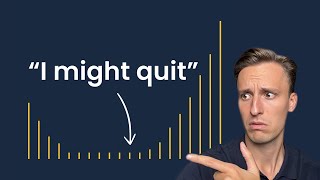
In this solo YouTube presentation, Jim Ebbelaar—founder of the digital agency Seamless Agency and the ADHD Harmony community—addresses the common pattern among ADHD entrepreneurs of constantly launching new ideas without ever finishing or monetizing them. He visualizes the journey as a chart with an initial dopamine‑driven excitement that fades, leading to a “lonely chapter” (the messy middle) where doubts rise and the temptation to start a new project re‑ignites the dopamine cycle. Drawing on insights from Alex Hormozi, Chris Williamson, and his own experience, Jim outlines five concrete lessons to break through this cycle: (1) fall in love with the process rather than only breakthroughs; (2) reduce commitments before producing, using a Steve Jobs‑style product cut‑down exercise; (3) work in focused sprints to concentrate energy on one task at a time; (4) understand that periods of silence or slow growth are not failure, illustrated with the bamboo growth analogy and sales‑call statistics; and (5) validate ideas with the market instead of relying on internal assumptions, using MVP examples like Dropbox and his own pre‑sale of the ADHD Harmony course. Throughout, he emphasizes sustainable, ADHD‑friendly methods, offers practical exercises, and promotes his free and paid ADHD Harmony community for further support. The video concludes with a call to subscribe and engage.
Chapters
If you're an entrepreneur who constantly starts new things, new courses, new business ideas, but don't get to the point where you actually launch, actually start to make money by constantly chasing this next new shiny thing, then this video might be really helpful. For those of you that don't know me, my name is Jim. I run Seamless Agency, it's a digital agency and we're doing multiple six figures. I also run a community called ADHD Harmony where I help ADHD entrepreneurs to launch and scale their business. Now in this video I will be sharing my 5 lessons of how to overcome that cycle of constantly starting new things without finishing what matters. So let's dive into the video. If you see this chart, this is a chart I recently found online. Andrew Kirby shared it, I adjusted it a little bit to make it the ADHD version. So if we look at this chart, you probably recognize this starting point where you have like this new business idea and you're full of dopamine, you're excited to go all in and this time, this time it's going to work and you got the excitement and then by week 2 some of the doubts are starting to kick in and you start doubting whether it actually was such a good idea and then by week 3 the doubts come even more and after around a month you are here. You are like in this phase where the dopamine has worn off and you completely overthink the business idea and then you start considering doing something else. Because the problem here is that the new idea that is probably coming up in this phase will basically kick you back to the starting point of this chart, which means that you get the dopamine again because there's a new idea, there's excitement. You can do like the whole mission, vision stuff that your brain really is built for. But the problem is that you fall in this trap of constantly starting over. And this is what happened to, happened to me for over a decade. And I learned about this and I understood that I actually have to break through that, that what we call the lonely chapter. That's what Alex Hormozi calls it and Chris Williamson also talks about in his podcast. It's like this phase where the excitement is worn off. You have to do like the messy hard work. It's like the messy middle of this chart where you have to do sales calls, you have to make content, you have to do the things that maybe you don't like doing. But you need to, to break through that phase where, which we call the lonely chapter, where you just have to push through. And it's hard because there's no one standing besides the line clapping for you like, hey, keep on going, because this is where you really have to do it alone. And then when you actually get in that first customers, you break through this phase, which means that you will finally get those rewards. You will get in your first money, you will get in the first customers. Now this is interesting, and this was, this was the same when I was building my program, ADHD Harmony. I really had to spend a lot of time in this chapter, like overthinking everything. And I— there were so many moments where I almost was about to quit, but because it aligned with my deeper purpose, I was able to, to break through that phase. And in this video, I will be sharing 5 lessons on how you can also start breaking this phase and actually break to the "I might quit" phase of your business, continue and launch and actually start scaling. So let's dive into the 5 lessons. So lesson number 1 is fall in love with the process, not just the breakthroughs, because the process is 99% of the journey. And it's all about finding beauty in the repetition by focusing on what's sustainable. The process is the proof you're becoming who you're meant to be. If you can enjoy the days when no one's watching, you've already won. So this is— it's really important to run a business that really excites you. And especially if you have ADHD, like if you have to force yourself to do specific things, then you will never break through that, that what I call the lonely phase based on what Hormozy and Williamson shared, because it will be almost impossible. Like you need to get in the dopamine, you need to have something that actually lights you up to start breaking through. That phase. So find something that, that, that, that's sustainable. And I think Nafal also talked about this, Nafal Rafiqan. He said if you make content, find something that actually works for you. Like if you follow this course and they say make YouTube content but you really hate sitting in front of the camera, don't do it. Then maybe do, do text posts or do DM outreach, but find something that actually suits you as a person so you can do it in a sustainable way and you actually enjoy the journey because otherwise it's not sustainable and you will never be able to break through that phase. Then lesson number 2 is reduce before you produce. Now I want to give this example from Steve Jobs at Apple. So Steve, for those of you that don't know, he was CEO at Apple, he founded it, and then there were a couple of years where he actually went away from Apple. And Steve Jobs had to return to Apple to save the company. And what he did is he returned to Apple and cut out 70% of the products. And because of that, he was able to actually save the company, which meant they had to say no to a thousand things. Now, here's a quick little exercise that you can do to start removing things from your life, because that is what it's all about. And it's not just about business here. So list everything you're doing from business projects, personal commitments, daily habits, everything. So this is a quick little exercise you can do in just a couple of minutes. Ask yourself, what if I stopped doing this thing? Not specifically what would I lose, but also what would I gain back? And for example, this can also be maybe like social relationships. Maybe you have some friends that really don't really bring anything that will help you get to where you want to be, to help you achieve your goals. Then ask yourself, is it worth spending my time with those people? Or maybe you use a lot of different tools, like you have this huge technology stack which can be really simplified into actually one platform. It can be anything. And then you can probably cut almost half of it. And that's just something— it will feel— you will feel some friction in the beginning, but because it's hard to stop doing specific behaviors, or it's hard to cut off people out of life, it's hard, yes. But it will not be easy, but it will actually help you to get to where you want to actually to head in life. And then it's all about doubling down on what remains. So what is currently already working, well, now you have 2 times the energy to actually spend more time doing that thing that is actually moving the needle. Alright, so lesson number 3, and this one is about focus. Work in sprints so you can focus on one thing at a time. So this is interesting and I learned this model from Sam Ovens and it's a very interesting model. So it's about energy and I know, I know as ADHDer we are not able to just focus on one thing and skip all other things. So this really is not realistic. I completely understand that. But I found what I think is quite a cheat code. Also based on the work that I'm doing since I'm from IT. In IT we work a lot in sprints. Which means that you will pick one thing and you will spend a couple of weeks like really hyperfocusing on this thing. And instead of like having to do 10 different things in a day— so for example, I, I, I run my agency and I have this program and I now I'm making content— I'm really bundling things. So I've learned myself that by bundling things and using my hyperfocus to, for example, whenever I have a sprint with the agency that gets prioritized. When I'm working on a new module in my course, I can lock myself in a room for a full day and just go all in on that thing. And really, because here, what the chart is showing, if you decide to spend like your energy on 10 different things, this is the outcome, this is the output that it will get you. But if you decide to like put all that energy on one thing, you can actually compound it into getting like a multiplied result. So it's really important to understand that. And this is a hard one. I know this is a hard one because as ADHD and I used to struggle with this like my whole life, like I wanted to do this, dude, I want to do that. I wanted to have my hobbies, my work, and I wanted to run this business and I wanted to help other people. But now I'm slowly like getting that bigger vision clear and also understanding how things are actually compounding towards each other. And at the same time, really blocking my weeks and my days in a specific way that allow me to still like benefit of this model, which means that I can really spend some focused moments. So I work in sprints and I can get done in like a single week by focusing on just one thing, what otherwise probably would have took me a year if I had to stand different things in a day, getting emails here, responding to clients there. So that is really something that you should take away from this one. Work in sprints so you can focus on one thing at a time. Now, Lesson number 4 is that silence doesn't equal failure. Seeds grow in the darkness before they break through, and the example here is bamboo. So if you're in that lonely chapter, so the, the, the messy middle of that chart, you might feel like you don't make any progress at all. Again, because there are no— there's no dopamine, there are no people clapping for you. This is like the hardest period where you have to put in the most amount of, of, uh, input for the least amount of results and rewards that you're getting from it. Now you can make the comparison to bamboo. Bamboo grows 5 years, it spends building root systems in the darkness, so below the surface. And then afterwards, in just 6 weeks, it grows 90 feet. Now this can also be your journey of growth. You have to put in a lot of work and you don't see any of the results, but it doesn't mean that you're not growing. And you have to understand that. Now, another example here which I recently heard is also interesting. So sometimes we just give up way too fast on something. So I recently heard of this example where a girl did 17 sales calls. She started her sales calls with her offer and she got 6 nos in a row. And then afterwards she had 11 yeses. So this is kind of crazy. Like at that 6th point you're like in the messy middle of the chart and you're starting to doubt everything, overthink. Understand that this is not enough data to take real conclusions. And this is just also how life and how, yeah, how things work. So don't give up too fast before like throwing everything overboard and just completely pivot. You really need to speak with around 30 people to actually be able to confirm if what you're doing is product-market fit and if there's potential. And I also want you to know that success almost never happen overnight. So sometimes we look at others and we think, well, how does this guy— is— how is he able to achieve a million subscribers on YouTube? Or if we take MrBeast, for example, like the biggest YouTuber, how is he able to be so successful and so consistent? Well, MrBeast literally posted the video a couple of days ago, I think weeks ago, where he— he, uh, it was a video from 10 years ago that he published for like in the future. So he was able to set a date 10 years ahead in the future where he had just a couple of subscribers. He was very small. He said, oh, it would be amazing if in, in the 10 years, I really hope I would have 1 million subscribers by then. Now he has so much more, but people think like, oh, MrBeast, he just made a couple of videos and now he's like this big YouTuber. No, there's, there's literally years of work, and this is almost for everyone. There's almost no one that just instantly get the results that they're dreaming of. So understand that this, those periods of silence, it's not equal to failure. It can be you growing like bamboo, believe below the surface before actually breaking through. And then the final lesson, lesson number 5, is ask the market, not your mind. And this is also such an important lesson. So if we look at the fishing principle, Fish don't tell you what bait works, you find out by actually fishing. Such a simple one, but it's true. And an important one here is Dropbox. So Dropbox, what they did is they— their MVP, which stands for Minimum Viable Product, this is something we use in tech to validate the product before actually like building, building the real thing. Now what Dropbox did is they made a demonstration which was actually just a video. Now, because of that video, they were able to become a $4 billion company. And that why? Because the market said yes to that video before the product even existed. And this is what it's all about. This is also what I did with my community and my product. I actually sold my course before building it. I got some founding members and that allowed me to validate, are people actually wanting this thing instead of like building something for a year and to get to know that no one is looking for what you're actually building. You have to speak with the market, ask the market and validate that what you're doing is actually viable. So get in, quick validation, prototype something, test it with them, A/B test it and iterate so that you're continuously learning and iterating and making small little improvements from early on. And this is something we do in software a lot, it's called agile, it's working in sprints. And it's getting that customer in very early, offering your products, for example, for a very cheap price so you're able to, to just teach them one lesson. Look if this applies, if this resonates with them, and then based on that, work in small cycles and continuously work and outbuild your product. So that is the way to do it. And it's not by locking yourself in a room, building something for a year before showing it in the world. And I know this is hard because we are perfectionistic and we are scared to share and put our stuff out there online. But you have to do that to actually validate if what you're working on is the right thing. Now those were the 5 lessons. If you want to learn more like this, then I highly recommend you to check out ADHD Harmony. The link is below. It's my school community and it's a, uh, so it's a free community that we offer. It's school.com/adhd. There's also a paid community which is for people that really want to start a business. So check that out if you want to start a business. I will put both of the links in the description and I would love to see you there. If this video resonated, then would be really nice if you can subscribe and maybe like this so we also help the algorithm to help more people with, with this material. So thank you for being here, thank you for staying till the end, and I really hope to see you in the next one. Bye-bye!