3 Words That Sabotage Weight Loss
In this episode of the Program Yourself Thin podcast, Jim Katsoulis explains how three common words—"have to," "need to," and "should"—undermine weight‑loss efforts by creating an external‑pressure mindset that triggers resistance. He proposes replacing these with the phrase "I want to," which re‑frames goals as internally motivated desires, fostering congruent action. Throughout the show, Jim expands on related concepts: the pitfalls of all‑or‑nothing dieting, the benefits of an "all‑or‑something" approach, the importance of long‑term sustainable weight‑management versus short‑term rapid loss, and the role of intrinsic versus extrinsic motivation. He introduces the Program Yourself Thin (PYT) technique—specifically the "redo rehearsal" method—to re‑program eating habits, and mentions supporting tools such as free hypnosis sessions, his book The Tao of Living at Your Goal Weight, and a members‑only community. The episode also features live Q&A with listeners, addressing topics like motivation, exercise effects, GLP‑1 medication limits, and practical language shifts for discussing diet. Jim repeatedly emphasizes shifting language, mindset, and timeframes to create lasting change rather than temporary diets.
Chapters
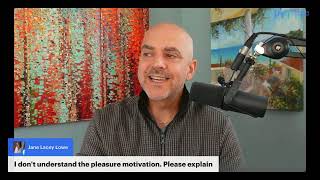
Hey everyone, welcome to today's program, Your Self Thin Podcast. Today we're talking about the 3 words that sabotage your weight loss. And once you start to become aware of these words first and then start to change them into the words I'm going to share with you in a moment, it's going to change how you fundamentally approach weight loss. And I don't say that lightly. This is really one of the most subtle but most powerful things that you can do when it comes to your weight loss is change these 3 words. So what are the 3 words? The 3 words are have, need, and should. As in, I have to lose weight. I need to lose weight. I should lose weight. And we can use these words in any context related to your weight. I have to eat better. I need to eat better. I should eat better. Any of them, they all fit there. I have to work out. I need to work out. I should work out. Same thing. And the reason these words are so damaging is because subconsciously imply that it's not really our decision, right? We're internalizing it as there's some outside pressure or force that is causing us to have to do something different. And again, whether we say have to, need to, or should, the idea subconsciously is that the idea is coming from outside of us. And what that does is it sets the, the stage to resist that, right? Because if we feel like it's coming from outside of us, we start to rebel against it. We feel like There's this outside force or idea or pressure to get us to do something. Now, of course, if we were going to approach it differently, we would use a different word to describe that. Do you know what that word is? This is the word I suggest you start to replace it with. Well, it's I want to. So instead of saying I need to, I have to, I should lose weight, we say I want to lose weight. And right off the bat, what that does is it changed the focus from it being an outside force that's coming in to affect us, that we set ourselves up to rebel against, push back against. And instead, we start to internalize that. Now it's not coming from the outside, it's coming from within. I want to eat better. I want to work out more. I want to lose weight and get my weight under control. When we say, I want to, we connect to that motivation and we internalize that motivation as coming from us as opposed to it coming from someone else. I hope this is making sense because this is so fundamentally important, because when you're trying to do something big in life and changing your weight is something big, it's on the level of what you do for work, you know, what your responsibilities in life are, college. I mean, it's big, big, big stuff because Again, your weight is a reflection of your mindset, your lifestyle, your eating. It's a reflection of a lot of things. So if you're going to change your weight, you need to change a lot of things in your life. You need to change your mindset, your lifestyle, and your eating. So it's a big undertaking. And when you are going to take something big on in life, you really need to have the best motivation possible. And the best motivation possible usually comes from within what we truly want. Because that way we don't waste energy fighting against it. I know this may sound strange if you've never really considered it, um, because it's not a logical thing. Let me just talk about that for real quick. When we talk about the subconscious mind, we're not talking about that rational, logical part of your brain, right? If we operated logically and rationally, you wouldn't even have a weight issue because you'd know that these foods cause you to be overweight, and so you just stop eating them. But there's clearly this emotional level, this subconscious level where a lot of our behaviors flow out of. And so it's not that I need to lose weight. It's not that we can't understand it logically. We do. But the problem is that when we internalize it as it coming from someplace else, right? If we need to, have to, um, should, there's some other person there. There's some other, um, force that's putting that on top of us. And so again, subconsciously, we're set up to push against it as opposed to things we want to do. Things we want to do are generated from inside, and we move towards them in a congruent fashion. And so we tend to have deeper motivation, and it tends to be more congruent, meaning we're not rebelling against it because we want it. And so as you start to speak about your weight loss with the term want to, you start to unleash, you start to deactivate the emergency brake that you've had on there. Um, when you do frame it as I have to, because if you have to, you're getting— it's pressure, it's force. Why do you have to? Because my doctor told me to. Why do I have to? Because the BMI chart said I should be this. Why do I need to? Why? You don't need to. You don't have to and shouldn't. Is again a relative sense of what you, you know, how you internalize it. So as you start to describe your weight loss in terms of what you want to do, I think you're going to find that it feels a lot different and you're going to set yourself up right from the beginning when you talk about what you want to do to avoid the rebellious phase that typically comes through with weight loss for most people. So give this some thought. And if you want to go deeper into this idea of really wanting something and wanting to lose weight, go to my bio and get the free hypnosis session I made for you. It's called The New Thin Me, and it is designed to help get you excited so that you do start naturally describing the weight loss journey as one that you want to do as opposed to one that you have to do. So I hope that helps you out. And if If you're on TikTok, you just click my picture up there and go get it in my bio. And if you're on Facebook or wherever else, I just put the link in the chat, so go check that out. But if you have any questions, feel free to ask them. I hope you're all on a nice Monday, and I am here to answer any weight loss questions you may have, or even just talk about any weight loss things that are going on. What's up, Sanjita? How's it going? Oops, what's up, Jane? Jane says it's difficult to focus on intrinsic motivation when I have heard from several men that they would never date an overweight woman. Seems so shallow to me. Um, yeah, sure, I, I don't disagree that that's shallow. It's not for me to decide that, but what I will say is that both can be true, Jane. You know, both can be true. So I'm not taking away all of your extrinsic motivations, folks. Clearly We live in a culture that values what people— there's a beauty standard and there's a level of reality that absolutely is built around that. So I would never deny that. That being said, there really is no reason why it should be difficult to focus on intrinsic motivation as well as extrinsic motivation. You're absolutely capable of that, Jane, I promise you. It can be difficult because you haven't practiced focusing on intrinsic motivation. That could be a reason why, but I see no reason why, um, you can't want to look better, uh, to, you know, appeal to a wider segment of men that you may be attracted to. Um, in addition to having your internal intrinsic reasons why you want to do it as well. I don't know why you can't have just both of those and, um, let both of them drive you forward. You know, it's not an either-or thing. Um, Jane says, I just don't want my motivation to be to please my boyfriend. Um, then don't let it be, you know what I mean? Again, I, um, but again, you know, we first said is it's difficult to focus on intrinsic when I've heard from several men that they would never date an overweight woman. Well, we know this is true. I mean, let's not pretend it's— that's not true. And it goes— everyone has their opinions and what they're looking for, you know. So again, but notice, Jane, that what that's creating, what I'm hearing from you, is an incongruency. You know, because I'm not hearing an intrinsic motivation problem. I'm hearing that you're upset that that's the reality and it's unfair. I'll be the first, um, to identify and acknowledge that. I don't need to be. I mean, we all know. I think women get the shit end of the stick in society. They're held to a beauty standard that's ridiculous that men aren't. Uh, I think all that stuff's true. And I think there's men out there that are very shallow and all they care about is what a woman looks like. That's absolutely true. No doubt. Um, so where do you go from there? You know, if we, if we kind of ruminate on that one factor, it only hurts you, you know. So look the way you want to look, be the way you want to be for the reasons you want to do it. And those reasons honestly are partly because you want to look a certain way for your boyfriend or your partner or whoever. And I don't think we should deny that. It may not be right, it may not be fair, it may not be the, the, you The moral thing, I don't know, but if it's a real genuine motivation to you, why not put that on the list? But then simultaneously, if there was no boyfriend, if there was no men or no potential romantic partners on earth, what would be your motivation to wanna manage your weight and your health and your happiness? And put that on the list, right? And so build up a list of reasons why you want to live at your goal weight. Uh, and as many reasons as possible is going to be better. So, um, Kalina says, I was just thinking today that a big trigger for my binges are feeling unfulfilled in other areas, perceived exclusion by friends, feeling of disconnection, or avoiding a task in the home or work. Yeah, well, that's great. I think that's great. So much of programming yourself then, and I think almost always the initial phase is becoming aware. Becoming aware of patterns we have. And a lot of times the overeating, the binge eating, the different stuff is triggered by something else. A lot of times the emotional eating is a symptom of something deeper. And if we approach things with that mindset, we start to uncover things like this, like, oh, maybe part of the binges sometimes is when I've got work to do, or I've got some responsibility I've got to meet, and I don't want to do it. And so the food becomes a distraction. It becomes a way to not do those things. That, that's very common. But again, if you look at any of your emotional eating through that lens, I think you end up getting to more interesting ideas than just, you should just never overeat. You should just never emotionally eat. Just don't do it. Just stop it. I, I don't think that's really gets you to a place that's like a resolution. I feel like it's just you trying to fight against yourself for a little while, typically. So that's great. And, and so as you realize that, because once you realize, oh, maybe, you know, some of my overeating has been triggered by, um, a feeling of disconnection from my friends. Well, great. Now you realize the core issue. And so now you can ask the question, how can I feel more connected to my friends? Maybe you can, maybe you can't. Maybe then if you can't, then it's how can I find friends that I can feel more connected to? So once you get to the deeper core reasons, you can start asking much more accurate and effective questions. And, uh, I think that's really important. Uh, San says, all good, Jim, just returned from my 3-day holidays, overate a few meals but not like before, and was very conscious of every other meal and restarted my healthy food choices immediately. Did not spiral, all thanks to you. Well, you're welcome. Thank you. Um, that's wonderful. And, and I think that, that to me right there is the epitome of all or something, right? So in Program Yourself Thin, we talk a lot of times about the distinction between dieting, which is really an all or nothing mindset, right? You're either doing it 100% perfect or you're not doing it at all. And Program Yourself Thin approach is all or something. Sometimes we're doing everything perfect, but when we're not, we're still doing something. Always doing something. Even at our lowest points, we're still doing something, whether it's making sure we get to bed on time, drinking some water, eating an apple, going for a walk, whatever it may be. We always want to do something, and that always staying in the game, even on a minimal level, starts to show up more and more and more the more you practice it. So that even when you go on vacations and holidays and special events and all the rest of it, you can go and you live a normal life where, yeah, sometimes you're going to get caught up in the food, you know, you overeat too much, make the wrong food choice— completely normal and natural. But you start to develop the ability to absorb that, right? Again, we can make mistakes and they don't have to blow us way off track. We We can make a mistake and then stay grounded and calm. It's not a big deal. As they always say with politics, it's not the crime, it's the cover-up. But with weight loss, it's a lot of times it's not the binge or the overeating, it's what we do afterwards. And most dieters, when they make a mistake, they tend to go way off the other side and really just start overeating. Who gives a shit and who cares and all that. Um, and it's that all-or-nothing thing. They literally call it— they've, they've specifically for dieters, they call it the what the hell effect. And they've studied this, uh, multiple times. It's fascinating too. I mean, again, you could— reading the studies really is really fascinating. The one they always remember, that one they did where they had a group of people that were dieters and a group of people that weren't, and they, they basically kind of tricked them into overeating a little bit. Um, and it was fascinating to see how the two groups responded. The ones that weren't dieters were you know, it didn't really make much of a difference. The dieters, though, oh my God, they went way— they consumed way more once they realized they'd made a mistake or felt like they'd made a mistake. So it's, it's very interesting, you know, it's very, I think, relevant psychology for when it comes to weight. And, uh, yeah, the idea of being all or something, though, to me is just absolutely foundational because, again, and a lot of times dieters don't even realize, you just take it for granted that And if I'm going to lose weight, of course it's going to be an all or nothing thing. It's layered so deeply into it. No pain, no gain. It's an all or nothing mentality, right? Obviously, all or nothing. People think about that all the time, but you see it in your behavior, right? You jump into a plan a few times a year, 100%, but then you're off the plan completely most of the time. And this is why you can't get the results you want, because you you can't just all of a sudden, you know, just change everything. That, that it's the timeframes we've been trained to associate with weight loss are so incorrect. And so dieting your whole life, dieting has conditioned us to think about weight loss in these tiny timeframes, you know, where it's like, if you're gonna start, and again, here's Monday, today's Monday. So a lot of people Monday, Well, a lot of you were planning on starting today and already it's over. But it's like when you start to— it's that pattern. That's that diet pattern. And it's like when you look at it, you see, holy shit, it's been my whole life. Every time, my entire life, when it comes to weight, it's this all or nothing thing. And most of the time I'm kind of nothing. I'm not, I'm not really on track. And that's the problem. You know, statistically, you need to get yourself in the game more. You don't have to be perfect, though. And that's the, that's the beauty of it all, right, is that it relieves a lot of pressure. You know, you've got to have more patience. I think that's the hardest part, you know, of that mindset is that the initial part, you won't get results as fast. But on the other side is that it's not too hard to start. It's not too hard to stick to it. You get better at it and the results start building up over time. And I think the most important piece is that you're building on a solid foundation. And that's what most dieters don't have any idea what that even feels like. Most dieters have no idea how to approach their weight in a way that feels stable. Like, and I give you— college is probably the best example of this, I think, where it's like college, like you take on this challenge, but you give it the appropriate amount of time. And so it doesn't even matter what degree you're aiming at. It's like you're giving it 2, 4, 6, 8, 10 years to achieve it. And so you're giving yourself the time and you're, you're spacing things out in a very intelligent, strategic way. And that allows you, you know, to kind of build up the mindset and the, the resiliency and the sustainability that's necessary to get that degree. But when it comes to weight loss, it's like the get rich quick scheme. It's like, it's like, how fast can I lose the weight? And it's such a wrong focus. And that focus of how fast can I lose the weight, that's what traps you. Because of course, the only way to lose weight fast is to do extreme things. It's that simple. The fastest that you're— the speed at which you lose weight is directly related to the intensity of what you're doing to lose it. And so most dieters are wrapped up in that and they just take that for granted now because, you know, it's the illusion of choice. You know, you look at all the diets and you say, oh my God, there's all these diets I could pick from. But it's an illusion because every diet is exactly the same. Because no matter which diet you pick, you're going to jump into it 100% on day one. You're going to overwhelm yourself and most likely you're going to quit before the month's out. Probably going to quit before the week's out. And it's because it's so overwhelming to try and change everything all at once. And so once you expand your timeframe to a more accurate timeframe, that's the beginning, I think, of really approaching this in a fundamentally different way. Karen, Karen says, screw it, I'll start next week. My mantra for decades. My son even remembers me saying that. Yeah, of course, Karen, right? I think that's, that's the dieter's mantra. Screw it, I'll start next week. And most dieters are saying that Monday morning, you know what I mean? Like, you don't even get started. And why don't you get started? This is the part I want to, I want to reinforce this because you're probably literally dealing with this right now. Most likely you think about weight loss 24 hours a day, but you never really do anything to really make it happen. And the reason why, one of the big reasons why, is because you build it up to be this huge thing. And it's like the amount of times a year that you can really get yourself up to here to do the keto, to, to do the intermittent fasting, to do the tracking, it's only a few times. And then as soon as you make a little mistake, it feels catastrophic. And so most of the time, yeah, Monday people are quitting. Screw— ah, screw it. Oh, I slept like shit last night. I can't go keto today. You know what I mean? Like, whatever, it doesn't matter. You know, you just insert whatever The thing is, but it's the same pattern, right? You start Monday or the best of intentions, but you can't carry them out. And that's fine with me. I, I think that's a normal thing because dieting is dumb shit. Dieting is just stupid. I don't blame you for doing it because it's the only method you've been given in your life. It's the only method any of us have been given in our lives to lose weight and to control our weight is dieting. So it's normal that we would think as dieters that that's com— makes complete sense, um, but it doesn't work. And the main reason it doesn't work is because it's a shitty strategy. It's a terrible strategy for long-term weight mastery. It's probably the worst strategy possible, which is why we live in a population with 75% of the population is overweight or obese. Yeah, but I get it, Karen. Yeah, Jackie said, definitely overdid it on the cruise I just got back from— buffets, desserts, etc. Um, yeah, of course, Jackie. But of course, you know what I mean? Again, we can't, you know, again, we're human beings living a human life. Who the— who wants to go on a cruise and just eat like you do at home? Again, we have to think about quality of life. And so for me, if I went on a cruise, I go on vacation, it's all you can eat and all this stuff, I'm gonna overeat, um, when I'm away, and then I'm gonna come back and get right back on track. You're not on a cruise anymore. But a lot of people go on the cruise and they put 5 pounds and they come back and they're devastated. I'm not devastated. I expected to put weight on because I'm going to overeat when I go on vacation or cruises and all the rest of it. So the last thing in the world I would ever do is go on a cruise and try and diet on it. I eat well all year so that when I go on vacations, I can go and enjoy myself. And part of enjoying myself is eating more than I normally do. So I hope you can just enjoy the experience you had. And now you're back on track in your normal schedule and your weight's going to go right back to where it was. And I find even that interesting because dieters are just so set up for failure. Your mindsets have been so tweaked negatively, it's hard for you to even appreciate how deep that goes. But my main message to you is this, that a lot of times you're always blaming yourself for not having the willpower or the focus or the motivation to stick to a plan. And I wish you would let go of that idea a bit and start to consider that the plan you've been trying to follow— and it doesn't matter what diet, that's what I'm trying to say. I know he's like, well, no, I'm gonna try Weight Watchers and I try keto. They're all the same. Every diet's the same mindset-wise. And you have been conditioned to think about weight loss within that mindset. And it's not you that's the problem, it's dieting as a concept that's the problem. It does not work. No one succeeds with a diet statistically. I mean, it's a statistical failure. It's proven. Your experience is not unusual. Your experience is virtually everyone's experience on a diet, which is that it didn't work for you long term. So what's up, Green? How's it going? Green said, I went from weighing myself every day to once a week, and I finally broke my stall. Nice job, Green. Nice job. I should have— hello from Greece. All right, nice to be in Greece. Although I will say it's finally warmer around here. It's finally getting warmer consistently. Sometimes like random warm days are worse than just being cold. I will tell you, that's the last month. I would say March for me started so awesome, it started to get warm, and then it was cold a lot most of the time. I'm all sensitive to the temperature these days, so I wish I was in Greece. What's up, Vicki? Vicki says, hey Jim, happy Monday. The culture promotes all-or-nothing thinking in every severe— um, thank goodness for you and the sanity of all or something. Thank you. Oh, in every sphere. Yes, yes, yes. Yeah, absolutely. Yeah, this is a culture of all-or-nothing. I would agree with that too. And I just think all-or-nothing thinking, it's got its place. I'm not saying never being all-or-nothing thinking, but— well, I guess maybe, I don't know, does it have its place? I'm sure with some things, obviously. You know, like, hey, hardcore substances, I think all or nothing is a wonderful strategy, you know, but I don't think with food it's a good strategy. I don't think with weight loss it's a good strategy because you're a human being is going to make mistakes. So all or something, the key thing there is that, listen, you're keeping your all. I don't know what you want. How, how in any context would all or something be worse than all or nothing? You still got your all. The only difference is we're trading nothing for something. And so sometimes, you know what I mean? Like, you're just not going to be able to be all. I think that's the hardest part because dieters, it's like you convince yourself that you got to go 100% in so you get 100% fastest results possible. And you live in that weird mindset because, okay, I'll give you that. Yeah. If you, if you do the perfect, if you stick to your plan perfectly, you're going to get the best results possible. Okay, I'll give you that. But how about this? You can't do the fucking best plan perfectly. No, you can't. That's what you have to stop doing. And a lot of my clients are perfectionists. They don't want to let go of that. But you're, you're allowing, right? So you're allowing the perfect to be the enemy of the good. Most likely, if you're a typical dieter, you've wanted to lose a lot of weight for a long time. And it's like if it's If it's not fast weight loss and start losing 2 to 5 pounds a week the first week, then you're not going to do it. Be honest, you're not excited. What if you— what if you did a plan in the first month and that was easy plan, it was comfortable and it was— it was— it felt good and it wasn't even a big deal. But the first month you didn't lose any weight. It was just kind of a, you know, stabilizing phase. Most people aren't going to do that. Now, the other side of it, though, is that most people aren't going to do anything this month. That's the other side of it. So to me, you dieters are pissing away all your valuable time in service of waiting for that day when you're ready to go 100% in. When's that day coming, folks? When's the last time you went 100% in? I bet it's been more than 6 months. Well, maybe it was the first of the year. Maybe. When's the last time you really went 100% in? I bet it was in the last year. How many times have you gone 100% in? Once, twice? How long did you stick to it? A couple days, couple weeks? Those numbers are not going to help you change your weight. And so dieting has conditioned you to think dieting is not your friend. I say this every day because I want the world to hear it. Dieting is not your friend. Dieting is a branch of the food processing industry. They don't want you to lose weight and eat less of their food. Weight Watchers was owned by Heinz. Jenny Craig was owned by Nestlé. Uh, Atkins Food Products, owned by the same company that owns Onions, Pretzels, and Cinnabon. SlimFast, owned by the same company that owns Ben Jerry's. You think these companies, their primary goal is to get you to eat better so that you're then healthy and happy and not eating their food all the time? Like, what sense does that make? And so there's, there's a very specific intentional reason why dieting doesn't work. And I'm not just giving you excuses. I'm telling you, dieting doesn't work. It doesn't work for anyone. It's statistically proven. I don't— am I talking crazy? Do you think diets work? Does anyone here think diets work? What's up, Dina? Dina says, hello, I joined your program my 6th day. It all makes sense, but I don't seem to be able to change my old habits, like eating a bit less for dinner. Any suggestions? Thanks. Yeah, Dina, great job taking action. Welcome to the program. And remember, I just want to make clear, part of the program— I mean, certainly tomorrow, Tuesday, we have a live Q&A Um, you can always email me questions at, uh, jim@programyourselfthin.com for the Tuesday Q&A if you can't make it live. The best thing would be for you to make it live so that we can go back and forth. Um, and I will literally talk to you about this. Um, but you can also get on here too. So I literally, Dina, I'm happy to help you right in the live chats I do. And I do these every day, Monday through Friday, around noon Eastern. Okay, so The big thing that you have to understand, Dina, is that this is a program where you're learning and growing and evolving. So meaning to that point, I don't seem to be able to change my old habits, like eating a bit less for dinner 6 days in. I wouldn't expect you to. I would be very surprised. You know, sometimes that can happen, but most, most of the time when someone starts the program, you're not going to change some of your worst habits in 6 days. My worst habit when I started over 30 years ago was my nighttime snacking. And every night after dinner, I'd wait about an hour and then I'd start snacking and I'd graze all night long every single night. And it took me months and months and months and months to finally figure that out and get it resolved. That being said, though, once I had it resolved, now I am here 30 years later and I have— I don't do that. So instead of thinking like something's going to change right away, we will look at that. And what you want to do, Dina, the main thing that's going to help you reduce how much you're consuming at dinner is the redo rehearsal technique. All right, so you want to go to the, go to the members area, watch the PYT technique, the redo rehearsal technique, and start using that specifically for what you're— how you're eating dinner. And start training your mind, start programming your mind. It'll take 60 seconds a night. Start programming your mind for how you want to eat dinner, the amount of food you want to eat. And then what's going to happen is, again, we redo how dinner went today. We rehearse how we want dinner to go tomorrow. Then tomorrow, let's see how it worked. What worked? What didn't work? What do we need to reinforce? That tomorrow night, you redo how it went, then you rehearse how you want it to go again. And if you keep doing that, Dina, that's where 6 days, 2 weeks, 3 weeks, that's where you're going to get a huge shift and change in your behaviors. All right. So the hypnosis supports everything you're doing, but the cornerstone of the whole program is the PYT technique. All right. And so use that, go in the members area, watch the PYT technique training. It's 40 minutes. There's a walkthrough if you just need to do a quick— takes 5 minutes. Start using that for the dinner eating. And I think you'll start to get some influence over it. So Marta Marta says, I stick to 3 meals a day, balanced, plenty of hydration. I'm being active almost daily. Weight stays the same. Uh, weight stays the same. I don't want to go back to tracking, it doesn't end well. Um, yeah, but Marta, I mean, first of all, weight stays the same, that's like, that, that's an interesting linguistic trick you're playing on yourself because my first question to you is 'Cause I find this fascinating and this happens all the time. I stick to 3 meals a day, I'm being active, I'm plenty of hydration, I'm being active daily, weight stays the same. Well, how long, Marta? How long have you been sticking to 3 meals a day, balanced with plenty of hydration? How long have you been active almost daily? I wanna know how long, first of all. And second of all, weight stays the same. Um, great. You know, again, I don't know how long you've been doing that. Hold on. So when I say great, uh, what I mean is first thing we need to know, first thing I want to know is how long you've been doing it. Because if you've been doing that for a week, well, that's not even nearly enough time. If you've been doing it 2 weeks, that's really not nearly enough time. If you've been doing it for a month, I'd say, okay, you're starting to get to a point where we could start to look at what you're doing. But even if it's got to be 2 months and you've been living this new way and your weight doesn't change, I still think that's great because you've stabilized what you're doing. And so once you've stabilized what you're doing, now you can go to another level of sophistication, a sense of how to manage your weight, and you start to dial down the calories. Marta said, good question. All right, so we're not even sure. So yeah, so Marty, you would have to know how long first. But, and I, I'm feeding that back to you I want you to really understand that's one of the number one things dieters do is they'll tell me everything they've been doing and the weight hasn't moved and they don't give me a time frame. And as soon as we get to the time frame, almost without exception, it's under a month and typically it's under 2 weeks. And that's just not enough time. I always say to people, weight loss is inconsistent and unpredictable in the short term and very consistent and predictable in the long term. And so you got to figure out how long you've been at it, Marta. Um, first of all, and second of all, though, let me just— one other thing I want to add on to this is I want you to notice, do you feel any better other than the weight not going down? Have there been any other benefits of living that way? Your hunger, your moods, your energy levels, your sleeping, how you feel emotionally. Have there been any improvements in those areas from all the positive changes you started to make? Yeah, Marta says it's been a few months but only a few weeks for exercising daily. Yeah, so when you start exercising too, we have to understand, folks, that a lot of times— and this is why I don't even recommend exercising as a first step for most people— because when you first start exercising, it, it really screws with the weight sometimes. Because A, when you start exercising, you get hungrier, you get more tired, you get more sore, and you experience the licensing effect. So you could start exercising and a lot of times, and it increases cortisol levels a lot of times. So the, um, you know, when you start exercising, you really have to give yourself another month or two at least before you can really get a sense of how that's affecting the weight. And if these timeframes are scaring you folks, I don't care because I'm tired of talking about weight losses. It has to happen this week or people are going to go away. I've lived that game. I've been selling weight loss. Coaching and programs for over 20 years, and I've made my mistakes. The biggest mistakes I've ever made is when I tried to sell fast weight loss. And because I was scared if I said, oh, this play— this— my plan takes longer than these other plans, I was scared no one was going to want it then. And, you know, thank God we get more mature and potentially we have the opportunity to get wiser as we get older, because I don't give a shit anymore. I don't care about how fast you can lose weight. And so if talking about, well, exercise for 2 or 3 months and then see how the weight goes, if that terrifies you, good. Because what is your timeframe? What are you thinking in? You know, you all think about how fast you want to lose weight, but where do you want to be next year at this time? Where do you want to be 5 years from now? Jesus Christ. It's like you can't make all your decisions based on what you're going to get in the next week or next month. Imagine like, like what business could you start where you demand to make profits the first week, the first month? What, what business are you going to be able to run? I, you know, it just, it makes no sense. The time frame that dieting has saddled you with makes no sense to the goal you want to achieve. Because on top of that, how long do you want to stay at your goal weight? Because I know you're freaking out. The idea of like not losing weight for 3 months and exercising and not freaking out if I don't lose weight, like it's hard to imagine sticking with a health plan or a weight loss plan or an exercise plan, if you don't lose weight the first month, the first 2 months, your brain is breaking in half thinking of that idea. But I don't know why, because you want to stay at your goal weight for the rest of your life, right? Well, then you're going to have to eat and live and think the way that you think to lose weight the rest of your life. So what is the rush? Jesus, you, you've tried rushing your entire history, your entire life. You've tried rushing your weight loss. What would happen if you really stuck to mastering your weight, to committing to say, you know what, for the rest of my life, I'm going to want to live at my goal weight. So I'm going to approach this logically, strategically. I'm going to build up a system that's rock solid where my mindset's right, my lifestyle supporting my weight, my eating is dialed in exactly for me to make me the happiest, enjoy it so I can enjoy it. Most people don't think that. Yeah, Jane says diets don't work. Yes, yes. All right, Nancy. Nancy says, I reject the term perfectionist. It is impossible and sets us up for failure. I agree, I agree with that. And I'm a, uh, I, I kind of say like recovering perfectionist. A lot of my clients are on the perfectionist scale, and I honor that. I think there's a lot of good parts about kind of identifying as a perfectionist, but I think the bad part is when you believe it's possible. You can't be perfect, and if you can be perfect, you can't be perfect for long. And I think that razor's edge perfectionist walk is the dangerous part. You know, keep 95% of your perfectionism and get rid of the 5% that thinks it's actually possible to live a perfect life. And that seems like the perfect, um, thing for me, you know. And build around your mistakes, build around your challenges, because they're gonna show up and happen. You can't be perfect, like it's not possible. You're a human being, and being perfect isn't even on the menu as far as I can tell, and certainly not with your reading. But yeah, if anyone's got questions, feel free to ask them. Nope, chains don't work. Andy says, I've been on a diet for 30 years, I don't think it works. Agreed, agreed, right? And again, you know, for the people that have been on diets for 30 years, I, I applaud you. Please understand, I, I respect it, you know, because I know like, like you keep, you keep going, you know, you keep trying. Um, I'm trying to tell you though, the main thing is that you got the wrong strategy. You look at the wrong map, you know, you're in Boston and you got a map for LA and you're wondering why you can't find anything. That's the best description I can give you of why dieting doesn't work. It's the wrong, wrong map for what you're looking to accomplish, because the truth is you don't even want to lose weight. That's not your real goal. Your real goal is that you want to live at your goal weight. You want to live at your goal weight. And then they're two totally different things. Getting to your goal weight is like a temporary thing, and your subconscious mind thinks of it that way. Let's be honest, folks. Ask yourself, reflect on this yourself. Don't you think about weight loss as a temporary thing? You're going to diet until until you get to your goal weight. That until carries a lot of water in that sentence, right? Because the idea is I'm going to do this crazy shit until I get to my goal weight. Well, then what are you going to do? I'll figure that out then. But I'm going to— and so you create this broken concept in your mind that you're going to do this thing until you get your goal. And then what? There's no sense of maintaining it long term. And for most people, when they consider dieting for the rest of their lives, they get an instant panic attack response in their nervous system. So again, in Program Yourself Thin, we start the whole process off by asking the question, how can we live at our goal weight in the most comfortable way possible? When's the last time you asked that question, folks? And I know it's never— I know it's never. So I think that question serves you a lot better, though. Brings you where you want to go. All right. Look at that. On the way to my library, on the library, says I stopped counting calories because of you and I'm living my best healthy life. I'm really happy to hear that. That makes me so happy. Because, and again, I'm not against counting calories. I think that first rule of program yourself then is there's no right or wrong. There's only what works for you. For— there are people I've met that love counting calories. They're like accountant types. I don't know. They just— they find comfort in the certainty of those numbers and tracking them and doing that is relatively easy and enjoyable for them. Now, that's a minority of people I've met. I would say that's outlier, unusual. But they exist. And so if that's you, then, then great. But most people don't want to track their calories constantly, and I don't blame them. It's— it takes a ton of energy and there's other ways to manage the calories. There's other ways to manage your weight that are a lot easier and more comfortable and sustainable. And I think once you realize that, it just opens the door to figure out what works for you. Everyone's different. You know, Kimmy says, I've counted calories to lose weight all my life, but I want to stop and eat to my appetite. Well, that's great. And I find it's crazy, like, the counting calories my whole life, it's just that, that to me is the perfect epitome of what I'm talking about, because it's like, you can do it when you do it, but what's happening when you stop counting calories? That's what I mean. Like, the counting calories, again, I don't care if you want to do that, do it. It doesn't matter to me. But most people don't want to do it forever because it's tedious. And so to me, it's like, okay, fine, if you want to count calories, count them. But let's use the counting calories as a phase that supports us getting to a better phase. So when I recommend, like, like I will recommend, sometimes I think it's valuable to count your calories for a little bit of time. So you track calories for a week or two just to get a sense of what I typically eat. What are the calorie levels of it? Just kind of calibrate that what I thought, what it actually says. What it is. And then you start to get a sense of that. But the whole program yourself approach is building it around to make it automatic. We want to have automaticity is the core piece of what we're doing. So we want to have a sense of what the calorie levels of things are, but then we want to structure our eating so that what we're typically eating is right in our calorie ranges to weigh what we want to weigh. So there's more to it that the calorie counting, if you're going to use it, is a piece of a much bigger puzzle. It's not the whole puzzle itself because counting calories as the main form of weight loss is tedious. And once again, it becomes an all or nothing thing, you know? And so what I look at, Kimmy, for that, what bothers me most about what you just said there is that you have put so much time and effort into counting calories, but then you only get benefit from doing that when you're doing it. So it's like there's no counting calories in order to, again, to evolve to a higher level strategy. It's just counting calories as the answer. And as long as I'm doing it 100%, I'll lose weight. And the second I get distracted, I can't do it. Then I put the weight back on. I feel I'm so bummed by that because you have put so much time and effort and work and knowledge into learning about calories and counting them, but you haven't figured out how to boost that up to a higher level strategy that starts to run automatically. And that's what I find with most dieters that bums me out, is that when you all are dieting, you're putting so much time and effort and work into this, but then it just— the way you're approaching it, you have to be like 100% focused to do it. And the second you get distracted or sick or bored or, you know, life, you know, kicks you in the gut, then you can't do it. And then you stop doing everything. And then once you get back, okay, I got to do this, and you jump into 100%, and then you do 100% for a little while, you can't do 100%, you quit. You know, and it's like, that's what you have to get rid of. You have to stop doing that because mathematically it's dooming you, you know. So I get it, I get it, Kimmy. A lot of people do that. I, I— that's again, and it doesn't matter whether it's counting calories or keto or intermittent fasting or whatever your strategy is, folks. Um, it really doesn't even matter. It's the same pattern pretty much. Sylvia says, I paid my membership but don't know how to get all my information. Do I have to download an app first? Um, yeah, Sylvia, shoot an email to to support@programyourselfthin.com or open a help desk ticket and we'll get you straightened out quick. All right, so we'll get you all the information, all the what to do and everything. So glad you're in the program. Just shoot me that message, shoot it to the help desk, whatever. We'll get that all straight out for you today. Anita says, since I've been hearing your podcast religiously, I've been programmed to eat like the weight I want to live at. It's so enlightening and fascinating and simple. It's not hard at all. Thanks so much. Yeah, you're welcome, Anita. And, um, yeah, that's what we're always aiming to do in Program Yourself Thin is to— and that's the goal. I'm not saying just because we say this, it instantly happens. Please understand. But what makes Program Yourself Thin approach so different than dieting is the goal is so different, right? For, for dieters, the goal is I want to lose weight as fast as possible. For Program Yourself Thin, the goal is we want to live at our goal weight for the rest of our lives on near autopilot. These are two fundamentally different destinations. And part of program yourself then is saying, how can I get to and then live at my goal weight in the easiest, most enjoyable, sustainable way possible? That's the goal we set up there. That's the question we ask. And again, I'm not saying you can just— you ask that and then tomorrow you're doing it. What I'm saying is that's the path we're walking, where each and every day we're looking to get 1% better at living at our goal weight in the easiest, most enjoyable, comfortable way possible. That's the goal. Every day. Good day, bad day. Every day we're looking to get 1% better at being able to get to our goal weight and then stay there in the easiest, most comfortable, enjoyable way possible. You should write that down. Okay. Even if you'll get the program, isn't that a better goal? What are you trying to do? Lose the weight as fast as possible? I know, listen, if, if that goal worked well for people, I would suggest you do it. But I see it does not work well for people, not long term. And is there anything worse than getting to your goal weight and then putting the weight back on? You know, so again, I'm proud of you, Anita, and it just gets easier and easier and easier the more you listen, the more you practice, um, the more you kind of live with that. Let's see, if anyone has questions, feel free to ask them. Kimmy says thank you. You're welcome, Kimmy. See, yeah, Marta says I feel great exercising and better mood, no weight loss. No weight loss yet, Marta. Jesus Christ, I'm joking with you. I'm joking with you, Marta. I'm not joking with you, but I, I'm not, um I'm not annoyed, you know, because it's just normal. But I hear this all the time too, by the way, because I always want to— I want to take this apart a little bit. So Marta has been eating better, hydrating, living healthier, exercising now, um, and she's not losing weight. Now she's not really specific because I said how long, and she kind of— I'm not sure, months, I guess. Well, months I've been, you know, eating better, but I don't know, maybe about a month I've been exercising. So that lets me know it's not clear. And when things aren't clear You shouldn't trust yourself because when we're doing good stuff, we experience time distortion and a week of living and eating well feels like months. So anyways, though, even if it's been months, Marta, here's the funniest part to me. I just want to say this. So Marta is eating better, living healthier, exercising, no weight loss. Now, how long has it been? Well, let's just say a month, 2 months. Okay. So no weight loss. Yet we don't really know. It's still too early to tell. Okay, but let's just say there's no weight loss doing what you're doing. But on the other side, I feel great and my moods are way better. Okay, so should you keep it up even if you don't lose weight? So what if you never lose weight? Is it worth eating and living the way you've been living in order to feel great and have better moods? I want you all to sit with that because I can feel you saying no. I can feel it in your guts. I can feel you say, I know I should, I know I should say yes. I know, like, feeling great and feeling my moods are better. I know that should be enough to keep going even though I'm not losing weight, but I know I'm not going to do it. And you should all sit with that because there's a lot of wisdom in that feeling you have. It's bullshit, you know. Because, A, you're probably going to start losing weight at some point anyway. Sometimes your body just needs to adjust, okay? Especially if you just started adding exercising in a month ago. Because if you added— if you started eating better, hydrating, living healthier, and then now you start adding exercise a month ago, the first thing I'm thinking is that the exercising— you've started eating more because you start exercising. I always associate eating more with exercising unless you are really specific with your calories. It's almost guaranteed you're going to eat more once you start exercising. Why? Because you're burning more energy. Your body is a homeostasis machine. So the second you start depleting your energy, your body sends you signals to eat to replenish the energy. So there's the first thing. So unless you're rock solid with your calorie numbers, I almost guarantee you started eating more since you started exercising. B, you're using your body more and you're stressing your body more. That's what exercising does. It stresses your body. In a healthy way, because then you come back and you build stronger. But in the initial phases of exercising, you release more cortisol, for example, and there's other things beyond that to happen, and that may slow down your weight loss in the first month. So again, the idea of adding exercise— I know everyone thinks, oh, I start exercise, I should lose weight. I don't think that way at all. And what are you basing it on? I'm basing mine on a lot of studies that I've read about. What are you basing yours on? And I've done over 6,000 private weight loss sessions. A lot of my clients have exercised and then not lost weight immediately. So Nancy says, I think it's nuts, I'm exactly the same weight on a GLP-1 but lost 65 pounds the first year. Um, it's, it's— yeah, well, it's not nuts anyways, Nancy, because what a lot of people don't know about the GLP-1s that I'm gonna— I've been talking about this for a while— I think the biggest secret of GLP-1s that most people don't know is that you're going to get 13 to 16 months of weight loss and that's it. So all the GLP-1 studies have shown the same thing, that 13 to 16 months, that's when the weight loss stops. And now you're going to maintain the same weight as long as you're on the GLP-1s. So there's kind of a— if you want to call it ceiling or floor, whichever way, but there's kind of a limit. You get 13 to 16 months of weight loss on GLP-1s and that's, that's that, at least at this point. They come up with something else, whatever. But All the GLP-1s on the market right now all show that same thing in the studies. So that's, um, very normal, Nancy. And I think most people don't know about that. And then they gotta ask the question because there's a lot of people that are morbidly obese when they start the GLP-1s, um, over the 13 to 16 months they get to obese, and then that's it. You're not losing any more weight with the GLP-1. So that's not unusual. It's not nuts at all. It's, it's to be expected. And a lot of doctors don't even know that because they don't really know all the details of it. Um, Jane says, just got blood test results and I am pre-diabetic, so there is my motivation. Um, uh, no, no, Jane, that's not your motivation. I'm just letting you know that is not enough motivation. And that's a huge mistake a lot of people make. They did a study years ago where they took— it was, it was men like between 50 and 70, and they'd all had open-heart surgery, and they tracked them with their lifestyles. And I think it was about 20% of them actually changed their lifestyles. The other 80% no. So you have to never, never, folks, never assume that some negative health diagnosis is the motivation you were looking for. It could be. Okay, so I'm not saying it's absolutely not. I'm saying the fact alone that you get a diagnosis is not automatic motivation. Please let it be known, because there are tons of overweight people that are type 2 diabetic, you know, and at the worst parts of it even, you know, there's plenty of smokers, you know what I mean, that get a lung cancer scare, keep smoking. So don't think that that's enough motivation. I will tell you, typically motivation— there's two sides to motivation. There's pain and pleasure, and they both work. So it's not either or, it's both. And so typically we want to have the pain, you know. And so again, just getting diagnosed pre-diabetic is not going to do much for most people. You can internalize it in a way where it's way more motivating to you. And again, Jane, you're in the program, so you could go into the motivation section, which I'd suggest you do. Go through the pain section and go deeper into the pre-diabetic diagnosis and what that means to you specifically in your mind. And I would dive into that because just getting the slip that says, oh, you're pre-diabetic, that's going to do almost nothing to your motivation. So you've got to go deeper into it. You got to use that. It's a lump of clay and you got to carve it into something that's truly effective for you. But the other side that I think is the most important part of motivation for weight and eating is there needs to be some pleasure there. Some reason you want to eat well beyond the fear of being pre-diabetic. I think the core motivation that has to drive us when it comes to our weight is a pleasure-based motivator. So Hillary says the book is brilliant. Those stories really stick. Thank you. You're welcome. Thank you for saying that. The book that Hillary is talking about is this book. The Tao of Living at Your Goal Weight. This is my book. So yes, it is available now. Come on, sharpen up, image. I don't know why my camera is not focusing. There we go. The Tao of Living at Your Goal Weight, written by yours truly. This book's something else. Yes, the stories do stick because there's 40 chapters in here. Each chapter is a page or two, and each chapter is a hypnotic story. Okay. And so this is not just a normal book telling you a bunch of information. This is a book designed to change you while you read it. And it changes you through hypnosis so that these stories you read about stick in your mind and impact you, um, as you move forward through your day. So that's what makes it so unique. And that's why people are enjoying it so much. Um, Sanjita says, so what words should we use instead of diet if someone asks us, Jim? I mean, I don't use the word— I mean, I think a diet is a noun, right? There's diet, the verb, and diet, the noun. And so dieting, the verb, is kind of like what I think of as like the diet mindset, right? You're going to— you're going to diet until you get to your goal weight, right? So we're going to use it as a verb and then it doesn't matter what diet you pick. It's all the same. I'm going to do this thing. I'm going to do this diet until I get to my goal weight. Very— because are you going to diet for the rest of your life? Notice the difference between how those two feel. One lands like you think about it the same way all the time. I'm going to diet until I lose the weight. Notice how that feels in your body. Okay, now say I'm going to diet for the rest of my life. Oh, notice how that feels. Okay, but don't you want to stay at your goal weight for the rest of your life? So again, even linguistically, dieting is really doing a lot of negative work on you. So what you say instead, what I always say is I'm going to reduce my average calorie consumption. I'm going to lower my average calorie consumption down to my goal weight. And that's where I'm going to stay for the rest of my life. So I smirk because that, that's so profound. I don't want to be like some delusional person who thinks I'm amazing, but did you hear what— because you've never heard that. You've never heard lower your average calorie consumption, have you? But isn't that— and I'm sure there's other ways to say it, but lowering your average calorie consumption is one of the most comfortable ways to think of it long term, right? Does that make sense? Dieting for the rest of your life elicits a negative response in your nervous system. And so right off the bat, you've got to do a lot of heavy lifting. Reducing your average calorie consumption to your goal weight for the rest of your life just fits like a glove, doesn't it? It feels good to say it, does it not? Compare the two, right? Take a little bit of time later today, sit quietly in a room and say, I'm going to diet for the rest of my life. Notice how that feels in your body. And then say to yourself, you know what, I'm going to reduce my average calorie consumption so I can live at my goal weight for the rest of my life. See how they feel. Marta says, I like this one. I've been dieting for 40 years, it's not working. Yeah, of course, right? So again, and Marta, specifically for you, it's like the dieting mentality is really the main thing you're dealing with, and that's what you're projecting when you speak. I can hear it, right? Because it's like Oh, I've done everything great and I've started even exercising. The weight's not coming off. Well, it's not coming off yet. You give it more time. You feel great. Your moods are better. Don't you think if you feel great and your moods get better that your eating is going to improve over the next year? You've got to start thinking in a year-long time frame. You're trying to think too short term. You're trying to like force the weight loss. You have to start thinking more strategically, more systemically, systems-based. So it's like, again, I, so I just look at it this way. Okay, well, I haven't lost weight in the first 2 months. Okay, fine. But 2 months isn't a year. What happens if you feel great and your moods improve over a year? Do you think your weight might be impacted by that? Would you like to find out? So we got to always expand the timeframe. Nia says, I never asked the question of how to lose weight comfortably. So much happier this way. Will take a bit longer, but that's okay with me. Yeah, exactly. And to be honest, take a bit longer is really incorrect and inaccurate because I always say that too. And I have to catch myself because a lot of times I'll say, oh yeah, dieting is faster weight loss, but not really, because what's fast weight loss? If you do the most extreme diet and lose 20 pounds this month, but then you can't keep it up, so you put 20 pounds on over the next 3 months, was that fast weight loss or no weight loss? Well, it depends, right? If we're talking after 1 month, that seems really fast weight loss. But if we're talking after 4 months, we're talking about no weight loss. So fast and slow weight loss is really a relative term based on the time frame we're thinking in. And so if you— so let's just say you do 3 crazy diets during the year, like just the most intense ones possible. Dry fasting. Nothing's going in. No water, no food. And you're exercising as much as you possibly can. And you do that 3 months out of the year, right? So January comes, that's how I'm not going to eat anything. And you lose 20 pounds in January. And then February, March, you put it all back on. You get so upset, you say, okay, here comes May, dry fasting. You lose 20 pounds, you put on the next 2 months. Then finally September, oh my God, this is, this is crazy. I gotta stop yo-yoing. Oh, that's it, I'm gonna stop eating in September. And you drop it, then you put 20 pounds on for the end of the year. So is that fast weight loss or no weight loss? I'd say it's no weight loss. So what happens, that same person who made slow systematic changes to their lifestyle, their mindset, their eating over the year and say they lost a pound a month. Is that slow weight loss or fast weight loss? Right at the end of the year, we've got one person who's lost and regained 60 pounds and started the exact same number. And we have the other person who's really been doing very little, but they've been doing it consistently, a pound a month, which seemed like nothing. But now here they are a year later and they're 12 pounds down. So, so again, fast and slow weight loss is a relative term. As well. Yeah, Martha says, if you're miserable and hate what you need to do to lose weight, guess what happens next? I don't want to track no more. 3 meals work for me. I found my favorite activity, Pilates reformer, and I look forward to using it. Yeah, that's great, Martha. So again, Martha, if you build around what you like to do, it changes everything, you know. And if you can— if you see what happens— see, Martha's a perfect example of this. Martha has started to make changes in her life that make her feel great and emotionally feel a lot more balanced and better. So to me, it's like, okay, let's keep doing those things and let's remove the pressure of the weight right now. Let's just start focusing on feeling great and feeling emotionally a lot better for 6 months to a year. First of all, you'll probably lose weight anyways, but even if you don't, boy, you've just raised your, your foundation up so much more. Jackie says, any tips on maintaining the weight once you get to your goal weight? Yeah, I mean, again, I mean, the answer is just right within what I'm talking about. Program yourself, then we start on day 1 thinking about your maintenance. Program yourself, then the entire program is built around your maintenance. So any tips on maintaining the weight once you get to your goal weight? Let's just, again, let's just reframe this. If the goal from the very beginning is to reduce your average calorie consumption to your goal weight, so you're starting here, here's your initial calories, and your goal is to reduce your average calories down to your goal weight, and you do that, and now your weight goes down to your goal weight. Well, you have any tips on how to keep this up? Well, what do I do now? That's— I just want to show you how broken dieting makes our brains. So program yourself then. What do you do? You just keep doing what you're doing because we're working on our long-term system. We're working on our forever plan starting on day 1 and ending on day— last day of our lives. You see what I'm saying? There are no more days off. There's good and bad days, but we're always on the path. We're always making things better. We're always gonna get 1% better each and every day. So the day A month before we get to our goal weight is the same thing as the day we get to our goal weight. It's the same thing a month after our goal weight, a year after our goal weight. We keep optimizing. It looks a little different, but it's the same path. It's like saying, you know, what? How do I— how do I keep up brushing my teeth once I get them cleaned and they're all clean? We just keep brushing them. It's just a forever process. Lois says, life's so good thanks to you and my health coach. Uh, 35 pounds gone since June 7th. Great job, Lois. Wow, proud of you. That's a great, great accomplishment. And it's a great accomplishment because I know the way you've been doing it has been so great. And I love the time frame. Again, we're talking, you know, 9 months here. So that's wonderful. Great job, Lois. Um, Jane says, I don't understand the pleasure motivation. Please explain. Um, Jane, go into the motivation section of the Blueprint and read the, the pleasure part. It's a whole section on that. It's the most important part of the whole thing, and it's going to be especially the most important part for you because, A, you don't know what it is, and B, you— again, it's not, it's not just a you thing, but, um, you've really built around the pain. But every dieter does. Most dieters build around the pain for their motivation. Diets train you to have pain-based motivation and to use it. Um, so But yeah, Jane, I'll give you a shortcut anyways though. Who's the best Jane possible that you could imagine? When you imagine yourself just kicking ass, Jane, just kicking ass, like you weigh what you want, you live the way you want, you're operating at a high level, you're productive, you're working, um, relationships are better, just, just you're being the person you want to be, you're showing up in your life as the person you want to be. When you think of that best case scenario, Jane, is that pleasurable to think of that version of you? There you go, there's your pleasure motivation. Um, Martha says we're playing a Jane. Yep, it's like we can go dancing all night, it's not exercise for me, I love it. Yeah, exactly, it's all the little things you're doing day in and day out. Um, yeah, um, Dina says, can you please tell me again where to find the rehearsal technique? Thanks for your patience and guidance. Yeah, if you go— and actually I just fixed all this as well— so if you go into the members area, um, if you just literally go to the homepage now, you can link right to it. It'll bring you right to Start Here, and that'll drive you directly to the PYT technique. So the redo rehearsal are the PYT technique. And again, like I said, 40 minutes and you'll be through it. There's literally— I made you a new quick start guide, which takes you through the redo rehearsal too. So you don't have to watch the training yet. You can literally just read that, um, and start using it. But I would suggest at some point watching the training because I give a lot more context to it. Okay, but again, Fragmented Self has been really optimized, I would say, really over the last year for sure. But even the last couple of weeks, um, the members area has all been updated. Everything's a lot more congruent. The new welcome sequence has been updated. So that quick start guide's in there, and I think that's really wonderful to use. So go get that. I gotta send that out to everyone. I will do that today. Um, but Dina, especially go get the quick start, the, the, um, PYT roadmap. It's right there. I just put that out 2 weeks ago. It's so good though, people have been loving it, and it'll walk you through that. And then again, you get it, you have any questions, you can always, um, shoot a ticket to this help desk, uh, and/or get on here and ask me questions. Carol says, you're the best, your method works for me and I'm feeling so much more relaxed, thank you. Well, you're welcome, Carol, thanks for sharing that. Um, yeah, the method works because it's comfortable and easy and supportive, you know, as opposed to dieting, which is really kind of, uh, kind of miserable, I would say. Dieting is miserable, let's be honest. And most humans aren't going to do miserable things for very long. So, um, all right, I'm gonna get out of here. I got a lot of stuff to do, as I always do, but I gotta get some things ready. So, all right everyone, have a super duper day. If you are not in my world, please click the link in my bio or go to programyourselfthin.com. Go get the free hypnosis session I give you. I give you so much stuff. Not only, you know, do I give you the hypnosis session, but you also will have access if you choose to do it. I have a PYT daily program I just put together where every day I send you an email to support you, help you completely free. It is my gift to you, and I'm really so happy to be able to give it away. Yesterday I just sent out like my goal weight quiz. I give you more free stuff than I think anyone I've ever seen. And so again, it's all in service of my mission to help as many people as possible with their goal weight. So go opt in there, get in my world. Uh, if you like this here, I'm here every Monday through Friday, usually around noon Eastern. Um, so check that out, and I'm happy to answer your questions that you may have. Uh, if you can't make the live, you like listening to it, it's also a podcast. You can go to any podcast platform, search Program Yourself Then, it'll pop up, and you can listen anytime you want. And, uh, finally, yeah, my book. Here's a book. So if you're ever interested, The Tao of Living at Your Goal Weight, uh, written by Jim Katsoulis. There it is. And, uh, it's on Amazon, $9.99 for the physical book, $2.99 for the Kindle version. Um, people are loving it. So, all right everyone, have a super duper day and we'll talk soon. Bye.
More from Jim



Weight Loss Visualization: Wake Up in Your Dream Size #programyourselfthin #weightlosshypnosis



What If You Pretended to Be Thin for One Hour? #programyourselfthin #weightlosshypnosis




