Reacting Vs. Responding To Food

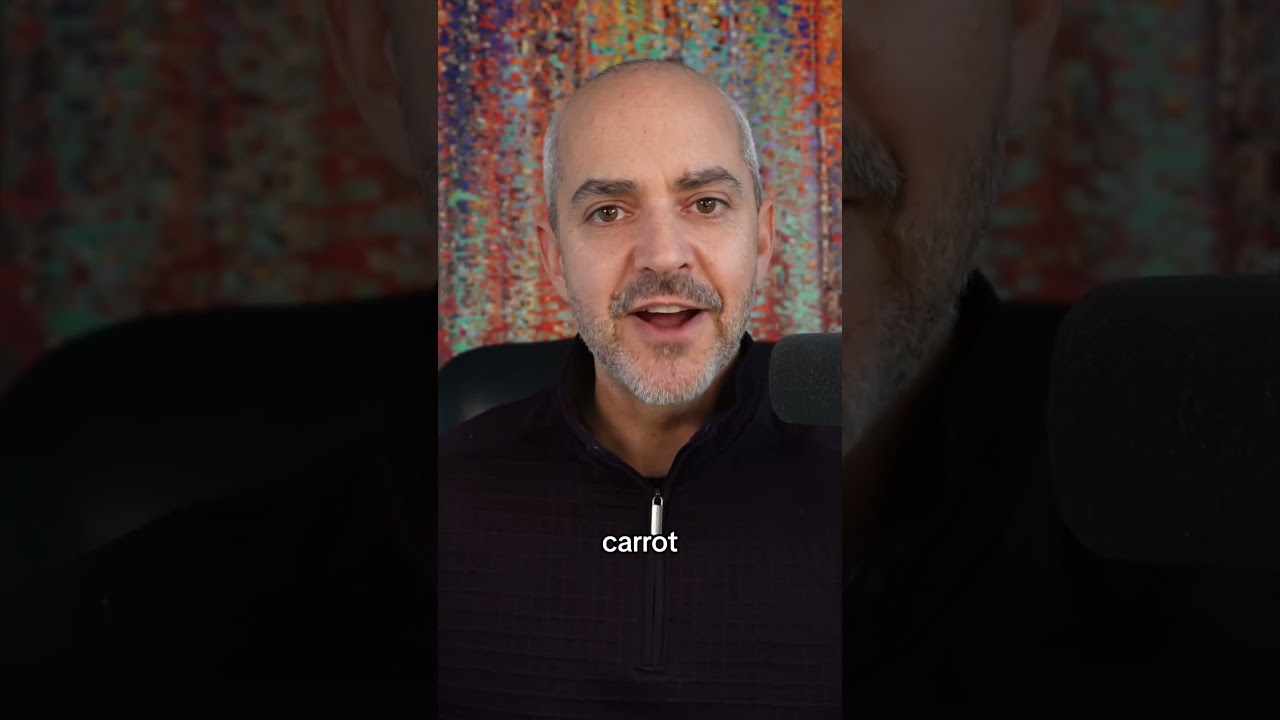
Jim Katsoulis explains the difference between reacting to food (automatic, driven by cravings and marketing) and responding (deliberate choices aligned with your goals). He teaches a technique called redo rehearsal where you mentally practice healthier responses to past overeating, and argues lasting weight loss comes from building new automatic responses, not extreme diets.
Chapters
Reacting versus responding to food. This is the difference that makes all the difference in the world, because which one you tend to do more often is going to have a huge impact on your weight. So we start with reacting, and reacting to me is basically whatever your normal, natural, developed, conditioned reactions are to food. And when we just react to food, we're not necessarily thinking about it. We're just doing what we do. And this is really what the modern food industry relies on, is that we've been so conditioned to think about food in terms of processed food and flavors and fast and how quick we can get it that we don't really consider food the way it's really meant to be, which is to really evaluate it on its fuel ability. Right. How much is this going to fuel my body? How much is going to nourish me, satisfy me? We tend to think about it, how enjoyable is it going to be to eat it? And so the reaction that a lot of times is happening is that we will either get hungry and then start thinking about what we're going to eat based on what's going to be the most enjoyable eating experience, or we're not even hungry. And all of a sudden we drive by a place and now we're pulling in and/or we get home and we're not even hungry, but there's a bag of chips or cookies there and we start eating them. Right. And it's just an automatic reaction. They were there. I wasn't even hungry and I started eating them. Right. But regardless, neither one of those situations, whether you're hungry or not, is really going to matter. Because when you're just reacting the way that you do, you can almost guarantee in this environment of food abundance that you're going to be overweight because your natural reactions to food are developed over millions of years of evolution in a food-scarce environment. So the bodies, the brains that we're born into, all of us, Love calories. They love easy-to-get calories. So our reaction when we have easy-to-get, hyperpalatable, super addictive, easy-to-chew calories right in front of us, our reaction is to eat them all. So when we just react, we're most likely in this environment going to struggle with our weight. So what's responding? Responding to me is a more evolved approach. So instead of just reacting the way that we react because of how we've evolved and how we've grown up in the environments we're in, we start to train ourselves to respond differently, to rise above our biology so that we don't just react to, um, the, the food in front of us or the environment that we're in, but we start to respond to the food in a way that serves our higher goals. Now, the good news is you do not have to give any pleasure of food up by doing this. You just start to make more strategic, well-thought-out food decisions so you can still eat all the foods you love. You just eat them differently. And a lot of that comes through responding to food differently. So in Program Yourself, then the big way that we change our responses to food is we use the redo rehearsal technique. But basically what that means is that when you think about maybe in the last couple of days, a time when you overate or you snacked or grazed on something you didn't really want, when you take a step back and put yourself back into that scenario, could you imagine yourself handling that situation differently? And this, in a nutshell, is the redo technique that we use in Program Yourself Then. In the rehearsal technique, just imagining how we want to react in the future. But both of them allow us to practice responding to food in a new way. Because what most people try to do to lose weight on a diet is they just try and fight their reactions. The problem with that, though, is that your reactions are subconscious. They're automatic. They're natural. You can be thinking about weight loss or not. As soon as I put a bag of cookies in front of you, like cookies or whatever your favorite food is, as soon as I put it in front of you, Your reaction is to want them. And now you need conscious willpower to say, no, don't do that. And that dynamic never works out well for you because when you instantly react and want something and then you have to stop yourself, you're always playing catch up. It always requires extra energy. And this is why most people end up stopping that and just living in their reactions. Responding is training ourselves to respond differently to how we think about the food and then ultimately how we behave with the food. So one of the best ways to do this again is to go back into a time— the last few days would be ideal— where you ate too much, ate something you didn't want to, or grazing or snacking on something that you would be better off not doing. And if you put yourself back into that scenario, And you imagine in that situation, if you were more calm, really access that state. If you were more calm in that situation, if you were more motivated, right? If you were really in that situation, more calm, grounded, clear-headed, and aware of what goals you want to accomplish, how you want to feel, what you want your health to be, how much better you want to feel in your body and in your clothes. Would you have made a different decision? Now, for most people, they would. But why? Because you're now not just reacting the way you did, you're responding the way you want to. And this starts by practicing, okay? Because you have to understand, you've had a lifetime of your reactions being programmed in like Pavlov's dogs through non-stop advertising, through through transforming the environment you live in. I mean, literally walking into a grocery store is a— it's a sample in marketing. It's all marketing. You're just surrounded by all these tempting foods in their bright, vibrant packaging that's been reinforced through the ads and your experiences of eating them. So your reactions are going to bring you down the same path. Building up new responses is what's going to change the game long term. And the only way to do that is to practice it. How could I have done that better? Even after you've made mistakes too, by the way, please understand that we can practice by going back in our mind and looking at mistakes and saying, how could I have handled that better? And then we can anticipate challenges in the future and start to prepare our mind to say, how can I respond better to that? How can I respond better? Not how can I stop myself? How can I fight against myself? How can I respond better naturally? And as you begin to practice this and focus on it and come up with new strategies and come up with new mindset pieces, start to think differently, act differently, transform your environment, you start to build up a system, an idea, and a concept of how to respond to food the way that's going to serve you, the way that's going to bring you to your goal weight. And that's what we want, because once you have the new responses in your body, Now you're using those powerful part of your mind to bring you towards your goal weight because now you're not relying on willpower, you're relying on your automatic responses. Reactions and responses are handled by the same part of the brain and they fire off instantaneously so that when you now see, um, the bag of cookies, you look at it and you say, oh, that's kind of good, but last time I ate those I felt like shit. I don't want to spike my blood sugar. I don't want to throw off my hunger for the rest of the day. I don't want to put all those empty calories in my body. I'm good. I'm gonna get some water and eat an apple, and I'm gonna go, um, go for a walk. That's a different response right now. At first, it takes some, some effort and thought to develop that. But once we've installed it, it becomes as automatic as anything else. If you're a nonsmoker, you respond to cigarettes much differently than a smoker does. And I would suggest that it happens instantaneously because you have a different mindset, a different thought process. That goes on in your mind when you see the cigarettes, right? Do the exact same thing with food, but you want to have this distinction in your mind—the difference between reacting and responding—so that you can start to develop the responses that are going to serve you instead of fighting the reactions that you've struggled with your whole life. So if you want to go deeper into this concept and further into this, click the link in my bio or go to programyourselfthen.com. And go get the free hypnosis session that I made for you. If you're on Facebook, you can just type mind, M-I-N-D, into the chat window, and it will automatically send you a link and you can get started. But again, the session is called The New Thin Me, and it will help you by starting right away. First of all, relaxing you, calming you down, and then putting lots of good ideas in your mind, specifically helping you clarify and connect to your goal weight. What exactly is it? Not just the number on the scale or the size of the clothes, but what is it like to be that version of you? And this session helps you do that. So go check it out. It's completely free. Again, click the link in my bio, uh, go to Program Yourself Then, uh, or just type mind, M-I-N-D, into the comments section. Uh, yeah, and if you have any questions, feel free to ask them. I hope you all had a nice long weekend. If you're here in America, we just had a long weekend, and, um, I can tell you That if you didn't have a great weekend, I had a great weekend for the both of us. It was wonderful. I, uh, got a lot of sleep. I was saying to my wife, I took, I took a long nap yesterday. I've, I gotta say, I cannot remember having done this, you know, short of being sick or depressed. I can't remember taking an hour and a half nap in the middle of the day. afternoon, and it was glorious, absolutely glorious. And, uh, it really speaks to something that I talk a lot about. It's— I guess it's best, um, kind of said— I get— they assign this to Abe Lincoln. I don't know if he said this or not, but he goes, if I had, uh, 4 hours to chop a tree down, I'd spend 3 hours sharpening the blade. And it's the concept of kind of sharpening the saw, that, um, instead of just always pushing ourselves more, that we take a step first back And replenish ourselves, right? Because I think a lot of people don't realize how depleted they are physically, mentally, emotionally, energetically. And I would say, you know, I've been doing this professionally for over 20 years. I've done over 6,000 private weight loss sessions. I work with very intelligent, successful people, and almost without exception, everyone seems to need to start. By relaxing, by grounding, by calming down. Okay. And I think that's really, really important. So, and I think this time sets it up, you know, and it will not quite yet because I know people still, you know, ironically, people kind of get really motivated right around this time of year. I don't think— I don't know if people know that if they're not in the weight loss industry, but this is a time of year for sure where people tend to start getting motivated. But when I talk about relaxing and recovering, I do think that as the holidays come up, I think it's very important to have that concept in your mind, um, that success is not always about pushing yourself and making yourself do the right thing. A lot of times it's about taking a step back and setting yourself up to kind of naturally do the right thing. And it's 2 totally different mindsets, but I think it's really, really helpful. Um, so Carolyn, Carolyn says, oh cool, must have been needed. So great. Um, Yeah, so it was great and it was needed. Um, yeah, I really— I gotta say, I utilized the weekend good, real good. And you know, once again, I think this a lot too, that in Program Yourself, then we take the weight loss and we wrap it in personal development. So, um, we do it very intentionally because basically we're looking to make the weight loss almost a secondary factor, which is a really important concept. Um, so for me, you know, my weight is really like a side effect, uh, of how I manage my life. Now don't get me wrong, there's still just the nuts and bolts of weight loss, you know what I mean? Like the calories, the habits, the, the food, the mindset, the lifestyle— all those things are important, real too. Um, but I also find And this especially is important as you keep moving further down the path, because again, you don't just want to lose weight. You want to live at your goal weight. So again, dieting focuses you on losing weight and getting to your goal weight. Program Yourself Thin is about living at your goal weight, and living at your goal weight is a different goal, and it's a different— it requires a different strategy. It's funny, I posted a video about this last week, and I was saying ALAP versus ASAP, right? As soon as possible with weight. Um, ASAP weight loss versus ALAP weight loss. As soon as possible losing weight or as long as possible? Which would you choose right now? Some genius out there said, well, if I lose the weight faster, then I'll get to stay at my goal weight longer, which sounds good on the surface but does not, does not, um, prove to be true in reality because the faster you try to lose weight requires the more extreme thing for you to do. And there's virtually— I have never seen, I've never seen an exception to this rule. If you have one, let me know. Um, if there's anyone out there that lost weight very rapidly and kept it off, let me know. Um, almost without exception, you're not going to lose weight quickly and keep it off. It just rarely happens. And it rarely happens simply because it is a very direct correlation that to lose weight really fast, you You have to do more extreme things. And we can take it to the ultimate extreme that you just stop eating, stop drinking, and that's going to give you the fastest weight loss possible. But it's also the shortest lasting because you got to eat and drink at some point, you know. So again, the goal of getting there as fast as possible versus living there as long as possible are 2 totally different things, and they require 2 totally different mindset and sets of strategies and solutions. To make them happen, and so we can tell ourselves that I'm going to lose weight as fast as possible, and then I'm going to focus on the maintenance. But what that really is saying is that I'm going to have to go through two completely different processes, which is that I'm going to do extreme things to lose weight, and then I'm going to figure out how to stay at my goal weight. And the numbers do not support that very well because it's estimated that 85 to 95 percent of dieters that lose the weight. That get to their goal weight, put it back on. And so this idea that you're going to do this drastic shit to lose it, and then you're going to focus on how to maintain it—very few people ever do that. And when you really reflect on it, that is your goal. Your goal is not to lose some weight and put it back on. Your goal is to live at your goal weight for the rest of your life. Well, in order to do that, I suggest you make this a one-phase process that you start. Thinking about maintenance on day 1. Don't do anything that's extreme and unsustainable. Only do things that are sustainable and comfortable for you. And when you build your weight loss process around this mindset of whatever I'm going to do to manage my weight, it's got to be comfortable. It's got to be relatively easy. If you go about it that way, what ends up happening is you start to put together a strategy That's relatively easy and relatively comfortable for you and effective. And that is the magic thing you're looking for, right? More than anything else, you don't want some extreme plan that you lose 30 pounds in a month on, that you put the 30 pounds on the next 2 months. That's not what you want. What you want is a way to live at your goal weight comfortably for the rest of your life on near autopilot. But you have never, ever, ever, never looked at the process of losing weight With the frame that it needs to be relatively comfortable and easy for me. If not, I'm not going to stick with it. Well, what's the point? Because again, losing weight and putting back on is just one of the most destructive things you could do. It's just so demoralizing and discouraging. Okay, so it makes a lot more sense to right from the beginning chart a course forward that's built for the rest of your life. That's why I say no. Really, don't use any way to lose weight that's intense or extreme or uncomfortable or makes you miserable. That's what I'm saying. I'm saying the exact opposite of what you've learned your whole life with weight. Because again, even in the— what you think is the best-case scenario, you get to your goal weight with that extreme plan, it's almost guaranteed— again, 5 to 15% of people are able to maintain it with that approach. Those are very low numbers. Which means that you're most likely going to put the weight back on with that approach. And so again, this is a big reason why most of my clients are 50 plus, because they've done this shit a number of times and they finally, you know, through experience, um, they realize that that's not the way. And that is typically why people, you know, typically, typically there's always, you know, some people that are younger, but the vast majority of my clients are in their 50s, 60s, and 70s. And it's directly because they kind of hit a state of apathy. You know, it's very easy to hit a state of apathy with your weight, not because you failed, but because you keep being told to keep using the same method that fails. And, you know, whether you realize it or not, your, your subconscious mind realizes, and it tends to kind of opt you out of it. So a lot of times ends up happening as people start getting 50 plus is that it's hard to even get yourself to start a plan. Right, because even if you start losing weight, you're still anxious you're gonna put it back on. So when it gets to that point, it's almost like there's no winning, you know. It's very difficult to keep moving forward. But what's up, Kim? Kim says hello from New Zealand. Thanks, um, I really love your words. I was bored today and I started looking for food. Well, I'm glad you found this, Kim. Yes, again, boredom eating is very common, um, in this world. We are conditioned and trained to use food Uh, to manage our emotions, and boredom is no different. So yes, good, good. I'm glad you, you got to stumble onto something, um, that can be interesting to you and pull you out of your boredom a bit. Uh, what's up, Lynn? How's it going, Lynn? Lynn said, that's great that you were able to do that for yourself. There are days where I feel like I could use a nap, then I start thinking about grannies needing their post-lunch naps. I'm rewiring my brain to accept that it's okay to nap. Oh, okay, Lynn. Yeah, not unusual. Again, You have to understand that a lot of, um, a lot of Program Yourself Then clients, myself included, we're overthinkers. And I would say we're typically dealing with perfectionism on some level. You know, it's, it's there. And for a lot of us, we've been raised explicitly and implicitly to think of naps as laziness, right? That naps are for lazy people, old people, people that aren't productive. And, um, I had to deal with that myself. You know, I really got into naps. It's been a long time now. I mean, shit, 15 years. Um, I didn't have to take a nap, but I— there was, you know, it's the same time I, I've lost 50 pounds. I've lost over 50 pounds. It's been over 30 years. Um, but the one time I put like 25 pounds on was 15 years ago. And but again, it was an acute moment of stress in my life. We had moved into a new house that we completely redid. Um, my son was literally born right during that process. I'm running a business, right? There's just a lot. Yeah, and I put 25 pounds on. Um, but with that, you know, I, I was exhausted. I was exhausted, and that was a big part of what led to that. And so to get the weight off and get myself back on track, a big thing I focused on, uh, during that time was my sleep. And I really started leaning on naps especially. And again, I'm very fortunate I get to— I work for myself, so, um, I will take naps. But the naps I used were usually 12-minute naps, 12 to 14-minute naps. And, um, I set the timer on my watch, right? And say 12, set timer 14 minutes. And, um, then I will sit in the same chair I always sit in. I go through the same process. And I fall asleep virtually every single time, then get woken up by the timer and I feel a lot better. And when I first started doing that, it was not unusual for me to take 1, 2, 3 naps a day like that. I was that depleted, that exhausted. But again, most people in 2026, I believe, are depleted and exhausted. And giving yourself more opportunity to sleep, whether it's going to bed earlier, which is Not as easy as it sounds. Sleeping in later if you can, and then napping it up, right? And getting over the— again, a lot of us have these biases against napping, especially if you consider yourself an action-taker, productive person. You might have some real negative ideas about napping. Okay, so the big thing I'll tell you, I would suggest, is set a timer for a nap. Don't leave yourself an open-ended nap. I did it yesterday for a really long time and stumbled onto something wonderful. Um, but I knew I had that chunk of time. I still set a timer for myself too, even with the hour and a half. Um, I, I knew I had to get up at a certain time, so there it wasn't open-ended completely. It was just extra long. But, uh, I really— using the 12 to 14 minute naps, it was unbelievable how much better I felt very quickly. And I think most people— this is why in Program Yourself Thin We talk about the goal weight pyramid, and the lifestyle piece right here is right in the middle, right? So we got mindset, lifestyle, and eating. But lifestyle, I put order of importance, and number one is sleep. I believe sleep is probably the number one lifestyle habit. It's— hydration is really important too. Relaxation is important. Nourishment is important. But sleep, I believe, is really crucial. As sleep goes, everything else goes. And I think dedicating energy to getting better quality sleep, getting more sleep if you need it, uh, one of the greatest things you can do. You know, really, really believe that. Um, yeah, Lynn says, absolutely an overthinker. I'm into my second week with your program and feeling like it's really starting to kick in for me. Uh, I wanted to thank you for what you do for us. Yeah, you're welcome, Lynn. I appreciate you being here and I'm glad you're enjoying it. Yeah, it's, um, this program is specifically built for overthinkers, I would say. I can't say that I knew that when I created it, but I've come to realize that Um, really fundamentally, if I had to give you one disqualifying factor of not to get this program, if you're not an overthinker, I would— I'm not sure I would even recommend it, honestly. The hypnosis piece I would, because the hypnosis piece helps everyone. But the actual program itself, um, of running your own mind, the full program, it really is built for people that are up in their heads thinking all the time. Because if you're an overthinker, you know, another way to look at it Is it's like, you know, you've got this really powerful sports car that no one taught you how to drive. And if that's the case, you know, you just drive into a pole faster, you know. So you got this super powerful piece of equipment, but you never learned how to use it. And that's where the overthinking can become a blessing or a curse. Because if you're an overthinker and you're constantly overthinking why you don't do the right things, why you're a bad person, what's wrong with you, how come I'm not doing this and everyone else is doing this? How come I can succeed over here, but I can't get my weight under control? If you obsess on those questions, it literally makes things worse for you. It literally programs in your failure to some degree. And so learning how to use your mind is the key thing. It's not that being an overthinker is a problem. It's what you're overthinking that is the problem. And if you've been overthinking the reasons why you keep screwing up and the reasons you keep making mistakes and why you have so many problems. You're going to get more of those. And if you're an overthinker, you generate a lot more of those. So it's a real trap in that sense. But if you start shifting your mind, your overthinking mind, over to solutions and you start overthinking solutions in your life, well, now it's a very quick path to getting the results you want in a way that really works for you. But again, you've never learned how to use your mind. You've never been taught how to run your mind. And that's a big part of programming yourself then as well. But yeah, so for all you overthinkers out there, uh, the overthinking is not the problem. The problem is that you have not learned what to overthink. Um, you have a supercomputer, but you've never been given the right program to run on it, if that makes sense. So, um, you can get all these results, but you got to learn how to use your mind proper. And, um, again, I think that's probably one of the most important, uh, skill sets that you develop. You know, certainly program yourself then and probably need. You know, but yeah, if you have any questions, feel free to ask them. Any weight loss questions are welcome. Ideal, you know, while I do obviously teach program yourself, then I obviously work with people that have done every weight loss approach available, and I think that that's a benefit for you. You know, that's just another thing that I think dieters unfortunately. Um, it's kind of like, you know, you're taught a shitty way to lose weight that doesn't work. Dieting is not a good strategy for living at your goal weight. Um, and you know, if you want to get better results, you got to do something different, right? But, um, but at the same time, you also have a lot of experience. You know, if you've been trying to lose weight for 30, 40 years, you got a lot of wisdom in there, a lot of experience that you can utilize. But again, dieting doesn't teach you how to utilize that. Dieting just teaches you to just do the same thing again, but do it better. You know, and I would suggest that you would need to alter and optimize and improve what you're doing to do it better, not just blunt force yourself to do it better. Right? But as a dieter, you know that's not what you do. You don't learn from your mistakes and then you know bring better strategy and better solution to the next time. That's not how dieting works. Dieting works by doing the exact same thing again, but just this time I'm going to do better. You know why? Why would you do better the second time? Why would you do better on your diet the 50th time than the first time? And you don't. You know, I mean, how many times have people tried some form of paleo or keto? You know, holy shit. I mean, we're at this point. I mean, my God, people have been trying the Atkins paleo keto carnivore thing. For what, 40 years now? 40 years. I mean, I think it's pretty clear that, yeah, okay, you can lose some quick weight on it. I'll give you that. I'll give you that. But isn't it pretty clear that no one keeps the weight off with those approaches? Yeah. Do you know a lot of people have been at their goal weight for like 10 years because they're doing keto? It might be keto-inspired. You know, at best, if someone's actually managed to keep the weight off and they started with keto, I can almost guarantee you That they've created their own version of it now anyways, where there's a lesson there anyhow. But yeah, I mean the diets—it's like you can't just keep blaming yourself because a diet that doesn't work for anyone didn't work for you either. When things statistically don't work, you really should not blame yourself like it's an individual thing just to you. And that's dieting. Dieting doesn't work for anyone, folks. Not to keep the weight off; it works to get the weight off for a little while. But it doesn't work to keep the weight off, and it's pretty obvious when you look at it. It's not built for that. Dieting's not built for the rest of your life. Well, you're gonna— you're only gonna eat meat for the rest of your life? You'll be a carnivore for the rest of your life? You know, unless you got some physical malady that, you know, demands that, uh, no, you're not. You're not gonna eat meat the rest of your life. My God, the fact that we've gotten to a carnivore diet in 2026 just shows you that people with a lot of information can really have no idea what they're talking about or doing. And that's, I think, defines weight loss in 2026 more than anything else. And here comes for the GLP-1s. I used to be, I gotta tell you, you know, now GLP-1s, I've been here since they first came on the market. I've been talking about them the whole time. I'm very open to them. I have a lot of people in the program that, um, are using them in tandem with the program. Okay. But, um, I find every day that goes by, I find myself less I'm a welcoming space for them for sure, but I think that there's also a lot of downsides to the GLP-1. A lot of downside, and it's the same downside that the diets have really. Now it's different, but it's the same. What do I mean? Um, the big difference is that obviously GLP-1s are way more effective than dieting is. Okay, so, and as long as you're on them typically— now again, we're talking about a percentage of people. There's a percentage of people GLP-1s just aren't going to work for. Okay, it's pretty substantial. I mean, it's 20 to 30 is what I've seen, you know, and that's now. Um, we'll see how the numbers shape up over time. But the biggest issue is this. This is why I say the GLP-1 and the people— way people approach them is very much like a diet. Most people on GLP-1s are gonna stop, and they're gonna stop because they don't want to be on the GLP-1. Um, they don't or can't pay for them anymore. Um, or there's some side effect. Going on. But the reality is that most people don't give a shit. They're not thinking clearly when they're promised that if you just inject yourself, you're going to lose weight. They're so excited about that that they're not really calmly considering the idea that they're going to be on this thing for the rest of their lives if they want to keep the weight off. Because I'm in GLP-1 forums all the time, and I challenge you, go look at yourself. I'm sure you're all going to you know, look into it. You probably already have. But what you'll notice is people talk about GLP-1s the same way they talk about diets. That's what hit me right in the face, 'cause dieting, people are always like, yeah, I'm gonna diet until I lose the weight. I'm gonna, I'm gonna do this until I get to my goal weight. People are treating GLPs the same way, even though they've been told you'd have to be on this for the rest of your life. They do not believe it. And most people using GLP-1s are thinking in their head, how do we get off this thing? They're not internalizing that they're just on this forever. I'm on a statin. I'm gonna be on the statin for the rest of my life. I've internalized that. I've made my peace with it. Took me a while, But I'm there now and I'm fine with it. The GLP-1, people have not done that yet. And there's a big difference between a statin and a GLP-1. A statin does nothing for my quality of life. I mean, it improves it and lengthens it. Hopefully that's the promise. Um, but I, I wouldn't— whether I'm on it or not, I don't notice a single difference in my life. Okay, GLP-1 is totally different because GLP-1, you're not hungry really anymore. You might be feeling kind of full. You're right on the edge of, you know, nausea. Um, your, your relationship with food's changed a lot. Now people say, wow, it's great because I want to lose weight, the food noise is quieter. Yeah, I know you say that now, but let's think a year, 2 years, 5 years from now of never having and really looking forward to and enjoying your favorite meal. You know, you go away on vacation and the food's just kind of, meh, I don't really care. You go to your favorite vacation spot, you don't really give a shit if you get the ice cream cone. You just don't really care. You know, and so food satisfaction certainly goes down with GLP-1s, and food satisfaction is a huge part of our lives as humans, folks. So this is the biggest thing. And then the big whammy with the GLP-1s is that people that it does work for lose weight quickly. They also lose muscle quickly. And so if you do come off the GLP-1, and you're going to want to— that's what, that's what we're going to realize. That's what the stats are going to show. People are gonna want to come off the GLP-1s. They already do. Now, we can't know exactly why, because again, the, the, they'll become cheaper, you know, for sure. But right now they can be expensive. So that's a big part of it. But the next big part, I think, is that the quality of life, once it starts to dawn on you— because after 16 months you stop losing weight, okay? So we're talking about 16 months on, you're living in this reality where you're not losing any more weight. You say, I don't give a shit, Jim, I'd be at my goal weight, so what? Yeah, but there's a thing called hedonic adaptation where we just adapt to our reality now. So when you get to your goal weight, the process there is really fun and exciting. After 3, 4 months, a year, 2 years of being at your goal weight, it's just your goal weight. And we need other things in our life to kind of look forward to. And a life where you never really look forward to food Is a life I think a lot of people are not going to want to live. And this is where the GLP-1s get pretty dangerous, is that they do cause rapid weight loss when they work a lot of times, and rapid muscle loss. And then if you come off them, people are putting weight back on, but it is mostly fat weight. And I think this is going to be the defining factor— GLP-1. I have some psychological questions too, but I think the biggest one is going to be people's body composition. It's realizing that if you're gonna go on this, you really— you get one or two chances to come off it because you cannot— you can't have this rapid weight loss and rapid weight gain where it's changing your body composition. It— you all know this, right? Because I always say, on a parallel track, all of you women have gotten the message for the last 5 to 10 years of how important protein is. Why? For your muscle. Right, so all the protein you're eating to keep your muscle, um, going is all wiped out with the GLP-1 weight loss. So it's— we got to be careful of that. Again, I'm not here to fearmonger. I'm not fearmongering. It's a relatively safe medicine from what we know about it. Um, but again, you have to understand that everything you've known about GLP-1s up until about this point has been put there by the pharmaceutical companies. And now we're getting into a couple years of having it out in the world, and you're going to start to get more real questions with a more real understanding, more complete understanding of what this is and the pros and the cons. And I think right now we're a bit off track. I think we're a bit unbalanced because the pharmaceutical industry has been able to influence the the initial understanding of it, and that's how it is. That's what they do. They they Frame the initial understanding, and that's how you primarily think about. It's called primacy. So the main way we think about GLP-1s is all the shit that the pharmaceutical companies have put there for last couple years, and now we will start to get real people's experience with it. But that will always lag behind. But you gotta kind of look for it. What's up, Bethong? Bethong says I'm a slow responder. I'll always do my 10K steps, eat healthy, etc. Yeah, and being a slow responder, you know again whether you're a fast fast responder or slow responder. Is almost irrelevant. You know, it just comes down to the time frame you look at. But ultimately, you know, I think it's a great strategy, and ten thousand steps works for you. But again, there's nothing magical about ten thousand steps either. I just why I always say that. You know, for some people, it really is good. Oh, Ungabathong said before that I'm a GLP one lifer, not just for weight, but for PCOS, anxiety, etc. I'm still a foodie. Yeah. Yeah, it's still the foodie thing. I, I find that interesting, and I, I appreciate people on GLP-1 saying that. Um, but I don't know, I, I just, I, I find a hard time believing that. I, let me put it this way. I don't, I think most people, um, that, so I always say this about dieters, that most people use, dieters anyways, they'll use the food As their main source of kind of excitement and stimulation, right? It's kind of like one of their main things emotionally and mentally—pleasure and excitement, right? And then all of a sudden you go on a GLP-1 or you start a diet, and now it's like the weight loss. This is awesome, right? And now, so now that's where you're getting your pleasure and excitement from—is the weight loss. Excuse me. And this applies to diets too, right? Because that's why I always say the worst person in the world to ask how the diet is is a person who's actively losing weight. Because when people are actively losing weight, they don't give a shit. They don't care. All they care about is they're losing weight. They're so happy, so excited. So you can't really get a sense of how the diet really is or how the GLP-1 really is until you have been at your goal weight for a year or two, right? Because you need to experience the reality of the diet or the reality of the GLP-1 or the reality of the surgery in a neutral context. Not when you're actively losing weight because you're so excited you just, you don't care. We need to get you to a kind of stable ground. Okay, so now you're at your goal weight and that's it. No more looking forward to weight loss, no more focus on that, no more excitement about that. Now you're living your life day to day. And that's when I think people start— again, I think this is a big reason why 85 to 95% of dieters put the weight back on. Because the The losing weight is exciting. The being at your goal weight and following the diet's kind of boring. It sucks. There's nothing to look forward to anymore. And so the GLP-1, that is something I consider. So when people say they're still a foodie on GLP-1, if you're actively losing weight on GLP-1, if you if you started taking it and you're starting to lose weight, and you tell me I love food as much as I ever did. I don't know. I don't know. I don't know if you really do, you know. And that's fine too, by the way, you know what I mean? Like, like, that's fine. We make trades in life. That's fair. But I just don't know if that's really honest, because for GLP-1 to work, part of what makes it work is it's activating your aversion system. Um, and meaning times in your life when you start to feel nauseous, where they're looking to get right below that. They don't want you to feel nauseous. But right below that, so when you in your own life think about times when you've been full or close to nauseous—not exactly nauseous—but in the ballpark, think about those two experiences you've had in your life. How much do you enjoy food in those situations? And that's why I find it hard to imagine being a foodie and really enjoying food at the same level. If you feel full or if you feel relatively nauseous. Now I know people say, oh no, I enjoy food as much as I ever did. Then why do you think you're not eating as much of it? Again, hunger plays a part in satisfaction of food. Maybe I'm crazy, maybe none of that's real, I don't know. But it's something to, um, I think is gonna— I'm curious to see how that plays out. And I think that's another reason. I think that's gonna be one of the biggest reasons people End up coming off of GLP-1s is I think they're gonna find that they're gonna get to their goal weight, and then they're gonna start to realize, "I don't really give a shit about grandma's lasagna anymore. I don't really care about the the the creamy we get every year when we go down to the beach. I don't really give a shit about Friday night pizza anymore. I don't really care about this thing. Go to fancy restaurant for my birthday. I don't really give a shit what I eat. I don't really care. I don't know." I don't know, that, that's the part I think that's what I'm most interested in. Because Program Yourself Thin, when I say we take the weight loss and rapid and personal development, it's because the main goal is to give you the best quality of life. And you know, it's so funny, um, the last couple of weeks I've been asking, um, Program Yourself Thin clients to share their stories with me, and reading through has just been— it's unbelievable. It's so gratifying. I mean, it's really just It's been one of the greatest joys just reading through these and seeing these stories. But one thing that keeps showing up is that these people can still enjoy food like they always have. They get as much joy out of food, if not more now, than they did when they were struggling with their weight. And that is a key feature of Program Yourself Thin. I enjoy food so much, the idea of dialing down food enjoyment to manage my weight would not be the first thing I would do it. I personally would do it. Because I think my weight's—it's such an important piece of my life. But this is another reason why I say program yourself thin success stories versus GLP-1 success stories. The PYT success stories smoke them because again, you know it doesn't cost any money forever. You're not injecting yourself with anything. But I think most importantly is that you can eat whatever your favorite foods are for the rest of your life. You'll eat them differently, right? But you can still eat your favorite foods. You still look forward to them as much as you ever have. You get more joy out of them than you ever have. I think that's a really important piece of the puzzle, and I don't think GLP-1's got the answer to it. I, I really believe that, which again is why I say that, um, I think it makes a lot of sense if you are doing GLP-1, um, and you're interested in this form, that yes, using program yourself thing and learning how to run your mind while you're on that. I've seen people say— I was reading for some of the studies that a lot of people had been on GLP-1s and they, they stopped working for some reason or another. And program yourself thin is the thing that not only allowed them to cross the finish line to get to their goal weight, but then keep them there. You know, so again, at the end of the day, it just reinforces that there's no rarely one solution to a multifaceted problem. And I don't believe GLP-1 is the answer to people's weight loss problems long term. I think it's a great intervention medically. Um, but I, I think the jury is certainly still out, um, for how it's going to show up in people's lives long term, right? Yeah, man. But Thong says, I've been able to— I've been at goal weight since 2024, first time in my life to be able to keep it off. Nice job, Thong. Nice job. That's quite an accomplishment. Again, GLP-1 or not, yeah, that's, that's a big accomplishment. All right, uh, Thong says, my thing is portion control. I don't eliminate food groups, so I'm able to enjoy but not binge. That's wonderful. That's wonderful. Um, uh, what's up, Lynn? Lynn says there's more to GLP-1s than the weight loss. For me, it's to manage my diabetes for now, and it's a low dosage, and my doctor and I are on the same page that it's only a temporary gig. Yep. And the PYT— oh, there you go. Lynn's exactly the type of person I was just talking about. Lynn says the PYT program is superior in the fact that it's okay to love all the foods that may be taboo but can still be enjoyed in moderation without having the negative effects, both mentally and physically. Yeah, thank you, Lynn. I couldn't have said it better. And I think that's so important. And it really highlights something that I think is so interesting is that I think so often I'll say, you know, we all know moderation is a key to managing your weight, obviously. Right. I think everyone knows moderation is, is a key part. But what most people will do is they kind of like they've already defined themselves. I'm not good at moderation. Yeah, but have you ever practiced it? Yeah, I tried dieting and it didn't work. Well, that's not practicing moderation, because practicing moderation is an inside-out job that you need to literally practice. And I, I know for a fact, because I, I've never really seen— I see some hacks and strategies to moderate, you know, use a smaller, use a smaller plate, you know what I mean, as an example of like a tactical response to that. But I think that, again, and not that that can't work, I think it can be very helpful. But I think ultimately how you think about food is the biggest lever you've got to pull in order to impact your moderation. And when you know how to influence how you think, I think that's the biggest lever you can ever pull in terms of being able to moderate your intake of food and program yourself. Then is literally how do we do that? You know, and it uses a more holistic, comprehensive approach, really. Again, if we look at The goal weight pyramid, mindset, lifestyle, eating. So again, we want to get to the point where we're moderating our eating. We want to reduce our calorie consumption, and we do that through moderation. Absolutely a huge part of the strategy. But we've got a lifestyle and a mindset underneath us supporting us, and most dieters do not. Most dieters just go straight to here and try and moderate or restrict, but they don't have the The scaffolding. They don't have the structural support under them to pull that through, to carry it through. And I think it's crucial. I think it's really important. But yeah, Lynn, that's awesome. So again, yeah, please understand, it's not a— it's not— it's not an attack on GLP-1s. I'm not attacking them. But I think it's fair. You know, I'm just asking questions about it because I would say this day and age, you've got to ask the questions. No one's going to give you the answers. Right? Because there's a lot of money being made off of them. So excuse me. Good Lord. What's up, John? There's John. Thank you, John. John says you're the go-to successful weight control. I like that. I appreciate that. And I may be. I may be. I don't know. It's funny. I watched that. I watched a movie last night. It was called Him. Kind of weird. Kind of a horror movie. I'm on a horror movie kick every October. I just I watch as many horror movies as I can. Um, yeah, anyway, so, but I'm watching this movie Him. But anyways, about a guy's gonna be a quarterback, but his dad's raising— you're him, you're the guy, you're the man. I'm like, yeah, I'm gonna— I need some of that. But it's like, yeah, I, no one, not that I know of— you tell me, you tell me the other person— but I don't know anyone else who really talks about living at your goal weight as much as this. I love Corinne. Um, she's out there, you know what I mean? And again, I'm a big fan. Uh, but in my opinion, and again, I think it's, it's really good, and the people that love it and it's working for, keep going. Um, but I, I like more mindset stuff, you know, and I think that's a crucial component. And I think that's what makes me so different. Um, and again, even Corinne, she's Corinne Crabtree, for those who don't know. It was wonderful. Um, but again, there are very few people have done over 6,000 private weight loss sessions. I've been obsessed with this shit for a long time. And, um, that's put me in a position that very few people are in, um, or could have been in, I guess. I don't know. Kind of walk my own path, but it's allowed me to really work directly with people. Directly, week after week, helping them keep their mindset straight, keeping them motivated, keeping them focused, helping them deal with challenges that show up and get past them. And I find that's fairly unusual because usually what you're going to get— and again, this is where Karin's not really different in this sense— is she's really saying what worked for her. You know, now she's at a point where it's helped lots of other women too, and I think that's wonderful. You know, but I mean, even honestly, even Susan Peirce Thompson, I love her. I think she's so smart. Don't love that approach. Not a big fan of the Bright Lines food addict FA approach too much. I don't really like that. But I think she's wonderful. I've learned so much from her. But again, she's not someone who's done 6,000 private weight loss sessions. You know, she's a psychology professor. You know, Corinne hasn't done 6,000 private weight loss sessions, you know, and that's one of the differences here is that I'm in the, I'm in the trenches week to week working with real people. How do you stay focused? How do you stay motivated? How do you stay on track? So it's real, you know, it's not just when someone's fired up and motivated, but I've gotten to work with people when their motivation flags, when their results stall. How do you keep them going? And that is so much of what Program Yourself Thin is meant to help people with, you know. And again, the other big difference is that I have studied everything I've done. I originally was 50 pounds heavier, and I began studying people that lost weight and kept it off. That's what I did differently, is I studied success. Then I utilized those strategies and techniques and created my own success. Then I continued to model success and learn about successful people lost weight. But then I began working with people with all of these strategies and techniques and got to test it over 6,000 times. And that's what's different, because most of the time you're getting one person's kind of idea. Maybe they studied it a lot and came up with a philosophy. Maybe they stumbled on it themselves and lost weight, and then they share their idea with you. What's different for me is that I have studied people that have lost weight and kept it off for at least 2 years. Right? The unicorns of the weight loss world. And I've been obsessed with them for over 30 years. So it's— this is not just my ideas. This is not just, oh, what's Jim think you should do to lose weight? This is Jim telling you what I think you should do to lose weight based on starting with people that had lost weight and kept it off, and then using those techniques on myself. They worked. Refined them, kept studying them. Then I got to use them with a huge group of people as well. And I think that's what makes it unusual, you know. And I think that's why, um, if you're not in my world, you should be in my world. Click the link in my bio and go get the free hypnosis session I made for you. It's completely free, and I think it's the first step into this approach. And right away you find, um, that it's relaxing, it's calm, it's grounding, it's positive, it feels nice. That was one thing I, I was reading through, um, a lot of the stories, and I was kind of analyzing some of the, the words and phrases And I'll give you an example. What some of the things I heard was, yeah, okay. What people say—it's not a diet; it's calm. A lot of people said it feels calm; it's relaxing. The self-hate stopped again. That's kind of a we need we we can't hate ourselves healthy, right? So the self-hate help hate stop people had said. Food food stopped running the show. It stayed off again. Program yourself about living at your goal weight. I'm not in a rush. Okay, so it's a more calm grounded approach to managing your weight than dieting is. You know, and that's something I learned right off the beginning. When you study success, it leaves clues. For you to follow. Dieting is not giving you the clues about how to live at your goal weight. Dieting is teaching you how to do drastic shit to get the weight off as fast as possible. And so most people are able to do it for a little while and then can't keep it up. All right, so I gotta get out of here. But again, if you're not in my world, please click the link in my bio if you're on TikTok, um, and go get the free hypnosis session. If you're in Facebook, all you have to do is type mind, M-I-N-D, And it'll automatically send you a link to go get that session. Go listen to it. And if you're somewhere just listening, you can go to programyourselfthen.com. Go get that session. It's completely free. I also give you a free training on the other side of it as well. If you like this, I'm here every Monday through Friday to talk to you all, help you out any way I can. This is a service I offer. It's kind of my, my mission in life. So this is part of what I do. And if you can't make the live and you like listening to it, You can go to a podcast platform, search Program Yourself Then, and go listen anytime you want. It's like
More from Jim


Weight Loss Visualization: Wake Up in Your Dream Size #programyourselfthin #weightlosshypnosis



What If You Pretended to Be Thin for One Hour? #programyourselfthin #weightlosshypnosis