4 Ways To Reduce Hunger So You Can Lose Weight
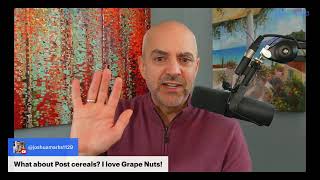
In this hour‑long podcast episode Jim Katsoulis outlines a holistic, four‑pillar approach to curbing hunger and supporting sustainable weight loss. He argues that sleep, relaxation, proper hydration, and eating more whole natural foods form the foundational "weight‑loss pyramid" that makes healthier food choices easier and more automatic. Throughout the show he expands the discussion to mindset, habit formation, and the broader cultural battle against the food and diet industries. He repeatedly stresses that weight loss is a life‑or‑death issue for many, and that success depends on rewiring subconscious patterns through hypnosis, habit stacking, and environmental control rather than relying on willpower or extreme diets. The episode also includes live Q&A where listeners ask about calorie deficits, fasting, binge‑eating, and practical strategies for holidays, work‑from‑home meals, and family dynamics. Jim repeatedly invites listeners to a free hypnosis session and promotes his book "The Tao of Living at Your Goal Weight" as a tool for subconscious reprogramming.
Chapters
Everyone, welcome to today's program, Yourself Thin podcast. Today we're talking about 4 ways to reduce your hunger so that you can lose weight. And I think if you really focus on these 4, that you're going to find that it's so much easier to make the right food choices. So number 1— and are these in order of importance? I'm going to say no because they're all important in their own separate way. I'm not going to put anyone over the others. But if I had to pick one, I would pick this, and it's sleep. Getting your sleep under control in the terms of how much sleep you're getting and the quality of it is probably the thing that would have the biggest kind of residual impact on your weight and hunger, uh, just in general. I mean, even physically, um, it's going to make you feel better, uh, in a way that supports you making better food choices. They've done studies on sleep where the quality and quantity of sleep you get literally affects your blood sugar. So again, what we even know about sleep, I think we're just beginning to scratch the surface, and it's so fundamental physiologically, biochemically, psychologically, cognitively in pretty much every single system that goes into your food choices and ultimately your weight are directly impacted by the sleep you're getting. And so dedicating time and energy to getting that better. And I always want to, without going too deep into it, I wanted to just remind you of the key thing that even if you're a bad sleeper, you can become a much better sleeper. Sleeping is literally a skill. And if you practice at it, you start to reflect on it, work on it in terms of your sleep environment, how you're going to bed, you know, different strategies. You can get better at it. Can you be perfect at it? Maybe not, but you can get exponentially better at it. And that improvement there really shows up not only in your eating and your, your weight, but really every area of your life improves when the sleep improves. So I'm going to start number 1 with sleeping. Number 2 is relaxation. And I think they're closely related too, by the way. I think the more you dedicate to actually relaxing, you're going to find that your sleep naturally improves anyways, and that's going to be beneficial to you. Again, just like sleep, there's so many benefits to being more relaxed. Same thing biochemically, physiologically, neurologically, cognitively, just everything. Again, when you're more relaxed, improves. And one of the specifics is cortisol. Cortisol levels tend to reduce the more relaxed you are. Um, when you're more relaxed, you see things differently, right? It's such a shift cognitively to look at problems and challenges and mistakes from a place of being relaxed and calm, from having a calm, relaxed mindset. It's so important. So again, dedicating time to relaxing in my opinion, is directly going to impact your weight. If you never try and count a calorie, track a food, change an eating habit, if you only did the sleeping and the relaxation, I believe that over time it would positively impact your weight. Number 3 is hydration, making sure that you're drinking and eating enough water. And when you get yourself properly hydrated, one of the best things that happens is a lot of times you feel more fulfilled. And I mean that physiologically. Think about this, right? If you don't get enough calories, your body sends you a hunger signal, right? And oftentimes, if you're not hydrated properly, your body will send you a hunger signal. Why? Because we evolved in an environment where we ate a lot of our hydration, right? Because of the foods we ate, whole natural foods tend to have a way higher water content in it. And so those are the foods we ate and we consumed ate a lot more water. And so this is kind of a little Trojan horse I wanted to sneak in, which is going to get us number 3 as well, or number 4, is that the more whole natural foods you eat, typically the better your hydration is going to be. But in addition to that, there's also just drinking more water. And again, this is a strategy, this is a focus. But if you focus on it and work on it consistently, you can start to implement the habits and the routines so that your hydration is right where you want it to be. And a lot of times what happens there, just like the previous two, is that you're getting systems improvements physiologically, cognitively, you think more clearly, emotionally, you feel more balanced, energetically, you're more stable, everything improves. All the core factors that impact your food choices and ultimately your weight tend to improve the better hydrated you are. Okay? And then finally is the one I hinted at, is to start consuming more whole natural foods. And I put that as its own category. It's certainly going to help you with the other ones as well. It relaxes your body, it hydrates you, it helps you sleep better typically. But starting to add more whole natural foods into your diet is one of the best things you can do because obviously, just like the other ones, it impacts you at a very deep systems level and that creates exponential shifts in you so that once again, you start eating whole natural foods, you start to feel a satisfaction, satiety in your body that you may have never felt before because your body's finally getting the micronutrients it needs. It's getting fed and nourished on a deep, deep level, and it feels fundamentally different when you consume that kind of diet. And again, that supports you in making healthier food choices, satisfying that deeper hunger, and then, you know, being able to manage your weight more effectively. So these are 4 things I would suggest and I know a lot of times they don't seem sexy because we want to jump right into just cutting calories. So go ahead and do that. Cut your calories. Okay. Do your diets. Do whatever you want to do. Go ahead and do it. But when you stop doing that, okay, when you stop doing— you get tired of it, you're bored of it, whatever— don't go back to doing nothing. Go back to these 4 things and work on them one at a time or work on a few of them at once. But start to work on them because, again, not only are they going to help you make better food choices, But you are going to feel better almost instantaneously if you start working on any or all of these 4 things. And the shift in change is so fundamental that building your weight loss on that foundation is absolutely different than what you've probably ever done. Because every time you start a diet, you're really starting with kind of a cracked foundation. Most people where they're dehydrated, they're not sleeping enough, they're stressed out, and they're not nourished at the highest level. And so that becomes metaphorically kind of this cracked foundation that can't support your success. And so when you take care of the foundation in these 4 ways, again, it becomes fundamentally different. And I think you're going to feel it right from the first day. So go test that out. And if you want some support in doing that, click the link in my bio, go get the free hypnosis session I give you. That will help you to kind of get your mindset right in order to kind of set you up to do these things. Because just as these things here are kind of the foundation of your physical body in order to make the right food choices, The mindset is the foundation of doing these things and then the eating on top of it. So again, go get that hypnosis session. It's completely free. And, um, again, you can get it up in my bio or you can go to Program Yourself Then. Uh, if you're over in Facebook land, let me put the link in there for you. Because, uh, again, this is a free session that you really kind of owe to yourself to get. Where the hell is this thing? Okay, there it is. And I hope you're all having a nice day. Fuzzy. There it is. Okay, and if you have any questions, feel free to ask him. Any weight loss questions are welcome. Boop, there it is. Um, what's up, Jane? Yes, okay, so yeah, the first two, it's, um, and I guess are these in order of import? I feel like I'm crooked. Sorry, hold on. See, that's my own fault. Sometimes just doing things too quick in life, and there it is. Okay, now I feel more comfortable. I was a little off-center the whole time, and it was, it was actually making me anxious while I was doing that. Oh, now I can relax. Um, what is it? Sleep, stress, relaxation, hydration, nourishment, eating more whole food, fruits, vegetables, healthy foods. Natural foods. So that's them. So Tree says, do I have this right? Hydration, sleep, de-stress, eat well. Yes. And eat well specifically, again, I want to be crystal clear. I use the— in the program we call it nourishment, but really what I'm talking about is eating more whole natural foods. So I want to be specific because sometimes, well, people confuse eating well with just eating less bullshit, you know, or eating less harmful foods. Okay, so for example, you know, what do they got now? They got these chips. It's the whole line. I guess it's Lay's. I'm not sure which company makes it, but, but it's the naked line of their stuff, right? So it's just, you know, it's bullshit food, but okay, fine, at least it doesn't have dyes. So listen, I applaud the improvement all day long, but I'm also very aware of what we call the halo effect. You know, so again, I say this to you specifically about those. Again, they're better, but you know, again, everything's relative. So are, you know, are naked Doritos better than dyed Doritos? Yeah, sure. I'd say they were. But are naked Doritos better than an apple? Oh, I'd say no. You know, and again, they got their time and their place. I'm not saying you can never eat them, but watch out for that halo effect. It's a doozy. It'll get you. It's a doozy. Everyone think that when that's said. I love that movie. Um, yeah, what's up Anita? It says 4 things mentioned changes you physically and mentally, key components to support the right food choices too and sustain weight loss for the long haul. Yeah, exactly. Uh, and again, I think it goes back to the point, you know, what we're really talking about is, uh, the Gold Weight Pyramid. Really. I mean, it's just a— I'm kind of hitting the highlights of the goal weight pyramid when I talk about those things, right? But again, what this implies though is that we're gonna have a comprehensive, holistic approach to managing our weight. We're not just gonna get a, you know, give me the meal plan. That's about that much of the pyramid, okay? So we want to bring all this stuff in. And so what I just covered really were 4 of the lifestyle habits, you know, specifically. Um, but I think that those 4 things alone, right, if I have to pick if I had to look at that whole goal weight pyramid and say, okay, what are 4 things that are gonna give you the best bang for your buck? That's probably what I would say, you know, probably the closest thing you're accessible to. I think the mindset stuff's really important, but I think that takes a little bit more— you got to learn a little bit, kind of, you know, understand some things, work to implement, and all the rest of it. I think the things I talked about are kind of in your wheelhouse. I'm sure you have worked on trying to get your sleep better, trying to get more hydration, all the rest of it. And so I bring this up. So I brought that up for you just because it's accessible. Now, what I will say about all those things is that you don't know enough to do them either, though. So let me just mention that I didn't go into that. But yeah, I can say, okay, get better sleep, hydrate yourself better, relax, and eat better, healthier, whole natural foods. But, you know, your chances of being able to do that with what you have now currently in your brain is probably pretty limited, you know. So it's not— doing those things more consistently really has a lot less to do with willpower and a lot more to do with your mindset, the way you think about them. Just so you know. Uh, what's up, Mimi? Mimi says, what's the least amount in a deficit to quick results? Um, that's a funny question to me. That's a funny one. Right? That's like saying, what's the least amount of money I can invest to be, you know, get the fastest returns, the quickest returns, you know? So I don't even know how to answer that. A, I don't really like thinking in terms of calorie deficit. I do not like that. I don't like that. I don't like it one bit. I don't think most people want to live their lives in a deficit of any kind. It's just linguistically, I think it's unpleasant. You know, oh, here we go. Like the lowest, it's still safe. Who gives a shit? I mean, it— that's really not the question, Mimi, honestly. Because what if I say it's 60% of your calories? I don't know, does that make sense to you? Whatever your current calories are, cut 60% of them out and you'll still be safe, right? But the safety really isn't the issue. Well, physically safe, you'll be physically safe. Emotionally you won't be very safe. Mentally you won't be very safe if you cut 60% of your calories out. Not for long, you know. But, um, you know, because people say, just tell me what's the most I can cut, what's the most I can cut? It's— who gives a shit? Who cares? Well, who cares what my answer is? Because you're not going to do it for long anyways. No offense. And I'm not saying to be an asshole. I'm saying it because you got to stop thinking that way. You— I don't know how old you are, but If you're 60, you've been thinking that way for 45 years. If you're 20, you've been thinking that way for 5, 10 years at this point. And, um, it's just a matter of time until you realize that way of thinking is never going to get you the results you want. It's just a loop you get on. What's the most I can cut? Um, uh, 1,500 calories. What's the biggest deficit I can have? 1,000 calories. Okay. And then you go and do it for a couple days, a couple weeks, and then you can't keep it up and you go back to what you always did. And that's what everyone does in some form or another. So, um, it's less about how quickly you can lose the weight and more about how long you can keep it up for if you really want to change the game and get real results. That's the question all of you want to shift to. Cut the shit with how fast you can lose the weight. I know the diet industry's got y'all geeked up on fast results, but, um, it's an illusion and a trap. It's a trap, I tell you. The focusing only on fast results is the biggest diet trap that exists, in my opinion. Prove me wrong. Prove me wrong. Uh, what's up, Jane? Jane says, I thought I was being so clever, so when I bought a big bag of chocolate eggs and divided them into 3 parts and then froze 2 of them and ate the 3rd one, but an hour later I went and got the 2 other frozen containers and ate them. Another day, another try. Yeah, well, there you go. Yeah, I mean, you know Oh, good. I wonder what Jim AI said. Probably the same shit I'd say. It's weird. It is a little weird. My Jim AI is my AI clone that I use for my clients to be able to get coaching 24/7 whenever they need it. Um, well, I'll tell you what I would say is, again, I would use the— hey, I would want to gain awareness for Jane of the behavior because clearly I hope you're— I'm inspired by what you say, Jane, and to me I value resilience above all else. Because I think if a person's resilient, then literally I've never seen anyone who's resilient not succeed. It's impossible for two reasons. A, they stick with it and get better and better. But B, even if they stick with it for a long time, they're going to start to redefine what success is for them. So again, I literally have never seen anyone not succeed who's resilient. So you're being resilient right now, Jane, and I hope that's the first level. The next level, those— I hope you're becoming really aware of the pattern And the pattern we have to become aware of, like the behavioral pattern— I was, uh, I ate 3 candy bars again. Oh my God, I ate 3 candy bars. I had 3 bags of eggs. You're starting to notice the pattern of like, I'm going to do this, and then you do the extreme of it. Okay. And that's great. That's a step. The next step though, is you become aware of what you're saying to yourself. And that's the key pattern, I think. So again, we want to just go straight to the solution in life, right? Just tell me what to say to myself, Jim. Well, I can't do that. It's your process. It was just— again, I like to put it into the realm of, you know, I always say golf club because that's— well, let's just go tennis racket. You said, show me how to hit a ball, a tennis ball with the racket. And I show you. But just because I showed you doesn't mean you can do it. Right. So again, with weight loss, I would say weight loss more than almost anything else in life, people really conflate understanding how to do something with being able to do it. Because I think dieters really— again, it's like, it's like, and again, no, no offense, Mimi asked a question, what's the most calories I can cut safely? Who gives a shit? I can tell you, I don't know, go down to 500 calories. I've talked to plenty of people that have lived at 500 calories for a little while. They can't stay there, but they do it for a little while. So who gives a shit though? You know what I mean? Like, again, A, you're not going to stay there, and B, we're not going to be able to stay there. That's the first thing. Most people aren't gonna be able to stay at 500 calories for very long. No one's gonna be able to stay there forever. So it's just, it's pointless. Yeah. Yes, Jane, I do see the pattern. And again, seeing the pattern is the first step. And it's not just seeing it because, oh no, I know, I've known, I've done this forever, I know I've overeaten forever. Yeah, well, we all have a vague sense of what the pattern is, you know. Oh no, I know. No, Jim, I've seen this. I know I overeat. Well, knowing you overeat in a vague general sense versus seeing, oh my God, every day I start the day by saying I'm not going to eat any chocolate bars. And then in the evening I eat 3 chocolate bars. Every day I do this, you know, now all of a sudden that's like much different thing to say. Do you see the difference between, yeah, I know what I do. I'm an overeater. I keep overeating versus, yeah, every day I wake up and say I'm not going to eat chocolate bars and I eat 3 chocolate bars at night. Because even that, right, even that description is still vague because we go deeper into this. Well, how did the chocolate bars get in there? You know, so, so again, we want to keep going deeper and deeper and deeper. We call it granular understanding. I'm an overeater is no granular understanding. That's the vaguest, most general explanation you can give, and it's practically meaningless to your mind. But as we go deeper and deeper into the behavior, the pattern, understanding it, the different things about it, the more you understand it, I believe the more likely you are to get to a solution, because the solution is almost always at least partly mindset-wise. So understanding, oh, I'm an overeater, means nothing to you psychologically. Um, getting clarity on a— why I say I'm gonna eat— not eating chocolate bars, and then I eat 3 chocolate bars every night. I eat 3 chocolate bars every night. How do you do that? You know, I mean, again, I want to go deeper into it. I want to understand it. Because you don't just eat 3 chocolate bars, you have to buy the chocolate bars first. How do you buy them? He's always, shit, okay, well, I kind of blank that part right out. Every day at noon, the afternoon, I go to the store and just get them and then freeze them because I'm not going to eat them. So you know what I'm saying? Like, like, there's so many different components to this pattern, this behavior pattern, that instead of wasting all your fucking energy beating yourself up for being an overeater— that's what all of you are doing too, by the way. You're all defining your, your failure of controlling your weight very vaguely, you're saying, I don't have the willpower to eat right. I can't get myself to do the right things. It's so vague and it's based around willpower. It's basically the, the formula is I don't have the willpower to stop myself from overeating, to get myself to exercise, to eat the right foods, whatever. It's vague and it's general. And that vagueness traps you and you get stuck on that level that in a nutshell, you're always beating yourself up for not having the willpower to stop yourself from doing the wrong thing or to get yourself to do the right thing. And that's, that's what you're thinking in very vague terms. And you, you never get out of that. You never get out of that. It never changes. It's always vague. And it's one of the main reasons you're stuck. Because once you start, instead of wasting the energy beating yourself up, you start to realize, like, I've been programmed to behave in certain ways that I don't even fucking realize. I don't even fucking realize why I'm eating 3 chocolate bars every night. I have no, I don't. I don't know why. I don't even, to be honest, I didn't even really even see that it was all the time. Now I see it and now I'm starting to understand it. I don't really understand what's going on. That's what all of you are going to say, isn't it? When you're, if you're being honest, you're going to look at your, your worst eating habits, the top 2 or 3, you're going to look at me and say, I don't fuck, I don't even know what I'm doing. I don't know why I do this. I don't want to do it. Right. All day long. I don't want to do it. I don't want to eat the ice cream at night. I don't want to overeat at dinner. I don't want to snack in the afternoon. I don't want to. But I do it and I don't know why. I don't know what's going on. But instead of diving into it and starting to understand it and what's going on, you, you know, you just beat yourself up for doing it. And so that, that keeps you trapped. But when you start getting more detailed, it is very difficult to stay in the same spot. It's very easy to stay in the same spot when you're just like, oh, I'm a fucking asshole because I screwed up again. I screwed up again. Oh, we're at 8 again. Oh, look at me, you loser. You deserve it. When you stay in that conversation, you never— you just stand in the same spot, the same space, which is why nothing changes. But as soon as you take a step back, you say, whoa, what the fuck? What is going on here? What is going on? And you do it with this attitude. Again, I'm kind of laughing because Jesus Christ, you all, you're so mean to yourself and you're so stern and serious and punitive and mean. And it's like, that's the wrong energy. That's the wrong energy. That's not the energy that creates change. That's the energy that keeps you trapped. Keeps you imprisoned. The energy that frees you is the energy of Jesus Christ. Treat yourself like you would one of your good friends, someone you love. Would you treat them the way you talk to yourself? Would you treat them the way you treat yourself? You know you wouldn't. It would— they always say like, treat others the way you want to treat yourself. I don't know if that's so true. Being in this head and having the opportunity to work with the people I've worked with, I'm not sure if that's a true statement. Um, you know, treat yourself the way you treat others. You know, that might be a better statement for, for a lot of us. It's so funny, but we're so mean to ourselves, you know. And so even the energy when we're thinking about our mistakes is so mean and disciplinarian and stern and cruel. And so to me, it's like, you know, relax, you know, have fun with this. You're a good person. You deserve to hug yourself metaphorically, right? Hold yourself, support yourself. Um, you deserve it. And, you know, if for no other reason than the being stern and mean to yourself hasn't worked for no other reason. Yeah, Toto Rose says, I'm interested in some fasting information. Uh, wrong place. I don't really— I don't really do the fasting stuff, you know. Again, you know, oh, the fast— this is why people are so susceptible to diets too, because most people think about their weight loss in such vague terms that they become susceptible when something that seems like it's specific comes down the pike. But who gives a shit if I tell you fasting information? What's the fasting information? Don't eat for 16 hours. Stop eating at 7 and start eating at noon. Like that. Isn't that basically gonna be the information you're gonna get? And it's gonna be useless because the real information is what happens at 9 o'clock in the morning, 11 o'clock in the morning, when you start getting really hungry, when you start getting tired because you didn't eat breakfast and you've been working for 5 hours. And you're stressed out. That's the more interesting information that would impact fasting. And I say that— listen, I do, I do what I call nighttime fasting. So I very intentionally have created a window of time where I don't eat. It's not 16 hours because 16 hours for me was stressful. I didn't like it. But lucky for me, I began doing this over 30 years ago before there was intermittent fasting. So I was able to build it around what I wanted to do and what worked for me. And so I'm grateful for that. But I think a lot of people try and, you know, try and fit a square peg into a round hole and try and force yourself to not eat for 16 hours because tomorrow's Monday. I usually eat for 16 hours, but tomorrow I'm going to change it and not eat for 16 hours. And I think it's the classic diet pattern of like overwhelming yourself right from the get-go, you know. But that being said, again, I like— I love fasting and I love aspects of it. Um, so I guess that's my I know that's not the information you want though, because you probably want the information what's going to give me the fastest weight loss. I get it. But Jane says, it's an interesting idea that as an overeater I worry about my weight, but like many other overweight people, I focus on having nice clothes and nice hair so I feel better about myself. Yeah, but Jane, I don't think— I, I— it is interesting, and I think it's, it's helpful to kind of reflect on those things, but they're certainly not mutually exclusive because they're two separate things happening at the same time. And I think you should celebrate and be happy that you do get nice clothes and get your hair done and feel good even at your weight. Because I find another pattern a lot of people will use is they punish themselves by withholding new clothes, feeling good about how they look, getting their hair done. They will withhold that until they lose the weight. I don't find that working very well for people either. So at least you get to feel better. And I think that they're two totally different things, Jane, honestly. So, um, Tree says, I don't know if this helps, but I can do that with the cookies, so I'm trying not to have them around because I don't trust yourself too much. Yeah, and I think that's fair too. You know, I want to make clear, like, I, I'm a master of my eating, I'm a master of my weight. That being said, strategically, I wouldn't just leave anything in my house. I wouldn't leave just like my favorite cookies on the counter to look at every day and just have to fight and avoid. So I absolutely use strategies that lower my cognitive load. And one of those, maybe I don't— like, I have cookies in the house. Well, I'll give you one of them. Is, um, I won't have like a pint of my— I won't have a pint of Ben Jerry's ice cream in the freezer anymore. Why? Because I'll just think about it, I'll start eating it more. So if I want Ben Jerry's ice cream, it's not restricted for me. I can have Ben Jerry's ice cream anytime I want it, but what I have to do is I have to go to the store and I get the small cup of it. So I will get it, I will eat it, and then it's gone. And then if I want it again, I have to go back to the store, get it, and go through that whole thing again. And most of the time I'm just too lazy to do it, to be honest. But I think, yeah, we absolutely— we're using everything at our disposal. Listen, folks, this is a war. You are in a war for your health and your weight. Let it be known, a fucking war against an enemy, against a literal enemy. Please understand that this is not some— you know, I think we frame this so wrong. It's a war for your life. Let me get real dramatic here for a second, but I'm not being dramatic. This is a literal fucking war for your life. And I mean, literally in terms of literally how long you're going to live, most likely how you eat typically is probably, God willing, the number one thing that's going to impact how long you're alive. But then number two, which may be even more important, is that how you eat consistently is probably going to be the number one factor that dictates your quality of life while you're here. That's what I think. You don't believe me? If you're unhappy with your weight, I mean, there's obviously the physical effects of it, maybe on your health and in other ways, but it's the mental piece of it to me that's crushing. It's like if you go through a life where the, you know, 60 years of your life, 80% of what you think about is your weight and how you haven't been successful and how bad you are because of it and just thinking about it constantly, that's your life. That is your life that just went by. I don't mean to hit you with the, with the deep stuff here, but you know, to me it's life and death. Weight is life and death. And literally, my father died at 54 of a heart attack. I was 9 years old. So when I say that, it comes from a deep place of pain, like a real fucking thing that happened. So for me, managing weight is life and death in every way, and I treat it as such. And that being said, I will use absolutely everything at my disposal to win this war. I will use strategy of keeping foods out of the house. I'll keep strategy to keep foods in the house. I'll put things out of sight. I will use all the— I'll eat on a smaller plate. I will do every strategy that helps me, um, mindset-wise, lifestyle-wise, eating-wise, everything. Constantly looking for more of them too, because the game's constantly evolving. The other side's constantly evolving new foods that are more and more appealing, more and more addictive. They're finding more effective and efficient ways to market and get us to eat them. It's a never-ending fucking war. And I hate to sound paranoid, you know, but we live in a fucking country where 75% of the population is overweight or obese. And that's just a top-line number, you know, that, that doesn't really get into the, the details of shortened lifespans, less time people have with their parents and with their kids and with their best friends, um, less patience and mental, you know, states to thrive in life with people that you love. And that's how I look at it, you know. And so that's why this is a mission for me, you know. Like, it goes so far beyond like, I just want you to wear your skinny jeans. And I want you to wear your skinny jeans too, right? But, but this is so much more meaningful to me. That's why I'm here literally every single day. Well, not every day, I would take the weekends off, but every Monday through Friday I'm here. So please, um, feel free to pop in here and ask any questions you have. I feel confident that I can at the very least give you a different perspective that could help you. Um, but this is why I do it, you know what I mean? Because it is so serious to me, and I don't really talk about this whole lot because I don't want to bum people out. It's kind of heavy stuff, you know what I mean? I just want to dump this on you. But I just think that, um, this to me, that's how I think of it, and that's why I'm so motivated though. But, but that's a mindset thing, do you understand? I think a lot of people try and overcome their lack of mindset with willpower. You know, when your mindset's right you naturally want to do the things you don't want to do. Okay. So I'll give you a perfect example, like brushing your teeth. Like, who wouldn't rather just go to bed? You know what I mean? Like, sometimes I don't want to brush my teeth, but, but you do it and you do it because you want to do it deep down. Right. And so that's a, that's a good example of like a mindset. When the mindset's congruent with the goal, you want your teeth to be right. You know, you want to say you brush your teeth even though you'd rather just go to bed and not do it. You know, but you do it because you want something. And so I think you can feel that way about weight too, you know, when you set it up proper. So J-Maine J says, hello and happy Wednesday, absorbing info while I, while I walk, while I WFH. What's that mean? Appreciate your live. Well, thank you, I appreciate you listening. Dancer says, do you have any advice for people with higher physical activity, weight gain, binging, body dysmorphia? Um, yeah, I mean, to me, regardless of the physical activity, pretty much I don't really focus on physical activity in the beginning almost ever. I really focus in on the eating patterns, you know, because I feel like that's where you have the most control, and I feel like that's the most bang for your buck, uh, and long term. Because I think when you focus on exercising, it's very streaky. You know, you get into it and you're really fired up and you love it. You can't imagine any other way until you get hurt, you get bored, you get tired, you get distracted, life calls, whatever. Then you're off track and then you never dealt with your eating. And so now the weight goes up. So to me, I feel like getting your eating under control is the best long-term strategy for managing your weight. And so all those issues you talk about, you know, the body dysmorphia is real. Obviously, the higher physical activity is a factor. Um, but I would go into the binging, you know, is kind of the place where I would probably start and focus on. And at the end of the day, you're probably gonna find they're all related in some weird way anyways. But, um, I would probably focus on the binging to start and I would break it down. So I wouldn't just say binging as a general term. I would get specific about the specific patterns of binging that show up because there are some. So that would be my initial suggestion. Will Baker says, how do you rewire your brain to eat better food instead of the normal food I eat that is not healthy? Great question. And I think the way— that's a great question because I love how you're right off the bat, you're taking into account rewiring. Okay, so we can talk about subconscious program— program yourself then, right? It's about subconscious programming, which really is just another way to say rewiring, which is this kind of colloquialism for neural wiring in your brain. But how do you do it? And I think the mistake most people— so I like the way you say that because it's a more detailed description of what's actually going on. And I think that sets you up for my answer, which I think is the opposite of like just starting healthy food, you know, because what most dieters are going to do is they're going to start like a Mediterranean diet or a healthy food diet. And now all of a sudden the goal is to eat 100% healthy food and no unhealthy stuff. That's not what I would suggest. What I would suggest, if you want to start eating healthier foods than you currently do— I did this. I used to eat, I would say, unhealthy. My dinners were always at least whole natural— they were like homemade food, but it was super high calorie. You know, a lot of, a lot of it was— again, I, I, it's hard for me to think it is bad. It was a lot of calories, I will say. But outside of that, I ate a lot of bullshit, a lot of junk food, um, processed food, junk food, all the rest of it. So I was in this exact boat. And so my suggestion to you to start eating healthier food and to rewire yourself is to focus on habits. So for example, um, say you don't eat much fruit, any— you don't eat a whole lot of whole natural food at this point in your life. No judgment. I was there. So instead of trying to change everything, I would suggest maybe habitually, um, you know, every afternoon I'll have an apple. Um, I'm going to start in the morning at breakfast. I'm gonna have a banana after I finish my typical breakfast. Uh, breakfast time, I like focusing on breakfast because I think it's the best bang for your buck focus meal-wise. Because if you get your breakfast healthy, it tends to impact the rest of the day. Not always, but it's just— it's a nudge in the right direction. But I would do it strategically. Well, okay, so it's not— it's not trying to change everything all at once, but instead being strategic and focusing on habits. And again, those are just two examples, but you could take that to whatever would work for you. What kind of resonates best for you and what would be easiest for you? Again, I would look for the easiest. Again, dieters, you're trained to go against the easiest. You're looking for the hardest. Dieters are always looking for the hardest thing to do. Dieters subconsciously always want the hardest way to lose weight because they associate the hardest with the fastest weight loss. And they're not necessarily wrong. I think that's a true statement. But what they don't take into account when they're in their heat of passion is that the hardest thing is also the shortest lasting thing. And I think once you realize that, then you're able to make the more mature decision to focus on the long term, because that's the only term that really matters, right? Um, so Bonita Anita says, I'm an overeater who disguises the extra calories by eating large whole food portions and then attaching processed foods to the meals in addition, sort of the cherry on top. Ate good, so let's reward myself. Not a good pattern and one I'm working on to rewrite, replacing processed food with fruit. Um, that's great, Anita. Anita, I'm so proud of you. Again, it's awareness. Awareness is always the door we walk through to get to the solutions, because We can't fix what we don't know is broken. And, and Dieters, there's so much fucking broken that you can't even believe it. I'm sorry to tell you, you know, it's like I watch, I've been watching Hoarders lately and it's like, it's so fascinating because everything I want, I am obsessed with weight. I am obsessed with it, have been for literally my whole life, but certainly last 30 years. But it's like, I see such a, I see so many dynamics in that, you know what I mean, that show up. But it's like, um, you know, the hoarding— again, it's not, it's not just the hoarding, is like the presenting problem, but there's so much stuff underneath it. And it's the same thing with the weight. And so the idea that you did your one meal plan away from changing your weight for good, um, one, one diet trick away from changing away for good, I just, I just think that's inaccurate. I don't think that that's true. And it's okay, you know, but you got to give up on the illusion first. And again, that's just another form of awareness. So great job, Anita. And he followed up by saying, oh my God, it is a war and it's against your faulty patterns established in your own brain. Never thought of it this way. Thank you. Yeah, you're welcome. It is a war and I can't wait. Oh man, I got to get my books cracking. I got to, but I'm not doing the books yet. I got, I got to button up some loose ends and, uh, I'm going to do those, but I should have those, those loose ends buttoned up this month. And then, um, I want to get started on the next book because I want to get to the book after it. That's the book I cannot wait to write more than anything. Um, and it's all about that. Uh, Jane says it is a war and we are now going into it with some weapons rather than without them. Yes, exactly, Jane. And again, the first step of dealing with your weight is to realize it is a war. It's a fucking war. I mean, literally that, because, you know, here's an example too, just to drive the point home, because you don't think of it as a war. You think of it as a war against yourself, do you not? Tell me you don't think about your weight as a war against yourself. Yes, you do. You think about it as a war against yourself, but really it's a war against literally other people. And the other people are the corporations, the food companies, the diet companies, the advertisers that advertise for the food companies. If you want to add them in, okay, but let's just keep it simple. Let's just say the food companies just to start. The diet companies and food companies are the same company, so they are the same anyways, but let's just call it the food companies. You're literally at war with them. It's because here's the thing, if you think about cigarette companies, you probably have a negative— you know, I don't like them, right? Why, why wouldn't you, right? Okay, fair enough, right? Because their, their product literally kills people. And so you say, that's not a good thing, I don't like that, I don't like that. And you have a very visceral negative reaction to the cigarette companies. But when it comes to the food companies, not so much. Not so much because you associate it with the pleasure of the food and it's been so minimized. So you think about the youth. It's just like cigarettes were, by the way. People didn't have strong negative visceral reactions to cigarette companies 100 years ago. They didn't think they were good for you necessarily. They didn't think they were that bad. They used to think about cigarettes the way we think about processed foods now. We know it's not healthy for us, but oh, maybe I cough a little bit, man, my breath's not great, who gives a shit, you know, it's worth it, it's— I like doing this, right? And that's what— that's kind of the level we're at with the food, um, but now we've been trained and conditioned to see what the cigarette companies are doing because we see how damaging the cigarettes are, and they know exactly how dangerous the cigarettes are, and they don't give a fuck. I'm sure if they had a choice and they could make them not dangerous, I'm sure they'd hit that button, but They don't give a shit. They know they're dangerous. They don't give a fuck. So they know they're dangerous and they continue to make them more dangerous by making them more addictive and then using the most aggressive marketing possible to get them into as many people's hands as possible. Kids, adults, old people, people with emphysema, don't matter. Cigarette companies don't give a shit. And you see that pretty clearly. You have a pretty strong, um, proper association between cigarette companies and their pieces of shit, and you have a negative response to them. But now let's think about the food companies. Think about your favorite, favorite fast food restaurant. Think about your favorite snacks and the company that makes them. Notice how that feels completely different in your nervous system. Yeah. So that's an illusion though, because take a step back, zoom out from your life and look at that behavior pattern of eating those foods and what it's done to you. Your health, your happiness, your mindset. Now you start to see there's, there's a lot more in common. They know how bad the food is for you. You're going to learn how bad the food is for you over your life. It's going to happen, just like happened with the cigarettes. They've been able to sit on a lot of the science because this food they're serving us is relatively new still. Do you understand? Cigarettes were relatively new. For most of history, people are smoking tobacco straight out of tobacco. The thing that made the cigarette the most dangerous thing in history is that you could cure it and it made the tobacco less harsh and sweeter. And so all of a sudden you could inhale it deep into your lungs, which made it way more addictive because you could put way more nicotine into your body at a time. It was almost like freebasing. I shouldn't have said that, they're gonna ban me on TikTok here now. But, um, it put all that, that tobacco in your lungs now because before that you couldn't do that, the smoke was too harsh. So curing— being able to cure tobacco um, only happened 150 years ago. There were no cigarettes like that before. So that was a dangerous machine that created a really deadly thing. And so processed food is the same trajectory. We've only had processed food like we have now for the last 40 years. That's crazy to think, isn't it? 1980 is really the turning point. You go a couple years before, I'm sure, too, but, but 1980 is kind of a real the kind of line. And what happened in 1980, by the way, just as a little side— right, I don't know if you're all interested in this, but I'm going to share it. You want to know what happened right around 1980? The cigarette companies saw the writing on the wall. They saw that the studies were coming out linking cigarettes to cancer, and so they divested from cigarettes. And guess where they put their money? You're never going to believe it. Maybe you will. Yeah, the food companies. You don't know this probably, but today, right now, R.J.R. Reynolds and Nabisco are the same company. They literally merged. The parent company of Kraft and, uh, General Foods— you're never going to believe it. You're never going to believe the parent company of Kraft and General Foods— Philip Morris. So they went into the food, and they did the exact same strategy they did with the cigarettes to make the most addictive substance they possibly could, right? Make the food as addictive as possible, to use the most aggressive marketing possible to get it into as many people's mouths as possible, and then to sit on the science of how bad it is for you. It's a literal repeat of the playbook they did with cigarettes. And this is why I say it's a war. Britt says, yes, life and death. One saying I learned from a great person is, if it's— if I'm your house, it's in your mouth. Oh, if it's in your house, it's in your mouth. Yeah, I love that. That's very true, right? Yeah, if I'm in your house, I'm in your mouth. It's so true. Yeah, yeah, exactly, Josh. Yeah, Josh says brushing teeth should be non-negotiable, just like nutrition. And again, we're not shaming anyone who has issues to get their toothbrush under control, please. I understand that too. Rhonda says, how do you prepare for holidays, vacations, and social events to enjoy the event and people and not white-knuckle or have after-event collapse and cave? I want to— I want the living at my goal weight to rise and trump all of these situations. That's a great question, Rhonda. And it starts with, again, the question. Great question. And so let's take your question a step further though, right? Because your question really is more of a description of how do I avoid the problem. And so what I'd love you to do is spend some time articulating more fully the solution. And that would look like this: how can I go to social events? How can I go on holiday and enjoy the hell out of myself without kind of losing control of the food? How could I go to those situations and eat moderately? I don't want to eat perfectly because I want to enjoy myself, and part of enjoying myself is eating more and eating different stuff than I normally do. So I don't mind if I put a couple pounds on vacation, but I don't want to completely lose control. I want to stay grounded, stay in control, and enjoy myself as much as humanly possible. That being said, not all the foods and all the things I do on vacation are equally pleasurable. And so maybe if I give up the morning donut for something healthier, that would keep me more grounded. I could still have dessert after dinner. Um, I could still have my favorite lunch or whatever, but I could shift that up. Do you hear my language, Rhonda? So right off the bat, I'm starting to describe specifically what I would love to have happen if I could go on vacation. That's the starting point. And then I back it up from there. So how can I make that happen? And that's where you start uncovering the strategies. So that's a great question, Rhonda. I hope, I hope you heard my answer. My answer was how you talk about it, right? Talk about it more detailed, what you would want. Man, I'll tell you what, I think I found a solution in my life, and it is called— do you want to know what it's called? It's called hand warmers. I'm holding them right now. Look at these things. Jesus Christ, they're so hot though. I'm actually going to turn them off. I have like cold hands sometimes. It must be a circulation thing. It's just kind of— well, when it's cold, obviously that's outside trigger, but they just kind of randomly get cold and then they'll be cold and they don't feel good. And I never really figured out a good way to do it. These things are, are crazy. Well, shout out to these. They're like $20, and so far, I don't know, I've only had them for a week, but They're hot as hell and, uh, they're just like little charged things, but I hold them and it's like, oh, my hands are nice and warm. I got a little osteoarthritis in my fingers, you know, so it's like, oh man, it feels so much better. Anyways, uh, Jamie says you're 100% right. I'm 72, diabetic. I have to get my eating in order to take care of my life. Yeah, exactly. Oh, working from home. Okay, yeah, that makes sense. I don't know, my acronyms I'm kind of— I'm okay with some. I guess that's how everyone is, right? Working from home. What's up, Christina? Went for coffee and a muffin, ended up just getting a black coffee and had my apple. Win-win. Nice job, Christina. I'm so proud of you. Again, I work with Christina, so I know the backstory on that. That's awesome. Um, Eliza says, is it healthy to do OMAD? Um, I mean, I can't answer that question. Is it healthy? In what way? Do you know what I mean? And I'm not trying to be a wise guy here. Is it physically healthy? I think so. I don't, I don't think— I, I think eating one meal a day, if it's the right meal, I think physically I don't think you'll suffer any, anything that harmful would happen from that. I can't imagine nothing I could think of. There's always outliers that got certain situations, but for the average person eating one meal a day, it's the right meal, right amount of calories, nourishment, all the rest of it, I can't see any problem with that. Mentally, mentally, is it healthy? That's another question. And I would have to say I've not seen evidence for most people. Now, again, there's a lot of people in the world, right? So for some people, OMAD is just the magical thing from, from the heavens, you know. And so for those people, I say, great, you found your thing. I wouldn't tell them that they're— what they're doing is wrong. So I think the real question is, is OMAD healthy for you mentally? I think physically you'll be fine again, unless there's some other, you know, kind of random obscure condition. Um, I think the biggest issue though is mentally. What happens if you try and do OMAD? You get obsessed with food. All you can think about is eating, when you're going to eat, how you can eat, flipping a switch, right? So that's what I find a lot of people do is they get very anxious and stressed. So when I say mentally healthy too. I'm also saying emotionally healthy. So is it emotionally healthy for you to do OMAD? Does doing OMAD calm and ground you and make you feel more peaceful and happy and excited and loving life? Or do you feel miserable and stressed and anxious? I can't answer that for you, but that, that's how I would say you would answer it for yourself, is go, go do it and then see how you feel. Emotionally. Notice how you're thinking. What are you focusing on? Is that how you want to live your life? Most people, no. But again, some people, yes. Uh, Mark says, I would also love to hear your thoughts on OMAD to reduce inflammation and cholesterol. Um, OMAD is just one strategy. And again, diets, diets are all— it's so funny because diets are literally always built around the one thing, and OMAD is literally It says it right in it, you know, so it's the epitome of the one thing, but every diet is one thing. Think about it. Weight Watchers, you're just counting your points. Intermittent fasting, you're just not eating for 16 hours. Keto, you're just not eating carbs. Um, you know, calorie counting, you're just counting calories. Calorie restriction, you're counting calorie deficit, you're just going to create a calorie deficit. So it's always like with weight loss, with diets, you've been taught to focus on one thing. And that's because conceptually one thing is simple to understand. But always the real challenge is actually implementing it. And the flip side of these— I always think of the coin, right? So the flip side of these one things is everything. So to— what I mean by that is to say, oh yeah, I just got to stop eating carbs. Well, on one side, that's just one thing you got to stop doing. But the flip side is that you've completely changed how you eat. You know what I mean? So we can make anything sound really simple and easy. So that being said, One meal a day is just a marketing ploy trick because— and it's a, it's a compelling one, right? Because it's just simple to understand. It's as conceptually simple as you can imagine. It's right in the name. You don't have to look it up. You know what one meal a day means. That's it. And those are the most appealing diets to people because conceptually they're so simple. But it's an illusion because again, the, the concept of eating one meal a day is as simple as it gets. The reality of getting yourself to eat just one meal a day is about as hard as it gets for most people. So, you know, that being said, do I think eating less calories is great for you? Yes. I think if you're overweight or obese— well, let me change that. If you're obese, I definitely think reducing the calories in your life is going to have a lot of, a lot of benefit. We know this for a fact. I mean, we found this without question with with the GLP-1s. You know, when people with all sorts of metabolic disorders and health issues reduce their calorie consumption, a lot of their health markers improve. And it's different for different people, but, but across the board, health markers tend to improve. So we have to back it up. What I'm saying is OMAD is nothing special. And as much as they will try and convince you it's the only way— they all do that. Intermittent fasters do this, right? If you're not doing 16 hours and you're not doing it right, you're missing the most important part. One meal a day. It's the one meal a day thing that does all the magic. And that's bullshit, because what if you hate one meal a day? What if one meal a day stresses you out to the gills? How is that the healthy right thing for you to do, right? At the end of the day, it comes down to the calories you're consuming, the number and the quantity and the quality of them. And so whether you eat one meal a day or five meals a day is, is almost irrelevant. If It's more important is what's the total calories you're consuming and what are those calories made of? That's the way bigger question. So again, if you love one meal a day and it just works for you strategically, then, then knock yourself out. Because I mean, I have clients— well, some days I eat 2 meals a day, some days I eat 3 meals a day. Which one's right? Which one's wrong? Well, they're both right. Neither are wrong. I have a client that has 5 meals a day. I eat 3 meals a day. Who's right? Who's wrong? Neither of us. You know, different people are different. The bigger question is what feels right too. You know, again, I think dieters just have this tendency to just look at one side of the equation— how fast will I lose weight? And it's like, Jesus Christ, wake the fuck up. You can't be doing this forever. I— okay, eat 500 calories a day. You want the fast weight loss? Eat 500 calories a day. 500. That's it. See you later. Do you really think that's all you need to know? Do you not take into account the experience of eating 500 calories at all? It's like the classic, the classic dieter line is, just, Jim, just tell me what to do and I'll do it. It's like, holy shit, a bigger lie has never been spoken. I'm not, I'm not attacking you, but it's like, just tell you what to do? You've known what to do the whole time. That knowing what to do is not the problem, that getting yourself to do it consistently is. And so I can sit here and say, one meal a day, will you lose weight? Maybe. Will you do it long term? Probably not. And you don't have to. That's the other piece. So again, if we start to take, you know, most dieters, the only criteria they measure their diet on is how fast they lose weight. I think you'd be well served by adding a second criteria to that, which is how do I feel while I'm doing this? Can you use that too? Because now, yeah, fine, take into account how quickly you lose weight, fine. But if the fastest weight loss you achieve is done in the most stressful way, We've got to take both those into account. We can't just look at one side of the equation. So if the fastest way you're losing weight is the most stressful, guess, guess what I think you're going to do? I think you're going to quit even if you lose weight. And that's something all of you can relate to because literally every one of you have done that. Every one of you have done something that felt extreme and you've lost weight on it. And the reduction in quality of life that came from living in that extreme way trumped the improvement in quality of life you got from losing weight. So I hope you hear that, because that is the core reason why you're stuck and haven't lost weight right there in a nutshell, if you want to know. And you just don't see it. You don't want to see— I don't know. I don't know, dieters. You have to answer that for yourselves. But that in a nutshell is it. And it's just the truth. And once you realize that truth, it's never going to change. You think it's going to— see, that's the mistake you're making, dieters. You think at some point you're going to be able to have some willpower that allows you to live in that misery longer. But the point is, it feels more miserable than good. Do you understand what I'm saying? You've all increased— you've got more misery in order to lose weight, and then the weight loss comes and you still feel more miserable than you do feel good. That's why you quit. And it's always going to be that way. So what's the solution? Well, the solution is figure out what works for you. Don't allow yourself to use a plan that makes you feel miserable. Only use plans that make you feel mildly uncomfortable to feel good. That's it. That's the only ones. That's my criteria. Because right now, the only criteria you got is that it has to make you lose weight fast. You don't take into account how it feels to do it. Shit. What's up, Vale? Vale says, I struggle with overeating for over 20 years, even though I physically look average size. Food always on my mind. The worst part is I'm now finding my 12-year-old is hiding food in her room. Um, yeah, I'm sorry to hear that, Vale. I know it always hurts when our kids do some shit, and especially if we feel we're somehow responsible for it. So that's tough. I hear you. Um, yeah, struggle with overeating, right? It would be interesting too. I mean, it's interesting, you know, when you say the worst part is I'm finding my 12-year-old hiding food in her room. And it makes me think right off the bat, like, did you hide food in your room? And so I think that's a good jumping off point to realize it's really, it's not about the weight piece so much as the behavior piece of it. And I say this all the time, I think it's another mistake dieters make is that you think it's a weight problem and I think it's a behavioral problem. And I think the weight's just a symptom. And so with that, Vale, even I would wanna reflect if you used to hide food, I would want to dive into that, you know, and, and somewhere you probably internalized something about being ashamed of how much you wanted to eat. Maybe you were attacked for it. Again, I would want to dive into that. And you're probably held that, learned that when you were a kid, and now, you know, your daughter's kind of picked it up through osmosis subconsciously, maybe. Now again, I'm just making stuff up. I don't know your story, and I wouldn't just randomly, you know, guess things, but, um, Yep, it's in your house, in your mouth. I had to learn this and relearn this. Yes, and sometimes we do, right? Sometimes we got to relearn things over and over and over again, right? Yeah, exactly. User 585 says that big tobacco companies pivoted to ultra-processed foods when public opinion changed towards smoking, use the same marketing. Exactly. Exactly. And I think that's important to see, you know, because I think it changes. And by the way, I say I think it's important to see as well, not just because I think it's important to see. I literally— I've read a study where they compared people. They put one group into a typical diet program, a supportive diet program on top of that, and then they put another group into where they would just educate them about these food companies and what they were actually doing and why and who they were targeting things at. And the people that got educated actually got better weight loss results than the other people. Because when you internalize it as like a war, when you internalize it as someone trying to hurt you and the people you love, it changes your mindset, and that mindset tends to support, um, user 585. GLP-1 reduces the hunger. That's the key. Yeah, exactly. I think reducing the hunger is the key, and that's why I started this whole day here, um, with 4 steps to reduce your hunger naturally. Because yeah, getting your hunger under control— again, I say this all the time— dieters they tend to fight against their hunger. In Program Yourself Thin, we work to manage it, and they're two totally different things. But yes, obviously you need to focus on and manage your hunger to some degree, um, if you are going to, uh, get your weight under control, right? Tina says, with work and university, I struggle actually making healthy, nutritious meals because I have no time. Um, that's fair, that's fair, Bettina. And so what I would suggest though, and I hear this a lot, I think the answer is really exists within this concept and program itself then we talk about, which is all-or-something thinking. Because most dieters are all-or-nothing thinking. And so you probably have this dynamic where you're either eating really healthy nourishing foods when you have time and can prepare them, and/or you're eating just whatever you can grab, which ends up typically being not very nourishing and nutritionally good. And so I'd say that the answer is somewhere in the, the middle right now. And it's to take a step back and say, okay, what's something better than what I typically eat? So instead of having this dynamic of like really healthy and nourishing, really bad fast food, junk food, whatever, start to fill in this gap here. What are some fast food options that are healthier than when you may typically get and start optimizing what you typically do now. And simultaneously, what are some— so, so we want to build it from both direct— I get my fucking hands— I turn the thing around and it's like I've been doing it the same way for 3 years, and so now when I flip the screen around so you can read what I'm showing you, I can't work my hands, make them work. Um, but, but okay, so, so we want to do 2 things at once, Bettina. In my opinion is that we want to— the unhealthy stuff we eat, we want to start optimizing, make it a little bit better. In whatever way possible. Um, look for healthier options that are quick. Look for options that are at the places we typically go that are a little bit better. Um, optimize the orders we typically get in some way or another. And then the flip side is the healthy foods we have— we got what we got, but we want to start saying, okay, what are some healthy foods in that realm that are just quicker and easier to make? Um, what are some ones that I can have that are just easy to grab and go? Some frozen options, cans of soup, things like that. And as you start working on those middle grounds, you know, you start you can start making a pretty consistent improvement, considerable improvement too. But that's a great question, and a lot of people— that's a real challenge too, you know what I mean? Um, what's up, Lisa? Look good. I'm good. Nice. Uh, Bridget? Yeah, Jay says, yep, it's a war against myself. Um, did you used to smoke, Jim? No, I did not smoke. Thank goodness. I did try cigarettes once or twice, but thank goodness that was not for me. Um, he says Madison Ave owns us. I hate that for— I don't want to say they own us though. I won't, I won't go that far. I'll say they try to own us. They've gotten close sometimes, but I just, I can't cede that ground. Uh, Joshua says, what about post cereals? I love Grape-Nuts. Um, yeah, I mean, Grape-Nuts, out of everything, you know what I mean? Like, listen, what do they say? Broken clocks write twice a day, right? So it's like I don't want to say like every single thing these companies make is bad. I, I don't, I don't really think that. I, I mean, my first reaction is it's bad. That, you know, it's like innocent until proven guilty. These companies are guilty until proven innocent. Okay, that being said, I think Grape-Nuts, um, that's, that's, you know, you're gonna be okay with Grape-Nuts. That's one of the, probably one of the top 5 things they make. And I'm talking about just food companies, general food companies. General ones, right? Obviously there's like specific niched out ones that, you know, are known for making healthier options. But even then, don't trust them because a lot of— that's the classic is that one of these companies genuinely is a small little company with a good mission. You know, all the rest of them want to do good stuff and they build up a brand and people think of them as that. And then these shitbags, big companies buy them and then they sabotage all the ingredients and stuff, but they keep the marketing and the brand for a little while. You know. So, but, but Grape-Nuts, um, I've never really eaten Grape-Nuts much, but I would say out of everything, that's one of the better ones for sure. Uh, so Bridget Bridget said, Jim, I had purchased your book and was excited to get it. I have replaced it and racked my brain looking for it over and over. I'm in the program, and I think you said there's a free download for it. I could order a new one, but then the lost one will pop up after the new one arrives. That sucks. Yeah, I hear you. I hear you with that. It. Um, yeah, that's so funny. Um, shoot me, shoot me an email, Bridget. Shoot me an email at jim@programyourselfthin.com. Just remind me of what your situation is and shoot me an email and I'll get to the link for it. Um, yeah, Josh says what's funny is that there are enough diet options out there that you could do a different one every day of the entire month. It's so true, right? There's just a million of them because it's just marketing. Marketing. Dieting is just marketing. And this is what I try and tell you so you stop waiting for the perfect diet to show up. It's never going to show up. Dieting is bullshit. It doesn't matter what the diet says. Do you understand? I say this all the time, that you could take veganism, carnivore, keto, um, low carb— you could literally take every single diet you can think of and put them in the same category. What makes them all the same? They're all diets. What makes all diets the same? The mindset you approach them with. So whether it's telling you to eat only fruit or only meat What binds them together is that you're going to start them both on a Monday trying to do it 100%. That's, that's the problem. So it does not matter. The rest of it, it's just like diet Mad Libs. I swear to you, you know what I mean? Like, that's okay. Pick a macro, pick a, you know, a quantity, you know what I mean? It's just like, it does not matter what they come out with because the problem is, has been, and always will be that it's not about what they tell you to do. It's about your ability to get yourself to do it. And that's a mindset issue. And so until they teach you how to change your mindset and get it linked up and lined up with your goals, it's always going to be a struggle regardless of what the diet says. All right. I want to get out of here. Thank you so much. You guys are awesome. I appreciate this. Great questions as usual. If you're not in my world, please click the link in my bio. Go get that free hypnosis session I give you. It is called The New Thin Me, and it is a kickstart session that helps you clarify your goal weight, who you want to be, connects you to it. Motivate you. That's what it's designed for. The other piece is that I give you a training as well. I give you a bunch of stuff. It's all free too. So go check that out. And if you, um, like this, I'm here every Monday through Friday, usually around noon Eastern, uh, to answer your questions. Any questions are welcome. I love doing this, helping you out, moving you forward if I can. Uh, and if you can't listen to the live, it's also a podcast. So you can go search Program Yourself Then on any podcast platform. and it will show up, um, and you can listen to it anytime you want. And then finally is my book is available and out, ready to buy, The Tao of Living at Your Goal Weight. This book is something else. Uh, people are loving it. I'm not surprised. It's really good. It really is. Not that I have to pat myself on the back, but it's really good. 40 chapters. Each chapter is a page or two. Each chapter is a hypnotic story designed to reprogram your subconscious mind while you read it. So that you easily and naturally start to think like a thin, healthy person, live like a thin, healthy person, and eat like a thin, healthy person naturally. That's the key word. I don't want you to struggle with it. I want you to just do it. And by reading this book, um, that tends to happen. So go check this out. It's available on Amazon. I think it's like $9.99 for the, the physical book, $2.99 for the Kindle version. And, uh, it's a game changer. So thank you so much, everyone. Have a super duper day. We'll talk soon. Bye.
More from Jim



Weight Loss Visualization: Wake Up in Your Dream Size #programyourselfthin #weightlosshypnosis



What If You Pretended to Be Thin for One Hour? #programyourselfthin #weightlosshypnosis




