Believing You Can Lose Weight
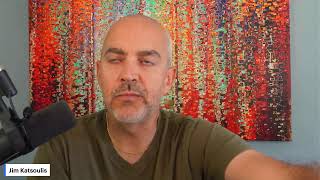
YouTube livestream/podcast by Jim Katsoulis titled "Believing You Can Lose Weight." The host argues that belief to lose weight arises from changing strategy (moving away from rigid dieting toward gradual, sustainable habit change), shifting identity/self-image, and working on one behavioral pattern at a time. He challenges dieting norms (cites that ~95% regain diet weight), advises gradual calorie reductions (10–15% steps rather than drastic cuts), suggests daily weighing during active loss then behavior-tracking in maintenance, and answers live audience questions about overeating, gallbladder/trauma, calories, exercise, and hypnosis resources. Calls-to-action: link in bio to "Program Yourself" resources and a free hypnosis session; live schedule noted as weekdays around noon Eastern.
Questions this video answers
August 13, 2025
"95% of people that lose weight on a diet put it back on."
A free hypnosis session (link in his bio to the "Program Yourself" resources).
Every Monday through Friday, usually around noon Eastern.
Chapters
It.
Everyone, welcome to today's program Yourself then podcast. They were talking about believing that you can lose weight. You got to believe it in order to achieve it. And if you don't believe you can lose weight, you're going to have a real hard. A hard time, right? Because in the back of your mind, you're like, what's the point of this? If we don't believe you can lose weight, you're never going to give it the full amount of effort that you can, and that most likely is required to get the results you want. So how do you believe that you can lose weight? Because the secret to believing it, I think, starts by making the distinction that the reason you've struggled to lose weight in the past is, is not because of you. I think a lot of people, when they think about can I lose weight? Don't believe they can lose weight because they're reflecting on all the times they've tried to lose weight and haven't been able to stick with it to get the results they want, right? So I think in that case, it's really easy to say, I can't do this. Look how many times I've tried and it hasn't worked. I don't believe I can do this. And that's where most people are starting from. So how do you get from that place to actually believing you can do it? Right? The good news is that it's easier than you think. What you have to do is you have to make the distinction between you and the strategy you've used to lose weight this whole time. So most likely, if you're a dieter, what you have done to try and lose weight in your life is you have tried to do something relatively intense. Now, you're not going to describe it as intense because you've justified it, but if you've tried to do Weight Watchers, Keto, Paleo counting points, intermittent fasting, south beach diet, it doesn't matter. Any diet you've attempted to do, it's been extreme in the sense that you've tried to jump into it 100% perfectly on day one, right? So your idea of how to lose weight is to choose some diet plan or some strategy and then jump into it perfectly on Monday and maintain that perfection until you get to your goal weight. That's the plan. And what I'm trying to tell you is that regardless of what the actual plan is, it doesn't really matter. It doesn't matter if it's intermittent fasting or keto vegetarian or carnivore, it doesn't matter what the nutritional philosophy is. The extreme piece of the weight loss approach is how you're attempting to do it. And you're trying to do too much, too soon and too overwhelming of a way where you can't stick to it. Now, once you make this distinction, you magically are able to see things more accurately. And instead of always saying, oh, the reason I can't lose weight is because I have no self control or I have no willpower, I'm a sugar addict or I'm addicted to food, or whatever excuse you kind of make for yourself. You can start to look and say, no one loses weight on a diet. No one loses weight when they diet. And this is literally true. It's estimated that 95% of people that lose weight on a diet put it back on. So literally, virtually no one succeeds with a diet. And when the numbers are that bad across the board, you've got to start looking at things more accurately and saying, it can't just be me. I mean, if there's a strategy that fails 95% of the time for people, how could it just be you?
At some point we got to look at the strategy and evaluate that. Now, the big challenge is that in your life, you've never even had an alternative to dieting for weight loss. You know, short of surgery or, you know, injections or medicines or something, there has been no legitimate, real way for you to get control of your weight that does not involve dieting. So your entire life, you've been steeped in this dieting mindset of jumping into it 100%, sticking with it perfectly, losing weight, and that's how you're going to do it, right? But once you realize there's other ways to do it, it gives you some perspective on how bad a strategy dieting is. It makes no sense that you're just going to Change your eating 100% starting tomorrow for good. It makes no sense. That's not how humans operate. We operate on autopilot. We do what we did. We are creatures of habit and routine. And so this idea that you're going to let all that go and just make intentional decisions starting tomorrow for the foreseeable future, until you lose the weight, it has no basis in real reality of a successful approach to losing weight. So if you can start to look at it this way, this is the magical piece that gets you to believing you can actually lose weight. Took a little bit to get here, but this is where we're at. And the idea of believing you can lose weight, I Think really begins when you start to use a different strategy. That, to me, is the secret weapon, because you've tried a million times, okay, now I'm going to do it now. This time I'm going to do it. This time I'm going to do it. But it's always been focused on you, and it hasn't really been focused on the plan enough. And when all of a sudden you start to think about living at your goal weight, changing your mindset, your lifestyle, and your reading for good so that for the rest of your life, you can live at your goal weight in a way that's comfortable and relatively easy for you. When you start to approach your weight like you did college right now, again, who didn't want their college degree in a year? Everyone did, but it takes longer. You need to have some patience. You need to have commitment. You need to show up and do the work consistently. Okay? But the thing that got you through college, most likely even when things got difficult or hard, was the belief that you could do it. If I keep doing this work, if I keep moving forward, I'm going to get to the ultimate goal I want to get to. Now, with weight loss, you have no. There is no alternative to dieting most of your life. You need to create it. And the way you create it, you start to realize that I want a comprehensive holistic system where I don't need to be perfect, where I will strategically work on something, get it going, improve it, make it automatic. Then I'll go work on the next thing, Then I'll go work on the next thing, then I'll go work on the next thing. But you keep approaching it this way. Over months, over years, you start to transform in ways that you've never imagined. And I'm going to kind of close it up with this. One of my favorite quotes of all time that really validates this approach, and it's that most people overestimate how much weight they can lose in a month and underestimate how much weight they can lose in a year. The diet industry has conditioned you to think very short term. And as soon as you start thinking longer term and you start thinking about truly committing to this in a way that's sustainable, then you start to realize, maybe I could do this. And once you start doing it this way and you realize it is way more comfortable, way more sustainable, that is when you truly start to believe that you can do this, you can absolutely get control of your weight, because you now understand how to have control of your mindset, your lifestyle and your eating patterns. And once you know that you absolutely can control your weight. So I hope this helps you out. And if you want to go deeper into this approach and this philosophy, click the link in my bio, go to program yourself, then go get the free hypnosis session I give for you all. Watch the training I made, read the emails, I sent a bunch of stuff for you and just, you know, discover a different way. That's what I'm offering you. What I show you is not a diet. It's a different way to think and approach this whole thing. And I think very quickly, one of the things you'll notice is you start to believe in yourself more. You start to believe it's more possible because it's a better strategy, right? So stop blaming yourself and find a better strategy and you're going to get better results. All right? So if any of any questions, feel free to ask them. Linda says it's really hard to stop the all or nothing thinking. Yes, it is. It's very difficult to not think all or nothing folks. You have been conditioned to think as an all or nothing person your whole life. And on top of that, there's a biological predisposition to think in all or nothing ways as well. And the diet industry has co opted that. And yes, absolutely. I'll be the first to admit it is difficult to not think like an all or nothing person. But I will let you know the solution is not to not think like an all or nothing person, by the way, because that's just a vacuum. It's to think like an all or something person, to approach your weight with an all or something attitude that yeah, when things are going great and you're in a great mood and feeling good, you just do everything perfect. Great, okay. But when things aren't great, when things are difficult and challenging and stressful in life, you still have strategies to stay engaged. And again, you may not be perfect, but you're still in the game. That is the most important kind of message I could give you, you know, is to get out of the all or nothing thinking. Because that is literally one of the most toxic mindset beliefs that there is is this all or all or nothing thing. It really is. You wouldn't succeed in any area of your life all or nothing and weight loss is no different. So I get it, Linda. I get it's hard, but it's worth training yourself to start thinking in an all or something way. All right. What's up, Jen? How's it going? Jen says you can do it. I dieted for over 30 years and this is the only positive maintainable program. There is been a goal for nine and a half months. Never done that before. I know it's permanent this time. And my brain is finally catching up with my body. That is awesome. Yeah, Jen's a superstar, getting, doing the work, you know, so that's awesome though. Little screenshot of that. Yeah. Again, this is what I mean though, right? And so you know, again, now Jen knows, now she believes, obviously it's been nine and a half months, but that's what I'm trying to tell you all. You know, it's really the strategies that have been shared with you and they suck and they're co opted again, you know, the, the big reason I believe, I believe this, that diets don't work is they're not intended to work. The diet industry is just a branch of the food processing industry. So again, Weight Watchers was owned by Heinz. Jenny Craig was owned by Nestle Atkins Food Products, owned by the same company owns onions, pretzels and Cinnabon. Slim Fast, owned by the same company owns Ben and Jerry's ice cream. These companies don't want you to lose weight. They don't want you to not eat their food and be healthy and happy because they make a shit ton of money off of you when they, when you diet and they make a shit ton of money off you when you're eating their foods. So there's very little desire for them to want to teach you something that genuinely works. So that's my thought on it. Jen says, is there a point where I could should stop weighing myself daily? Absolutely, Jim. I think you're probably right about that point. Although it's always up for you. It's always up for you to figure out what that point is and how you're feeling and how your results show up. But I think, yeah, I'm a big fan of when you're losing weight. I'm a big fan of weighing yourself every day. That strategy, you know, it may or may not work for you. You know, I mean everyone's a human. But I think weighing yourself every day is a good strategy. I've seen that work for most people once they kind of get through all the mindset stuff with it. But yeah, when do you stop weighing yourself every day? Well, that's up to you. And you certainly could start weighing yourself, you know, once a week and just see where the weight goes. Right now I will tell you, Jim, what I do and I'm about to hit that space right now, because I was in a weight loss mode, and now I'm kind of right where I want to be and now go back into maintenance mode. But I. When I was in weight loss mode, I weigh myself pretty much every day. And now that I'm kind of stabilized where I want to be, what I do is I keep track of my behaviors. So I'm very aware of what my behaviors are. Again.
My lifestyle, my eating are structured, so I'm eating similarly week to week. And if I keep eating that way and acting that way, my weight's going to stay where it typically stays. Okay. So in my mind, where I start to shift into maintenance mode, part of that for me is I use the scale a lot less, but I'm still kind of monitoring and paying attention to my behaviors. And as long as my behaviors are, you know, consistent, then I'm not too worried about the weight. But, you know, you can play around with that if you want to. You could dial it down, too. You could go from weighing every day to weighing every other day, you know, to every third day. So you can. There's a couple different ways you can kind of go about it. But yeah, you absolutely do not need to weigh yourself every day. Then again, there's some people that weigh themselves every day forever. So again, there is no right or wrong. There's only what works for you. But you could absolutely, at this point, play around with weighing yourself less and just see what happens if you choose to. Right. Rose says. I like Jen's comment that her brain is catching up with her body. It took me a year. Yeah, it takes a while. I don't know. We. And program yourself. Then that's one of the very first things we go through is your self image, your identity, because you always live up or down to your self image. And for a lot of people, they've been overweight for a long time, and so you identify or think of yourself as an overweight person. You know, that's got to be addressed, you know, because if you think of yourself as an overweight person, you're going to do overweight things, you know. And so again, a big part of my approach to change is to also.
Change up your self image, how you think about yourself, to think of yourself as a thin, healthy, happy person. You know, to me, that's a key part of the program. And it starts on day one, you know, so I get it, but. But then takes a while for it to really sink in, too. So I totally get that, Rose. And I think a lot of people don't really think about that enough because they think, well, once I get to my goal weight, then I'm all set again. 95% of people that lose weight on a diet put it back on. So there's got to be more than just having a plan and following it if you want to live at your goal weight. And part of that is definitely transforming your identity and self image into that of a thin, healthy person, the person you want to be, you know. So, Vicky, Vicki says hello. Can you address overeating? Can you really eat as much as you want and lose weight? Is this another lie we've been fed? Oh, no, you cannot really eat as much as you want and lose weight. No, no, no way. No way.
If I. Now, again, now I will say, hold on. Okay, let me, let me back it up a little bit. Want. How much do I want to eat? Is a funny phrase, and I have changed the meaning of that in my life. Okay? So originally, eating what I want is. I ate everything I used to eat literally all day long. I'd wake up, I would eat six times a day. I'd have my breakfast and I'd have a breakfast. Dessert is what I'd think of it as. Then I'd have lunch, then I'd have an afternoon snack, then I have dinner and then I'd snack all night. So, you know, in its own way, that was enjoyable, right? It was. It's pleasurable. Just eat all day. Shit, I like to eat. Didn't really think about it. Ice cream, candy crackers, sodas, muffins, donuts, croissants, sugar cereal, peanut butter sandwiches, chips. Oh, the good old days. But so again, it's pleasurable and it's one way. So I wanted to eat that way, but I couldn't eat that way and lose weight. Now you asked me, oh, you don't eat how you want? Well, I will tell you I eat how I want, but I've changed the meaning of the word want. And it's less based on the enjoyment of eating the food. And now it's much more based on the pleasure of living in the consequence of eating in a way that's really a good fit for my body. So again, it's everything's good or bad, right? Everything's good and bad. And eating a bunch of bullshit all the time is good and bad. It's good because it's fun to eat everything you want to eat. When you want to eat it, it just feels good. Pleasure centers in your brain going off, great, okay, that's the good Part bad part is you're most likely gonna have weight and health issues. Okay? Right now, eating healthy in a way that keeps me on my goal weight, good and bad, same thing. Not as pleasurable. It's not as pleasurable. I'm not gonna bullshit you. It's not. You know, eating a salad is never going to be as pleasurable as eating a pizza to me. Okay, but. So that's the bad part. I don't get as much pleasure out of the eating of the food, but I get a million times more pleasure out of being at my goal weight and not having to deal with any of the health or weight issues that went with the food. So, again, everything is this way. And so, no, you cannot just eat as much as you want and lose weight. That makes no sense and would never work. But you can get to a place where you feel like you're comfortable and happy with how you're eating and you weigh what you want, you know, but, yeah, that's absolutely a lie. The idea that you could just eat as much as you want, you know, it's. Listen, your weight is a reflection of your average calorie consumption. You know, if you want to think about it real simple. So if you want to lose weight, you've got to reduce your average calories down, you know, and the weight comes down. And so, you know, if you're overweight right now, you know, we don't have to say it's overeating, right? Overeating is a funny word that kind of is confusing to us. What you can say is that you. You eat exactly what you weigh. Your weight is a reflection of your eating. And so we don't have to say it's overweight. We can just say that this way I'm eating now brings me to this weight. I want a lower weight, so I'm going to reduce my average calories down, you know, and that's kind of how I think about it. So there's no reality in the world where you eat this much and weigh this much and you keep eating this much and now you just lose weight that I know of, you know, again, short of chopping off your limbs, right? Yeah, keep eating that way and chop your legs off and now you'll be, whatever, 30 pounds lighter. That's the only strategy I would know to do that. So, no, you've got to dial down your calorie consumption as well in order to lose weight. And anyone tells you. Now, that being said, I know you can absolutely eat all the foods you like. Like, you don't have to give. You do not have to give up pizza, cookies, ice cream, whatever foods you really like, you do not have to give those up to lose weight. Now you will not be able to eat as much of it as you used to eat. Okay, now I think this is an important distinction. You can eat all the foods you like, but you are gonna have to dial down the amount of it you eat, you know, or make up the calories someplace else. But there is absolutely no reason you have to give up all your favorite foods. As a matter of fact, that's a shitty strategy, a terrible one. To get rid of all the foods you like really is, again, so common and so terrible, so ineffective. But if you, again, are strategic with it, you can absolutely continue to eat all the foods you like strategically and lose weight that, that you can do and help people do it every day. That's what I did. I've not given up any foods. What's up, Karen? Karen says, I was just thinking, I haven't seen you lately. Yes, you haven't seen me lately. I was away last week down in Delaware and. Yeah, down at the beach at a great time. And now we're back and I was a little late today at a meeting I had to do. But here, here, now.
I hope everything's going well. Just me says, what about if you have no gallbladder and serious amounts of trauma?
Well.
I will say this. I mean, everyone's got their own challenges, right? I. I think the way I always look at this process is everyone's kind of got their own path they're going to follow, right? Because everyone's got their own situation. You got your unique genetics, you got your past. You know what I mean? You've got the people you've grown up with, the environment you've grown up in, the environment you live in. Now there's just. There's a lot. There's a lot to your weight. And so I, you know, specifically gallbladder and trauma. I haven't worked a lot with no gallbladder, but I've absolutely worked a lot with traumas. And I'm a believer because I've just seen, I've seen the extremes in every situation lose weight. So I'm a big believer that, you know, if you're alive and you're a human being, you. If you reduce your average calorie consumption, you're gonna lose weight. Now, some people, it moves quicker and some people move slower with. But I'm a big believer that if you're still breathing, you can absolutely lose weight no matter what your situation is, you know. But again, it may be easier and harder for other people. Faster and slower. No doubt about it. But I, I've never seen anyone personally who has not changed their eating that has not lost weight for a period of time. Now again I said, well, I died. I didn't eat anything for a week and didn't lose weight. No, I'm not talking about a week, but I'm talking about if you reduce your average calorie consumption for an extended period of time. I've never seen one not lose weight. So even those.
Oh, you should have got massagements then. Yeah, a massage would be great. Yeah, I should have looked you up.
Yeah, it was nice down there. It's a nice weather. It was so, so nice. Wasn't even humid. It was beautiful. Great, great time. All the weather. The water sucked. It was a jellyfish. There was rip ties. He couldn't swim the last couple days, even the days I swam, it was intense. But that's okay. I'm pretty good swimmer. What's up X? X says I ate too much foods that high in sodium and oil and they messed up my gut for a few days. I learned that sometimes you enjoy foods for a few minutes and sluggish for days. Not worth it. Yeah, exactly. X I agree a thousand percent.
Yeah, it's I, I did that last week. I had a bunch of last week, you know what I mean? From fries to frozen custards to croissants to, I mean, you know, I say like everyone else, I enjoy the out of my vacation. I eat what I want to eat, you know, and I enjoyed it. But at the same time I did recognize, you know, I pay attention to the consequence. I was exhausted last week too. Those foods take it out of you. You know, digestion is one of the main uses of energy in your body. So when you're dumping a bunch of in it constantly, it's going to tire you out, you know, you're going to be tired. So if you pay attention to that and are aware of that, it's helpful you get a more accurate image of it. Yeah, access. Same with sugary and processed foods. Think before we put something into our body. When we eat the right foods, we feel a lot better. And good gut health, no inflammation. We can lose weight too. I agree 1000% X that's really where my headspace is at when I'm making food choices. That's my thinking is I'm thinking, how is this going? How will I feel half an Hour after I finish eating, how will I feel? And I make a lot of my food decisions based on that question. And so it's not even just about weight loss. It really is about how I want to feel moment to moment, day to day. And most of the time, I want to feel energized and light and happy and healthy and clear headed and all that. And so I tend to make better food choices because of that. So right on the money there. Well, there you go, Jen. Jen just says I have no gall platter since 2002. And yeah, Jen just said that she is literally at her goal weight and has been under goal weight for nine and a half months now. Again, that's Jen's story. Someone else with a gallbladder might have a different, you know, experience. So that's why I try to say, like, everyone is unique and different, but at the same time, I have not seen. I've never seen a physical condition other. There's one, it's kind of rare, but I've never seen a physical condition that prevents a person from losing weight if they reduce their calories. So, yeah, Rose says I've given up most processed foods and seed oils. I've learned to make delicious food without the junk. For information. Headed to Bethany in two weeks. All right, all right, we got the Delaware beach crew. Yeah, Bethany. I went to Beth. Well, you know what, I didn't really go to Bethany. I'm telling you, when I go to the beach, I go to Rehoboth. And man, once I park that car, I pretty much don't get in it, you know. But my wife finally talked me into going down towards Bethany. We actually went to a park down there. So it's like if you take a left to Bethany, we took a right coming from the north. And they're always beautiful though, you know, my wife and daughter love birds so that we went, saw some birds and stuff. But it was beautiful. It was fun to get to a different part. So, yeah, Bethany looks. It looks. I've never been there. I should go. But yeah, that's awesome. Good for you, Rose. Have some fun and nice job of the eating. Yeah. Again, it takes time, you know, again, as you start to wean out the processed foods, the oils, and you start to increase the healthy, whole natural foods.
Even if you don't lose weight, it sets you up to lose weight for a number of reasons. So it's always a good idea for numerous reasons.
Karen says, oh, no gallbladder either. Since I'm 30. I'm 54. Yeah. Okay, so there you go. I guess more people are missing their gallbladder than I realized. Yeah. And so, again, these two situations where it hasn't impacted the weight loss. So let that be known. Y2K says, I've been feeling dizzy on 2,500 calories. Surely I can't lose weight on more than that.
No, that's not true. I mean, if you consistently, you know, if you consume 3,500 calories a day, which is not that crazy, I can look at the numbers. These numbers are getting blurred in my head. But the average American consumes. I don't know why I'm thinking It's in the 3000s. I came out on this number right now. But I will tell you, the average American consumes a lot more calories than they think they do. And I know you don't believe it, and that's fine. But I, um. My point is this, that if, on average, you consume 3,300 calories a day, which is not hard to do, by the way, in America, not hard to do at all. Okay, but let's just say you consume 3,300 calories a day and you cut down to 2,500 calories, guess what's going to happen? Your weight's going to go down. If you consume 3300 calories a day on average, and you cut down to 2,900 calories, guess what's going to happen? You're gonna lose weight. So, again, what the diet industry has taught us to do is we want to lose weight quickly. So the diet industry has conditioned you to drastically cut calories out. I find most people on diets will cut their calories by 40 to 70% just right from the start. Day one, 70% cut, you know, 40% cut, which is dramatic, and it's overwhelming to your brain and body. It's stressful. And so I'm much bigger believer in cutting 10 to 15% of your calories out, getting comfortable with that, then cutting 10, 15% more calories out, getting comfortable with that until you reach your goal weight. So, yeah, if you're feeling dizzy, you're not gonna stick with the plan, you know, and by the way, if you're feeling dizzy on 2,500 calories, that. That does imply that you probably consumed a lot more than 2,500 calories. You. If you're implying that the. That reduction in calories was making you dizzy. So, yeah, that's a good question, though, because I think a lot of people have ideas in their mind.
That I Don't know. Like, the diet industry, again, is always teaching you very specific tag. Oh, you gotta cut thousand calories a day, 1200 calories a day. You gotta do this, you gotta do this. And it's like you're given this, like, this idea from a person who has no idea who you are. They don't know you. You know, think about this. Every weight loss thing you've done, whatever strategy you've done, you followed, that person doesn't know you. They don't know your situation, they don't know your weight, they don't know your average calorie consumption. They don't know your history, they don't know your genetics, they don't know the food you've grown up on. They don't know anything about you. And you're just trying to, like, follow this plan some stranger told you to do. You know what I mean? Like, it makes no sense. It makes a lot more sense to figure out where you're at. What are my behaviors? What are my habitual behaviors that are creating my habitual weight? How can I start to comfortably and easily start to change them so that I can reduce my average calorie consumption? What's the easiest way I can do that? No one starts from that place, which is crazy to me, which, again, it just reinforces my belief that all of you are. If you're a dieter, you've been brainwashed, conditioned, hypnotized to be a dieter. And it's a very. It's a very odd way to think. It really is. It makes very little sense, dieting as a strategy to just jump into something 100%, following these strict rules with no flexibility. It's just so weird. And yet people do it every day. So, anyways, yeah, just, just, again, work with who you are, start with where you're at and go from there. Karen says I work at Fenwick, but go to Rehoboth Boardwalk. Yeah, the boardwalk's so fun. So fun. Oh, yeah. Working at Fenwick. Okay. Yeah, that was a beautiful ride, too. I forgot because I haven't been to Ocean City in forever either. And boy, I thought I was gonna get there this year. I was so close to going, and then we just didn't go. I get lazy.
My two cases, yes. I think I was consuming at least 3200 calories a day. I'm 5 11, very active. Yeah, 83 kilograms, girl. So, yeah.
Again, now, this is. I'm not a big believer in calorie counting either. And me personally, what I suggest to people and What I use is looking at your habitual behaviors because humans tend to do what they did. Humans tend to run in patterns. And so Y2K, let's just assume she's consuming 3200 calories a day. You're not consuming like, yes, you are consuming 3,200 calories a day, but that's not how your brain thinks about it. Your brain doesn't think in calories, okay? Your brain thinks in behaviors. And so those 3200 calories a day and you're probably consistently. We all consume a similar volume of food every day, so we're very consistent with that. And so what I would want to do is I want to say, okay, how am I consuming 3200 calories a day? What are my typical behaviors? And again, the first thing is like, what are my work days versus my off days? That's a good distinction. On a typical work day, what do I typically eat for breakfast, for lunch, for dinner? I want to get that basic start. This is what we do in the program, okay? Just give an example. And I'm not going to go too much into this because with the eating blueprint, I've decided not to talk so much about that because it gets confusing. And if you don't have all the information, people just take it the wrong way. But in program yourself, then we have clean and pleasure days. It doesn't matter. But what I would say to Y2K is I'd start to look at your patterns and you're going to start to notice there's patterns to your life and your behaviors. You eat similar breakfasts on certain days, similar lunches, similar snacks. And I want to start to notice those patterns. Then what I'm doing, once I notice the patterns, I'm saying, okay, which pattern is bringing the most calories in? Right. For me, it was late night snacking or it wasn't late night, it was night night snacking because I would snack from basically 8 o' clock until 11, 12 o', clock, you know, and so I knew that that was the behavior that was bringing the most calories in my body. So that's the one I fixated and focused on first to change, you know. And so this is a much less overwhelming way to go about this. You know, instead of trying to change all of your eating in one day, you strategically start working on your habits. So that's what I would suggest again, that the calorie thing every day, you know, A, it's just a guesstimate, B, you're going to be Way off. Because you, you're just not good at estimating calories, okay? And I know you think you are, but you're not, no matter what. I mean, the labels alone are off by 20%. Frozen foods, they're off by more. You're off by counting them, trust me, by another 20 to 50%.
I know you don't believe me. And again, I'm not saying there's a time and a place because.
Calories in, calories out is like technically the, the most effective way to lose weight for a little while, but it's not a long term approach that, that works for people pretty well, you know, so. But anyways, good job. Y2K again, you know, even now that you know you're 3200 calories. Yeah. Cutting to 2500 and you're active. Yeah. That's probably too much. Think about it, right? 30, 32 to 2,500 calories. Right. That is about 25%. So in day one and you're active and you're probably off on your calorie numbers, just to be honest, but you're probably cutting 25 to 35% of your calories day one. And for your body, that's a lot. And that's probably, probably potentially a reason why you might be feeling dizzy, might be too much, you know, so again, I'm not a big fan of count calories, but there you go. At least now you, you have a better explanation for what's going on. And hopefully you won't just keep pushing yourself to do that, you know?
Man, I'm missing questions here.
Scrolling Thumbs Little out of practice from week vacation.
Sea Star says hi. I did your hypnosis a couple of weeks ago and I've lost six pounds already. Hey. Oh. All right, let's do the picture of that. Well, geez, Sea Star, you should get the program if you got that just from the free hypnosis session. Holy macaroni. Great job. Nice job listening to it, taking action, getting it. And it's all you. Go get the hypnosis session, folks. It's free. There you go. You might be six pounds lighter in a couple weeks. All right. Nice job, Sea Star. Great job taking action. Great job listening to it and doing what you need to do to lose the weight. Nice job. Keep it up. Keep it up. Yeah. Thank you. You're welcome. Y2K. Yeah. Think about this way, because again, you always want a little bit of flexibility with yourself. Again, diets are so rigid and it's, it's a fact. It's A scientific fact that rigid diets do not work long term. And all the diets are rigid, which is why none of the diets work. None of the diets work. None of them. There's not one. There's not one outlier diet. Isn't that crazy? 100, 100 years of dieting. There's not one diet that rises to the top in terms of effectiveness that crazy. They don't work. They don't work. And then I can sit here and tell you why, but I'm not gonna, because I'm wrapping it up. So I'm gonna get out of here again. If you're not in my world, click the link in my bio, go get the hypnosis session, watch the training I did. Read the emails I send, go check them out.
And it's gonna help you. Okay? There's a better way to lose weight. And if you like this, I'm here every Monday through Friday, usually around noon Eastern. Sometimes I'm a little delayed, but I'm always here between 12 and 1. And so if you got questions, please pop in. This is what I do. This is my mission. So I'm here to help you out and I'm happy to coach you right on here with whatever you're doing. And if you miss these lives, I want to listen to them. It's also a podcast called Program Yourself then where you can you search at any podcast platform and listen to that day's podcast. Right. Thank you. It's thanks to you. It really works for me. Just acting like the way I want to be. Great job, Se Star. Yeah, that's super. Yeah. Again, we want to be the person, you know, that's programming yourself in a nutshell. It's an inside out process of transformation where you become the person you want to be, starting by how you think and ending with not ending, but moving into how you act and then ultimately changing how you look. So that's wonderful. So keep it up. Sea Star.
Y2K says Do you think excess cardio increases appetite? Yeah, I absolutely do. I definitely think a lot more. Cranking up your activity, whether it's cardio or resistance training or just general activity, is going to make you hungrier and you're probably going to eat more. So yes, absolutely. Which is one more reason why for most people, I don't even recommend starting with exercising. I just don't. You do not need to exercise at all to lose weight. I'm a shining example of that. I literally stopped exercising and lifting weights when I lost all the weight. I put all my energy into changing my eating. So, again, I think exercise is great. I want to be crystal clear on that. I think exercise is wonderful, has a lot of wonderful benefits. Weight loss really isn't one of them, ironically. So, yeah, I definitely think that. Yeah, excess cardio.
It'S, it's. You're not getting the best bang for your buck weight loss wise with. With a lot more cardio. So that's just a fact of science. So there we are. All right, everyone have a super duper day, and we'll talk soon. Bye.
More from Jim



Weight Loss Visualization: Wake Up in Your Dream Size #programyourselfthin #weightlosshypnosis



What If You Pretended to Be Thin for One Hour? #programyourselfthin #weightlosshypnosis




