Dealing With Stress Eating
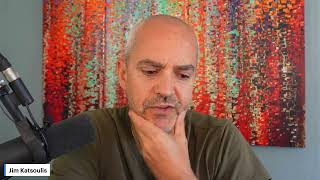
Jim Katsoulis explains why we eat when stressed and how to build real coping skills instead. He walks through breathing, meditation, walking, and hobbies as replacements, then talks about building a weight plan that actually sticks around mindset and lifestyle, not just food rules.
Chapters
Foreign.
Welcome to today's program Yourself Thin Podcast. Today we're talking about how to deal with stress eating. Stress eating is like one of these major things that really sabotages so many people. And the answer is surprisingly simple. Simple, but not easy, I would say. Okay. But I think even just understanding how to approach it in a different way than you've probably been doing is going to move you pretty dramatically towards a resolution with it, or at least an improvement of it. That feels good. And that's the key thing, because we start talking about stress eating from a different angle. If you're a stress eater, chances are that you have tried to stop stress eating.
And it's probably worked occasionally once in a while, and then it stops. You start eating again. Okay. But if we take a step back and look at it, we're going to reframe the whole thing because you think the stress eating is bad and you got to stop yourself from doing it. But I'd love for you to look at it a different way, where the stress eating is good for you in that moment, in that it helps you deal with the stress. Right? So you're stressed out and you use the food to relieve your stress, even if it's just for a moment, it's probably the best way you know how to ease the stress off, at least for a moment. And so if you start to look at the stress eating as something positive you're doing now, again, I know it has a negative result you don't want. We're going to get to that. But if you start looking at it as something positive that you're doing for a positive reason, it changes the whole approach to it. Because now we're not trying to just stop ourselves from stress eating. Right? Because if you stop yourself from stress eating, the best case scenario is you're a thin stressed person. That's not really what you want. And it's very difficult to achieve that. So what we're looking for, instead of to just try stop stress eating, we're going to ask a different question. We're going to ask the question, how can I relax without food? What can I do when I feel stressed to relax and ease off the pressure to give myself some relief? That has nothing to do with food. This is the magic question, because I believe the core issue for your stress eating is that the eating is just the best thing you've got on the For a plan, There's a good chance it's the only thing you got for a plan. There's a good chance that when you Think when you're stressed, what can you do to relieve the stress? You probably have no ideas. It's very common. So when you start asking the question, how can I start to relax more effectively in a way that does not involve food, what happens is you start setting your brain up for the real, genuine solution, which is that you're able to relax and calm down and not need any food to do it. Now, how do you do that? Right. There's a million different ways. It depends on you. Everyone finds different things relaxing. One thing we all find relaxing is, of course, you could connect to your breath. You could relax and slow your breathing down.
That buys you a little bit of time, okay? But then we usually need something to do to kind of allow ourselves to relax. And it could be anything. I mean, it could literally be go to the movies. It could be reading a book. It'd be going for a walk. It could be doing a little yoga. It could be playing a musical instrument. It could be drawing a picture. You see what I'm saying? Like, it's different for each person. Depends on who you are. But if we start with the physiology of relaxing and breathing.
And then genuinely asking that question, how can I relax even deeper right now? And if you begin to ask that question from that place, what happens is you start to develop strategies for how to relax, how to relieve stress that has nothing to do with food. And once you start to find one or two other ways to relieve stress naturally that don't involve food. Now, what happens when you start to get stressed? Your brain may say, let's go eat, because that's what it's done. But now the conversation is completely different. It's not. I have to stop myself from stress eating. It becomes, oh, right, I'm thinking about eating. But what about that walk I was thinking about? Oh, I forgot. You know, I could take a few moments and go do a yoga posture for two minutes, you know. Now, again, it depends on each person's thing. Maybe it's like, I go home tonight, I'm going to color my, you know, meditation coloring book. I might go home and read a little bit of a chapter out of that, you know? So again, it's about figuring out what works for you. That's the most important thing you can do. But it changes the whole conversation, because now you're going right to the heart of the problem. And the heart of the problem with stress eating is that you just don't have a better alternative. Because, of course, if you did have a better alternative, you would use that because eating is not a great stress reliever. No, it's not. It may feel like that in the moment because it takes your mind off it while you're eating. But as soon as you finish eating, the stress comes back even stronger because you still have whatever was stressing out the beginning, and now you have the extra, the eating and the weight issue and all that stuff on top of it. So it doesn't really resolve the stress, it just distracts you from it for a few moments. When you start to genuinely relieve the stress and relax yourself. Now you genuinely are starting to transform yourself. You've created a real genuine solution where you've started to change inside because you've gone right to the heart of the matter, which is that you're stressing out about something and now you're relaxing and calming down in the face of it.
And that almost always allows you to think more clearly, think more effectively. And so we look at the thing and we ask the magic question, how can I deal with this more effectively? How can I feel more relaxed? How can I feel more calm? If you keep asking these questions, imagine where you are a couple days from now, a couple weeks from now, a couple months from now, when you just keep accumulating the strategies that work best for you. Your stress levels go down, your relaxation goes up, and everything feels different and you're eating improved naturally, because again, if you don't need the food to relax, you're not going to eat as much food because you're relaxing genuinely. So I hope this makes sense. If you want some support and relaxation, please click the link in my bio, Go get the free hypnosis session I give you. It's going to help you relax deeply, right to the core. And you'll see exactly what I mean, that I don't care what situation you're in. When you genuinely relax inside of yourself, physically, mentally, emotionally, you feel completely different and you respond completely different. Naturally. That's the key word, just naturally. You've got that inside of you. The secret is to connect to it more. And this session will help you do that. There's also a training I put in there that you can watch as well. All of it's free. Go check it out. And if you have any questions, feel free to ask them, because that's what I'm here for. I'm here every day to answer your weight questions and help you out as much as I possibly can here, get you on the right track. Because of course, dieting is not the right track. And if you're Struggling to lose weight. The reason for that is probably because you don't have a good strategy to master your weight, most likely. What's up? Judy gave me the hearts. Thank you. Revo says. Do you recommend meditation? Yes, I absolutely recommend meditation. I think meditation is really just one of your secret weapons that if you practice meditation, and that's one of the. One of the core lifestyle habits we talk about in the program. So it's a. It's a fundamental part of program yourself then. Now, the secret is you don't have to do meditation like a Buddhist monk. Right? That's the secret is that you create meditation that fits your lifestyle. And for most Americans, what that means is a few minutes of meditation, it doesn't take a lot. Just the act of closing your eyes, turning your attention inwards, relaxing your body, connecting to your breath.
To do that for a few minutes regularly is life changing. It quiets your mind down. It makes you more aware of what's going on inside of you. It helps you connect to your goals, have clarity of thought. It's just, it goes on and on. It's a fundamental thing that if you dedicate time to meditation, it just serves you in so many ways outside of the actual practice of it. So, yes, I Recommend Meditation wholeheartedly, 100%. I think it's one of the most valuable things you can do. And I think the big thing that stops most people from meditating is that they blow it way up in their minds. I think a lot of times meditation is taught as this, you know, this, this hidden secret, you know, skill by yogis in India.
Would it be alive if there wasn't yard work going on next door? I don't think so.
So, yes, now, you're welcome, Rebos. Yes. Meditation. Can't get enough of that. Biggest suggestion to you, though, is just ease off on. We take it too serious sometimes. I think a lot of you think, you know, it's. Listen, you're probably not me, a Buddhist monk. I've been meditating for over 30 years. I don't meditate anything like that, you know, and I've meditated a lot. That's just not my path. I'm looking for a more practical application experience of hypnosis, I mean, of meditation. And that's way easier to achieve than the meditation of enlightenment or of intense yoga. So that's my biggest suggestion to you. And I am a certified yoga teacher, too, so I'm not just talking out of my ears here. I. I do have some experience with this, but, yes, you can get so much benefit out of it with just a little bit. All right, what's up, Vicki? Vicki says happy Monday. Received my blueprint on Saturday. So excited. I donated to the Brick House. All right, Vicki. Well, thank you. I appreciate that. Yes. The Brick House kicking ass. The Brick House will be one of the. Well, it'll be the recipient of my charity when I get my book printed. And so I can't wait for that either. But thank you very much, Vicki. That's. That's truly appreciated. And the goal weight blueprint she's referring to is this one. Oh, it's awesome. Yeah, it's so nice. This is something that clients in the program can get. There will be more coming on Fridays, so if you missed the first batch of them, there will be more coming in if you want to get them. I'll let you know when that happens. But, yeah, this thing's great. I will tell you. It's. This is one of the fundamental pieces of the program is the blueprint. It's knowing what to do, right? You basically need to know what to do. You need to know how to get yourself to do it. And that's big things you learn in the program. But it's been fun putting this book together because now it's a physical book that you can kind of just, you know, and write with your hand. I don't know. It's kind of nice. And even reading through this thing, I very intentionally made this a book that was. It's primarily questions, you know? So again, there will be a book coming out that is a deep dive into all the content of this. But this here is primarily the questions, your roadmap for getting from where you are to where you want to be. And of course, we go through the goal weight pyramid, which is.
Mindset lifestyle eating. So we strategically go through those areas of mindset, then lifestyle, then eating, and you customize the plan to yourself, right? So again, when you. When you finish this thing, you have a very specific, direct roadmap for you to follow. I always say this point, I think this is one of the biggest thing diets get wrong is they're just kind of like these one size fit all concepts and ideas. And, you know, someone. Someone from on Ohio will say, oh, you should stop eating carbs. And it's just like, oh, okay, everyone stop eating carbs. And you know what I mean? Like, that's kind of how the dieting world is. But really what you need to do to create a great weight loss plan and ultimately weight maintenance plan is you got to build it around you. You know, again, I can't tell you I'm not going to give you my meal plan. It's built for me. I probably like different things than you. Like, I probably live a different lifestyle than you live. So the idea that I'm going to make you force yourself to follow my plan is so silly to me. And I just think that it's really important that you take the time to figure out what's going to work for you. And it does take a little bit of time. I'll be the first to admit that. That's, that's the, I understand that's the draw of diets is that you don't have to think. You just try and force yourself to follow the plan. What I'm saying is you can flip that around and start putting that energy into figuring out what works for you and your lifestyle. And you're so much better off. You know what I mean? Like you're so much further down the path because now you have a plan that's custom built for you and your lifestyle and you've probably never done that. And I'm not even talking about a nutritionist plan, by the way. I'm not just talking about a plan that'll make you lose weight the fastest or even a plan that will make you the healthiest the fastest. I'm talking about a plan that will do those things, but that primarily fits for you and your lifestyle is one that feels good, one that doesn't feel overwhelming. That that's the big piece that I think most dieters just ignore. And I think dieters, you don't realize you're doing this, but you're basically saying overwhelm me, overwhelm me. I just want to lose weight as fast as possible. I don't care what I got to do. Stress me out, overwhelm me. I don't care. I'll stick with it. No you won't. No you won't. You know, and it's kind of realize that you're not a bad person. You're not a weak willed person with no self control. Look at your life. If you're listening to me right now, I can almost guarantee you you are an overthinker, a perfectionist, an action oriented person. You're not weak willed, you're not lacking self control. You've never learned how to manage your weight strategically. You have never learned how to influence your mindset, your lifestyle and your eating to live at your goal weight for the rest of your life on your autopilot you've never done that once. And so what are you doing? I'll tell you what you're doing. You're winging it. You're looking at different plans. And it's either the same plan or you change every month and you try and force yourself to do it. You jump into a keto plan, 100% perfect. You jump into Weight Watchers, 100% perfect. Then you try and stick with it, white knuckle, grin and bear it as long as you can until you finally let go. And then you just go back to doing what you always did. Get upset a couple months later, do the same thing, white knuckle, as long as I can. Then you fall a couple months ago, it's just, oh, same thing. So instead, we want a calm, rational, strategic, logical approach where we systematically figure out how to shift your mindset, lifestyle and eating into that of a thin, healthy person. Does it not make sense? So what are we talking about anyways? Even mindset. What do we talk about? Mindset. Because again, I could ask a thousand people what mindset means. I'm not gonna get any good answers. I've read a lot about mindset and I have not found satisfying answers. Even Ms. Carol Dweck, who's the queen of mindset growth, fixed mindset. Great stuff. Love it. But in practical terms, how do we go from fixed growth to being our goal weight? Good luck. Good luck with that. Okay. And so I would suggest that this is a much more specific plan. What do I mean when I say mindset? To live at your goal weight, what I mean is motivation. Do you know how to motivate yourself? If you don't, there's a whole section on motivation which asks you the questions that motivate you. Do you know how to shift your self image? Do you know how to shift your self image and your identity? Do you. Do you know how to influence your habits strategically? Do you? Or are you just trying to fight against your habits? Do you know how to manage your emotions? Do you know how to manage your emotions genuinely? Do you know how to feel more of the emotions? You want, less of the emotions, shitty ones. You don't want to feel without food, do you? Because if you don't, what are you doing? Do you know how to think like a thin, healthy person? Do you know what thin, healthy people say to themselves? The questions they ask, the words they use? If you don't, what are you doing? Just guessing. I don't know. And then maintenance. The final one's maintenance. Do you know how to Live at your goal weight forever. Do you know how to deal with stressful times of life? Do you know how to get back on track quickly when you make mistakes? Because you're going to make mistakes. That's just the mindset piece, right? Then we go into lifestyle and then we customize the eating plan for you. But my main point to you is that your struggles with weight really have a lot less to do with your willpower and self control and a whole lot more to do with, with the fact that you don't really have a well thought out strategy. You don't have a comprehensive, holistic plan to live at your goal weight. You've got a meal plan, you've got a workout plan, maybe, and it's you just trying to force yourself to do it. And no matter what plan you choose, it's always the same experience. It's you just fighting against yourself for as long as you can until you give up and then you go back to what you always do. And you've probably been stuck in that pattern for a long time. But the biggest mistake you probably making is, is that you think it's because your willpower and self control are weak. And again, I just can't stress this enough. Look at other areas of your life. Are you crazy? Look at you. Like, look how you work. Look how you raise your family. Look how you are in your relationships. Look how you were in school. I mean, you're not. No, you do. You do not have a willpower problem. No, you do not have a self control problem. Look at you. You know what I mean? That's not the problem. The problem is you've never learned how to manage your weight strategically. Never learned it. And so you said struggling. You know, Natalie says thank you for the good strategies. You're welcome. What's up, Christy? How's it going? Christy says finding ways not to use food for distraction or calm my nervous system without food is definitely challenging. I'm working on it. Yeah, exactly, Christy. But that's the point again. You know, I got the opportunity to speak with Christy a couple weeks ago, and that's a big thing, right? So you use the food to calm yourself down. You use the food to walk yourself off a ledge. And it feels that way. Let it be known, if you become mindful with your eating, what you will quickly notice is that some of your unhealthiest food choices happen when you kind of feel emotionally at the very edge. And it feels like, if I don't have this ice cream, I'm going to lose My mind, if I don't eat these cookies, I'm just going to go over the edge and stress out. I'm going to have a panic attack. I'm gna freak out. You feel like you're on the edge of an abyss, and if you don't have the food, you're going to fall into it. That's what it feels like the moment you make these food choices. So it's not. It's not about what you know. It's primarily about how can you manage your state? How can you manage your body and your mind in the key moments? Do you have the ability to be at a peak level of stress or anxiety or tension? Can you bring yourself down naturally? Do you have any ability to do that? And most likely no. And it's not a big deal. Okay. It's about practicing that, though. Do you understand, like, if. If you. Because the first step's awareness. You know, the first step is realize it's not that you're a bad person. It's not that you don't want this. It's that you get into these moments where you feel like you're literally on the edge of the abyss. And if you don't eat this food, you're going to fall into it. That's what it feels like in that moment. And you think it just takes more willpower in that moment, but it's not. It's a mindset thing, because in that moment, your mind says, I know the food's not the greatest thing for me, but it's fucking better than falling into the abyss. So I'm gonna go to the food. But what we do in program yourself then, is you learn a better way to bring yourself away from that abyss. And the way you do that.
You calm yourself down. But that's a skill. Do you understand? Relaxation is not a gift. It's not something you were just born with, ready to go. It's something you have to develop, like reading, writing, like driving a car, like using a computer mouse. You have to practice it. We live in a world that's constantly stressing us out, tensing us up. So you need to literally make it a part of your reality where you practice.
It's one of the most fundamental things you could do to change your weight because you've got the skills. You are smart, you do have a lot of knowledge. You're not activating in that peak hyper state. So you calm yourself down, you ground yourself, and right off the bat, you see things differently, you think differently, and that leads you to choose differently. And when you start changing what you choose to do regularly, that is how you change your body. Okay, so good job, Christy. Again, that's the process, but keep practicing it. And again, you're practicing in two ways. Christy. Remember that like every time you listen to a hypnosis session, every time you practice the PYT rehearsal technique, every time you practice relaxation, breathing, meditation, all of these things are helping you exactly the same way, be able to ground yourself intentionally. And so we want to practice that in neutral times when everything's just kind of normal. Let's take a moment and practice going into our calm, relaxed, grounded state so that when we get triggered, when we get kind of stressed out, we have a rehearsed ability.
To let it go and calm down and reground ourselves. And once you can do that again, it's fundamentally shifting. This is the core issue for people. Again, it's not what you know, it's what you know in the moment. And a lot of when you guys get into the moment, when it comes to make the right choice, you have very little ability to shift what you're feeling and thinking in that moment and program yourself then. In my opinion, that's one of the core things you're learning through the program yourself then rehearsal technique. You are learning how to manage your mindset and your body in these moments so that when you start getting stressed, intense and anxious, and going towards the emotional eating, you have the ability to recognize that.
Ground yourself, let it go, come back to center, make a better choice. And that is how you change your weight long term for good. That, that, that to me is the core of the process. It's not a diet. I promise you that. The main problem is not the diet. It's not the knowledge you have of a diet or workout. It's that you have no ability to manage your mind or how you feel, most likely. So, yeah, keep it up, Christy. Good job. D says, what are there ways to reduce stress, to avoid stress eating? I mean, there are just 10 million ways. And I could sit here and just name them, but what I'd rather do is give you the process that's going to work for you. And so everyone's different, you know what I mean? Everyone's got to just get different situation in life, different likes and dislikes and all the rest of it. So the better question is, what things help me reduce stress? You know, because I could sit here and list a bunch of things that help me reduce stress, but you might hear me say, I don't like any of those Things, you know, so what's the point? So for you, d. In your life, what are some things that have helped you reduce stress again? Yoga, breathing, relaxation, taking a walk, reading a book, drawing a picture, learning a skill, singing, dancing, martial arts, sewing.
You know, I don't know. Just. You know what I mean? Like, I literally sit here and name everything like that. But what are some hobbies you've let go that you haven't done? Hobbies can be extremely helpful. What are some hobbies you've had that you've let go, that you could re. Engage or they've wanted to do, that you could start all of these things, help you, you know? But again, you get to figure out what works for you. You know what I mean? Everyone's got kind of their own unique, you know, things that work best for them. But once you have that again, it is just. It's like a cheat code. That's what it feels like. What's up, Haley? Haley says I try. I've tried hypnosis, however, it feels like my mind is hiding the reason behind my emotional eating. Yeah, no, I'm sure. I mean, I. I am a firm believer that hypnosis is not enough for you to lose weight and live at your goal weight. I. I do not believe that it's the primary reason I do not sell.
My program.
Not. Not to, you know, let's get distracted.
The hell is I just talking about?
Yeah, okay. I'm talking about hypnosis. That's the reason I don't sell the hypnosis program on its own. I definitely think hypnosis can help you lose weight in the short term, but I think ultimately you've got to figure out your own self what is going to work for you. You know what I mean? And what your kind of deal is. Everyone's got kind of their own experiences in history, and it's up to you to kind of recognize what those are, what's holding you back, what you can build on, to support, move you forward. And that's part of. That's a huge part of programming yourself, then, is understanding you understand, what are the emotional things going on inside of me? What are my patterns of emotional eating? How can I deal with them? You know? So you're absolutely right, in my opinion, Haley, that just. Just doing hypnosis over a core issue is not going to help you long term. We've got to recognize the big core issues and work to resolve them. I think that's. That. That's my approach to it. Now program yourself, then the hypnosis is absolutely a big part of the program. It's, it's, it's. But I think of hypnosis is best when it's used as in a supportive way, you know, So I think of the hypnosis as a very, very powerful supplement to the program, but I do not think it's enough for you to just completely change. I think you've got to do some of the work. You've got to recognize your own history, your own story, and how you can deal with that. All right? And so. Yeah, so. So you're probably exactly right, Haley. There probably is some emotional reason there. And look for it, understand it, seek to understand it, and then you can start to move forward with it and resolve it. Right. 5 Wonder says how to stop food noise. That's such a big question, you know, And I know food noise is a big phrase now because of the, you know, GLP1s and stuff.
There's a lot of ways to deal with food noise, and I think the primary one, again, if we. So, so to me, I've been thinking about and dealing with food noise for over 30 years. I like, I know the food noise is kind of a hot concept now, but I think of the food noise, that's what I've been obsessed with. And so I want to show you my approach to dealing with the food noise. Now, it's not as easy as just taking injecting yourself with a needle and putting that shit in you. It's a little more work. Okay? But that's what this is designed for. So I think that to deal with food noise, you need a holistic, comprehensive strategy. I don't think there's, like, one thing, oh, stop eating carbs. Oh, stop eating sugar. Nah, that ain't gonna do it. I think you need a holistic, comprehensive approach that deals with your mindset, your lifestyle, and your eating. So right off the bat, most people have a lot of incongruent thoughts and beliefs. And, you know, in your mind, let's put it that way, you know, part of you wants to eat the cookies, part of you wants to lose weight. It's called ambivalence. And you've got this ambivalence in you. That's a core issue, and you're kind of going back and forth with it all, and that needs to be resolved. You need to get congruent, you need to get clearly motivated, and you want to move forward in a unified way. So that. That's a big part of the mindset piece. Right? But the next huge Part of your food noise is your lifestyle. Okay? Because the easiest way for me to crank up food noise in you is to keep you up all night. Let me give you a shitty night of sleep and let me know the food noises tomorrow. I'll let you know it's going to be loud. Don't drink water and get dehydrated. Guess what? More food noise. Stress out all the time. More food noise. Don't nourish yourself. Right. Don't put healthy, nourishing food in your body. More food noise. Don't move. More food noise. Don't meditate. More food noise. Okay? So again, I do. You don't have to do all these things at once. But I think you want to have an eye towards creating a lifestyle that quiets the food noise. Because the alternative to that is that you get nice quality sleep, that you're hydrated. Because, listen, when it comes to hydration and nourishment, nourishment. If you're not hydrated, your body can confuse thirst signals for hunger signals. Because most of history, we ate our hydration. If you're not nourishing yourself, your body's sending you a signal to eat more because it wants nourishment. But if you're eating processed foods with very few micronutrients in it, then your body's getting lots of calories but little nourishment. It's screaming out for more food because it thinks it's going to be nourishing. So all of these things, when you approach it strategically, lifestyle wise, I think that's probably the eating is big, too. But lifestyle is a huge piece of the food noise that you experience, right? And then there's finally the eating. And again, what are you eating? How could I crank up your food noise? Well, again, I'll affect your lifestyle. I'll put lots of bad ideas into your mind. And most importantly, I'll start feeding you a bunch of bullshit. If you're eating a lot of processed foods, of course you're going to have food noise. Processed food is literally engineered in labs and to create food noise. Do you understand that Frito Lay has a campus down in Texas?
They have a chewing machine to figure out the perfect pounds per square inch. It's a $40,000 chewing machine. The amount of resources aimed at creating food noise in you through processed foods is astronomical.
So those would be the ways that I would strategically move at food noise. And it's my whole life, basically.
He says. Thanks for the personal note as well. Yeah, you're welcome. Vicki. Viddy. Says, oh, video. Video says, I do well during the week and destroy progress with too much. Friends, food, fun, drink, how to break loop. Okay, Vidya, I wouldn't break the loop. Okay. I think, great. You're doing well during the week. Super duper, right? So you get a nice solid base to start with. So keep doing what you're doing during the week. And now let's focus on the weekend though, you know, and we're not going to break it. That's the classic diet thing, right? The diet thing is all or nothing. Always all or nothing. Drastic changes are nothing at all. Okay, So I would kind of meet that in the middle. I say, great, I'm doing well during the week. Super. Let's build on that when I go the weekends. Friends, food and drink. Let me dial that down by 20%. What's that look like? It might be one less drink here, one less appetizer here. You know, I'm looking to cut it down by 10 to 20%. That's the sweet spot. Okay, so that's how I'd work to break the loop because what a dieter is going to say, I'm just going to stop going out. My friends gonna completely cut that weekend thing out. And you'll do that for a couple weeks and then do it again. This, what I'm talking about, has the potential to be long lasting. And by the way, if you cut 20% out of the weekend, if eventually you get to cutting 30, 40% of the calories out on the weekend, you might be right at your goal weight just by doing that. But. But don't think all or nothing. Start to think in smaller incremental steps. What can I do during the weekend to improve it by 10 to 20%? Calorie reduction. Okay.
Haley says, how do I disconnect my emotions? You don't really want to disconnect your emotions. We want to acknowledge and, and be aware and feel the emotions we're feeling. And then sometimes it's to be unpleasant ones and then work to generate the emotions we want. So I don't want to. It's like one of the primary things about your mind is it doesn't understand negatives. So I sit here and say, don't think about a banana. You're thinking about a banana. Okay? So a lot of times I don't want to phrase my goal in terms of what I don't want. So I don't want to say I want to disconnect from the negative emotions in my life. I don't want to. It's a fine place to start. You say, God, I'm stressed all the time. I don't want to disconnect from stress. That's fine. But as quickly as I can, I want to move over to what I want. And so if I start with I want to disconnect from stress, and I want to feel more relaxation in my life, more calm, more peace, right? I don't want to feel so lonely in life anymore. I would disconnect from loneliness, and I want to start feeling more connection, more love, more care, more blah, blah, blah, blah. Do you see that difference? So that's the first thing I would do, Hayley, is I would shift from what you want to disconnect from to what you want to connect to. And that gives your brain a direction to go in and kind of set you up to start achieving that. And I think you'll find that once you stated in the positive, it's a lot easier than you thought. It's hard to disconnect from all the negative stuff we don't want. That's a very hard game to play. All right? So I think you may find a lot easier if you articulate what you do want to. They start moving towards that. Riverwood says, I love why you ask. I love the way you always say, but I don't like your background. Can you change it another day? Oh, I love what you say, but I don't like your background. Everyone loves this background. What are you talking about? People always love this background. Are these bullshitting me? It's funny you say that, because last time I someone said they loved, it was actually a salesperson. Are they just me? Does everyone hate this background.
Now? I don't know. Will I change it? I should get, you know, I should do. There's a lot of things I should do is I should put a green screen back there, and then I could always change it every day. I could be somewhere different.
Now. I don't know. Do people hate this is a background hateable.
Hope says, I've been losing weight. Now started walking and not losing what to do. Oh, interesting. Not unusual, though. Okay, so again, you have to understand that your weight loss always comes down to a calorie deficit. And one of the biggest things you gotta watch out for psychologically is a thing called the licensing effect. And what this is is when we start to do something good, moral, virtuous, noble, we tend to do something less good, moral and virtuous somewhere else. And so it's very normal. It's very normal that someone might not be walking or exercising and they're losing weight because they're changing their eating and all of a sudden they start exercising or walking. Now they think, oh, I burned 300 calories, I've burned 500 calories on that walk. I can have that muffin, you know, and that's a big thing we gotta watch out for, so be careful of that. Okay? But that's probably what happened. Hope Most likely. Most likely. Now again, I don't know how long you've been walking and not losing. So there could be your body just adjusting to it. In another couple weeks you start losing weight again. That's possible. But I would say probably the number one thing is that you started walking and now you probably start eating more. That's what I would guess. So pay attention to what you're eating, notice if it changed once you started walking and also just give yourself some more time to see if your body changes. Bookworm says. Jim, what's your take on Ozempic type medication for weight loss? More cons than pros. It all just depends. I mean everything's relative. So if you're just a typical dieter who's not going to put the work in like that, you wouldn't program yourself then, for example, I think the injections are probably the best bet for you. I think that they're safer and less side effects than like gastric bypass surgery.
Less invasive. So I think it's better than that. The GLP1s are unquestionably better than diets. Okay. However, you know, again, it just depends what you want and what you're willing to do. I mean, Ozempic and GLP1s. Again, we got to look at success stories, right? So, you know, not everyone wins with Ozempic and GLP1s. You understand that, right? Majority of people do. Okay. Lose weight. 4. Now, again, remember, some of the cons against GLP1s that a lot of people don't know. First one is that you get 16 months of weight loss. So depending on where you're starting from, you're basically get 16 months of weight loss. Then you're going to maintain that weight forever. That's something a lot of people don't know.
The other thing is, so. So if we look at GLP1s, yes, the majority of people are experiencing weight loss effects, but it's not everyone by any means. So if we compare best case scenarios of GLP1 versus the best case scenarios of program yourself then wins. There's no comparison on GLP1s. You don't really deal with the mindset, the lifestyle, the eating factors. You basically take this thing and it dials down your hunger as long as you're taking it. So you're going to take this, you're going to lose weight for 16 months, you're going to need to take this thing forever if you want to maintain that weight loss. And so that's kind of the cons of it now compared to Program yourself then Program yourself then. If you transform your mindset, your lifestyle and your reading to that of a thin, healthy person that's built around you. The big difference is that we program yourself, then we take the weight loss rapid and personal development. So this isn't just about weight. So yes, you lose weight and live at your goal weight for the rest of your life without needing injections or paying for injections for the rest of your life. That's obviously way greater. But that the bigger piece is that it sets you up to live your life where you keep improving, you keep becoming a better version of yourself. That's the core focus. One of the main things with Program Yourself then is that we look to take the fixation off of the weight and start to make the main focus being a better version of yourself. And the weight's just one piece of that. And that is fundamental. It's fundamental in getting to your goal weight, but more fundamental in living at your goal weight for the rest of your life. And it just leads to a better quality of life. And you feel like you did it organically, you did it naturally, you dealt with all the core issues and overcame them. You create a system that's built for you, you feel better about yourself, you know how to manage your mind more effectively. You know how to get yourself to take the actions you want to take in life beyond just the weight related ones. And so in that sense, I mean, Program yourself then is way better, but again, it just depends on where you're at in life. A lot of people say, I don't give a about all that, Jim. I just want to lose weight. Well, great, then, then the GLP ones are probably the best bet for you, I would say. You know, so again, I wish I just had a simpler answer, but there really are no simple answers because everything's relative and contextual. So that that's kind of my bigger answer.
Come on, Christy, what do you think? It is a wild background. Is it good or bad? Should I get rid of this thing? I don't even know. What would I put? I, I have another picture I always look at and it's like. It's like an ocean scene at. Well, I'll show you. I'll just show it to you.
I love this thing. Is this. Is this better? Whoops.
I look like I'm at the ocean. How's that? Is that better? Now that person can listen to what I'm saying. Do we like this?
Yeah, I look like I'm gonna imagine we put that back there, I guess. It doesn't look real. Things painted. That looks kind of nice, too. I don't know. What are we liking? I don't even know. I don't know.
At this point, that's kind of become kind of part of the brand, I suppose, though. Background's good. Which one, Lori? This one or the. The beach scene? I don't know.
Oh, the green screen idea. Done. Yeah, it's Greece. That's what. That's what. It's. Yeah, it's Greece. Right. I should know. I gotta go to Greece. Oh, you like both, Christy. All right, maybe I'll switch them up. Maybe I'll do that. Just mixing things up. That is my plan. I'm telling you. Like, I've been saying this for a while. I'm finishing up this first book. The second book I'm not in a rush with, so the first one, I just want to get out. It's so good. I. I cannot wait for y' all to read it. I literally read this book, and it makes me so happy. I can't wait. But anyways, it's gonna free up energy. I've finished a lot of things, and it's freeing up a lot of energy. So one of the main things I'll be doing is a circle app. And even these lives, just kind of mixing things up a bit. So that is coming. But maybe I will start with. Maybe I'll start with the. The background. Yeah. Remind you of the Matrix, Shereen? I love that Matrix. My favorite movie of all time. So, yeah, you're right. It's like a colored. It's like a colorful Matrix thing then. That's really cool, too. I never thought of that. So, yeah, I'm gonna rotate them green screens, though. That'll be fun. That's another thing, too, where I want to be kind of playing around, because right now I stream natively to Tick Tock, and I restream to YouTube, Instagram, Facebook, and I'm gonna play around with restreaming to all of them because then I can start doing cool stuff. I can show you stuff on screen. I can have, like, backgrounds. I can do all Sorts of cool stuff. And that's something that is on the. I don't know, on the docket. I'll get to it. This feels like I'm at disco. Well, that's fun, right? The fun of being a disco. The beach is fun too, though. That's kind of nice. Yeah. I'll switch them up. What's up, Sherry? I see Sherry says hi. Jim got my blueprint Friday. It's so great. And reminded me how thankful I am for the program. Your focus on mindset lifestyle is literally giving me my life back. Forever grateful. Thank you. Because of the focus on mindset and lifestyle, I finally appreciate and crave healthy foods. For the first time in my life, I'm learning to weed out crappy foods and cravings for them, too. Don't you dare change that background. I love it. I know a lot of people do love it. I do know that. That's funny. The. Sherry, that's awesome. I'm really glad you got your blueprints and. And I appreciate your. Your note there. Yeah. Sherry's just killing it. Sherry is just a superstar, I would say, in the program. But I'm glad you got your. Your book because it's fun, right? It just feels cool, like, especially if you're like. Like, you know, Sherry's a real deep student in the program, so I know people are really in the program getting this thing. It's just. It's cool, right? It just. It feels weighty. I like that. A lot of cool stuff coming. Even Jim AI just real quick for the people in the program. Jim AI took a big leap this weekend, so it's working the way I wanted to. So that's really cool, too, where it'll literally reach out to you. So that's kind of working now, finally. So that's another thing. Jim AI is gonna be a huge piece moving forward, and that was something I wanted to fix first. And so that'll be coming probably this week. Jimmy. I got some cool stuff coming for that. A lot of cool stuff coming this week, too, by the way, for my clients. Anyways.
Jen says, how do you feel about Weight Watchers? Weight Watchers, I think, is probably the best program out there, I would say, historically. Now I want to make clear, because I think they were the best. Because the social piece, I think, is probably the best thing of any diet, which just proves that it's not the. It's not the method. It's not. It's not counting points. Who gives a about that? It's the social piece of weight watch. Is probably the most useful piece of it, which, in my opinion, probably makes it the most real program out all of them. Plus Weight Watchers is probably the most validated program, to be honest. You know, that was started by a woman in New Jersey. She was a housewife. Started talking to her friends. They would talk, they get together, they all start getting better results. So that actually started from a real genuine place, you know, got bought by Heinz, and they just sell their shitty food through it. But that's another story. But I do think the social aspect's important. I think support's really important. I don't think Weight Watchers offers a whole lot in terms of, like, you know, there's no blueprint like this. You know, I mean, like, it's not a well thought out plan. It's basically an eating strategy. And that's fine. It's a fine one. But I don't think it's enough. Which is a reason why I get a lot of program. I get a lot of Weight Watchers people and even people that are like lifetime members that have maintained their weight lifetime members for forever, still join the program. Because I, again, Weight Watchers, I think, is better than most of them because of the social thing. So without the social thing, I don't think Weight Watchers is all that great. I mean, it's just a marketing company, basically, and they just took calorie counting and put a little, you know, spin on and call them points and all that. But. But I do think the social piece of it's valuable. And so that's kind of my thoughts on. On Weight Watchers. But for most people, Weight Watchers has kind of lost its effectiveness. Most Weight Watchers people lost a bunch of weight on Weight Watchers in the past and have been trying to get that back for decades now. And so, again, if that's you, I would say Weight Watcher is not so great. Don't. Please don't go back to it again. The 21st time at weight Watchers is no different than the previous 20. Okay. Usually the best time on weight watches is the first one or two times you tried it. Usually. There's always outliers.
Oh, you like the ocean, Jody? I do. I do, too. It'd be kind of nice to look at the ocean the whole time.
Everyone likes the ocean. I do, too. But I, you know, I look at it all the time. I look, it's right. It's directly in front of me. So I look at it all day, actually, dad, pictures of my kids when they were kids, when they were babies. Love that one too.
What's your take on weighing yourself daily? My take on weighing yourself daily is that it's good. I think if you're, if you're actively working to lose weight, I think you should weigh yourself every day. I think weighing yourself once a week is just cruel. Because what you'll learn if you weigh yourself every day is your body weight fluctuations happen consistently every day and wildly sometimes. But I think weighing yourself every day lets you understand your body more effectively. Now, I know a lot of people don't want to weigh every day because they have a real unhealthy relationship with the scale, weight loss, all that stuff in general. So, you know, just the fact that you have an unhealthy relationship with the scale to me shouldn't be defining of it, you know, meaning that the scale.
The scale in an ideal world and where you can work to get to is the scale is like the speedometer of your car. The speedometer of your car. You're not like scared to look at it, right? You look at it. I mean, if there's a cop there, then you look at it. That might be the only time. But you're not scared to look at the speedometer car because you're just using as a measurement stick and you know how to speed up or slow down. That's the key thing. I don't think you're scared of the scale. I think you're scared of the scale revealing the truth that you have no idea how to make the scale move the direction you want it to go in. So I don't think the scale is the real problem. I think it's that you don't really have a clear cut plan for what you're doing that you believe in. And so if you did, I think weighing yourself every day I think is valuable, especially when you want to lose weight. But eventually, you know, you get to your goal weight and you stay there for a while and then you just don't weigh yourself as often. I don't weigh myself every day anymore. But you know, this winter I put ten pounds on one. Take it off. And once I went into weight loss mode, I weigh myself every day or close to it, you know, and I think there's a lot of benefits to that. So that's a side I'm on. Toasted bagel with cream cheese. What's happening? I've seen you in a while.
Bookworm says the side effects though we don't know yet on Ozempic. Yeah, true. I, I, I know that I, I don't get on here to be, I want to be as supportive as I can be. I'm not supportive with diets because diets are the goofiest. I'm not going to be supportive of, of keto and you know, dumb, I'm not going to do that. But I am supportive of people's decisions, you know. And so yeah, but I think that's a totally legitimate ideas that ozempic and the GLP1s, we don't know, you know, they, they have studied those medicines for over 20 years in diabetics, but they have not studied them for a long time. And people that don't have diabetes. So you know, you know, who knows, who knows. But yeah, it's as a whole it's obviously it's a pretty extreme substance, you know, and so yeah, I mean, whatever. And again, the side effect thing, you know, there is no side effects, there's just effects and it just depends what level they rise to. So you know, that is another level to it. But I think, you know, I've said this for a while that I think right around December this year is when I think things are going to get interesting because I think that's when people are going to start hitting that 16 month mark that I, very few people know about that. And all, all the GLP1 studies have shown this that people will get about 16 months of weight loss and then it stops. And meaning if you're obese, depending where you're starting from and your rate of speed, you may end up still obese. And that's it, you're not going to lose any more weight from it. So I'm, I'm interested to see what happens because that 16 month mark for the majority of people is going to start kicking in right around December. And I am curious to see what effect that has on people when they stop losing weight and it starts to dawn on them that they're going to have to inject themselves forever, but they don't have the weight loss to look forward to. So I don't know, you know, I'm curious to see how that plays out and I'll be paying attention to it. But that's true. We don't know the effects, the full effects of that either. So that is a real thing to pay attention to, I think.
Bookworm says program. What did I miss? It's for Program yourself then. Program yourself then is my, my weight mastery program. But this is one component of there. You need to know what to do, you need to know how to get yourself to do it, you need the support to kind of get you there. So this goal weight blueprint is the knowing what to do. This is customized to you, your lifestyle, everything about you. Again, we're going through the. There it was, the goal weight pyramid. Right. So that's basically what we're following. We're going through your mindset lifestyle eating and you answer all these questions specific to you so that you have the mindset lifestyle and eating of a thin healthy person. Right. That's knowing what to do. The other piece of the program is the program yourself thin rehearsal technique. This is a 60 second self hypnosis technique that you use to program your own mind to take control of your own mindset and run your own brain. Okay. And I think this is crucial too because you can have all the greatest information and knowledge in the world. If you can't get yourself to do it consistently, it's not going to matter. Right. So those are the two big parts of the program. And then there's the support and the support comes in. There's an eight week hypnosis program that really kind of cocoons you in this great mindset. There's live calls, there's a community app, there's a lot of support system as well. But that's the program and that's the book that people in the program can get. Don says I really do need to start using gym AI. Yeah, absolutely. And it's.
There'S a lot of cool things happening with them actually. I'm, I gotta set it up though. But it's like I get to, I'm gonna be speaking with the, the person that started that whole company so they're doing a lot of cool stuff and so I'm really excited. I, it's, it's really cool. So yeah, anyways, I will be letting you. That's gonna be, like I said, a main part of the program is gonna just be more prompts and it's going to just be integrated more into it and it's going to be more reminders. That's the hardest part of GMAI initially. It's just the reminders and I got that working out. So yeah. Vicki, Vicky's a Weight Watchers lifetime member and yeah, she needs the additional mindset components that PYT provides. It's true. I mean again, I like aspects of Weight Watchers, but I just don't think it's complete system. I think it's missing a whole bunch of important stuff personally, you know, Bookworm says, you're funny, Jim. Well thank you.
Hendra says, can I still lose weight while drinking 2 liter Coke Zero? As long as I'm in deficit? Yeah, most likely, you know, 2 liter of coke, though. Good Lord.
You can still lose weight. I, I mean, again, you can do, you can lose weight doing all sorts of crazy shit. That's why it drives me nuts. There, There was a guy, he was a college professor too, a couple years ago, and he lost a bunch of weight just eating.
Eating McDonald's, you know. And so, you know, again, it's just, it's really just calorie deficit. That being said, you know, I, again, I wouldn't suggest just giving up the two liters of Coke Zero, but I would absolutely start working on reducing that, you know, because I don't think anything good's coming from that. Now, again, you know, do what you're going to do if weight loss is your main goal, you know, keep drinking it and do other stuff, that's fine. But at some point, I hope you, you know, consider dialing that down a little bit, you know, as well. But yes, you can still lose weight. All right, all right. I don't have to throw the questions. Oh, Christy. Yes? Do more blueprints available to order? Yes, I will have the blueprints. They should be here at the end of the week. So I will, I will send out a link, an email if people want to order them.
Probably the middle of the week, and then they'll be ready to go out for Friday. So, yes, I will let you all know about that.
I should consider. Stand up. Oh, thank you. Yeah, I know. I, I think I thought about that before. I, I, I have considered that, but I just. Time is so precious for me and I really, honestly, I dedicate outside of my personal life, I really am obsessed with helping people with their weight. You know, I do love personal development too, but, yeah, I'm just so obsessed with helping people with their weight that I really struggle to take on other things. Yeah, I should, I should struggle more on other things. I keep wearing myself too thin sometimes, but anyways, yeah, maybe someday. Bookworm says. Thanks so much for this session, Jim. Always informative. You're welcome. You're welcome. And again, if you're not in my world, make sure you click the link in my bio or go to program yourself then dot com, Go get the free hypnosis session I made for you. It's really good. It's called the New Thin Me. It's a kickstart session. Go check it out. And as soon as you sign up for that I bring you to a training. You should watch that. It's like 20 minutes long. You should definitely watch that. It kind of goes through the whole process, the whole approach of this program, and it can be a game changer just to watch that. So go check it out. It's free. All that stuff's free. And I got a bunch of cool free stuff coming. So again, if you're on my email list in another week or two here, you're going to get an email for the Circle app. And so that is based on that community. And there's going to be a whole free section as well. And I'm going to be helping you through there in addition. So again, I'm doing everything I can here to help you all out, but you got to take your action. Get on my email list. That's kind of the biggest thing. And if you like this, I'm here every Monday through Friday, usually around noon eastern, noon to 12:30 eastern, I pop on here. So any questions you have, feel free to ask them. I am happy to help you out in any way I can. And if you like this and you missed the live, it's also a podcast. It's called Program Yourself. Then you can go to any podcast platform, search it and you will find it and you can listen to it anytime you you'll want. All right, everyone, have a super duper day and we will talk soon. Bye.
More from Jim



Weight Loss Visualization: Wake Up in Your Dream Size #programyourselfthin #weightlosshypnosis



What If You Pretended to Be Thin for One Hour? #programyourselfthin #weightlosshypnosis




