Defining Yourself By Your Strengths
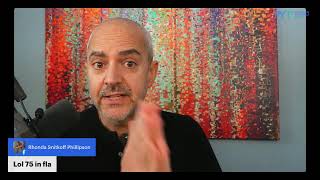
Jim Katsoulis explains how negativity bias makes people define themselves by weaknesses instead of strengths. He shows how to list your cognitive, emotional, and behavioral strengths and weave them into weight-loss strategies for faster results. Specific challenges beat vague ones: identify exact foods and situations rather than saying "carbs."
Questions this video answers
December 10, 2025.
144 pages.
An eight-week program: daily ~5-minute morning hypnosis sessions plus one ~10-minute weekly/night core hypnosis session (eight total weekly sessions).
The 'redo rehearsal' 60-second mental rehearsal technique (used nightly to reprogram subconscious habits).
Early January 2026 (approx. the first week; he mentions around January 4th as likely).
Chapters
Hey, everyone. Welcome to today's program Yourself then podcast. Today we're talking about defining yourself by your strengths. One of my favorite things to talk about in the world because we tend not to do that naturally. And you have to understand before we can get into defining yourself by strengths, we got to recognize the context which, in which we say this, in which is that we all, all of us, I don't care how optimistic and positive you think you are, we all have a negativity bias, meaning the negative stuff stands out to our brain a lot more than the positive stuff. And I experience this every single day. Videos I release. I could have 100 people that say, it's amazing. Great video. 100 comments that love it. One comment says, you're a jerk, you don't know what you're talking about. That's the one I think about, right? So it is just this way. There's no avoiding it. It's what's referred to as a cognitive bias. It's hardwired into you. It's an evolutionary process that brings us to this point because in nature, it was a lot more important to notice the negative, scary, threatening things than it was the positive things, right? It's more important remember where the lion was than where the flower is. So evolution has, you know, evolved us to have this very negative bias. Now when it comes to our own personal development and when we want to create changes in our lives, this becomes an issue because we tend to fixate on our weaknesses and we think we need to fix our weaknesses in order to get the results we want. And this is one of the fundamental problems and mistakes that you can make. And it's so easy to do because you're literally wired and set up to do it. So you have to very intentionally take a step back and say, no, I'm going to define myself by my strengths. And you start focusing on the strengths that you have. And I promise you, folks, I know again, my clientele base is perfectionists and overthinkers and overachievers and over action takers. And they push back on this. I said, no, I gotta fix my weaknesses. And it can be such a strong belief, but telling you mathematically, they've looked at this a million different ways. And when you focus on improving your strengths, again, you have the same amount of time. And if you take that time and focus on improving your strengths over dwelling and trying to fix your weaknesses, you're always going to get better results. Okay? Which doesn't mean you never work on fixing your weaknesses, obviously, but I'M saying the majority of your focus, if you put around really exploiting your strengths, that's how you're going to get the results you want. That's how you're going to get the best results you can possibly get. So defining ourselves by our strengths can be such a profound shift, because certainly when it comes to weight loss, you have been defining yourself by your weaknesses for as long as you can remember. And so not only are we kind of evolutionarily kind of wired for this, but on top of that, you have been practicing it for your whole life. And so it is a challenge to change it. It's almost like learning another language. You can think of it that you basically, you know, have been defining yourself by your weaknesses, and that's your fluent primary language. And so to start defining yourself by your strengths feels as weird as learning another language, as strange as that sounds. Okay, so I say that to you just to prepare you for the challenge that's in front of you. It's not as easy as it sounds to focus on our strengths. It does take consistent effort and work, which is why I'm making a big deal out of it. And in program yourself, then, so much of the program is built on nudging you back to, what are your strengths? What are your strengths? What are your strengths? Right. Again, doesn't mean we ignore our weaknesses. We acknowledge them, we recognize them, but we make the very clear decision that we're going to focus on expanding on our strengths and building around them. So to do that, what you want to do is you want to take a step back and start to appreciate your strengths. And this could be any kind of strength. It could be a cognitive strength you have. Right. We all have strengths and weaknesses. So the way you think, what are some of the strengths in terms of how you think? Right. What are some strengths in terms of how you feel, in terms of how you behave, in terms of how you get yourself to create the results you're looking for. So we get real specific about all the strengths that we have in all the different contexts, and we start to create a whole new narrative this way. And again, I can't stress this enough. We're not ignoring or pretending like the weaknesses don't exist. All right? We can recognize, and we saw. You know, I really struggle with willpower when it comes to chocolate. Great. Okay. However, I'm also a person who's extremely loyal and resilient. You know what I mean? So we want to start balancing things out, because your brain has a tendency to get caught up in the negative things. And eventually what happens is you. That becomes your reality. Because again, we don't live in reality. We live in our version of reality. We filter our reality for our beliefs. And so if you're constantly reinforcing this idea of your weaknesses in defining yourself by them, which is what most people with weight do. If you've been struggling with your weight, you do this, oh, I've got no self control. I'm a sugar addict. I got no willpower. I've, you know, whatever you say to yourself, that has become kind of the de facto idea of you in this scenario. So a big part of changing your weight is changing how you think about yourself. And the easiest way to do this is to start acknowledging and focusing on your strengths and starting to build around them. And again, even something like resilience, let's say you're a resilient person. I'm going to bring my resilience into this. And even though I might stumble, I might fall and make many mistakes, that's okay. Because one thing I know about me is I'm resilient. I'm going to keep on going. Okay? And so this is how we do it. Everyone's got strengths. In your life, what do you believe your strengths are? Right? Start defining those and then start to figure out how you can weave those strengths into creating the body, the weight, the health, the happiness that you want. You know, but no one does this because again, our brain doesn't do it naturally. You have to do this intentionally. What your brain will do naturally is say, I'm a sugar addict and you get me around sugar meat, all of it. That's why I can't control my weight. And we start defining ourselves by our weaknesses. When you start defining yourself by your strengths, it's transformative almost instantly. And as you keep reflecting on these strengths and keep weaving them into your life, keep working on them to help you get to your weight that you want to live at again. It becomes one of the most powerful things you can do. So take some time today and think about, what are your strengths? What do you consider to be your strengths? And even if there's strengths that you don't think would matter when it comes to weight, write down as many strengths as you can possibly become aware of. Write them down on a piece of paper and then go back to those and say, how can I use these strengths to move me towards my goal weight? How can I use them in this process to help me succeed? And if you start getting obsessed with your strengths and how you can use them again. Absolute game changer. I mean, it is a complete transformation of process when you do it. So I hope you have some luck with this. And if you want to go deeper into the mindset and get even more out of this, click the link in my bio or go to program yourself. Then get the free hypnosis session I give you. Free people over in Facebook land. I'll type it in. But yes, go get this free hypnosis session because it's going to help reinforce those strengths that you identify and it will help you relax and kind of the first step to being able to run your mind, I would say. And it's completely free. Go check that out. But if you have any questions, feel free to ask them. Let's see. Maurice says, thanks for all the tips and encouragements. You're welcome. Thanks for listening. Thanks for using them. It's nice hearing people use this stuff. I will tell you that.
Rhonda says, for me, it's carbs. So I'm gonna assume that's one of the weaknesses. No one says my strengths are my carb consumption.
So, yes, people say carbs, though, a lot. I don't know. I get it, I get it, I get it. But I don't like. I don't like. I would never define my challenge as. Well, my weakness is carbs. I would always get more specific. Because your weakness isn't technically carbs, right? Your weaknesses in carrots and celery and, you know, cucumbers.
Apples. Right. These are not your weaknesses. Right. You're probably talking about baked goods, cookies, you know, pizza, bread, you know, chips, things like that. So it's important with the carb thing, I think, to get more specific because I think a lot of times, and I think this is very intentional, personally, carbs get conflated, you know, refined processed carbs get conflated with whole food, natural carbs. And you get to the point where people.
You know, people stop trying to eat fruits and vegetables because they're trying to get their carb consumption as low as possible. And that's when you know you might be going down the wrong path. What's up, Sanjita? Rhonda says, exactly. Yes, I get it. So, yes, be specific though, because again, when we say carbs, it really. With your subconscious mind, you need to be extremely literal. You could think about your. Your subconscious mind a little bit like, like a computer. And if you know anything about computer programming, which you don't have to know much if you are computer program, you need to be very Very specific about what you're saying. You know, you can't just give vague programming instructions. Right? You need to be very, very specific. And so in that sense, your subconscious mind is very much like a computer in that it needs to have very specific information put into it. And so we don't want to say, oh, my weakness is carbs. We want to get specific. Well, what are your weakness? Because I don't even want to say, like, oh, it's cookies and bread and whatever, because even that's vague, you know? So I want to say things like. I want to say things like, what are my specific challenges? Right. May not be bread. It might be a specific type of bread at a specific time. It's not just cookies. It's a specific type of cookie in a specific type of situation. So I'm always looking to get more and more specific with how I'm thinking, because as you define your challenges in a more specific way, you simultaneously begin to, you know, increase your ability to find the solution. So.
Yeah. So Judah says, I love your I am thin meditation. Yeah, it's a good one for sure. I suggest y' all get that. Yeah, it's the new thin me. That's the name of it. What's up, Bookworm? And speaking of books, look what I got today.
Oh, can you believe it.
Just came in? Hot off the presses. Literally hot off the presses. So here it is, my first real B book.
Looking pretty cool, I would say.
That. So awesome. So you see, you kind of get a sense of how it's laid out. It's hard to describe it, you know? Look at that.
Can't wait. Can't wait till I get this. It's so good. So it will be. Excuse me.
It will be available. So make sure you get on the email list, because I'm giving it away for free. I don't think it's going to be the first to the fifth. I think it's going to be the fourth to the eighth, but that'll be a little difference. But this will be ready to go 2026, the year of getting this book. I got another book coming, too, but this one's. It's so good. I was reading through. I can't wait to read. I just kind of. I literally just got it, but I'm gonna go and.
Read through it again. But in this version, it's very surreal, though, so it's very exciting.
Foreign.
Question. Tick tock is always hard. Oh, Bookworm says, like sourdough bread. Yeah, Sourdough bread's like my Strength it is. I'm in that challenge too. I am making sourdough bread and I'm eating it. I slowed down a little bit in sourdough bread. I ate so much bread on Sunday that I was like, I gotta take a break here. I took a break yesterday. I haven't started eating it today. But.
So funny.
Sort of. Bread's good. You all know that normally. Yep. Yes. The book looks great. Thank you. Thank you. Turn the pages slowly. I know, right? Like I said though, it's. Yeah, it looks pretty good, right? That's the COVID I go, that thing's not going to be there. It's just the old proofing thing they put on there. I don't know. I got to do it that way. I don't want me to sell the book somehow. Oh, man, look at this thing. So exciting. I can't wait to read it.
So, yes, many questions, feel free to ask them. Maurice says, I really like the idea of the strengths rather than the weakness. That will take some focused willpower and practice. Agreed. Yeah, it does take a lot of practice. I mean, there's no question, I always say that, you know, there's no hacks and simple, easy ways to lose weight and change your weight forever. I mean, it's something you have to, you know, make a real commitment to. I think of like the way you should commit to your weight is the same you would commit to like going to college or taking some training program. It's a big long term commitment. You know, there, there is no hack. You hack your weight, you know, like, you know, like fundamental. Your eating is. You know, they estimate we make over 200 food decisions a day. I mean, your eating is so much more than you think it is because most of it runs on autopilot. But eating is, is, is the fundamental thing to your life. It's a more fundamental, like, it's not like breathing and your body temperature, right? And that shit's fundamental. But eating is fundamental because it require it. Not just an automated thing, Right? It's automated and it requires it hijacks your brain and focus. So you have to think about it a lot. And it's pretty much the primary thing, you know, so there's so much about eating when you're going to change it. That's why I say if you're really going to change your weight, if you're serious, you're going to need a holistic, comprehensive strategy to make that happen. You're not just going to get a meal plan and then tomorrow you're just Going to follow that, you know, it just doesn't work that way, you know, so. Yes, it does. It does take a little bit. Jody says show it again. There it is. There it is. It's so nice. And it's funny because one of the decisions was if I wanted to get like a glossy cover or a mat. I'm really glad I got the matte one. It looks, it looks so awesome. And thank you everyone, because you all helped me. You all helped me pick this cover out and I love it. I have been looking at a lot. Even the back looks cooler. It's a little, kind of a little back in them. I love it. So I don't know, you know, one thing we didn't do, I didn't write on the spine of the book. Now I look at it, I. I was like point two inches and I was like, it was gonna be that big. But I don't know, maybe I could have written on the back of that. They told me not to. Ah, well, whatever. But.
Yeah, it's really cool looking. It's so cool looking. It came out perfect.
I think until I start reading it closely, I better not. I don't want to find a mistakes. I've read through this book so many times that it proofed everything.
I better not find a mistake. But if I do, I'll figure them out now. Yes. Thank you, Sanjita. Congratulations.
Sanjay says. So basically being at your goal weight requires a conscious way of thinking, Jim.
I mean, yeah, I. I mean, a bit conscious. I mean, everything in life is conscious and subconscious. There's no purely conscious thing you do. You know, dieting might be the closest. Dieting might be one of the closest things in life that is just a pure conscious thing, you know, because when you diet, it's really. Dieting is basically a battle between your conscious mind and your subconscious mind. And so you're consciously trying to take over all of these decisions you usually do on autopilot. That's what dieting is. And it's so many decisions, it's so many things you have to consider that it very quickly overwhelms your conscious mind and you opt back to just your automatic mode. This is why most people can't stick to a diet, right, because it's cognitively extremely taxing and our brain doesn't like that. And so usually what happens is we can follow the plan for a little bit and eventually we just can't keep it up. We run out of steam, you know, and what that steam is, it's that your conscious Mind can't keep fighting your subconscious mind. Your subconscious mind is very energy efficient. Think about it, right? Your subconscious mind, that's where your ability to ride a bike, use a computer mouse, drive a car, brush your teeth. Thousands of other things you just do on autopilot without even thinking about it. That's all in your subconscious mind. So your subconscious mind's an extremely energy efficient part of your brain and the conscious part of your mind is extremely energy intensive. And so you know to go into a diet is very unnatural where you're going to micromanage and consciously think of every little thing you're going to do. Food wise, it's very unnatural. It's very difficult to live that way and it usually doesn't last. So and program yourself. Then we very strategically use our conscious mind to reprogram your subconscious mind. So just like you learned how to ride a bike and now you know how to ride a bike, right? You learned how to have your tooth brushing habit and now you just have a tooth brushing habit where you brush your teeth pretty much on autopilot certain times of the day. So those are two good examples of using your conscious mind to program your subconscious mind. Because once your subconscious mind gets it, you don't got to think about it anymore. So that's a sweet spot. Now you never get to a point where you don't have to think about your weight because you don't, we live in a, we don't live in a natural environment, you know what I mean? So you're always going to have to some degree keep an eye on your weight, okay? But not like a dieter, not like it's a hundred percent the only thing you can think about. We want to get it so that you're kind of coasting. I use the garden garden metaphor that if you start a garden for the first time, you know, the beginning is where most of the work is, right? And then as you get all the soil figured out, you get all, all of it ready, plant your seeds, all the rest of it. Now you kind of more into a maintenance mode. You still got to pull weeds and keep an eye on it. But the, the process of tending to it once it's set up is a lot easier than the process of getting it going initially, right? So.
Just like riding a bike. Riding a bike was a lot hard. It was really hard learning it, right? But, but once you got it, now it's just easy. So that's the nature of learning and that's what we want to do with our weight. But that's not what dieting does. Dieting, you just always have to be on high alert, and that's an unnatural way to be. And that's why it doesn't last for. So, yeah, so. So we are conscious, but we're. We're primarily. We want to ultimately be mostly unconscious, mostly subconsciously oriented with our weight. But there's always a part of us that's kind of aware of it. And tracking things, if that makes sense.
Rhonda says takes a lot of practice. Tracking helps. Have to be consistent, which I struggle with. Yeah, yeah. Everything takes a lot of practice. And I love that you wrote practice because I think a lot of times when it comes to weight, people don't think about the concept of practicing with weight. The diet industry has taught you that, you know, you just. I gotta close this door.
It is so cold. It is so cold where I am. It is literally.
Like getting colder as the day goes on. I don't know what's going on here. It is weird, but usually I keep my door open, but today it's so cold, the draft is just getting me cold here. So anyways, what was I just talking about? I don't remember. Oh, practice. Yeah, so. So, yeah, practice. I. I think that's such a great way to approach your weight because you're. You're not really even losing or gaining weight. You know what I mean? Like, I don't even look at it that way. You're not losing weight. What you're doing is you're getting better at your eating strategies. You know, your weight is a reflection of your reading. And so I really don't even look at the weight primarily. It's obviously an important metric. But the main thing I'm looking at is my behavior. And I don't look at, like, I play guitar and basketball, so it's like I look at changing my nighttime snacking. I look at that the same way as I look at, like, learning a new song or practicing a new shot in basketball. You know, it's like, okay, I get the idea of it. I understand it consciously, but now I gotta install it. I've gotta implement it, right? And the only way to implement something like in guitar or basketball is practice, right? You got to get the muscle memory of it. But I think a lot of times when it comes to behavior, people don't think in terms of practicing and muscle memory. A lot of dieters think, well, I know what to do, so I'm just going to do it. That's just not how it works. That's the same again. If you want to learn how to play golf, you've never played golf before, you can read a book about how to do the perfect drive. That doesn't mean you're going to do the perfect drive. Right. It's two totally different things. Knowing what to do and being able to do it are two totally different things. And the way you go from one to the other is you practice it. But when it comes to weight, dieters don't think they need to practice. I can't tell you the number of times I hear dieters say, I know what I need to do, I just got to get myself to do it. I said, well, that's a weird framing. I'm like, I'm. You might know what to do, but you need to practice doing it. I think it's much more accurate. So I appreciate you saying that, Rhonda. Yeah. Having to be consistent, which I struggle with. Yep. A lot of people struggle with consistency. Again, I mean, if you look at your strategies to be consistent, though, they're probably lacking like, you know what I mean? Like, I bet you don't have a lot of strategies to be consistent. Physical, mental, emotional strategies to be consistent. I bet you just expect, you kind of just measure yourself. I just need to be more consistent. So you said practice in the beginning. But the second part of actually practicing to be consistent, I bet there's a lot of not strategy there. I bet there's not a lot of strategy there. I bet you just expect that I need to show up and just do the things I need to do. But I bet you don't break that apart and really reflect on how could I be more consistent in these situations. When you're not consistent, I bet you don't go back and say, how could I have been more consistent there? And that's one of the big differences. To program yourself then that's a huge part of the program is looking back and redoing things in the way we could, would have liked to have done them. And what that does is it reprograms your mind. So again, a cool thing I got coming, it's coming this week. I got, I just got the COVID for it. But I have a, a report I put together. It' the program yourself thin technique. It's a 60 second technique you use and part of it's redoing and rehearsals. That's what it is, the redo rehearsal technique. And I just put that report together. So again, if you get, if you get on my email list, I'll be sending that out this week, like a five, six page report just describes how to, how to use that basic technique. So make sure y' all get in there. Kate says, carbs are my problem unless I pair them with protein.
Yeah, well, make sure you pray them pair them with protein then. But again, it's a type of carbs. Get more specific. Don't just say carbs. Don't just say carbs. Folks. That. That's the wrong thing to say. That's like saying food is my problem. It's just, it's so vague. It doesn't mean enough. You can't, oh, food's my problem. If you say food's my problem, you're not even serious about a solution, in my opinion. Do you know what I mean? Like, it's like, oh, you know, I go, go to the mechanic and I say, my car, my car is making noise.
Well, can you be more specific? You know what I mean? If we. The quality of your diagnosis is directly related to the quality of the solution you're going to get. So again, don't say carbs are my problem. Get more specific. What specific carbs are your problem?
Sanjita said, want to enroll in the program. Can you give an outline of it, please?
I'm going to give a real brief outline because I don't, I don't. I'm very intentional not to use this as a space to sell my program. And if you're serious about the program, what I really suggest is that you go sign up for the hypnosis session because as soon as you do, it takes a couple minutes to send it to you. And I give you a training, three steps to master your weight. It's like 20 minutes. And if you watch that training and you're interested, I describe the whole program, okay. In detail. And so I'm going to suggest to you, Sanjita, if you're serious about getting to the program, go watch that training. If you can't find the training, email me a gym at program yourself, then I'll send it to you. But watch that training. And if you can't get through the training, then you should not get the program anyways. But basically, the program, there's three main components to it. There's knowing what to do. That's this part, the goal weight blueprint. Okay? There's 144 pages of getting real clear on what you need to do to be a thin, healthy person. And we break it down by following the goal weight pyramid mindset, Lifestyle eating. We deep dive into each of those sections Give you a crystal clear, customizable roadmap for you to follow to get to your goal weight and stay there for the rest of your life. So that's knowing what to do. The other side though is you need to be able to get yourself to do it. Knowing what to do and being able to do it are two totally different things. So we use the goal weight blueprint to know what to do. And we have the program yourself then method which relies on the redo rehearsal technique to get yourself to do it. Okay? And that's basically learning how to run your mind. It's a 60 second mental rehearsal technique you use at night. And this programs into your mind all the things that you want to do and have laid out in your blueprint. Okay? So those are the two big parts of the program. Knowing what to do, knowing how to get yourself to do it. And the last part is support. Support to kind of hold you and help you do all this, you know, because again, doing this on your own is gonna have much lower success than when you have a nice support system. So the core of the support system is the goal weight hypnosis system, which is an eight week hypnosis program. This is the number one hypnosis program on the planet. For we. There's nothing close to this. I don't say this lightly. I know for a fact, I've been in this industry for over 30 years. There's not a hypnosis program that's anywhere close to this for eight weeks. Every morning you get a five minute hypnosis session. Each session is built around a weight loss mantra. So you start your morning relaxed, calm, getting all this good stuff put into your head. Then you go about your day. Each week you get a 10 minute hypnosis session with a core weight loss mantra in it. And ideally you listen to that at night. And so each morning you get your new hypnosis session sent you and you listen to that. And then at night, ideally you're gonna listen to your 10 minute core weight loss mantra session. And you get eight of those over the eight weeks and you'll bookend your day with those hypnosis sessions. And that becomes an incredibly powerful support system. In addition, there's also a hypnosis library. We have live Q A calls on Tuesdays. So if you have any questions you can get on these calls and directly ask me them. And there's a lot more support you get. Jim AI which coaches and on and on and on. So again, but that, that's the core of the program. There's a lot more than that. But again, please, if you're, if you're serious and interested in the program, go watch that, that 20 minute training. Because if you don't want to watch that or you can't get through it, please, the program is not for you. I will let you know that. So go watch that training though. You'll learn a lot and you'll, you'll find out everything in the program.
Yeah. What's up, Jen? Jen says, glad you're still on. Just able to join, so. Yeah. Look at this, Jen.
You got the book? Got it in today. I was just showing everyone that I know you'd be excited about that. Can't wait till this is available again. This will. I will say something. I'm just gonna say this. I, I'm giving away for free the first week of January. So it's not gonna be exactly the first, but it'll be like the fourth, I think is when it's gonna start. And I'm giving the.
The, the Kindle version away for free. Now, I looked at that. I will say one thing I learned. I'm not a big Kindle person, but one thing I know, they told me, oh, that's called flowable. Something I don. Story short is if you get that book, get it for free. Read through it, okay? See if you like it. But if you do like this book, I'm going to encourage you to get the physical version. I'm gonna. It's going to be very inexpensive, ultimate. It's gonna be less than $10, you know, for the book. But it is laid out a little better, you know. So I will say I think it makes for a nicer reading experience, like even part of it. And I think this is an important part of it is, is it's kind of written out in like, kind of poetic. I don't know what you would call this. Poetic formatting maybe, I don't know. But this kind of like, you know, I mean, spaces. And that was a big part of how I wrote this. And with the Kindles, it does kind of squish things a little bit. So I, I didn't like that too much and there's nothing I could do to fix it. But again, if you do get this book, you do really like it, I strongly suggest you get a physical copy of it because I really did write this with the intention that this is going to be something that you read regularly. It's meant to be read over and over and over and over and over again, you know, and Again, like, like idea. You just pop open to a chapter. Each chapter is short. Most chapters are like two pages, you know, page and a half, two pages. And so it's meant to be, you know, read multiple times. And each time you read it, you're a little different thing out of it. So anyways, just a little, little note. Where can we get the book? The book. You're going to be able to get it from Amazon. It's not available yet. Again, get on my email list. I'm giving it away for free as well. So the beginning of January, I'm gonna give it away for free. If you want to order it, you'll be able to order at the beginning of January through Amazon originally. What's up, Deb? Deb says, whoops. Yeah. Do you recommend chia seeds? I'm loving them. Yeah, I've used chia seeds before. I think they're fine. You know, I think anything that's natural is pretty good. I'm not a huge fan of like supplements or.
I know what you would call, like chia seeds. They're not really supplements. I don't know what you refer to them, but, but yeah, I like anything that's natural. I'm pretty good with. And I think they're great when I've had them. I found that they definitely had a positive impact on my hunger and appetite. So, yeah, I think chia seeds, I'm not an expert on, on what they do and all the rest of them. I played around with them at one point. My smoothies, they did gum things up. They can be a little gummy sometimes, like gum up my smoothies, you know, so that was a little weird. So be careful of that. But I think if they help you out, I think they're great. Great.
Let's see. Tik tok. Sorry if.
Missing your questions. There are any. Get to those.
Things. Streaming toes are cold. It's cold times up here in Massachusetts.
It's cold and snowy. Yeah, it's just funny.
All right.
Bookworm says Jim, what are your thoughts on taking vitamins?
I mean, I'm, I'm.
You know, I don't know. I'm not a vitamin expert, so I'm gonna start there. So just, I, I would say I'm probably not the person. I'm going to tell you my personal opinion on them, but I don't think my personal opinion when it comes to vitamins is worth a whole lot lot. So there you go. But my, my general feeling on vitamins is that I don't take them the Way I look at vitamins and all that stuff is I'm really looking to get them out of my food. I know people say the soil is deplete and all the rest of it and doesn't work. I'm just not a big believer in vitamins at this point. I haven't looked into them a ton. I don't know, you know what I mean? So again, I'd rather get my stuff from natural food sources. So I, I do think about vitamins and minerals and all that. Micronutrients. I think about them all the time. But I really am primarily when I think about them, I imagine getting from my foods, you know, fruits, vegetables, salads, whole grains. Just a good diet.
But, you know, I, I could see myself one day like researching it, falling into. And all of a sudden I love vitamins. So again, it's more something I haven't really looked into. And I certainly have kind of a natural bias. I don't necessarily trust the vitamins, but who cares? I haven't really looked into it enough anyways.
So.
Rhonda says, lost 75 pounds in Florida. Nice job, Rhonda. Yeah, quite an accomplishment. Nice job. All right, so you're pretty consistent then. Okay, so you might struggle with consistency, but sounds like you, you're not struggling too hard or you got quite a handle on it. So nice job. Right, so £75 takes a little while, right? And it's. That's quite an accomplishment. So great job. Great job. Rhonda.
Chill says I'll definitely buy the book. Buy the actual book. Can't wait. Your daily posts and live TikToks have inspired me. That's awesome. That's what I'm here for. And again, I got so much cool stuff coming. I'm telling you folks, I really, I know I say this every day, but it really, like a lot of cool things are coming all at once now, you know, and like I said, the new report that I put together about how to use the program yourself, Thin method is coming out. This book here is coming out. You know, I'm redoing right now, this week. I'm working on the program itself, so. So I'm redoing all the reminder emails. And so I'm fixing that whole system up. And so if you're going through it, you'll notice that if you're gonna start it over again, it's gonna be all updated and look a lot nicer and just be more valuable, I'll put it that way. So the program, I guess you could say it's kind of going to facelift, I would say, but it's not just a facelift. It's also. It's just gonna function better. It's gonna be more effective at kind of reinforcing what we're doing in the program, reminding you, keeping you on track, all those things. Things. So those are cool, too. But yeah. So I'm gonna get out of here anyways. I do have a lot of stuff to do if. If you're not in my world, make sure you click the link in my bio or go to program yourself. Then go get the free hypnosis session I give you. It's completely free. It's called the New Thing Me. It's a kickstart session designed to get you fired up and motivated. You can go get that again. I also give you a training three steps to master your weight. Oh, I might have. I might have a calm holiday session coming for you to kind of help you go through the holidays in a calm, relaxed way. So, again, I say this all the time, but no, I don't know anyone that gives more free stuff away than me. And I always look to give more and more away. So get on my email list again, you don't like it, you can unsubscribe. No big deal. I'm here every Monday through Friday, so if you have any questions, hop on. I'm usually here around noon eastern, noon to 12:30 eastern, somewhere in there. And so if you want any questions or you want to get on here, talk to me. Feel free to get on here. And if you can't make those, and you like listening to this, this is also a podcast. You can go to any podcast platform, search program yourself then and it'll pop up and you can listen whenever you want. So, all right, everyone, have a super day and we'll talk soon. Bye.
More from Jim



Weight Loss Visualization: Wake Up in Your Dream Size #programyourselfthin #weightlosshypnosis



What If You Pretended to Be Thin for One Hour? #programyourselfthin #weightlosshypnosis




