Enjoying The Weight Mastery Journey
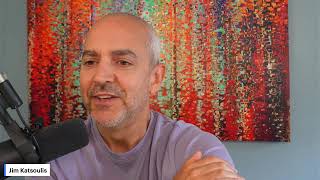
A live YouTube podcast episode by Jim Katsoulis about shifting from short-term "weight loss" thinking to lifelong "weight mastery." Jim explains destination- vs. journey-based motivation, recommends gradual, skill-building behavioral changes, addresses common objections (overwhelm, socializing, drinking, loose skin), and promotes his Program Yourself method (hypnosis, goal-weight blueprint, rehearsal) as a practical support pathway.
Chapters
Hey, everyone. Welcome to today's program yourself Thin podcast. Today we're talking about enjoying the weight mastery journey. I want to make clear that I'm not saying enjoying the weight loss journey. I'm talking about the weight mastery journey. The difference being that if I was talking about just enjoying the weight loss journey, I'd be only talking about the phase where you're losing weight. And the secret to really mastering your weight long term and living at your goal weight for the rest of your life is to enjoy the journey of weight mastery. Because the journey of weight mastery goes on way longer than just the weight loss phase, right? Focusing on weight mastery and that journey is. Is really about for the rest of your life. How do you live at your goal weight in the easiest, most enjoyable way possible? And so if you approach it this way, it's really a big shift because there's two types of motivation. There is destination based motivation and journey based motivation. So destination based motivation is typically how people think about weight loss because the goal is about getting to your goal weight. Everything's about losing weight so that you can get to your goal weight. And that is how you think of the whole process. And in essence, you kind of think of it like a sprint, right? You think about like, okay, I got this thing I'm going to do for a while to get to my goal weight. And so subconsciously, usually when you think about weight loss, you're just thinking about the weight loss phase and that's it. And you think about getting to your goal weight and then you don't really think beyond that, right? Because the diet industry is kind of embedded into your mind the idea that once you get to your goal weight, there you are, you're just going to stay there. And it's this weird kind of frozen reality, you know, is how we typically think about what we really want, which isn't, again, to lose weight, it's to live at your goal weight. You have lost weight in the past and put it back on. That's not the goal, right? That's not what you want to do again. What you really want to do is get to your goal weight and then stay there forever, right? That that's the real goal. And so right from the beginning, you want to make the clear distinction between the power of destination based motivation and journey based motivation. Because again, destination based motivation about getting to your goal weight, journey based motivation is about the process of getting there and then continuing it for the rest of your life. And it's never ending. That's the big difference. Whereas getting to your goal weight is a fixed finite point in space, right? You get to there and then you achieve the goal. But that's not true and that is setting you up for failure. Because again, your real goal is not just to get to your goal weight. You've got to articulate this. I know you think it is, I know you think you're going to get to your goal weight and you'll figure out the rest. But it's estimated that 95% of dieters that lose weight on a diet put the weight back on. So we can no longer just live in the fairy tale that we're going to get to our goal weight and then just magically stay there. That's not how it works typically. And so we need to, right from the beginning, start to set our sights on the real goal, which is again to stay there forever. And it's a completely different paradigm and it's completely different goal. And, and so if you move away from destination based motivation, which is just about getting there now, we start looking at the journey and this is where things get interesting. And again they get interesting now and in the future. Because when you start looking at journey based motivation, really what you start focusing on is how it feels day to day to move in the direction you want to go in. And that actually helps you to achieve your goal because it relieves a lot of the pressure and stress that you subconsciously put on yourself when you, when you think about weight loss as a destination that you just want to get to. Because the second you think of it as a destination, that's all you're looking for. So again, start to focus on the journey and enjoy it right from the beginning and realize that this is a never ending journey. Because I'm assuming you want to live at your goal weight for the rest of your life. You don't just want to lose weight for six months or a year and then put it back on, you want to live at your goal weight. So you want to think about this kind of like brushing your teeth, right? That's a journey based motivator, right? You're going to do it forever because you want the results of that forever. And it's the same thing with your weight. And if you want any support and thinking this way, click the link in my bio or go to program yourself. Then dot com, go get the free hypnosis session and watch the free training I give you and it'll help you all out with this. And if you have any questions, feel free to ask them. I'm here to help you out in any way, answer any questions, move you forward any way that I possibly can here. So feel free to ask any questions on this. Time frames make all the difference in the world. You know, the classic example is giving everyone to college. College. You have a long time frame, right? You think in 2, 4, 6, 8, 10 years. And that's what you're thinking, you know, timeframe wise to get all this stuff done. And so it's the appropriate amount of time for the thing you're looking to accomplish Now. When it comes to weight loss, we don't really think in timeframes, any consistent timeframe. We just think as fast as possible. And right off the bat that creates a much more stressful environment mentally, emotionally and physically for us. So again, as we start to orient our weight journey to be a journey based motivation that's going to be on forever, you know, all of a sudden it starts to become, okay, how do I want to live day to day? How do I want to achieve this? How can I get myself to do the right things consistently, easily, comfortably? Our whole focus starts to change and we start to create strategies that are built around not only getting to the goal weight, but doing it in a way that feels comfortable for us. And that's one of the biggest differences because again, when you think about this process in a short term timeframe, that sets your brain up to say, well, I can do anything for a little while. And that brings us right to the doorstep of these extreme diets and approaches that may gave you some quick results but you can't stick with and so it doesn't last. And so the alternative is that is that we realize, well, there is no rush, there is no time frame. It's not about just getting there. It's about transforming myself so that it's easier and comfortable to do the things I need to do to live it the way I want to live at all. Right? So this is how you start to enjoy the journey, is you shift the way you're thinking about it and you start to break it down into smaller pieces. You don't need to take just giant dramatic actions to get to the goal you want again. Instead, we start to take smaller, more strategic, intelligent shifts in our behavior that moves in the direction we want to go in. And the more you start to think of it this way, the more you're going to actually enjoy the process and start to set yourself up to get great results and to get those great results easier and easier. Because again, we're looking to approach it where you start to develop some skill, then build on that skill, develop some more skill, build on that skill. And we're giving ourselves the time and the space to do that as opposed to dieting. There's really. You're not developing or building on any skills. You're just enacting 100% plan day one and hoping you stick with it, right? So again, that approach doesn't have a high likelihood of success. Whereas if you start being more strategic and start planning things out, you know, in a way that works better for you, now you're setting yourself up for the long term, and that's where the real results you're looking for happen. The physical results, the weight results, the way you want to look, the way you want to feel, those are going to take a while. Again, you can't just get there in three months, six months, like, it's just not enough time for most people. I know you may want to hear that. But the results you're really looking for happen a year from now, two years from now. When you get used to living this way, when you start to stack success on top of success, those are the results you're really looking for, physically, mentally, and emotionally. They're down the line. You know, it's just like anything. It's like if you think of. Because let me put it in different context, because I know you're freaking out if I say the real weight loss results don't happen for a year, two years away. I know you're freaking out about that. But let me put it in a different context. Let's talk about playing a musical instrument, playing golf, drawing, dancing, any. Anything like that. Think of that, okay? And if I say, okay, well, here's a course that's going to teach you how to get started with it right away, right? And so in the next, you know, two weeks, you're going to go through this program and kind of learn how to get some movement with it. But obviously, if you keep with any of those things, dancing, music, languages, whatever, whatever, you stick with the real results and the real benefits show up. If you've stuck with it for six months, a year, two years, and the longer you stick with it, the better you get, the better the results you get, you see? So it's the same thing with weight, that you get better results. And the way you're getting the results becomes easier and more refined as you keep sticking with it and improving. And this is how you want to start thinking about weight. And when you start thinking about this way again, you get Better results because it's a better approach, you know, it's a better approach for getting the results you're looking for. So again, start to focus on the journey and enjoy it right from the beginning and realize that this is a never ending journey. Because I'm assuming you want to live at your goal weight for the rest of your life. You don't just want to lose weight for six months or a year and then put it back on. You want to live at your goal weight. So you want to think about this kind of like brushing your teeth. Right? That's a journey based motivator. Right? You're going to do it forever because you want the results of that forever. And it's the same thing with your weight. And if you want any support in thinking this way, click the link in my bio or go to programyourself then dot com, go get the free hypnosis session and watch the free training I give you and it'll help you all out with this. And if you have any questions, feel free to ask them. I'm here to help you out in any way, answer any questions, move you forward any way that I possibly can here. So feel free to ask any questions on this Friday and see if I can give you some suggestions to them. Someone says, what advice do you have for people that feel overwhelmed? Okay, that's a great question. And I think most people fall into this category. I would say, I would say the majority of people in terms of their weight. You've been struggling with it for years, probably decades. Okay. And so you feel overwhelmed at this point because you've tried lots of different things, nothing's worked for you. But worst of all, when it comes to weight loss is that for all the effort and work you've put in, you're no better off now. If anything, you're worse off. And if you're really honest with yourself, you'll probably realize that you know as little about how to lose weight now as you did before you started your first diet. And so when we take that into account, yeah, it feels overwhelming because it's like, I don't know what to do. And then on top of that, everything you do think about doing is overwhelming. You know, this is what ties every single diet together, right? Think about this. Every diet's the same. I'm going to explain this. But every single diet's the same. And you say, what do you mean? It's like literally vegan diet, carnivore diet, south beach diet, Weight Watchers, intermittent fasting, counting, Calories counting points, calorie restriction, portion control, intuitive eating. They are all the same. How are they the same? Right? Because they all seem so different. Well, yes, they are different nutritionally and, you know, philosophically and strategically, they're different. But. But what makes them all exactly the same is your mindset. Because regardless of which one of those plans you do, and they're all wildly different on the surface, right? But regardless of which one you pick, you are going to start it the exact same way. How are you going to start it? You're going to start at 100% on day one, right. Monday is going to roll around. You're going to dive into your plan 100%. And anything you dive into 100% is going to start to feel overwhelming to you. To just completely change your eating in one day is overwhelming. It's estimated you make over 200 food decisions a day. So when you jump into a plan and now all of a sudden you're going to make all these decisions and choices, it feels overwhelming. It's stressful, you know, and on top of the fact you have to make all these new choices simultaneously, you stop doing all the things that kind of satisfy your emotional needs. And so, you know, you've been using the ice cream, the cookies, the pizza, whatever, emotional reasons, and now all of a sudden, you're taking that away, too. And so now you don't have a strategy to deal with your emotions because you're ripping all that food away, and then you're forcing yourself to totally make new food choices that you have to stay on track of all the time you're over utilizing your willpower, and it feels overwhelming. No, I always say the way you approach dieting, it would be like if you said, oh, I want to learn to play the piano. And I said, oh, you want to play the piano? You're serious? Then you got to play for 10 hours a day. You need to play 10 hours a day, right? You say, okay, yeah, I'll get really good. Then If I play 10 hours a day, and you go and you sit down for your first and you muscle through 10 hours. Well, the next day you wake up, your fingers are killing you, you're sore, you hate the piano, you got no energy left to force yourself to do, and it's really hard. So in that situation, is the problem you and your motivation and your willpower and your focus, or is the problem the strategy that you're trying to follow? And I hope in that situation that's a strategy that's never going to work? Okay. Well, it's the same thing with your. It's the exact same thing with your weight that you're jumping into these plans 100%, because that's what you've been trained to do your whole life by the diet industry. But of course, the diet industry is not your friend. The diet industry is a branch of the processed food industry. Just so you know, the modern diet industry, Weight Watchers was owned by Heinz. Jenny Craig was owned by Nestle Atkins. Food Products, owned by the same company, owns onions, pretzels and Cinnabon. Slim Fast, owned by the same company, owns Ben and Jerry's ice cream. These companies don't really want you to stop eating their foods long term and to lose weight and be happy and healthy and all the rest of it. That's not what they want. They want you to keep eating their food. And so they also want to take your money when you want to try and lose weight. So they take your money when you want to diet, fill your head with rocks, and you all ultimately end up going back to the food anyways. And that's been your pattern for your whole life. That's been everyone around you's pattern. So how do you break that? Well, it starts right from the beginning. Program yourself. Then I'll give you a counterpoint to dieting. Instead of starting with some real strict plan, some really overwhelming system, program yourself. Then you start with a five minute hypnosis session in the morning. You sign up for the program, you get a five minute hypnosis session sent to you. Listen to that. Now, you start your day relaxed and calm with good ideas in your mind. Does it change everything? No. Does it nudge you in the right direction? Absolutely. You start filling out your goal weight blueprints. Is there a rush to do it? No. Take your time. What is the rush? You're.
Again, the dieting mindset. I know why it's so overwhelming. Here's another metaphor for you. When you try and lose weight, you lose weight as if you were in a marathon, but you had the bright idea that you were going to run it. Like a sprinter, you say, you know what? Everyone's kind of pacing themselves. Forget that. I'm just gonna go balls to the wall, all out, pedal to the metal, and the gun goes off and you start sprinting as hard as you can. In the first eighth of a mile, you're way ahead of you. When you're like, holy, it's really working. I figured it out. The next eighth of a mile, you collapse and you can't finish the Race. And then you look back and say, next time I just got to go, I got to just want it more. I got to push harder. And that's kind of how you're approaching your weight loss. And that's the only way you've ever been taught to approach your weight loss. You've never been taught to approach your weight loss calmly, in a relaxed way, with a holistic, comprehensive strategy and approach that's built for the long term. You've never learned how to approach your weight loss comfortably, easily, bit by bit. You have no idea in your mind of even how to do that. It doesn't even exist as a concept. And so in program yourself then we, we take it strategically. You're not trying to change everything all at once. Cut this, you how many times have you tried to change everything all at once? Tons of times. How many times has it worked long term? Zero. If you're overweight, it's zero.
So, you know, again, my job here is to kind of point that out because it's so normalized. We're giving that message from they know. The diet industry is fascinating because the diet industry in the form we know it has really been around, you know, 50, 60 years, you know, the way we know it, because the diet industry could only happen with mass media. Diet industry really spread through women's magazines primarily in the beginning and through mass media. This concept of dieting was pumped into our brains and for most of it, that's our entire lives. Our entire lives. Weight loss is synonymous with dieting. And so when you subconsciously think about weight loss, you really think about dieting. And dieting has been put there by food companies basically. And so it's a broken strategy. You're not a broken person. The main reason you're struggling to lose weight is not because you have no willpower, self control, focus, motivation. It's not those things. It's that you've never learned how to manage your mindset. You've never learned how to approach weight in a strategic, practical way. You've never learned that. Not even once. I bet. So once you learn that, you know it's completely different process. And so in program yourself then you know there's a support system of hypnosis. So you start to relax, get good ideas put in your mind, and then you go through the goal weight blueprint. You learn how to transform your mindset, your lifestyle and your eating into that of a thin, healthy person customized around you so that what you're going to do is custom made for you. And that right off the bat, makes the process more likely that you're going to stick with it. Because think about it, with every diet, what are you doing? You're just taking someone you've never met, that's never met you, is telling you what to do. That's what I'm gonna do. No more carbs. Never any carbs again. You know, and it's like you, you've become the saying, the uncanny used to say that he's like, he's like a lot. You know, dieters are special like this. It's like they're walking around with their umbilical cords in their, their hands looking for somewhere to plug it into. Inditers get like this because the other side of overwhelmed is desperate. Because you get so desperate that you jump into these extreme plans and then you feel overwhelmed and you keep repeating that process. The secret is to approach your weight loss in a calm, relaxed state. To approach your weight like you did. Whatever your career may be, maybe you went to college, maybe you took a training, maybe you took, you know, some, some certification program. And you, you calmly, logically made that decision, committed the time, energy and money to learn that thing and came out the other end with the ability and skills or degree to move down the path you wanted to go to. And now we compare that approach to weight loss. And weight loss is just like, I just want to know, I just wanna know. And then you do these drastic, extreme things. I always say, like to put it in a different context, diets are basically like get rich quick schemes. It's the same exact thing, just one's money and one's weight. But they really prey on your impatience and your desperation and that's where they get most people that go into these. But the problem with the difference between get rich quick schemes is that get rich quick schemes are in the context of traditional money making. So again, we understand get rich quick schemes in the context that most people, you know, either again, go to school or trainings or somehow they learn to create value and they're compensated for that. That's the traditional path of making money. And so get rich quick schemes, you know, are relative to that. But when it comes to weight loss, the only thing you have in your mind is diets, surgery, injections. You literally have no concept of weight management that is smart, strategic and rational. You lit, I know. It doesn't even exist in your mind. And at best you have a plan of what you should do. I can almost guarantee you have no idea how to change your thoughts, feelings and behaviors strategically. I would almost guarantee it. And so if you don't really have a strategy or a plan for how to change your mindset, your behaviors strategically in a way that really works, how are you going to change your behaviors long term? How are you going to lose weight long term if you don't know how to do those things because you think one magical Monday is going to show up and you're just going to force yourself to follow a plan and you keep living within this, this idea, but when you really start to look at it from a different angle, that's what you've been thinking for decades. At this point, probably it just doesn't work.
But the good news is other things do. What's up, Jen? Jen says hi, Jim. Happy long weekend. Been weighing myself every other day or so. It was, it was harder not to do that than I thought. Keeping it at nine plus months of goal and literally never feel like I'm on a diet. Yeah. Great job, Jen. That's awesome. Yeah.
Yeah, it's harder. I know. Well, you know, that's a good point too, right? Because I always, for, for people in my program and just in general, I always suggest, I think weighing yourself daily while you're losing weight is a great idea. I think it's a smart move.
And again, you, the scale is a relative thing, you know, so I know, oh my God, that freak out. And I get that scale is, has too much power and everything, but you can change how you feel about the scale, you know, to the point where literally pulling back on that after you've gotten used to it, now that seems hard. Right? So again, everything's relative. But great job, Jen. That's awesome. Yeah. Nine plus months of staying at your goal weight and doing it in a comfortable way, that's the key thing. Again, I, I, I lost over 50 pounds over 30 years ago. I have not dieted once over 30 years in order to maintain my weight. I had one little blip, you know, 14 years ago. I put £25 on, took it off. I have not dieted once to maintain my weight or to, you know, lose that weight. That little bit that I put on there dropped down. I haven't exercised really in any consistent way. Really. What I've mastered is my mindset, my lifestyle, my eating. And if you do that properly again, you set yourself up to live at your goal weight again. You got to upgrade your goals, folks. You know, the goal of just wanting to lose weight is such a shitty goal. It really is, you know, because it's not what you want. You Know, again, the goal is not to just lose weight. That's just a short term, temporary goal. And so, you know, it's important that you upgrade that goal to be what really matters, which is that you want to live at your goal weight in a comfortable, easy way. And when you set that as your goal, you know what I mean, it's easier to do. So, Regina, Regina said. Went to my 40th reunion later because of listening to these podcasts. All right, Regina, nice job. That's awesome. Yeah, it's fun. Fun to walk into. It's fun to walk into reunions and run into old people and still, you know, feeling good, looking good, you know, it does. So again, when you get your mindset right, you know what I mean? Like, that's where you start to get your pleasure and joy from, you know, real experiences, real accomplishments, rather than just relying on the food. So great job, Regina. Keep it up. That's awesome. Yeah. If anyone's got any questions, feel free to ask them.
It's been a long week. Has it kind of been a long week? My daughter going to school. Kid, go back to school. Oops. Get up here. I missed. I. I apologize. Tick tock. I always say this, that if I get caught up on these, if I miss some questions for a minute, sometimes I miss them. But anyways, let me get to them here. This is live. I was on a reminder. This is live. It's not a video that I'm playing. I would never play a live video as if it were live. I wouldn't do that. What's up, Casey? Casey says, just got back from holidays. Awful feeling not finding a single picture you like. Yep, that happens.
But glad you got to go on vacation.
Snarky malarkey says I get discouraged when I start my week well, but then friends invite me to their dinner party.
Yeah, socializing is important. Yeah. Okay, well, there you go again. That's really important.
Here's the thing, snarky. It's like everyone's got their challenges, unique challenges, right? So if you're a person who doesn't socialize, that ain't gonna be a problem for you, right? But for you, it is, right? You want to socialize, and so you want to be able to go to dinner parties and stay in control. But what happens is you start your week pretty well. When you're not socializing, it's pretty much easier. And then you get to end of the week, you socialize and you get off track. Okay, so in program yourself, then what we do is want to zoom in on that. Right. So again, in programming yourself, then we basically frame it this way that you are basically three habits away from your goal weight right now. Is that exact. No. Okay, understand what I'm saying here. But if you transform your three worst eating habits, and by worst, I mean your highest calorie eating habits that happen regularly, you are going to be a lot closer to your goal weight. So for. For snarky here again, starts out the week pretty good when they're not socializing and on their own more. And then as soon as the socializing at the end of the week comes, that's where the wheels kind of come off the bus a little bit. And so what happens is most likely snarky in her mind is either saying.
I need to not socialize anymore. I guess I can do great when I'm by myself, I eat great. And then when I go out to socialize, I can't eat at all. I need to stop socializing. Now what happens is subconscious. You have this battle. And she followed it right up under there. Socializing is important to me though. So I bet snarky's wrapped in a battle between one voice saying, we have to stop socializing because we can't lose weight when we socialize. And the other voice says, socializing is important. And I bet snarky. You go back and forth with that, back and forth and back and forth. And that's. You've been stuck in that mindset for, I bet, decades. You're constantly, I need to stop socializing because I want to lose weight. And that's socializing making me gain weight. And socializing is important. And that's what you're stuck between, I bet never snarky. Do you ask the question, how can I go out socially and still stay in control in a way where I can still lose weight? I bet you've never asked that question. I'm gonna bet maybe you have. Okay. But a lot of people, because our brains, the way they're wired, they tend to look at the problem side of things. And that's how you define that, Right? You say, well, I've gone out a bunch of times socially, I've done great. Then I go out and I blow everything. So I have to stop going out to lose weight. But socializing is important. What's the point of losing weight if I don't socialize? It's important. Stuck in that. And never do you go into the solution oriented question of how can I socialize and lose weight?
I bet you've never really considered that. Most clients never do. I never did. You know, you have to make solution oriented thinking a real intentional part of your process here. You know, but once you start focusing, let's just say snarky for the next two months focuses on the obsessively on the question, how can I go out and socialize and still lose weight? How can I go out and socialize and still stay in control? Now this comes back to the big mindset of all or nothing thinking versus all or something thinking. And I'm going to guess snarky thinks in an all or nothing way. Right. And so I either have a perfect week where I don't go out and socialize and eat perfectly, or I go out and socialize and I blow everything. What's the point? And that all or nothing thinking, really, it dooms us so much because it prevents us from finding real strategies for the real situation. Because in this all or nothing thing, it's either I don't go out and eat perfect or I go out and I blow everything and never do we think in the middle. How can I go out and maybe eat more than I would than when I'm at home, but eat less than I used to eat when I went out and socialized? That's still weight loss. But a lot of times our brain's been conditioned to only look at all or nothing thinking that if I'm not going to be perfect, what's the point? Well, the point is you can still lose weight. You do not need to be perfect to lose weight. And as soon as you kind of give yourself a little bit more flexibility and room to move, then you start, you can focus on how can I go out and make better choices? And now it starts to get a lot easier. You know, we shift again, everything's mindset and strategy. So there's specific strategies you can use to go out and socialize and stay in control. And there's mindsets you'd want to go into that situation with to kind of support you as well. But if you focus on for that for the next two months, what happens? You start to develop strategies, mindset and strategies to help you get into that situation and stay more in control. Because again, you don't need to be perfect. You just need to be better in those situations than you've been and then get right back on track when you're out of that social situation and you're, you're a huge step towards your goal weight. So I hope that makes sense. No. Casey says drinking always sets me back. Yeah, drinking can do that again. Drinking is a tough one, you know, just for a lot of reasons. It messes with your blood sugar, it messes with your biochemistry, obviously. It messes with your, with your mindset. And so, you know, drinking, depending on how you drink, can absolutely be a big factor, no doubt about it. You know, so if it sets you back, you know, again, the same type of thing, focus on it and work to, you know, work, work to. On that, you know, snarky. Followed up dinner parties require saying no to drinks, dessert, and appetizers. Not necessarily, you know, that's what I'm saying, snarky. Again, you're gonna say all the things I just said, I can almost guarantee, because again, your mind's saying I have to go to dinner parties and not do anything. Again, it's all or nothing, right? I have to go to a dinner party and not have a drink, not have an appetizer, not dessert, hardly anything I like. And it's all or nothing. And so you usually go to nothing. I can't, I can't just, you know, be perfect there. So it's like I'm just going to forget about it. But how much have you thought about having, you know, let's just say you go there and you have three drinks, typically, you know, a whole dessert, you know, a whole appetizer. So a solution starts to become. I'm going to work on having two drinks, half an appetizer, half a dessert. That's weight loss, folks. You know what I mean? This is what I'm saying. This is the most important thing to me, because it's like when you think all or nothing, you're just set up for failure because you can't be all or nothing in your life. You're not going to not go out and socialize to dinner parties just to lose weight, folks. Your goal weight, your goal weight really ought to be a weight that increases your quality of life. And what dieting has taught you to do is that weight loss requires you to reduce your quality of life, and you're never going to stick with it. You, you care more about the dinner parties and the socializing and the enjoyment of that more than you care about your weight. So you're never gonna, you're never gonna choose the weight over that.
And so what we need to do is figure out how to improve the dinner parties. Because subconsciously what you're saying, snarky is I basically can't even go to them. And if I go to them, I have to just not partake in anything and Then I'm a weirdo. And that. So you. Now, in your mind, those are the two options you got, but there's another third option where you go to the dinner party and you improve on how you used to go to the dinner parties. A little less alcohol, a little less appetizer, a little less drink. And that's not that hard to do. That's the funny part. You know what I mean? Like, it's really not. It's way harder to say no to all drinks, all appetizers, all desserts at a dinner party. That's super hard. It's not that hard to say no to an extra drink, you know, no to a full appetizer, no to a full dessert. That's way easier. Now, you may suck at it right now, so it may still require practice, but it's still a lot easier to do that than it is to say no to all of it. So hope that makes sense. But I'm really glad you asked that, because, again, just. That's just another example of what I mean with that diet mindset, you all. Your diet mindset is really the number one thing sabotaging you more than anything else because it puts you in these spots where you're thinking about things in very, very limited ways, you know, and you're giving yourself very, very limited options. You know, April says you're beautiful. Well, thank you. Brie says I'm going to need skin removal surgery after I reach maintenance. I'm trying not to be discouraged. Okay, Bri, I get that. But what I like to do in that situation is I like to look at it.
That conversation, Bree, is going on in the back of your mind. And when you think about skin removal, you feel bad about it. Okay? So what I'd like to do is bring it out and realize that you always have a choice. Okay? So you could continue to be overweight and you don't need skin removal surgery. Okay? But you're overweight and all the things that that is means in your life. And so I want to look at that. Okay, what's being overweight for the rest of your life. Now, again, you don't need skin removal surgery in this one here. Okay? But there's the other effects. And again, I don't know, for you, everyone experiences the weight differently. You know, that's what's important. That's why you have to spend a little bit of time on this and reflect for you, if you maintain the same weight, yes, you don't need skin. So again, there's always good and Bad about everything, Right? So if you stay at the same weight, one of the good things is you won't need skin removal surgery. Right, but what are the bad things? Right, and you'd have to list those out, because, again, for you, what's bad about it for you is different than what might be bad about it for someone else. Okay. But there might be health issues, there might be confidence issues, there might be stamina issues, there might be mobility issues. So, again, we want to look at this honestly. We want to pull this out from the back of our mind, just kind of think, oh, skin remove, I don't want that, and it's going to suck. We want to put it out here and look at it honestly and kind of look at it in a logical way. If I stay overweight, what's the pros and cons of that? And if I lose the weight, what are the pros and cons of that? Okay, so now we go to the weight loss side of it. And yes, skin removal, that's a negative. That's going to suck. I don't really like that. I don't like that. But what are the positives of that? And again, it's different for each person. What do you. You anticipate? What are the most exciting parts of losing the weight for you, though, is, oh, I move better, I feel better, I have more energy, my clothes look better on me, you know, ultimately, blah, blah, blah. And so I want to look at it honestly that way, because at the end of the day, autonomy is really the foundation we want to build on. We want to feel like we have a choice. And so sometimes, oh, my God, if I lose weight, I'm going to need skin surgery. But when we frame it that way, we kind of. We miss the big picture choice we're making, you know? So, again, it's your decision, Bri. And again, nothing's easy in life anyways, right? There are no perfect decisions. And so, again, if you remain overweight, that's going to come with, again, advantages and disadvantages. If you decide to lose the weight, that's going to come with advantages and disadvantages. And it's up to you to look at them calmly and honestly and come out on which side you want to be on. So that when your brain says, oh, my God, we're going to do skin surgery, you can say, yeah, I can't wait to have skin surgery, because that's going to mean that I have more energy, more mobility, more flexibility, I feel better, I'm confident, blah. Whatever those things are, that you said, but right now your brain says, oh, we're need skin surgery. And you just go into feeling bad and discouraged. Okay, so again, bring it up a level. Look at how you're making this decision, which thing you're going to choose. And when your brain says, oh, we're running skin surgery. Yeah, and that's going to be great because that's going to mean that we're X amount of pounds, we look this way here, we're moving this way, we have this stamina, we're feeling more confident, we were successful, we're going to live longer, we're at less risk of diseases, that stuff. You see what I mean? So again, mindset, always mindset, is, is the core level. All right?
Jennifer said, in my own experience, walking around with extra skin is a lot better than being overweight. It's not like I was going around in bikinis and crop tops anyways, Jen, thank you. That's straight. That's straight from Jen's mouth. And, and that's what I've heard over and over again. That again, what we do a lot of times subconsciously is we're in our minds and we're always referencing like before and after pictures, you know, and again, if you're a man or woman or whatever you're referencing, it's usually some perfect person wearing, you know, yeah, bikini or you know, you know, some 25 year old. You know what I mean? Like, it's just, it's not really relevant to our experience. So again, when you look at your honest, quality, day to day quality of life, which one's going to serve you better? And I think when you look at it that way, the answer becomes very obvious. But regardless of what the answer is, you can just move forward from a congruent place with a stable foundation. Because right now, Bri, you feel that incongruence, we call it ambivalence. Part of you wants to lose weight and part of you is scared to extra skin. So again, we want to come to this level and make a decision, look at the whole thing in a whole, in totality and then make a decision about which one we actually want. Okay? So take control of that process. And I agree with Jen, and this is what I've seen over and over again, that again, I. Obviously in an ideal world you want to get, you don't want any loose skin, you know, obviously in an ideal world you want to lose the weight and then look like a bikini model or, you know, a swimsuit model. Okay? But we got to come back to Reality. And let's look at my reality. What are the options on the table for me? You know, and yes, a lot of times when we get past the idea that we're going to have extra skin still, your day to day quality of life is way better. It's easier to move, you have more energy, you feel better about yourself. You feel better in your clothes. There's just so many benefits people typically have, you know, and again, everything has some downsides, too. But again, the positives usually outweigh the negatives when it comes to that conversation. But you've got to go through that conversation and identify your own, you know, what you think about it, you know, and build around that.
JS thriving, says your content.
You're content to waking up in dream body and act like her. I'm at goal weight now, 122 pounds. 120 pounds down. Wow, that's amazing. Oh, I see. Yeah. Yeah. Your content to picture waking up in dream body and act like her. I'm at my goal weight now, 120 pounds down. Holy. I'll take a little screenshot of that. Nice job. Yeah, it's powerful again. And that's. That's program yourself then. I always describe it as kind of an inside out approach to weight mastery. So if you think about most diets are outside in, right. You're just changing your behavior. You're not really changing what you think, what you feel, all that stuff. And program yourself. Then we're changing what we think and feel on the inside first, you know, and then letting that, you know, flow into the behavior piece. And I think that makes all the difference in the world. But yeah, when you start thinking to yourself at your goal weight and how you want to be and all the rest of it, it's transformative in a way that it's hard to even articulate. But great job, Jazz. Nice. Nice work. Quite an accomplishment. £120, man. That's his. Nice job sticking with it and doing that work. Good for you. Keep it up. Keep it up. Ocean fun says, need to stop snacking. No, you don't need to stop snacking. Okay, so here's a little linguistics lesson for you all, is that you don't need to stop anything. You don't need to lose weight, you don't have to lose weight, you shouldn't lose weight, none of that shit. You either want to lose weight or you don't either want to stop snacking or you don't. This goes right back to like the extra skin thing I was talking about. So Again, snacking. Snacking is good and bad, not snacking good and bad. We have to recognize both sides of those two options. And so obviously, snacking is fun to do while we're doing. It's exciting, it's interesting, it's something to look forward to, relaxes us, calms us down. You know, all that. The bad side is, again, extra weight and all the negatives that come along with that. Not snacking. Right. Oh, now I feel kind of bored looking for my. So there's the bad side of that then. The good side, though, is you have. You lose weight, you have more energy, you feel better, blah, blah, blah, blah. Okay, so we want to weigh those two things out and come out of it with a definitive decision. You may say, ah, you know what? I'm going to keep snacking. It's actually, overall, my life's better snacking. Great. Go that path. But if you want to stop snacking, we want to come out of it saying, I don't want to snack anymore. I want to eat healthy foods. I want to just build my food around meals. I want to eat clean, you know, whatever, however you want to describe it. I want to stop snacking because it's actually costing me a lot in life. I don't want to do this anymore. I want to start eating cleaner. I want to stop snacking because it's making me tired. I'm making me feel discouraged and frustrated and upset about myself. It makes me feel, you know, discouraged about myself, what I'm doing, you know, and you want to identify that so clearly. You come out of it naturally saying, I want to stop snacking. I want to, not I need to. Again, as soon as you say the words I need to, I have to. I should. These are words that imply that you're feeling a pressure to do something that you don't really want to do. I don't want to stop snacking, but I need to. And the second you have that dynamic, it becomes an internal battle where you can feel it. You can feel like this rebellious part of you always trying to sabotage you. Yeah. Because the way you're going into it is saying, you have to stop snacking. How do you respond to that? You know, I mean, think about someone in your life that that's close to you, maybe you live with them, then they come in one day, so you need to stop snacking. How do you respond to that? Oh, okay. Yeah, you're right. You're right. I'm just gonna stop. Yeah, no, you get pissed. It's. It's Annoying, right? And we talk to ourselves and we say to ourselves, I need to stop snacking. No, you don't. You don't need to do. You can keep snacking. There's very few things on the planet that you really need to do, honestly, have to do. We choose to do what we want to do. You choose to snack. So you either want a snack or you don't. Now, that doesn't mean, listen, you know, we can start having this conversation, I want to stop snacking. Then you, you snack because you get caught up and you, you get, you know, you forget things or whatever, that's fine too. But you need to have, at the core, I want to stop snacking because I, I these reasons, you know. What's up, Karen? How's it going?
All right. Yeah, Ocean likes that. Wow. Powerful. Yeah, of course. Right Again. This, again, is the mindset piece. This is really, at the core, what I help people with. I am a hypnotist by trade. So really, you know, there's two main things I, I show you. I show you how to figure out what to do. That's why taking you through the goal weight blueprints, and I show you the program yourself. Then technique, the rehearsal technique, and that's how to get yourself to do it. So those are the really the two pieces of the puzzle to get yourself to get your goal weight and stay there is knowing exactly what to do for you, that's the right thing for you. And then being able to get yourself to do it consistently. And then I think there is a third piece which is support. But the two key parts are knowing what to do and being able to get yourself to do it. Once you have those two pieces of information, this whole process just transforms before your eyes. Because right now you don't know what to do. You have a gist knowledge of what to do, meaning you have a vague idea. Your idea of losing weight is, I need to stop eating carbs. I need to stop eating for 16 hours. I need to count my points. I need to stop socializing. I need to, you know, control my portions. These are vague. Just the idea. They're so big. Yeah, they make. I get what you're saying, but your eating is really run by granular, detailed understandings, you know, and these big idea, I'm gonna stop eating carbs. That's like a big idea. But what are you gonna do? Okay, you're gonna stop eating carbs. What are you going to do tomorrow then? And that's what you don't have the answer to. You know, and we run on autopilot. So this is a big issue, though. Again, when you understand how to run your mind, it's just. It's. It's really like night and day. It really is that crazy, like how different life is when you understand how your mind works and you're able to influence yourself more effectively. Because I can tell you. And again, I don't know if this is just natural or if it's just been conditioned into us. I don't know. But the way we think about our mind is, especially with weight, it's almost completely the opposite of how it actually works. And it just does. As an ex. As one example of this, and there's a million of them, but as one example, you probably think that the main thing dictating what's going to control your weight is willpower. You probably think the main thing that's going to dictate your weight is your willpower and your ability to just change your behaviors and follow a plan. And I'm telling you that's completely wrong. Never, never, ever are you going to do something as big as changing your reading with just willpower. So.
Anyways, Karen says you're so right. Thank you. Appreciate that.
And it's true. I am right with this.
Love your lives. New here. Oh, it's great. Great. Yeah. So make sure. Oh, if you're new here, make sure you go click the link in my bio. Like, you can click my little picture up in the top left. You go right to my bio and there's a link there. Go click that and go get the free hypnosis session I give you. It's called the New Thin Me. It's a kickstart session, 10 minutes long. It's designed to get you fired up and motivated to kind of clarify the goal of who you want to be, what you want to look like, how you want to live. It's very inspiring. And if you never experienced a hypnosis session, you should do that. Okay. The other side is that I also made a free training for you, too. And I'd watch that because I kind of lay out this whole system in a presentation. So I'd watch that, too. That's free, too, so. And then I got a lot of cool stuff coming for you. So glad you're here, though.
All right, there we are. Good. All the questions answered, perfect time. I gotta get out of here anyways. So glad you're here, though.
All right, there we are. Good. All the questions answered, perfect time. I got here anyways. Sorry, everyone have a Super duper weekend here. And yeah, again, if you're not my world, go get that hypnosis session. If you like this, I'm here every day, Monday through Friday, usually around noon Eastern. Happy to answer your questions, help you. This again is a mission for me. I'm here to help you as much as I possible. Sorry, everyone, have a super duper weekend here. And yeah, again, if you're not in my world, go get that hypnosis session. If you like this, I'm here every day, Monday through Friday, usually around noon Eastern. Happy to answer your questions, help you. This again is a mission for me. I am here to help you as much as I possibly can here and kind of believe I can help you. Again, this is what I do. I've been doing this for over 20 years, and at the very least it's a different approach, you know, and sometimes I can. We can here and kind of believe I can help you. Again, this is what I do. I've been doing this for over 20 years, and at the very least, it's a different approach, you know, and sometimes that can be the most valuable thing. Jen says I love snacking. Perfect. Replace example fruit, dark chocolate veggies and dip baby bell cheese. No more highly processed crap. Yeah, so again, Jen's in the program, but yeah, she's using the replacement strategy. And so again, what I would be the most valuable thing. Jen says I love snacking. Perfect. Replace example fruit, dark chocolate veggies and dip baby bell cheese. No more highly processed crap. Yeah, so again, Jen's in the program, but yeah, she's using the replacement strategy. And so again, what I would say with program yourself then is you give yourself options. And when you give yourself options, you choose the one that feels best for you. So again, having autonomy, having choice is really fundamentally crucial. Say what? Programming yourself then is you give yourself options, and when you give yourself options, you choose the one that feels best for you. So again, having autonomy, having choice is really fundamentally crucial for human beings. And dieting really does the opposite, that it takes away our choices, gives us less choices, and we start to feel trapped and we start to rebel against that. So, yeah, brilliant strategy, Jen. Nice. Nice work. That's why Jen's been at her goalway for nine months, because again, she's using these strategies for human beings and dieting really does the opposite, that it takes away our choices that make it relatively easy for her to manage her weight. So nice job. All right, everyone. Yeah, and also, this is a podcast, so if you like listening to this and you miss the lives. You can also listen to the podcast. It's called Program Yourself. Then you go to any podcast platform, search it, and you'll hear it and you can listen. We talk about something different every day in the beginning and then go into questions. All right, everyone, have a super duper weekend, and we'll talk soon. Bye.
More from Jim



Weight Loss Visualization: Wake Up in Your Dream Size #programyourselfthin #weightlosshypnosis



What If You Pretended to Be Thin for One Hour? #programyourselfthin #weightlosshypnosis




