Grief and Weight Loss
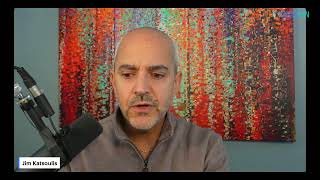
Jim Katsoulis discusses how grief—especially around the holidays—can drive emotional eating and complicate weight-loss efforts. He recommends pausing major diet changes during acute grief, then using grounding, meditation, and intentional ‘inviting’ of grief (in a calm state) to reduce fear-driven eating; he also offers practical lifestyle tips (water, sleep, naps, replace/reduce/remove snacks) and interacts with audience questions throughout.
Chapters
Hey, everyone. Welcome to today's program yourself thin podcast. Today we're talking about grief and weight loss. It is the holiday season here, and for some people, it's a really fun, enjoyable time. And for other people, it's kind of a time when you kind of re experience people that you've lost, you know, and some of the sadness of that. So any time of year, though grief is when it's there. It's a real challenge when it comes to your weight loss, simply because food is one of the easiest ways in the world to at least, say, manage your grief, but at the very least, distract yourself from your grief. You know, numb yourself to it. So if you are dealing with grief in your life, I think that it's a unique challenge to deal with in order to achieve your weight loss goals. Okay. Because as you've probably found, if you are dealing with grief, there's probably a good chance that you are using food to deal with those emotions. And so I want to talk about some other ways to kind of approach it and how to deal with it. I've dealt with this many times personally and with my clients over the years. And the good news is that not only can you eat better and lose weight even if you're dealing with grief, but I think even more importantly is that there are better ways to deal with grief.
Obviously better ways than eating, but just better ways in general. We're going to talk about some of those, and so hopefully those help you. Again, I'm going to make clear I am not a grief counselor. This is not my expertise. However, it is something that consistently is flowing through this process of weight loss is how do we deal with grief in a genuine way so that we can move forward with our weight loss goals? Okay. So the first thing I would suggest to pay attention to is the time frame. So if you have lost someone close to you recently, and recently is a relative term. Okay. But certainly within the last couple of weeks or months. I would say if you're within a couple weeks or months, I would suggest that the weight really becomes a secondary factor. Absolutely. And that you really put your time and energy into letting yourself move through the grieving process. Okay. And what I mean by that is, I guess I'm saying that in the first initial phase of grief.
We got to reset our expectations. Right. Grief is one of those things. I mean, you know, I. I've lost my father. It's over 40 years now, and I still am grieving his loss, you know, so to some degree, grief is something that's Always going to be there. All right. However, it does tend to get better with time. But that initial phase of grief can be very overwhelming, and it may not be the ideal time to really make big shifts in your eating behaviors, in your weight. Okay? So that's me saying that initially, you know, I hope that you're able to kind of put the weight to the side for a minute and. And really allow yourself to as fully and genuinely move through the grieving process as possible. Let that be your focus and intention. Now, once we get past that kind of initial phase of grief, now it becomes a question of, how do you deal with the grief? Now, again, I am not a grief counselor. I want to be crystal clear about that. But I think one of the biggest things that I've been able to use, and a lot of my clients have had a lot of success with is. Is experiencing the grief. Right. And what this means is that a lot of times what happens is we have the sense of loss and the grief that's here, but then what happens is we get scared that we're going to feel that, so we get scared that we're going to feel sad or we're going to go into this deep grief. And so now what's happening is not only do we have the grief that's there, but now we've added a layer of fear to it. And I find I got caught in this. I find a lot of people can get caught in this where you're already experiencing the grief. Just because you're not paying attention to it doesn't mean it's not there. So that's already there. But then on top of what people are trying to do is they're trying to not think about the person they lost, trying not to think about being sad, trying not to feel sad, to grieve. And now what happens that creates that extra layer of fear. So now not only are you grieving, but now you feel scared and worried and fearful on top of it. And I think this is something you want to recognize, because if this situation you're in, I think you can deal with this. And I think the way to deal with it, and this takes a little bit of work and grounding. And again, you have to acknowledge your own situation at the time and your own mental kind of fortitude at the time. But something that worked really well for me was to really rely on. Well, I certainly relied on meditation, but within the meditation, I relied on stillness and calmness and quiet centeredness. And so what I did is I had this tremendous grief That I was trying to avoid. I was avoiding it through food, alcohol, entertainment, crazy behavior. And as I calmed down and centered myself, grounded myself, connect to my breath.
And I occupy this place now, I go and re. Experience the grief from this place, though, because I think a lot of times people are going through their life, they're just trying to not. I don't want to pay attention, I don't pay to it. And then they get scared of it. I welcomed it in. I got myself into as good a spot as I could get myself physiologically, emotionally, mentally. And then I invite the grief and allow myself to feel sad, allow myself to kind of reflect on all this and what this tends to do now, if it starts to feel too overwhelming, pull myself out of it. Okay, that's enough. I'll do more later. Okay, but what you quickly, what I certainly quickly experienced is that when I invited the grief in, when I was in a more advantageous position, more calm, grounded, relaxed, I could bring the grief in and I could move through it. You know, it didn't have. I wasn't. I wasn't an open nerve, open wound. I was more grounded and calm. And so I was able to bring the grief in and what this allowed me to do. And we have to do this a number of times. But what happens is, at the very least, we start to get rid of that fear layer because it's almost like exposure therapy. As we start to kind of interface and interact with the grief, we start to assimilate till we start to understand that we start to not be so scared and fearful. If we start to understand it. And I think this starts to set you up in a completely different position. Right. Because again, understand I probably should have started with this, that the grief. And when it leads to weight issues and eating, it's just a form of emotional eating, a very deep sad form. But it's basically emotional eating. And emotional eating, in my definition of it, is basically when we're using food to manage our emotions. And so in this case, you know, we start feeling sad, we start reflecting on the thing that we're grieving, and we start to feel sad. We don't like feeling that way. And one of the things we've all learned in this culture is to use food as an emotional management strategy. So we go to the food. What am I going to. I'm going to get this from this store. I'm going to eat this, I'm going to eat that. I'm going to do that. As soon as we start thinking about what we're going to eat. The second we start thinking about it, that's less attention on the thing that's making us sad. So that starts to make us feel better, and then we actually eat. That makes us feel better. Okay? So a lot of times it's very easy in this culture to use food as an emotional management strategy. So we don't really want to do that. Now. Again, it can make you feel better in the moment, but it never deals with the core issue that's the problem with it. So again, when it comes to grief, it's no different than any other emotion. What we want to do is we want to interface with the emotion because the emotional eating is a symptom of a deeper problem. The problem isn't that you're eating out of grief. The problem is that you don't have a genuine way to manage and deal with your grief. And so you're just using the food because that's your best strategy you have available to you. So as you start to ground and calm yourself and interface with the grief, acknowledge it, understand it, you know, get familiar with it. What happens a lot of times is we naturally are dealing with the grief. And so I don't need the food as much anymore because we're genuinely dealing with the feeling. And so a lot of times the food will kind of fade away a bit because it's not necessary. And simultaneously why it helps you improve your eating. A lot of times the most important thing is that a lot of times when you do this kind of work, it allows you to.
I don't know what the word would be, but.
Coexist with the grief more effectively, I guess, is the best way. And I say coexist. I'm going to say manage it or make the grief go away, because my experience of grief has been that it doesn't go away, but you can dim it. You could dim it. Right. So again, I still feel grief for my dad 40 years later. I imagine I will feel it for the rest of my life to some degree, but it's way dimmer now. Okay. And so I think that's what we're looking for. So what I'm sharing with you here basically is a combination of mindset and strategies. Right? The mindset piece is the expectations. We go into this with. What are you expecting? If you're expecting you're just going to move through grief and not be sad anymore, it's not going to affect you. That's probably not going to happen ever. Right? So we want to be accurate with what we're expecting. And then strategically, I think one of the biggest things is, is for you to get yourself into a calm, grounded state where you feel powerful or as powerful as you can and then invite the grief in on your terms and you start to coexist with it a bit. You start become familiar with it. And I think that that leads to a lot of very interesting insights a lot of the time. And so again, I could talk for hours about all this, but I'm going to stop it there. This as just a general kind of approach to dealing with grief. If it's affecting your reading and if it's. If it's not either. Either way, I think this will help you with grief regardless. It's has any food, you know, relation to it at all or not. But I have used this with many clients and I found it to work most of the time. So hope that helps you out. And if you want to go deeper into this, click the link in my bio and go get the free hypnosis session I give you. It's free. It's there to help kickstart your weight loss, let you experience hypnosis firsthand. I also made you a training. Got a report coming. I got a bunch of free stuff coming. So go get on there. And if you get on that email list, you will be notified when. Oh, nuts. When program yourself thin.
Or when my new book comes out.
Yeah. So there we go. And I'm wondering if y' all can hear me. Can you hear me over in YouTube land? Because for some reason.
Oh, I see what happened. Oh, well, turn that off. Not recording myself anyways. All right, so yeah, if you have any questions, feel free to ask them. Sorry, a little distracted there. Tisha says, I really enjoy watching your videos. They're so encouraging and straight to the point. Well, thank you, Tisha. That's why I make them. So I appreciate you watching and listening to them and I'm glad they're helping. That's my goal. My mission in life is to help as many people as possible with their goal weight. And I've been very fortunate to make a lot of these reels and TikToks and as a way to kind of spread the message. And I love them because they're just straight to the point. So I'm glad you're enjoying them. Thank you. Leslie says I appreciate you doing these videos. Thank you. You're welcome. Yeah, again, I. And not on top of the videos. Another thing I do is I do this every day. I'm here every Monday through Friday, usually around noon to 12:30 Eastern somewhere. I start right around there and I'm here every day and I genuinely am here to help you. So whatever questions you may have, I am happy to answer them and at least give you my, my take on them because again, for me, weight loss really, weight is life and death. It's really important. So. Yeah. So I'm glad, glad you're appreciating, enjoying it as well.
Sanjusta says hi. Still have not gotten my menopausal session, Jim. I don't believe I even have a menopause session. So yeah, I don't think you'll be getting. I don't think I have one, so I'm not sure. Did I say I had one? It's kind of hard to believe I've never made one. But you know, the reality is, the reality really is that, you know what, what I'm going to tell to a menopausal woman is pretty much the same thing I'm going to tell to a non menopausal woman. I mean really, at the end of the day, the same thing I'm going to sell to a menopausal woman is the same thing I settle myself really. You know, at the end of the day it's eating more whole natural foods, reducing your calorie consumption, improving your lifestyle, improving your mindset. And yes, menopause is a unique, has its unique set of, you know, flavorings of challenges for sure. But at the core of it, the answer is still the same, you know.
But if you're talking about the regular hypnosis session, you can just actually I'll put this link if you're on YouTube. Let me put this link in here.
Oops. So yeah, if you're on YouTube or Facebook, here's the link. If you want to get this hypnosis session.
There it is.
User Miranda says thank you, Jim, for this topic. I got married two months ago and a few weeks later we lost my mother in law from cancer. Someone suddenly memories from that time are so bittersweet and I can't climb out of it. I get it, Miranda. I'm sorry for your loss. Yeah, that's tough. And that's why, you know, someone this is, was directly related with someone who just joined the program and asked me if I had any podcasts on grief. So I don't know, I, I'm sure I've probably talked about in somewhere, somewhere along the way. Jesus. We've done almost 650 episodes at this point, so probably. But I figured there's no Time like now. But you know, one thing, Miranda, what I would say is again, memories from that time are so bittersweet and I can't climb out of it. I think, and this isn't a. It's not a cure all. I want to make crystal clear. I'm not saying that you ground yourself, calm down, relax, center, get centered, and then think about things and you're fine. I'm. Please understand, I'm not saying that. But what I am saying is that a lot of times people are always trying to keep the memories and the thoughts away. And when do the memories and thoughts end up coming then? When you're at your weakness, weakest, right? So it's like you fight them all the time. Get away. Get away from me. I don't want to think about. I don't want to think about it. I don't think about that. Then all of a sudden, you know, you're just whack. You're exhausted and tired and you start thinking about it. You can't stop the thoughts anymore. You wake up at three in the morning. Classic, right? You wake up at three in the morning and all of a sudden these, these thoughts are flooding your mind. And so for a lot of people, they're trying to not think about things all the time, and they're successful most of the time, but then all of a sudden they get overwhelmed with it, you know. And so what I'm saying is that if you intentionally ground, calm yourself, wait, to a place where you're well rested, you know, calm, grounded as you can be, and then you bring these thoughts in intentionally. It's a profound shift for most people. And I'm not saying it fixes everything instantly, but I am saying is it changes things instantly almost every time. You just start to think of it differently. Because when you have more psychic, mental, emotional, physiological energy, you think differently, you interact differently, and you're going to interact differently with the thoughts that can make you sad. And I experience this firsthand. So, you know, again, I'm not saying it always works, and I'm not saying it instantly works, but what I am saying is going to be a very powerful strategy that you're probably not doing that if you start doing it. And you know, a thing that goes with this as well, I think, is you begin asking the person you're grieving the loss that you're grieving if you start to.
I want, I don't want to say gratitude, because I think gratitude is the secret sauce to getting through grief. However, I think that there's a time frame for that. I don't think you're. You don't get through grief in a month being grateful, you know, it doesn't work that way. But when you start getting into two, three, four, six months, a year, that's when the gratitude is really helpful. Because no matter who you've lost in your life.
You had to be lucky enough to have them in your life first. And again, I'm not saying this makes the grief go away, but I am saying it's a reframe. That no matter who you're grieving the loss of, the flip side of that coin is that you were so lucky to have them in your life as well. And I know, I understand the sad part of it. I totally understand that. But I do also understand there's a gratitude part of it, too. And I think if you spend a bit of time in that gratitude and appreciating what you did get, it has a somewhat of a magical effect a lot of the times, you know. So, again, sorry for your loss, Miranda, but hopefully I can help you a little bit. Natalie says, I appreciate this sharing. My mom is in hospice. I've been ignoring it all along because I cannot deal with it. You know, a blessing to me, listening to you is like having a conversation with a friend. Many of us are isolated, and your podcasts are a blessing. I really appreciate that, Natalie. That means so much to me, and that's not lost on me. I say this regularly. I say, you know, all of you are probably looking at the luckiest person on the planet. I consider myself to be one of. I have to be one of the luckiest people that ever lived. And part of that luck is being able to spend my time helping people that feel stuck. And I'm so thankful to be able to do this because I was one of those people. You know, my story, if you don't know it, is I lost my father when I was nine years old. He died of a heart attack. So for me, that grief is the. It's my origin story, you know, because I remember.
You know, I remember even then, like, just being like, I'm never going to let that. I knew the weight was an issue for he had a heart attack, you know, and so he was obese and he had health issues. He wasn't morbidly obese, but he was obese and he had health issues from it, you know, his lifestyle and the rest of it. And I remember saying, like, I'm not going to let this happen to me. And 10 years later, I was 50 pounds heavier. And those 10 years, I never learned how to manage those emotions. And I believe 1000% that the feelings of grief and loss and the anger and the sadness and all of the roiling emotions that were going on from that, I never learned how to deal with until, you know what I mean, I got a little bit older. And that's why I feel so lucky, too. You know, everything I share with you started really a little over 30 years ago. You know, I was 50 pounds heavier. Never mind being 50 pounds heavier, though. I was binge drinking. I'd taken a semester off from college. I was depressed. I was feeling so lost and confused in life. It was a tough time. And so during that time, though, I magically was exposed to a lot of the stuff I'm sharing with you. Hypnosis, personal development, Tony Robbins meditation, yoga, hypnosis, neuro, linguistic program, playing guitar, martial arts. I mean, all these things fell in my life in like a month. It really was again, back to the lucky me. I didn't do anything to deserve that. I just. It just happened to me. I grasped on it with both hands, though. And everything I'm sharing with you really, I believe, stemmed from that experience. I believe all my story really stems from grief. I feel like that was a huge, huge factor. My overeating, my over drinking. I. No question about it. And it wasn't until I learned all this stuff that I was able to truly kind of sit with those emotions and those feelings. And like I say, for me personally, I wouldn't say, like, I didn't fix them so that they're gone. Like, I could still feel sad. I still feel it sometimes. Still feel grieved, like it's there. I hate to say it, I don't want. If you don't believe this, let it go. But for me anyways, it just feels like I'll carry that. Grief's a part of me, but it's a part of me that I'm no longer scared of. I'm not. I'm not terrified of it. It doesn't control me. I'm not running away from it all the time. And that's how it controls you A lot of times. You know, that's how it controlled me for years, is I was so scared to go into those feelings that I did everything I could to distract and numb myself from them. And so as I started to directly interact those intense feelings genuinely without food, without alcohol.
It was transformative. It just lowered the temperature, just calmed things down. And that was so fundamental to just Feeling better as a human, but also absolutely fundamental, being able to manage my weight. Because again, it wasn't. Listen, weight's a complex thing, but for me, anyways, a big part of my weight issue was that I had this emotional issue. I did not know how to deal with these very intense emotions I was feeling inside, genuinely. And so I was running away from them, running to the food, running to alcohol, so I didn't have to think about this, you know, once I started, stopped doing that, dealt with it, you know what I mean? I felt like I had solid ground under my feet. So, again, I'm sorry you're dealing with that, Natalie. That, that's. It's so hard. It's so hard. Um, and I wish you the best. I wish you the best with it.
Jen says so sorry for your loss. Perhaps take the PYT strategies that are easier and will help you with your grief as well, like water, sleep, meditation. Agreed, Jen. A thousand percent. I think you're so right, Jen. That, that, that's why I think, like, when you're in, when you're. That's why I say there's time. I think when it comes to grief, I think a really important concept of it is having a sense of time, time frames, because grief moves differently depending how far away you get from it. It may not feel that way sometimes. Okay, but it's. The intensity tends to fade a little bit. But in the initial phases of it, that's not the time to do the deep work, in my opinion. You know, because you're just so disoriented, you're just survival mode. It's very difficult to make much forward momentum with it, you know, really, I believe now, again, I'm not a grief expert, so take this with a grain of salt, but my experience when I have worked with grief with myself and clients is that it's something, you know, you can, you can start to approach after some time's pass. And I'm keeping that vague because it's always different for each person and situation. But again, during those times when you are in the grief, I do think that focusing on things like water, sleep, meditation, keeping the simpler things is really valuable because I think, again, it supports you in the long run dealing with these, these.
Emotions. Jody, thank you. Yes, you can hear me. Oh, and Jen, by the way. Jen, Jen, I meant to tell you this. You're. You're. Yes, I'm glad you sent me the email because, yeah, your email was screwed up. So you should begin to receive the emails for the Thrive program tomorrow and if they're a little screwy. If they're a little screwy this week, for whatever reason, they'll be perfect next week. It might be a little bit of a glitch that might affect things, but you'll. I know you'll get tomorrow's. Well, if you don't, let me know and you can go in there and listen to them whenever. But. But thanks for letting me know that. But that should be cleared up. But let me know if it's not.
That. Jen says hi. Jim celebrated one year at goal on 11 22. While it was a big milestone, it was anticlimactic, and that felt good because it was just another day in this lifelong journey. That's awesome. Take a little screenshot of that. Super proud of you, Jen. It is like that. I mean, you know, in a weird way, I'll. I'll tell you this, that I think one of the goals, and I know it sounds crazy, but it's like, this is such a subtle thing, but I think it's so profound and powerful that, like, when we think about change and dieting's really messed us up with this as well. But when we think about losing weight and we. We think about it as a dieter, because we've all just been conditioned to think like dieters. But when we think about dieting, we think about it as like, this battle. You know what I mean? Like. Like we're looking. Okay. You know what I mean? We're gearing up for war. We're gearing up for a battle, right? Because that's how we think of change. You know, that it's going to be, I'm going to want a cookie, and I'm going to say no to it. You know, we're going to fight our cravings, we're going to battle ourselves, we're going to fight our mind. And it's this. This kind of very confrontational, you know, sort of concept. But I think that's completely wrong.
Because I think the change we really want to model is the type of change that just naturally happens. And I'll give you an example. It's kind of like, you know, I always think of this, like, when you were growing up, there was some toy or thing that you were obsessed with, right? Like, I'll give you an example. I use this before. I think this is so funny, though. But when I was a kid, I remember I had a fish tank, and I love my fish and all the rest of it. And I remember one night I was. The next day I was going to get up. And we were going to get. It was called a rainbow gourami. And, and so it was a fish, you know, this big, wasn't even big, but rainbow colored. It was a really beautiful fish. And I was so excited, I couldn't even sleep that night. I couldn't even sleep that night. I was so excited to get this fish. I couldn't get that excited about a fish. Now if, if a fish had three legs and you know, six arms, I couldn't give a. About a fish now. Right. But that shift is so naturally happened. I didn't fight against how I thought of fish. Oh, don't think about fish. Don't think that. Like, it wasn't like that. Real change is subtle and complete. So I think you're right on the money, Jen, that when things feel anticlimactic, we're just all, this is kind of the way I am now. That's what we're looking for. That's how you want change to be. I'll tell you as a, as a hypnotist in the way I work with clients, this is how I look to create change in them. And it's a little bit of a double edged sword. I will tell you because I cannot tell you the number of clients over the years I've had. They'll be like, well, yeah, I ate better this week. I, I don't know, I, I haven't been eating chocolate. I haven't been eating, you know, this stuff here. I've been eating really good. And I say, well, what's going on? They said, I don't, I don't know, I just, I don't really think it's the hypnosis, I don't think it's any of that. I think, I don't know, I'm just kind of thinking different. I just feel, I don't know, I just feel like eating that stuff, not, not eating that. It's like, it's so funny. But so on one hand it's like, no, that's because. Excuse me. Jesus. I said on one hand. You know what I mean? Like good, you know, I want you to get the change, but you have that change because of the ideas we put in your head. You know what I mean? You're thinking differently and now you're acting different. And ideally that's how you want to change the feel. Like it's just, I don't know, I just don't feel like I want that and I want this. That's what we're looking for, right? But when it comes to weight loss, you're so hyper aware of every little thing you have to fight and everything you have to do to change and get the right results that it doesn't feel like that. So a lot of times with your weight loss, subconsciously you're expecting. Anticipating that you need to fight against something. So you're subconsciously expecting a big battle, you're expecting big cravings, and you're gearing up for that and assuming that me succeeding is being able to rise to this occasion. Holy. One year. Oh my God. I got here one year. I can't believe I made it a year. It's been one year. I did it. And that's what we think. That's what it's supposed to be like. But that's not real change. Real change is subtle and complete. And it's exactly like you're saying, Jen, where you're like, holy, I didn't realize it's been a year. Oh my God. Wow. Crazy cool. But it's not a big deal because you've transformed from the inside out into a different version of yourself. So now you're not tracking it by the days. You see what I mean? Like when you're tracking day by day by day, it's kind of like, well, it's because I can't trust myself. I gotta. Oh, look, here I am. You haven't internalized the changes deeply as when you wake up on the. Oh my God, I totally forgot. It's been a year. Wow, look at that. It's. Oh my God. I didn't even eat the cookies. I just, I grabbed the apple. I didn't realize I did that. When you don't realize you did the good thing, that's what we're looking for. That's. That to me is the pinnacle, the peak of transformation and change. So super proud of you, Jen. And it's exciting because you'll get another year after this and it'll feel even more just who you are, more normal. Next year you might not even know. Who knows, you know? So it's, it's just, it's. That's exciting. I'm really, I'm really happy for you, Jen. And you've deserved it. You've done a lot of work here, so. Yeah, it is wonderful. It's a, It's a nice way to be. And again, of course, it sets you up for long term success.
Carlos says thank you. You're welcome, Carla. I do appreciate and everything. So if you have any questions, feel free to ask them. Tick tock. I Am here. This is live. I've been getting a lot of questions from Tick Tock. It's so funny. Things really do. I've been doing this for a while now. Is it? Three years I've been doing this podcast. Holy. But it's so funny because I actually I stream to tick tock, YouTube, Facebook and Instagram. And it's so funny because different places kind of get like, I don't know, the action goes. It's, it's cycles. It's very weird. Anyway, sausage lady says, I saw a random video from you that has made me change the way I feel about snacking. Thank you. Well, you're welcome. Yeah, that's why I do them. And again, to back to the point, snacking is another example of that. As a dieter, you think you're going to have to fight the snacking craving, fight the snacking urge.
But in my world, what I want you to do, my ideal I'm aiming at is I want you to naturally just not snack so much anymore, you know, I want you to be able to eat your meals comfortably, easily, enjoyably, so you satisfy the next meal. And so snacking just disappears, fades away. That's the ideal. But I'm glad that helped you sausage ladies. So, yeah, keep watching them because you never know how much those videos can help you, you know, that's why I put them up there.
Yeah. If you have any questions, feel free to ask them. Any weight loss questions are welcome. Instagram.
Got a snowstorm here. So funny. It's hasn't even snowed. This is the first snow of the year and they actually canceled school because I thought it was going to be so much snow. And it's kind of a lot. It's snow like two, two and a half inches already. It's only snow for an hour. Problem is I didn't do my leaves yet. Now there's gonna be snow on the leaves. Oh, well, we'll see. All right. When we get out of here, I got all the questions answered. I'm gonna get out of here. I'm kind of hungry. So, yes, if you are not in my world, click the link in my bio and go get the free hypnosis se made for you. It's called the new thin me. It's Kickstart session. Go check it out. Completely free. I also made you a training called three steps to master your weight. I got a report, special report coming to show you how to use the program yourself. Then technique, the redo rehearsal technique. That's going to be free. I got Free stuff coming out the wazoo. Free book is going to come out January 1st to the 5th. So again, if you get on my email list, I'll be letting you know about that so you don't miss it. So, yeah, check it out. If you care about your weight at all, go check that out.
Shereen, Tree says yes, the change you do on autopilot, the fruit, veg, beans also not wearing when the scale goes up, know that that on pilot autopilot will come back down. Yeah, exactly, exactly, Shereen. And I think that's what sets you up, you know, because of course, I was just had this conversation and we'll talk a lot about this over this month. But December is a month. It's, it's for most people, December is not really the month to lose weight in, you know, so again, it becomes the month of, you know, understanding yourself more and, you know, getting better at managing your mind, your lifestyle and your reading, you know, Shereen says winter wonderland here. That's right. Yeah. Shereen lives close. We live close to each other. So, yes, it's. If you live in Western Mass, you're getting a lot of snow today. And I'm excited because I know I'm actually skiing snowboarding again this year. I took last year off because my shoulder and I'm so excited this year to be able to do it and I can't wait. But anyways, they start blowing snow and so they should be open another week or two. Can't wait. Jane says, how do you avoid midday snacking and evening snacking? So that's a great question, Jane, but I'm going to change the way we think about this a little bit. And before I explain my strategy, I want to explain kind of a mindset piece that I have a saying. I say to myself all the time that an ounce of prevention is worth a pound of willpower. And so I think that, you know, when you ask the question, how do you avoid midday snacking and evening snacking? I know your mind is focused on midday snacking and evening snacking. And you're thinking, when I have, when I'm hungry and craving snacks during those times, how do I fight them? How do I say no to them? Right. So you're fixated on the snacking piece of the question. My brain's not. My brain is thinking, what's going on before the snacking that is causing the snacking situation? So what you're asking me is how do I have a pound of willpower? Jim, what I'm saying to you is how can we use an ounce of prevention to avoid the need of willpower? Okay, now my answer to that would be.
Well, I'm going to meet you halfway. So, so if we're going to start with the snacking, the first suggestion I would say is that, okay, there's avoiding snacking, right? That, that's kind of your goal, and we'll get to that in a second. But the first easiest strategy I would suggest to you, because we want to have a number of strategies, right? There's avoiding snacking is number one. So in program yourself, then we have the three Rs of weight loss. Reduce, replace, remove. Okay, so what you just asked me, Jane, is remove. How do I avoid snacking in the afternoon, in the evening, how do I remove them? Okay, now out of the three, removing is the hardest, takes the most energy. Reducing and replacing are a little bit easier. So my question would be, Jane, how do I improve my snacking? How do I improve my. My midday and evening snacking? And so now we've opened ourselves up to a couple other options. If you're feeling fired up and motivated, you don't want to, you want to say no to them, say no to them. You removed them, great. But if you don't quite have that energy or that motivation, then we have a fallback plan. And it can be reduce or replace. So you could eat the same snacks you normally do, but eat a little bit less of them, 10, 20% less of them. That's an option you have. And the other option is that you replace that snack with something healthier. So if you're grabbing a bag of chips, maybe you get an apple instead. You know what I mean? Like, you eat a bag of chips, usually you eat half the bag if you're going to reduce it. Okay, so there's a couple more options for you. But the real solution is probably going to go back to what I was saying a minute ago, that it's not about those moments of snacking and it's about what's happening before them. And most likely what you're eating for lunch, breakfast, lunch, and what you're eating at dinner are not nourishing you and satisfying you enough to get you through those snack periods. That's probably the biggest thing, food wise. And now I just see you wrote an extra little message there where you said, those are the times I feel tired. Wonderful. So now we're getting more understanding of the snacking habit, and we're understanding that it's not just about the flavor of the snacks and that you're using this as a strategy to energize yourself, wake yourself up. Okay? And so now we've got a little more to work with. And so now we realize it's not so much about the food, it's that you're tired and you're looking for some energy. So now we can ask the magical question is, how can I have more energy? Or how can I deal when I feel tired in the afternoon, when I feel tired at night? You may have two different answers to this. That's why I split them up. When I feel tired in the afternoon, how can I feel more energized? Now, this is contextual. So if you're at work and you feel tired and you go and get snacks, you're gonna have a different answer than if you're at home and you eat snacks and what you're gonna do. So again, everything's contextual. However, the point is that if you're at work going to eat a snack, what's happening is you're getting up from your desk, probably you're walking around, you're seeing different people, you're moving, you're eating a snack, you have something to look forward to, right? So there's a lot more there than just snacking usually. So you're at work, you might be asking us a question. What else can I do during that snacking period? I would even change that. I want to say snacking period, but what can I do in the middle of the afternoon when I start to feel tired, to rejuvenate myself? And I don't know what you'll come up with when you ask that. Maybe you can go somewhere and take a five minute nap. Maybe you could go step outside, sit on a bench for a few minutes. Maybe you could go for a walk, go to the bathroom and come back. Maybe you could get up and do three jumping jacks. Again, it's up to you, but I would start to ask that question. Look at it at night when you feel tired. Again, I would start to look at when I feel tired, can I go to bed, Can I take a nap? Oh, okay. Home and retired. Yeah. All right. So absolutely. I would, I would probably start relying on naps if I feel tired in the afternoon. And you are most likely looking for more energy and you've trained yourself to have snacks for more energy. But what I would do is I'd come up with a different alternative and a nap would be at the top of my list. I love napping though, you know.
So anyways, I'm not saying that's the complete answer. But that's how I would start to understand it. I would treat them as different, right? The afternoon snacking and the nighttime snacking, I would treat them as two totally separate, different things. Even though snacking, it sounds like they're the same. Don't do that. There's totally different things going on in each situation contextually. So I would dive into, I would do one at a time, and I would figure out, what can I do during those times instead? And I would go to work on that question until I had good answers.
Shereen says thank you for being here and all your wisdom. Thank you, Shereen. Appreciate that. Yeah, it's my pleasure. All right. But I am getting out of here now. So, yes, again, if you're, if you're not in my world, make sure you click the link in my bio or go to program yourself then and go get that free hypnosis session that I made for you. And if you like this, I'm here every Monday through Friday, usually around noon Eastern. And yeah, you can hop on here, ask any questions you have. I'm happy to answer them. And if you like listening to this, but you can't make the live. It's also a podcast. Go search, program yourself then, and you can listen to this whenever you like. All right. All right, everyone, have a super duper day, and we'll talk soon. Bye.
More from Jim



Weight Loss Visualization: Wake Up in Your Dream Size #programyourselfthin #weightlosshypnosis



What If You Pretended to Be Thin for One Hour? #programyourselfthin #weightlosshypnosis




